Startup Funding News Today, November 16, 2026: Blackbird Coffee, Daisytuner, Stark Future, Seawolf, Stoa & More
 Nickie Louise
Posted On November 16, 2026
Venture investors continue to back companies that take advanced technology out of the lab—from electric motorcycles and AI image sensors to industrial energy systems and DNA medicines. Barcelona-based Stark Future led the latest announcements with a financing transaction exceeding €150 million at a €1.2 billion pre-money valuation. San Diego’s Seawolf Therapeutics emerged from stealth with $100 million disclosed across seed and Series A rounds, while India’s Bharat Semi secured $24 million to develop programmable image sensors.
The most interesting investments are not confined to conventional AI software. China’s Wenzhun Intelligent announced a new, substantial Series A+ for models trained on structured industrial data. INFevo raised more than RMB 100 million to combine virtual-cell models with laboratory experiments. Germany’s Daisytuner is working to lower the cost of running AI models on different chips. Meanwhile, Finland’s Intergrid is automating industrial electricity management, and Stoa is using AI to organize construction projects.
This is also a day when capital structure matters as much as headline size. Stark calls its financing more than €150 million in total transaction value, although Reuters describes at least €150 million in equity. Seawolf’s $100 million covers two previously private funding stages, not one newly completed $100 million Series A. Intergrid’s reported €23.5 million is cumulative financing that includes a grant and a loan, not verified fresh venture equity. Those distinctions prevent a precise, comparable daily equity total.
Among the ten selected companies, five are based in Europe, three in China, one in India and one in the United States. At least six have a direct AI or AI-enabled infrastructure proposition. The mix reflects announcements within the cutoff—not proof that any one region has permanently gained an advantage in global venture funding.
The Macro Environment: Investors Are Paying for Technology That Has to Work in the Real World
Today’s financing activity illustrates a distinction that is easy to miss in the AI investment cycle. One category of startups predicts or generates content; another tries to turn sophisticated computation into dependable performance in factories, scientific laboratories, construction sites, and physical devices. Wenzhun’s structured-data models and Daisytuner’s compiler software address different technical problems, but both seek measurable improvements in processes customers already operate.
Physical execution creates different barriers to entry. Stark must manufacture motorcycles that compete on price, performance and service. Bharat Semi needs to take image-sensor designs through fabrication, testing, and qualification. Seawolf must turn promising animal data into safe and effective medicines. In all three cases, development capital is necessary but insufficient: a laboratory result or product demonstration does not establish durable commercial economics.
The financing also shows why energy, computing and data are linked investment categories. Intergrid’s software manages electricity consumption and trading for industrial customers; Stoa serves construction projects, including data centers; Daisytuner targets the computing waste caused by poorly optimized model execution. These companies do not compete directly, but they serve customers whose operating costs increasingly depend on efficient infrastructure use.
Strategic investors can change a company’s commercial prospects, but they do not remove execution risk. Blackbird Coffee’s new round is backed by venture firms and experienced European business executives. INFevo’s supporters include established technology investors and existing shareholders. Public-sector participation in Intergrid’s funding history illustrates the blend of equity, grants and credit that can support industrial technology—and the need to report each component correctly.
Stark Future raises over €150M to take electric motorcycles into larger markets
Stark Future, the Barcelona-based maker of electric off-road motorcycles, announced a financing transaction worth more than €150 million, led by Highland Europe with Morgan Stanley Investment Management’s 1GT strategy and Axon Partners Group. The company disclosed a €1.2 billion pre-money valuation. Reuters separately described the deal as at least €150 million in equity. A possible second close had not been completed at the time of the announcement.
Founded in 2020, Stark manufactures its VARG line near Barcelona and has concentrated on motocross, enduro and supermoto bikes. Founder and CEO Anton Wass says the company has captured roughly 5% of the €3 billion global off-road motorcycle market. He expects revenue of about €150 million for 2026 and positive earnings before interest and tax; those are management forecasts, not audited full-year results.
The commercial thesis is unusually concrete for an electric-vehicle startup: win customers by offering better motorcycles, rather than asking them to pay a premium for an environmental benefit. The financing will support entry into broader motorcycle categories, where brand loyalty, dealer networks, repair capacity and price competition are formidable. Investors should watch whether Stark can preserve its economics as it moves away from specialist off-road products.
Funding Details
Startup: Stark Future
Investors: Highland Europe; Morgan Stanley Investment Management’s 1GT; Axon Partners Group; existing investors
Amount Raised: More than €150 million in total transaction value; Reuters reports at least €150 million in equity
Total Raised: Not disclosed on a reconciled lifetime basis
Funding Stage: Not disclosed
Funding Date: November 16, 2026
Headquarters: Barcelona, Spain
Sector: Electric motorcycles / advanced manufacturing/mobility
Valuation: €1.2 billion pre-money
Seawolf Therapeutics emerges from stealth with $100M in funding to develop repeat-dose DNA medicines

Seawolf Therapeutics emerged from stealth with $100 million in funding across a seed round and a Series A to develop repeat-dose DNA medicines. Versant Ventures was its founding seed investor. The Series A syndicate included Versant, MPM BioImpact and Novartis Venture Fund, alongside Eli Lilly, CRISPR Therapeutics, Sixty Degree Capital, Alexandria Venture Investments and Pathway to Cures. The company did not disclose how much was raised in each stage.
The San Diego biotech is developing TRIDENT, a lipid-nanoparticle delivery system intended to carry DNA into cells and support sustained therapeutic protein expression. Its goal is to allow repeat administration without some of the limitations associated with viral delivery. Seawolf reports encouraging results in nonhuman primates, but the lead metabolic-disease program remains preclinical; the company expects to select a development candidate in 2027 and could seek to begin human studies in 2028.
The company also announced a research and licensing collaboration with Sanofi that could generate up to $1.2 billion in future milestones, plus royalties. That figure is contingent commercial consideration, not venture capital received. The investment case depends on delivery safety, duration of expression, redosing performance, and eventual human efficacy. The Sanofi relationship offers outside scientific and commercial validation, but does not settle those clinical questions.
Funding Details
Startup: Seawolf Therapeutics
Investors: Versant Ventures; MPM BioImpact; Novartis Venture Fund; Eli Lilly; CRISPR Therapeutics; Sixty Degree Capital; Alexandria Venture Investments; Pathway to Cures; others
Amount Raised: $100 million across previously undisclosed seed and Series A rounds; individual amounts not disclosed
Total Raised: $100 million publicly disclosed
Funding Stage: Seed and Series A, disclosed together
Funding Date: November 16, 2026 (first public disclosure)
Headquarters: San Diego, California, United States
Sector: Biotechnology / DNA therapeutics/drug delivery
Valuation: Not disclosed
Source: Seawolf Therapeutics, November 16 Business Wire announcement; Reuters, November 16.
Wenzhun Intelligent raises several hundred million yuan in Series A+ financing for industrial data models
Chinese AI company Wenzhun Intelligent disclosed a Series A+ financing of several hundred million yuan, supported by CDH Investments, Shanghai International Group-related investment capital, and Xuhui Science and Technology Investment. Its announcement also discussed an earlier Series A led by Guoke Investment and Monolith Management. That Series A was already recorded in June 2026 and is not being counted again. The amount attributable to the new A+ was described as several hundred million yuan without a precise figure.
The company, associated with a team from Tsinghua University, develops large data models for structured information such as industrial measurements, time series, and enterprise tables. Its LimiX models are intended to identify patterns across datasets without requiring a new bespoke model for every factory or research use case. The company cites strong benchmark results, but those do not automatically demonstrate accuracy, value, or reliability in live industrial operations.
Why invest in structured-data models when language models dominate attention? Industrial companies have large collections of numerical and operational data that are not naturally handled as prose. Software that generalizes across plants or processes could lower deployment costs. The commercial test will be repeatable improvements in forecasting, quality control or decision-making—and the ability to maintain those improvements when the underlying data changes.
Funding Details
Startup: Wenzhun Intelligent
Investors: CDH Investments; Shanghai International Group-related investment capital; Xuhui Science and Technology Investment (A+); earlier A investors excluded from the latest round
Amount Raised: Several hundred million RMB in the latest A+; exact figure not disclosed
Total Raised: Not disclosed on a reconciled basis
Funding Stage: Series A+
Funding Date: November 16, 2026 (latest A+ disclosure)
Headquarters: Xiong’an New Area, Hebei, China (registered); Beijing operations also reported
Sector: Industrial AI / structured-data foundation models
Valuation: Not disclosed
Bharat Semi raises $24M in funding to put AI image processing directly on sensors
Bharat Semi raised $24 million in an all-equity seed round led by Info Edge Group, South Park Commons and Indus Bridge Ventures, with participation from Valour Capital, Micromax, Gaingels and individuals. TechCrunch first reported the financing on November 15 at 3:30 p.m. Pacific time, comfortably inside the Eastern-time reporting window.
The New Delhi semiconductor company designs programmable image sensors that combine visual capture and local processing in one chip. Founder Vrinda Kapoor argues that integrating those functions can reduce the cost of systems used in drones, smart buildings and industrial equipment. Bharat Semi reports design wins involving General Atomics and Kaynes Semicon, but remains pre-revenue and expects initial commercial production in 2027.
The opportunity is attractive because sending every image to a separate processor consumes power, adds components, and increases latency. However, sensor manufacturing is unforgiving: customers must be satisfied with image quality, power consumption, reliability, and software support before designs become volume orders. Bharat Semi also faces international incumbents with established manufacturing and distribution relationships.
Funding Details
Startup: Bharat Semi
Investors: Info Edge Group; South Park Commons; Indus Bridge Ventures; Valour Capital; Micromax; Gaingels; others
Amount Raised: $24 million in equity
Total Raised: Not disclosed on a fully reconciled basis
Funding Stage: Seed
Funding Date: November 15, 2026 (reported at 3:30 p.m. PST)
Headquarters: New Delhi, India
Sector: Semiconductors / intelligent image sensors/edge AI
Valuation: Not disclosed for this round
Blackbird Coffee raises $17.7 million in funding to automate workplace coffee delivery
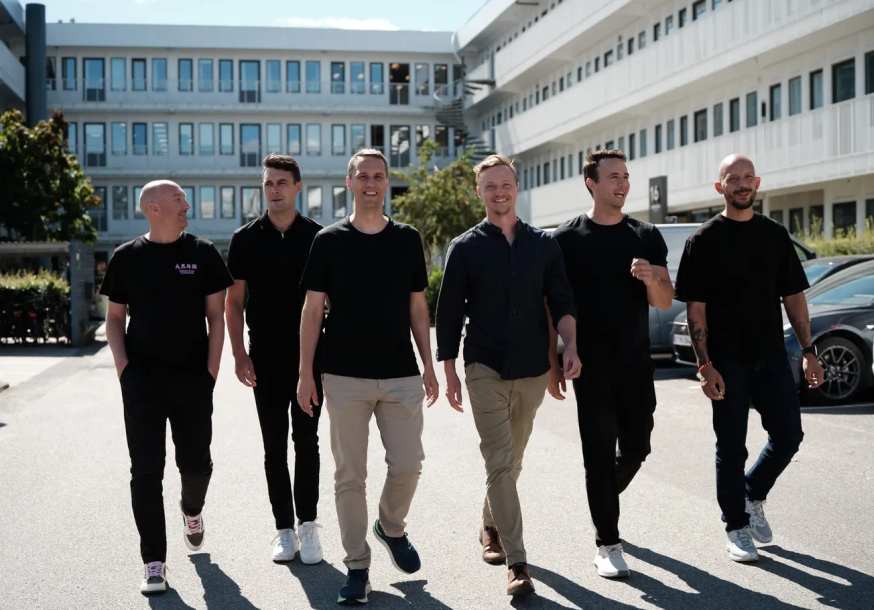
Denmark’s Blackbird Coffee secured DKK 120 million (approximately $17.7 million) in Series A funding, led by Dutch venture investor henQ. Carlsberg chairman Henrik Poulsen, former EQT executive Mads Ditlevsen, and existing investors Seed Capital and Damgaard Company participated. Its total disclosed funding now stands at approximately DKK 170 million since summer 2025.
Founded in 2024, Blackbird installs connected coffee machines in offices without a conventional machine lease, charging customers for the coffee they consume. Its software monitors equipment, supplies and service needs. The company reports approximately 3,000 workplace customers, up from 1,300 in January, and annual recurring revenue exceeding DKK 50 million. Those figures are company-reported and do not establish profitability.
This is an instructive venture deal precisely because it is not another AI model developer. Connected equipment and automated replenishment may make a fragmented, operationally demanding market easier to serve. The risks are equally physical: equipment financing, maintenance, coffee margins and international service coverage. Blackbird must show that its attractive customer proposition can scale without service costs rising just as quickly.
Funding Details
Startup: Blackbird Coffee
Investors: henQ; Seed Capital; Damgaard Company; Henrik Poulsen; Mads Ditlevsen; other angels
Amount Raised: DKK 120 million (about $17.7 million)
Total Raised: Approximately DKK 170 million
Funding Stage: Series A
Funding Date: November 16, 2026
Headquarters: Greater Copenhagen (Herlev), Denmark
Sector: Connected equipment/workplace services / industrial software
Valuation: Not disclosed
INFevo raises over RMB 100M to combine virtual cells with laboratory testing
Beijing-based INFevo announced more than RMB 100 million in Pre-A financing on November 16. Investors included Xinglian Capital, Prosperity7 Ventures, Huagai Capital, Huakong Fund and DT Capital, with existing investors Shunwei Capital, HongShan and Songhe Capital participating again. The financing follows a separate angel round announced in June, which is excluded from today’s new-capital tally.
Founded in 2025 as a project incubated by XtalPi, INFevo is developing computational models intended to predict how cells respond to drugs and genetic interventions. Its OCOO modeling system is paired with automated laboratory experiments, creating a loop in which biological results can challenge and improve model predictions. That combination matters because computational guesses are useful only if they can be tested against physical evidence.
The strategic opportunity is to help pharmaceutical researchers prioritize experiments and potential targets. But virtual-cell modeling remains an early scientific discipline. Investors will need evidence that predictions generalize across cell types and experimental settings, and that the platform improves actual discovery decisions. The company has not announced a valuation or sufficient revenue information to assess its commercial maturity.
Funding Details
Startup: INFevo
Investors: Xinglian Capital; Prosperity7 Ventures; Huagai Capital; Huakong Fund; DT Capital; Shunwei Capital; HongShan; Songhe Capital
Amount Raised: More than RMB 100 million
Total Raised: Not disclosed; earlier angel financing announced separately in June 2026
Funding Stage: Pre-A
Funding Date: November 16, 2026
Headquarters: Beijing, China
Sector: AI for science / computational biology/drug discovery
Valuation: Not disclosed
Intergrid announces new investment within €23.5M in total financing for industrial energy automation
Finland’s Intergrid disclosed €23.5 million in total funding on November 16 and identified a latest investment round co-led by Kvanted and Finland’s state-backed Tesi. Existing investors True Ventures, Lifeline Ventures and First Fellow Partners also participated. But its €23.5 million figure covers the company’s cumulative financing, including €2.7 million in Business Finland support and an EU-guaranteed loan from Finnvera. The equity amount attributable to the latest round was not stated.
Intergrid’s Autopilot software monitors industrial electricity consumption and power-market conditions, then adjusts energy operations and trading decisions. Founder and CEO Olli Kangas says the platform operates at more than 100 industrial sites across food production, heating, and other energy-intensive operations. The company says customers typically achieve double-digit percentage reductions in energy costs, a claim that requires comparison against individual site conditions.
Intergrid represents a practical form of industrial AI: customers care less about the model than about electricity bills, operating risk and production continuity. The investment thesis is plausible where factories can shift electricity demand or manage flexible assets, but integration complexity and volatile power markets may affect results. The €23.5 million cannot responsibly be added to a daily venture-equity total as if it were one new round.
Funding Details
Startup: Intergrid
Investors: Kvanted; Tesi; True Ventures; Lifeline Ventures; First Fellow Partners
Amount Raised: Latest-round equity amount not disclosed; €23.5 million is cumulative mixed financing
Total Raised: €23.5 million, including €2.7 million in public support and a Finnvera loan
Funding Stage: Not disclosed
Funding Date: November 16, 2026 (latest funding announcement)
Headquarters: Helsinki, Finland
Sector: Energy software / industrial automation / electricity-market optimization
Valuation: Not disclosed
Daisytuner raises €6M to make AI models run more efficiently across chips
Darmstadt-based Daisytuner raised €6 million in seed financing, co-led by Elaia and LEA Ventures with participation from the Amadeus APEX Technology Fund and Seedcamp. Investor Amadeus Capital Partners confirmed the investment on November 16. The money will support expansion of its Daisyflow performance-optimization platform and the engineering team behind it.
Running an AI model efficiently on a particular processor often requires specialized software work. Daisytuner is building a compiler and automated tuning system intended to reduce that manual effort across Nvidia, AMD, and other hardware. It says one test ran the Qwen 2.5 model up to 18% faster than vLLM on AMD Instinct GPUs. That is a company-reported result for a specific comparison, not proof of universal performance improvement.
The business opportunity follows from growing diversity in AI hardware. Even a technically capable chip can be commercially unattractive if developers cannot deploy existing models efficiently. Daisytuner could benefit from helping customers use competing processors, but established compiler projects, chip vendors and cloud platforms are pursuing similar improvements. Repeatable cost savings across customer workloads will matter more than a single benchmark.
Funding Details
Startup: Daisytuner
Investors: Elaia; LEA Ventures; Amadeus APEX Technology Fund; Seedcamp
Amount Raised: €6 million
Total Raised: Not disclosed on a fully reconciled basis
Funding Stage: Seed
Funding Date: November 16, 2026
Headquarters: Darmstadt, Germany
Sector: AI inference/compilers/developer infrastructure
Valuation: Not disclosed
Rex Bionics raises tens of millions of yuan to advance neurological rehabilitation robotics
Wuxi-based Rex Bionics announced a Pre-A investment of tens of millions of yuan on November 16. BGI-Songhe, a partnership associated with BGI and Songhe Capital, led the round, with existing shareholder Meian Innovation participating. The exact amount and valuation were not disclosed.
The Chinese medical-robotics company develops self-balancing exoskeleton technology for people with severe neurological injuries. Its thesis is that assisted movement could do more than exercise limbs: structured sensory and motor feedback may support neural rehabilitation. The company also operates a consumer-health-oriented product line, Free Future. The distinction between medical rehabilitation and wellness products is commercially significant because evidence, regulation, and reimbursement requirements can differ widely.
Investors are financing both robotics engineering and a possible clinical service model. But improved mobility during a device-assisted session is not the same as durable neurological recovery. The company’s long-term value will depend on credible clinical studies, patient safety, manufacturing quality, therapist workflows, and whether healthcare systems will pay for treatment.
Funding Details
Startup: Rex Bionics
Investors: BGI-Songhe (lead); Meian Innovation
Amount Raised: Tens of millions of RMB; exact amount not disclosed
Total Raised: Not disclosed
Funding Stage: Pre-A
Funding Date: November 16, 2026
Headquarters: Wuxi, Jiangsu, China
Sector: Medical robotics/rehabilitation/neurotechnology
Valuation: Not disclosed
Stoa raises €3.5M in funding to bring AI into data-center construction projects
Helsinki startup Stoa announced €3.5 million in pre-seed funding led by Lifeline Ventures, with participation from Illusian, Wave Ventures and individual investors including PlanGrid co-founders Tracy Young and Ralph Gootee. The company also attracted backing from founders of Supercell and Wolt.
Stoa gathers drawings, schedules, quality records, and safety information into a shared system for construction teams. Its product targets complex projects where fragmented documentation can cause delays or costly mistakes. The company reports deployments at more than 20 construction sites across the Nordic region, including data centers, and says users save time searching for and coordinating information. Those benefits are company-reported.
The commercial connection to AI investment is indirect but important. More data centers mean more construction projects with difficult schedules, specialized contractors and expensive rework risks. Stoa could build a business by reducing those coordination costs, although large construction-software vendors also serve the market. Investors will look for customer retention, project-level savings and international repeatability, not simply the volume of planned data-center spending.
Funding Details
Startup: Stoa
Investors: Lifeline Ventures; Illusian; Wave Ventures; Tracy Young; Ralph Gootee; other angels
Amount Raised: €3.5 million
Total Raised: €3.5 million in the company’s disclosed pre-seed announcement; other lifetime financing not confirmed
Funding Stage: Pre-seed
Funding Date: November 16, 2026
Headquarters: Helsinki, Finland
Sector: Construction technology / AI software / data-center infrastructure
Valuation: Not disclosed
What Today’s Funding Activity Reveals
Commercial hardware is still attracting substantial venture capital. Stark and Bharat Semi work in unrelated markets, but each must turn engineering into products that customers can buy at sustainable prices. The capital requirements and timelines differ significantly from those of a company distributing software through an API.
AI investment is spreading into specific operational bottlenecks. Wenzhun is targeting structured industrial data; Daisytuner is optimizing model execution; Intergrid is controlling energy operations; Stoa is coordinating construction information. The common feature is an identifiable workflow in which higher accuracy, faster processing or lower costs may produce customer value.
Life-sciences funding is being tied to experimental systems. Seawolf’s DNA-delivery technology is based on animal research, while INFevo aims to improve the selection and testing of biological hypotheses. These are different scientific businesses, but both need evidence that translates from models or preclinical experiments into useful outcomes.
Founders are using software to compete in traditional services. Blackbird Coffee’s connected-equipment model shows that venture-backed innovation need not be a foundation model or semiconductor. Better monitoring, logistics and customer convenience can create a differentiated business, provided the unit economics survive scale.
Geographic figures are distorted by the reporting clock. Five selected companies are European, three Chinese, one Indian and one American. Because the window includes an Asian and European Monday morning but a U.S. Sunday, this is not evidence of a structural shift away from American startups.
The most important analytical distinction is between transaction size and new equity. Stark describes the deal as a transaction worth more than €150 million. Seawolf has disclosed historical seed and Series A investments together. Intergrid’s €23.5 million includes previous funding and non-equity support. Those figures cannot all be added to create a clean daily venture-capital total.
Tech Funding Table
| Startup | Amount Raised | Sector | Funding Stage | Lead/Key Investors | Country |
|---|---|---|---|---|---|
| Stark Future | Over €150M transaction value | Electric motorcycles | Not disclosed | Highland Europe; Morgan Stanley 1GT; Axon | Spain |
| Seawolf Therapeutics | $100M across seed + Series A | DNA therapeutics | Seed + Series A disclosed together | Versant; MPM BioImpact; Novartis Venture Fund | United States |
| Wenzhun Intelligent | Several hundred million RMB; exact A+ figure undisclosed | Industrial structured-data AI | Series A+ | CDH; Shanghai International Group-related fund; Xuhui Sci-Tech | China |
| Bharat Semi | $24M | AI image sensors/semiconductors | Seed | Info Edge; South Park Commons; Indus Bridge | India |
| Blackbird Coffee | DKK 120M | Connected workplace services | Series A | henQ; Seed Capital; Damgaard Company | Denmark |
| INFevo | Over RMB 100M | AI for science/drug discovery | Pre-A | Xinglian; Prosperity7; Huagai; Huakong | China |
| Intergrid | New equity undisclosed; €23.5M cumulative mixed financing | Industrial energy software | Not disclosed | Kvanted; Tesi; True Ventures | Finland |
| Daisytuner | €6M | AI inference/compilers | Seed | Elaia; LEA; Amadeus APEX; Seedcamp | Germany |
| Rex Bionics | Tens of millions RMB | Rehabilitation robotics | Pre-A | BGI-Songhe; Meian Innovation | China |
| Stoa | €3.5M | AI construction software | Pre-seed | Lifeline Ventures; Illusian; Wave Ventures | Finland |
Funding accounting note: A single exact global total is not defensible. The report includes currency-specific amounts, approximate Chinese disclosures, a transaction-value figure, two earlier private rounds disclosed together, and Intergrid’s cumulative financing that incorporates grants and debt. Wenzhun’s previously public Series A and INFevo’s earlier angel round are not counted a second time.
Strategic Takeaways for Founders and Investors
1. Prove superiority where customers already spend money. Stark competes against established motorcycles on performance and usability. Founders in capital-intensive sectors should make customer benefits measurable rather than relying on a broad industry-transition thesis.
2. Treat prototypes, design wins and production orders as distinct milestones. Bharat Semi has reported design wins but remains pre-revenue. Investors should distinguish early customer interest from manufacturing yield, repeat orders and recognized revenue.
3. Build AI around an expensive recurring workflow. Intergrid, Wenzhun and Stoa address electricity management, structured-data analysis and construction coordination. Buyers can evaluate these tools against known costs, but that also means vendors need credible before-and-after results.
4. Avoid assuming benchmark leadership equals a commercial advantage. Daisytuner and Wenzhun cite technical results. The larger question is whether performance improvements persist across different customers, hardware environments and datasets.
5. Price the full cost of physical service models. Blackbird Coffee’s automated replenishment and remote support may improve efficiency, but machine financing, repair visits and consumable margins ultimately determine whether the business earns attractive returns.
6. In biotechnology, follow the evidence rather than the headline partnership value. Seawolf’s Sanofi agreement could create future milestone income, but no portion of its potential $1.2 billion should be counted as equity. Preclinical claims and human clinical outcomes are also separate milestones.
7. Proprietary experimental feedback can be more defensible than a model alone. INFevo aims to combine predictive models with automated biology experiments. If established, its advantage may come from the quality of new data and the rigor of validation rather than model size.
8. Medical robotics faces a two-part adoption test. Rex Bionics must establish both meaningful clinical benefit and a service model that hospitals or rehabilitation providers can afford. Mechanical sophistication alone is insufficient.
9. Read the financing footnotes before comparing deal sizes. Intergrid’s cumulative mix of equity, grants, and debt is not comparable to Bharat Semi’s all-equity seed. Seawolf’s combined historical disclosures and Stark’s total transaction value also require separate treatment.
10. Do not extrapolate a market trend from a weekend-to-Monday window. The regional distribution reflects local announcement schedules and investment activity. Use this report to identify promising technical and commercial questions, not to claim a permanent geographic shift.
Conclusion
November 16’s funding announcements span electric motorcycles, experimental DNA medicines, specialized semiconductors, industrial AI and connected workplace equipment. Stark Future drew the largest disclosed transaction, while Seawolf and Bharat Semi illustrate investors’ willingness to fund technical development before commercial outcomes are fully established.
The smaller rounds reveal a second theme: investors are backing software that improves the operation of energy systems, AI chips and complex construction projects. The opportunity is not simply to make technology more sophisticated. It is to make expensive real-world work measurably better.
Today’s financing tells us where investors see the opportunity. Manufacturing performance, scientific evidence, customer retention, and operating margins will determine whether that conviction was justified.