Plural raises $1.1 billion to back Europe’s next wave of AI, defense, and deep tech startups
 Daniel Levi
Posted On November 16, 2026
Europe has no shortage of ambitious technology founders. What it has struggled to produce is enough venture capital willing to finance their biggest ideas. London-based venture capital firm Plural is betting $1.1 billion that the next generation of global technology giants can emerge from Europe, focusing on artificial intelligence, defense, energy, healthcare, and other capital-intensive industries.
The firm announced Monday that it has raised €1 billion ($1.1 billion) across its third early-stage investment fund and a separate fund for follow-on investments. The new capital marks Plural’s largest fundraising effort since its 2022 launch and comes as European startups seek more financial backing to compete with American and Chinese technology companies.
Plural plans to direct roughly two-thirds of the capital into early-stage startups, reserving the remaining third for additional investments in companies already in its portfolio. The strategy gives the firm room to finance promising new businesses without abandoning companies that need substantial funding to reach commercial scale.
The fundraising milestone is significant for a relatively young venture capital firm. Plural raised €260 million for its first fund in 2022, followed by a €500 million second fund in 2024. Its latest €1 billion raise is nearly four times its inaugural fund.
“For two decades, most of the world’s most valuable technology companies have been built in the US and China. Europe has been a customer rather than a creator, and that has cost us prosperity and bargaining power. That’s changing. Today we’re announcing €1bn in new capital, almost four times our first fund in 2022 and double our second in 2024,” Plural said in a statement.
Unlike traditional venture capital firms dominated by financial investors, Plural was established by entrepreneurs who have built and operated technology businesses themselves.
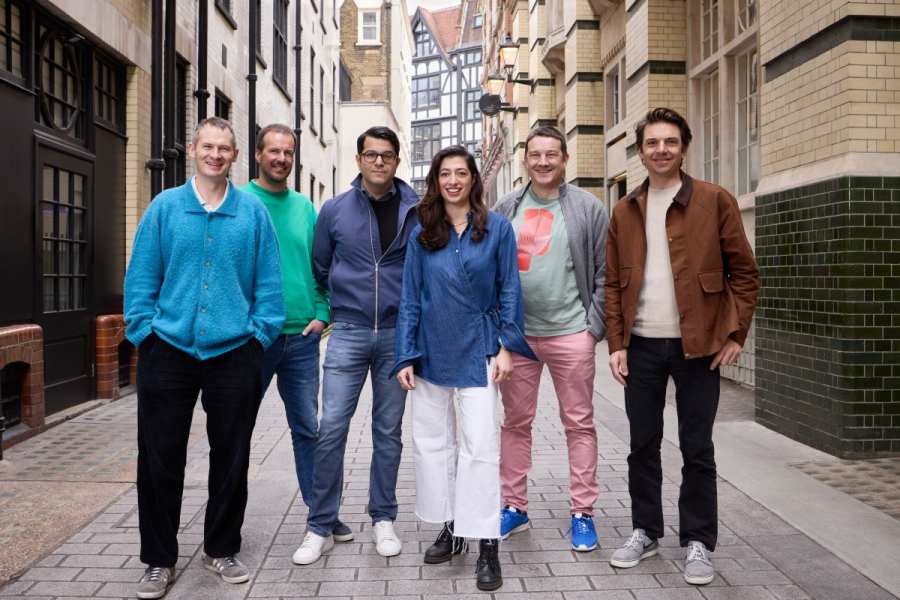
Its six partners include Wise co-founder Taavet Hinrikus, Teleport co-founder Sten Tamkivi, Songkick co-founder Ian Hogarth, former Bigpoint CEO Khaled Helioui, HelixNano co-founder Carina Namih, and former Uber executive Pierre-Dimitri Gore-Coty.
The firm’s investment approach centers on backing founders tackling difficult technical problems, particularly in industries where research, manufacturing, and infrastructure can take years to develop before generating meaningful revenue.
Why Plural Is Betting Big on Europe’s Deep Tech Future
Plural’s investment priorities offer a window into where some European venture investors see the continent’s biggest opportunities.
Artificial intelligence is a major focus, but the firm is looking beyond consumer AI applications and chatbots. Hinrikus told Reuters that Plural is interested in semiconductor manufacturing, chip fabrication facilities, robotics, and defense technologies.
These are industries where Europe faces serious competition from the United States and China, both of which have invested heavily in advanced manufacturing, computing infrastructure, and strategic technologies.
Plural already has exposure to several companies working in these fields.
Its portfolio includes Helsing, the European defense technology company developing AI-based military systems; Proxima Fusion, which is pursuing commercial fusion energy; The Exploration Company, which is developing spacecraft technology; and OLIX, an AI semiconductor startup.
The investments reflect a broader question confronting Europe’s technology sector: Can the continent build globally competitive companies in industries that demand billions in long-term capital, rather than relying on technologies developed elsewhere?
That challenge is particularly difficult for deep tech startups. Building a software product may require a small engineering team and modest seed funding. Developing a fusion reactor, advanced semiconductor, or spacecraft can require specialized facilities, regulatory approvals, and years of expensive research.
Plural’s larger capital base gives it more flexibility to support such ventures, though the financial and technical risks remain considerable.
The firm is keeping its investment mandate broad rather than betting its future on a single technology category.
“We do not pretend to know in which area the next great company will be built,” Hinrikus said in an interview with Reuters.
“That’s partly the magic of the job. We will meet an entrepreneur who’s deep in some field and wants to build a world-leading company,” Hinrikus added.
For Europe’s startup ecosystem, Plural’s $1.1 billion raise is another sign that investors are willing to commit substantial capital to homegrown technology businesses.
The bigger test comes next: whether that funding can help turn promising European startups into companies that can compete globally, particularly in industries where Europe has spent decades playing catch-up.