Startup Funding News Today, November 13, 2026: Mirendil, LangChain, Luminal, Kindo, Q-CTRL & More
 Nickie Louise
Posted On November 13, 2026
An AI research startup raised $1 billion, an agent-development platform secured $300 million, and an Australian quantum software company closed $290 million. The latest venture funding announcements point to a market willing to finance expensive scientific and computing problems, but also increasingly interested in the software that makes advanced technology dependable enough for customers to use.
San Francisco-based Mirendil led the reporting period with a $1 billion Series A backed by Kleiner Perkins and Clearlake Capital. LangChain followed with a reported $300 million investment led by Alphabet’s CapitalG at a $3 billion valuation. Q-CTRL raised $290 million led by Salesforce Ventures, crossing the $1 billion valuation threshold as it expands quantum-control software and navigation systems designed to function without GPS.
The remaining selected announcements range from Databento’s $100 million Series C for financial data infrastructure to Mount Thor’s $45 million across previously undisclosed seed and Series A financings for cloud-hosted Apple silicon. China’s Phrontline Biopharma disclosed a nearly $40 million Series A, while France’s Orakl Oncology raised $34 million to combine patient-derived tumor samples with AI-assisted drug research. Enterprise AI security startup Kindo, inference startup Luminal, and British banking infrastructure provider Griffin round out the selection.
The nine exact dollar amounts total $1.844 billion, plus Phrontline’s nearly $40 million. That brings the selected financing to about $1.88 billion. The three largest rounds represent $1.59 billion, or roughly 84% of the approximate total. This concentration of investment in a few companies is not evidence that startups can generally raise at comparable valuations or round sizes.
The Macro Environment: The Cost of Making Advanced AI Useful Is Becoming an Investment Category
The defining feature of this reporting period is the distinction between building more capable technology and making that technology practical to operate. Mirendil is pursuing AI agents that assist with the research process itself. LangChain sells tools to develop, test, and supervise agents in production. Kindo focuses on governance, while Luminal is working to make inference run efficiently across different computing hardware. These businesses compete at different points in the AI supply chain, yet all address the expense or uncertainty of deploying AI at scale.
The largest transactions also reveal how concentrated investor conviction has become. Mirendil, LangChain, and Q-CTRL account for about 84% of the selected financing in this report. Those deals should not be used to infer a broad recovery in fundraising conditions for ordinary seed-stage software companies. They reflect investors’ views of specific opportunities, investor access, and—in Mirendil’s case—ambitious claims not independently established.
AI infrastructure is no longer confined to GPUs and large data centers. Databento is investing in financial information delivered through software interfaces; Mount Thor is creating rentable Mac environments for AI agents and developers; and Q-CTRL is applying software to quantum computers and navigation hardware. In each case, the commercial question is whether the system performs a task more reliably, quickly, or economically than existing alternatives.
The financing also suggests demand for specialized biological research and regulated financial infrastructure. Orakl and Phrontline need to convert scientific work into evidence that pharmaceutical partners and regulators will accept. Griffin is expanding a licensed banking platform into cards and stablecoin-related services, where regulatory permissions and operational controls could be harder to replicate than software features alone.
For investors, capital efficiency differences are substantial. Databento says it has doubled revenue while remaining profitable; Mirendil is financing frontier AI research; Mount Thor must procure and maintain physical computing hardware; and biotechnology companies must finance successive laboratory and clinical milestones. The relevant comparison is not simply valuation per funding round, but how much money each company needs to prove its next commercially meaningful claim.
Mirendil raises $1B in funding to develop AI agents for frontier research
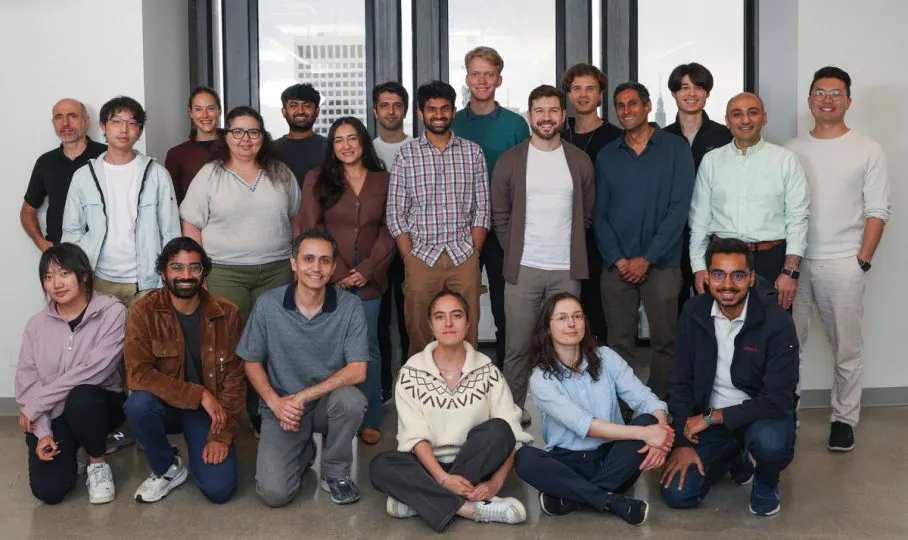
Mirendil announced a $1 billion Series A funding co-led by Kleiner Perkins and Clearlake Capital. Battery Ventures, Doerr Capital, Gil & Co, Google, M13, Pear VC, and S32 were among the participants. The company did not disclose its valuation. Earlier reports of fundraising talks at a potential $5 billion valuation should not be mistaken for confirmed final terms.
Founded by researchers with experience at major AI labs, the San Francisco company is developing tools that let individual scientists and small engineering teams conduct research with multiple AI agents. Its private-beta product, Lor, coordinates agents that write code, run experiments, and work across lengthy research sessions. Mirendil says one researcher working with agents trained its Mirendil-Base coding model in three and a half months using less than $10 million of compute, before developing longer-context models. Those are company-reported experiments, not an independently replicated demonstration of a lower-cost frontier-model development method.
The investment proposition is clear: if research agents can automate meaningful portions of experimental work, the effective output of a research team could increase without hiring at the same pace. The harder question is whether the result generalizes beyond a carefully selected internal project. Investors will eventually need evidence of reproducibility, model quality, customer demand, and the full cost of agent orchestration—not just the compute bill of one training run.
Funding Details
Startup: Mirendil
Investors: Kleiner Perkins, Clearlake Capital, Battery Ventures, Doerr Capital, Gil & Co, Google, M13, Pear VC, S32, and others
Amount Raised: $1 billion
Total Raised: Approximately $1.2 billion reported, including an earlier $200 million seed round
Funding Stage: Series A
Funding Date: November 12, 2026
Headquarters: San Francisco, California, United States
Sector: Frontier AI research / AI agents/developer infrastructure
Valuation: Not disclosed
LangChain raises $300M in funding to expand the infrastructure for AI agents
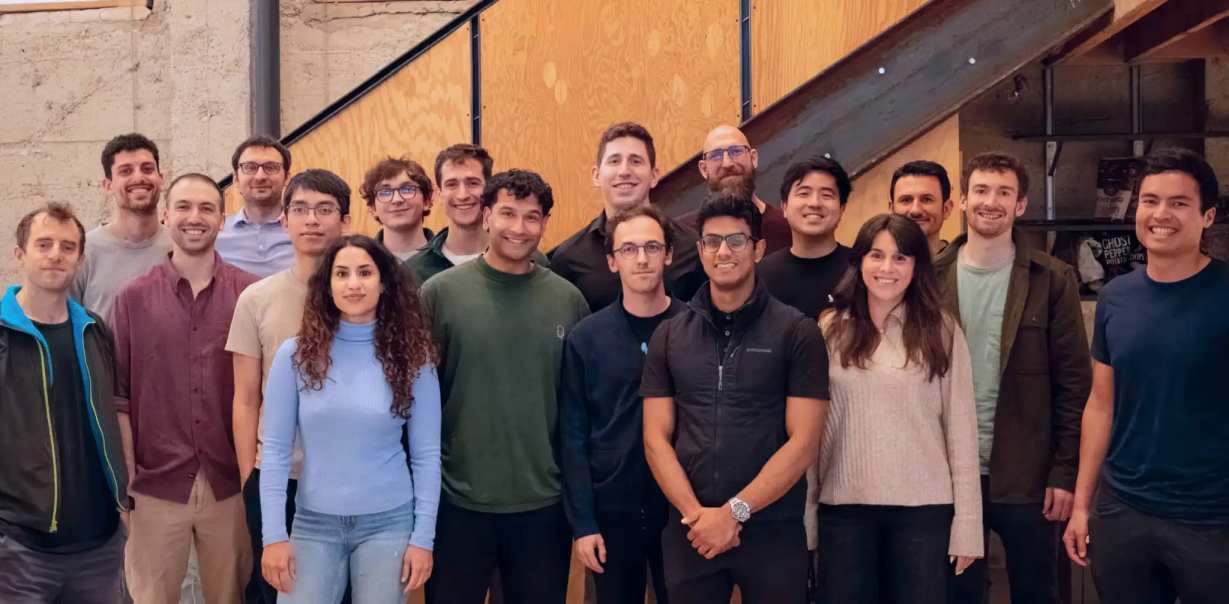
LangChain raised $300 million at a reported $3 billion valuation. CapitalG led the investment, joined by existing backers IVP and Sapphire Ventures and new investors GIC and DFJ Growth. Funding trackers classify the transaction as a Series C; the original report did not specify a stage, so treat that classification as reported rather than company-confirmed.
Founded in 2022, LangChain provides tools for developers building applications around language models. Its commercial focus increasingly includes LangSmith, a platform for testing, tracing, evaluating, monitoring, and deploying AI agents. Those capabilities matter because agents can run through several steps, access business systems, and produce outcomes that are hard to evaluate from a single response.
LangChain competes with tooling offered by model providers, cloud platforms, and other developer-infrastructure startups. Its potential advantage is model independence and an established developer community. But developer adoption does not necessarily convert into durable enterprise revenue; the company must show that customers are willing to pay for reliable production monitoring and governance. The reported $3 billion valuation is more than twice its $1.25 billion valuation from October 2025.
Funding Details
Startup: LangChain
Investors: CapitalG, IVP, Sapphire Ventures, GIC, DFJ Growth
Amount Raised: $300 million
Total Raised: Approximately $460 million reported; not independently reconciled with the company
Funding Stage: Reported Series C; not confirmed in the original reporting
Funding Date: November 12, 2026
Headquarters: San Francisco, California, United States
Sector: AI developer tools/agent evaluation/enterprise software
Valuation: $3 billion, reported
Q-CTRL raises $290M in funding to improve quantum systems and GPS-independent navigation
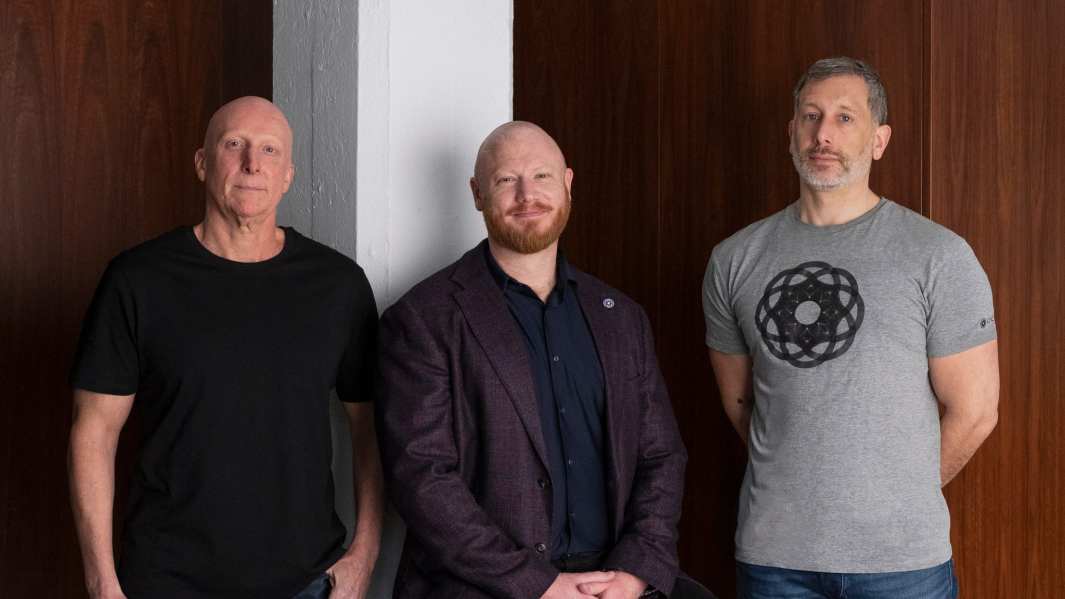
Sydney-based Q-CTRL raised US$290 million (A$415 million) in Series C financing led by Salesforce Ventures. Bullhound Capital and Affinity Partners were major participants. Other investors included AMD Ventures, EDGE Group, Australia’s National Reconstruction Fund Corporation, SPARX Asset Management, In-Q-Tel, and Lockheed Martin Ventures. The company says the financing takes its valuation above US$1 billion, but it did not disclose an exact figure.
Q-CTRL builds software for controlling quantum computing and sensing devices. Quantum systems are vulnerable to environmental noise and imperfect control, making useful performance difficult outside carefully managed research settings. Its Ironstone Opal navigation product uses quantum sensing to provide positioning information when satellite signals are unavailable or disrupted. The company reports work involving commercial aircraft and autonomous platforms.
For investors, the commercial interest extends beyond the distant promise of a large-scale quantum computer. Navigation in GPS-denied conditions is a more immediate use case in aviation and defense. Still, claims about quantum advantage, resilience to interference, and performance relative to competing systems need to be evaluated against independently documented field results. Commercial revenue figures were not disclosed with this round.
Funding Details
Startup: Q-CTRL
Investors: Salesforce Ventures, Bullhound Capital, Affinity Partners, AMD Ventures, EDGE Group, National Reconstruction Fund Corporation, Lockheed Martin Ventures, In-Q-Tel, and others
Amount Raised: US$290 million (A$415 million)
Total Raised: Not disclosed on a fully reconciled lifetime basis
Funding Stage: Series C
Funding Date: November 12, 2026
Headquarters: Sydney, Australia
Sector: Quantum infrastructure software / quantum sensing/navigation
Valuation: Above US$1 billion; exact figure not disclosed
Databento raises $100M in funding to expand financial-market data infrastructure
Databento announced a $100 million Series C at a $1.1 billion valuation, led by Fifth Down Capital. Investors included NEA, DRW Venture Capital, Tribe Capital, Redpoint Ventures, Hedosophia, and strategic newcomer Fitch Ventures. The Salt Lake City-based company previously announced a separate $97 million Series B; that earlier financing is not included in today’s total.
Databento distributes historical and real-time market information through standardized APIs, serving quantitative traders, brokerages, asset managers, and other institutions. The company says it has signed enterprise agreements with five of the six leading frontier AI labs, illustrating the growing use of financial data in AI research and applications. It reported 39 employees when the Series C closed, more than doubled revenue since its previous round, and says it remains profitable. Absolute revenue was not disclosed.
The significance is as much about operating efficiency as AI demand. Market-data providers can face substantial infrastructure and licensing costs, and larger incumbents benefit from established exchange relationships. Databento must sustain reliability and data coverage while expanding asset classes. If its customer and revenue claims hold up, the investment offers a counterexample to the idea that every high-value infrastructure business needs a very large workforce or persistent operating losses.
Funding Details
Startup: Databento
Investors: Fifth Down Capital, Fitch Ventures, NEA, DRW Venture Capital, Tribe Capital, Redpoint Ventures, Hedosophia, and others
Amount Raised: $100 million
Total Raised: Not disclosed on a fully reconciled basis
Funding Stage: Series C
Funding Date: November 12, 2026
Headquarters: Salt Lake City, Utah, United States
Sector: Financial data infrastructure / APIs / enterprise software
Valuation: $1.1 billion
Mount Thor discloses $45M in funding across seed and Series A funding for Apple-silicon cloud computing
Mount Thor announced $45 million in equity financing across seed and Series A rounds on November 12. CRV and Conviction co-led the Series A; Chad Byers and Offline Ventures co-led the seed. Other participants included CSC Leasing, Enea Capital, Long Journey Ventures, and Upper90. The company also raised separate non-dilutive hardware financing, the amount of which was not disclosed and is excluded from this report’s total.
The San Francisco company rents managed Apple-silicon computing instances to developers and AI researchers. Some computer-use agents need to interact with macOS applications, while teams testing Apple software require scalable access to real Mac environments. Mount Thor’s platform offers fleets of macOS machines for research, isolated testing environments, and potentially model inference.
Its bet is that the demand for computer access will eventually scale with the number of agents performing tasks, not just the number of human developers. That is commercially interesting, but established Mac hosting providers and cloud services already exist. Mount Thor will need to prove utilization, unit economics, secure isolation, and the cost of continually refreshing physical hardware. Because the $45 million combines two funding stages, it must not be described as a new $45 million Series A.
Funding Details
Startup: Mount Thor
Investors: CRV, Conviction, Chad Byers, Offline Ventures, CSC Leasing, Enea Capital, Long Journey Ventures, Upper90, and strategic angels
Amount Raised: $45 million in combined equity disclosures; separate hardware financing excluded
Total Raised: $45 million in publicly disclosed equity funding
Funding Stage: Seed and Series A, first disclosed together
Funding Date: November 12, 2026, first public disclosure
Headquarters: San Francisco, California, United States
Sector: AI computing infrastructure / Apple-silicon cloud services
Valuation: Not disclosed
Phrontline Biopharma raises nearly $40M in funding to advance next-generation cancer drugs
Phrontline Biopharma announced a nearly $40 million Series A, according to original Chinese biotechnology reporting released within the Eastern-time window. Yuanhe Origin and Decheng Capital jointly led the round; Longpan Investment, Jifeng Capital, Med-Fine Capital, Songqing Capital, and C&D Emerging Industry Investment also participated. The amount was disclosed as nearly $40 million, not exactly $40 million.
The China-based company is developing antibody-drug conjugates, or ADCs, that combine targeting antibodies with cancer-fighting chemical payloads. Its approach includes bispecific antibodies designed to recognize two targets and dual-payload systems intended to address different tumor characteristics or resistance mechanisms. Its lead program, TJ101, targets EGFR and B7-H3 and is in early clinical development; the company also has a second program, TJ102, in clinical development.
The financing reflects sustained interest in oncology platforms that can offer meaningful differences from existing antibody-drug conjugates. But technical novelty and early clinical observations do not establish improved patient outcomes. Phrontline must show safety and benefit in controlled studies, and demonstrate that complex manufacturing and licensing relationships can support a viable business. The new round follows a separately announced $60 million Pre-A+ financing in 2025, which is not counted again.
Funding Details
Startup: Phrontline Biopharma
Investors: Yuanhe Origin, Decheng Capital, Longpan Investment, Jifeng Capital, Med-Fine Capital, Songqing Capital, C&D Emerging Industry Investment
Amount Raised: Nearly $40 million; exact amount not disclosed
Total Raised: Not fully reconciled; nearly $100 million across the latest two disclosed rounds
Funding Stage: Series A
Funding Date: November 12, 2026, U.S. Eastern time (November 13 in China)
Headquarters: Hangzhou, China, according to original Chinese reporting; the company has additional operations in Shanghai and Suzhou
Sector: Biotechnology / antibody-drug conjugates/oncology
Valuation: Not disclosed
Orakl Oncology raises $34M in funding to test cancer-drug hypotheses using patient-derived models
French biotechnology startup Orakl Oncology raised $34 million (€30 million) in Series A financing, co-led by Norrsken VC and Singular. Other investors included InfraVia, Serena, the Bpifrance-managed Patient Autonome Fund, teampact.ventures, Plug and Play, and existing backers. The financing brings reported lifetime funding to approximately $50 million.
Orakl was founded as a spin-off from the French cancer institute Gustave Roussy. It combines laboratory-grown tumor samples derived from patients with clinical and molecular information to estimate how potential treatments might perform. Its technology aims to help pharmaceutical developers select drug candidates, patient groups, and trial designs before investing heavily in human studies.
The model illustrates an important division of labor: AI can help analyze complex biological information, but its value depends on reliable physical experiments and representative patient samples. Orakl reports strong predictive accuracy in its own studies, but those findings should not be interpreted as clinically established outcomes for individual patients. Commercial validation will require studies across more cancer types and evidence that predictions improve trial decisions.
Funding Details
Startup: Orakl Oncology
Investors: Norrsken VC, Singular, InfraVia, Serena, Patient Autonome Fund (Bpifrance), teampact.ventures, Plug and Play, Verve Ventures, Speedinvest, HCVC, and others
Amount Raised: $34 million (approximately €30 million)
Total Raised: Approximately $50 million
Funding Stage: Series A
Funding Date: November 12, 2026
Headquarters: Paris area, France
Sector: Biotechnology / predictive oncology / AI-assisted drug discovery
Valuation: Not disclosed
Kindo raises $30M in funding to govern enterprise AI agents and their spending
Los Angeles-area startup Kindo announced a $30 million financing co-led by Crosspoint Capital and Forgepoint Capital, bringing its reported lifetime total to $57.6 million. The company disclosed the transaction on November 12 without assigning a conventional stage label to the new financing.
Kindo provides a central management layer that lets enterprises discover AI agents, control access to data and business tools, track usage, and apply security policies. That work becomes more demanding when different teams deploy agents through multiple models, applications, and cloud services. Kindo is also developing specialized cybersecurity capabilities through its Deep Hat products.
The company reports approximately 800% year-over-year revenue growth in 2026, although it did not disclose the starting revenue base. Investors are betting that enterprise AI will need an independent control layer, but large cloud platforms and established cybersecurity companies are pursuing many of the same problems. Kindo’s commercial advantage will depend on enforceable controls, cross-system compatibility, and the quality of evidence it provides to security and compliance teams.
Funding Details
Startup: Kindo
Investors: Crosspoint Capital, Forgepoint Capital; existing backing includes Drive Capital and Riot Ventures
Amount Raised: $30 million
Total Raised: $57.6 million
Funding Stage: Not disclosed for the latest expansion
Funding Date: November 12, 2026
Headquarters: Venice Beach, California, United States
Sector: Enterprise AI / AI agent governance/cybersecurity
Valuation: Not disclosed
Luminal raises $25M in funding to lower AI inference costs across computing hardware
Luminal raised a reported $25 million Series A led by Standard Capital, according to Axios and other funding coverage published November 12. Existing supporters include Y Combinator, Felicis, Saga Ventures, and Liquid 2 Ventures. A competing report put the round at $23 million; this edition uses Axios’s $25 million figure and flags the discrepancy because the company did not publish a readily verifiable primary announcement resolving it.
The San Francisco company is developing a compiler and inference service intended to optimize how AI models run on different chips. Most developers want dependable performance without rebuilding their applications for every accelerator architecture. Luminal’s search-based approach attempts to find efficient ways to execute models on available hardware, including alternatives to Nvidia GPUs.
The opportunity is commercially significant because inference costs recur whenever customers use deployed AI products. Yet claims of lower costs must be tested across workload sizes, hardware types, latency requirements, and system reliability. Luminal must also compete with optimizations developed by chip manufacturers, cloud platforms, and other inference providers.
Funding Details
Startup: Luminal
Investors: Standard Capital; Y Combinator, Felicis, Saga Ventures, and Liquid 2 Ventures reported as existing backers
Amount Raised: $25 million reported by Axios; another outlet reported $23 million
Total Raised: Approximately $30.3 million if the $25 million figure is used, including a previously reported $5.3 million seed
Funding Stage: Series A
Funding Date: November 12, 2026
Headquarters: San Francisco, California, United States
Sector: AI inference/compilers/computing infrastructure
Valuation: Not disclosed
Griffin raises $20M in funding to add card and stablecoin services to its licensed banking platform
London-based Griffin raised $20 million in Series B financing led by Octagon Partners, with participation from Notion Capital, A+ Ventures, Nordic Ninja, Breega, and other existing investors. The company says the new investment values it at more than $100 million.
Griffin operates a regulated UK bank that provides accounts, payments, and other financial infrastructure through APIs to fintech companies and software platforms. It reports serving more than 80 business customers. The latest capital will support planned branded payment cards and services for companies working with stablecoins, including reserves and cross-border transfers.
Unlike a conventional fintech software vendor, Griffin operates under banking regulation and must maintain appropriate risk, compliance, and operational controls. That could give it an advantage over businesses relying entirely on banking partners, but it also brings compliance costs and balance-sheet responsibilities. Its planned stablecoin services remain an expansion strategy, not a guarantee of adoption or regulatory approval in additional markets.
Funding Details
Startup: Griffin
Investors: Octagon Partners, Notion Capital, A+ Ventures, Nordic Ninja, Breega, and existing investors
Amount Raised: $20 million (approximately £15 million)
Total Raised: Approximately £73 million reported by The Times
Funding Stage: Series B
Funding Date: November 12, 2026
Headquarters: London, United Kingdom
Sector: Fintech/banking infrastructure / embedded payments
Valuation: Above $100 million; exact amount not disclosed
What Today’s Funding Activity Reveals
The biggest checks are going to infrastructure and research, not just applications. Mirendil, LangChain, and Q-CTRL collectively represent $1.59 billion of the selected financing. But these are three different theses: automating AI research, supervising deployed agents, and stabilizing quantum hardware. Grouping all three under an undifferentiated AI label would hide their distinct economics and technological risks.
Reliability is emerging as a product category. LangChain and Kindo focus on agents that must be evaluated, controlled, and audited. Q-CTRL addresses noise and error in quantum devices. Databento sells dependable financial information through standardized interfaces. Customers are paying for predictable performance, not merely novel algorithms.
Alternative computing approaches continue to attract capital. Mount Thor is expanding cloud capacity based on Apple hardware, while Luminal is developing software that can improve inference across different processors. Neither eliminates the advantages of Nvidia’s ecosystem; both are attempts to reduce cost, increase flexibility, or support workloads that established GPU services do not serve well.
Biotech investment remains tied to expensive validation. Phrontline is developing new drug constructs, and Orakl is seeking better methods for predicting treatment response. Their technologies could complement one another within the drug-development process, but their milestones differ. Clinical safety and efficacy drive Phrontline’s value; predictive performance and pharmaceutical adoption determine Orakl’s.
Geography should not be read as a trend from one day. Six selected companies are headquartered in the United States, with one each in Australia, China, France, and the United Kingdom. Their distribution reflects eligible announcements during this window, not a permanent change in global venture leadership.
Financial disclosures still require discipline. Mount Thor disclosed two equity rounds together. Phrontline reported an approximate amount. Luminal’s reported $25 million differs from a $23 million figure in another publication. These differences matter when readers compare companies or calculate aggregate investment.
Venture Funding Table
| Startup | Amount Raised | Sector | Funding Stage | Lead/Key Investors | Country |
|---|---|---|---|---|---|
| Mirendil | $1B | Frontier AI research | Series A | Kleiner Perkins; Clearlake Capital | United States |
| LangChain | $300M | AI developer/agent infrastructure | Reported Series C | CapitalG; IVP; Sapphire Ventures | United States |
| Q-CTRL | US$290M | Quantum software/sensing | Series C | Salesforce Ventures; Bullhound Capital; Affinity Partners | Australia |
| Databento | $100M | Financial data infrastructure | Series C | Fifth Down Capital; Fitch Ventures; NEA | United States |
| Mount Thor | $45M across two rounds | Apple-silicon cloud computing | Seed + Series A | CRV; Conviction; Chad Byers; Offline Ventures | United States |
| Phrontline Biopharma | Nearly $40M | Oncology / antibody-drug conjugates | Series A | Yuanhe Origin; Decheng Capital | China |
| Orakl Oncology | $34M (about €30M) | Predictive oncology/biotech | Series A | Norrsken VC; Singular | France |
| Kindo | $30M | Enterprise agent governance | Not disclosed | Crosspoint Capital; Forgepoint Capital | United States |
| Luminal | $25M reported; $23M alternative | AI inference/compiler software | Series A | Standard Capital | United States |
| Griffin | $20M | Licensed banking/fintech infrastructure | Series B | Octagon Partners; Notion Capital | United Kingdom |
Funding note: The nine exact amounts as reported here total $1.844 billion, plus Phrontline’s nearly $40 million. This approximately $1.88 billion figure counts Mount Thor’s newly disclosed combined seed and Series A financing once and excludes its separate undisclosed non-dilutive hardware financing. The aggregate is approximate and reflects a material unresolved $2 million difference between reports about Luminal.
Strategic Takeaways for Founders and Investors
1. Sell a measurable improvement rather than an AI label. LangChain needs to prove that agent supervision reduces deployment risk; Luminal must demonstrate lower inference cost or better performance. The relevant commercial metrics are different, but both must translate technology into an outcome customers can audit.
2. Distribution can be as defensible as technology. LangChain has a broad developer following; Griffin has a banking license and established fintech customers; Databento has institutional integrations. Each advantage takes time to replicate, even if competitors can copy software features.
3. Research automation needs independent benchmarks. Mirendil’s internal experiment is interesting, but founders and investors should ask whether the claimed productivity gains are repeatable across model types, research teams, and full operating costs.
4. Platform independence is valuable only when switching costs fall. Luminal is targeting heterogeneous computing and LangChain is positioning itself across model providers. The strongest evidence will come from customers who can change vendors without major application rewrites or a loss of performance.
5. Commercial adoption of frontier technology may arrive through narrow uses. Q-CTRL’s GPS-independent navigation has a more immediate customer proposition than an abstract promise of quantum computing. Specialized, verifiable uses can create early revenue while longer-term research continues.
6. Physical infrastructure changes the capital equation. Mount Thor must buy and maintain computing hardware. Investors should track capacity utilization, financing costs, chip refresh cycles, security, and gross margins—not simply the number of machines deployed.
7. Bioinformatics still depends on physical evidence. Orakl’s predictive models are built on patient-derived biological experiments. Phrontline’s drug programs require clinical testing. Founders combining AI with biotechnology need credible validation at every stage.
8. Governance can become an enterprise purchasing requirement. Kindo and LangChain show how agents moving from prototypes to production create demand for permissions, monitoring, and accountability. Those controls may influence deals as much as underlying model capabilities.
9. Cost structure matters more than headline valuation. Databento reports profitability and a small team relative to its valuation. Mirendil is financing substantial AI research. Both can attract capital, but they should not be evaluated against identical cash-efficiency expectations.
10. Evaluate financing structure before calculating industry totals. Mount Thor disclosed two equity stages together; Phrontline used an approximate amount; Luminal has conflicting reported amounts. A precise-looking total can still rest on imperfect inputs.
Conclusion
The November 13 funding report is dominated by three very large investments: Mirendil’s $1 billion Series A, LangChain’s $300 million financing, and Q-CTRL’s $290 million Series C. Together, they signal strong investor interest in research productivity, dependable AI-agent infrastructure, and software that makes difficult quantum technology useful.
The smaller rounds add an important qualification. Databento, Mount Thor, Kindo, Luminal, Griffin, Phrontline, and Orakl are tackling problems where customers care about cost, reliability, security, regulation, or scientific validation. Their opportunities are not interchangeable, and neither are their risks.
The funding signal is less about financing AI indiscriminately and more about backing companies that can make complex systems work reliably in the real world. For founders and investors, the key evidence will be operating economics, repeatable performance, clinical results, and customers willing to keep paying—not the size of the latest check.