Daylight raises $80M in Goldman Sachs-led funding to fight cyber threats with AI agents
 Daniel Levi
Posted On November 11, 2026
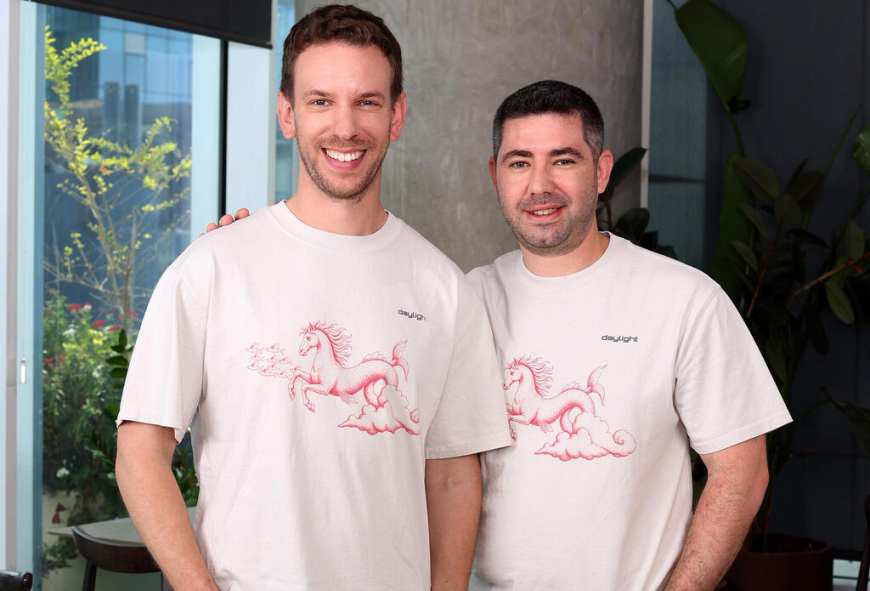
AI cybersecurity startup Daylight has raised $80 million in Series B funding led by Goldman Sachs Alternatives after reporting more than 40-fold revenue growth over the past year, reflecting growing corporate demand for AI agents that can detect and stop cyberattacks.
The New York-based company announced the funding on November 10, bringing its total capital raised to $120 million. The round attracted new investor Okta Ventures, alongside existing backers Bain Capital, Craft Ventures, Vintage Partners, and Maple Capital.
Daylight did not disclose its revenue figures, but its reported 40x growth suggests strong demand for its enterprise cybersecurity approach. The company counts Lovable, LastPass, Rogo, dLocal, and Miro among its customers. The Wall Street Journal reported that the latest investment values Daylight at approximately $400 million.
The funding comes as companies face a troubling cybersecurity problem: AI is making attacks harder to manage, yet the tools intended to help security teams are creating new challenges of their own.
A July 2026 survey from the cybersecurity professional association ISC2 found that 65% of cybersecurity professionals using AI spend more time deciding whether to trust its recommendations than they did a year earlier. Another 63% reported spending more time verifying AI-generated results.
For businesses already struggling with security staffing shortages and mounting threats, that creates an uncomfortable question: What happens when the technology meant to reduce workloads becomes another task to manage?
Daylight believes the answer lies in combining autonomous AI agents with experienced security engineers.
How Daylight is using AI agents to rethink cybersecurity
Founded by Hagai Shapira and Eldad Rudich, Daylight takes a different approach from traditional managed detection and response (MDR) providers.
Rather than relying primarily on human analysts or selling companies another standalone security tool, Daylight deploys AI agents that monitor systems, investigate suspicious activity, and respond to threats. Human security engineers oversee the agents, customize their operations, and handle decisions that require expert judgment.
The company says its technology can detect threats in seconds and contain incidents within minutes, delivering response times up to 10 times faster than traditional managed security providers. Those performance claims have not been independently verified.
At the center of its offering is Aura, an AI-native security platform that lets customers investigate threats using natural language, access centralized security data, and manage security operations through a single interface.
Companies can outsource security operations entirely, work alongside Daylight’s engineers, or use dedicated technical specialists within their existing teams.
Daylight is targeting another emerging problem: securing enterprise AI systems themselves. Its platform monitors risks such as prompt injection attacks, unsafe Model Context Protocol (MCP) connections, and unusual AI-driven behavior.
For Shapira, the shift is about changing how companies measure the effectiveness of their security operations.
“The future of security operations won’t be defined by how many people a company can deploy, but by how effectively AI agents can take on increasingly complex security work,” said Hagai Shapira, co-founder and CEO of Daylight.
The company’s founders bring experience from Israel’s military intelligence community and cybersecurity unicorn Torq. Shapira previously held a product leadership role at Torq, and Rudich was the company’s first employee and vice president of research and development.
Goldman Sachs sees an opportunity in bringing AI automation and human expertise together.
“Cybersecurity remains a top priority for enterprises of all sizes, and we see a significant opportunity for agentic technologies to transform how security outcomes are delivered,” said Irit Kahan, managing director and global head of cybersecurity investing within Growth Equity at Goldman Sachs Alternatives.
Daylight plans to use the new capital to strengthen its U.S. operations, expand into Europe, the Middle East, Africa, and Asia-Pacific, hire more security engineers, and continue developing its AI platform.
The larger question is whether AI agents can consistently deliver faster, more reliable security outcomes without introducing new risks.
For Daylight, the next challenge is turning its reported revenue surge into a sustainable business and proving that AI agents can do more than assist cybersecurity teams. They must earn the trust required to defend some of the world’s largest companies.