Anthropic unveils Claude Sheets, Whiteboards, and Data as AI-powered Microsoft Office alternatives ahead of IPO
 Daniel Levi
Posted On November 10, 2026
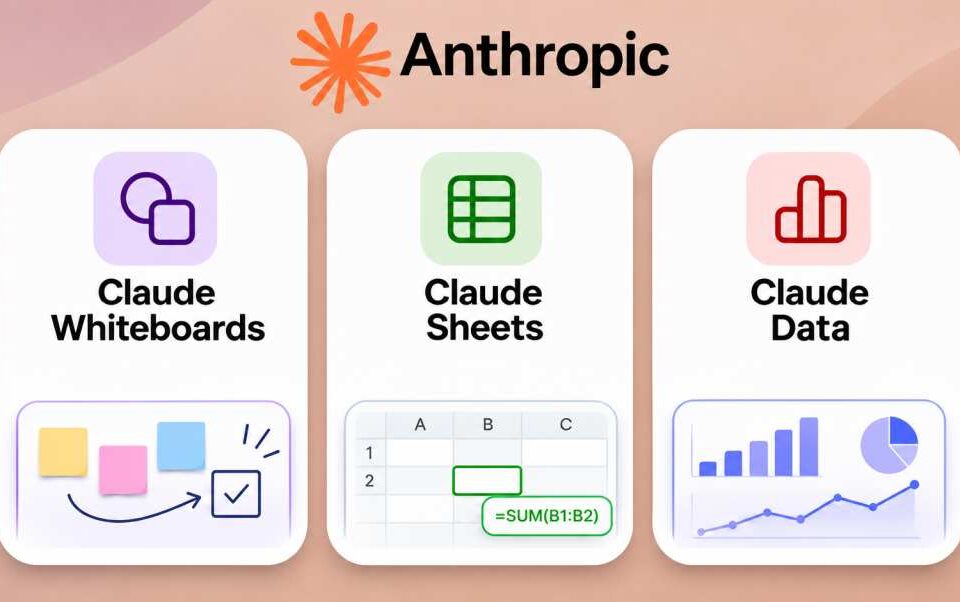
Anthropic is directly targeting Microsoft Office with three new AI-powered productivity tools that let users build spreadsheets, collaborate on whiteboards, and analyze business data without leaving Claude. The November 10 launch marks a major expansion beyond AI chat and coding, putting the San Francisco-based startup in closer competition with Microsoft, Google, and established workplace software providers ahead of its highly anticipated initial public offering.
The announcement introduces Claude Sheets and Claude Whiteboards in beta, alongside Claude Data, a business analytics tool previously known as Claude Dashboards, now generally available. All three products are available to paying Claude subscribers across web, desktop, and mobile devices.
“Today we’re launching Claude Whiteboards and Claude Sheets in beta, and Claude Dashboards(opens in new tab) becomes generally available as Claude Data. Whiteboards is a shared board where your team brainstorms with Claude, Sheets is a spreadsheet Claude builds and edits with you, and Claude Data adds data stories, certified queries, and live sharing,” Anthropic said in a statement.
The bigger story is Anthropic’s ambition to change how people work with AI. Rather than generating content that users must copy into separate applications, Claude can now help create, edit, and share work directly inside its platform.
For Microsoft, whose Office applications have dominated workplace productivity for decades, the move introduces another competitor pursuing a different approach to everyday business tasks.
Anthropic Takes Aim at Excel, Miro, and Business Analytics Tools
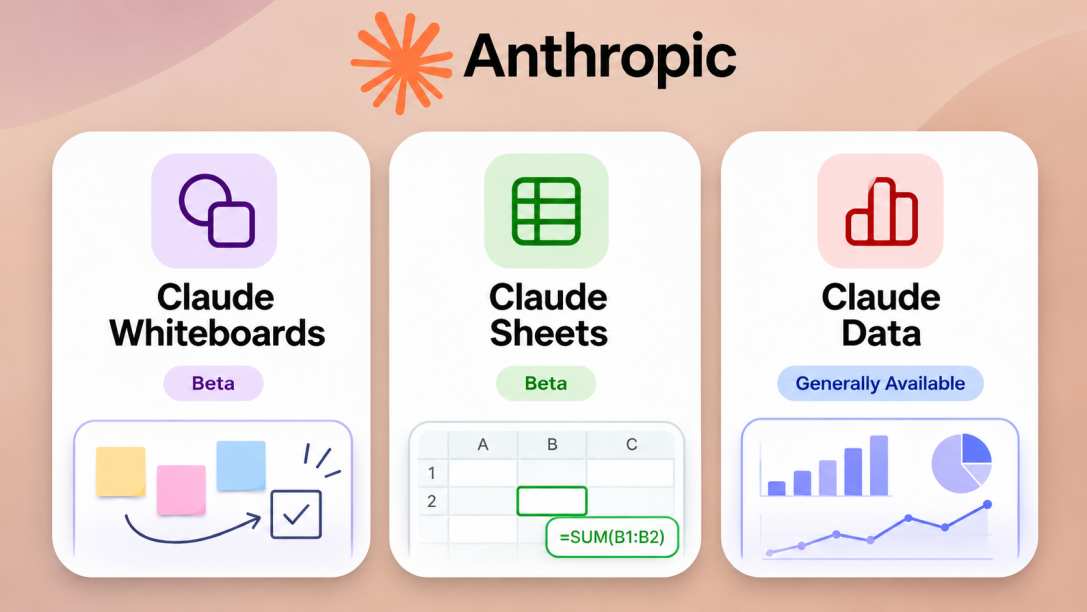
Claude Sheets, Whiteboards, and Data
Claude Sheets is perhaps the most direct challenge to Microsoft’s productivity business. Users can ask Claude to create spreadsheets with natural-language instructions, including formulas, multiple tabs, formatting, and dropdown menus.
For example, a marketing manager could request a campaign budget or hiring tracker without building the spreadsheet manually. Claude can edit individual cells and highlight changes, giving teams visibility into what the AI has modified.
The product remains limited compared with Microsoft Excel. Anthropic acknowledges that Claude Sheets currently supports basic spreadsheet functionality. Users needing more advanced features can export files to Excel or CSV, or continue working through Claude for Excel.
Claude Whiteboards takes a different approach, turning brainstorming sessions into collaborative visual workspaces. Teams can use conversational prompts to organize ideas, assign responsibilities, build timelines, and turn meeting discussions into actionable plans.
Users can select portions of a whiteboard and ask Claude to expand or revise specific ideas. Completed boards can become documents or presentations, with integrations supporting collaboration through Miro, Lucid, and Zoho’s Vani.
Claude Data targets another lucrative software category: business intelligence.
Originally launched as Claude Dashboards in October, the renamed product connects with corporate data sources, including Amazon Redshift, Google BigQuery, and ClickHouse, to create dashboards and reports.
Its new features include certified metrics, narrated data stories, live dashboard sharing, caching, and version tracking. Teams can share current business performance figures without granting every viewer direct access to underlying databases. Certified queries and live sharing remain in beta.
Anthropic is working with analytics providers including Amplitude, Mixpanel, Omni, PostHog, and Sigma.
Anthropic Expands Into Workplace Software Ahead of IPO
The launch arrives at a significant moment for Anthropic.
The company filed an amended IPO registration statement with the U.S. Securities and Exchange Commission on November 10, seeking to list its Class A shares on Nasdaq under the ticker symbol “ANT.”
The filing comes amid intense investor scrutiny of AI companies, their enormous computing costs, and their ability to turn growing adoption into sustainable businesses.
Anthropic’s latest products offer another potential avenue for attracting paying customers, particularly businesses seeking to consolidate their AI and productivity workflows.
The company is extending Claude’s reach through interactive connectors that allow users to open applications from Adobe, Atlassian, Box, and Notion directly inside Claude. Employees can interact with those applications themselves or ask Claude to assist with changes.
The tools are available across paid Claude plans, though enterprise administrators control which features employees can access.
The competitive implications extend beyond Microsoft Office. Google Workspace, Miro, Airtable, Smartsheet, and business intelligence platforms face growing pressure as AI assistants take on tasks previously handled through separate applications.
Still, replacing established workplace software is a much bigger challenge than generating a spreadsheet or dashboard. Businesses depend on advanced features, established workflows, security controls, and years of accumulated data.
Anthropic has yet to demonstrate that its new products can match those capabilities at scale.
For now, the company is making a calculated bet: If employees can brainstorm, analyze data, and build spreadsheets directly with Claude, they may have fewer reasons to leave the platform.
And with Anthropic preparing to enter the public markets, the stakes extend far beyond another AI product launch. Below is a YouTube video of Claude Sheets, Whiteboards, and Data in action.