Amazon’s Ring launches $250 flying home security drone and $1,000 AI robot that autonomously patrol homes and businesses
 Daniel Levi
Posted On November 10, 2026
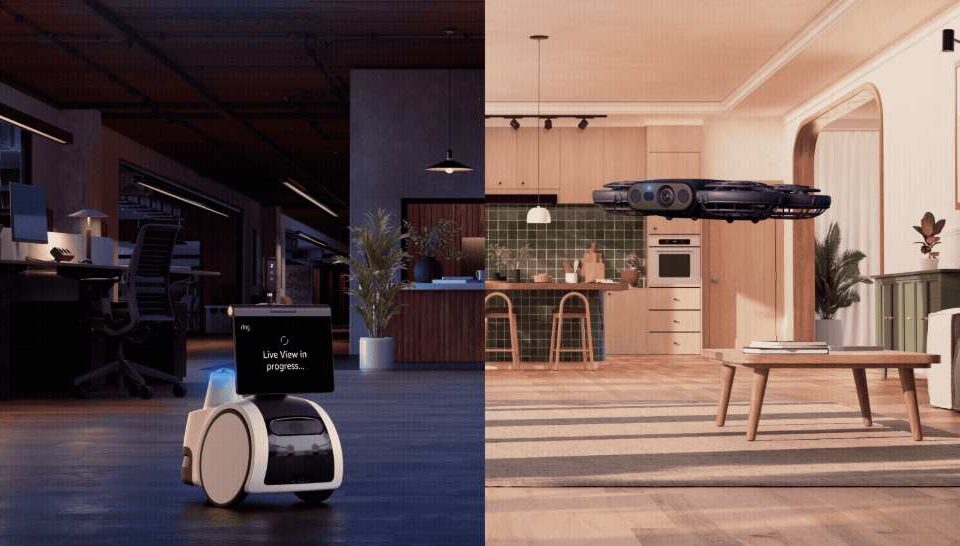
Amazon’s Ring is taking home security off the walls and putting it in motion. On Tuesday, the company unveiled a $250 flying security drone that autonomously patrols homes, investigates suspicious activity, and streams live video, alongside a $1,000 AI-powered robot that patrols businesses. The two devices mark Ring’s biggest push yet beyond traditional security cameras, turning home and business surveillance into something that can move, react, and investigate without someone controlling it every step of the way.
The new devices, called Ring Drone Cam and Ring Rover Cam, are part of Ring Robotics, a new product category built around autonomous security. Both use an artificial intelligence system called AI Pilot to map their surroundings, identify patrol points, and move around obstacles without manual guidance.
The announcement comes six years after Ring first introduced the idea of a flying home security camera in 2020. That earlier product, the Always Home Cam, never reached widespread commercial availability. Now, Amazon is returning with a redesigned drone and a second robot aimed at businesses.
“Ring Drone and Ring Rover are both powered by AI Pilot, a custom-built system that uses the devices’ cameras, specialized vision models, on-device sensors, and cloud processing to see, think, and navigate autonomously,” Amazon said in a statement.
The timing is significant. AI is moving beyond chatbots and software assistants into physical devices that can make decisions and perform tasks in the real world. Amazon is betting that security cameras that can move around a property will offer something stationary cameras cannot: the ability to investigate what happens outside their field of view.
Ring Drone Cam: A $250 flying camera that patrols your home
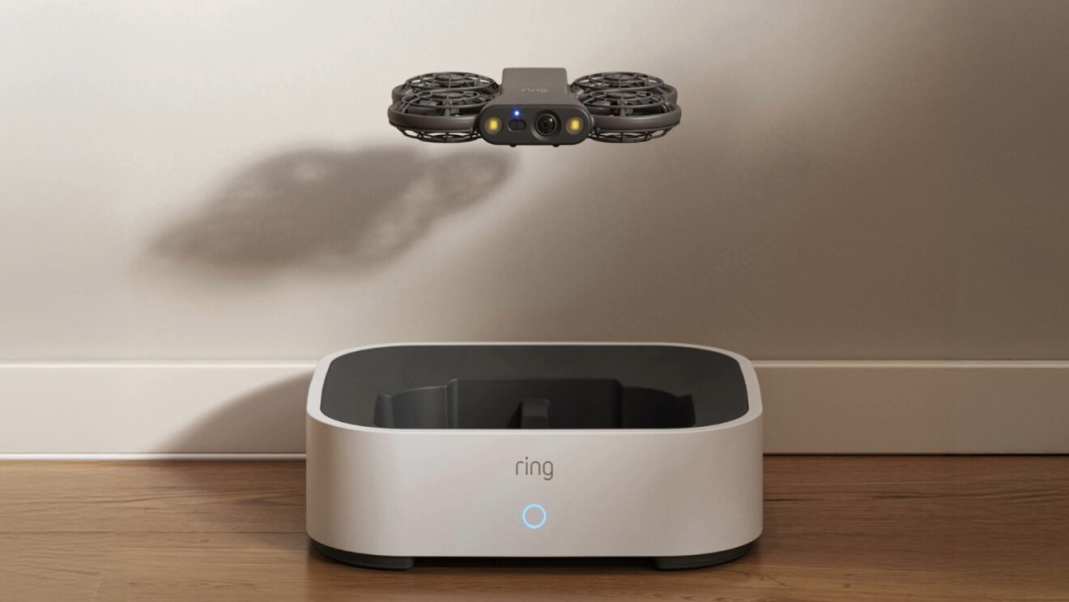
Ring Drone Cam: security takes flight (Image credit: Amazon)
The Ring Drone Cam looks like something out of a science fiction movie, but its purpose is straightforward. Instead of installing cameras throughout a house, homeowners can send a small flying camera to check rooms, inspect windows, or investigate an alert.
Priced at $249.99, the indoor drone follows customized flight routes that users can schedule or activate on demand. If a connected Ring camera, motion sensor, or alarm detects unusual activity, the drone can automatically fly to a designated location and stream footage through the Ring app.
It captures 2K video, offers a 148-degree field of view, and can rotate 360 degrees to inspect a room. Two built-in LED lights help it record in low-light conditions.
Its most interesting feature is AI Pilot, which combines cameras, specialized vision models, sensors, and cloud processing to navigate indoors.
During setup, users carry the drone through their home so the system can build a floor plan. AI Pilot then identifies rooms and suggests locations worth monitoring. Once configured, the drone can navigate around furniture and other obstacles while following its assigned routes.
The drone stays docked when idle, with its camera switched off until a flight begins.
“For years, customers told us they wanted eyes in the places a fixed camera couldn’t reach, and peace of mind in the spots they’d never want one,” said Jamie Siminoff, Ring’s founder and chief inventor.
The drone isn’t built to remain airborne continuously. According to hands-on reporting from The Verge, it flies roughly five to eight minutes per charge, making it better suited for short inspections than extended surveillance.
Ring expects to begin shipping the Drone Cam in the United States on January 27, 2027. The device still requires authorization from the Federal Communications Commission before it can be offered for sale.
Ring Rover Cam: A $1,000 autonomous security robot for businesses
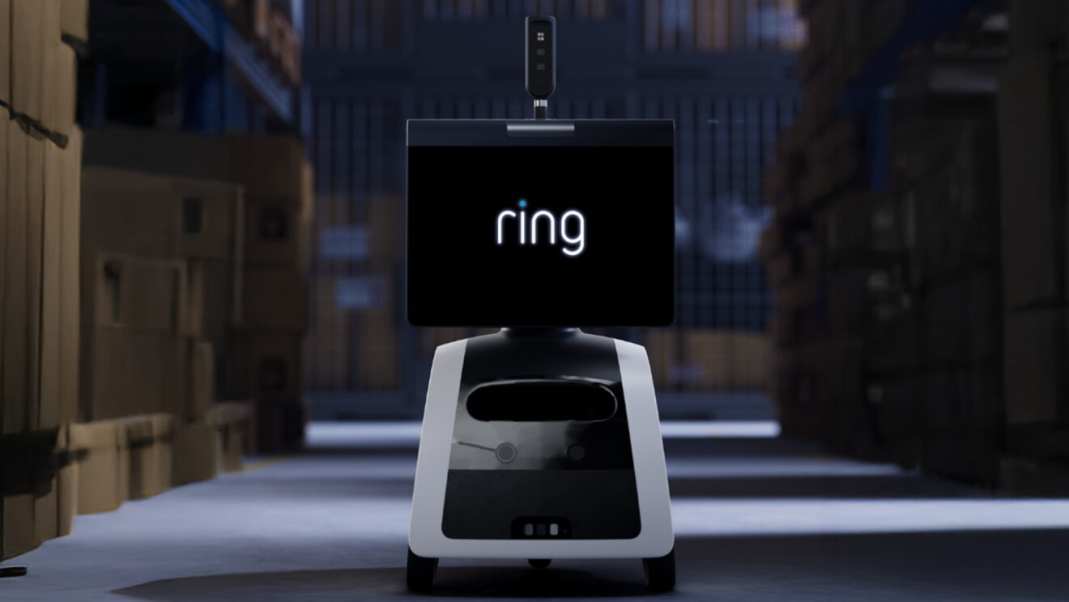
Ring Rover Cam (Image credit: Amazon)
Amazon’s second device takes a different approach. Instead of flying, the Ring Rover Cam moves across floors, making it suitable for businesses that need to monitor stores, offices, warehouses, and other indoor spaces.
Priced at $999.99, Rover can patrol predetermined routes, investigate disturbances, and stream video in up to 4K resolution.
The robot features an adjustable periscope-style camera that rises above counters and shelving, giving operators a better view of areas that traditional cameras might miss.
When Rover reaches a designated patrol point, it performs a 360-degree scan. It can respond automatically to alerts from other Ring devices, allowing businesses to investigate activity remotely.
The robot includes a built-in siren, a light tower, and two-way audio. Business owners can use the Ring app to communicate with someone near the robot or activate its deterrence features.
Rover can record video throughout its patrol rather than capturing footage only at designated stops. It can also detect people and begin recording when docked.
The device draws on lessons from Amazon Astro, the company’s earlier household robot. According to Ring, customer feedback showed that mobile security was one of Astro’s most appreciated features, prompting the company to develop a robot dedicated to that purpose.
Ring Rover Cam is scheduled to begin shipping in the United States on December 16, 2026, and is available for preorder.
The bigger question: Do homes need flying security cameras?
Ring’s announcement raises a broader question about where consumer robotics is heading.
For years, home security has largely depended on stationary cameras, motion detectors, and alarms. Ring’s latest devices introduce a different model: cameras that can travel to the source of an alert instead of waiting for something to happen within their view.
That could help homeowners check on empty properties or businesses monitor large indoor spaces.
There are trade-offs.
A flying camera inside a home raises legitimate privacy questions, particularly when footage involves family members, visitors, or employees. Cloud-dependent navigation introduces another concern: how much information about a property’s layout and activity passes through remote systems.
Ring says both devices will use its Throw Away the Key encryption system. The drone’s camera remains off when docked, and Rover includes a Sleep Mode that retracts its camera mast and disables its microphone. Both products include recording indicators.
The devices also have practical limitations. Battery life, internet connectivity, subscription costs, and navigation reliability could all influence whether customers see enough value to justify buying them. Certain scheduled patrol and recording features require a compatible Ring Protect subscription.
For Amazon, the launch represents another attempt to make autonomous robots useful outside research labs and industrial facilities.
The technology itself is no longer the only question. Consumers will want to know whether these devices work reliably, protect their privacy, and solve problems that existing cameras cannot.
At $250, Ring’s flying camera could attract curious homeowners. At $1,000, its business robot faces a different test: whether autonomous patrols can deliver enough practical value to earn a place alongside traditional security systems.
For now, Amazon has introduced the products and announced shipping targets. The real test begins when customers put them to work.