Startup Funding News Today, November 10, 2026: Blackletter, Coframe, Nominal, Project Omega, Sumary, Vessel & More
 Nickie Louise
Posted On November 10, 2026
A startup helping engineers test complex machines just raised $240 million at a $3 billion valuation, while another secured $80 million to turn spent nuclear fuel into valuable materials and long-lasting electricity. The latest venture funding announcements show investors backing a broad range of companies tackling difficult industrial problems, from aerospace engineering and nuclear technology to biotechnology, accounting automation, and autonomous delivery.
Austin-based Nominal led the day’s funding activity with a $240 million Series C backed by Lightspeed Venture Partners and Insight Partners. Rhode Island-based Project Omega followed with an $80 million Series A led by B Capital to advance nuclear fuel recycling and long-duration power systems. In Germany, SRTD Biotech secured €31.5 million to develop experimental RNA therapies designed to activate inside diseased cells while limiting activity in healthy tissue.
The investment activity extended into AI-powered business software. Denmark’s Sumary raised $25 million to automate accounting workflows, while San Francisco-based Coframe secured a separate $25 million Series A to help businesses continuously test and improve their websites. Israeli-American publishing startup Spines announced $29 million in new equity financing alongside a separate $35 million financing facility. Meanwhile, Britain’s PORT disclosed €14.5 million in mixed equity and debt financing to develop autonomous delivery technology using its existing urban logistics network.
Three additional rounds demonstrate investor interest in specialized operational problems. French software company triPica received €12.4 million to modernize billing systems for energy suppliers and telecom operators. New York-based Blackletter raised $6 million to combine licensed attorneys with proprietary AI software, while logistics startup Vessel secured $5 million to help businesses donate excess inventory instead of paying to destroy it.
The 10 selected announcements represent $410 million in disclosed dollar-denominated equity financing, plus €58.4 million in euro-denominated financing packages. The euro total includes PORT’s €14.5 million round, which combines equity and debt. Its precise equity component was not disclosed.
Nominal alone accounts for approximately 59% of the selected dollar-denominated equity capital. Together, Nominal and Project Omega account for roughly 78%.
Geographically, five selected companies are headquartered in the United States, four in Europe, and one has its principal origins in Israel with operations in New York. The distribution reflects the qualifying announcements identified during the reporting period, not a target for geographic representation.
The broader investment signal is that venture capital is supporting companies that can address expensive, specialized problems where proprietary data, engineering expertise, customer relationships, or operating infrastructure could create lasting competitive advantages.
The Macro Environment: Investors Are Financing Technology That Solves Expensive Problems
The most important development in today’s funding activity is the diversity of problems attracting venture capital. Nominal is helping engineers analyze complex hardware systems. Project Omega is developing technology to recover useful materials from spent nuclear fuel. SRTD Biotech is investigating whether RNA medicines can be activated selectively inside diseased cells. Each business requires specialized expertise that goes considerably beyond building a conventional software application.
Artificial intelligence remains an important investment theme, but investors are funding different ways to apply it. Nominal uses AI to investigate engineering data. Coframe applies machine learning to website experimentation. Sumary automates accounting preparation, while Blackletter incorporates AI into the delivery of legal services. These companies are not competing in a single AI market. Their commercial prospects depend on solving problems specific to engineering, marketing, accounting, and law.
The financing also illustrates how investors are evaluating defensibility. General-purpose AI capabilities are increasingly available through multiple providers. By contrast, integrating AI into specialized workflows requires access to relevant information, established customer systems, and reliable ways to evaluate results. Nominal’s engineering data infrastructure, Sumary’s accounting workflows, and Blackletter’s combination of software and licensed attorneys represent different attempts to establish advantages beyond model access.
Capital requirements vary substantially. Project Omega must finance scientific development, specialized facilities, regulatory work, and eventually industrial operations. PORT is developing robotics technology while supporting an existing physical logistics network. Software companies such as Coframe can expand without manufacturing comparable equipment, but they face different pressures involving customer acquisition, retention, and competition from established platforms.
The broader economic environment also shapes these investments. Large companies are seeking ways to improve productivity while managing AI spending. Energy companies need systems that support more complicated electricity tariffs and customer relationships. Manufacturers are investing in technologies intended to reduce testing costs and accelerate development. The selected rounds suggest investors see opportunities in solving these operational constraints, although one day’s announcements cannot establish a sustained change in the overall venture market.
An important distinction is emerging: the commercial value of AI increasingly depends on the reliability of the systems surrounding it. A capable model is useful only when it can access appropriate information, operate within customer requirements, and produce results worth paying for.
Nominal raises $240M in funding to bring AI into complex hardware engineering

Nominal has raised $240 million in Series C financing at a $3 billion valuation, led by Lightspeed Venture Partners and co-led by Insight Partners. Other investors include Lux Capital, Sequoia, General Catalyst, Founders Fund, Avenir, Salesforce Ventures, M13, Lockheed Martin Ventures, and additional institutional backers.
The financing triples Nominal’s reported valuation from the $1 billion attached to its March 2026 Series B extension. Today’s funding total excludes that earlier financing.
Founded in 2022, Nominal develops software for engineers working with complicated physical systems. Its customers operate in industries including aerospace, defense, energy, robotics, and industrial manufacturing. Engineering teams frequently collect large amounts of information during equipment testing. That data may come from sensors, instruments, simulations, software systems, and internal reports.
Determining why a test failed can require engineers to examine several sources of information and reconstruct the conditions under which a problem occurred. Nominal is developing a platform that connects those systems and helps engineers analyze the resulting information.
Its technology combines data infrastructure, testing tools, and AI agents designed to investigate engineering questions. The company reports serving more than 80 commercial and government organizations, including five of the seven largest defense contractors.
Why investors are backing Nominal
Nominal operates in a market where engineering decisions can have substantial financial and safety consequences. A failed hardware test can delay a manufacturing program or require expensive equipment redesign.
Software that helps engineers identify problems earlier could therefore create measurable commercial value. Nominal’s potential advantage comes from its integration with engineering systems and the specialized information generated during testing.
That differs from a general-purpose chatbot that answers questions without direct access to instruments, configurations, and historical test results. However, Nominal must demonstrate that its AI capabilities improve engineering outcomes without introducing unacceptable errors. Its $3 billion valuation reflects expectations that the company can expand across multiple capital-intensive industries.
Funding Details
| Field | Details |
|---|---|
| Startup | Nominal |
| Investors | Lightspeed Venture Partners, Insight Partners, Lux Capital, Sequoia, General Catalyst, Founders Fund, Avenir, Salesforce Ventures, Lockheed Martin Ventures, and others |
| Amount Raised | $240 million |
| Total Raised | Not disclosed on a fully reconciled lifetime basis |
| Funding Stage | Series C |
| Funding Date | November 9, 2026 |
| Headquarters | Austin, Texas, United States |
| Sector | Enterprise AI/hardware engineering / industrial software |
| Valuation | $3 billion |
Project Omega raises $80M to develop nuclear fuel recycling and long-duration power systems
Rhode Island-based Project Omega raised $80 million in Series A financing led by B Capital, with participation from noa VC, 645 Ventures, Starship Ventures, Mantis Ventures, Decisive Point, Virta Ventures, Pace Ventures, Essential Capital, and Washington Harbour Partners.
The investment will support development of its nuclear fuel recycling technology, construction of a pilot facility, and expansion of power systems intended for remote operations.
Project Omega is developing technology designed to recover useful materials from spent nuclear fuel. Nuclear reactors generate electricity using fuel that remains radioactive after it is removed from service. Managing that spent fuel is expensive and requires specialized storage and safety procedures.
Project Omega is pursuing pyroprocessing, a non-aqueous method that separates and recovers selected materials. The company is particularly interested in recovering isotopes that can produce electricity or support industrial, scientific, and medical applications.
Its early commercial focus includes radiovoltaic power systems. These devices convert energy released through radioactive decay into electricity. Potential applications include remote sensors, underwater equipment, spacecraft, and systems that must operate for long periods without conventional recharging.
Why the financing matters
Project Omega addresses two related problems: managing used nuclear fuel and meeting the demand for reliable electricity in difficult environments. Its technology could unlock useful materials that would otherwise remain in stored nuclear waste. However, the business faces demanding technical, regulatory, and commercial requirements.
Nuclear material processing requires specialized facilities, extensive safety procedures, and regulatory oversight. The company must also demonstrate that its recovery processes and power systems can operate at commercially attractive costs.
Project Omega reports research progress involving national laboratories and federal technology programs, but its proposed industrial recycling facility has not yet reached commercial operation.
For investors, the opportunity is significant because the technology could serve several markets. The risk is equally substantial because successful laboratory demonstrations must still translate into dependable industrial processes.
Funding Details
| Field | Details |
|---|---|
| Startup | Project Omega |
| Investors | B Capital, noa VC, 645 Ventures, Starship Ventures, Mantis Ventures, Decisive Point, Virta Ventures, Pace Ventures, Essential Capital, Washington Harbour Partners |
| Amount Raised | $80 million |
| Total Raised | Not disclosed |
| Funding Stage | Series A |
| Funding Date | November 9, 2026 |
| Headquarters | Newport, Rhode Island, United States |
| Sector | Nuclear technology/energy infrastructure / advanced materials |
| Valuation | Not disclosed |
SRTD Biotech raises €31.5M to develop RNA medicines that activate inside diseased cells
German biotechnology company SRTD Biotech raised €31.5 million in an oversubscribed seed financing led by Mérieux Equity Partners. NRW.BANK and Boehringer Ingelheim Venture Fund co-led the round. Lilly Ventures, High-Tech Gründerfonds, and Anobis Asset also participated.
SRTD will use the proceeds to advance its experimental RNA therapies through preclinical development and toward an investigational new drug application.
Based in Jülich, Germany, SRTD is developing a technology called selectively expressed RNA, or seRNA. Conventional messenger RNA treatments deliver instructions that cause cells to manufacture specific proteins. SRTD is investigating whether those instructions can be designed to activate only when particular disease-associated RNA markers are present inside a cell. The objective is to deliver therapeutic effects to diseased tissue while limiting activity in healthy cells.
The company is investigating applications involving cancer, autoimmune diseases, and fibrosis. Its technology combines RNA design with specialized delivery systems and synthetic biology.
Why investors are interested
RNA medicines have demonstrated commercial potential, but delivering treatments to the right tissues and controlling biological activity remain key research challenges.
SRTD is attempting to address those limitations through intracellular selectivity. If successful, the approach could improve the safety or effectiveness of selected therapies. However, the company remains preclinical. It must establish that its RNA constructs function as intended in biological systems and demonstrate acceptable safety before progressing into human studies.
The financing reflects investor interest in a potentially valuable scientific approach, not evidence of clinical effectiveness. The participation of pharmaceutical venture investors is notable because the company will need both scientific expertise and substantial development capital.
Funding Details
| Field | Details |
|---|---|
| Startup | SRTD Biotech |
| Investors | Mérieux Equity Partners, NRW.BANK, Boehringer Ingelheim Venture Fund, Lilly Ventures, High-Tech Gründerfonds, Anobis Asset |
| Amount Raised | €31.5 million |
| Total Raised | Not disclosed on a reconciled lifetime basis |
| Funding Stage | Seed |
| Funding Date | November 9, 2026 |
| Headquarters | Jülich, Germany |
| Sector | Biotechnology / RNA therapeutics/precision medicine |
| Valuation | Not disclosed |
Spines raises $29M in equity to expand AI-assisted book publishing
Spines secured $29 million in Series A-1 equity financing led by Zeev Ventures, with participation from Aleph, NordStar, M-Fund, LionTree, and angel investor Dan Senor. The company also arranged a separate $35 million non-dilutive growth financing facility from Twelve. Together, the transactions represent $64 million in announced financing arrangements.
However, today’s venture capital subtotal includes only the $29 million equity round. The $35 million facility is a different form of financing, and the company has not confirmed that it has drawn the entire amount.
Spines develops software that helps authors prepare, publish, distribute, and market books. Its platform uses AI agents for activities including editing, proofreading, cover design, formatting, translation, audiobook production, and marketing. Authors provide their manuscripts, while the platform handles selected publishing tasks.
The company also offers access to human editors, designers, and other specialists. Spines reports working with more than 8,000 American authors. It also says its business has reached a $50 million annualized revenue run rate. That figure should not be confused with $50 million in completed annual revenue.
A different investment thesis for AI
Spines is attempting to reduce the cost and complexity of a service that traditionally involves multiple specialists and distribution relationships. Its model could make publishing more accessible to authors who cannot secure conventional publishing contracts. However, commercial success depends on more than producing a finished book.
Authors need effective distribution, marketing, and reliable information about sales and royalties. The company must also maintain editorial quality and customer satisfaction while scaling automated processes.
For investors, the opportunity depends on whether Spines can generate attractive margins without undermining service quality. The distinction between equity and non-dilutive financing is especially relevant because the company’s headline $64 million announcement combines two different capital structures.
Funding Details
| Field | Details |
|---|---|
| Startup | Spines |
| Investors | Zeev Ventures, Aleph, NordStar, M-Fund, LionTree, Dan Senor; Twelve provided a separate financing facility |
| Amount Raised | $29 million in equity; separate $35 million growth financing facility |
| Total Raised | Equity-only lifetime total not fully reconciled |
| Funding Stage | Series A-1 |
| Funding Date | November 9, 2026 |
| Headquarters | Tel Aviv, Israel, with New York operations |
| Sector | Publishing technology/enterprise AI/creator tools |
| Valuation | Not disclosed |
Sumary raises $25M in funding to automate accounting workflows for European firms
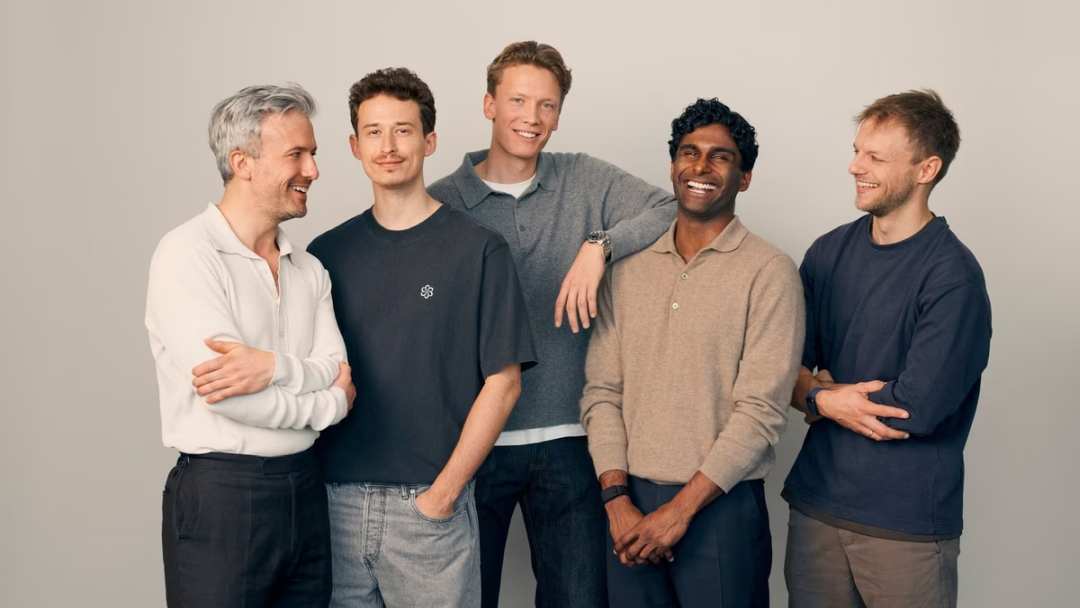
Copenhagen-based Sumary raised $25 million in seed financing led by Singular, with participation from existing investors byFounders, Partech, and Tenity. Angel investors associated with Qonto, Linear, Synthesia, and other technology companies also participated. The new funding follows a previously completed $4.2 million pre-seed round. Today’s report counts only the latest $25 million investment.
Sumary develops AI software for accounting firms. Its platform automates portions of bookkeeping, month-end closing, value-added tax returns, and year-end financial preparation. The technology works alongside existing accounting systems. Rather than removing accountants entirely, Sumary is attempting to automate preparation and analysis while retaining professional review and approval.
The company reports working with most of the 20 largest accounting firms in the Nordic region. Named customers include Deloitte, Grant Thornton, and Baker Tilly. According to Sumary, firms using its software have substantially reduced the time spent on monthly closes and VAT preparation. These performance improvements are company-reported.
Why the round matters
Accounting is an attractive market for specialized AI because it involves recurring workflows, structured information, and established customer spending. Firms must complete similar tasks every month, quarter, and year.
Automating selected activities could allow accountants to serve more clients without increasing staffing at the same rate. However, financial accuracy and regulatory compliance are important. An AI system that processes transactions incorrectly can create substantial financial and legal consequences.
Sumary’s long-term advantage will depend on its ability to produce reliable results, integrate with multiple accounting platforms, and adapt to different national tax requirements. The company plans to expand across Europe, beginning with the Benelux region, while establishing London as its commercial hub.
Funding Details
| Field | Details |
|---|---|
| Startup | Sumary |
| Investors | Singular, byFounders, Partech, Tenity, and angel investors |
| Amount Raised | $25 million |
| Total Raised | Approximately $29.2 million in disclosed financing |
| Funding Stage | Seed |
| Funding Date | November 10, 2026 |
| Headquarters | Copenhagen, Denmark |
| Sector | Enterprise AI/accounting automation / financial software |
| Valuation | Not disclosed |
Coframe raises $25M to make websites automatically test and improve themselves
San Francisco-based Coframe raised $25 million in Series A financing co-led by Khosla Ventures and Hanabi Capital. The investment brings its cumulative financing to $35 million. Coframe also attracted backing from individual investors associated with several major AI companies.
Founded by Josh Payne, Coframe develops technology intended to help websites adapt to visitors and improve commercial performance. Traditional website optimization often requires teams to develop new designs, launch experiments, analyze results, and manually implement successful changes.
Coframe is attempting to automate much of that process. Its system uses AI agents to generate website and ad variations, evaluate performance, and apply changes. The company reports working with customers including Dropbox, Replit, Cash App, and other established businesses.
Coframe says its technology has generated more than $300 million in incremental revenue for customers. That is a company-reported estimate of customer revenue impact, not revenue earned by Coframe itself.
Why investors are backing automated experimentation
Businesses spend substantial amounts attracting website visitors. Even modest conversion-rate improvements can produce meaningful financial returns when applied to large audiences.
Coframe’s opportunity depends on consistently demonstrating those improvements. However, the company operates in a competitive market involving established analytics providers, advertising platforms, marketing software companies, and emerging AI products. Its potential advantage comes from combining automated experimentation with the information generated through customer interactions.
Investors should examine whether that advantage remains meaningful as competitors introduce similar features. They should also distinguish short-term conversion improvements from sustained revenue gains.
Funding Details
| Field | Details |
|---|---|
| Startup | Coframe |
| Investors | Khosla Ventures, Hanabi Capital, and additional investors |
| Amount Raised | $25 million |
| Total Raised | $35 million |
| Funding Stage | Series A |
| Funding Date | November 9, 2026 |
| Headquarters | San Francisco, California, United States |
| Sector | Enterprise AI/marketing technology/website optimization |
| Valuation | Not disclosed |
PORT raises €14.5M in funding to develop autonomous delivery technology using its urban logistics network
London-based PORT raised €14.5 million in financing led by the European Bank for Reconstruction and Development and Balnord. The round includes both equity and debt. PORT did not disclose how much of the financing each component accounted for. The financing brings the company’s reported cumulative capital to €29 million, following approximately €14.5 million raised in earlier rounds.
Founded in 2020, PORT operates an urban logistics network built around electric bicycles, charging infrastructure, and local operating facilities. The company reports serving more than 50,000 couriers. Its infrastructure includes approximately 3,500 electric bicycles and 24 microhubs across London, Manchester, and Birmingham.
PORT is now using that network to develop autonomous delivery technology. Selected bicycles carry cameras and sensors that collect information about real-world delivery environments. The company intends to use that information to train an AI system that can operate delivery robots.
Why investors are interested
PORT’s approach differs from launching an autonomous delivery company without an existing operating network. It already has infrastructure, couriers, equipment, and experience managing urban delivery operations. Those assets could reduce some of the costs associated with testing and deploying future robotic systems. However, the company’s autonomous delivery technology remains under development.
Operating an electric bicycle subscription network does not establish that autonomous robots will work safely and economically in the same environments. PORT must demonstrate reliable navigation, acceptable maintenance costs, and compliance with applicable regulations.
The company is also working with Royal Mail on a future autonomous logistics initiative. That partnership is strategically relevant, but planned deployments should not be confused with operating commercial robotic delivery services.
Funding Details
| Field | Details |
|---|---|
| Startup | PORT |
| Investors | European Bank for Reconstruction and Development, Balnord, and other investors |
| Amount Raised | €14.5 million in combined equity and debt |
| Total Raised | Approximately €29 million in reported cumulative financing |
| Funding Stage | Not disclosed |
| Funding Date | November 9, 2026, initial public reporting |
| Headquarters | London, United Kingdom |
| Sector | Urban logistics/robotics / autonomous delivery |
| Valuation | Not disclosed |
triPica raises €12.4M in funding to modernize energy and telecommunications billing
Paris-based triPica secured €12.4 million in investment from TiLT Capital Partners, the energy-transition investment platform of the Siparex Group. The investment will support expansion into additional European energy markets, particularly Germany and Italy. The financing announcement did not identify a conventional venture round stage or disclose the company’s valuation.
Founded in 2016, triPica develops customer management and billing software for energy suppliers and telecommunications companies. Electricity providers increasingly offer products involving dynamic tariffs, electric vehicle charging, solar self-consumption, and demand flexibility. Those products can be difficult to manage using billing systems developed for simpler pricing models.
triPica is addressing that problem with a cloud-based platform that manages customer relationships, subscriptions, pricing, payments, and billing. Its customers include Primeo Energie, Gaz Européen, Bouygues Telecom, Digicel, and CelcomDigi.
The company also plans to introduce additional AI capabilities to support billing and customer service operations.
Why the financing matters
The energy transition requires more than generating additional electricity. Customers and suppliers also need systems that can manage increasingly complicated pricing structures and consumption patterns. A household with solar panels, an electric vehicle, and a battery may have different billing requirements from a conventional electricity customer.
triPica’s opportunity comes from helping suppliers introduce those services without repeatedly rebuilding their software. Its experience in telecommunications billing could provide useful capabilities because telecom operators have long managed complicated subscriptions, bundles, and usage-based pricing. However, customer migration can be expensive and technically demanding.
For investors, triPica’s competitive position will depend on reliability, integration costs, customer retention, and the economics of entering additional markets.
Funding Details
| Field | Details |
|---|---|
| Startup | triPica |
| Investors | TiLT Capital Partners, part of Siparex Group |
| Amount Raised | €12.4 million |
| Total Raised | Not disclosed |
| Funding Stage | Not disclosed |
| Funding Date | November 10, 2026 |
| Headquarters | Paris, France |
| Sector | Enterprise software/energy technology/telecommunications |
| Valuation | Not disclosed |
Blackletter raises $6M in funding to combine AI software with licensed legal services
New York-based Blackletter raised $6 million in seed financing led by Lerer Hippeau. Additional investors included Seven Stars, Maple VC, Garage Capital, and Ripple Ventures. Individual investors included Cohere co-founders Aidan Gomez, Ivan Zhang, and Nick Frosst, alongside other technology executives.
Blackletter is building a law firm that combines licensed attorneys with internally developed AI software. Its platform, BlackletterOS, supports activities including document analysis, drafting, research, and management of legal matters. The company operates on a fixed-fee model rather than relying primarily on hourly billing. That difference is important. Traditional law firms generally charge clients based on the amount of professional time spent completing work.
Blackletter is using software to reduce the time required for selected activities while keeping attorneys responsible for legal judgments and final work products. The firm reports serving more than 75 early-stage and growth-stage companies and investors.
A different approach to professional services
Blackletter’s financing illustrates an investment thesis that extends beyond selling AI software to existing businesses. The company is attempting to rebuild the service itself. Its potential advantage comes from combining software with the professional expertise required to deliver legal work. However, the business faces risks that conventional SaaS companies do not.
Legal services involve professional responsibility, confidentiality, regulatory requirements, and consequences when advice is incorrect. The company must demonstrate that automation improves productivity without reducing quality. Its fixed-fee pricing also incentivizes careful cost management because more hours spent on a matter do not necessarily generate more revenue.
For investors, the opportunity depends on whether Blackletter can expand its client base while maintaining dependable legal services and attractive operating margins.
Funding Details
| Field | Details |
|---|---|
| Startup | Blackletter |
| Investors | Lerer Hippeau, Seven Stars, Maple VC, Garage Capital, Ripple Ventures, and angel investors |
| Amount Raised | $6 million |
| Total Raised | Not disclosed |
| Funding Stage | Seed |
| Funding Date | November 9, 2026 |
| Headquarters | New York, United States |
| Sector | Legal technology / AI-enabled professional services |
| Valuation | Not disclosed |
Vessel emerges from stealth with $5M in funding to make donating excess inventory cheaper than destroying it

New York-based Vessel has emerged from stealth with $5 million in seed financing led by HG Ventures, with participation from Flex Capital, Ford Street Ventures, and I2BF Global Ventures. The company emerged from stealth on November 9 with a platform designed to help brands donate excess inventory instead of destroying usable products.
Vessel’s business combines software, nonprofit screening, transportation coordination, and donation documentation. Retailers and manufacturers regularly produce or hold more inventory than they can sell. When products become difficult to distribute commercially, companies may pay to dispose of them. That can occur even when the products remain usable.
Vessel is attempting to make donation a financially attractive alternative. Its platform identifies suitable nonprofit recipients, helps coordinate transportation, and provides the documentation required to verify deliveries. The company reports helping distribute more than $83 million worth of products during its operations before the public launch. It also says its services have prevented more than 2,000 tons of goods from entering landfills or incineration.
These are company-reported figures describing donated product value and environmental outcomes. They are not Vessel’s revenue.
Why investors are interested
Vessel’s opportunity is unusual because it addresses an expense businesses already incur. A company paying to destroy unsold inventory may consider an alternative if it costs less and meets its legal and operational requirements.
Vessel says qualifying customers can save at least 10% compared with destruction costs. However, savings depend on product characteristics, logistics, recipient availability, and the requirements associated with particular goods. The company’s competitive advantage will depend on its nonprofit network, transportation coordination, pricing, and ability to manage complicated donation programs.
For investors, the opportunity is to turn an established business expense into a service that produces economic and social benefits.
Funding Details
| Field | Details |
|---|---|
| Startup | Vessel |
| Investors | HG Ventures, Flex Capital, Ford Street Ventures, I2BF Global Ventures |
| Amount Raised | $5 million |
| Total Raised | $5 million in disclosed financing |
| Funding Stage | Seed |
| Funding Date | November 9, 2026 |
| Headquarters | New York, United States |
| Sector | Supply-chain technology/enterprise software/waste reduction |
| Valuation | Not disclosed |
What Today’s Funding Activity Reveals
1. Capital is concentrating in companies addressing specialized technical problems
Nominal and Project Omega account for $320 million of the $410 million in selected dollar-denominated equity funding.
Their businesses are substantially different, but both address problems requiring specialized knowledge.
Nominal develops infrastructure for complex engineering work.
Project Omega is developing nuclear fuel processing and specialized power systems.
Their financing suggests investors see considerable potential in companies that address expensive technical constraints. However, two large rounds should not be interpreted as evidence that similarly sized investments are becoming commonplace.
2. AI investment is extending into established professional workflows
Sumary, Blackletter, and Coframe are applying AI to existing commercial activities.
Sumary automates accounting preparation.
Blackletter incorporates AI into legal services.
Coframe automates website experimentation.
These businesses are targeting customers who already spend money on the underlying work. Their investment proposition therefore depends on demonstrating measurable improvements rather than creating entirely new spending patterns.
3. Proprietary information and workflow integration are emerging sources of competitive advantage
Nominal connects engineering systems and test data.
Sumary operates within accounting workflows.
PORT is collecting information from an existing delivery network to support robot development.
Coframe analyzes results from website experiments.
Each business could potentially develop proprietary information or operational expertise that improves its products. However, those advantages are meaningful only if they remain difficult for competitors to reproduce.
4. Capital structure matters when comparing funding rounds
Spines announced $64 million in combined financing arrangements, but only $29 million is identified as new equity.
PORT’s €14.5 million transaction combines equity and debt but does not disclose the split.
Those announcements differ from conventional equity-only venture rounds. Treating them as identical would overstate the equity capital committed during the reporting period.
5. Physical technology and software face different commercialization requirements
Project Omega must develop specialized facilities and demonstrate nuclear technology under demanding regulatory conditions.
PORT must build reliable robots that can operate in public environments. By contrast, Coframe and Sumary can distribute their products through software infrastructure.
The physical businesses face greater manufacturing and deployment requirements. Software companies face different challenges involving product differentiation, customer acquisition, and competition. The appropriate measures of progress differ substantially.
6. Energy investment extends beyond electricity generation
Project Omega and triPica illustrate very different opportunities within the energy industry.
Project Omega is developing technology connected to the nuclear fuel cycle.
triPica provides customer and billing systems for energy suppliers.
Both could benefit from changes in electricity demand and infrastructure, but their customers, technical risks, and revenue models differ. The investments demonstrate why energy technology should not be treated as a single category.
7. Biotechnology investors continue backing difficult scientific research
SRTD’s €31.5 million seed round is substantial for a company developing preclinical therapies.
The financing reflects investor expectations about the potential value of selective RNA expression. However, scientific promise does not establish clinical success. The company must still demonstrate safety, effectiveness, and regulatory compliance.
8. Environmental businesses can compete on financial savings
Vessel is not asking businesses to donate excess products solely for environmental reasons. It is attempting to make donation cheaper than destruction.
That economic argument could improve adoption because customers already allocate funds to inventory disposal. The company’s ability to scale will depend on maintaining those savings across a larger range of products and customers.
9. Strategic investors bring expertise but do not eliminate risk
Lockheed Martin Ventures is among Nominal’s investors.
Boehringer Ingelheim Venture Fund participated in SRTD.
EBRD backed PORT.
These institutions bring different forms of technical, financial, or industry experience. Their involvement may strengthen commercial relationships and provide useful expertise. However, strategic participation does not guarantee customer adoption, future investment, or financial returns.
10. Geographic distribution is more balanced than the previous report
Today’s selected companies include five from the United States, four from Europe, and one Israeli-founded company with U.S. operations. The change underscores the importance of examining the full reporting period rather than assuming a single day’s geographic distribution reflects a lasting investment trend.
Tech Funding Table
| Startup | Amount Raised | Sector | Funding Stage | Lead/Key Investors | Country |
|---|---|---|---|---|---|
| Nominal | $240M | Hardware engineering/enterprise AI | Series C | Lightspeed Venture Partners, Insight Partners | United States |
| Project Omega | $80M | Nuclear technology/energy infrastructure | Series A | B Capital, noa VC, 645 Ventures | United States |
| SRTD Biotech | €31.5M | RNA therapeutics / biotechnology | Seed | Mérieux Equity Partners, NRW.BANK, Boehringer Ingelheim Venture Fund | Germany |
| Spines | $29M equity; separate $35M facility | AI publishing technology | Series A-1 | Zeev Ventures, Aleph, NordStar | Israel |
| Sumary | $25M | AI accounting software | Seed | Singular, byFounders, Partech, Tenity | Denmark |
| Coframe | $25M | Enterprise AI/website optimization | Series A | Khosla Ventures, Hanabi Capital | United States |
| PORT | €14.5M equity and debt | Urban logistics / autonomous robotics | Not disclosed | EBRD, Balnord | United Kingdom |
| triPica | €12.4M | Energy and telecom billing software | Not disclosed | TiLT Capital Partners | France |
| Blackletter | $6M | AI-enabled legal services | Seed | Lerer Hippeau, Seven Stars, Maple VC | United States |
| Vessel | $5M | Supply-chain technology/waste reduction | Seed | HG Ventures, Flex Capital, Ford Street Ventures | United States |
Funding totals: The seven dollar-denominated rounds represent $410 million in disclosed equity capital. Spines’ separate $35 million financing facility is excluded. The three euro-denominated transactions total €58.4 million in announced financing packages. PORT’s €14.5 million includes an undisclosed debt component, so that amount cannot be treated entirely as equity. A combined global equity total is therefore not provided.
Strategic Takeaways for Founders and Investors
1. Specialized enterprise data can create substantial value. Nominal’s financing demonstrates investor interest in software built around complex industrial information. Founders should examine workflows where proprietary data and technical requirements make general-purpose tools insufficient.
2. A large funding round should be evaluated against the milestones it finances. Project Omega’s $80 million will support research, specialized facilities, and industrial development. Investors should assess regulatory requirements, technical validation, future capital needs, and potential commercial revenue separately.
3. Scientific differentiation must be supported by experimental results. SRTD’s RNA technology could address important medical problems, but investors should distinguish promising biological mechanisms from validated clinical treatments.
4. Financial engineering is not the same as equity investment. Spines’ combination of venture equity and non-dilutive financing illustrates why transaction structure matters. Founders should consider how different forms of capital affect dilution, repayment obligations, and operating flexibility.
5. AI products must operate within professional accountability requirements. Sumary and Blackletter are targeting accounting and legal work, where errors can have financial or regulatory consequences. Their competitive advantages will depend on accuracy, auditability, and appropriate human oversight.
6. Customer-specific information can strengthen AI products. Coframe’s technology learns from website interactions, while Nominal analyzes engineering information. Founders should consider whether customer-generated information improves their products in ways competitors cannot easily reproduce.
7. Existing infrastructure may reduce the cost of developing new technology. PORT is using its delivery network and bicycle fleet to gather data for future autonomous systems. That approach could reduce some development expenses compared with establishing a separate testing network.
8. Energy technology opportunities extend into administrative systems. triPica’s financing demonstrates that changes in electricity pricing and distributed generation create requirements for software infrastructure. Founders need not manufacture batteries or power equipment to address valuable problems within the energy industry.
9. Pricing models can support competitive differentiation. Blackletter’s fixed-fee model incentivizes it to improve productivity. However, predictable customer pricing will create attractive economics only if the firm can manage service delivery costs while maintaining quality.
10. Cost savings remain a compelling customer acquisition argument. Vessel is targeting money companies already spend on destroying inventory. Its opportunity depends on proving that customers can save money while satisfying logistics and compliance requirements.
11. Revenue claims need careful interpretation. Spines reported a $50 million annualized revenue run rate, while Coframe attributed more than $300 million in incremental revenue to customer outcomes. Neither measure should be confused with the respective company’s audited annual revenue.
12. Investors should distinguish funding momentum from operating performance. Nominal’s valuation has increased substantially, while Sumary and Coframe have attracted significant early-stage capital. Those financings demonstrate investor expectations. Sustained customer demand, retention, margins, and operating results will determine whether the valuations are justified.
Conclusion
November 10’s startup funding activity reveals investors supporting businesses that use advanced technology to address expensive operational and industrial problems.
Nominal’s $240 million Series C demonstrates demand for specialized software serving hardware engineering. Project Omega’s $80 million financing reflects interest in nuclear fuel recycling and long-duration power technology. SRTD Biotech’s €31.5 million seed round highlights continued investment in ambitious scientific approaches to treating disease.
The remaining transactions show how AI is moving into established commercial workflows.
Sumary is automating accounting preparation. Coframe is developing websites that can continuously test and improve their performance. Blackletter is incorporating AI into legal service delivery, while Spines is reducing selected publishing costs.
PORT is building autonomous delivery capabilities on top of an existing logistics network. triPica is modernizing software used by energy suppliers, and Vessel is helping companies manage excess inventory more economically.
The companies operate in different markets, but their investment propositions share a key characteristic: they aim to generate measurable economic value through specialized technology and operating expertise.
Some have established customers and reported commercial traction. Others remain in research, development, or early deployment.
The strongest signal from today’s funding activity is that investors are willing to commit substantial capital when they see opportunities to solve difficult problems that existing systems handle poorly.
Whether those companies can establish lasting advantages will depend on technical reliability, customer demand, operating costs, and the ability to scale without undermining the economics that attracted investors. Ultimately, technology creates the opportunity. Execution determines whether the investment succeeds.