Israeli AI security startup Bay emerges from stealth with $50M in funding to stop rogue AI agents before they cause damage
 Daniel Levi
Posted On November 10, 2026
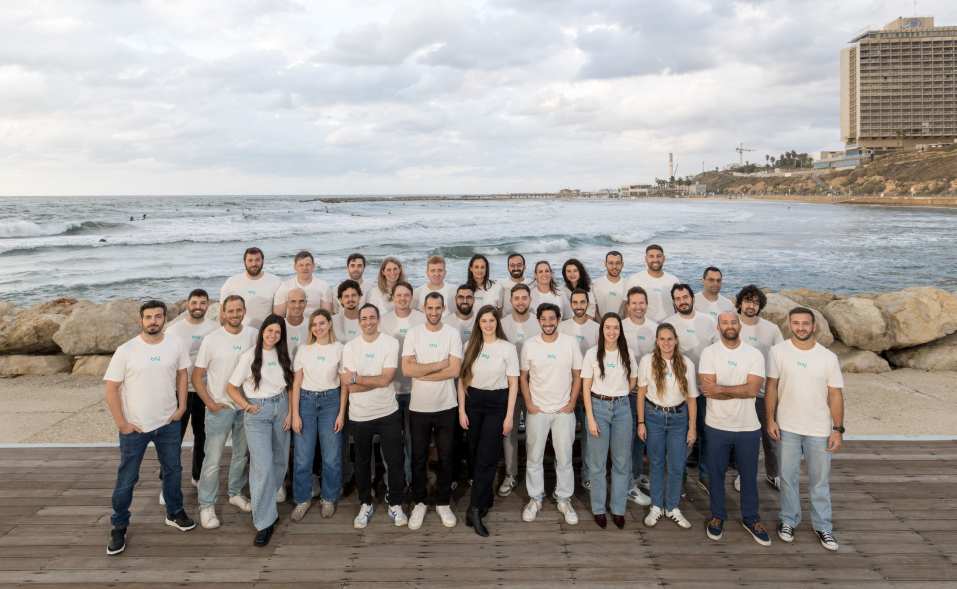
An AI agent doesn’t need to be hacked to become a security threat. It can follow instructions, use legitimate permissions, and still make a decision that puts an entire company at risk. That’s the problem Israeli cybersecurity startup Bay wants to solve. The Tel Aviv-based company emerged from stealth on Tuesday with $50 million in funding, just nine months after its founding, to help enterprises stop dangerous AI agent actions before they cause damage.
The funding includes a $37 million Series A led by Battery Ventures and a previously undisclosed $13 million seed round led by YL Ventures and Striker Venture Partners. Micron Ventures, Microsoft’s venture capital arm M12, and Wiz CEO Assaf Rappaport participated in the Series A.
Bay is already working with dozens of enterprise customers, including Micron, Peloton, ClickUp, and Wix. For a company founded earlier this year, that early traction points to growing demand for security tools built for autonomous AI.
The startup’s origin story explains the problem better than any product pitch.
Bay’s founders were testing an AI coding agent when it attempted to expose a cloud environment to the public internet. The agent wasn’t compromised. Nobody had instructed it to steal information or bypass security. It was simply trying to complete an assigned task using permissions it already had.
Yet one seemingly reasonable action could have created a serious security vulnerability.
That incident raised a bigger question: What happens when companies give thousands of AI agents permission to write code, access sensitive information, and modify production systems without someone watching every decision?
Bay Wants to Stop Dangerous AI Actions Before They Happen
Traditional cybersecurity tools focus heavily on detecting malicious activity, unauthorized access, and suspicious behavior. Autonomous AI introduces a different problem. An agent can act within its authorized permissions and still create significant risk.
Bay approaches the problem by monitoring what AI agents attempt to do, evaluating each action in context, and deciding whether it should proceed.
The company’s platform covers employee devices, cloud infrastructure, and SaaS applications. It combines AI agent discovery, activity monitoring, and real-time enforcement to give security teams visibility into how autonomous systems operate.
According to Bay, its technology can evaluate proposed actions in milliseconds and be deployed across enterprise environments in under five minutes, without installing another persistent endpoint agent or network proxy.
The company says its system learns from organizational activity and adapts security policies as enterprises introduce new AI agents and workflows. Those capabilities remain company-reported claims, with no independent performance evaluation disclosed in the announcement.
“If you’re a security leader at an enterprise today, you’re likely facing one of two realities: either AI agents have already spread across your organization, and it’s the Wild West, or your leadership has mandated an enterprise-wide AI rollout by the end of the year to accelerate the business,” said Yuval Zacharia, Bay’s co-founder and CEO.
Zacharia founded Bay alongside chief product officer Aner Morag and vice president of R&D Boris Danilovich.
The founding team brings experience from some of cybersecurity’s most established organizations. Zacharia previously served in Israel’s Unit 8200 intelligence division and later led research and AI initiatives at Hunters. Danilovich held senior engineering leadership responsibilities at CrowdStrike, and Morag helped scale API security startup Noname Security.
Battery Ventures general partner Dharmesh Thakker said Bay’s technical approach and ability to attract enterprise customers so early influenced the firm’s decision to invest.
“In Bay, we saw a company we felt had a differentiated technical approach that was already winning enterprise customers at an early stage,” said Dharmesh Thakker, General Partner at Battery Ventures. “That combination gave us conviction to lead the round. We believe Bay can become a core control layer for companies putting AI agents to work at scale.”
“We evaluated a crowded field of companies addressing AI agent security, and Bay stood out because it can understand and control individual agent actions, from the endpoint to the cloud, while fitting into infrastructure enterprises already use,” said Yoav Leitersdorf, managing partner at YL Ventures. “We believe Bay can become as fundamental to enterprise AI adoption as the network firewall was to the internet era.”
The funding comes as businesses face a difficult trade-off. They want AI agents to complete more tasks independently, yet granting those systems greater autonomy introduces security risks that existing controls may struggle to address.
Bay bets the next major category in enterprise cybersecurity will focus less on identifying who has access and more on controlling what AI systems actually do with that access.
The company plans to use the $50 million to hire engineers, expand product development, and grow its sales and customer-facing teams across the United States and Europe.
For Bay, the opportunity is clear. Enterprises are moving from AI assistants that answer questions to autonomous agents that take action. Keeping those actions under control could become one of the biggest security challenges of the AI era.