AI financing demand remains strong despite Wall Street selloff, Goldman Sachs CEO says
 Daniel Levi
Posted On November 9, 2026
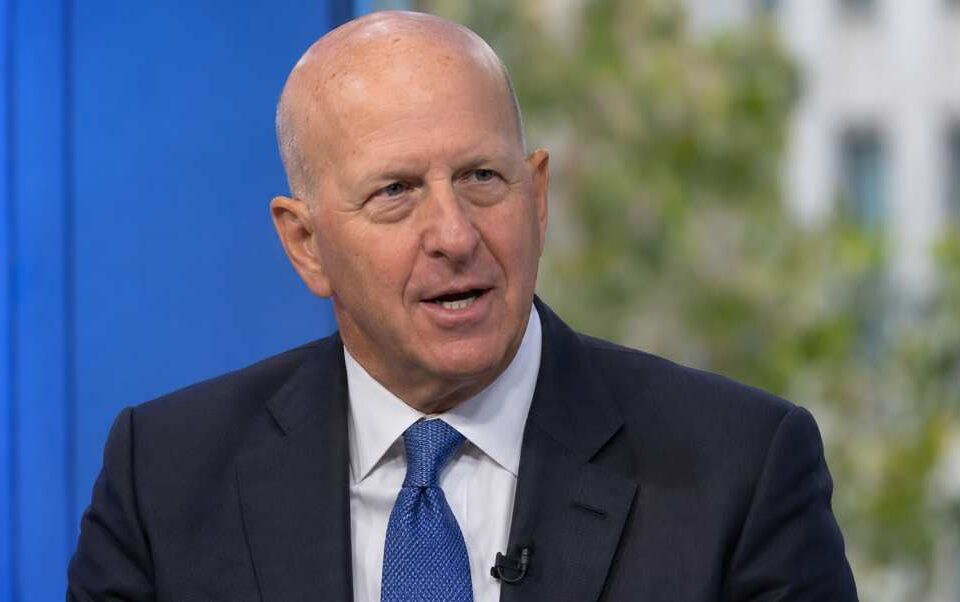
Wall Street is dumping AI stocks, but the money behind the artificial intelligence boom is still flowing. Goldman Sachs CEO David Solomon said Monday that demand for AI infrastructure financing remains strong, pushing back against fears that the recent market selloff could derail billions of dollars in planned data center investments.
Speaking in an interview with CNBC’s Leslie Picker on November 9, Solomon said Goldman Sachs has been heavily involved in AI-related capital markets transactions in recent weeks. He expects dealmaking activity to remain healthy through the remainder of the year, signaling that investors are still willing to finance the industry’s costly infrastructure buildout.
“There’s still very strong demand for investments in the AI infrastructure build and the technology around the growth of AI,” Solomon told CNBC.
His comments come at a tense moment for the AI industry. Shares of semiconductor companies, cloud infrastructure providers, and other AI-linked businesses have fallen sharply as investors question whether the hundreds of billions of dollars being committed to artificial intelligence will produce sufficient returns.
The selloff began ahead of last week’s U.S. midterm elections and intensified after Democrats secured sweeping victories on November 3. The results raised fresh concerns about potential restrictions on data center construction, particularly in communities facing rising electricity demand, infrastructure strain, and opposition to large-scale developments.
Solomon acknowledged that political changes and shifting investor sentiment could create further volatility.
“Changes in the political environment are among factors that will ‘create recalibrations and ups and downs, and we’re seeing some of that,’” Solomon said. “But I still deeply believe in the long-term trajectory of the power of AI in our economy to drive productivity.”
Wall Street questions AI spending, but financing continues
The growing disconnect between falling AI stock prices and continued infrastructure financing highlights a central question facing the technology industry: Can the AI boom deliver enough revenue to justify its enormous construction and computing costs?
For Goldman Sachs, the immediate answer appears to be that demand for capital remains healthy. Yet strong financing activity does not mean every AI project will succeed.
Banks and credit investors are becoming more selective about which projects they finance. According to Reuters, lenders are paying closer attention to borrowers’ cash flows, construction deadlines, customer commitments, and the financial risks associated with heavily indebted AI infrastructure providers.
Goldman Sachs has previously warned that rising financing costs could affect the economics of certain projects. The bank’s broader outlook remains optimistic, with demand for computing capacity continuing to drive investment in data centers, networking equipment, and supporting infrastructure.
The next major test of investor appetite could come from Anthropic, the AI startup behind Claude, which is preparing for a potential initial public offering. Goldman Sachs is among the banks involved in the anticipated IPO process.
Solomon declined to discuss the company’s plans in detail but described the broader market environment as favorable.
“We’ll see, obviously, if this IPO moves forward, how it all plays out,” Solomon said. “I would say that the market environment is still pretty constructive.”
Solomon addressed another growing concern: political resistance to new data centers.
Across the United States, proposed facilities are facing scrutiny over electricity consumption, grid capacity, and their impact on surrounding communities. Solomon argued that blocking domestic construction could push AI infrastructure investment overseas without reducing global demand for computing resources.
“We certainly don’t want this infrastructure going to places outside the U.S., which is what will naturally happen because the demand for compute is there,” Solomon said.
His remarks underscore the difficult balancing act facing the AI industry. Companies need billions of dollars to build the AI infrastructure required for increasingly sophisticated AI systems, yet investors want clearer evidence that those investments can generate sustainable profits.
For now, Solomon’s message is that Wall Street’s declining confidence in AI stocks has not translated into a collapse in demand for financing.
The bigger question is no longer whether investors are willing to fund the AI buildout. It’s whether the companies borrowing and spending that money can generate returns large enough to justify the cost.