Zipline raises $1.5 billion at $21.5 billion valuation to expand drone delivery across the U.S.
 Daniel Levi
Posted On November 5, 2026
Drone delivery startup Zipline has raised $1.5 billion in fresh funding at a $21.5 billion valuation, nearly tripling its worth in just 10 months as it prepares to bring autonomous delivery to homes across America. The massive investment comes alongside a new agreement with Walmart to add 300 drone delivery sites, signaling that a technology once used to deliver emergency blood supplies in Africa is moving closer to becoming an everyday delivery option for American consumers.
The South San Francisco-based company announced the funding Thursday, with Paradigm, WCM Investment Management, and Layer Global leading the round. Uber, Tiger Global, J.P. Morgan, Fidelity Management & Research Company, Valor Equity Partners, ARK Invest, and Salesforce Ventures participated.
The valuation marks a remarkable jump from January, when Zipline raised more than $600 million at a reported $7.6 billion valuation. Its latest financing puts the company among the most valuable privately held autonomous delivery businesses.
Zipline plans to use the capital to increase U.S. manufacturing capacity, hire more workers, and build a nationwide network that can deliver groceries, meals, medical supplies, and everyday household products directly to customers.
From emergency medical deliveries to America’s doorsteps
Zipline’s latest funding arrives at a turning point for the drone delivery industry.
Walmart announced Thursday that it will add 300 Zipline delivery sites under a multiyear agreement, extending a partnership that began in 2021. The retailer’s broader drone delivery program has already completed more than two million deliveries.
Walmart customers in eligible locations can order tens of thousands of products through its app or website and receive them at home in as little as 30 minutes.

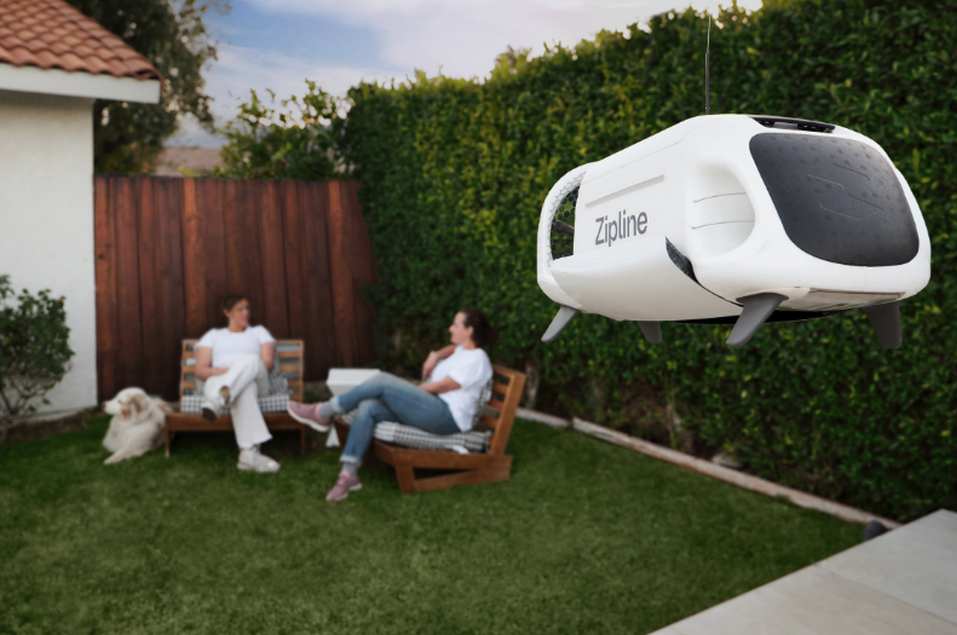
Zipline (Image credit: Zipline)
Zipline’s aircraft use a distinctive delivery system. Instead of landing at a customer’s home, the drone stays roughly 330 feet above the ground and lowers a small delivery pod on a tether. The approach reduces the need for landing space and is intended to limit noise near homes.
The company is betting that convenience will turn occasional drone deliveries into routine purchases.
Zipline reported that it completed more than one million deliveries in the Dallas-Fort Worth metropolitan area during 2026. In October, the median delivery took 19 minutes from checkout, compared with more than 30 minutes for conventional delivery, according to company figures.
The startup is making a similar push into restaurant delivery through Uber.
In August, Uber announced a strategic partnership and investment in Zipline to integrate autonomous drone deliveries into Uber Eats. The companies are targeting one million drone deliveries per day by the end of 2029, starting in existing Zipline markets before extending into dozens of U.S. cities.
That ambition puts Zipline in direct competition with Amazon’s Prime Air and Alphabet-owned Wing, each pursuing its own approach to driverless package delivery.
A decade-long bet on autonomous delivery
Founded in 2014 by Keller Rinaudo, Keenan Wyrobek, and Will Hetzler, Zipline initially built its reputation delivering blood, vaccines, and other medical products to hard-to-reach communities in Rwanda and Ghana.
Its autonomous aircraft helped healthcare facilities receive critical supplies without relying on lengthy road trips or conventional distribution networks.
TechStartups has followed Zipline’s progress since 2018, documenting its transition from medical logistics into commercial delivery. In 2024, we covered the company after it reached its one-millionth delivery and began exploring restaurant partnerships.
That early healthcare business remains central to Zipline’s operations. The company now serves more than 5,000 hospitals and health facilities and operates across multiple continents.
According to Walmart’s latest announcement, Zipline’s aircraft have flown 150 million autonomous commercial miles without a major safety incident. That figure is company-reported and reflects the scale of its operations, not an independent safety assessment.
Yet taking drone delivery nationwide presents challenges far beyond raising money.
Regulatory approvals remain a major hurdle, particularly for flights beyond a human operator’s visual line of sight. Noise complaints, neighborhood safety concerns, limited payload capacity, and the economics of operating thousands of delivery sites could slow adoption.
Zipline must prove that autonomous delivery can remain reliable and economical across different cities, weather conditions, and customer populations.
Its investors are making an enormous bet on that outcome.
The company’s latest valuation reflects growing expectations that delivery drones could become a meaningful part of America’s logistics infrastructure. With Walmart adding hundreds of locations and Uber pursuing daily delivery volumes in the millions, Zipline has secured two major distribution partners.
The next test is whether it can turn those ambitious partnerships into a profitable nationwide delivery business.
For Zipline, the challenge is no longer proving that drones can deliver products. It’s proving they can deliver them at the scale, cost, and reliability customers expect.
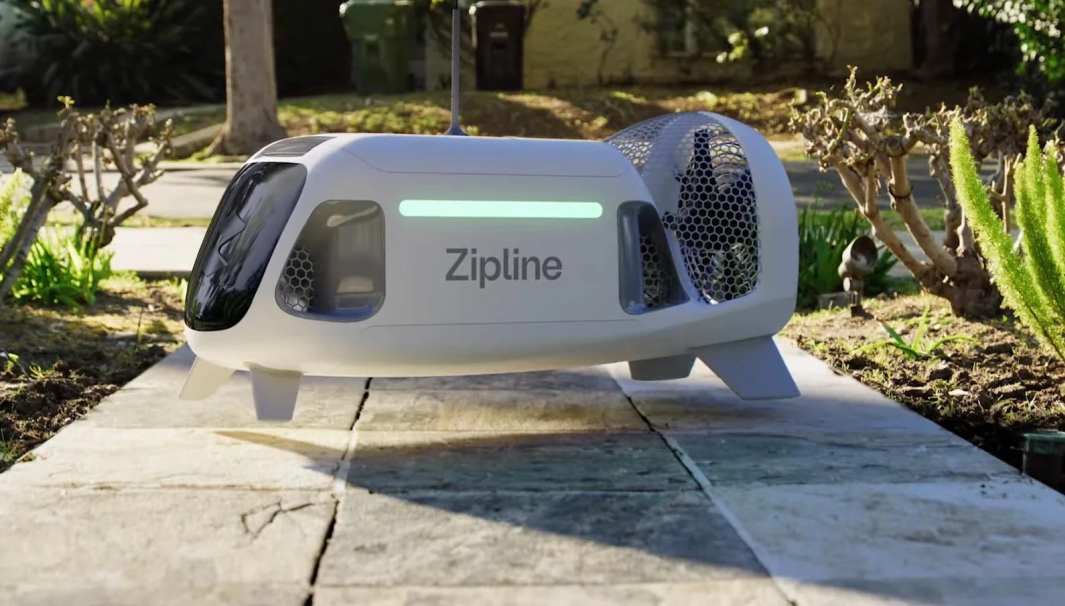
Zipline (Image credit: Zipline)