Startup Funding News Today, November 5, 2026: bit.bio, FluoRok, Sand.ai, Sentra, Pliant, VÆRIDION & More
 Nickie Louise
Posted On November 5, 2026
The next phase of the AI investment boom is taking shape, and investors are backing companies that can generate AI content, protect corporate data, and build the infrastructure needed to make advanced technology commercially viable. Leading today’s startup funding activity is China’s Sand.ai, which secured $200 million to develop generative video models. Cybersecurity startup Sentra followed with $150 million to protect enterprise data from increasingly autonomous AI agents, while German fintech Pliant raised $80 million to expand its payment infrastructure and support AI-driven financial transactions.
The funding activity extended well beyond software. California-based Laza Medical announced a structured Series B financing of up to $160 million, led by GE HealthCare, to advance intelligent cardiac imaging. China’s Bangxin Semiconductor raised more than RMB 600 million to expand semiconductor equipment manufacturing, while two other Chinese companies secured several hundred million yuan each for chip inspection technology and high-speed optical components.
European startups also attracted significant investment. VÆRIDION raised €30 million to develop battery-electric regional aircraft. Oxford-based FluoRok announced a €26.64 million financing package to commercialize a safer process for manufacturing fluorochemicals, while Cambridge biotechnology company bit.bio secured $25 million to expand production of human cells used in drug discovery.
Across the 10 selected announcements, four companies disclosed $455 million in dollar-denominated funding rounds. Laza Medical’s separate financing has a maximum announced size of $160 million, but the amount immediately funded was not disclosed. The European transactions add €56.64 million in announced financing packages, one of which includes a grant component. Three additional Chinese semiconductor-related companies disclosed substantial renminbi financing, although two did not provide exact amounts.
The larger story is where investors are placing their bets. AI remains central, but capital is moving into specialized hardware, cybersecurity, optical communications, industrial manufacturing, and technologies that can address real operating constraints. Today’s deals suggest investors are looking beyond the ability to build impressive technology and asking which companies can produce it reliably, distribute it economically, and turn customer demand into sustainable businesses.
The Macro Environment: Investors Are Financing the Economics of AI
Artificial intelligence continues to attract substantial investment, but today’s financing activity reveals a more complicated market than the familiar competition to build larger models.
Sand.ai is developing generative video technology. Sentra is helping organizations control access to sensitive information as AI agents become more common. Pliant is preparing financial infrastructure for transactions initiated through automated software. Although the three businesses operate in different markets, their financing reflects a common expectation: AI adoption will create demand for specialized services that established systems were not originally designed to provide.
The semiconductor investments reveal another side of that demand. Bangxin manufactures equipment used in semiconductor production. Jushi Technology develops precision inspection systems and AI-assisted manufacturing analytics. Huayi Yingfei Photonics is working on optical components that can transmit information at high speeds between computing systems. Their opportunities depend partly on the growth of AI infrastructure, but their products must also satisfy demanding engineering and manufacturing requirements.
Corporate and government-linked investors are particularly notable. Capital One Ventures led Sentra’s financing, GE HealthCare led Laza Medical’s structured investment, and several Chinese rounds attracted industrial investors or state-backed funds. These transactions demonstrate how strategic investment can overlap with conventional venture financing. A corporate investor may seek financial returns, but also access to technology, supply-chain strength, or a commercial relationship.
Beyond AI, investors back technologies with different development cycles. VÆRIDION must build and certify an electric aircraft. FluoRok must demonstrate that its chemical manufacturing process works economically at industrial scale. bit.bio is expanding an established commercial offering, but its customers require consistent, biologically relevant research materials. These businesses cannot rely on software-style deployment economics. Manufacturing, validation, regulatory requirements, and customer qualification will influence their growth.
The most meaningful signal is not simply that investors are spending heavily on AI. It is that capital is moving toward companies addressing the practical costs and limitations of deploying advanced technology. That includes computing efficiency, information security, manufacturing quality, scientific validation, and dependable infrastructure.
Nevertheless, interpret the concentration carefully. One day’s financing activity does not establish a lasting shift across the entire venture market. Nor does a large funding round demonstrate profitability. Each investment must ultimately be evaluated against the commercial and technical milestones it finances.
Sand.ai raises $200M in funding to challenge established AI video-generation platforms

Chinese artificial intelligence startup Sand.ai secured $200 million in Series A+ financing, co-led by Cornerstone Capital and Wangsu Science & Technology. Other investors included Times Capital, Guofang Venture Capital, Panlin Capital, Dongzheng Capital, and several institutional and industrial investors. Existing backers, including Matrix Partners China and CAS Star, also participated.
Sand.ai completed three financing rounds in 2026, raising about $300 million in total. That cumulative figure includes earlier rounds and is not newly raised capital. Chinese venture publication Investment reported that the latest financing places Sand.ai among privately held companies valued above $1 billion, though it did not disclose an exact valuation.
Founded in 2024, Sand.ai develops foundation models for generating video. Its technology uses an autoregressive approach, which predicts successive elements of generated content, rather than relying entirely on the diffusion methods used by many competing video systems.
The company released MAGI-2 Preview in August. According to Sand.ai, the model has approximately 114 billion parameters, with roughly 6 billion activated for individual processing tasks. Sand.ai has also developed VidMuse, an AI video creation product aimed at content creators.
The company reports that VidMuse exceeded $10 million in annual recurring revenue within two months of launch. That figure is company-reported and should not be confused with audited annual revenue.
Why investors are backing Sand.ai
Generative video is becoming a competitive market involving established technology companies, specialized model developers, and consumer content platforms.
Sand.ai is attempting to establish a position through model performance, processing efficiency, and commercial distribution. Its decision to develop both models and applications could provide two advantages. The company can generate revenue directly from customers while learning how its technology performs in commercial use. However, that strategy also creates competitive risks.
Large technology companies have substantial computing resources, distribution channels, and established customer relationships. Sand.ai must demonstrate that its technology can remain competitive as other providers improve video quality and reduce generation costs.
Wangsu’s involvement is noteworthy because the company operates internet infrastructure and content-delivery services. Its previously announced investment commitment is part of the new financing round, not a separate transaction to be counted again.
Funding Details
Startup: Sand.ai
Investors: Cornerstone Capital, Wangsu Science & Technology, Times Capital, Guofang Venture Capital, Panlin Capital, Dongzheng Capital, Matrix Partners China, CAS Star, and others
Amount Raised: $200 million
Total Raised: Approximately $300 million
Funding Stage: Series A+
Funding Date: November 5, 2026
Headquarters: Beijing, China
Sector: Generative AI/video foundation models
Valuation: Reportedly above $1 billion; exact amount not disclosed
Laza Medical secures up to $160M in funding to develop AI-powered cardiac imaging
California-based Laza Medical announced a structured Series B financing of up to $160 million, led by GE HealthCare. Existing investors Unorthodox Ventures, PA MedTech, and AMED also participated.
While Laza disclosed financing of up to $160 million, the announcement does not establish that the entire amount has already been funded. The $160 million therefore represents the announced financing ceiling and is not included as confirmed new capital in today’s disclosed equity total.=
Laza is developing an AI-powered robotic imaging system for cardiac catheterization laboratories. These facilities perform minimally invasive procedures involving the heart and blood vessels.
Clinicians depend on medical imaging to understand anatomy, position instruments, and guide treatment. Laza is attempting to improve the consistency and availability of that imaging through software, automation, and robotic technology.
The company conducted a first-in-human clinical study involving its technology in 2025. However, the Laza Medical System remains under development and is not approved for commercial sale in any country. That distinction matters when assessing its commercial maturity.
Why GE HealthCare’s involvement matters
GE HealthCare operates in medical imaging and related clinical technology. Its participation gives Laza a strategically relevant investor with experience in the markets the startup intends to serve. The investment could support technical development and future commercial relationships, although it does not guarantee regulatory approval or distribution agreements.
For investors, the opportunity is tied to improving complicated medical procedures. Automated imaging could potentially reduce variability, support clinical workflows, and make specialized capabilities available to more healthcare facilities. But those benefits must be demonstrated through appropriate clinical evidence.
Laza will need to establish safety, performance, regulatory compliance, and practical value to healthcare providers. The company also faces the challenge of integrating its technology into existing hospital systems without introducing unacceptable costs or operational difficulties.
Funding Details
Startup: Laza Medical
Investors: GE HealthCare, Unorthodox Ventures, PA MedTech, AMED
Amount Raised: Up to $160 million in structured financing; immediately funded amount not disclosed
Total Raised: Not disclosed
Funding Stage: Structured Series B
Funding Date: November 4, 2026
Headquarters: Los Gatos, California, United States
Sector: Medical technology / AI imaging / surgical robotics
Valuation: Not disclosed
Sentra raises $150M in funding to protect enterprise data from autonomous AI agents
Sentra raised $150 million in Series C funding led by Capital One Ventures, bringing its total funding to more than $260 million. The investment follows earlier backing from Bessemer Venture Partners, Zeev Ventures, Standard Investments, Munich Re Ventures, and Key1 Capital. Capital One Ventures will also receive representation on Sentra’s board.
Sentra develops software that identifies, classifies, and protects sensitive enterprise information. Its technology helps organizations determine where important information is stored and which employees, applications, and automated systems can access it.
The company’s business has become increasingly relevant as enterprises introduce AI agents that can retrieve information and complete tasks. Traditional security controls were developed primarily around human users and conventional software systems.
AI agents create additional challenges because they may access information continuously and perform actions across multiple applications. Sentra is attempting to address those risks by protecting information where it is stored rather than relying exclusively on monitoring individual requests. The company reports more than 300% year-over-year growth. That figure is company-reported and does not identify an absolute revenue base.
Why investors see a large opportunity
The growing use of AI agents creates a new category of security concerns. An organization might deploy an automated assistant to analyze customer information, prepare financial reports, or support internal operations. If that assistant inherits overly broad permissions, it could access information unrelated to its assigned task.
Sentra’s investment proposition is to reduce those risks before they result in exposure. Its commercial advantage will depend on accurately identifying sensitive information, managing access rights, and integrating with enterprise systems.
The company faces competition from established cybersecurity vendors and cloud providers developing their own AI governance capabilities. However, its financing suggests investors expect demand for specialized data-security infrastructure to increase as autonomous software becomes more widely deployed.
Funding Details
Startup: Sentra
Investors: Capital One Ventures; existing investors include Bessemer Venture Partners, Zeev Ventures, Standard Investments, Munich Re Ventures, and Key1 Capital
Amount Raised: $150 million
Total Raised: More than $260 million
Funding Stage: Series C
Funding Date: November 4, 2026
Headquarters: New York, United States, and Tel Aviv, Israel
Sector: Cybersecurity/enterprise data security / AI governance
Valuation: Not disclosed
Bangxin Semiconductor raises over RMB 600M to expand chipmaking equipment production
Shanghai-based Bangxin Semiconductor secured more than RMB 600 million in Series B+ financing. Jiangxia Science and Technology Investment Group led the round, with participation from BOC Capital, Changjiang Venture Capital, and other institutions. The company will use the capital for advanced semiconductor equipment research, manufacturing expansion, and developing regional delivery capabilities.
Founded in 2020, Bangxin develops equipment used in semiconductor manufacturing. Its products include etching, stripping, and thin-film deposition systems. These tools perform specialized processes used to produce semiconductor devices.
Bangxin offers equipment designed for six-inch, eight-inch, and twelve-inch wafers. The company reports that semiconductor manufacturers have validated its products and installed them in production environments. It also says it delivered more than 100 pieces of equipment during 2025.
Why manufacturing equipment attracts investment
The semiconductor industry depends on a complicated network of equipment suppliers. Even companies that successfully design advanced chips may struggle to manufacture them without access to reliable production tools.
Bangxin is pursuing a market in which customers evaluate equipment against demanding requirements for precision, reliability, production yields, and operating costs. Its opportunity is supported by interest in developing domestic semiconductor manufacturing capabilities. However, competing against established equipment manufacturers requires sustained investment.
Semiconductor customers typically conduct extensive qualification procedures before adopting new tools. A system that performs well in testing must also prove reliable under continuous production conditions.
Bangxin’s ability to expand will depend on improving equipment performance, increasing manufacturing capacity, and establishing durable customer relationships.
Funding Details
Startup: Bangxin Semiconductor
Investors: Jiangxia Science and Technology Investment Group, BOC Capital, Changjiang Venture Capital, and others
Amount Raised: More than RMB 600 million
Total Raised: Not disclosed
Funding Stage: Series B+
Funding Date: November 5, 2026
Headquarters: Shanghai, China
Sector: Semiconductor manufacturing equipment
Valuation: Not disclosed
Pliant raises $80M to expand B2B payments and AI-driven financial transactions

Berlin-based Pliant raised $80 million in Series C financing led by Seaya Nova and Speedinvest. Illuminate Financial, Motive Partners, and Molten Ventures also participated.
Pliant said the funding will support expansion into the United States and Canada, further international growth, and development of financial services that AI agents can access through software interfaces.
Pliant provides payment infrastructure for businesses. Its products include corporate payment cards, payment automation, embedded financial services, and software interfaces that other companies can integrate into their products.
The company reports annual recurring revenue exceeding $100 million. It also says it employs more than 300 people across eight offices and processes billions of dollars in annual payment volume. Its latest financing comes as the company develops additional capabilities for automated financial workflows.
Pliant lets third-party AI agents connect to its services through the Model Context Protocol, an emerging approach for connecting AI systems to external tools.
The opportunity in payments initiated by AI
Businesses already use software to automate purchases, reimbursements, invoice processing, and financial reporting.
AI agents could extend that automation by identifying required transactions and initiating approved actions. However, financial transactions create different risks from generating text or analyzing documents.
Organizations need clear permissions, spending limits, transaction records, fraud prevention, and reliable accounting information. Pliant’s opportunity is to provide infrastructure that supports those requirements. Its existing payment operations could give it an advantage over companies attempting to build financial transaction capabilities from scratch.
The challenge is demonstrating that AI-enabled workflows create additional revenue rather than merely adding features to established payment products. Investors will also need to assess compliance costs, payment economics, customer retention, and the company’s ability to expand internationally.
Funding Details
Startup: Pliant
Investors: Seaya Nova, Speedinvest, Illuminate Financial, Motive Partners, Molten Ventures
Amount Raised: $80 million
Total Raised: Not disclosed on a fully reconciled basis
Funding Stage: Series C
Funding Date: November 4, 2026
Headquarters: Berlin, Germany
Sector: Fintech / B2B payments / AI financial infrastructure
Valuation: Not disclosed
Jushi Technology raises several hundred million yuan to improve semiconductor inspection with AI
Chinese industrial technology company Jushi Technology completed a Series C financing worth several hundred million yuan. Investors included Caitong Capital, Yihua Capital, publicly listed Rilian Technology, Shanghai state-backed investment institutions, and Jili Ventures. The company did not disclose an exact financing amount or valuation.
Based in Shanghai, Jushi develops industrial AI software and precision inspection equipment. Its products help semiconductor manufacturers measure production quality, identify defects, and improve manufacturing yields.
Semiconductor fabrication requires highly precise processes. Small variations during production can reduce the number of usable chips manufactured from a wafer. Inspection and measurement systems help manufacturers identify problems before they affect larger production volumes.
Jushi combines specialized equipment with AI-based analysis of manufacturing information. The company operates facilities in Shanghai and Shaoxing and maintains research operations in several Chinese cities.
The economic value of better manufacturing yields
Jushi’s investment case is connected to a measurable industrial problem. Semiconductor manufacturing facilities invest heavily in equipment and production capacity.
When defects reduce yields, the financial consequences can be substantial. Technology that identifies production problems more accurately or earlier in the manufacturing process could provide valuable savings. However, semiconductor inspection equipment must satisfy demanding performance requirements.
Customers need systems that produce consistent measurements, integrate with existing processes, and operate reliably in highly controlled manufacturing environments.
Jushi’s competitive position will depend on whether its technology improves production economics compared with established alternatives. Industrial investors may support manufacturing relationships, but that does not mean the company’s products have reached broad commercial adoption.
Funding Details
Startup: Jushi Technology
Investors: Caitong Capital, Yihua Capital, Rilian Technology, Shanghai state-backed investment institutions, Jili Ventures, and others
Amount Raised: Several hundred million yuan; exact amount not disclosed
Total Raised: Not disclosed
Funding Stage: Series C
Funding Date: November 5, 2026
Headquarters: Shanghai, China
Sector: Semiconductor equipment / industrial AI/precision inspection
Valuation: Not disclosed
Huayi Yingfei Photonics raises several hundred million yuan to develop high-speed optical chips
Beijing-based Huayi Yingfei Photonics announced a Series A financing worth several hundred million yuan. The round was co-led by a fund affiliated with China Reform Holdings and Huakong Fund. Other participants included Shenzhen Capital Group, Beijing investment funds, BOC Capital, Yizhuang Investment, and several industrial investors.
Founded in 2019, Huayi Yingfei develops photonic chips and components used in high-speed optical communications. Its technologies include lasers, optical detectors, and thin-film lithium-niobate modulators. These components help transmit information through optical communication systems.
The company’s research originated from work associated with Tsinghua University’s integrated optoelectronics laboratory. Huayi Yingfei is targeting applications involving data centers, telecommunications infrastructure, and high-speed connections between computing equipment. Its products include technologies intended to support increasingly demanding optical networking requirements.
The company reports that selected laser and photodetector products have entered customer sampling and validation. That is an important development milestone, but it does not establish full-scale commercial production.
Why optical interconnects matter to AI infrastructure
AI computing requires moving large amounts of information between processors, memory systems, and networking equipment. As computing clusters grow, communication bandwidth and energy consumption can become major operating constraints.
Optical technologies offer a way to transmit substantial amounts of information efficiently. Huayi Yingfei is attempting to supply specialized components for that infrastructure. Its opportunity depends on producing devices that meet customers’ requirements for speed, reliability, power consumption, and manufacturing consistency.
The company must also compete against established international photonics suppliers. For investors, the critical milestones will include successful customer qualifications, repeat orders, production yields, and the transition from engineering samples to meaningful revenue.
Funding Details
Startup: Huayi Yingfei Photonics
Investors: China Reform-affiliated fund, Huakong Fund, Shenzhen Capital Group, Beijing investment funds, BOC Capital, Yizhuang Investment, and others
Amount Raised: Several hundred million yuan; exact amount not disclosed
Total Raised: Not disclosed
Funding Stage: Series A
Funding Date: November 5, 2026
Headquarters: Beijing, China
Sector: Photonic semiconductors / optical communications/data center infrastructure
Valuation: Not disclosed
VÆRIDION raises €30M in funding to develop battery-electric regional aircraft
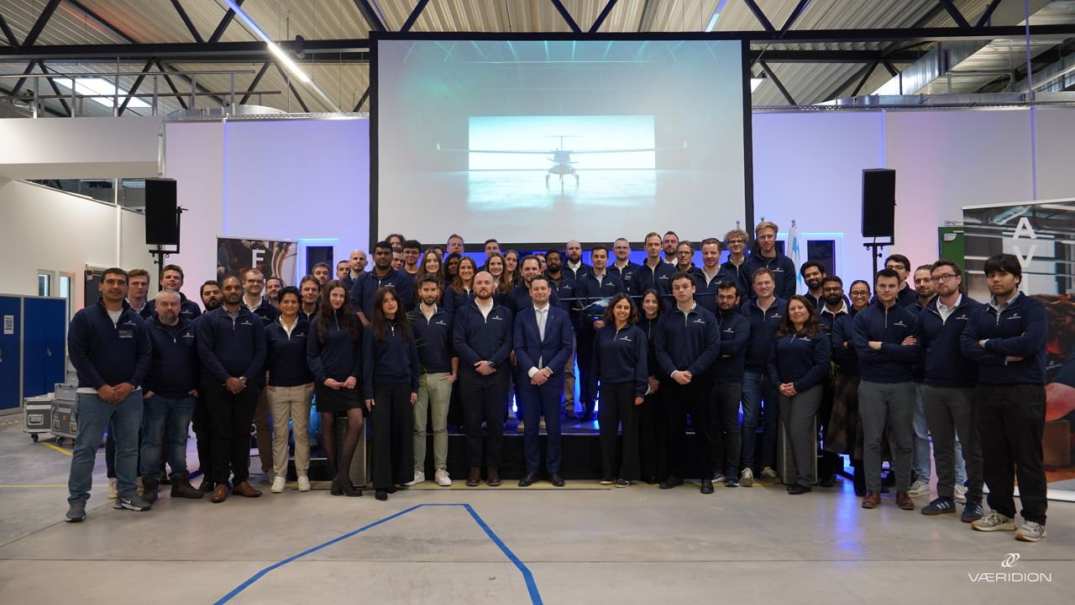
Munich-based VÆRIDION secured €30 million in Series A2 equity financing, led by SHIFT Invest and Invest-NL. Existing investors World Fund, Project A, and Vsquared Ventures also participated. The financing will support development of its first conforming aircraft prototype and further testing of its electric propulsion and battery systems.
Founded in 2021 by former Airbus managers Ivor van Dartel and Sebastian Seemann, VÆRIDION is developing a battery-electric regional aircraft called the Microliner. The aircraft is designed to carry nine passengers over distances of approximately 400 kilometers.
The company is targeting routes that may not be economically attractive for larger conventional aircraft. Potential applications include passenger transportation, regional connections, and cargo services. VÆRIDION says it has received conditional orders for more than 130 aircraft, representing potential business exceeding €730 million.
Those are conditional orders, not recognized revenue or guaranteed future deliveries. The company is targeting commercial service around 2030, subject to successful development and regulatory certification.
Separating equity financing from government support
VÆRIDION also announced that it had been selected for a €94.5 million European Union Innovation Fund grant. That support is separate from its €30 million Series A2.
According to Aviation Week, the proposed grant remains subject to completion of an agreement expected in 2027. It is therefore not included in today’s venture funding total. The distinction matters because combining the figures could make the latest investment appear substantially larger than the completed equity round.
VÆRIDION faces significant engineering and regulatory challenges. Battery-powered aircraft must meet demanding requirements involving range, weight, safety, reliability, and charging infrastructure.
The company’s commercial prospects will depend on whether it can produce an aircraft that airlines can operate economically. Investor interest is meaningful, but certification and manufacturing remain major milestones.
Funding Details
Startup: VÆRIDION
Investors: SHIFT Invest, Invest-NL, World Fund, Project A, Vsquared Ventures, and others
Amount Raised: €30 million in equity financing
Total Raised: Approximately €60 million in reported financing and earlier public support, excluding the proposed €94.5 million grant; comparable equity-only total not disclosed
Funding Stage: Series A2
Funding Date: November 5, 2026
Headquarters: Munich, Germany
Sector: Aerospace / electric aviation/climate technology
Valuation: Not disclosed
FluoRok raises €26.64M to develop safer fluorochemical manufacturing
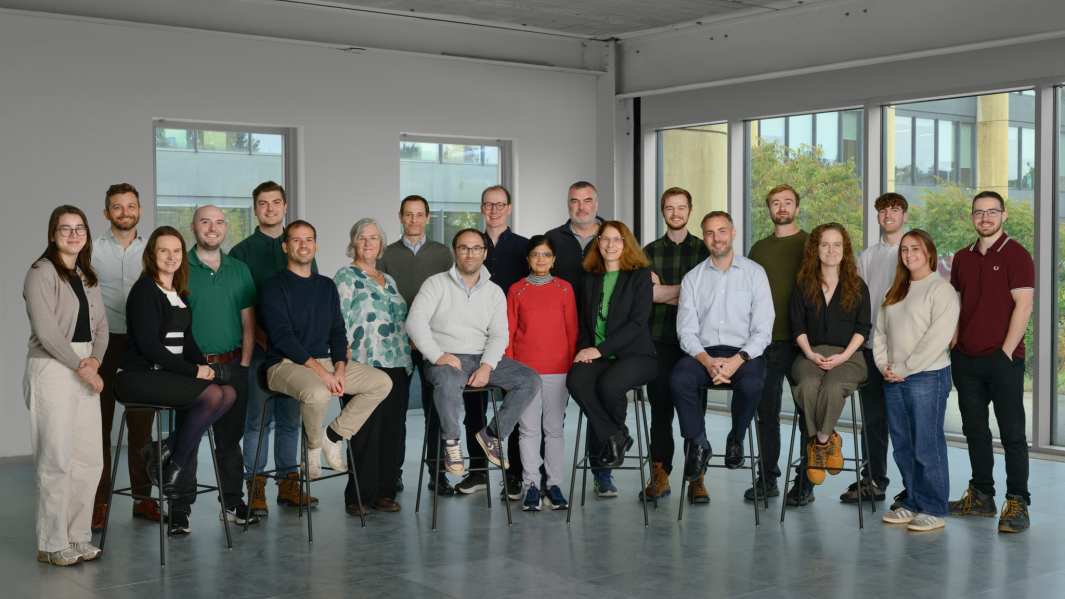
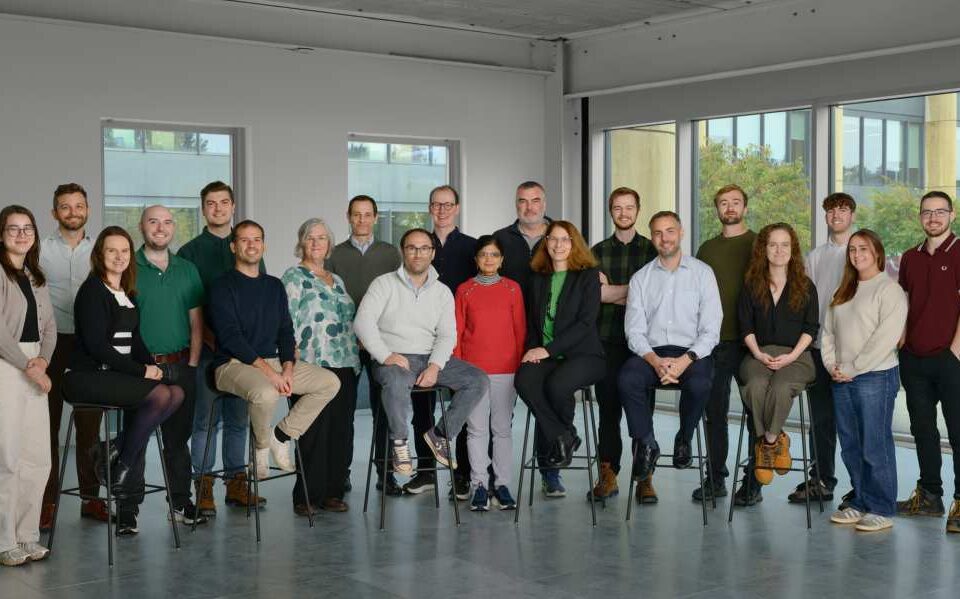
Oxford-based FluoRok announced a €26.64 million Series A financing package to scale a chemical manufacturing process that avoids highly hazardous hydrogen fluoride. The round was led by Orano Ventures Fund, managed by Supernova Invest.
Bidra Innovation Ventures participated alongside existing investors Oxford Science Enterprises, BGF, GGF, Volta Energy Technologies, and the University of Oxford.
One reporting qualification is necessary: the announced package also references approximately €1.15 million in Innovate UK grant funding. The available disclosure does not fully reconcile the grant with the reported package total, so the entire €26.64 million should not be treated as verified new equity investment.
Founded in 2022, FluoRok is a University of Oxford spinout developing technology for producing fluorochemicals. These materials are used in pharmaceuticals, agricultural chemicals, and lithium-ion batteries. Conventional fluorochemical manufacturing often involves hydrogen fluoride, a highly hazardous substance requiring specialized handling and safety systems.
FluoRok’s patented process uses mechanical activation and alternative chemistry to produce fluorinated materials without relying on conventional hydrogen fluoride-based processing. The company is attempting to reduce safety risks and create additional options for sourcing important industrial materials.
FluoRok says more than 10 partners across eight countries are validating its products. Those relationships indicate commercial evaluation, but they do not establish that the company has reached large-scale manufacturing.
A manufacturing opportunity beyond AI
FluoRok’s financing shows how investors are supporting technologies that address industrial supply-chain constraints. Fluorochemicals are important inputs for multiple established industries. A process that reduces hazardous handling requirements or lowers production costs could offer a competitive advantage. However, chemical manufacturing depends on consistent product quality, operating efficiency, and customer qualification.
FluoRok must show its process remains economical as production volumes increase. Its planned expansion includes demonstration facilities for chemical reagents and battery electrolyte materials.
For investors, the opportunity depends on whether laboratory and pilot-scale results can be reproduced at industrial scale. The company previously reported €12.43 million in earlier fundraising, alongside separate public funding. Those historical amounts are excluded from today’s reported financing.
Funding Details
Startup: FluoRok
Investors: Orano Ventures Fund/Supernova Invest, Bidra Innovation Ventures, Oxford Science Enterprises, BGF, GGF, Volta Energy Technologies, University of Oxford, and others
Amount Raised: €26.64 million reported Series A financing package; includes or accompanies approximately €1.15 million in grant funding, with the equity-only amount not fully reconciled
Total Raised: Not disclosed on a comparable equity-only basis
Funding Stage: Series A
Funding Date: November 5, 2026
Headquarters: Oxford, United Kingdom
Sector: Climate technology / industrial chemicals/battery materials
Valuation: Not disclosed
bit.bio raises $25M in funding to expand human cell production for drug discovery
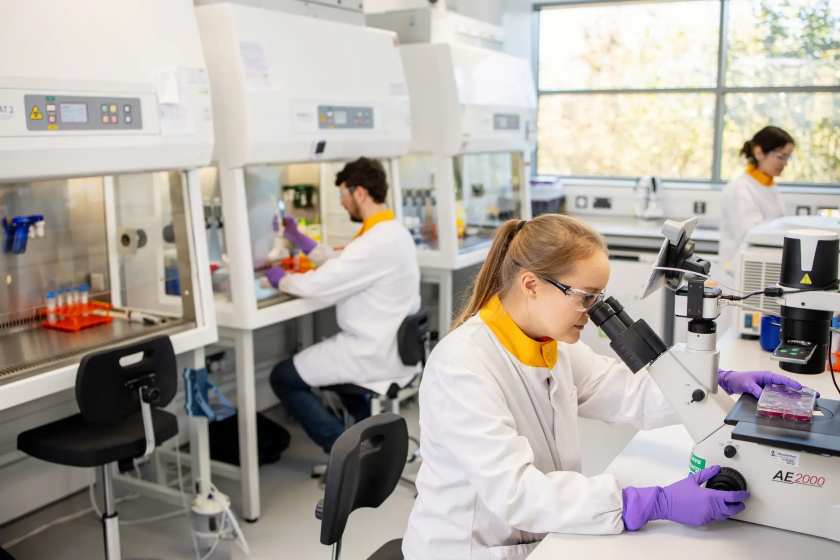
Cambridge-based biotechnology company bit.bio secured $25 million in Series D financing, with backing from existing investor M&G Investments and Jonathan Milner, the founder and former chief executive of Abcam.
The investment follows an earlier Series C round completed during 2026. bit.bio will use the new capital to expand its product portfolio and make its human cell models available to more research customers. bit.bio develops technology for producing consistent types of human cells from stem cells.
Its proprietary opti-ox platform allows the company to manufacture defined cell types for scientific research. Pharmaceutical companies, biotechnology firms, and academic researchers use these products to study diseases and evaluate potential treatments.
The company offers more than 50 human cell types, including models relevant to the heart, liver, and nervous system. Researchers can use these cells to study biological processes and investigate how experimental drugs affect human tissue. bit.bio says paid vial volumes increased 76% during 2026 through the reporting period.
It also reported a 34% increase in orders and a 40% increase in active customers. These figures are company-reported and should not be interpreted as audited financial results.
Why human cell models could become more valuable
AI is accelerating parts of the process of identifying and designing potential medicines. However, laboratory experiments and clinical research must still evaluate computational predictions. That creates demand for biological materials that scientists can use consistently across different experiments.
bit.bio is trying to meet that need by producing standardized human cells at scale. Its commercial opportunity depends on the quality and reproducibility of those products.
Researchers need confidence that results are not distorted by unexpected differences between cell samples. However, the company faces competition from established life sciences suppliers and other cell engineering businesses. Its long-term advantage will depend on product quality, manufacturing economics, scientific credibility, and customer adoption.
The latest financing supports commercial expansion rather than a newly announced clinical treatment.
Funding Details
Startup: bit.bio
Investors: M&G Investments, Jonathan Milner
Amount Raised: $25 million
Total Raised: Not disclosed on a fully reconciled basis in the company announcement
Funding Stage: Series D
Funding Date: November 4, 2026
Headquarters: Cambridge, United Kingdom
Sector: Biotechnology/cell programming/drug discovery infrastructure
Valuation: Not disclosed
What Today’s Funding Activity Reveals
1. AI investment is extending beyond model development
Sand.ai’s financing demonstrates continued investor interest in foundation models.
However, Sentra, Pliant, Jushi, and Huayi Yingfei represent different opportunities created by AI adoption.
Sentra protects information accessed by AI agents.
Pliant is extending payment infrastructure to automated workflows.
Jushi develops equipment and software that help semiconductor manufacturers improve production.
Huayi Yingfei is building components for high-speed optical communications.
The transactions suggest investors see opportunities throughout the systems supporting AI adoption.
2. Capital-intensive technologies remain attractive to selected investors
Bangxin, Huayi Yingfei, VÆRIDION, FluoRok, and Laza Medical require specialized equipment, engineering, testing, or manufacturing.
Their financing needs differ from those of software companies. A manufacturing process cannot necessarily be expanded through additional cloud infrastructure.
Production facilities, quality systems, and regulatory requirements create substantial costs. However, these requirements can also make successful businesses difficult for competitors to reproduce.
3. Corporate investment is playing a meaningful role
Capital One Ventures led Sentra’s financing.
GE HealthCare led Laza’s structured Series B.
Wangsu participated as a co-lead investor in Sand.ai.
Other rounds attracted investment from companies or institutions connected to their industries.
Strategic investors may provide valuable technical knowledge and commercial relationships. However, their participation should not be treated as proof that future customer contracts have been secured.
4. China’s semiconductor investments are concentrated across multiple manufacturing layers
Bangxin manufactures equipment used in chip production.
Jushi develops precision inspection and measurement technology.
Huayi Yingfei designs optical components used in communications infrastructure.
These are distinct businesses serving different parts of the semiconductor industry. Their combined funding activity reflects investor interest in manufacturing capabilities rather than simply designing additional computing chips. That distinction matters because semiconductor production depends on equipment, materials, inspection, packaging, and many other specialized suppliers.
5. European financing reflects a different set of industrial priorities
Pliant is expanding financial infrastructure.
VÆRIDION is developing battery-electric aircraft.
FluoRok is attempting to improve industrial chemical manufacturing.
bit.bio supplies research materials to biotechnology customers.
The four companies operate in unrelated markets, making it inappropriate to impose a single investment narrative on all of them. However, their financing shows that European investors continue to support businesses that combine technical expertise with established commercial demand.
6. Security and governance are becoming important parts of enterprise AI adoption
Sentra’s financing highlights the operational risks introduced by autonomous software.
As organizations deploy more AI agents, managing access to sensitive information becomes increasingly complicated. The company’s investment suggests demand for security tools that can govern AI systems alongside human users. However, competition and customer adoption will determine whether Sentra can turn that demand into lasting commercial advantages.
7. Manufacturing maturity varies considerably across the selected companies
Bangxin reports equipment deliveries and customer installations.
bit.bio sells human cell models to research customers.
Huayi Yingfei reports selected products undergoing customer validation.
VÆRIDION is developing an aircraft that still requires certification.
Laza Medical’s imaging system remains under development and is not approved for commercial sale.
These companies should not be evaluated using the same measures of commercial maturity.
8. Funding disclosures can exaggerate capital availability when read carelessly
Laza announced up to $160 million in financing.
VÆRIDION disclosed €30 million in equity alongside a separate proposed EU grant.
FluoRok’s financing announcement references grant support.
Sand.ai reported $300 million in cumulative financing, including earlier rounds.
Those figures cannot simply be added together as though every amount represented newly received equity financing.
Tech Funding Table
| Startup | Amount Raised | Sector | Funding Stage | Lead/Key Investors | Country |
|---|---|---|---|---|---|
| Sand.ai | $200M | Generative AI/video models | Series A+ | Cornerstone Capital, Wangsu Science & Technology | China |
| Laza Medical | Up to $160M structured financing | Medical imaging / AI robotics | Series B | GE HealthCare, Unorthodox Ventures | United States |
| Sentra | $150M | Cybersecurity / AI data governance | Series C | Capital One Ventures | United States / Israel |
| Bangxin Semiconductor | >RMB 600M | Semiconductor manufacturing equipment | Series B+ | Jiangxia Science and Technology Investment, BOC Capital | China |
| Pliant | $80M | B2B payments / financial infrastructure | Series C | Seaya Nova, Speedinvest | Germany |
| Jushi Technology | Several hundred million RMB | Semiconductor inspection / industrial AI | Series C | Caitong Capital, Yihua Capital, Rilian Technology | China |
| Huayi Yingfei Photonics | Several hundred million RMB | Optical semiconductors/data center networking | Series A | China Reform-affiliated fund, Huakong Fund | China |
| VÆRIDION | €30M | Electric aviation | Series A2 | SHIFT Invest, Invest-NL, World Fund | Germany |
| FluoRok | €26.64M reported package, including or accompanying grant funding | Industrial chemicals/battery materials | Series A | Orano Ventures Fund/Supernova Invest, Bidra Innovation Ventures | United Kingdom |
| bit.bio | $25M | Biotechnology / human cell models | Series D | M&G Investments, Jonathan Milner | United Kingdom |
Funding note: The selected announcements contain $455 million in completed funding rounds, excluding Laza Medical’s structured financing ceiling. The two euro-denominated announcements total €56.64 million in reported financing packages, although FluoRok’s equity-only amount is not fully reconciled. Three Chinese semiconductor-related rounds add more than RMB 600 million in explicitly quantified funding, plus two separate transactions described as several hundred million yuan each.
Strategic Takeaways for Founders and Investors
1. AI businesses need a defensible position beyond model access. Sand.ai is developing proprietary video-generation technology while also building direct commercial products. Its opportunity depends on maintaining competitive model performance and converting technical improvements into revenue. Founders relying exclusively on third-party models may face greater pressure as capabilities become more widely available.
2. Enterprise AI creates demand for new security infrastructure. Sentra’s financing reflects the importance of controlling what autonomous agents can access. Founders selling AI systems to enterprises should account for data permissions, auditability, and security requirements early in product development.
3. Payment automation requires financial controls, not just intelligent software. Pliant is extending established payment infrastructure to AI agents. Its strategy illustrates why integrating AI with regulated financial systems can be more complicated than building a conversational interface.
4. Semiconductor startups must prove manufacturing reliability. Bangxin, Jushi, and Huayi Yingfei occupy different parts of the semiconductor supply chain, but all must meet demanding customer requirements. Investors should evaluate product qualification, production yields, reliability, and repeat orders rather than relying solely on technical specifications.
5. Strategic investors can strengthen commercial positioning. GE HealthCare’s investment in Laza and Capital One Ventures’ backing of Sentra demonstrate the value of industry-specific relationships. However, founders should distinguish strategic interest from committed revenue, distribution agreements, or guaranteed adoption.
6. Regulatory milestones can determine the commercial timetable. Laza Medical must obtain appropriate medical-device approvals. VÆRIDION faces aircraft certification requirements. Founders operating in regulated markets should finance their businesses around realistic development and approval schedules.
7. Industrial technology must demonstrate competitive production costs. FluoRok’s opportunity depends on producing fluorochemicals safely and economically at scale. A superior laboratory process will have limited commercial value if manufacturing costs or customer qualification requirements prevent adoption.
8. Proprietary scientific infrastructure can benefit from AI without being an AI company. bit.bio supplies human cell models used in drug discovery. As computational drug design develops, researchers will still need reliable biological materials to evaluate their predictions. Founders should look for opportunities created by the supporting requirements of new technologies.
9. Manufacturing capacity should be evaluated against verified demand. Bangxin reports equipment deliveries, while Huayi Yingfei is advancing products through customer testing. Investors should distinguish installed equipment and completed sales from engineering samples, production plans, or conditional orders.
10. The quality of funding matters as much as its size. Laza’s structured financing, VÆRIDION’s separate proposed grant, and FluoRok’s mixed financing disclosure illustrate the importance of examining transaction structures. A company announcing a large financing package may not receive all of that amount immediately or in the form of equity.
Conclusion
Today’s startup funding activity reveals investors financing the technologies required to make AI and other advanced systems commercially useful.
Sand.ai’s $200 million Series A+ reflects confidence in specialized generative video models. Sentra’s $150 million financing highlights growing demand for security infrastructure as enterprises deploy autonomous AI agents. Pliant’s $80 million Series C illustrates how established financial technology is being adapted for automated transactions.
The semiconductor investments add another dimension. Bangxin, Jushi, and Huayi Yingfei are developing equipment and components used in the production and operation of advanced computing systems.
Outside AI, Laza Medical is pursuing intelligent cardiac imaging, VÆRIDION is developing electric aircraft, FluoRok is improving industrial chemical manufacturing, and bit.bio is expanding a business supplying research materials for drug development.
These investments have different risks, timelines, and potential returns.
Some companies are expanding established commercial operations. Others must still show their technologies can meet demanding regulatory, manufacturing, or customer requirements.
The common investment proposition is that specialized technology can create valuable businesses when it addresses problems customers will pay to solve.
Today’s rounds show strong investor conviction, but the durability of these investments will depend on what companies accomplish after receiving the capital.