Oracle to raise $20 billion in stock and debt sales to fund AI expansion as shares plunge nearly 9%
 Daniel Levi
Posted On November 3, 2026
Oracle is turning to Wall Street for another $20 billion to finance its massive artificial intelligence ambitions, raising fresh questions about how much debt and shareholder dilution investors will accept before its AI investments begin paying off.
The software giant announced Monday that it would raise $10 billion through a stock offering and another $10 billion through bond sales, as it races to build the data centers and cloud infrastructure needed to compete with Microsoft, Amazon, and other major AI players.
Investors weren’t impressed. Oracle shares plunged 8.8% to $119.22 on Monday, extending the stock’s losses this year to roughly 39%. The selloff reflects growing concerns about the company’s spending commitments, mounting debt, and the financial risks of its aggressive AI strategy.
Oracle priced 86.2 million shares at $116 apiece, an 11.2% discount to Friday’s closing price. The equity offering is expected to raise about $10 billion, with another $10 billion coming from five fixed-rate bond offerings maturing between 2029 and 2046, Reuters reported.
The bonds carry interest rates ranging from 7% to 8.65%, reflecting the substantial cost of borrowing to finance its infrastructure plans. The offerings are expected to close on November 4, subject to customary conditions.
Oracle said proceeds could support capital expenditures, debt repayment, acquisitions, dividends, and share repurchases. The broad range of potential uses gives the company flexibility as it balances infrastructure spending against its existing financial obligations.
The fundraising comes just days after Oracle outlined an ambitious plan to more than triple annual revenue, from $67.36 billion in fiscal 2026 to more than $225 billion by fiscal 2030.
That target depends heavily on Oracle’s ability to turn demand for AI computing into profitable, recurring cloud revenue.
Oracle’s $20 billion AI bet raises questions about debt and profitability
Oracle’s biggest challenge is no longer convincing customers that AI infrastructure matters. It’s finding enough capital to build that infrastructure without putting too much pressure on its balance sheet.
As of August 31, Oracle carried approximately $125.34 billion in notes payable and other borrowings, a substantial figure for a company generating $67.36 billion in annual revenue.
The latest bond offering adds to those obligations, bringing new interest expenses at a time when investors are closely examining the financial returns from AI infrastructure spending.
Oracle’s exposure to OpenAI adds another dimension to those concerns. The ChatGPT developer is among the major customers driving demand for Oracle’s cloud infrastructure, making its spending plans and future computing requirements important to Oracle’s growth outlook.
Unlike Microsoft and Amazon, Oracle operates with a smaller revenue base to support its enormous infrastructure commitments. That leaves less room for setbacks if construction costs climb, customer demand slows, or expected revenue takes longer to materialize.
Oracle executives remain confident that the spending will translate into strong financial results.
At its October 28 investor presentation, the company projected that capital expenditures would peak during fiscal 2027 and 2028 before declining in fiscal 2029. Chief Financial Officer Hilary Maxson said Oracle expects free cash flow to turn positive during the second half of fiscal 2028.
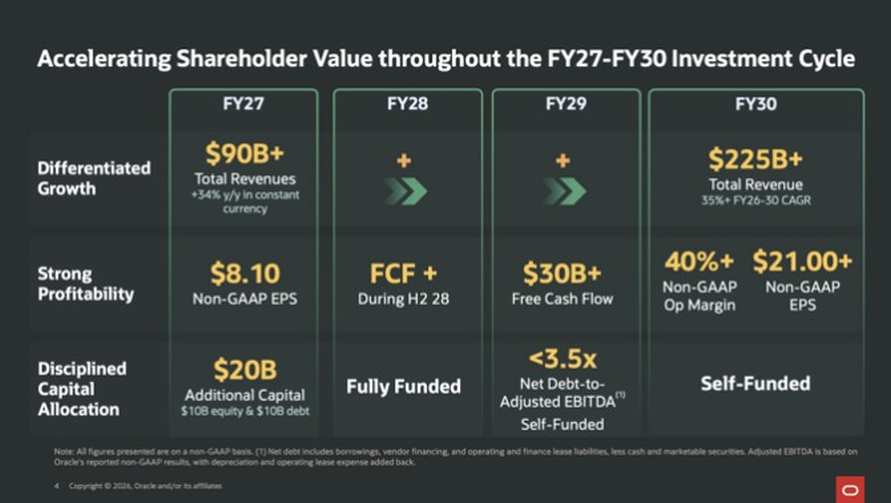
Image credit: Via Oracle SEC Filing
The company is targeting more than $30 billion in free cash flow in fiscal 2029 and adjusted earnings exceeding $21 per share by fiscal 2030. According to SEC filings, Oracle has committed to limiting additional capital-market fundraising through fiscal 2030 to $20 billion, excluding debt refinancing.
Those projections offer a potential path to stronger profitability, but investors must first absorb years of substantial spending.
The latest fundraising illustrates a broader tension across the AI industry. Demand for computing capacity continues to attract billions in investment, yet building the infrastructure requires enormous amounts of cash long before the full financial returns become clear.
For Oracle, the question is no longer whether AI can drive revenue growth. It’s whether that growth can arrive quickly enough to justify the debt, dilution, and enormous capital commitments required to get there.