Startup Funding News Today, October 30, 2026: Kalshi, Cohere, Bites, Dulo, Opentrons, Firehawk Defense, Wabi & More
 Nickie Louise
Posted On October 30, 2026

More than $1.77 billion in newly announced venture-equity financing flowed into financial technology, artificial intelligence, defense manufacturing, battery materials, and enterprise automation over the past 24 hours. Kalshi led the day’s funding announcements with a $1 billion Series G at a $40 billion valuation, while Canadian AI startup Cohere announced the initial closing of a much larger financing initiative targeting up to C$7 billion. The two transactions reveal different forms of investor conviction: one in expanding financial markets, the other in building an AI company that can compete globally outside the United States and China.
Industrial technology also attracted substantial capital. Group14 Technologies secured €150 million, approximately $169 million, to expand silicon battery-materials manufacturing into Spain. Defense technology startup Firehawk Defense raised more than $150 million at a valuation exceeding $1.4 billion to increase domestic rocket-propulsion and munitions production. Meanwhile, Serval raised $150 million at a $3 billion valuation to challenge established enterprise software providers with AI-powered workflow automation.
Elsewhere, AI engineering startup Dulo raised a $130 million seed round backed by investors including Eric Schmidt, John Doerr, and DST Global. Personal AI startup Wabi secured $55 million at a $1.25 billion valuation, while Collective announced a $100 million financing package combining $40 million in equity with a separate $60 million customer-acquisition facility. Bites raised $40 million to improve frontline employee training, and laboratory robotics company Opentrons secured another $40 million to expand automated scientific research.
The nine selected rounds with disclosed equity amounts total approximately $1.774 billion. Kalshi accounts for roughly 56% of that disclosed minimum. Cohere is the tenth selected company, but its completed initial closing amount remains undisclosed, so it is excluded from the aggregate. Collective’s additional $60 million growth facility is also excluded from the equity total.
The geographic concentration is notable. Eight selected companies are headquartered in the United States, Cohere is based in Canada, and Bites operates from New York and Tel Aviv. The selection reflects the size and strategic importance of the verified announcements, not a requirement to distribute deals evenly across regions.
The Macro Environment: Investors Are Financing Control Over Technology, Infrastructure, and Distribution
Today’s venture capital activity reveals a market pursuing two related objectives. Investors are backing companies that can operate important financial and enterprise systems, while also financing the physical infrastructure and specialized technology needed to support economic and industrial activity. Kalshi, Serval, and Collective are attempting to reshape existing services through software. Group14 and Firehawk are investing in manufacturing capabilities that require substantial facilities, equipment, and specialized expertise.
Kalshi’s financing illustrates how private-market valuations can rise rapidly when investors believe a startup may become a significant financial institution. The company’s $40 billion valuation represents an increase of about 82% from the $22 billion valuation in its previous funding round in May. Its ambitions now extend beyond conventional prediction markets toward financial products that compete more directly with established exchanges. However, that expansion also introduces regulatory, competitive, and financial risks.
Cohere’s announcement demonstrates another increasingly important investment theme: national and regional control over AI infrastructure. The company is pursuing a financing target of up to C$7 billion, with Germany’s Schwarz Group leading the round and participation from Nvidia, Canadian investors, and the Canadian government. The financing supports Cohere’s ambition to develop enterprise AI models and infrastructure that institutions can deploy under their own security, legal, and operational requirements. The initial closing is complete, but the company has not disclosed how much capital it has secured.
The financing environment also remains demanding for companies building physical infrastructure. Group14 must construct and operate battery-materials factories, while Firehawk is expanding facilities that produce specialized defense components. Both require capital long before they can realize all anticipated commercial returns. Their investments reflect demand for manufacturing capacity and supply-chain resilience, but the economic outcomes will depend on customer contracts, production costs, operating performance, and facility utilization.
Meanwhile, enterprise AI investment is becoming increasingly focused on products that complete work rather than simply provide information. Serval wants employees to create automated workflows without conventional software development. Collective is combining accounting, payroll, and tax services for individual business owners. Bites uses AI to produce and distribute workplace training, while Opentrons connects laboratory robots with software and experimental data.
The broader financial context matters. On October 29, Microsoft was preparing a major bond offering, reportedly targeting approximately $25 billion, as large technology companies continued financing expensive AI infrastructure expansion. That public-market financing is separate from today’s venture rounds, but it illustrates how capital-intensive AI development has become.
Today’s strongest investment signal is the growing value investors assign to companies that can control important workflows, computing capabilities, manufacturing processes, or distribution relationships. The challenge for founders is demonstrating that those advantages can generate sustainable returns.
Kalshi raises $1B to expand beyond prediction markets into broader financial trading

New York-based Kalshi raised $1 billion in Series G financing at a $40 billion post-money valuation, making it the largest disclosed financing in today’s report. Sequoia Capital and Wellington Management co-led the round. Other investors included Baillie Gifford, Andreessen Horowitz, Coatue, CapitalG, Morgan Stanley Investment Management, Hudson River Trading, Balyasny Asset Management, Stripes, Layer Global, and Sequoia Global Equities.
Kalshi announced the completed financing on October 29. The transaction follows another $1 billion round completed approximately five months earlier at a $22 billion valuation.
Founded by Tarek Mansour and Luana Lopes Lara, Kalshi operates a federally regulated exchange for event contracts. These contracts allow traders to take financial positions on the outcomes of events involving economics, politics, sports, weather, and other subjects. The company is increasingly positioning itself as a broader financial exchange rather than a platform exclusively focused on event probabilities.
A $40 billion bet on the future of financial exchanges
Kalshi has expanded into perpetual futures tied to cryptocurrency and other financial markets. Its strategy places the company in closer competition with established exchanges and trading platforms. The company says annualized trading volume across its markets has surpassed $1 trillion. That figure measures transaction activity, not company revenue.
The distinction matters because exchange profitability depends on transaction fees, market participation, operating expenses, and regulatory costs, not trading volume alone. For investors, Kalshi’s opportunity comes from developing new categories of tradable financial instruments while attracting both individual and institutional participants.
But the company faces significant regulatory uncertainty. Its sports-related event contracts have drawn legal challenges from state authorities, including allegations that some offerings amount to unauthorized gambling. Kalshi disputes such characterizations and operates under federal derivatives regulation.
The outcome of those disputes could influence the company’s addressable market and future operating requirements. Kalshi’s $40 billion valuation reflects substantial expectations about its ability to expand beyond prediction markets. The company must demonstrate that its growth can support a diversified, compliant, and profitable financial exchange.
Funding Details
Startup: Kalshi
Investors: Sequoia Capital, Wellington Management, Baillie Gifford, Andreessen Horowitz, Coatue, CapitalG, Morgan Stanley Investment Management, and others
Amount Raised: $1 billion
Total Raised: Not disclosed on a fully reconciled lifetime basis
Funding Stage: Series G
Funding Date: October 29, 2026
Headquarters: New York, United States
Sector: Financial technology/prediction markets / financial exchanges
Valuation: $40 billion post-money
Cohere announces first close of Series E targeting up to C$7B to build sovereign AI infrastructure
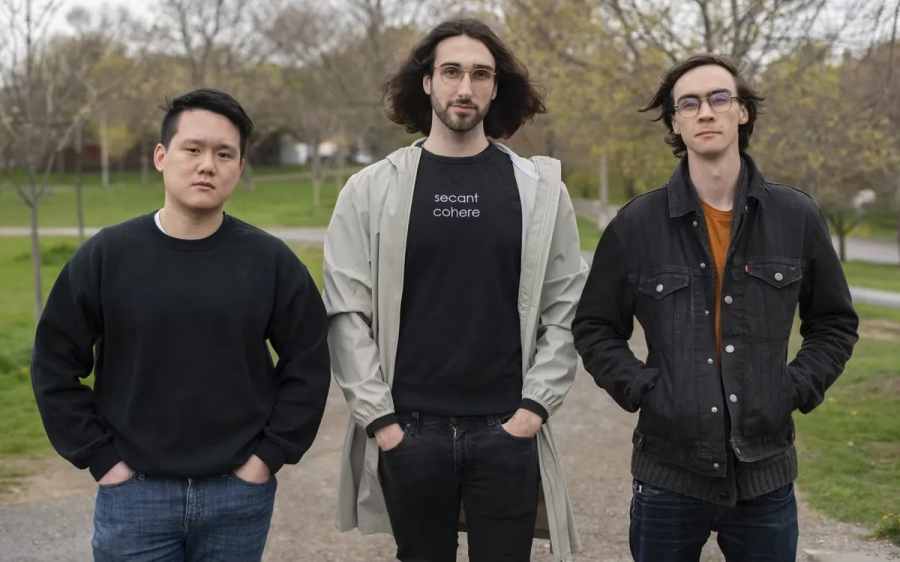
Toronto-based Cohere announced the initial close of a Series E financing targeting up to C$7 billion, about US$4.49 billion, led by Germany’s Schwarz Group. Participants include Bell Ventures, Bullhound Capital, Inovia Capital, Nvidia, Prosperity7 Ventures, and the Government of Canada.
Canadian Prime Minister Mark Carney also said the government would invest up to C$1.6 billion. Reuters expects the financing to value Cohere at about C$36 billion. However, Cohere has not disclosed the amount secured in the initial closing. The C$7 billion figure is the round’s target, not the amount completed.
Founded in 2019 by Aidan Gomez, Ivan Zhang, and Nick Frosst, Cohere develops large language models and enterprise AI software. Unlike companies primarily focused on consumer chatbots, Cohere targets businesses and institutions that need greater control over AI deployment. Its products support use cases involving enterprise search, business information processing, and AI applications deployed within customer-controlled environments.
Sovereign AI becomes a major investment category
Cohere’s financing is connected to growing demand for AI systems that governments and businesses can operate without depending entirely on American or Chinese technology providers. The company is strengthening its relationship with Germany through its planned combination with Aleph Alpha.
Schwarz Group, which owns the Lidl and Kaufland retail chains, also operates STACKIT, a European cloud infrastructure provider. That relationship could provide computing resources and commercial distribution for Cohere’s technology.
Cohere says annual recurring revenue increased 165% year over year in the third quarter of 2026 and that it serves approximately 300 customers. The company has not disclosed the absolute ARR figure in its latest announcement. It also plans to invest at least C$1.7 billion in Canadian computing infrastructure by 2030.
For investors, the opportunity lies in providing enterprise AI systems that meet demanding requirements for privacy, security, regulatory compliance, and operational independence. However, Cohere competes with better-capitalized AI developers and major cloud providers.
The business must show customers will pay for differentiated model capabilities, deployment options, and control over sensitive information. The financing has substantial geopolitical significance, but the actual completed amount remains unavailable.
Funding Details
Startup: Cohere
Investors: Schwarz Group, Government of Canada, Nvidia, Bell Ventures, Bullhound Capital, Inovia Capital, Prosperity7 Ventures
Amount Raised: Initial Series E closing completed; amount not disclosed
Target Financing: Up to C$7 billion, approximately US$4.49 billion
Total Raised: Not disclosed on a fully reconciled basis following the initial closing
Funding Stage: Series E, initial closing
Funding Date: October 29, 2026
Headquarters: Toronto, Canada
Sector: Foundation models/enterprise AI / sovereign AI infrastructure
Valuation: Approximately C$36 billion, according to Reuters; final valuation terms not fully disclosed
Group14 Technologies raises €150M to expand silicon battery-materials manufacturing into Europe
Woodinville, Washington-based Group14 Technologies raised €150 million ($169 million) through an extension of its Series D financing. The investment came from a new investor whose identity it did not disclose. The transaction increases Group14’s Series D financing to more than $665 million. The company announced the completed equity extension on October 29.
Group14 develops silicon-carbon materials used in advanced lithium-ion batteries. Its flagship product, SCC55, is designed to improve battery performance by replacing or supplementing conventional graphite-based anode materials. The company supplies materials for applications including consumer electronics, electric vehicles, drones, and other battery-powered products.
Battery innovation moves from chemistry to manufacturing scale
Group14 will use the financing to expand production into Spain. Its planned BAM-4 facility in Sagunto will initially provide 10 gigawatt-hours of annual battery-material capacity. The company already operates a facility in South Korea and is developing additional manufacturing capacity in Washington state.
When the planned facilities are operating, Group14 expects its near-term manufacturing footprint to reach 40 gigawatt-hours. However, planned production capacity should not be confused with operating output. The company’s South Korean facility is currently operating and increasing production, while its additional American and European capacity remains under development.
Group14 says its existing Woodinville facility has supplied materials to more than 150 customers. The strategic opportunity is to reduce battery supply-chain dependence while improving performance. Locating manufacturing facilities near customers may reduce transportation costs, improve logistics, and provide greater supply certainty. However, manufacturing economics remain demanding.
Group14 must achieve competitive production yields, maintain product quality, and show customers will buy enough material to support new facilities. For investors, the company’s advantage may come from its proprietary manufacturing processes, intellectual property, and relationships with battery manufacturers.
Funding Details
Startup: Group14 Technologies
Investors: New investor not disclosed; previous investors include established industrial and financial institutions
Amount Raised: €150 million, approximately $169 million
Total Raised: Series D financing exceeds $665 million; lifetime total not fully reconciled
Funding Stage: Series D extension
Funding Date: October 29, 2026
Headquarters: Woodinville, Washington, United States
Sector: Battery technology / advanced materials / industrial manufacturing
Valuation: Not disclosed
Firehawk Defense raises over $150M to expand U.S. rocket propulsion and munitions production

Dallas-based Firehawk Defense raised more than $150 million in Series D financing at a valuation exceeding $1.4 billion. The round was co-led by Advent International and Rochefort Asset Management. Rochefort announced the completed financing on October 29, building on its earlier lending relationship with Firehawk.
Firehawk develops propulsion systems and specialized materials used in rockets, artillery, and other defense applications. Its products include solid rocket motor propellant and components for Hydra-70 rockets. The company is also developing propulsion-related components for 155mm artillery systems.
Firehawk’s manufacturing approach uses thermoplastic materials rather than relying entirely on traditional methods for producing solid rocket propellant.
Defense investors target manufacturing bottlenecks
Traditional solid rocket propellant production can involve lengthy manufacturing and curing processes. Firehawk says its technology can produce usable energetic materials in hours, not weeks. That difference could become commercially significant if the company can maintain performance and safety while increasing production.
Demand for rocket motors and artillery components has increased as military stockpiles are replenished following sustained munitions expenditures in Ukraine and other conflict regions.
Firehawk is expanding its manufacturing operations in Oklahoma and Mississippi. Its Crawford, Mississippi, facility is already integrating Hydra-70 rockets. The company expects its Great Plains Arsenal facility in Lawton, Oklahoma, to begin commissioning in early 2027.
The planned facility is designed for initial annual production of approximately 740,000 pounds of thermoplastic propellant, with potential expansion beyond three million pounds. Those figures are planned capacity, not existing annual production. Firehawk also reports completing a six-for-six Hydra-70 live-fire test following a U.S. Army award.
For investors, the opportunity is connected to defense manufacturing capacity and the ability to produce critical components more efficiently. However, the company must demonstrate consistent manufacturing quality, reliable product performance, and compliance with demanding military procurement requirements.
Its $1.4 billion-plus valuation reflects significant expectations for its manufacturing technology and future defense contracts.
Funding Details
Startup: Firehawk Defense
Investors: Advent International, Rochefort Asset Management, and additional investors
Amount Raised: More than $150 million
Total Raised: Not disclosed on a fully reconciled lifetime basis
Funding Stage: Series D
Funding Date: October 29, 2026
Headquarters: Dallas, Texas, United States
Sector: Defense technology/propulsion systems / advanced manufacturing
Valuation: More than $1.4 billion
Serval raises $150M in funding at $3B valuation to challenge ServiceNow with AI-powered automation
San Francisco-based Serval raised $150 million in Series C financing led by Sequoia Capital, valuing the company at $3 billion. The round included participation from Elad Gil, Evantic, First Round Capital, General Catalyst, Redpoint, Conviction, and Headline.
The investment brings Serval’s total funding to $277 million. Serval announced the financing on October 29, marking its third round in about 12 months.
Founded by Jake Stauch and his team, Serval develops AI software for enterprise service management. Its technology initially focuses on IT operations, including employee access requests, technical support, software provisioning, and device management.
The company is expanding into administrative processes involving human resources, finance, and legal departments. Serval’s Catalyst platform allows employees to describe processes in natural language, after which AI agents generate automation workflows.
Enterprise AI moves toward replacing existing software
Serval is positioning itself as an alternative to established enterprise service-management platforms, including ServiceNow. That ambition is significant because large companies have invested heavily in existing software and operational processes.
Replacing those systems requires more than offering attractive AI features. Customers must be confident that the new platform can support permissions, approvals, integrations, audit records, and complicated business requirements.
Serval says electric vehicle manufacturer Lucid Motors migrated from ServiceNow to its platform in approximately 45 days. That is a company-reported example, not evidence that every large enterprise can complete a similar migration.
The startup is also separating agents used to build automation tools from agents authorized to perform operational tasks. This makes a huge difference because allowing an AI system to create workflows and execute them without appropriate controls could introduce security risks.
For investors, Serval’s potential advantage lies in replacing labor-intensive software configuration with automated workflow development. However, the company must demonstrate that its technology can support the breadth and reliability customers expect from established enterprise systems. Its valuation has reportedly tripled to about $1 billion as of December 2025. That increase reflects substantial investor confidence, but the company’s absolute revenue and profitability remain undisclosed.
Funding Details
Startup: Serval
Investors: Sequoia Capital, Elad Gil, Evantic, First Round Capital, General Catalyst, Redpoint, Conviction, Headline
Amount Raised: $150 million
Total Raised: $277 million
Funding Stage: Series C
Funding Date: October 29, 2026
Headquarters: San Francisco, California, United States
Sector: Enterprise AI / IT service management/workflow automation
Valuation: $3 billion
Dulo raises $130M seed funding round to develop AI models for engineering and hardware design
San Francisco-based Dulo raised $130 million in seed financing to develop foundation models for engineering and hardware design. Investors include former Google CEO Eric Schmidt, Kleiner Perkins chairman John Doerr, DST Global, Construct Capital, and Lowercarbon Capital. The Information first reported the financing, citing a person familiar with the transaction.
The startup was founded in 2026 by Sebastian Thrun and Adrian Aoun. Thrun is known for his work on autonomous vehicles and artificial intelligence, including his involvement in Google’s early self-driving car efforts.
Dulo is attempting to apply AI to engineering design. The company’s broader objective is to develop models that can help create and develop physical products.
AI moves into hardware engineering
Software development has become one of the most commercially significant applications of generative AI. Engineering physical products presents additional challenges. Design decisions must account for materials, structural requirements, manufacturing constraints, safety, performance, and cost.
A model that generates attractive designs is not necessarily capable of producing components that can be manufactured economically or used safely. Dulo’s opportunity lies in helping engineers evaluate design alternatives and potentially reduce development time.
The $130 million seed round is unusually large for a newly established company. That amount reflects substantial investor conviction in the founding team and the potential market opportunity. However, Dulo has not publicly disclosed detailed product specifications, commercial customers, revenue, or independent performance benchmarks. The company remains an early-stage investment, and its technical capabilities are not yet fully visible.
For investors, the opportunity lies in translating advances in AI model development into mechanical and industrial engineering. But the company must demonstrate that its models generate designs that satisfy real engineering requirements and improve development economics.
Funding Details
Startup: Dulo
Investors: Eric Schmidt, John Doerr, DST Global, Construct Capital, Lowercarbon Capital
Amount Raised: $130 million
Total Raised: $130 million in reported financing
Funding Stage: Seed
Funding Date: October 29, 2026, original reporting
Headquarters: San Francisco, California, United States
Sector: Engineering AI/foundation models/hardware design
Valuation: Not disclosed
Wabi raises $55M in funding at $1.25B valuation to develop AI assistants for shared everyday activities
San Francisco-based Wabi raised $55 million in financing led by IVP at a $1.25 billion valuation. Other investors included Andreessen Horowitz, Forerunner, Amazon Alexa Fund, and individual investors such as Shopify CEO Tobi Lütke, Salesforce CEO Marc Benioff, Marissa Mayer, and Dick Costolo. The company did not specify a conventional funding-stage designation for the latest round.
Eugenia Kuyda founded Wabi, after creating the AI companion platform Replika. The company initially focused on allowing people to create applications through natural-language instructions. It subsequently shifted toward a personal AI assistant designed for individuals and groups.
Wabi now combines conversational AI with personalized applications that can support activities such as planning events, organizing schedules, managing shared interests, and maintaining personal routines.
Consumer AI investors look beyond individual chatbots
Most prominent AI assistants are designed primarily around interactions between one user and one chatbot. Wabi is pursuing a different approach. Its platform lets groups use shared AI tools in common spaces. For example, friends might organize an event, families could coordinate schedules, or a group could create an application for a recurring activity.
Wabi bets these collaborative use cases will drive stronger engagement than individual chatbot conversations. The startup has not disclosed verified revenue, active-user totals, or customer retention figures in its latest announcement. That limits the ability to evaluate its valuation against conventional operating metrics.
For investors, Wabi’s potential advantage may come from user relationships, collaborative features, and applications that become part of recurring social activity. However, consumer AI is intensely competitive.
Large technology companies already control major messaging platforms, personal assistants, and consumer software ecosystems. Wabi must show that its shared AI experience offers enough value to attract and retain users without relying on those established platforms.
Funding Details
Startup: Wabi
Investors: IVP, Andreessen Horowitz, Forerunner, Amazon Alexa Fund, Tobi Lütke, Marc Benioff, Marissa Mayer, and others
Amount Raised: $55 million
Total Raised: At least $75 million in publicly reported rounds
Funding Stage: Not disclosed
Funding Date: October 29, 2026
Headquarters: San Francisco, California, United States
Sector: Consumer AI / personal AI assistants / collaborative software
Valuation: $1.25 billion
Collective raises $40M Series B plus $60M growth facility to automate finances for solo entrepreneurs
San Francisco-based Collective announced a $100 million financing package: $40 million in Series B equity and a separate $60 million growth facility. The equity round was led by General Catalyst, QED Investors, and Gradient Ventures. Other backers included Intuit Ventures, FT Partners, and SemperVirens.
The $60 million facility comes from General Catalyst’s Customer Value Fund and is intended to support customer acquisition. Today’s venture-equity total includes only the $40 million equity round.
Founded by Hooman Radfar, Bugra Akcay, and Uğur Kaner, Collective provides financial and administrative services for individuals operating businesses independently. Its platform combines business formation, bookkeeping, payroll, taxes, invoicing, and financial services. The company is increasingly incorporating AI into these processes.
Collective wants to provide the administrative capabilities of a larger organization without requiring customers to hire dedicated accounting and finance teams.
A different financing model for customer acquisition
Collective’s investment structure is particularly interesting. The $40 million Series B provides conventional equity financing. The additional $60 million facility supports customer acquisition through a structure connected to future customer-generated revenue. This differs from traditional venture financing because it lets the company finance growth without issuing additional equity for the full amount.
Collective reports annual recurring revenue growth of approximately 120%. The company also says its platform has helped customers save an estimated $350 million in cumulative taxes. Those savings are company-reported and depend on customer-specific circumstances.
The company has not disclosed absolute annual recurring revenue in its latest announcement. Its commercial opportunity is connected to the growth of independent businesses and the administrative work required to operate them.
For investors, the key question is whether Collective can acquire customers economically and retain them long enough to generate attractive lifetime value. The company must also maintain high standards of accuracy in tax, payroll, and accounting operations.
Funding Details
Startup: Collective
Investors: General Catalyst, QED Investors, Gradient Ventures, Intuit Ventures, FT Partners, SemperVirens
Amount Raised: $40 million Series B equity plus a separate $60 million growth facility
Total Raised: Lifetime equity funding not fully disclosed
Funding Stage: Series B plus non-equity growth financing
Funding Date: October 29, 2026
Headquarters: San Francisco, California, United States
Sector: Financial technology/accounting automation / small-business software
Valuation: Not disclosed
Bites raises $40M to use AI for frontline employee training and performance
Tel Aviv- and New York-based Bites raised $40 million in Series A financing led by PeakSpan Capital. Existing investors Vertex Ventures, Horizon Capital, Rittenhouse Ventures, and Lyra Ventures participated. The investment brings Bites’ cumulative funding to $55 million. The company plans to use the fresh capital infusion to support U.S. expansion and further product development.
Founded in 2020 by Eran Heffetz, Tal Nagler Almog, and Hagai Horovitz, Bites develops software that helps businesses train employees who do not work primarily at desks. Its customers include restaurants, retailers, hotels, manufacturers, and other organizations employing large frontline workforces.
The platform uses short videos and interactive lessons delivered through existing communication channels. Employees can access training through WhatsApp, SMS, Microsoft Teams, Slack, or web links. Bites also uses AI to turn company documents and procedures into training content.
Frontline training becomes a measurable business process
Bites is attempting to address a problem that traditional corporate learning systems often overlook. Employees working in restaurants, stores, warehouses, and manufacturing facilities may have limited time or access to desktop training platforms. Bites offers short lessons designed to fit into daily operations.
The company says its customers typically achieve more than 90% engagement within three weeks. It also reports net revenue retention of approximately 161%. These are company-reported metrics, although they suggest meaningful expansion within the existing customer base.
Bites’ customers include Unilever, Coca-Cola, Shake Shack, Wynn Resorts, The Venetian, and Compass Group. Bites is now developing capabilities intended to connect training participation with business performance. For example, a retailer could examine whether training employees on a new product improves sales.
For investors, the opportunity lies in moving beyond training completion metrics toward measurable commercial outcomes. However, Bites must demonstrate that changes in employee performance are genuinely attributable to its training rather than unrelated operational factors. Its advantage may come from distribution through existing communication platforms, customer relationships, and workforce performance data.
Funding Details
Startup: Bites
Investors: PeakSpan Capital, Vertex Ventures, Horizon Capital, Rittenhouse Ventures, Lyra Ventures
Amount Raised: $40 million
Total Raised: $55 million
Funding Stage: Series A
Funding Date: October 29, 2026
Headquarters: Tel Aviv, Israel, and New York, United States
Sector: Enterprise AI/workforce training/employee performance software
Valuation: Not disclosed
Opentrons raises $40M in funding to expand laboratory robotics and AI-driven scientific experiments
New York-based Opentrons Labworks raised $40 million in Series E financing led by healthcare investor Avego, with participation from BroadOak Capital Partners. Existing investors include SoftBank Vision Fund and Khosla Ventures. The investment will support expansion of its laboratory robotics, software, and data infrastructure.
Founded in 2014, Opentrons develops robotic systems that automate repetitive laboratory procedures. Its products include programmable laboratory robots that handle tasks such as liquid transfers, sample preparation, and experimental workflows. These tasks are common in biotechnology research, pharmaceutical development, and academic laboratories.
Opentrons is attempting to make laboratory automation more accessible through programmable hardware and software.
AI-driven research still requires physical experiments
AI systems can generate scientific hypotheses and suggest experimental approaches, but those ideas still need physical testing. That creates an opportunity for companies that connect computational research with automated laboratory operations.
Opentrons is developing software intended to help researchers design, execute, and analyze experiments. The company says it has deployed its technology through more than 11,000 robots across more than 80 countries.
Opentrons also reports relationships with major pharmaceutical companies and research institutions. The latest financing will support further integration of robotics, experimental software, and structured scientific data.
For investors, the opportunity lies in making laboratory research more automated and reproducible. But scientific automation involves substantial technical requirements. Robots must handle materials accurately, support different experimental procedures, and operate reliably in demanding laboratory environments.
Opentrons must demonstrate that its products can improve research productivity while maintaining scientific quality.
Its competitive position will depend on installed equipment, software integrations, customer relationships, and the quality of data generated through automated experiments.
Funding Details
Startup: Opentrons Labworks
Investors: Avego, BroadOak Capital Partners; existing investors include SoftBank Vision Fund and Khosla Ventures
Amount Raised: $40 million
Total Raised: Not disclosed on a fully reconciled lifetime basis
Funding Stage: Series E
Funding Date: October 29, 2026
Headquarters: Long Island City, New York, United States
Sector: Laboratory robotics/biotechnology infrastructure / scientific automation
Valuation: Not disclosed
What Today’s Funding Activity Reveals
The financing announcements reveal several meaningful patterns in venture capital allocation.
1. One financial technology company dominates the disclosed total
Kalshi’s $1 billion Series G accounts for approximately 56% of the selected equity financing.
That concentration matters because it can make overall venture activity appear stronger than the experience of smaller startups would suggest. Without Kalshi, the remaining eight rounds with disclosed amounts represent more than approximately $774 million.
Cohere’s undisclosed initial closing is excluded from both figures. The distinction suggests major investors remain willing to make substantial commitments to selected businesses, but it does not show that capital is equally available across the venture market.
2. AI investment is spreading across several different commercial models
Cohere develops foundation models and enterprise AI infrastructure.
Dulo is researching AI models for engineering.
Serval automates enterprise workflows.
Wabi targets consumer AI applications.
Collective uses AI in financial administration, while Bites applies it to employee training. These businesses address different markets and have different sources of potential competitive advantage. The pattern suggests investors increasingly see opportunities beyond general-purpose conversational AI.
3. Strategic control over technology is becoming an investment theme
Cohere’s financing involves Canadian and European institutions seeking greater control over AI systems.
Group14 is expanding battery-material production into Europe.
Firehawk is developing domestic defense manufacturing capacity.
Their businesses are distinct, but both connect to concerns about supply-chain dependence and access to key technologies. That may support demand, particularly among institutional customers and governments. However, strategic importance does not eliminate commercial risk.
4. Manufacturing investment requires evidence of production economics
Group14 and Firehawk are receiving substantial financing to expand manufacturing capacity. Both companies must convert technical capabilities into reliable production.
For Group14, investors should examine manufacturing yields, customer demand, facility utilization, and the cost of producing battery materials.
For Firehawk, production throughput, safety, qualification requirements, and defense procurement will influence financial returns.
Capital raised is not a substitute for successful manufacturing execution.
5. Enterprise software investment is moving toward complete workflows
Serval and Collective are attempting to complete business processes rather than simply provide tools that employees operate manually. Serval targets IT and administrative workflows. Collective combines several financial services for individual businesses.
The commercial opportunity depends on reducing administrative work without creating operational or regulatory problems. Accuracy, reliability, permissions, and integration with existing systems are becoming key competitive factors.
6. Consumer AI remains attractive despite intense competition
Wabi’s $55 million financing at a $1.25 billion valuation demonstrates that investors continue backing consumer AI businesses. However, its model differs from general-purpose chatbots.
The company is attempting to create collaborative experiences involving groups and shared activities. The challenge will be demonstrating that those interactions produce durable engagement and revenue.
7. AI is creating opportunities in physical scientific research
Opentrons represents a different AI application. Its technology connects computational research with laboratory equipment.
As AI systems become better at generating scientific hypotheses, researchers may need better infrastructure to test those ideas. Opentrons’ existing installed base could provide an advantage, but the company must maintain reliable hardware and software performance.
8. Financing structures are becoming more varied
Today’s announcements include conventional venture-equity rounds, a financing extension, a large seed investment, an initial closing with undisclosed proceeds, and a combined equity-and-growth-facility package. Those structures should not be treated as financially interchangeable.
In particular, Collective’s $60 million facility is not conventional Series B equity, and Cohere’s C$7 billion target is not a completed funding amount. The distinction is necessary to understand the amount of fresh capital actually committed.
9. Valuation information remains concentrated among the largest companies
Kalshi disclosed a $40 billion valuation.
Serval disclosed a $3 billion valuation.
Wabi announced a $1.25 billion valuation.
Firehawk’s valuation exceeds $1.4 billion.
Cohere’s financing reportedly implies a valuation of approximately C$36 billion, although the initial closing amount and final terms remain incompletely disclosed.
Several other companies provided no valuation information. As a result, today’s announcements reveal investor priorities more clearly than they reveal broader trends in private-market valuation multiples.
10. Geographic concentration remains significant
Most of the selected financings involve companies headquartered in the United States.
Cohere represents Canada, while Bites operates from Israel and the United States.
The distribution does not imply that Asian or European venture activity was absent. It indicates that the largest and most strategically significant financings verified for this reporting window were concentrated in North America, with an Israeli-American enterprise software company also represented. The geographic pattern is a one-day observation, not evidence of a permanent regional shift.
Startup Funding Table
| Startup | Amount Raised | Sector | Funding Stage | Lead/Key Investors | Country |
|---|---|---|---|---|---|
| Kalshi | $1B | Fintech / financial exchanges | Series G | Sequoia, Wellington, a16z, Coatue | United States |
| Cohere | Undisclosed initial close; target up to C$7B | Enterprise AI / sovereign AI | Series E | Schwarz Group, Government of Canada, Nvidia | Canada |
| Group14 Technologies | €150M (~$169M) | Battery materials / industrial technology | Series D extension | Undisclosed new investor | United States |
| Firehawk Defense | >$150M | Defense technology/propulsion manufacturing | Series D | Advent International, Rochefort Asset Management | United States |
| Serval | $150M | Enterprise AI/workflow automation | Series C | Sequoia Capital, General Catalyst, First Round | United States |
| Dulo | $130M | Engineering AI/foundation models | Seed | Eric Schmidt, John Doerr, DST Global, Construct Capital | United States |
| Wabi | $55M | Consumer AI / personal assistants | Not disclosed | IVP, a16z, Forerunner, Amazon Alexa Fund | United States |
| Collective | $40M equity + $60M growth facility | Fintech/business automation | Series B + growth facility | General Catalyst, QED, Gradient Ventures | United States |
| Bites | $40M | Enterprise AI/workforce training | Series A | PeakSpan Capital, Vertex Ventures, Horizon Capital | Israel / United States |
| Opentrons | $40M | Laboratory robotics/biotechnology | Series E | Avego, BroadOak Capital Partners | United States |
Disclosed equity financing: More than approximately $1.774 billion across nine quantified rounds.
Funding note: The total reflects newly announced, disclosed startup funding. It excludes Cohere’s C$7 billion fundraising target, since the company has not disclosed how much it has secured, as well as previously announced investments and unrelated financial transactions.
Additional capital: Collective announced a separate $60 million customer-acquisition growth facility. Cohere completed an initial Series E closing but did not disclose the amount secured.
Strategic Takeaways for Founders and Investors
1. Large valuations require evidence of expanding commercial opportunities
Kalshi’s $40 billion valuation reflects investor expectations that the company can become a broader financial exchange. That ambition is substantially larger than operating a specialized prediction-market platform.
Founders pursuing similar transitions must demonstrate that their technology, distribution, and regulatory position can support expansion into adjacent markets. Investors should examine whether additional products strengthen the business or introduce disproportionate risks.
2. AI infrastructure investment increasingly involves geopolitical considerations
Cohere’s financing illustrates the commercial opportunity associated with providing AI systems under different regulatory and national requirements. The company is pursuing partnerships involving Canadian and European institutions.
For founders, customer requirements concerning data control, deployment location, security, and technological independence may create specialized opportunities. Investors should distinguish genuine customer demand from political interest alone.
3. Manufacturing advantages require significant capital and operational discipline
Group14 and Firehawk are expanding physical production capacity. Their financial prospects depend on more than intellectual property.
Investors must examine equipment costs, production yields, facility utilization, labor requirements, and commercial contracts. Founders should show that customer demand and competitive production economics can support additional capacity.
4. Workflow automation is becoming a direct challenge to established software providers
Serval is positioning its products as potential replacements for established enterprise software. That strategy could create substantial opportunities if customers can migrate complex workflows successfully.
However, replacing established systems introduces risks involving data migration, integrations, permissions, and operational continuity. Investors should assess whether customer deployments are full migrations or limited pilot programs.
5. AI applications for engineering require real-world validation
Dulo’s $130 million seed round demonstrates substantial investor interest in applying foundation models to hardware design. However, engineering applications must satisfy physical constraints.
Generated designs need to be manufacturable, safe, and economically practical. Founders should prioritize validated technical performance over impressive demonstrations.
6. Consumer AI needs durable engagement, not merely initial adoption
Wabi is pursuing a collaborative model that combines AI agents with shared applications. Its commercial prospects depend on whether users return regularly and find value in activities involving other people.
Investors should examine retention, recurring usage, customer acquisition costs, and monetization. A high valuation alone does not establish the strength of the underlying business.
7. Growth financing can reduce dilution but introduces different obligations
Collective’s financing combines conventional equity with a customer-acquisition facility. That structure may help businesses finance growth without issuing equity for the entire amount.
However, founders must understand the repayment mechanisms and customer economics. A financing facility tied to future revenue can create additional obligations if customer acquisition costs rise or retention weakens.
8. Industry-specific distribution can become a meaningful advantage
Bites distributes employee training through communication platforms workers already use. That reduces the need for employees to adopt a separate application.
For founders, embedding a product into existing customer behavior can lower adoption barriers. Investors should examine whether distribution advantages translate into retention, revenue expansion, and improved customer outcomes.
9. Scientific AI creates demand for physical automation infrastructure
Opentrons is developing laboratory robotics that connect software with real experiments. Its opportunity reflects the fact that AI-generated scientific ideas still require validation.
Founders building scientific AI products should consider how their technology integrates with physical research processes. Investors should examine equipment reliability, experimental reproducibility, and customer productivity.
10. Capital announcements must distinguish completed funding from financing targets
Cohere’s initial closing and Collective’s financing structure illustrate the importance of financial precision.
Cohere is targeting up to C$7 billion, but its completed initial amount remains undisclosed.
Collective announced $100 million in financing, but only $40 million represents conventional Series B equity.
For founders, investors, and analysts, these distinctions matter because financing headlines do not always describe the amount of fresh equity available to operate a company.
Conclusion
October 30’s startup funding activity reveals a venture market directing substantial capital toward financial infrastructure, enterprise AI, advanced manufacturing, defense technology, and specialized automation.
Kalshi’s $1 billion Series G dominates the disclosed totals, reflecting investor expectations that the company can expand into a broader financial exchange.
Cohere’s initial Series E closing introduces an even larger potential financing initiative, backed by institutions seeking greater control over AI infrastructure. The amount completed remains undisclosed, but the transaction’s strategic significance is substantial.
Group14 and Firehawk are investing in industrial production capacity, while Serval and Collective are automating established business processes.
Dulo is developing AI models for engineering, Wabi is exploring collaborative consumer AI, Bites is modernizing frontline training, and Opentrons is building infrastructure for automated scientific research.
The day’s transactions are concentrated among a small number of companies, and their different financial structures make careful comparison necessary. Yet a broader investment pattern emerges.
Investors are backing companies that can gain control over valuable parts of the economy, whether through financial exchanges, AI infrastructure, manufacturing capabilities, enterprise workflows, or specialized customer relationships.
The strongest businesses will convert that control into dependable products, measurable operating advantages, and financial returns that justify the capital invested.
Technology creates the opportunity, but execution ultimately determines whether the investment succeeds.