Apple unveils first touchscreen MacBook Pro, reversing decades of resistance to touchscreen laptops: starting at $2,899
 Daniel Levi
Posted On October 28, 2026
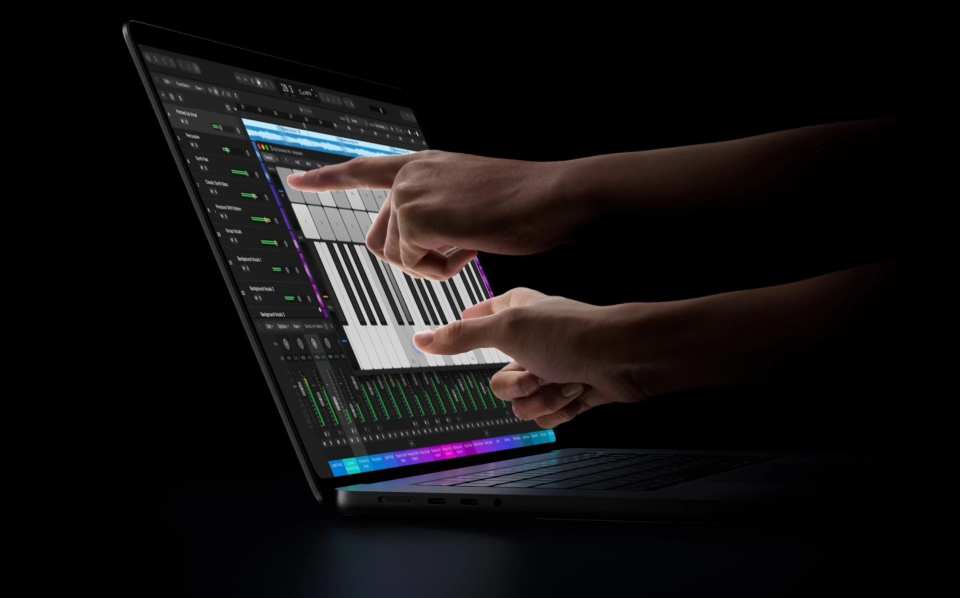
Apple spent years arguing that touchscreens didn’t belong on laptops. On Wednesday, the company reversed course, introducing its first touchscreen MacBook Pro and ending one of its longest-standing design positions.
The new MacBook Pro, officially called the MacBook Pro with PROLED XDR Display, brings touch controls to macOS for the first time. It features a new tandem OLED display, Apple’s M5 Pro and M5 Max chips, and a thinner, lighter design. The 14-inch model starts at $2,899, and the 16-inch version starts at $3,399.
Preorders opened October 28, with availability beginning November 6.
The announcement marks a significant departure for Apple, which has spent decades maintaining a clear distinction between the Mac and iPad. For years, its executivesAvailable in 14- and 16-inch models, MacBook Pro with PROLED XDR Display offers a visual experience unlike any other, transforming pro workflows with up to 2000 nits peak HDR and SDR brightness, an industry-leading 10,000,000:1 contrast ratio for exceptional detail, a 120Hz variable refresh rate, and a wider color gamut covering both P3 and Adobe RGB for brilliant colorsinsisted that laptops worked best with keyboards and trackpads, leaving direct screen interaction to tablets.
That argument has now changed.
Apple finally brings touch to the Mac
Apple isn’t simply adding a touchscreen to an existing laptop. The company has redesigned parts of the Mac experience around direct interaction, letting users swipe through webpages, pinch to zoom into photos, move presentation slides, and arrange windows with their fingers.
“Available in 14- and 16-inch models, MacBook Pro with PROLED XDR Display offers a visual experience unlike any other, transforming pro workflows with up to 2000 nits peak HDR and SDR brightness, an industry-leading 10,000,000:1 contrast ratio for exceptional detail, a 120Hz variable refresh rate, and a wider color gamut covering both P3 and Adobe RGB for brilliant colors,” Apple said in a news release.
The new display integrates touch sensors directly into the panel rather than adding a separate layer on top. Apple says the design reduces latency, making on-screen interactions feel more immediate.
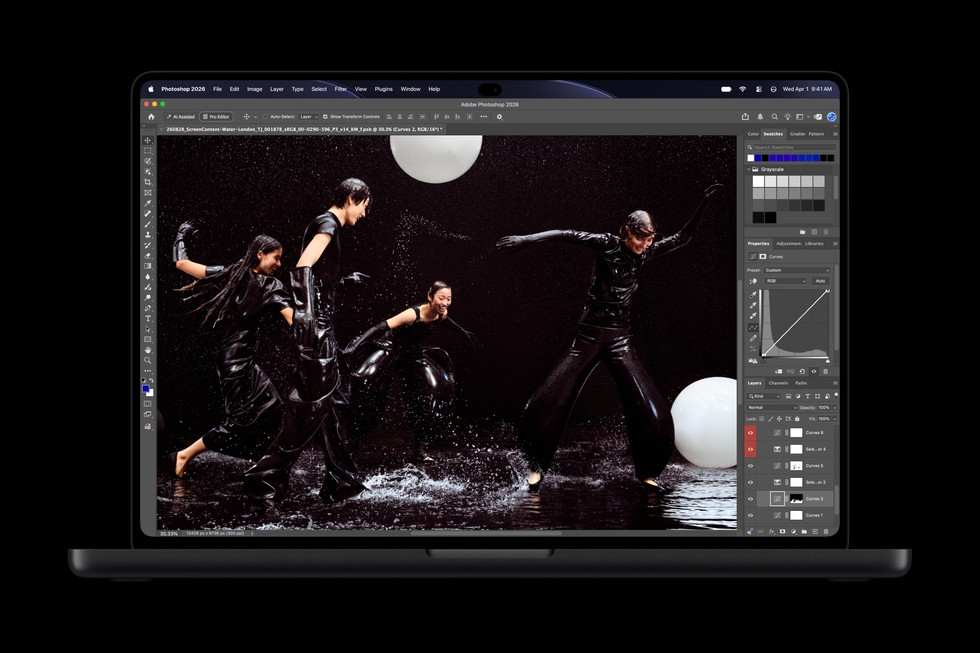
MacBook Pro with ProLED XDR Display (Image credit: Apple)
A redesigned hinge adds stability when users touch the screen, addressing a practical touchscreen laptop issue.
The changes extend into professional software. Designers can draw directly on the display, video editors can move clips using touch gestures, and developers can test touch interactions in iPhone and iPad applications directly on the Mac.
Apple says existing applications can recognize touch through macOS’s automatic conversion of touches into clicks. Developers can use updated gesture APIs to create more advanced interactions.
That software approach could prove more consequential than the hardware itself. Windows laptop manufacturers have offered touchscreen computers for years, yet touch has remained an optional feature rather than a defining reason to buy a laptop.
Apple now faces the same question: Will Mac users actually want to touch their screens?
The company is betting that deeper integration between hardware, macOS, and professional applications will make the difference.
The new MacBook Pro introduces another familiar iPhone feature: Dynamic Island. It provides a central interface for Spotlight searches, Live Activities, and Siri AI.
A $2,899 MacBook Pro with OLED, M5 chips, and a bigger AI ambition
Beyond touch, Apple has made substantial changes to its flagship laptop.
The new PROLED XDR display uses tandem OLED technology, combining two self-illuminating pixel layers to deliver deeper blacks, improved contrast, and greater brightness.
According to Apple’s official announcement, the display reaches up to 2,000 nits of peak HDR and SDR brightness, supports a 120Hz variable refresh rate, and covers P3 and Adobe RGB. Apple claims a 10,000,000:1 contrast ratio.
The display improvements target photographers, filmmakers, designers, and other professionals who depend on color accuracy.
Under the hood, the M5 Pro and M5 Max chips support up to 128GB of unified memory and 16TB of storage. Apple is positioning the machines for demanding applications, including video editing, 3D rendering, software development, and running large AI models locally.
That capability is increasingly strategic.
As AI developers seek alternatives to cloud-based inference, computers that can run sophisticated models on-device are attracting more attention. Apple says the M5 Max can run large language models containing hundreds of billions of parameters directly on the laptop.

MacBook Pro Touchscreen with ProLED XDR Display (Image credit: Apple)
The machines run macOS 27 Golden Gate, which includes Apple’s updated Siri AI and deeper AI features across applications.
Apple says battery life reaches up to 24 hours. The 14-inch model weighs 3 pounds, and the 16-inch version weighs 4 pounds. Both are lighter than their predecessors.
The higher prices could complicate Apple’s ambitions. The 14-inch M5 Max version starts at $4,499, with the 16-inch M5 Max beginning at $4,799.
Apple is asking customers to pay a premium for features that have existed on competing Windows laptops for years, though not with the same hardware-software combination.
The bigger question is whether Apple’s approach can turn touch from a convenience into something Mac owners consider indispensable.
For a company that once treated the touchscreen as incompatible with its laptop philosophy, that would represent a remarkable reversal.