Startup Funding News Today, October 28, 2026: Re:Build, General Compute, Hyphenate, Machenta, Atlas Bio, Ultra & More
 Nickie Louise
Posted On October 28, 2026
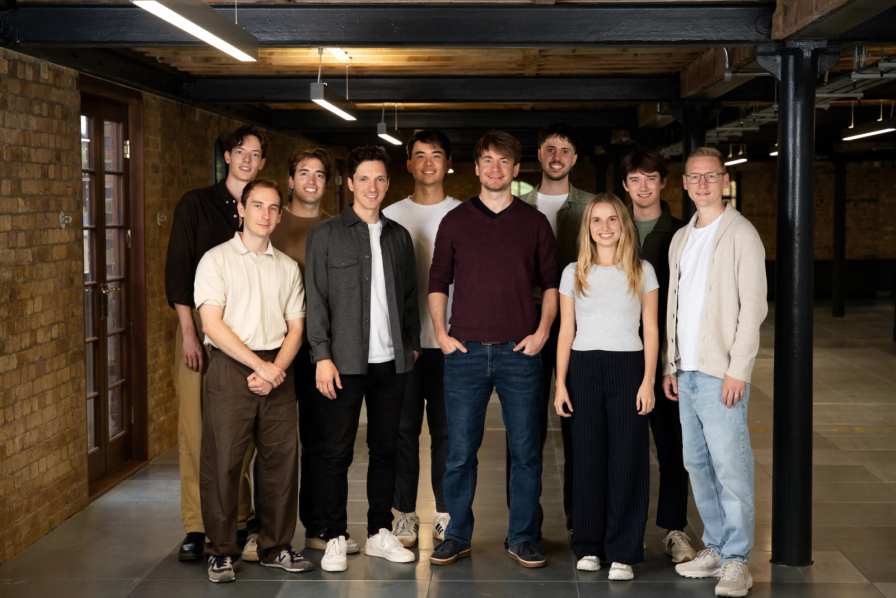
More than $2.45 billion in newly announced startup and growth-company financing flowed into advanced manufacturing, AI computing, robotics, cybersecurity, enterprise software, and biotechnology over the past 24 hours. The largest investment came from Re:Build Manufacturing, which secured $2.1 billion from investors led by General Catalyst and JPMorganChase to expand American manufacturing capacity. The transaction dwarfed the day’s other financings and revealed a key shift in investor priorities: capital is flowing into companies that can manufacture, operate, or secure the technologies the next generation of businesses will depend on.
AI infrastructure attracted another major investment. General Compute raised $100 million in Series A funding at an $800 million valuation, betting that specialized processors and flexible data-center infrastructure can make AI inference more economical. Meanwhile, warehouse automation startup Ultra secured $50 million to expand robotic packing systems already operating in commercial fulfillment facilities. In the United Kingdom, Machenta raised $40 million in seed financing to develop robots that learn new tasks through simulation rather than extensive real-world training. Together, these rounds highlight two distinct opportunities: improving the economics of AI computing and bringing intelligent machines into physical workplaces.
Enterprise AI and cybersecurity also attracted significant backing. Hyphenate raised $45 million to automate corporate finance operations, while Infisical secured $40 million at a $600 million valuation to protect credentials, machine identities, and AI agents. Seattle-based Avante raised $30 million to automate employee-benefits administration, and San Francisco’s Vera Health announced a $28.5 million Series A for its clinical research platform. India’s Simplismart secured $14 million with Nvidia’s participation, while Switzerland’s Atlas Bio disclosed a new $10 million seed round to develop AI simulations intended to improve drug-development decisions.
The 10 selected financings total $2.4575 billion. Re:Build alone accounts for approximately 85.5% of that figure, making concentration the defining financial characteristic of today’s report. The remaining nine transactions collectively raised $357.5 million. Seven selected companies are headquartered in the United States, two in Europe, and one in India. The total includes Re:Build’s investment into a long-term industrial holding company, which should not be treated as a conventional venture round, but excludes previously announced debt facilities and older funding disclosed alongside new transactions.
The Macro Environment: Investors Are Paying for the Ability to Build, Deploy, and Deliver
Today’s funding activity reveals two related developments in venture capital. The first is the enormous amount of capital flowing into physical production capabilities. Re:Build’s $2.1 billion investment is unusual both for its size and its structure. Rather than financing a single software product, investors are backing a business that combines industrial engineering, manufacturing facilities, customer relationships, and the creation of new hardware companies. It is a long-term investment in production capacity, not a conventional software startup financing.
The second development is the growing importance of efficiency throughout the AI economy. General Compute is financing infrastructure built around specialized inference chips, while Simplismart develops software intended to reduce the computing resources required to operate AI models. Both companies are addressing the same fundamental constraint from different directions: expensive computing can limit the commercial viability of AI applications even when the underlying models perform well. Their success will depend on measurable customer savings and the ability to maintain those advantages as processor technology and cloud pricing change.
Robotics investment offers a similar contrast. Ultra is deploying warehouse robots through a recurring service model, while Machenta is developing foundation-model technology intended to make robots learn unfamiliar tasks faster. Ultra’s investors can evaluate actual deployments and operational performance. Machenta’s investors are financing a research approach that has not yet demonstrated comparable commercial scale. Both opportunities are significant, but they require different standards of technical and financial diligence.
Enterprise software investment is becoming more closely tied to completed work. Hyphenate is automating accounting and finance operations. Avante is examining benefits contracts and claims information. Vera Health is helping clinicians retrieve medical evidence. Infisical is managing the security risks created when AI agents interact with sensitive systems. These companies are attempting to become part of important organizational workflows, where accuracy, data access, integration, and reliability can matter more than the underlying AI model.
The financial backdrop reinforces the distinction between funding volume and market breadth. Re:Build contributes the overwhelming majority of today’s selected capital. That single transaction does not demonstrate that financing has become abundant for ordinary startups. The smaller rounds suggest more selective investor conviction, concentrated in businesses addressing identifiable technical limitations or recurring customer needs. The central question is increasingly whether a company’s technology produces an advantage that remains valuable after the initial excitement surrounding AI fades.
Re:Build raises $2.1B in funding to expand American advanced manufacturing
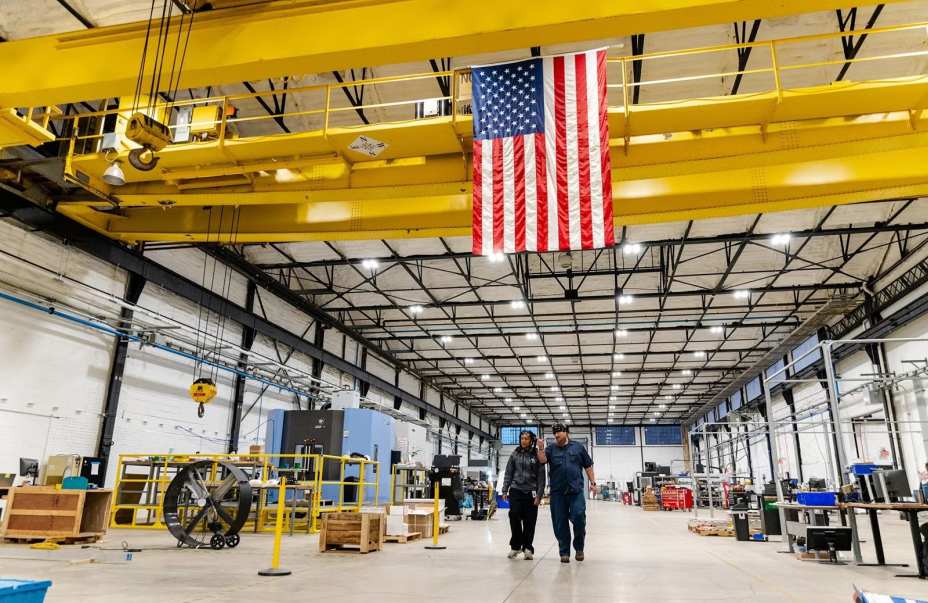
Boston-based Re:Build Manufacturing secured $2.1 billion in new funding, led by General Catalyst and JPMorganChase’s Strategic Investment Group. The investment, announced October 27, will support expansion of the company’s U.S. manufacturing operations and the development of new industrial businesses. Re:Build Manufacturing
Founded in 2020, Re:Build combines engineering, product design, and manufacturing under one organization. Rather than waiting for customers to finalize a product before manufacturing begins, the company works with them during the design process to address production costs, materials, and manufacturing requirements.
Re:Build operates across aerospace and defense, electrification, medical equipment, energy, and robotics. Its operations employ more than 2,100 people and encompass over 2.4 million square feet of manufacturing capacity, according to the company.
Its model also includes launching new industrial businesses. Companies developed within its ecosystem include electric vehicle startup Slate Auto, aerospace venture Neon Aero, and biotechnology manufacturing business Ensorcell.
A different approach to financing industrial expansion
The investment stands out because Re:Build is not a conventional venture-backed software startup. The company operates through a long-term holding structure that combines manufacturing operations with the creation of new industrial businesses.
This means its financial needs differ substantially from those of a company developing a single software product. Manufacturing requires equipment, facilities, skilled employees, supply-chain relationships, and working capital. Expanding these capabilities can consume significant capital before new production generates revenue.
For investors, Re:Build offers exposure to several industries experiencing increased demand for domestic manufacturing capacity. Its potential advantage lies in integrating engineering expertise with manufacturing execution. That could help customers shorten the transition from product design to commercial production.
However, substantial capital investment introduces financial risks. Re:Build must demonstrate that its facilities achieve sufficient utilization, maintain competitive manufacturing costs, and generate attractive returns across different economic conditions.
The company’s financing is also relevant to geopolitical competition. Governments and industrial customers are increasingly concerned about access to domestic manufacturing capacity, particularly for products used in defense, energy, and advanced computing. Re:Build’s investment suggests major financial institutions see an opportunity to rebuild some of those capabilities.
Funding Details
Startup: Re:Build Manufacturing
Investors: General Catalyst and JPMorganChase Strategic Investment Group
Amount Raised: $2.1 billion
Total Raised: Not disclosed on a fully reconciled company basis; the founding team reports raising more than $4 billion cumulatively
Funding Stage: Growth investment / long-term holding-company financing
Funding Date: October 27, 2026
Headquarters: Boston, Massachusetts, United States
Sector: Advanced manufacturing / industrial technology/aerospace and defense
Valuation: Not disclosed
General Compute raises $100M in funding to build an inference cloud using specialized AI chips

San Francisco-based General Compute raised $100 million in a Series A funding round, co-led by Blackbird Ventures and Abstract Ventures. Fuse Venture Partners, Village Global, and other investors participated. The financing follows a previously announced $400 million debt facility from Upper90, which is separate from the new equity round.
General Compute develops cloud infrastructure optimized for AI inference. Rather than relying exclusively on conventional GPUs, the startup is assembling computing systems using processors from companies such as Cerebras, SambaNova, and Positron AI. Its strategy is to match different AI workloads with hardware designed to process those workloads efficiently.
The company also plans to use smaller data centers and converted bitcoin-mining facilities rather than building all of its infrastructure from scratch.
AI infrastructure investment meets questions about profitability
General Compute’s financing comes as investors increasingly examine the economics of specialized AI cloud providers. Demand for computing remains substantial, but building data centers and purchasing processors requires enormous capital commitments. Companies must secure customers who can support those investments over time.
General Compute is attempting to distinguish itself through specialized inference hardware and more flexible infrastructure deployment. According to TechStartups, the company has secured a major customer agreement worth about $100 million in annualized contracted revenue. That should not be interpreted as already recognized annual revenue.
General Compute says its first major deployments are scheduled for the first quarter of 2027, with more than 50 megawatts of capacity in its development pipeline. These are planned deployments, not fully operating capacity.
The investment thesis is that the growing use of AI agents will drive demand for faster, more economical inference. However, General Compute must demonstrate that its infrastructure remains competitive as hardware performance, processor pricing, and cloud economics change.
Its commercial prospects will depend on customer demand, financing costs, equipment utilization, and the availability of electricity and computing hardware.
Funding Details
Startup: General Compute
Investors: Blackbird Ventures, Abstract Ventures, Fuse Venture Partners, Village Global, and others
Amount Raised: $100 million in new Series A equity
Total Raised: Lifetime equity funding not fully disclosed; a separate $400 million debt facility was announced previously
Funding Stage: Series A
Funding Date: October 27, 2026
Headquarters: San Francisco, California, United States
Sector: AI infrastructure/inference computing / specialized cloud services
Valuation: $800 million post-money, as reported by TechCrunch
Ultra raises $50M to automate warehouse packing with AI-powered robots
Brooklyn-based Ultra raised $50 million in Series A financing led by Framework Ventures, bringing its reported cumulative funding to $62 million. The financing follows a $12 million earlier round backed by Y Combinator and NextView Ventures. Ultra CEO Jon Miller Schwartz confirmed the transaction in an interview with AlleyWatch published on Tuesday.
Ultra develops industrial robots designed to automate order packing in e-commerce warehouses. Its Operator OP1 robot is a stationary system that can handle packing tasks without requiring customers to redesign an entire fulfillment facility.
The company sells access through a robotics-as-a-service model. Instead of purchasing equipment outright, customers pay recurring fees to use Ultra’s robotic systems. This model may reduce the upfront capital needed to adopt warehouse automation.
Warehouse automation moves toward recurring service models
Ultra says its robots have packed more than 500,000 orders across customer facilities in New York, Georgia, New Jersey, and Texas. One of its customers is Brooklyn-based fulfillment company Highline Commerce.
The startup claims it can install and make its equipment operational in less than one day. Warehouse operators face pressure to improve throughput while controlling labor costs. Traditional automation can require extensive equipment installation and changes to warehouse operations. Ultra is attempting to offer a more flexible alternative.
For investors, the company combines two potential advantages: AI-driven robotic manipulation and a recurring commercial model. However, robotics-as-a-service companies assume responsibilities that software vendors generally avoid.
Ultra must finance equipment, manage installation and maintenance, and ensure its robots remain productive. The financial test is whether monthly customer revenue exceeds the cost of equipment, servicing, and deployment enough to support attractive margins.
Funding Details
Startup: Ultra
Investors: Framework Ventures; previous investors include Y Combinator and NextView Ventures
Amount Raised: $50 million
Total Raised: $62 million
Funding Stage: Series A
Funding Date: October 27, 2026 public disclosure
Headquarters: Brooklyn, New York, United States
Sector: Warehouse robotics / industrial automation / physical AI
Valuation: Not disclosed
Hyphenate raises $45M to bring AI agents into corporate finance operations
New York-based Hyphenate raised $45 million in Series A financing led by Nexus Venture Partners, with participation from B Capital. Existing investors Foundation Capital, BoldCap, and Gaia Ventures also participated. The financing brings the company’s cumulative funding to $54 million.
Hyphenate, previously known as Maximor, announced the round on Tuesday following a period of substantial reported commercial growth. Hyphenate develops AI agents for corporate finance departments. Its software automates processes involving financial reconciliation, invoice management, treasury operations, order-to-cash workflows, and accounting.
The company integrates with existing enterprise systems rather than requiring customers to replace their accounting platforms. That strategy addresses a common enterprise technology problem: important financial processes often involve information distributed across multiple systems.
Finance automation depends on accuracy and auditability
Hyphenate reports that its annual recurring revenue has increased more than 80-fold over the previous year. The company also says its customer base expanded approximately elevenfold. Customers include Groupon, Mini Melts USA, and HiBid.
Hyphenate claims its technology can significantly reduce repetitive financial work and speed up certain accounting processes. The investment thesis is connected to the high cost of maintaining accurate corporate financial records. Finance departments must reconcile transactions, identify discrepancies, prepare reports, and document their work for auditors.
AI agents could reduce the amount of manual effort required for some of these processes. But financial automation introduces risks. Incorrect accounting entries or incomplete reconciliations can affect financial statements, tax reporting, and management decisions. Hyphenate must demonstrate that its systems provide dependable results, clear audit trails, and appropriate human oversight.
For investors, the opportunity lies in becoming embedded in recurring financial operations where switching costs and customer relationships may support long-term revenue.
Funding Details
Startup: Hyphenate, formerly Maximor
Investors: Nexus Venture Partners, B Capital, Foundation Capital, BoldCap, Gaia Ventures
Amount Raised: $45 million
Total Raised: $54 million
Funding Stage: Series A
Funding Date: October 27, 2026
Headquarters: New York, United States
Sector: Enterprise AI / financial automation/accounting software
Valuation: Not disclosed in the company’s financing announcement
Infisical raises $40M at $600M valuation to secure AI agents and machine identities
San Francisco-based Infisical raised $40 million in Series B financing at a $600 million valuation, led by investor Elad Gil. Y Combinator and Gradient Ventures increased their investments, while Gallery Ventures, Pace Capital, Dynamic Capital, and other backers also participated.
Founded by Vlad Matsiiako and his co-founders, Infisical develops security infrastructure for applications, developers, machines, and AI agents. Its products manage sensitive credentials, including API keys, passwords, certificates, and other information used to access computing systems.
The company’s software also supports privileged access management and automated credential handling. These capabilities matter most when AI agents are granted permission to interact with business applications and infrastructure.
AI agents create a new security problem
Conventional software typically accesses sensitive systems through controlled application interfaces and service accounts. AI agents add complexity because they may perform sequences of actions employees previously completed.
An agent working with production systems could potentially access databases, modify configurations, or retrieve sensitive information. Infisical is developing technology intended to manage those permissions without unnecessarily exposing underlying credentials.
Its Agent Vault product is designed around that requirement. Infisical reports that more than 1,300 organizations use its technology, including LG, Wise, OpenRouter, and government customers.
The company also says its open-source software has surpassed 30,000 GitHub stars and that it has been cash-flow positive. The commercial opportunity lies in reducing the security risks associated with increasingly automated infrastructure. However, Infisical competes with established identity and secrets-management providers.
Its advantage will depend on developer adoption, product reliability, integrations, and how effectively it manages permissions across increasingly complicated environments. The $600 million valuation reflects expectations that security for machine identities and AI agents will become a significant enterprise technology category.
Funding Details
Startup: Infisical
Investors: Elad Gil, Y Combinator, Gradient Ventures, Gallery Ventures, Pace Capital, Dynamic Capital, and others
Amount Raised: $40 million
Total Raised: Not fully disclosed on a reconciled lifetime basis
Funding Stage: Series B
Funding Date: October 27, 2026
Headquarters: San Francisco, California, United States
Sector: Cybersecurity/secrets management / AI agent security
Valuation: $600 million
Machenta raises $40M in funding to teach robots new tasks through simulated environments
London-based Machenta raised $40 million in seed financing, co-led by Creandum and Union Square Ventures. Founded by Imperial College London researchers Edward Johns and Vitalis Vosylius, the company is developing AI technology intended to help robots learn unfamiliar physical tasks after observing a small number of demonstrations.
Machenta’s research focuses on training robotic AI models in simulated environments. Many robotics systems require substantial amounts of real-world training data before they can reliably perform a new task. Collecting that information can be expensive because it involves operating physical equipment, recording movements, and evaluating performance.
Machenta is investigating whether simulated environments can reduce those requirements. Its approach trains models on artificial environments that represent physical interactions, allowing robots to develop capabilities before encountering actual equipment and objects.
A different bet on physical AI
Machenta says its models can perform certain new tasks after a single demonstration. The startup has shown robots handling activities involving packing, assembly, and object manipulation. These are early technical demonstrations. The company has not disclosed commercial deployments, customer revenue, or independently verified performance across industrial environments.
Machenta also acknowledges that precise manipulation and complicated movements remain difficult. The company currently has a small, research-focused team and no near-term commercialization plans. That makes its investment thesis fundamentally different from Ultra’s.
Ultra is financing the deployment of warehouse robots already performing commercial work. Machenta is financing research that could eventually reduce the amount of training required to make robots useful.
For investors, the potential opportunity is substantial because improvements in robot learning could benefit numerous manufacturers and application developers. But the company must demonstrate that its technology works reliably outside controlled demonstrations and provides meaningful advantages over competing robotics models.
Funding Details
Startup: Machenta
Investors: Creandum, Union Square Ventures
Amount Raised: $40 million
Total Raised: $40 million in disclosed funding
Funding Stage: Seed
Funding Date: October 27, 2026
Headquarters: London, United Kingdom
Sector: Robotics / physical AI / simulation-based machine learning
Valuation: Not disclosed
Sources: Tech Funding News’ Machenta funding report | Machenta’s founding team and research background
Avante raises $30M in funding to automate employee benefits and healthcare administration
Seattle-based Avante raised $30 million in Series A financing led by Frist Cressey Ventures, with participation from Sorenson Capital, Hearst Ventures, Morgan Stanley Next Level Fund, and existing investor Fuse. The financing brings Avante’s total funding to $40 million, including a $10 million seed round announced in 2024.
Founded in 2023, Avante develops AI software for companies managing employee benefits. Its technology helps human resources teams compare insurance contracts, analyze claims information, identify administrative errors, and prepare for benefits renewals.
The platform also allows employees to ask questions about their coverage. Benefits administration involves substantial financial commitments and complicated information. Large employers may work with several insurance carriers, benefits consultants, and service providers. Avante wants to reduce the manual work required to coordinate those relationships.
Healthcare costs create demand for better benefits management
Avante said it currently serves more than 70 customers, including Zscaler, Samsung Semiconductor, Real Chemistry, and News Corp. The company says its technology reaches more than 385,000 employees and family members. It also reports that bookings increased approximately fivefold over the previous year.
The investment opportunity is connected to rising employer healthcare expenses. Companies need better information about costs, coverage, vendor performance, and employee needs. AI-assisted analysis could help identify discrepancies and improve administrative efficiency. However, benefits decisions can affect access to medical care and financial protection. Avante must demonstrate that its software handles sensitive information appropriately and produces accurate, explainable results.
The company also competes with established HR software providers and benefits technology companies. For investors, Avante’s potential advantage lies in integrating its technology with existing benefits operations and developing relationships with employers and consultants.
Funding Details
Startup: Avante
Investors: Frist Cressey Ventures, Sorenson Capital, Hearst Ventures, Morgan Stanley Next Level Fund, Fuse
Amount Raised: $30 million
Total Raised: $40 million
Funding Stage: Series A
Funding Date: October 27, 2026
Headquarters: Seattle, Washington, United States
Sector: Enterprise AI / HR technology/employee benefits
Valuation: Not disclosed
Vera Health raises $28.5M in funding to provide AI-assisted medical research to clinicians
San Francisco-based Vera Health raised $28.5 million in Series A financing led by Threshold Ventures, with participation from Mantis VC and SV Angel. Existing investors Y Combinator and Gradient Ventures also participated. The investment brings Vera Health’s total disclosed funding to $32 million.
Vera Health develops an AI-assisted research platform that helps doctors locate and evaluate medical evidence. Its software searches medical publications and other clinical information sources to help clinicians answer patient-care questions.
The company emphasizes connecting answers to supporting research rather than providing unsupported generated responses. That differentiation matters because medical decisions depend on the quality and applicability of evidence.
Clinical AI adoption creates new questions about evidence quality
Vera Health reports that more than 800,000 clinicians across 190 countries use its technology. The company says much of its adoption has occurred through recommendations among medical professionals. Those figures are company-reported and do not independently establish how often or how deeply every registered clinician uses it.
The startup offers individual doctors free access while developing commercial relationships with hospitals, health systems, and other institutions. Its investment idea is connected to the difficulty of keeping up with medical research. Clinicians must evaluate studies, treatment guidelines, and changing evidence while managing demanding workloads.
AI-assisted search could reduce the time required to locate relevant information. However, medical evidence is complicated. A study may produce statistically significant results without demonstrating that a treatment is appropriate for a particular patient. Vera must distinguish strong evidence from weak research and avoid presenting generated summaries with more certainty than the underlying sources support.
For investors, the opportunity is to become a trusted information tool for medical professionals. Its commercial durability will depend on accuracy, clinician trust, institutional adoption, and sustainable monetization.
Funding Details
Startup: Vera Health
Investors: Threshold Ventures, Mantis VC, SV Angel, Y Combinator, Gradient Ventures
Amount Raised: $28.5 million
Total Raised: $32 million
Funding Stage: Series A
Funding Date: October 27, 2026
Headquarters: San Francisco, California, United States
Sector: Healthcare AI / clinical research / medical information
Valuation: Not disclosed
Simplismart raises $14M in funding to reduce the cost of running AI models
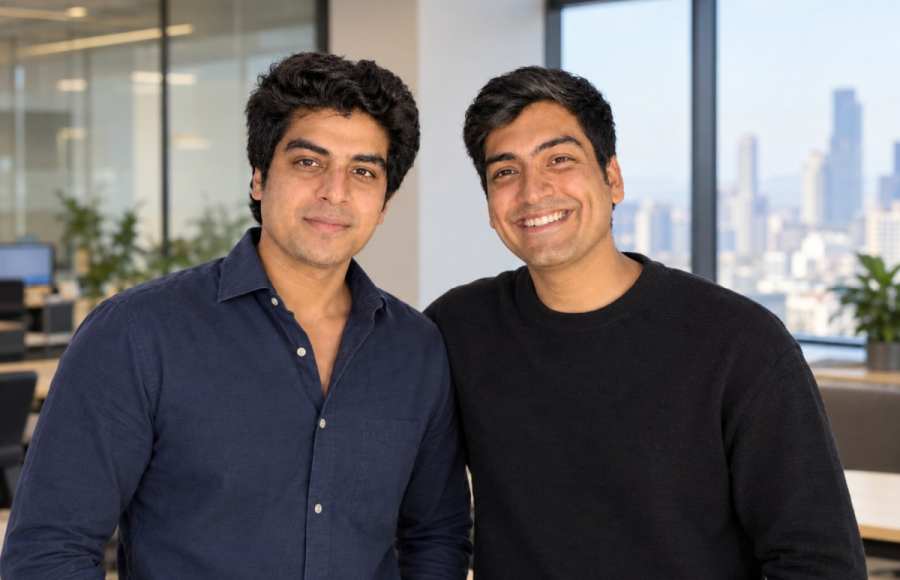
Bengaluru-based Simplismart raised $14 million in Series B financing led by Dallas Venture Capital, with participation from Nvidia, Accel, Shastra VC, and Micromax. The round valued the four-year-old company at approximately $100 million post-money.
The Nvidia-backed Simplismart develops infrastructure software that helps businesses deploy and operate AI models. Its platform manages tasks involving model optimization, computing resources, deployment configuration, and inference performance. The goal is to help companies operate AI applications without building and maintaining all the underlying infrastructure themselves.
The investment is significant because Simplismart targets the same economic problem as General Compute from a different position in the technology supply chain.
Nvidia backs software that could make GPUs more productive
General Compute is developing specialized cloud infrastructure. Simplismart focuses on software that improves how models use available hardware. Nvidia’s backing matters because businesses may be able to reduce computing costs without buying entirely new systems. Simplismart says its technology can improve model-serving efficiency by adjusting workloads to match computing requirements.
The company reports substantial revenue growth and says a majority of its revenue comes from U.S. customers. It has also cited customer deployments involving AI application developers such as InVideo. Nvidia’s participation is notable because the chipmaker has an interest in increasing adoption and productivity across AI infrastructure.
However, a major semiconductor company’s involvement does not guarantee commercial success. Simplismart must demonstrate that its software delivers meaningful savings compared with alternatives from cloud providers, model-serving platforms, and other infrastructure specialists. Its long-term advantage will depend on integration quality, performance, customer adoption, and the ability to support changing hardware architectures.
Funding Details
Startup: Simplismart
Investors: Dallas Venture Capital, Nvidia, Accel, Shastra VC, Micromax
Amount Raised: $14 million
Total Raised: Not fully disclosed on a reconciled lifetime basis
Funding Stage: Series B
Funding Date: October 27, 2026
Headquarters: Bengaluru, India
Sector: AI infrastructure/inference optimization/developer tools
Valuation: Approximately $100 million post-money, as reported by TechCrunch
Atlas Bio raises $10M to simulate drug trials before expensive clinical studies
Basel-based Atlas Bio emerged from stealth with $10 million in seed funding led by Creandum, bringing total disclosed funding to $12.5 million. Atlas also disclosed a previously completed $2.5 million pre-seed round backed by First Momentum Ventures and LEA Partners.
Today’s funding total includes only the new $10 million seed investment. The earlier pre-seed financing is excluded even though it was disclosed publicly alongside the new round.
Founded in 2024 by Simon Romanski, Sebastian Bayer, and Dominik Hartl, Atlas Bio is developing AI models intended to predict how patients might respond to experimental drugs. Its technology uses information about gene activity and other biological characteristics to create computational representations of patient populations.
The company wants pharmaceutical developers to use those simulations before committing to expensive clinical studies.
Virtual drug trials face a demanding scientific test
Atlas Bio says it trained its foundation model on about 2 million RNA readouts from human tissue. The model is intended to simulate potential treatment responses and identify factors that could influence clinical outcomes.
The company hopes its approach can improve decisions about which drug candidates should proceed into Phase II trials. This is a commercially important problem because clinical development is expensive and many experimental drugs fail after years of investment.
However, computational predictions cannot be treated as established evidence of clinical safety or efficacy. Atlas Bio must demonstrate that its models accurately predict outcomes across different diseases, patient populations, and treatment mechanisms. It must also show that pharmaceutical customers can use the results to make meaningful development decisions.
The company reports working with a major pharmaceutical company, although it has not disclosed the full commercial terms.
For investors, Atlas Bio represents a bet on improving drug-development productivity through biological data and simulation. Its potential advantage lies in model accuracy, access to relevant data, and the ability to validate predictions against actual clinical outcomes.
Funding Details
Startup: Atlas Bio
Investors: Creandum; earlier pre-seed backers include First Momentum Ventures and LEA Partners
Amount Raised: $10 million in new seed financing
Total Raised: $12.5 million, including a previously completed $2.5 million pre-seed round
Funding Stage: Seed
Funding Date: October 27, 2026
Headquarters: Basel, Switzerland
Sector: Biotechnology / AI drug development / clinical simulation
Valuation: Not disclosed
What Today’s Funding Activity Reveals
The latest announcements point to several developments in private technology financing. The most important is the concentration of capital in companies addressing expensive operational and infrastructure problems.
1. Re:Build changes the financial picture
Re:Build’s $2.1 billion financing represents approximately 85.5% of today’s selected capital. Without that transaction, the other nine companies raised $357.5 million. The difference is substantial. It demonstrates why daily venture capital totals should be interpreted carefully. One exceptional financing can dominate the aggregate without indicating a comparable increase in funding availability across the startup market.
Re:Build’s investment also differs structurally from conventional venture capital rounds because it finances a long-term industrial holding company.
2. AI inference is attracting capital at different points in the supply chain
General Compute and Simplismart both target the cost of operating AI models.
General Compute is developing computing infrastructure using specialized processors.
Simplismart provides software intended to improve the efficiency of model deployment.
The companies address related problems but have different capital requirements.
General Compute must finance and operate physical infrastructure.
Simplismart must develop software that remains valuable across changing hardware and cloud environments.
The presence of both companies in today’s selection suggests investors see multiple opportunities in reducing AI operating costs.
3. Robotics investors are backing both commercial deployments and research
Ultra and Machenta provide a particularly useful comparison.
Ultra reports hundreds of thousands of orders packed by robots operating at customer facilities.
Machenta is developing technology intended to help robots learn new tasks with less real-world data.
Ultra’s financial performance can increasingly be evaluated through deployment costs, recurring revenue, and equipment utilization.
Machenta’s progress must be evaluated through technical performance and its ability to operate outside controlled experiments.
Both strategies may create valuable businesses, but their commercialization timelines are different.
4. Security is becoming more important as AI systems gain permissions
Infisical is addressing the credentials and permissions used by applications and AI agents.
As more software systems perform automated tasks, companies need to know which machines and agents can access sensitive information. The opportunity is not limited to securing AI models. It includes managing the identities, credentials, and authorization systems surrounding increasingly automated business processes.
Infisical’s financing reflects investor interest in that requirement.
5. Enterprise AI investment is becoming more closely tied to financial outcomes
Hyphenate automates accounting and reconciliation.
Avante is developing tools for benefits administration.
Vera Health helps clinicians locate medical information.
These companies work in different industries, but each targets an identifiable operational problem. Their value can potentially be assessed through reduced administrative costs, faster workflows, improved information access, or fewer errors. The challenge is consistently demonstrating those benefits.
6. Strategic corporate investment remains significant
JPMorganChase participated in Re:Build’s financing.
Nvidia invested in Simplismart.
Other established financial and technology institutions participated across the selected rounds. Strategic investors can offer capital, technical expertise, and commercial relationships. However, their involvement should not automatically be interpreted as a binding purchase commitment.
The commercial value of these relationships depends on actual customer activity and business performance.
7. Healthcare AI remains divided between clinical information and drug development
Vera Health is developing tools for practicing clinicians.
Atlas Bio is investigating AI-assisted clinical simulation for pharmaceutical research.
Both businesses depend on medical and biological information, but their evidence requirements differ.
Vera must provide accurate, relevant clinical information.
Atlas Bio must demonstrate that its predictions correspond with real-world biological and clinical outcomes.
Neither can rely exclusively on user growth or technical demonstrations to establish medical value.
8. Valuation information remains limited
Re:Build did not disclose a valuation.
General Compute was reportedly valued at $800 million.
Infisical disclosed a $600 million valuation.
Simplismart was reportedly valued at approximately $100 million.
Most other selected companies did not provide valuation information. Consequently, the day’s transactions provide stronger evidence about where investors are allocating capital than about overall changes in private-market valuation multiples.
9. Manufacturing and deployment costs are becoming central investment considerations
Re:Build requires industrial facilities and production equipment.
General Compute must obtain computing hardware and electricity.
Ultra must manufacture and maintain robots.
These businesses cannot be evaluated using the same capital-efficiency assumptions as conventional software startups. Investors must examine the relationship between upfront capital requirements, utilization, recurring revenue, and operating margins.
10. Geographic representation does not require artificial balance
Seven selected companies are headquartered in the United States, two in Europe, and one in India. The distribution reflects the transactions selected during the reporting period. It does not establish that American venture capital activity permanently dominates other regions. Nor should smaller or older transactions be added simply to create a more balanced geographic picture.
Startup Funding Table
| Startup | Amount Raised | Sector | Funding Stage | Lead/Key Investors | Country |
|---|---|---|---|---|---|
| Re:Build Manufacturing | $2.1B | Advanced manufacturing / industrial technology | Growth / holding-company investment | General Catalyst, JPMorganChase | United States |
| General Compute | $100M | AI inference/cloud infrastructure | Series A | Blackbird Ventures, Abstract Ventures | United States |
| Ultra | $50M | Warehouse robotics / industrial automation | Series A | Framework Ventures | United States |
| Hyphenate | $45M | Enterprise AI/finance automation | Series A | Nexus Venture Partners, B Capital | United States |
| Infisical | $40M | Cybersecurity / AI agent security | Series B | Elad Gil, Y Combinator, Gradient Ventures | United States |
| Machenta | $40M | Physical AI / robotic learning | Seed | Creandum, Union Square Ventures | United Kingdom |
| Avante | $30M | HR technology/benefits automation | Series A | Frist Cressey Ventures, Sorenson Capital | United States |
| Vera Health | $28.5M | Clinical AI / medical research | Series A | Threshold Ventures, Mantis VC, SV Angel | United States |
| Simplismart | $14M | AI inference optimization | Series B | Dallas Venture Capital, Nvidia, Accel | India |
| Atlas Bio | $10M | AI drug development / clinical simulation | Seed | Creandum | Switzerland |
Total disclosed new company financing: $2.4575 billion.
Important qualifications: Re:Build’s $2.1 billion is a growth investment into a long-term industrial holding company, not a conventional startup venture round. General Compute’s previously announced $400 million debt facility is excluded. Atlas Bio’s previously completed $2.5 million pre-seed round is also excluded.
Strategic Takeaways for Founders and Investors
1. Capital-intensive businesses need a credible path to utilization
Re:Build and General Compute are financing expensive physical infrastructure. Their returns will depend on whether facilities and equipment are used efficiently.
For founders, this means securing capital should be paired with evidence of customer demand, realistic production schedules, and a credible plan to generate returns on invested assets. For investors, utilization and operating margins may be more informative than headline capacity figures.
2. AI infrastructure companies must demonstrate sustainable cost advantages
General Compute and Simplismart are both attempting to improve inference economics. The opportunity is substantial, but AI hardware and software are changing quickly.
Founders must demonstrate advantages that remain meaningful across different models and customer workloads. Investors should compare cost per completed task, response speed, reliability, and the capital required to support those results.
3. Robotics commercialization requires more than technical capability
Ultra reports existing commercial deployments.
Machenta is pursuing a research-stage approach to learning new tasks.
Both companies may develop valuable technology.
But investors should examine them using different milestones. For Ultra, equipment utilization and recurring revenue are relevant. For Machenta, independently reproducible performance on unfamiliar tasks is more important at its current stage.
4. Security infrastructure can benefit from the expansion of autonomous software
Infisical’s financing reflects demand for systems that manage credentials and permissions. As AI agents receive access to business systems, authorization becomes a significant operational concern.
Founders developing agent infrastructure should consider how identities, permissions, auditing, and human oversight will work at scale.
5. Finance AI must provide auditable results
Hyphenate is automating tasks that affect financial records. Its technology must produce results that customers and auditors can verify.
For founders, auditability should be part of the product architecture, not an afterthought. Investors should examine error rates, customer retention, compliance controls, and the financial value automation generates.
6. Healthcare AI businesses need different evidence depending on their use
Vera Health is supporting clinical research and decision-making.
Atlas Bio is investigating predictive simulations for pharmaceutical development.
The standards for demonstrating value differ. Clinical information tools must provide accurate sources and appropriate context. Drug-development simulations must be tested against actual biological and clinical outcomes.
7. Domain-specific customer relationships may be more valuable than generic AI features
Avante works with employee-benefits information.
Hyphenate operates inside finance departments.
Vera serves clinicians.
Their commercial advantage may come from specialized workflows, customer trust, and integration with existing systems.
Founders should examine whether their products become genuinely difficult to replace or whether customers can obtain similar capabilities from existing vendors.
8. Strategic investors should be evaluated by the relationships they enable
JPMorganChase’s participation in Re:Build and Nvidia’s investment in Simplismart may provide industry relationships and commercial opportunities. But investors should measure those relationships by actual results.
For investors, the relevant questions include whether strategic backing improves distribution, reduces operating costs, or creates meaningful technical advantages.
9. Reported valuations require context
General Compute’s $800 million valuation reflects expectations about future infrastructure deployment and customer demand.
Infisical’s $600 million valuation is attached to a cybersecurity company reporting existing customers and positive cash flow.
Simplismart’s approximately $100 million valuation reflects a different scale and business model.
Those valuations cannot be compared meaningfully without considering revenue, growth, gross margins, capital requirements, and competitive position.
10. New capital and previously announced financing must remain separate
General Compute’s $100 million Series A follows an earlier $400 million debt facility.
Atlas Bio’s $10 million seed financing was announced alongside disclosure of an older $2.5 million pre-seed.
Combining those amounts as though they were all newly raised would overstate the day’s activity.
For founders and investors, accurate financing analysis requires distinguishing fresh equity, earlier investments, credit facilities, and cumulative funding totals.
Conclusion
October 28’s startup funding activity shows an investment market increasingly focused on the ability to build, operate, and secure advanced technology.
Re:Build Manufacturing’s $2.1 billion financing dominates the day, reflecting substantial institutional interest in expanding American industrial production capacity.
General Compute’s $100 million Series A demonstrates investor conviction in specialized AI computing infrastructure, while Ultra’s $50 million financing supports the commercial deployment of warehouse robotics.
Machenta is pursuing a different opportunity in robotic learning, betting that simulation-based training could reduce the effort required to teach machines new tasks.
Hyphenate, Infisical, Avante, and Vera Health are developing specialized software for demanding business and professional environments. Simplismart is addressing AI inference costs, while Atlas Bio is investigating whether biological simulations can improve pharmaceutical development decisions.
These companies operate at different stages of maturity and face different risks. The day’s aggregate funding figure is heavily influenced by one exceptional industrial investment. It should not be interpreted as evidence of uniformly abundant venture capital.
The more significant observation is where investors are placing their money. Capital is increasingly flowing to companies that can control expensive infrastructure, automate difficult work, protect sensitive systems, and turn technical advances into dependable commercial capabilities.
The businesses that ultimately justify today’s investments will be those that demonstrate not simply that their technology works, but that customers can use it repeatedly, economically, and at scale.