Anthropic acquires one-person biotech startup that used Claude to develop promising muscular dystrophy treatment in 18 months
 Daniel Levi
Posted On October 28, 2026
Anthropic has acquired a biotech startup with just one full-time employee that used Claude AI to develop an experimental treatment for a rare childhood muscle disease in under 18 months, producing early results in mice showing improved muscle strength and survival.
The startup, Mithril Medicine, was founded by Cody Tranbarger, a biotech entrepreneur who used Claude to coordinate experiments, contracts, research data, and logistics across 11 external laboratories. This unusual setup let him pursue drug research that typically requires a much larger team.
Anthropic completed the acquisition in July 2026 but disclosed the deal on Tuesday, October 27. Financial terms were not revealed.
“We’ve acquired Mithril Medicine, a one-person company that has been developing treatments for two rare forms of muscular dystrophy. Its founder, Cody Tranbarger, used Claude to organize contracts, logistics, and experiments with 11 external labs, and delegated many other aspects of Mithril’s operations to Claude,” Anthropic said in a research post.
Tranbarger, who had spent years posting on X under the pseudonym Professor Oak, revealed his identity following the announcement. His research now underpins Anthropic’s first internal drug development programs.
The acquisition signals a significant shift for the Claude developer. Rather than supplying AI tools to pharmaceutical companies, Anthropic is now directly involved in developing experimental medicines, starting with rare childhood diseases that have limited treatment options.
How one scientist used Claude to advance a muscular dystrophy treatment
Mithril Medicine focused on two severe genetic disorders: LAMA2-related congenital muscular dystrophy and alpha-dystroglycanopathy. Both conditions damage the connections that keep muscle fibers attached to surrounding tissue, leading to progressive muscle weakness and deterioration.
Tranbarger developed an experimental antibody approach intended to restore those connections.
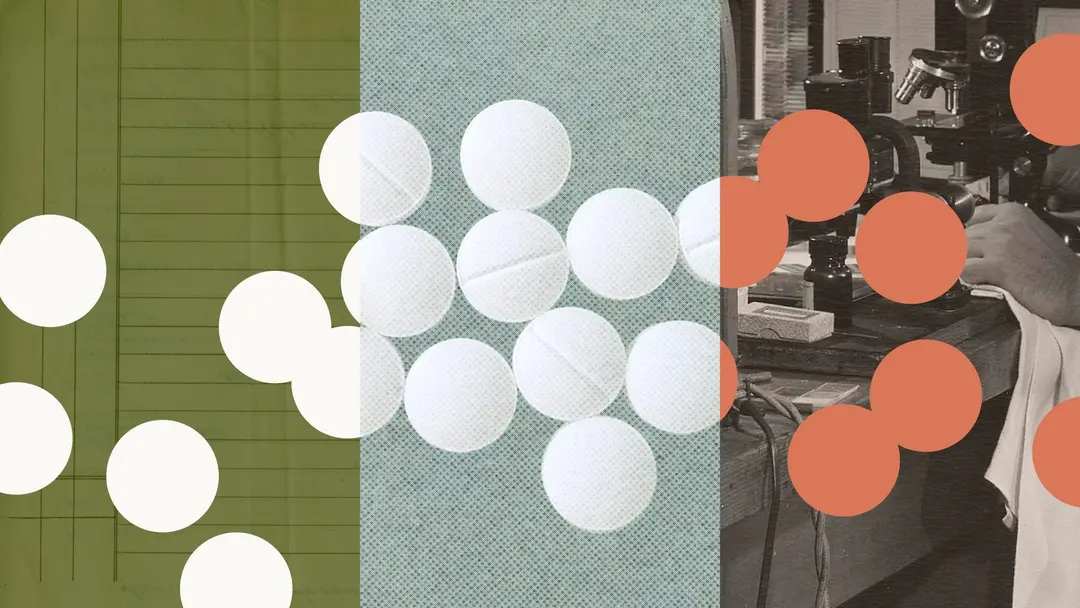
Image credits: Anthropic
The early findings were encouraging.
In a six-week study involving mice with a severe form of LAMA2-related muscular dystrophy, animals receiving the highest antibody dose demonstrated roughly twice the grip strength and muscle force of untreated mice.
Survival improved, too. Four of eight untreated mice died between two and six weeks of age, compared with just one of eight mice receiving the treatment.
Researchers found the experimental antibodies in the muscle tissue where they were expected to act, providing evidence that the treatment reached its intended target.
These findings are preliminary. The treatment has not been tested in humans, and the mouse results do not establish that it can safely or effectively treat children. The treated animals remained weaker than healthy mice, making clear that the therapy was not a cure.
What makes the project unusual is how the research was organized.
Tranbarger was Mithril’s only full-time employee. Scientific consultants and outside laboratories conducted specialized work, and Claude helped manage the flow of information between them.
In one instance, Claude reconstructed the status of experiments from email conversations and 14 months of presentation materials, identified outstanding problems, and prepared handover communications for laboratory partners.
In another, the AI consolidated hundreds of antibody-screening files and assessed which candidates were worth pursuing.
Anthropic calls the approach “Pipeline-in-a-Person,” an operating model that allows one scientist to oversee multiple drug research programs with AI support.
Tranbarger estimates that preparing an initial research strategy for a new drug program, previously a task requiring one to two months, can now take two to three days.
Human scientists still select research targets, evaluate evidence, and make final decisions. Laboratory experiments, biological testing, and clinical validation remain necessary.
Anthropic pushes deeper into drug discovery as human trials come into view
Mithril’s acquisition comes as Anthropic increases its involvement in pharmaceutical research through collaborations with Bristol Myers Squibb, BigHat Biosciences, Generate Biomedicines, Divergence Labs, Enveda, and The Column Group.
At Generate Biomedicines, researchers used Claude Code to redesign part of an experimental CAR T-cell cancer therapy. One design was approximately 70% shorter than the standard version and enabled immune cells to produce roughly 10 times as many cancer-detecting receptors in laboratory testing.
Divergence Labs used Claude to generate approximately 35,000 antibody designs in a month for a potential food allergy treatment.
Enveda reported an 89% reduction in human review time for pharmaceutical manufacturing documentation, with Claude identifying several issues missed during manual review.
Bristol Myers Squibb is applying Claude to clinical trial planning, including evaluating development options and estimating the prospects of early-stage studies.
For Mithril, the next challenge is turning promising experiments into drug candidates suitable for human testing.
The company has developed more than 100 new experimental antibodies and is testing them to identify the strongest candidates. Anthropic hopes to select formal drug candidates in 2027, potentially beginning human trials for LAMA2-related muscular dystrophy in late 2028 and alpha-dystroglycanopathy in 2029.
Those timelines depend on further research, safety testing, and regulatory approval.
The larger question is whether the same operating model can make drug development financially viable for diseases affecting relatively small numbers of patients.
Traditional pharmaceutical research requires extensive funding, specialized personnel, and years of experimentation. For rare childhood diseases, the potential commercial returns often struggle to justify those costs.
Mithril’s progress suggests AI could reduce some of those barriers by letting smaller teams manage more research programs without sacrificing human scientific oversight.
It remains an early experiment, not proof that AI can replace conventional drug development.
But the possibility is significant: If one researcher supported by AI can pursue treatments that once required an entire biotech company, diseases previously overlooked for economic reasons could finally receive serious scientific attention.