Hyperbolic raises $30M to build global AI compute grid, backed by Intel CEO Lip-Bu Tan’s VC firm
 Daniel Levi
Posted On October 27, 2026
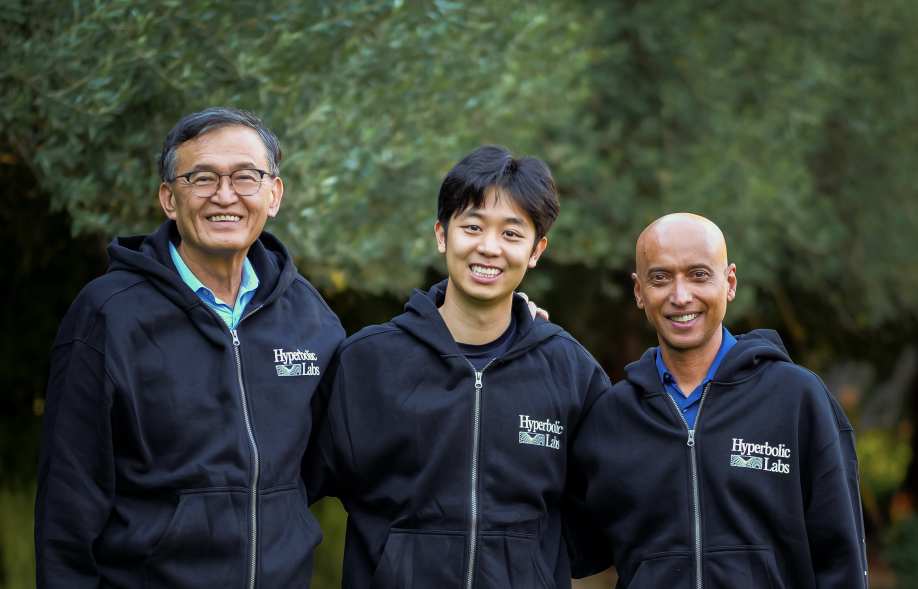
AI infrastructure startup Hyperbolic has raised $30 million in strategic funding to build a global computing grid that connects underused GPUs across hundreds of cloud providers, giving AI companies a simpler way to access compute capacity without juggling multiple vendors. Walden Catalyst led the round; the venture capital firm was co-founded by Intel CEO Lip-Bu Tan and former Samsung president Young Sohn.
The Series A-1 funding brings Hyperbolic’s total capital raised to $50 million. Other investors include Dell Technologies Capital, General Catalyst, Vista Equity Partners, Cambium Capital, and Salience Capital. Angel investors include executives and founders associated with Citadel Securities, the New York Stock Exchange, and GPU cloud providers WhiteFiber and Vector Core Compute.
The San Francisco-based startup is targeting a costly problem in the AI industry: companies spend billions on GPUs, yet some computing capacity sits idle as developers struggle to find affordable infrastructure to train and run AI models.
“The demand for AI compute will continue to grow, but adding more hardware is only part of the answer. The value of that investment depends on how effectively the capacity is put to work and made available to the teams that need it. We believe Jasper and his team are addressing a fundamental challenge in the AI stack, and we’re excited to support them as they build that platform,” said Lip-Bu Tan, Founding Managing Partner at Walden Catalyst and CEO of Intel.
The GPU cloud market now spans more than 300 providers, each operating with different hardware, networking systems, and software requirements. For AI developers, finding available GPUs can mean juggling multiple accounts, pricing structures, and technical integrations.
Hyperbolic wants to replace that fragmented experience with a single platform that connects available GPU capacity worldwide. Think of an electrical grid, where customers draw electricity when needed instead of building their own generating stations.
The company says its platform already supports more than 250,000 AI developers, including teams at Modal, Higgsfield, Daytona, HeyGen, Pika, and researchers at Stanford and UC Berkeley.
Turning idle GPUs into a global AI compute grid
At the center of Hyperbolic’s strategy is Forge, a unified infrastructure control plane that lets customers provision, manage, and move AI workloads across different cloud providers.
Rather than forcing developers to deal with the technical differences between individual GPU suppliers, Forge standardizes infrastructure and gives users a common interface for accessing computing resources.
Hyperbolic currently works with roughly 30 specialized AI cloud providers, with about $200 million in annual compute capacity connected to its platform, according to reporting by Business Insider.
The company’s longer-term ambition goes beyond renting GPUs. Hyperbolic plans to build a Global Compute Grid where customers can buy, sell, and resell eligible computing capacity through a unified marketplace.
That could create a secondary market for GPUs, allowing companies to recover value from unused capacity instead of paying for infrastructure they no longer need.
Hyperbolic is developing spot pricing and market-making capabilities that could eventually let buyers and suppliers hedge against fluctuations in compute prices. Those financial services remain part of its roadmap, rather than an established trading market.
“The demand for AI compute will continue to grow, but adding more hardware is only part of the answer. The value of that investment depends on how effectively the capacity is put to work and made available to the teams that need it. We believe Jasper and his team are addressing a fundamental challenge in the AI stack, and we’re excited to support them as they build that platform,” said Lip-Bu Tan, Founding Managing Partner at Walden Catalyst and CEO of Intel.
From Wall Street trading to the GPU market
Hyperbolic founder and CEO Jasper Zhang brings an unusual background to AI infrastructure.
A mathematics Ph.D. who completed his doctorate at UC Berkeley in two years, Zhang previously conducted research at Berkeley AI Research, where limited GPU availability constrained AI experimentation.
He later joined Citadel Securities as a quantitative researcher focused on market making, gaining pricing and liquidity experience that now shapes Hyperbolic’s approach to computing infrastructure.
That financial-market perspective sets Hyperbolic apart from conventional GPU cloud providers. Rather than acquiring more hardware, the startup wants to make existing capacity easier to find, use, and eventually trade.
The approach is already attracting customers. Higgsfield, an AI video startup, said Hyperbolic helped it secure Nvidia H100 GPUs for production inference before moving the company to a reserved contract at a rate 35% below on-demand pricing.
The new funding will support further development of Forge, multi-cloud orchestration, managed AI services, and Hyperbolic’s planned compute marketplace.
Hyperbolic is betting that the next major opportunity in AI infrastructure may come from making existing GPUs more productive, rather than simply building more data centers.
And as investment in AI infrastructure continues to climb, that distinction could become increasingly valuable.