Nvidia to invest $3 billion in Meta as part of expanded AI partnership amid Zuckerberg’s $97.5 billion fundraising push
 Daniel Levi
Posted On October 27, 2026

Nvidia is investing $3 billion in Meta as Mark Zuckerberg’s social media giant prepares one of the largest equity fundraising efforts in corporate history to finance its growing artificial intelligence ambitions. The investment, announced Tuesday, deepens a relationship between two of the biggest names in AI at a time when building the infrastructure behind the technology is becoming increasingly expensive.
The announcement follows Meta’s decision on Monday to raise an initial $35 billion through public equity offerings, followed by a proposed $60 billion stock-sale program. The original $95 billion financing plan has since grown to approximately $97.5 billion after Meta increased the size of its common stock offering.
“NVIDIA and Meta today announced they will partner to expand their work on Muse and the Muse family of models to improve inference and training performance, reflecting popular demand for useful AI agents,” Nvidia said in a news release.
Nvidia’s investment is part of that fundraising effort, which could bring several of Meta’s biggest chip suppliers onto its shareholder register. Advanced Micro Devices (AMD) and Broadcom have expressed interest in participating alongside Nvidia, with the three companies initially indicating potential purchases totaling up to $5 billion.
The timing is significant. Nvidia has become far more than a supplier of the chips behind the AI boom. The company is increasingly investing directly in businesses that depend on its technology, creating a network of financial and commercial relationships across the industry.
Nvidia and Meta deepen partnership around AI agents
The $3 billion investment comes with a broader technology agreement involving Meta’s Muse AI models and Nvidia’s next-generation computing infrastructure.
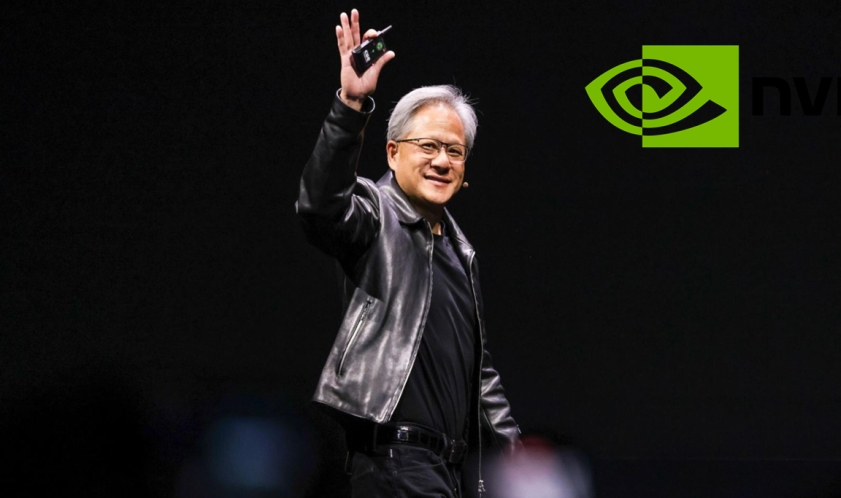
The companies plan to collaborate on improving the training and inference performance of Muse, Meta’s recently launched AI agent platform. Meta will increase its deployment of Nvidia’s Vera Rubin systems, Vera CPUs, and networking technology across its data centers.
“AI agents represent a new computing paradigm — software that understands our goals, reasons, uses tools and gets work done on our behalf,” said Jensen Huang, founder and CEO of NVIDIA. “This changes how we use computers, from operating applications to working with intelligent agents. NVIDIA and Meta are expanding our partnership to optimize the computing infrastructure end to end for capable, efficient and secure AI agents, so Muse can empower billions of people to achieve more and pursue greater ambitions,” Nvidia CEO Jensen Huang said in a statement.
“This changes how we use computers, from operating applications to working with intelligent agents.”
Meta CEO Mark Zuckerberg echoed that ambition.
“We’re excited to keep working with NVIDIA to deliver the best personal agents and frontier models for billions of people,” Zuckerberg said.
The partnership reflects a larger shift in AI development. Companies are moving beyond chatbots that answer questions to agents that can complete tasks, coordinate software, and handle work with less direct human involvement.
For Nvidia, Meta represents both a major customer and a long-term opportunity to place its computing technology at the center of that transition.
Meta’s massive AI spending raises bigger financial questions
Meta’s fundraising plan highlights the extraordinary cost of competing in artificial intelligence.
The company expects capital expenditures of $135 billion to $145 billion in 2026, CNBC reported, citing its latest financial disclosures. Its investments include data centers, specialized chips, networking equipment, and the computing capacity needed to train and operate increasingly sophisticated AI models.

Meta’s initial financing combines common shares and convertible preferred securities. Its proposed $60 billion at-the-market program would involve newly created nonvoting Class C shares, allowing the company to raise additional capital without reducing Zuckerberg’s voting control.
The planned future offering remains subject to market conditions and has yet to be finalized.
Nvidia’s involvement raises another question: What happens when the companies selling AI infrastructure become major investors in the businesses buying it?
Nvidia has already invested in AI companies including OpenAI, Anthropic, Intel, and xAI. According to Dealroom figures cited by CNBC, the chipmaker has participated in 121 investment rounds so far this year, compared with just 13 in 2022.
These investments could strengthen Nvidia’s customer relationships and increase demand for its technology. They could expose the company to greater financial risk if AI spending slows.
For Meta, the challenge is equally clear. Its advertising business continues to generate substantial revenue, but the company must eventually demonstrate that its enormous AI investments can produce returns commensurate with their cost.
The Nvidia deal captures a defining feature of the current AI race: The companies building the infrastructure are increasingly helping finance the customers buying it.