This ‘ugly’ website generates $106 million a year from 860,000 paying customers: Here’s how
 Daniel Levi
Posted On October 24, 2026
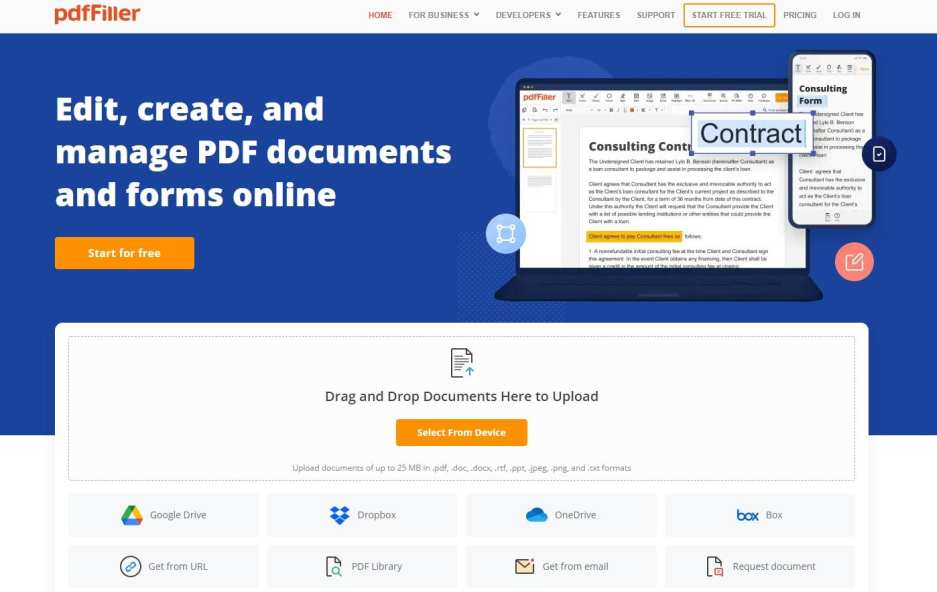
Every day, TechStartups covers startups raising millions of dollars in funding. But as Silicon Valley founders race to build the next AI unicorn, secure massive venture capital rounds, and chase the latest tech trends, some of the most successful internet businesses do something far less glamorous: solve everyday problems customers are willing to pay for.
Take pdfFiller, for example.
Its website isn’t winning any design awards. There’s no futuristic interface or flashy AI pitch. Yet this seemingly ordinary online tool for editing, filling out, and signing PDF documents generates approximately $106 million in annual revenue from more than 860,000 paying customers.
Behind that success is a surprisingly simple philosophy: Build something people need, make it easy to use, and give them a reason to keep paying.
In a revealing interview with entrepreneur and SaaS investor Nathan Latka, airSlate CEO Vadim Yasinovsky pulled back the curtain on how pdfFiller became a nine-figure business, the massive SEO operation that helped fuel its growth, and why he believes the rules of customer acquisition are about to change.
How a simple PDF editor became a $106 million business
The story of pdfFiller goes back nearly two decades, long before generative AI became Silicon Valley’s hottest investment category.
In the early 2000s, Yasinovsky spotted a problem hiding in plain sight. PDF files were everywhere, but changing them was frustrating. People could open and read documents, yet editing, completing, and signing them often required specialized software or printing out paperwork.
He saw an opportunity to bring that process online.
The idea eventually became pdfFiller, which launched in 2008 and grew into a document management business serving individuals and small companies. Its parent company, originally named pdfFiller, was renamed airSlate in 2019 as its product portfolio grew.
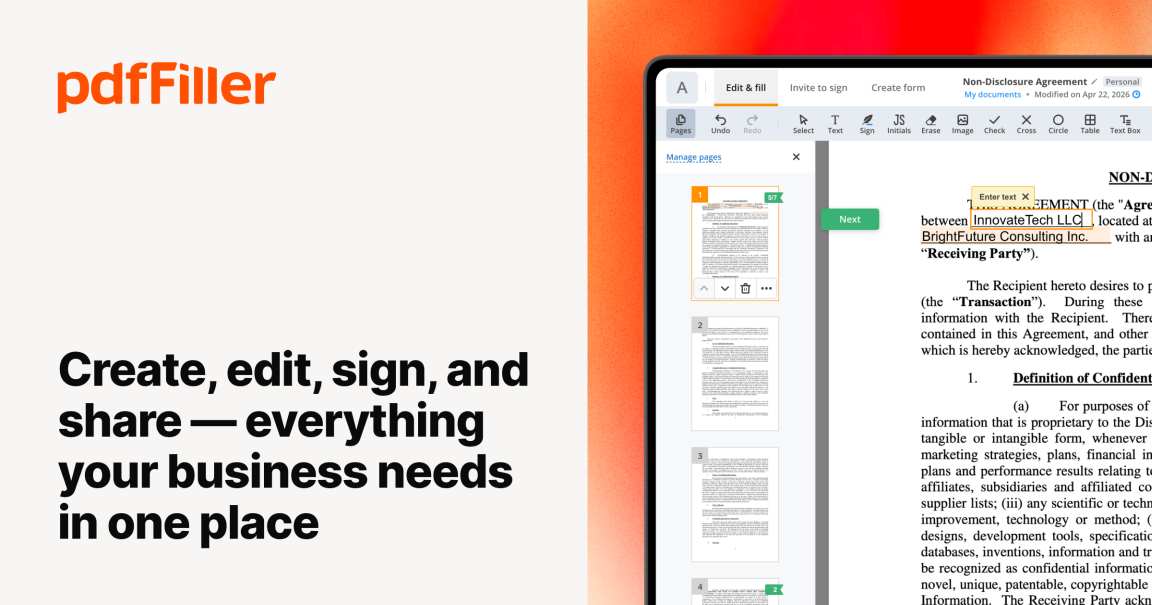
PdfFiller (Image credit: pdfFiller)
What began as a relatively straightforward PDF editing service gradually became the financial foundation for a much larger software company.
Today, airSlate owns several document-related products, including pdfFiller, signNow, DocHub, US Legal Forms, and airSlate Flow.
During the interview, Yasinovsky shared the financial breakdown behind those brands.
pdfFiller generates approximately $106 million in annual revenue. Electronic signature service signNow contributes roughly $35 million, and DocHub brings in between $20 million and $22 million. US Legal Forms adds around $6 million, and airSlate Flow contributes approximately $5 million.
Together with other business activities, airSlate generates about $200 million annually and serves approximately 1.1 million paying customers across its products, according to Yasinovsky.
The company employs roughly 650 people.
The figures are based on management disclosures during the July 2026 interview, rather than publicly audited financial statements.
For perspective, pdfFiller’s $106 million annual revenue spread across approximately 866,000 paying customers works out to roughly $122 per customer annually. That’s just over $10 per month on average.
Individual customers may pay different amounts depending on their subscriptions, but the economics illustrate why seemingly modest software subscriptions can become substantial businesses at scale.
A product doesn’t need to charge thousands of dollars per customer to generate nine figures in annual revenue. It needs a sufficiently large group of customers who find it worth paying for.
The 35 million-page SEO machine behind pdfFiller
So how does an ordinary PDF editing website attract hundreds of thousands of paying customers?
Part of the answer lies in an enormous search engine optimization operation that most visitors never see.
During his conversation with Latka, Yasinovsky revealed that airSlate had built a content operation spanning approximately 35 million pages and 4.8 billion keywords under management.
Yes, billion with a B.
For years, the company relied heavily on search traffic to connect users with the documents and services they needed.
Think about someone searching Google for a rental agreement, a tax form, an employment application, or a document they need to sign.
Those searches often signal an immediate problem. The person isn’t browsing for entertainment or researching a future purchase. They need a document, and they need to complete it.
pdfFiller built a business around capturing that demand and converting some of those visitors into paying customers.
The strategy extended beyond generic PDF editing searches. Through US Legal Forms, airSlate gained access to about 85,000 legal forms created by lawyers, covering a wide range of document needs.
That content creates opportunities to reach users searching for particular forms, agreements, and business documents.
The approach helped establish a large customer acquisition operation without depending exclusively on traditional advertising.
Yet Yasinovsky made a surprising admission: The strategy that worked for years is becoming less effective.
He acknowledged that only a small portion of the billions of keywords under management are productive. airSlate is now reducing and refining its content operation, focusing on relevant keyword clusters and higher-quality information.
“It’s quality versus quantity. Now that’s the name of the game,” he said.
It’s a significant admission from an executive whose company benefited enormously from search-driven customer acquisition.
And it raises a bigger question for founders building businesses around organic traffic: What happens when AI starts answering users’ questions before they ever visit a website?
The CEO behind the $106 million website thinks the old SEO playbook is ending
Yasinovsky didn’t mince words about the future of search.
He believes companies’ ability to influence search visibility through massive collections of optimized landing pages will weaken as AI systems become more capable.
During the interview, he suggested that the effectiveness of such efforts could fall dramatically, using an 80% to 30% comparison to illustrate his expectations.
Those figures represent his outlook, not independently measured industry data.
He went further, predicting that the heavy emphasis on producing enormous numbers of keyword-targeted pages could lose much of its effectiveness within nine to twelve months of the interview.
Instead, he expects original, trustworthy information and established sources, including Wikipedia and Reddit, to become more influential.
Latka pressed him on a question facing businesses everywhere: Can companies optimize their content to influence what ChatGPT recommends?
Yasinovsky was openly skeptical of consultants claiming to have cracked the formula.
“No, no. It’s bullshit. I’m sorry. I’ve tried this stuff,” he responded.
His objection wasn’t to AI itself. It was to the confidence of people promising predictable visibility in systems that keep changing.
For a company whose growth depended heavily on search, that represents a significant shift in thinking.
The old strategy focused on being present wherever potential customers searched. The emerging challenge is convincing customers that a product is worth choosing, regardless of how they discover it.
Yasinovsky expects brand recognition, reputation, and product quality to matter more as software becomes easier to build.
How pdfFiller became the cash machine behind airSlate
Perhaps the most revealing part of the interview wasn’t the SEO operation or the revenue numbers. It was Yasinovsky’s description of how the company financed its growth.
Unlike many startups that raise substantial venture funding before establishing a sustainable business, pdfFiller generated meaningful revenue before bringing in outside investors.
Yasinovsky recalled that the business had reached roughly $18 million in annual revenue around 2013 or 2014, before its first major institutional investment.
That gave the founders something many venture-backed startups spend years chasing: a business that could generate its own cash to fund new products.
Yasinovsky described pdfFiller as the financial engine that supported the company’s expansion.
“The way the company was built, pdfFiller was a cash machine, and we just gave the cash to the rest of the products.”
That approach helped airSlate grow through acquisitions and product development.
Take signNow.
When the company acquired the electronic signature service in 2017, it generated about $3 million annually. Today, Yasinovsky says the product brings in around $35 million a year.
It wasn’t an overnight success. The company rebuilt the product and invested heavily in marketing to grow the business.
airSlate later acquired US Legal Forms in 2019 and DocHub in 2022, extending its reach across document editing, electronic signatures, and legal paperwork.
Rather than forcing every acquisition onto a single technology platform, airSlate largely allows its products to operate independently. Each maintains its own development roadmap and team, supported by shared services such as marketing, payments, and infrastructure.
Yasinovsky believes this structure lets individual brands serve customers more effectively.
In his view, technology alone is becoming a weaker competitive advantage as AI gives more companies access to sophisticated development capabilities.
“It’s not the tech. It’s the brand. It’s the top of the funnel.”
Revenue doubled, but the company’s valuation fell
There’s another surprising twist in the pdfFiller story.
In June 2022, airSlate raised approximately $51.5 million at a $1.25 billion valuation, joining the ranks of privately held software unicorns.
The funding came from G Squared and UiPath, following earlier investments that helped the company build its portfolio.
At the time, airSlate generated approximately $100 million in annual revenue.
Four years later, Yasinovsky says revenue has doubled to roughly $200 million.
Yet he doesn’t believe the company would command its previous valuation in the current market.
Asked what airSlate might be worth today, he estimated approximately $800 million in an optimistic scenario.
That’s roughly a 36% decline from its 2022 valuation, despite the revenue increase.
The estimate is Yasinovsky’s own assessment, not a new financing round or independently established market valuation.
The contrast reflects a broader problem facing software companies. Investors are reassessing the long-term value of traditional SaaS businesses as AI changes expectations about software development, competition, and customer spending.
Still, Yasinovsky rejects the idea that small businesses will simply build their own applications using AI.
He believes business owners want practical solutions, not the responsibility of creating and maintaining software.
A plumber trying to complete a permit application or a bakery owner preparing a business agreement has little interest in developing custom software from scratch.
They want the task finished.
That belief is central to airSlate’s next phase.
AI without the AI hype
Yasinovsky isn’t ignoring artificial intelligence. In fact, he has spent decades working with the technology.
His approach is to make AI useful without constantly drawing attention to its presence.
airSlate is developing AI capabilities that can help customers create documents, complete forms, and automate administrative tasks.
One example is BizDraft, an AI-based legal document creation tool that Yasinovsky discussed during the interview.
The product combines document editing with AI-assisted agreement creation and targets small businesses that need straightforward legal paperwork.
Rather than positioning BizDraft as an expensive standalone AI service, Yasinovsky suggested it could become a customer acquisition channel for the company’s broader product portfolio.
That fits a familiar pattern in airSlate’s history: Give customers a practical reason to use a tool, build trust, and create opportunities for a longer-term commercial relationship.
Yasinovsky sees an opportunity to make software adapt to different business categories without building entirely separate applications for every industry.
A medical office, construction contractor, and small retailer may use similar document management technology, but their workflows and terminology differ.
AI could help the same software adjust to each customer’s needs.
For airSlate, the goal is to grow beyond document editing into a broader collection of tools that handle everyday business paperwork and administrative work.
Yasinovsky believes existing products can contribute another 20% to 30% in growth, with new products accounting for much of the company’s longer-term expansion.
He hopes pdfFiller itself can eventually reach $200 million in annual revenue within two to three years.
Those are management ambitions, not guaranteed outcomes.
The founder’s advice: Stop chasing millions. Start creating value and building something customers will pay for
Near the end of the interview, Latka asked Yasinovsky what he would tell founders building software companies today.
His response stood in sharp contrast to the fundraising culture that has dominated much of Silicon Valley.
“Try to get money as late as you possibly can.”
He urged entrepreneurs to preserve cash, avoid unnecessary spending, and build businesses that can support themselves.
“Cash is king. Make money. Don’t pay yourself too much. Don’t spend money.”
It wasn’t a rejection of venture capital. airSlate has raised substantial outside funding and used that money to acquire companies and develop new products.
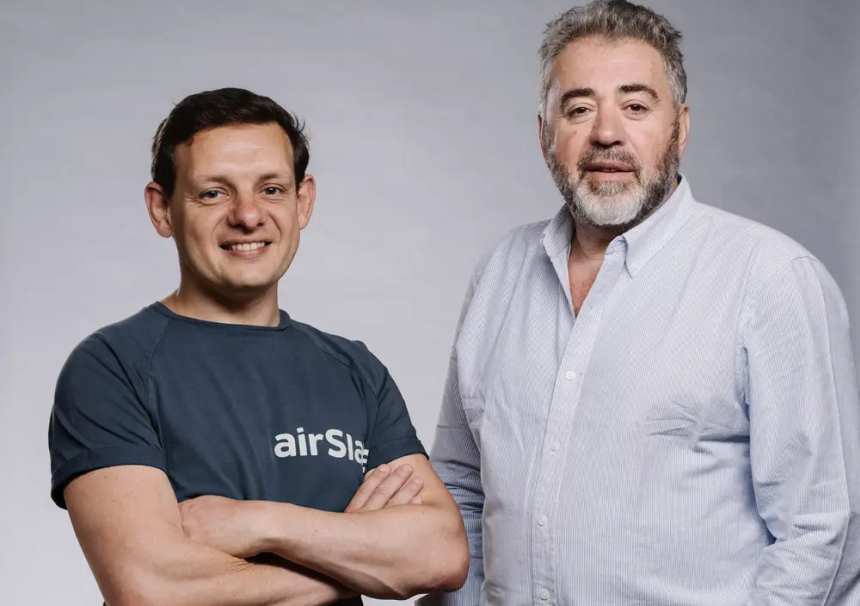
AirSlate co-founders – Borya Shakhnovich and Vadim Yasinovsky (CEO) (Image credit: AirSlate)
His point was that founders who establish revenue early have more options.
They can make decisions from a position of financial strength rather than constantly searching for another investment round.
Yasinovsky illustrated the point with a story from a software entrepreneurship seminar he once taught.
He asked the audience to identify the most important part of starting a company.
Participants offered familiar answers: a business plan, talented employees, and other ingredients associated with startup success.
Then a young attendee gave the answer he was looking for.
“Customer.”
That single word captured the philosophy behind pdfFiller’s success.
The company didn’t need to invent a new computing platform or create an entirely new consumer behavior. It found an existing problem, made it easier to solve, and built a business around people willing to pay for the solution.
The bigger lesson behind this $106 million website
None of this means design is irrelevant, that AI startups are chasing the wrong opportunities, or that every simple online tool can become a nine-figure business.
pdfFiller’s success required years of execution, marketing expertise, substantial investment in customer acquisition, and a willingness to adapt its products as customer needs changed.
Its extensive SEO operation shows that building a successful internet business can involve considerable technical and operational work behind an ordinary-looking interface.
The company now faces its own challenges as AI changes search traffic, software development, and competition.
Yet the central lesson remains striking.
At a time when startups compete for increasingly large funding rounds and the next breakthrough in artificial intelligence, pdfFiller demonstrates that some of the biggest opportunities can emerge from problems people already face every day.
A plumber needs to finish paperwork. A small business owner needs to sign a contract. Someone needs to edit a PDF without installing complicated software.
Solve those problems reliably, make the solution easy to find, and give customers a reason to return.
A website doesn’t have to look revolutionary to build a remarkable business.
Sometimes, the most valuable startup idea isn’t something nobody has ever seen before. It’s something millions of people already need.
Source: This article draws on airSlate CEO Vadim Yasinovsky’s interview with Nathan Latka, recorded July 14, 2026, and published October 14, 2026. Revenue, customer counts, and valuation estimates are management-reported figures.
Watch the full interview with airSlate CEO Vadim Yasinovsky
In the interview below, entrepreneur and SaaS investor Nathan Latka speaks with airSlate CEO Vadim Yasinovsky about how pdfFiller grew into a $106 million annual revenue business, the company’s massive SEO operation, and why he believes AI is changing customer-acquisition economics.
Video credit: Nathan Latka / The Top Entrepreneurs Podcast.