Startup Funding News Today, October 23, 2026: Helion, Slingshot, Xona, Warhound, Tractian & More
 Nickie Louise
Posted On October 23, 2026

At least $790 million in newly announced dollar-denominated startup financing flowed into space infrastructure, defense biotechnology, industrial AI, robotics, cybersecurity, and financial technology in the past 24 hours, along with more than €28 million in European defense technology investment. The largest round came from California-based Xona Space Systems, which raised $250 million at a $2.45 billion valuation to build a satellite navigation network designed for an increasingly autonomous economy.
The day’s most unusual investment came from Warhound, a defense biotechnology startup backed by $200 million in seed funding at a $1.2 billion valuation. Conceived by Colossal Biosciences co-founder Ben Lamm and Anduril founder Palmer Luckey, Warhound wants to use genetics, cloning, and military technology to develop healthier, more capable working dogs for defense and emergency response. Meanwhile, industrial AI startup Tractian raised $130 million at a $1.4 billion valuation to expand technology that monitors factory equipment and predicts mechanical failures.
Robotics and manufacturing accounted for another major share of the activity. Formic announced $50 million in combined equity and debt financing to expand its robotics-as-a-service business. In Switzerland, Enact Intelligence raised $30 million in pre-seed funding, backed by investors including Yann LeCun and Mistral co-founder Arthur Mensch, to develop robots capable of sensing force and touch. Portuguese drone manufacturer Beyond Vision secured more than €28 million to expand autonomous aircraft production and international sales.
Financial infrastructure and cybersecurity completed the picture. London’s Cognitive Credit secured $40 million from Summit Partners to expand AI-assisted corporate debt research. New York fintech Coast raised $35 million to automate financial operations for construction, transportation, and field-service businesses. Israeli cybersecurity startup Mave raised a fresh $28 million Series A, while Minnesota-based Slingshot Insurance secured $27 million to simplify the economics of small insurance policies sold through digital platforms.
Across the 10 selected announcements, nine dollar-denominated transactions totaled $790 million, with Beyond Vision contributing more than €28 million on its own. The dollar figure includes Formic’s mixed equity-and-debt financing, so it should not be described as entirely venture equity.
The three largest rounds, Xona, Warhound, and Tractian, accounted for $580 million, or approximately 73% of the disclosed dollar total. Three selected companies also disclosed valuations exceeding $1 billion.
Geographically, six selected companies are headquartered in the United States, with one each in the United Kingdom, Switzerland, Portugal, and Israel. That distribution reflects the relative significance of the qualifying transactions rather than an effort to manufacture regional balance.
The Macro Environment: Venture Capital Is Betting on What AI Can’t Do Alone
Today’s funding activity shows a venture market increasingly interested in technologies that connect software intelligence with the physical systems that support economic activity.
Xona is building satellite infrastructure that could improve positioning and timing for autonomous machines. Tractian is applying AI to industrial equipment. Formic is deploying robots into factories. Enact is developing robotic systems that can respond to physical forces. Beyond Vision is expanding autonomous aircraft manufacturing.
The common theme is that these companies are addressing problems that cannot be solved through software alone.
Their products depend on sensors, manufacturing, communications infrastructure, specialized hardware, operating data, and reliable performance under real-world conditions.
That distinction matters as AI investment expands beyond foundation models.
According to Crunchbase, global venture funding reached $159 billion in the third quarter of 2026, with AI-related companies accounting for approximately 64% of investment. The same analysis found that aerospace, robotics, semiconductors, energy, and data centers attracted substantial capital as investors increasingly financed physical infrastructure alongside software.
Today’s largest investments fit that broader pattern, but they also illustrate very different forms of investor conviction. Xona has launched demonstration satellites, developed manufacturing capabilities, and begun deploying its commercial constellation.
Tractian reports that its technology operates across more than 2,000 facilities. Formic has accumulated hundreds of thousands of hours of real production experience. Warhound, by contrast, has raised $200 million before producing the specialized working dogs it intends to sell. The financial risks differ substantially.
Xona must finance and operate a satellite constellation. Tractian must maintain customer growth and demonstrate industrial savings. Formic must support equipment deployment and servicing. Warhound must prove its biotechnology can produce animals that meet demanding health, welfare, training, and performance requirements.
The day’s financial technology investments reveal a parallel trend.
Cognitive Credit, Coast, Mave, and Slingshot are developing products for markets where specialized information, regulation, and operational requirements remain important. Their investment cases depend on more than access to AI models.
Credit research requires traceable financial information. Fleet spending involves vehicle and employee data. Cybersecurity requires trustworthy investigations and controlled responses. Insurance distribution depends on underwriting, licensing, and policy administration. These requirements can increase development costs, but they may also create competitive advantages for companies that can meet them.
The broader market signal is selective rather than universal: investors are committing capital to companies they believe can control specialized infrastructure, proprietary operating knowledge, or difficult commercial workflows.
Today’s deals do not establish that venture financing is becoming easier across every sector. They show where a meaningful group of investors believes defensible businesses can still be built.
Xona raises $250M in funding to build a satellite navigation network for autonomous machines
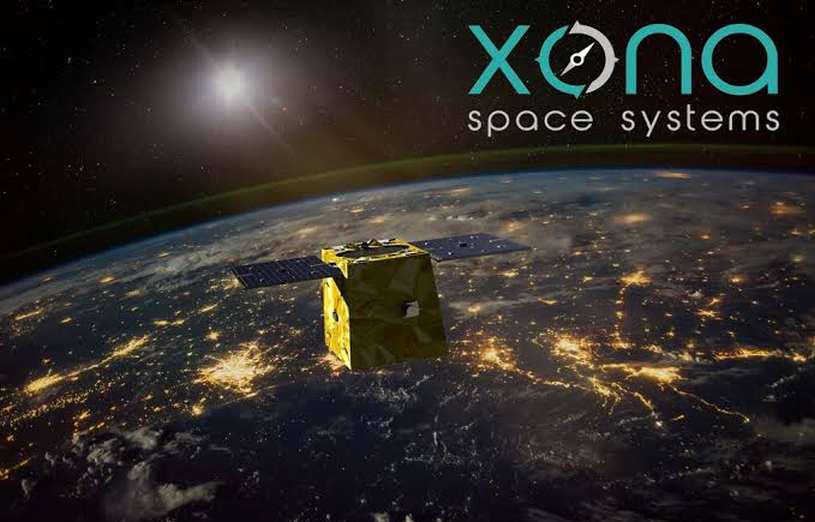
Burlingame, California-based Xona Space Systems raised $250 million in Series D equity financing at a $2.45 billion valuation, led by Steve Jurvetson’s Future Ventures. The financing brings Xona’s cumulative capital raised to more than $570 million. The company announced the investment after launching six satellites for its Pulsar navigation system.
Founded in 2019, Xona is developing a commercial alternative to conventional satellite navigation infrastructure. Global Positioning System technology supports navigation, communications, transportation, financial networks, and numerous industrial applications. However, conventional satellite navigation systems were developed long before autonomous vehicles, robots, and other machines began requiring highly precise positioning in complex environments.
Xona believes a constellation operating in low Earth orbit can provide stronger signals and more precise positioning than conventional higher-altitude navigation systems.
Why investors are backing an alternative to GPS
Xona says its Pulsar-0 demonstration satellite completed more than 500 transmissions and demonstrated positioning accuracy better than two centimeters under tested conditions. The company also reports that existing commercial receivers can be upgraded to use its signals without replacing their physical hardware. Those results are company-reported demonstrations, not evidence that the service currently provides equivalent performance everywhere.
Earlier this month, Xona launched six additional satellites. Four are expected to begin delivering services to customers in 2027, while the company manufactured two entirely at its Burlingame facility. The latest financing will support additional satellite production, constellation deployment, and commercial operations. The investment thesis extends beyond navigation.
Autonomous vehicles, agricultural machines, industrial robots, drones, and other systems increasingly depend on reliable information about their location and movement. Xona could become a supplier to several of those markets. Its potential advantage comes from controlling satellite technology, navigation signals, manufacturing processes, and the infrastructure required to operate a commercial positioning network. But substantial execution risk remains. A successful demonstration does not establish the economics of a global service.
Xona must launch and maintain enough satellites to provide useful coverage, establish customer relationships, demonstrate reliability, and compete with established government-supported navigation infrastructure.
The company’s $2.45 billion valuation reflects investor confidence in that opportunity, but commercial performance will ultimately determine whether the investment is justified.
Funding Details
Startup: Xona Space Systems
Investors: Future Ventures, led by Steve Jurvetson, and additional new and existing investors
Amount Raised: $250 million
Total Raised: More than $570 million
Funding Stage: Series D
Funding Date: October 22, 2026
Headquarters: Burlingame, California, United States
Sector: Space technology / satellite navigation / autonomous systems infrastructure
Valuation: $2.45 billion
Warhound raises $200M in funding to develop genetically enhanced military working dogs
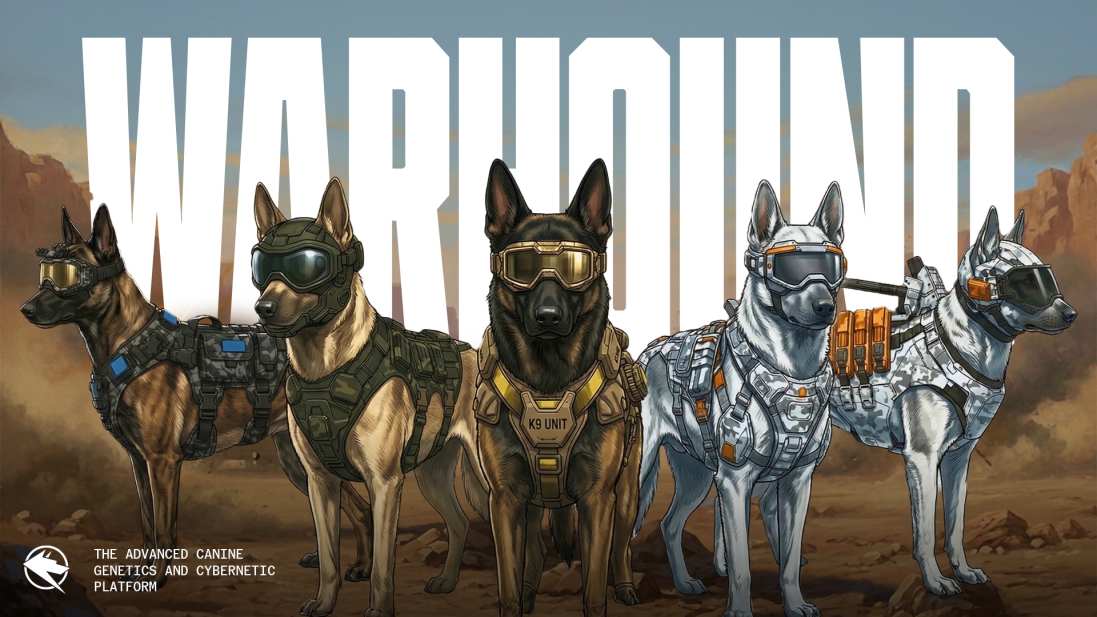
Dallas-based Warhound emerged from stealth with $200 million in seed financing at a $1.2 billion valuation, backed by investors including Sequoia Capital, In-Q-Tel, ARK Invest, Franklin Templeton, 8VC, Lux Capital, Breyer Capital, and other institutions.
The company was conceived by Ben Lamm, co-founder of Colossal Biosciences, and Palmer Luckey, founder of defense technology company Anduril. David Spirk, a former U.S. Marine and former chief data officer at the Department of Defense, serves as CEO. Warhound is attempting to modernize the supply of working dogs used by military organizations, law enforcement agencies, and emergency responders.
The company plans to combine selective breeding, cloning, genetic research, and training with equipment supplied through a relationship with Anduril. Its initial focus includes dogs used for detection, search operations, and other specialized assignments.
According to the company’s announcement, more than 80% of working dogs used by the U.S. military come from Europe, creating a supply-chain dependency. Warhound wants to develop a domestic alternative.
A $1.2 billion valuation before the first dogs enter service
Warhound’s scientific strategy draws on technology developed by Colossal Biosciences. The company plans to preserve genetic material from high-performing working dogs and use cloning to reproduce desirable characteristics. It is also investigating genetic changes intended to reduce inherited health problems and potentially improve certain capabilities. However, Warhound has not yet produced the genetically enhanced working dogs it plans to commercialize.
The company expects its first puppies in early 2027, with operational deployment potentially following later. Those timelines remain company objectives. Anduril is expected to provide equipment such as protective gear, sensors, and communications technology that could improve coordination between dogs and their handlers.
Luckey is involved in the venture but does not personally own equity, according to TechCrunch. Colossal holds an ownership stake and licenses technology to Warhound. The investment is unusual because it combines biotechnology with defense procurement.
Its success will depend on demonstrating that genetic techniques can reliably improve health or working performance without creating unacceptable welfare risks. Cloning an animal does not guarantee that it will develop identical behavior or training aptitude.
Environmental conditions, handling, training, and individual development remain important. Warhound will also need to establish responsible breeding and animal-care practices, navigate procurement requirements, and demonstrate economic advantages over conventional working-dog programs.
For investors, the $200 million seed round is a substantial commitment to an unproven commercial model. The company may address a specialized national security need, but its scientific and operational claims remain to be tested.
Funding Details
Startup: Warhound
Investors: Sequoia Capital, In-Q-Tel, ARK Invest, Franklin Templeton, 8VC, Lux Capital, Breyer Capital, USIT, CAZ Investments, Builders VC, and others
Amount Raised: $200 million
Total Raised: $200 million disclosed
Funding Stage: Seed
Funding Date: October 22, 2026
Headquarters: Dallas, Texas, United States
Sector: Defense biotechnology / genetic engineering / military working-animal technology
Valuation: $1.2 billion
Tractian raises $130M in funding at $1.4B valuation to prevent industrial equipment failures
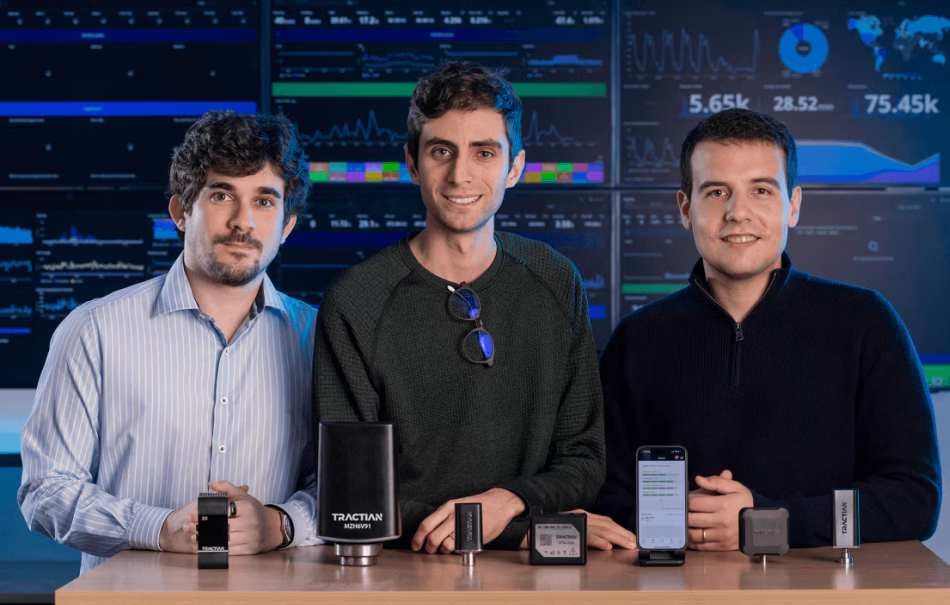
Atlanta-based Tractian raised $130 million in Series D funding at a $1.4 billion valuation, led by Sapphire Ventures and co-led by M&G’s Catalyst. Other investors include N47, General Catalyst, Bosch Ventures, 53 Stations, Monashees, Endeavor Catalyst, Norte Ventures, and Y Combinator.
Tractian develops technology that monitors industrial equipment and helps maintenance teams identify potential mechanical problems before they cause unexpected shutdowns. Its platform combines sensors, software, and AI-assisted analysis. The sensors collect information about machine vibration, ultrasound, and other operating characteristics.
Tractian’s software interprets that information to identify potential failures and recommend maintenance actions. The objective is to reduce downtime while allowing manufacturers to maintain equipment more efficiently.
Industrial operating data becomes an AI advantage
Tractian reports that its technology is used across more than 2,000 facilities worldwide. Its customers include large manufacturers and industrial operators such as Eli Lilly, Whirlpool, Coca-Cola bottling facilities, Cummins, and Embraer. These are company-reported customer relationships and deployment figures.
The company says its system can move beyond identifying abnormal machine behavior toward diagnosing likely causes and recommending corrective work. A predictive maintenance system that generates numerous alerts but cannot explain what technicians should do may create additional work rather than reducing it.
Tractian is attempting to connect detection directly with maintenance decisions. Its potential competitive advantage comes from the operational data accumulated across industrial equipment. Different machines exhibit different failure patterns.
A large collection of sensor information, maintenance records, and confirmed failures could help improve diagnosis and recommendations. However, the commercial value of that data depends on its accuracy and relevance. Tractian must also demonstrate that its products consistently reduce downtime and maintenance costs. Established industrial automation companies, equipment manufacturers, and software providers are developing similar capabilities.
For investors, Tractian offers exposure to AI through an established industrial market with measurable financial outcomes. A prevented shutdown can have substantial economic value, particularly in manufacturing environments where interrupted production is expensive.
The latest financing gives Tractian additional resources to expand internationally and serve more industrial customers.
Funding Details
Startup: Tractian
Investors: Sapphire Ventures, M&G’s Catalyst, N47, General Catalyst, Bosch Ventures, 53 Stations, Monashees, Endeavor Catalyst, Norte Ventures, Y Combinator
Amount Raised: $130 million
Total Raised: Not disclosed on a fully reconciled basis
Funding Stage: Series D
Funding Date: October 22, 2026
Headquarters: Atlanta, Georgia, United States
Sector: Industrial AI / predictive maintenance/manufacturing technology
Valuation: $1.4 billion
Formic raises $50M in combined financing to expand robotics-as-a-service across US factories
Chicago-based Formic announced $50 million in growth financing that combines Series B equity investment with debt financing. Mercato Partners led the Series B, with participation from Light Ray Ventures, Lightscape Partners, Citi, and other investors. S2G Investments provided debt financing.
The company did not disclose the separate amounts allocated to equity and debt, so the full $50 million should not be counted as venture equity. Formic operates a robotics-as-a-service business.
Instead of requiring manufacturers to purchase and maintain industrial robots themselves, the company deploys automation equipment and charges customers recurring fees. Its offering includes installation, software, maintenance, operational support, and financing. The company assumes responsibility for keeping the equipment productive.
That model addresses an important barrier to factory automation. Smaller manufacturers may see opportunities to automate repetitive tasks but lack the capital or technical staff required to purchase and support industrial robots. Formic attempts to reduce those obstacles.
Robotics deployment becomes the business model
Formic says it operates hundreds of robots across more than 100 facilities in over 30 U.S. states. Its systems have accumulated more than 750,000 hours of live production experience.
The company reports 99.6% equipment uptime and a 97% customer renewal rate. Those are company-reported operating metrics. They provide evidence of commercial deployment, although the financial returns for customers and the profitability of Formic’s contracts were not disclosed.
The startup currently automates tasks such as palletizing, packing, machine tending, and material handling. It is now expanding toward more general-purpose robotic applications.
Formic is also working with robotics AI company Physical Intelligence to adapt foundation models for manufacturing environments. That relationship could become important as increasingly capable robot software enters industrial markets. But the commercial challenge extends beyond intelligence.
Robots require installation, maintenance, servicing, safety procedures, and integration with production systems. Formic’s investment thesis is that the infrastructure required to deploy and maintain robots can become valuable independently of any particular robot manufacturer.
The company could potentially benefit from advances across several robotics suppliers. Its financial risk comes from the equipment and operational responsibilities involved in offering robotics as a service.
Investors will need to monitor contract economics, equipment utilization, maintenance costs, and the capital required to expand its installed fleet.
Funding Details
Startup: Formic
Investors: Mercato Partners, Light Ray Ventures, Lightscape Partners, Citi, other investors; debt financing from S2G Investments
Amount Raised: $50 million in combined equity and debt financing; individual components not disclosed
Total Raised: Not disclosed on a fully reconciled basis
Funding Stage: Series B equity plus debt financing
Funding Date: October 22, 2026
Headquarters: Chicago, Illinois, United States
Sector: Industrial robotics / robotics-as-a-service / manufacturing automation
Valuation: Not disclosed
Cognitive Credit raises $40M in funding to bring verifiable AI research to corporate debt markets
London-based Cognitive Credit secured a $40 million strategic growth investment led by Summit Partners, with continued participation from ETFS Capital. The financing will support international expansion and further development of its financial data and AI products.
Cognitive Credit develops software used by banks, asset managers, hedge funds, and other institutional investors to analyze corporate debt. Credit analysts examine financial statements, bond documentation, issuer performance, debt structures, and changing financial conditions to assess repayment risk.
That work often involves reviewing large quantities of financial information across numerous companies. Cognitive Credit is attempting to automate parts of the process while maintaining traceability to the original source documents. Its platform combines structured financial data, analytical models, and AI-assisted research tools.
Why financial AI needs verifiable information
Cognitive Credit says its products cover more than 3,500 corporate bond and loan issuers across the United States, Europe, and emerging markets. The company also reports that its technology supports analytical workflows at more than 80% of the world’s 25 largest asset managers and all 10 leading global debt league-table investment banks. Those are company-reported customer adoption figures.
Its products are accessible through a web application, API, Excel integration, and a Claude connector. The company is also developing AI agents intended to assist with fundamental credit research. The investment thesis is connected to a limitation of general-purpose AI.
Corporate credit analysis frequently depends on financial data that is inconsistent, difficult to locate, or available only through private disclosures. An AI model can generate a convincing analysis while relying on incomplete or incorrect numbers. Cognitive Credit is attempting to reduce that risk by connecting AI outputs to verified financial information.
For institutional customers, accuracy and auditability matter most because investment decisions involve significant financial exposure. The company must demonstrate that its technology improves analytical efficiency without weakening research quality.
Its potential advantage comes from proprietary datasets, established customer relationships, and specialized financial workflows. The $40 million financing suggests investor confidence in institutional applications where customers will pay for dependable information rather than general-purpose AI access.
Funding Details
Startup: Cognitive Credit
Investors: Summit Partners, ETFS Capital
Amount Raised: $40 million
Total Raised: Not disclosed
Funding Stage: Strategic growth investment
Funding Date: October 22, 2026
Headquarters: London, United Kingdom
Sector: Financial technology / corporate credit analytics/enterprise AI
Valuation: Not disclosed
Coast raises $35M in funding to automate spending and financial operations for field-service businesses

New York-based Coast raised $35 million in growth equity financing led by Thomvest Ventures, with participation from new investors Intuit Ventures, Small World Capital, and Alpha Square Group. Existing investors ICONIQ Growth, Accel, Insight Partners, Better Tomorrow Ventures, and others also participated, Coast said in a blog post.
Founded in 2020 by CEO Daniel Simon, Coast develops financial software for businesses that operate vehicles, equipment, and field-service teams. Its customers include companies in construction, plumbing, HVAC, landscaping, transportation, energy, and related industries. These businesses face spending challenges that differ from those of conventional office-based companies.
Employees frequently purchase fuel, equipment, supplies, and materials while working away from a central office. Managers need to authorize those purchases, understand which job generated the expense, and reconcile transactions with accounting systems. Coast combines payment cards with software designed around those workflows.
Financial software follows the physical economy
Coast’s platform can connect employee identity, vehicle location, and transaction information. That allows businesses to implement controls around where and how company cards are used. For example, a fleet operator could use vehicle-location data to determine whether a fuel purchase occurred near the vehicle assigned to an employee.
Coast also provides expense management, bill payment, and accounting integrations. The company plans to use the financing to expand its financial products and introduce additional AI-assisted automation.
According to Fortune, Coast serves thousands of businesses and employs approximately 135 people. The company is not yet profitable and is reinvesting revenue into product development and customer acquisition. Intuit Ventures’ participation is strategically relevant because accounting integration is central to Coast’s product.
The investment thesis is that specialized financial workflows can create opportunities outside the market for conventional corporate expense-management software. Coast must compete with corporate card providers, fleet payment companies, banks, and vertical software platforms. Its strongest opportunity may come from combining payments with information about vehicles, jobs, employees, and operational activity. That context could make its platform more useful to field-service businesses than general-purpose financial software.
Funding Details
Startup: Coast
Investors: Thomvest Ventures, Intuit Ventures, Small World Capital, Alpha Square Group, ICONIQ Growth, Accel, Insight Partners, Better Tomorrow Ventures, and others
Amount Raised: $35 million
Total Raised: Not disclosed on a fully reconciled basis
Funding Stage: Growth equity financing
Funding Date: October 22, 2026
Headquarters: New York, United States
Sector: Fintech/fleet payments / field-service financial software
Valuation: Not disclosed
Enact Intelligence raises $30M to develop robots that can sense touch and physical force
Zurich-based Enact Intelligence raised $30 million in pre-seed funding, backed by Redalpine, Notion Capital, and Firstminute Capital. Individual investors include Yann LeCun, Mistral co-founder Arthur Mensch, and Hugging Face co-founder Thomas Wolf. Enact emerged from stealth on October 22.
The financing is unusually large for a pre-seed round and places the young Swiss company among a growing group of heavily financed physical AI startups. Founded in March 2026 by Manuel Yves Galliker, Enact is developing robotic intelligence that incorporates information about physical forces. Galliker previously worked at robotics companies 1X and Physical Intelligence.
The company’s technical thesis is that vision-based AI alone cannot provide robots with all the information needed to manipulate objects reliably. A robot may recognize a cable connector or mechanical component but still struggle to determine how much force to apply.
Enact is developing systems that combine AI models with sensors and actuators that can measure those interactions.
Why physical AI needs more than cameras
Enact wants robots to perform tasks such as inserting connectors, handling mechanical components, and completing assembly operations. These activities often require continuous adjustments based on contact, resistance, and movement.
Humans perform many such tasks using touch and muscle feedback. Robots need their own ways to interpret similar information. Enact plans to develop much of that technology internally, spanning models, sensors, actuators, and supporting data systems.
The company is using its new capital to expand its engineering team and accelerate development. However, it has not disclosed commercial revenue, customer deployment figures, or independently verified performance results.
The financing therefore represents a bet on technical capability rather than an established operating business. The participation of prominent AI researchers and investors may help attract technical talent and industry relationships. But the company’s long-term prospects depend on whether its systems can perform reliably in actual industrial environments.
Manufacturers will evaluate productivity, equipment cost, maintenance requirements, and integration complexity.
For investors, Enact’s opportunity lies in developing capabilities that could make robots useful for tasks currently considered too variable or physically demanding for conventional automation.
Funding Details
Startup: Enact Intelligence
Investors: Redalpine, Notion Capital, Firstminute Capital, Yann LeCun, Arthur Mensch, Thomas Wolf, and other individual investors
Amount Raised: $30 million
Total Raised: $30 million disclosed
Funding Stage: Pre-seed
Funding Date: October 22, 2026
Headquarters: Zurich, Switzerland
Sector: Physical AI / robotics / tactile sensing / industrial automation
Valuation: Not disclosed
Beyond Vision raises over €28M in funding to expand autonomous drone manufacturing
Portuguese drone manufacturer Beyond Vision raised more than €28 million in financing, co-led by Índico Capital Partners and Lince Capital. Existing investor ActiveCap also participated. The fresh capital infusion will support production capacity, research, and international expansion.
Founded in 2013, Beyond Vision develops unmanned aircraft and supporting software for civilian and defense applications. Its products include autonomous drones, aircraft with vertical takeoff and landing capabilities, and cloud-based systems for managing operations.
The company’s customers operate in security, infrastructure monitoring, defense, and other specialized areas. Beyond Vision is registered as a NATO supplier. That status provides access to certain procurement opportunities but should not be interpreted as evidence of guaranteed NATO contracts or future revenue.
European defense investment moves into autonomous aircraft
Beyond Vision says it has grown to approximately 150 employees and expanded commercial activity across several international markets. The company plans to increase manufacturing capacity while investing in more capable autonomous systems.
Its strategy reflects growing interest in unmanned aircraft that can perform surveillance, inspection, monitoring, and other missions without requiring a pilot onboard.
For investors, the opportunity lies in combining aircraft manufacturing with flight software, sensors, communications systems, and customer-specific applications. But drone manufacturing is a demanding business. Equipment must perform reliably in different conditions, satisfy operational requirements, and remain economically competitive.
Defense customers also impose procurement, security, and export-control requirements. Beyond Vision must demonstrate that its products can meet those standards while competing with established international manufacturers.
The financing provides resources to expand production, but manufacturing scale introduces additional execution risk. The company’s commercial advantage may depend on its ability to deliver complete autonomous systems, not just individual aircraft. That includes flight control, mission software, support services, and integration with customer operations.
The investment also illustrates how European venture capital is financing defense technology companies with existing manufacturing and commercial experience.
Funding Details
Startup: Beyond Vision
Investors: Índico Capital Partners, Lince Capital, ActiveCap
Amount Raised: More than €28 million
Total Raised: Not disclosed
Funding Stage: Growth financing; formal series designation not disclosed
Funding Date: October 22, 2026 public announcement
Headquarters: Alverca do Ribatejo, Lisbon district, Portugal
Sector: Defense technology / autonomous drones/aerospace manufacturing
Valuation: Not disclosed
Mave raises $28M Series A in funding to automate cybersecurity investigations and response
Tel Aviv-based Mave raised $28 million in Series A funding led by Red Dot Capital Partners, with participation from Lumir Growth Partners. Existing investors Dell Technologies Capital and Emerge Ventures also participated.
The investment brings Mave’s cumulative funding to $34 million, including a previously completed $6 million seed round. The company’s announcement prominently references $34 million in total capital, but only $28 million represents the newly announced Series A.
Mave develops AI agents for enterprise security operations. Its technology connects with existing cybersecurity tools to investigate threats, identify suspicious activity, and recommend responses. Security teams often use multiple products to monitor network activity, identities, endpoints, cloud systems, and other infrastructure. Those tools can produce large numbers of alerts.
Analysts must determine which warnings represent genuine threats and reconstruct what happened across different systems. Mave wants to automate substantial portions of that investigation process.
Cybersecurity AI moves from alerts to investigations
Mave’s platform queries the security tools an organization already uses rather than requiring all information to be centralized in a new database. The system combines evidence from different sources and produces an account of potentially suspicious activity. It can also perform response actions approved under policies established by the security team.
Mave says its technology is already operating in more than 200 security operations centers. The company also claims its systems can investigate alerts within minutes. Actual performance will depend on the quality of connected data, the complexity of incidents, and the controls customers establish.
The investment reflects an increasingly important cybersecurity problem. AI tools may help attackers automate reconnaissance, phishing, and other activities, while defenders continue to rely heavily on manual investigations. That imbalance creates demand for tools that can reduce response times. However, cybersecurity automation introduces its own risks.
An incorrect automated decision could interrupt legitimate operations or fail to contain a genuine attack. Mave must therefore demonstrate accuracy, transparency, secure integration, and controlled execution.
For investors, the opportunity is to make cybersecurity operations more efficient without requiring organizations to replace their existing security infrastructure. The challenge is competing with established security platforms and newer startups building similar AI investigation capabilities.
Funding Details
Startup: Mave
Investors: Red Dot Capital Partners, Lumir Growth Partners, Dell Technologies Capital, Emerge Ventures
Amount Raised: $28 million in new Series A funding
Total Raised: $34 million, including a previously completed $6 million seed round
Funding Stage: Series A
Funding Date: October 22, 2026
Headquarters: Tel Aviv, Israel
Sector: Cybersecurity / AI agents/security operations
Valuation: Not disclosed
Slingshot Insurance raises $27M in funding to make small insurance policies easier to sell online

Minneapolis-based Slingshot Insurance emerged from stealth with $27 million in seed financing, co-led by Rally Ventures and Skyward Group. Insurance industry investor Jim Hays also participated and is joining the company’s board. Crunchbase News first reported the financing.
Slingshot develops software that helps digital businesses offer insurance products during customer transactions. Examples include travel protection, event cancellation coverage, and insurance connected to recreational activities. These policies are often inexpensive. That creates a problem for insurers and distributors because administrative costs can consume a substantial share of the premiums collected.
Slingshot is attempting to reduce those costs through software that connects policy distributors with insurance carriers.
Embedded insurance needs better economics
The company is initially operating as a technology provider rather than an insurance carrier. Its software supports policy administration and data exchange between businesses offering coverage and insurers that underwrite it.
Slingshot plans to acquire an insurance carrier, which could eventually allow it to combine technology services with underwriting capabilities. That acquisition had not been completed when the financing was announced.
Its first customer and design partner is Vertical Insure, which serves more than 750,000 customers, the company says. Slingshot says its first commercial program is expected to launch in October. The company currently charges a technology fee for administering insurance programs. Its investment thesis centers on the economics of embedded financial products.
Software businesses increasingly want to generate revenue beyond subscriptions. Insurance sold during an existing transaction could provide another revenue source. But offering coverage requires underwriting arrangements, regulatory compliance, claims administration, and customer support.
Slingshot is attempting to make that infrastructure easier for software companies to access. Its opportunity depends on whether automation can reduce the cost of serving relatively small policies. The company also faces regulatory and financial risks if it acquires an insurer and begins assuming underwriting exposure.
For investors, Slingshot represents a bet that specialized financial infrastructure can create value by making previously uneconomical insurance products commercially viable.
Funding Details
Startup: Slingshot Insurance
Investors: Rally Ventures, Skyward Group, Jim Hays, and other investors
Amount Raised: $27 million
Total Raised: $27 million disclosed
Funding Stage: Seed
Funding Date: October 22, 2026
Headquarters: Minneapolis, Minnesota, United States
Sector: Insurtech / embedded insurance / financial infrastructure
Valuation: Not disclosed
What Today’s Funding Activity Reveals
Today’s 10 selected financings reveal a venture market increasingly focused on technologies that operate inside physical industries or specialized financial and security systems. The individual rounds differ substantially in maturity, capital requirements, and commercial risk. But several patterns stand out.
1. Physical technology accounts for most of the capital
Xona, Warhound, Tractian, Formic, Enact, and Beyond Vision are all developing technology connected to physical systems. Their businesses involve satellites, biotechnology, machinery, robots, sensors, and autonomous aircraft.
Together, the five dollar-denominated companies in that group account for $660 million of the $790 million announced in dollar financing. Beyond Vision adds more than €28 million. That concentration matters more than simply counting AI startups.
Investors are financing technologies that require substantial engineering and operating capabilities beyond software development.
2. Commercial maturity varies dramatically
Warhound is attempting to build a new biotechnology business before producing its intended commercial product. Enact is developing robotics technology without disclosed commercial deployments. Xona has demonstrated satellite navigation capabilities and begun building its commercial constellation.
Formic has accumulated substantial production experience. Tractian reports deployments across thousands of industrial facilities. These companies should not be evaluated using identical milestones. Their risks range from proving scientific feasibility to demonstrating profitable expansion.
3. Robotics investment includes both hardware and commercialization
Enact is developing technology that may improve robotic manipulation. Formic finances and operates robots for manufacturers. Tractian uses AI to monitor industrial machinery rather than replace it. These businesses occupy different positions in the industrial technology market.
Enact’s success depends heavily on technical capability. Formic’s success depends on deployment and operating economics. Tractian’s success depends on measurable maintenance and productivity improvements. The difference helps explain why investors are willing to finance several companies addressing industrial automation without treating them as direct competitors.
4. Defense technology investment is broadening
Warhound is developing biotechnology for military working animals.
Beyond Vision manufactures autonomous aircraft.
Xona’s navigation infrastructure could support autonomous systems and applications requiring dependable positioning.
All three have potential defense relevance, but their commercial models differ. Warhound must satisfy animal-health and procurement requirements. Beyond Vision must manufacture and support aircraft. Xona must operate a satellite network.
Government interest does not guarantee long-term purchasing commitments in any of these markets.
5. Specialized information remains important in enterprise AI
Cognitive Credit and Mave demonstrate why domain-specific data can create valuable products. Cognitive Credit organizes verified financial information for institutional investors. Mave connects security data across existing enterprise tools.
Both companies are attempting to reduce the time required to interpret complicated information. Their competitive positions may depend on data quality, integrations, traceability, and reliability. Those capabilities could become more important as general-purpose AI models become widely available.
6. Financial technology is moving deeper into industry workflows
Coast and Slingshot are not simply developing payment interfaces. Coast connects financial transactions with vehicles, employees, and field operations. Slingshot connects insurance administration with transactions conducted through specialized software platforms.
Both illustrate opportunities where traditional financial products become more useful when integrated into the underlying customer workflow. Their potential advantages depend on industry knowledge and operational integration.
7. Investor quality is significant, but commercialization remains the test
Sequoia, Future Ventures, Sapphire Ventures, Summit Partners, Intuit Ventures, and several other established investors participated in today’s selected rounds. Their involvement may help companies recruit talent, establish partnerships, and access additional financing.
But investor reputation does not establish that a startup has a commercially viable product. This is especially important for early-stage businesses in biotechnology and robotics.
8. Valuation concentration remains substantial
Xona, Tractian, and Warhound disclosed valuations exceeding $1 billion. Their combined valuations exceed $5 billion. However, those values reflect different expectations.
Xona’s valuation is attached to satellite infrastructure development.
Tractian’s valuation reflects a business with established industrial deployments.
Warhound’s valuation is based on the anticipated commercial value of technology that has not yet produced its intended product.
Investors should distinguish those underlying assumptions.
9. Financing structures require careful treatment
Formic announced $50 million in combined Series B equity and debt financing. The company did not disclose how much came from each component. That means the full amount is available as a headline financing figure but cannot be treated as $50 million in venture equity.
The distinction matters when comparing financing volumes or evaluating shareholder dilution.
10. The absence of an Asian company from the selected 10 is not a claim about regional funding activity
The selection includes companies from the United States, United Kingdom, Switzerland, Portugal, and Israel. No Asian company met the final combination of significance and verification criteria strongly enough to displace one of those transactions. That does not establish that Asian venture investment was weaker during the reporting period.
Startup Funding Table
| Startup | Amount Raised | Sector | Funding Stage | Lead/Key Investors | Country |
|---|---|---|---|---|---|
| Xona Space Systems | $250M | Satellite navigation/space infrastructure | Series D | Future Ventures | United States |
| Warhound | $200M | Defense biotechnology / genetic engineering | Seed | Sequoia, In-Q-Tel, ARK Invest, 8VC, Lux Capital | United States |
| Tractian | $130M | Industrial AI / predictive maintenance | Series D | Sapphire Ventures, M&G’s Catalyst, General Catalyst | United States |
| Formic | $50M combined equity and debt | Industrial robotics / robotics-as-a-service | Series B plus debt | Mercato Partners, Light Ray Ventures, S2G Investments | United States |
| Cognitive Credit | $40M | Financial data / AI credit analytics | Growth investment | Summit Partners, ETFS Capital | United Kingdom |
| Coast | $35M | Fintech/fleet and field-service payments | Growth equity | Thomvest Ventures, Intuit Ventures, Small World Capital | United States |
| Enact Intelligence | $30M | Physical AI / tactile robotics | Pre-seed | Redalpine, Notion Capital, Firstminute Capital, Yann LeCun | Switzerland |
| Beyond Vision | >€28M | Defense drones / autonomous aircraft | Growth financing | Índico Capital Partners, Lince Capital, ActiveCap | Portugal |
| Mave | $28M | Cybersecurity / AI security agents | Series A | Red Dot Capital Partners, Lumir Growth Partners, Dell Technologies Capital | Israel |
| Slingshot Insurance | $27M | Embedded insurance / insurtech | Seed | Rally Ventures, Skyward Group | United States |
Total announced financing across the selected transactions: $790 million across nine dollar-denominated deals, plus more than €28 million in Beyond Vision’s financing.
Important qualification: Formic’s $50 million includes an undisclosed debt component. The $790 million should therefore be described as total disclosed financing, not pure venture equity.
A notable financing announcement excluded from today’s totals
Fusion startup Helion announced a letter of intent for a potential $175 million U.S. government CHIPS research award, accompanied by plans for $50 million in additional private investment.
The agreement had not been finalized. The company described the federal funding as expected and the additional private capital as accompanying that arrangement.
The potential government award and related investment are therefore excluded from the 10 completed funding announcements and the day’s totals. Treating the full prospective $225 million package as a completed venture round would misrepresent its status.
Strategic Takeaways for Founders and Investors
1. Critical infrastructure can support unusually large venture financings
Xona’s $250 million Series D demonstrates that investors remain willing to finance expensive infrastructure when they see a substantial long-term market opportunity. Its satellite network requires manufacturing, launches, ground systems, regulatory approvals, and ongoing operations.
For founders, the key lesson is that capital-intensive businesses can attract significant investment when they show technical progress and a credible path to commercial deployment.
For investors, the challenge is understanding how much additional capital the business will need before it generates sustainable returns.
2. Operational data may be more defensible than model access
Tractian and Formic are accumulating information from equipment operating in real industrial environments. That information could improve diagnosis, reliability, and deployment processes.
Founders building industrial AI products should examine whether their customer deployments generate information that competitors cannot easily obtain. The strongest advantage will come from using that information to produce measurable improvements, not merely storing large quantities of data.
3. Physical AI requires different proof from software AI
Enact is developing technology intended to give robots better awareness of physical forces.
The company has attracted substantial early investment, but commercial performance remains unproven.
Investors should evaluate its progress through demonstrations on unfamiliar tasks, deployment reliability, equipment economics, and customer adoption. Manipulating an object in a controlled demonstration is only one step toward commercially useful automation.
4. Robotics commercialization can become a business independent of robot manufacturing
Formic illustrates an opportunity created by the difficulty of deploying automation.
Manufacturers may prefer to pay for completed work or equipment availability rather than purchase robots themselves. That creates opportunities in financing, maintenance, integration, monitoring, and service delivery.
But investors must examine whether recurring fees adequately compensate the provider for equipment costs and operating responsibilities.
5. Defense technology increasingly involves specialized supply chains
Warhound is addressing the supply of working dogs.
Beyond Vision is expanding autonomous aircraft manufacturing.
Xona is building navigation infrastructure that could support security-sensitive applications.
These businesses demonstrate that defense technology investment is not limited to weapons software or conventional aerospace platforms. However, founders must establish reliable production, safety, regulatory compliance, and procurement relationships.
6. Domain-specific AI needs trustworthy information
Cognitive Credit’s investment reflects the value of financial information traceable to original documents.
Mave’s financing reflects the importance of integrating and interpreting security data.
Both companies are developing products for customers who cannot rely on plausible but unverified AI outputs.
For founders, accuracy and traceability may become meaningful product advantages.
For investors, evaluate those capabilities through actual customer results rather than marketing claims.
7. Vertical fintech can capture value from operating context
Coast uses vehicle and employee information to improve spending controls.
Slingshot is attempting to integrate insurance into transactions already occurring through industry-specific platforms.
Both companies demonstrate that financial services can become more valuable when they incorporate information about the underlying activity. The relevant commercial question is whether that integration improves customer economics enough to support recurring revenue.
8. Early-stage valuations should be evaluated against scientific uncertainty
Warhound’s $1.2 billion valuation reflects substantial expectations for a biotechnology business before its intended commercial products exist.
Investors need to separate the value of licensed technology, anticipated procurement demand, scientific feasibility, and actual commercialization.
Fundraising alone cannot eliminate technical uncertainty. The company must produce evidence that its proposed approach improves health and performance while meeting animal-welfare requirements.
9. Strategic relationships are useful but should not be confused with sales
Warhound has relationships involving Colossal Biosciences and Anduril.
Beyond Vision is a registered NATO supplier.
Coast has integrations with established industry platforms.
Those connections could help commercialization. But investors should distinguish partnerships, supplier registrations, and product integrations from binding customer contracts or recognized revenue.
10. Capital efficiency remains relevant even in well-funded markets
Today’s largest rounds involve businesses with substantial capital requirements.
Xona must build satellites and operate a network.
Formic finances and services industrial equipment.
Warhound must develop biological products and specialized operating capabilities.
Beyond Vision is expanding aircraft production.
For these companies, financial discipline does not necessarily mean spending little.
It means allocating capital toward milestones that improve technical certainty, commercial adoption, manufacturing economics, or long-term margins.
The most important measure is whether each new financing round moves the business closer to sustainable operations.
Conclusion
October 23’s startup funding activity reveals a venture market investing heavily in businesses that connect advanced technology with the physical and operational systems supporting the economy.
Xona’s $250 million Series D leads the day, reflecting investor confidence in commercial satellite navigation as autonomous machines require increasingly precise positioning.
Warhound’s $200 million seed financing represents an unusual bet on the intersection of biotechnology and defense, although its commercial and scientific claims remain largely unproven.
Tractian’s $130 million Series D demonstrates a more established investment thesis, centered on using industrial data to reduce equipment failures and improve productivity.
Formic and Enact are approaching robotics from different directions: one through commercial deployment and service delivery, the other through research into physical manipulation.
Beyond Vision is expanding autonomous aircraft manufacturing, while Cognitive Credit, Coast, Mave, and Slingshot are developing specialized financial and security systems.
The selected financings are concentrated in companies attempting to control capabilities that are difficult to reproduce: satellite infrastructure, industrial operating data, robotic deployment experience, specialized biological technology, regulated financial workflows, and trusted security information.
That concentration does not guarantee attractive returns. Many of these businesses face substantial technical, manufacturing, regulatory, and commercial risks. But the investment pattern is meaningful.
As AI capabilities become more widely available, investors appear increasingly interested in the companies that can connect those capabilities to proprietary data, physical equipment, specialized expertise, and established customer operations.
Today’s funding activity suggests that some of the most valuable opportunities may emerge not from making AI more impressive, but from making difficult real-world systems work more reliably and economically.