Startup Funding News Today, October 22, 2026: Flapping Airplanes, Legora, Mach9, Peak Energy, Whop & More
 Nickie Louise
Posted On October 22, 2026
More than $2 billion in fresh venture capital funding poured into startups over the past 24 hours, as investors doubled down on artificial intelligence and the technologies needed to sustain its growth. From AI research and developer infrastructure to legal technology, energy storage, and defense software, the latest funding rounds reveal where investors are placing their bets and which sectors are attracting the most capital.
The largest round came from San Francisco-based Flapping Airplanes, which raised $1 billion in Series A funding at a $6 billion valuation, despite having no commercial product or revenue. Swedish legal AI startup Legora secured $550 million at an $8.8 billion valuation, while online business platform Whop raised $200 million at a $5.1 billion valuation.
The activity extended beyond software. California-based Peak Energy raised $108 million to expand sodium-ion battery manufacturing and enter the data center market. Chinese industrial technology company Limiada disclosed nearly RMB 500 million across two rounds of financing to automate semiconductor and optical-component manufacturing. Meanwhile, Blacksmith raised $66 million at a $1 billion valuation to address a growing problem created by AI-generated code: the increasing cost of building, testing, and verifying software before deployment.
Four additional companies round out today’s selection. Coherence Neuro secured $45 million from investors including OpenAI’s startup fund and Founders Fund to develop experimental brain implants that could eventually help detect and treat cancer. Watchtower Labs raised $35 million to develop AI-assisted military logistics planning. Mach9 secured $34 million to automate engineering drawings for infrastructure projects. In China, Huixi Intelligence announced new Pre-B+ and Series B financings, bringing its cumulative equity funding during 2026 above RMB 2.5 billion, although the amount attributable to the newly disclosed rounds was not specified.
Across the eight selected companies with dollar-denominated rounds, disclosed funding totaled $2.038 billion. Limiada contributed nearly RMB 500 million across its newly disclosed B1 and B2 rounds. Huixi’s latest transactions add further activity, but their individual amounts cannot be separated reliably from the company’s cumulative 2026 financing.
The three largest dollar-denominated rounds accounted for approximately 86% of the $2.038 billion total, demonstrating how a handful of high-conviction investments can dominate daily venture funding statistics.
Seven of the selected companies are headquartered in the United States, two in China, and one in Sweden. Eight directly address AI development, deployment, or AI-assisted operations, while Whop’s online business platform and Peak Energy’s storage systems represent adjacent opportunities influenced by broader changes in technology demand.
The Macro Environment: Venture Capital Is Financing Both AI’s Promise and Its Bottlenecks
Today’s funding activity reveals two very different investment strategies operating within the same AI economy.
Flapping Airplanes represents the first: financing fundamental research before a commercially established business exists. Its $1 billion Series A reflects investor confidence that breakthroughs in AI efficiency could create enormous economic value. The startup is trying to reduce the computing resources and data needed to train and run AI models, potentially changing the economics of an industry increasingly constrained by electricity, hardware availability, and infrastructure costs.
Legora represents the second strategy. Rather than financing an unproven scientific approach, investors are backing a company with more than $200 million in reported annual recurring revenue and substantial adoption among major law firms. Its $8.8 billion valuation reflects expectations that legal AI will become a large enterprise software category, with specialized applications capable of generating significant recurring revenue.
The contrast is instructive. One company is worth billions because investors believe its research could produce a breakthrough. The other is worth billions because customers are already paying for its software. Both attract substantial capital, but the financial evidence supporting their valuations differs fundamentally.
Infrastructure constraints are another major theme. Peak Energy is expanding battery technology intended for electricity grids and data centers. Limiada is automating the manufacturing processes behind semiconductors and optical networking equipment. Blacksmith is developing computing infrastructure that helps software teams test increasingly large volumes of AI-generated code.
These investments illustrate how AI growth creates additional demand throughout the technology supply chain. More computing requires more electricity. More semiconductor production requires specialized manufacturing equipment. More AI-generated software creates a greater need for validation and testing.
Capital is also moving into applications where reliability matters more than conversational ability. Watchtower is developing decision-support tools for military logistics. Mach9 is automating technical drawings used by engineers. Huixi is building processors and supporting software for robots operating in physical environments. Coherence Neuro is investigating an exceptionally demanding medical application involving brain implants.
The competitive advantages in these markets may depend less on access to a particular AI model and more on technical expertise, specialized information, hardware integration, customer relationships, and operating experience.
There is also an important financial distinction. A billion-dollar financing does not carry the same implications for a pre-revenue research laboratory as it does for a company manufacturing batteries or selling established enterprise software. Investors must evaluate capital requirements, technical milestones, customer economics, and the timing of potential returns separately.
Today’s deals show substantial investor appetite for AI-related businesses. They do not establish that capital is equally available across the startup market.
The most revealing pattern is selective conviction: investors are financing companies they believe can control valuable parts of the AI economy, even when the path to profitability remains uncertain.
Flapping Airplanes raises $1B to develop more efficient AI models and computing systems
San Francisco-based Flapping Airplanes raised $1 billion in Series A financing at a $6 billion post-money valuation, in one of the largest early-stage AI investments announced this year. The round was co-led by Index Ventures and Lux Capital, with participation from Sequoia Capital, Alphabet’s GV, and Kleiner Perkins.
Index Ventures confirmed the financing on October 21, while Bloomberg separately reported the valuation and investor participation.
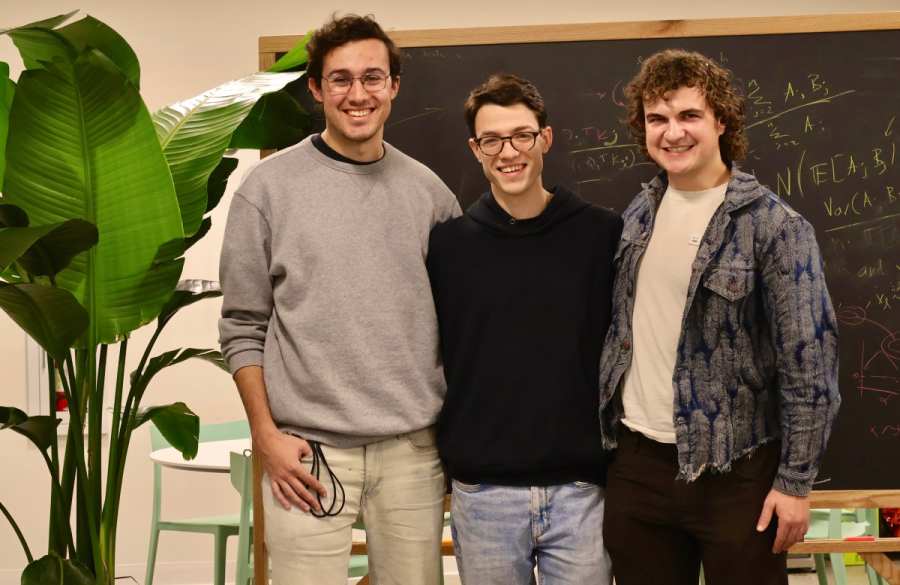
Founded in late 2025 by brothers Ben and Asher Spector alongside Aidan Smith, Flapping Airplanes is an AI research company investigating ways to make machine learning substantially more efficient. The company’s central argument is that AI development has become too dependent on increasing computing resources and training datasets.
Rather than assuming progress requires ever-larger data centers, Flapping Airplanes is exploring changes to algorithms, training methods, and the software that runs GPUs. Its research spans model pre-training, post-training, inference, and lower-level computing systems.
A billion-dollar investment before commercial revenue
Flapping Airplanes is developing a technology it calls megakernels. A conventional GPU workload may require numerous separate operations, with overhead associated with coordinating and moving between them.
The company’s approach attempts to execute larger portions of a program within a single GPU kernel, reducing some of that overhead. Index Ventures says the architecture can improve how computing resources are used across training and inference workloads.
Those improvements could become valuable if they translate into meaningful reductions in the cost of developing and running AI systems. However, the commercial claims remain to be demonstrated at scale. According to Bloomberg, Flapping Airplanes has not yet released a commercial product and generates no revenue. That makes its $6 billion valuation particularly striking.
Investors are financing the possibility of technical progress rather than established customer demand. The company previously raised approximately $180 million in January, bringing its reported cumulative financing to approximately $1.18 billion. Its valuation has increased substantially since that earlier investment.
For institutional investors, the opportunity is potentially enormous: a successful improvement in AI efficiency could affect the economics of training and inference across multiple industries. The risk is equally substantial.
Research breakthroughs are uncertain, and commercially valuable improvements must ultimately outperform competing methods developed by established AI laboratories, chip manufacturers, and infrastructure providers. Flapping Airplanes therefore represents one of the clearest examples of venture capital’s willingness to finance scientific potential before traditional financial metrics exist.
Funding Details
Startup: Flapping Airplanes
Investors: Index Ventures, Lux Capital, Sequoia Capital, GV, Kleiner Perkins
Amount Raised: $1 billion
Total Raised: Approximately $1.18 billion, including its previously reported January financing
Funding Stage: Series A
Funding Date: October 21, 2026
Headquarters: San Francisco, California, United States
Sector: Artificial intelligence / AI research/computing infrastructure
Valuation: $6 billion post-money
Legora raises $550M in funding at $8.8B valuation as legal AI adoption accelerates

Swedish legal technology company Legora raised $550 million in Series E financing at an $8.8 billion post-money valuation, led by Atreides Management.
New investors include Baron Capital, Capital Group, Fidelity Management & Research, Glade Brook Capital Partners, and JPMorgan. Existing investors Accel, Benchmark, Bessemer Venture Partners, General Catalyst, ICONIQ, Insight Partners, Menlo Ventures, Redpoint Ventures, Salesforce Ventures, and Sands Capital also participated.
Founded in 2023 and headquartered in Stockholm, Legora develops AI software for lawyers and legal teams. Its platform supports legal research, document review, contract analysis, drafting, and other professional workflows.
The company is increasingly developing AI agents that can complete multi-step assignments rather than simply answer questions about individual documents. That distinction matters because legal work often involves several connected tasks. A transaction might require reviewing contracts, identifying inconsistencies, researching applicable law, preparing revisions, and coordinating with multiple attorneys.
Legora wants its software to support more of that process within a single environment.
A $200 million recurring-revenue business
Legora reports that annual recurring revenue has surpassed $200 million. The company says it reached its first $100 million in ARR in less than 18 months and added another $100 million in under six months. Those figures are company-reported but provide a more concrete financial foundation than many AI startups disclose.
Legora also reports more than 140,000 legal professionals using its technology across over 2,400 law firms and corporate legal teams in more than 80 markets. The United States is now its largest market by revenue.
According to Legora, more than half of the AmLaw 50 firms are customers. These relationships matter because legal buyers place substantial importance on confidentiality, accuracy, professional judgment, and software integration.
Legora’s commercial opportunity comes from becoming embedded in those workflows. Its challenge is maintaining growth as competition intensifies. The company competes with legal AI startups such as Harvey, established legal technology providers, and enterprise software companies introducing increasingly capable AI tools.
Legal AI also faces a persistent reliability problem: incorrect citations, incomplete analysis, or missed contractual details can create significant professional liability. Legora must demonstrate that its software improves productivity without weakening legal quality or exposing confidential information.
The latest valuation represents a substantial increase from the approximately $5.6 billion valuation attached to its previous round. At an $8.8 billion valuation and reported ARR above $200 million, investors are assigning a significant premium to expected future growth. The financing reflects confidence that specialized AI applications can develop into large, durable software businesses.
But the company’s long-term value will depend on customer retention, margins, product quality, and whether its technology becomes an enduring part of legal operations.
Funding Details
Startup: Legora
Investors: Atreides Management, Baron Capital, Capital Group, Fidelity, Glade Brook Capital Partners, JPMorgan, Accel, Benchmark, Bessemer, General Catalyst, ICONIQ, Insight, Menlo Ventures, Redpoint, Salesforce Ventures, Sands Capital
Amount Raised: $550 million
Total Raised: Not disclosed on a fully reconciled lifetime basis
Funding Stage: Series E
Funding Date: October 21, 2026
Headquarters: Stockholm, Sweden; substantial operations in New York
Sector: Legal technology/enterprise AI / professional services software
Valuation: $8.8 billion post-money
Whop raises $200M in funding at $5.1B valuation to expand its online business platform
New York-based Whop raised $200 million in Series D financing at a $5.1 billion valuation, led by Sequoia Capital and Shopify Ventures. The company announced the investment on October 21, saying the proceeds would support international expansion, product development, payments infrastructure, and advertising technology.
The financing follows a separate $200 million strategic investment from Tether announced in February 2026. The earlier investment is not included in today’s funding total.
Whop operates a platform that helps individuals and businesses create, sell, and distribute digital products and services. Its customers include creators, online communities, software businesses, and companies serving specialized markets. The platform combines business management, distribution, payments, and other tools intended to make it easier to operate an internet-based company.
Whop’s strategy goes beyond conventional creator monetization. It is attempting to become infrastructure for a growing collection of smaller digital businesses.
Online business formation becomes an investment opportunity
Whop says approximately 25,000 business operators generate $550 million in monthly activity on its platform. The company also reports that more than 50,000 additional people earn income by providing services to businesses operating through Whop. Those are company-reported figures.
Importantly, the $550 million represents activity generated through the platform, not Whop’s own monthly revenue. The investment thesis is connected to changes in how online businesses are created. AI can reduce the time required to develop software, produce content, manage customers, and launch specialized services.
But building a successful business still requires distribution, payments, trust, customer support, and repeat demand. Whop is attempting to provide those capabilities. Shopify Ventures’ participation is strategically interesting because Shopify operates in an adjacent market involving the infrastructure required to build and manage online commerce businesses.
Whop’s potential advantage comes from its community of operators, marketplace activity, payment systems, and distribution relationships. However, it faces competition from e-commerce platforms, subscription services, creator platforms, payment processors, and companies offering AI-assisted business tools.
Its long-term economics will depend on transaction revenue, customer retention, operating costs, and the quality of businesses using the platform.
For investors, Whop represents a bet that AI-enabled entrepreneurship will create opportunities for platforms that support business formation and monetization. The challenge is demonstrating that those businesses can generate sustainable economic activity rather than short-lived online trends.
Funding Details
Startup: Whop
Investors: Sequoia Capital, Shopify Ventures
Amount Raised: $200 million
Total Raised: Not disclosed on a fully reconciled lifetime basis; includes a separate $200 million strategic investment announced in February 2026
Funding Stage: Series D
Funding Date: October 21, 2026
Headquarters: New York, United States
Sector: Digital commerce/creator economy/business software
Valuation: $5.1 billion
Peak Energy raises $108M to expand sodium-ion batteries for grids and AI data centers

California-based Peak Energy raised $108 million in Series B financing led by General Motors Ventures. Maverick Silicon, Infinite Capital, Eclipse, Xora Innovation, and LG Technology Ventures participated. The company plans to use the proceeds to expand domestic manufacturing and enter additional energy-storage markets.
Headquartered in Burlingame, Peak Energy develops sodium-ion battery systems designed for stationary energy storage. Unlike lithium-ion batteries, sodium-ion technology uses more abundant materials and may offer advantages in cost, safety, and supply-chain availability for certain applications.
Peak has developed a passively cooled battery architecture intended to reduce the equipment required to manage battery temperatures. That could improve the economics of large stationary storage installations. The company initially targeted electricity-grid applications but is increasingly developing products for data centers.
AI electricity demand creates another battery market
Data center expansion is increasing demand for electricity infrastructure that can support large computing systems. Operators need reliable power supplies, equipment capable of managing changing electricity demand, and systems that can reduce operating costs. Energy storage can help address some of those requirements.
Peak says it has accumulated more than $1 billion in customer orders and commitments. That figure is significant but should not be confused with recognized revenue. Orders and commitments can be subject to delivery schedules, commercial conditions, manufacturing availability, and customer requirements.
The company has also announced a partnership with General Motors involving sodium-ion battery development and manufacturing expertise. Peak intends to begin production at a planned 4 GWh Sacramento facility in the first quarter of 2027. That production schedule remains a company target.
The investment’s strategic importance comes from the intersection of two markets: electricity infrastructure and AI computing. Peak is not developing AI software, but increased computing demand could create additional customers for its energy-storage products.
For investors, the opportunity depends on manufacturing execution. Battery technology must compete on total installed cost, reliability, safety, operating life, and maintenance requirements. Peak will also need to demonstrate that sodium-ion systems can be produced consistently at commercial scale.
The $108 million investment supports that transition, but manufacturing expansion remains expensive.
Funding Details
Startup: Peak Energy
Investors: General Motors Ventures, Maverick Silicon, Infinite Capital, Eclipse, Xora Innovation, LG Technology Ventures
Amount Raised: $108 million
Total Raised: Not disclosed on a fully reconciled basis
Funding Stage: Series B
Funding Date: October 21, 2026
Headquarters: Burlingame, California, United States
Sector: Energy storage/climate technology/data center infrastructure
Valuation: Not disclosed
Limiada raises nearly RMB500M to automate semiconductor and optical-component manufacturing
Chinese industrial technology company Limiada announced nearly RMB 500 million in financing across its completed B1 and B2 rounds. The company disclosed the transactions today through the Chinese venture capital publication Investment
Investors include industrial capital providers, financial institutions, state-backed strategic investment organizations, and existing shareholders. The completed rounds did not fully identify individual investors. Limiada also disclosed investor interest in a subsequent B3 round. That financing remains in the subscription and signing process and is not included in today’s funding figures.
Based in Suzhou, Limiada develops manufacturing automation technology for semiconductor and optical-component production. Its systems are designed for highly controlled manufacturing environments where contamination, precision, and equipment reliability are particularly important.
The company is developing automated manufacturing facilities that require less direct human intervention. That approach is especially relevant to semiconductor production, where manufacturing consistency can affect product yields.
Semiconductor expansion creates demand for specialized automation
Limiada says its technology supports manufacturing processes used in semiconductor and optical-module production. Optical modules are particularly relevant to AI data centers because increasingly large computing systems require high-bandwidth connections between processors, servers, and networking equipment.
The company reports nearly RMB 1 billion in existing and prospective orders during 2026. Those figures combine different levels of commercial commitment and should not be interpreted as recognized revenue. Limiada also identifies Micron as an important customer, reporting cumulative orders worth several hundred million yuan.
The company says its operations extend across major semiconductor manufacturing markets, including the United States, Japan, Singapore, Malaysia, India, and Taiwan. Its new capital will support manufacturing facilities, product development, and research into AI-assisted industrial systems.
For investors, Limiada represents a bet on the equipment and automation required to expand semiconductor production. That opportunity differs from investing directly in chip designers. Manufacturing automation companies can potentially serve several customers and technology categories, but their commercial performance depends on product reliability, customer qualification, delivery schedules, and after-sales support.
The company must also convert prospective orders into completed projects. Its latest financing suggests investor confidence in demand for semiconductor manufacturing infrastructure, although the precise financial terms and valuation were not disclosed.
Funding Details
Startup: Limiada (立妙达)
Investors: Industrial investors, financial institutions, state-backed strategic investment funds, and existing shareholders; complete syndicate not disclosed
Amount Raised: Nearly RMB 500 million across completed B1 and B2 rounds
Total Raised: Not disclosed on a fully reconciled basis
Funding Stage: B1 and B2
Funding Date: October 22, 2026 public announcement
Headquarters: Suzhou, China
Sector: Semiconductor manufacturing / industrial automation / optical-component infrastructure
Valuation: Not disclosed
Blacksmith raises $66M in funding at $1B valuation to speed up testing of AI-generated code
San Francisco-based Blacksmith raised $66 million in Series C financing at a $1 billion valuation, led by Sequoia Capital. Premji Invest joined the round alongside existing investors Peak XV Partners, GV, and Y Combinator. The financing brings Blacksmith’s cumulative funding to $125 million.
Blacksmith develops infrastructure for building and testing software. Its products focus on continuous integration, commonly called CI, the process of automatically checking software changes before merging or deploying them.
CI systems run tests, compile code, and identify problems that could affect software quality. Those processes have become increasingly important as AI coding assistants generate larger volumes of code. Developers may produce software changes quickly, but those changes still require verification.
AI coding creates a new infrastructure bottleneck
Blacksmith argues that the growing use of coding agents is shifting the constraint in software development. Writing code is becoming faster. Testing and validating that code can become the slower part of the process. The company provides specialized computing infrastructure intended to perform those tasks more efficiently than traditional CI environments.
Blacksmith reports that annual recurring revenue has increased 17-fold since January. It also says more than 10,000 startups and enterprise customers use its platform. These are company-reported figures, and the company did not disclose absolute ARR.
The investment is strategically significant because it reflects an emerging secondary market created by AI software development. Companies adopting coding agents may need additional tools to verify correctness, manage tests, and control the cost of running increasingly frequent build processes.
For investors, Blacksmith’s potential advantage comes from performance, reliability, developer adoption, and infrastructure specialization. However, the company competes with established CI services, cloud providers, and software development platforms that may introduce similar optimizations. Its ability to maintain growth will depend on whether it can deliver measurable reductions in build times and computing expenses.
The $1 billion valuation reflects substantial expectations for a company operating in a specialized developer infrastructure category.
Funding Details
Startup: Blacksmith
Investors: Sequoia Capital, Premji Invest, Peak XV Partners, GV, Y Combinator
Amount Raised: $66 million
Total Raised: $125 million
Funding Stage: Series C
Funding Date: October 21, 2026
Headquarters: San Francisco, California, United States
Sector: Developer tools / continuous integration / AI software infrastructure
Valuation: $1 billion
Coherence Neuro raises $45M to investigate brain implants for cancer detection and treatment
San Francisco-based Coherence Neuro raised $45 million in seed financing, with participation from the OpenAI Startup Fund and Peter Thiel’s Founders Fund. The investment was disclosed in an October 21 WIRED report. The report did not disclose the company’s full investor syndicate or valuation.
Coherence is developing experimental brain implants intended to detect electrical signals associated with brain tumors. The startup’s longer-term goal is to use those signals to monitor cancer activity and potentially deliver electrical stimulation intended to affect tumor growth.
The approach differs from brain-computer interface companies primarily focused on restoring movement, communication, or other neurological functions. Coherence is investigating whether electrical signals from the brain could help understand and potentially treat cancer.
A medical technology bet with substantial clinical uncertainty
The company has conducted limited human testing. According to WIRED, its implant was briefly used during surgery involving three patients at Royal Melbourne Hospital in Australia. The devices remained in place for approximately 30 minutes before being removed.
That work provided an opportunity to evaluate recording capabilities under controlled clinical circumstances. It does not show that the implants can reliably detect cancer progression over long periods or improve treatment outcomes.
Coherence is now investigating additional recording and stimulation capabilities and hopes to advance toward longer-term clinical studies involving glioblastoma. Glioblastoma is an aggressive brain cancer with limited treatment options. The medical need is significant, but the proposed technology remains at an early experimental stage.
Investors are therefore financing a scientific hypothesis rather than a commercially validated medical device. Coherence must show that its electrical measurements reliably correspond to clinically meaningful disease activity. It must also establish the safety of longer-term implantation and investigate whether electrical stimulation produces therapeutic benefits. The investment has another notable dimension: OpenAI’s startup fund’s participation.
Coherence’s CEO told WIRED that the investment does not give OpenAI access to the company’s brain data or other patient health information. That distinction matters because brain-computer interface companies collect particularly sensitive information.
For investors, Coherence represents an ambitious intersection of neuroscience, medical devices, cancer research, and AI. The technical opportunity is substantial, but clinical validation and regulatory approval remain far from assured.
Funding Details
Startup: Coherence Neuro
Investors: OpenAI Startup Fund, Founders Fund; full syndicate not disclosed
Amount Raised: $45 million
Total Raised: Not fully disclosed on a reconciled basis
Funding Stage: Seed
Funding Date: October 21, 2026 public disclosure
Headquarters: San Francisco, California, United States
Sector: Biotechnology / brain-computer interfaces / medical devices / AI
Valuation: Not disclosed
Huixi Intelligence announces new funding rounds to expand AI processors for humanoid robots
Beijing-based Huixi Intelligence announced the completion of Pre-B+ and Series B financings, bringing cumulative equity funding during 2026 to more than RMB 2.5 billion. The Beijing Artificial Intelligence Industry Investment Fund led the newly disclosed rounds.
Other participants include the Beijing Robotics Industry Development Investment Fund, Hidden Hill Capital, Zhengxingu Capital, Jinpu Investment, and additional institutional investors. Existing backers, including Shunwei Capital and Cathay Capital, also participated. The amount attributable specifically to the latest Pre-B+ and Series B transactions was not disclosed. The RMB 2.5 billion figure covers multiple equity financings during 2026.
Huixi develops processors and computing platforms designed for embodied AI. Embodied AI refers to systems that use AI to perceive and act within physical environments, including industrial and humanoid robots. Robots need computing systems that can process information from cameras, sensors, and control systems while responding quickly to changing conditions.
Huixi is developing hardware and software intended to support those requirements.
Humanoid robotics becomes a semiconductor market
The company’s products include its Guangzhi R1 AI system-on-chip and supporting computing platforms. Huixi has also developed software components spanning model frameworks, compilers, runtime systems, and robotic control. The combination is intended to reduce the engineering work required to deploy AI algorithms on physical robots.
Huixi says its processors have been used in Agibot’s G2 robotic systems. The company also reports a demonstration in which robots completed more than 17,000 tasks during six days of continuous production-line operation, with a reported success rate of 99.99%.
Those are company-reported results from a specified deployment. They do not establish equivalent performance across all robots, tasks, or industrial environments. The financing reflects growing investor interest in semiconductor technology developed specifically for robotics.
A humanoid robot requires more than a general-purpose computing accelerator. It must coordinate perception, movement, communication, and real-time control while operating within strict power and thermal limits.
Huixi is attempting to develop a computing platform around those requirements. Its challenge is converting technical progress and customer partnerships into sustained commercial shipments. It must also compete with established semiconductor companies and other startups developing specialized AI processors.
For investors, the opportunity lies in becoming a supplier to multiple robotics manufacturers rather than depending on the success of a single robot model.
Funding Details
Startup: Huixi Intelligence (辉羲智能)
Investors: Beijing Artificial Intelligence Industry Investment Fund, Beijing Robotics Industry Development Investment Fund, Hidden Hill Capital, Zhengxingu Capital, Jinpu Investment, Shunwei Capital, Cathay Capital, and others
Amount Raised: Not disclosed for the latest Pre-B+ and Series B rounds; cumulative 2026 equity funding exceeds RMB 2.5 billion
Total Raised: More than RMB 2.5 billion during 2026; lifetime total not fully disclosed
Funding Stage: Pre-B+ and Series B
Funding Date: October 22, 2026 public announcement
Headquarters: Beijing, China
Sector: AI semiconductors / embodied AI/robotics computing
Valuation: Not disclosed
Watchtower Labs raises $35M to build AI-powered military logistics planning systems
Washington-based Watchtower Labs raised $35 million in seed financing, co-led by Shield Capital and Conviction. Founders Fund also participated. The company emerged from stealth on October 21, announcing its financing alongside plans to develop AI-assisted decision tools for military operations.
Watchtower is developing software that helps military planners evaluate logistics and operational decisions. Its initial focus includes transportation, fuel, spare parts, equipment, munitions, and supply routes. Military logistics involves coordinating resources across changing conditions. A plan that appears feasible may become impractical when transportation routes change, equipment fails, or supplies are delayed.
Watchtower helps planners model those constraints and compare possible responses.
AI moves into operational decision support
Watchtower combines AI, simulation, and optimization techniques. Its software models possible future conditions and gives decision-makers information on the assumptions and trade-offs behind different plans.
The company emphasizes that human operators remain responsible for final decisions. That distinction is important because military operations involve consequences that cannot be delegated casually to automated systems.
Watchtower previously collaborated with the Naval Postgraduate School to inform its technology development. The Defense Innovation Unit also selected it in January 2026 under a program intended to improve sustainment decision-making. That selection indicates government interest but does not establish the scale of future procurement or revenue.
The financing reflects broader investor interest in software designed for national security and defense operations. For investors, Watchtower’s potential advantage lies in its understanding of military requirements, operational data, and ability to integrate with existing planning systems.
The company must demonstrate that its simulations and recommendations remain useful when information is incomplete or conditions change unexpectedly. Government procurement cycles, information security requirements, and customer concentration also create commercial challenges.
The investment is therefore a bet on both technical capability and the company’s ability to operate within demanding defense procurement environments.
Funding Details
Startup: Watchtower Labs
Investors: Shield Capital, Conviction, Founders Fund
Amount Raised: $35 million
Total Raised: $35 million disclosed
Funding Stage: Seed
Funding Date: October 21, 2026
Headquarters: Seattle metropolitan area, Washington, United States
Sector: Defense technology / military logistics / AI decision support
Valuation: Not disclosed
Mach9 raises $34M to automate civil engineering drawings for roads and utilities
San Francisco-based Mach9 raised $34 million in Series A financing, co-led by First Round Capital and Bessemer Venture Partners. Prudence and existing investor Quiet Capital also participated. The financing brings the company’s cumulative funding to $49 million.
The company plans to use the proceeds to expand its engineering software and commercial operations. Mach9 develops AI-assisted computer-aided design software for civil engineering. Its technology converts data collected through surveying equipment into drawings that engineers can use to plan and manage infrastructure projects.
Modern surveying tools, including LiDAR systems, can collect detailed information about roads, utilities, buildings, and construction sites. But converting those measurements into usable engineering documents can require substantial manual work. Mach9 is attempting to automate that process.
Infrastructure surveying becomes an AI application
The company says its technology can identify physical features within three-dimensional scans, including roads, signs, poles, curbs, and utility infrastructure. Its software then converts that information into engineering drawings.
Mach9 claims its technology can complete certain drafting tasks up to ten times faster at approximately one-fifth the conventional cost. Those are company-reported performance estimates, and actual results will depend on project complexity and data quality. The opportunity addresses an established problem.
Large infrastructure projects require accurate information about existing physical conditions before engineers can design repairs or new construction. Surveying and drafting delays can affect project schedules. Mach9 is attempting to reduce the time between collecting physical measurements and producing usable engineering information.
The investment is significant because it illustrates a commercial AI application that does not depend on replacing engineers. Instead, the software automates repetitive technical work while allowing professionals to review and refine the results.
For investors, Mach9’s potential advantage comes from its specialized training data, integration into engineering workflows, and output accuracy. The company must demonstrate that its software can operate reliably across different surveying conditions and project types. Its long-term success will depend on customer adoption, recurring revenue, and measurable productivity improvements.
Funding Details
Startup: Mach9
Investors: First Round Capital, Bessemer Venture Partners, Prudence, Quiet Capital
Amount Raised: $34 million
Total Raised: $49 million
Funding Stage: Series A
Funding Date: October 21, 2026
Headquarters: San Francisco, California, United States
Sector: Civil engineering software/infrastructure technology / AI-assisted CAD
Valuation: Not disclosed
What Today’s Funding Activity Reveals
Today’s funding activity illustrates an increasingly divided venture market.
Some companies are raising enormous amounts based on their potential to change AI economics.
Others are attracting investment because they have shown that AI can improve specific commercial processes.
Both strategies can create valuable businesses, but their financial characteristics differ substantially.
1. The largest AI investments are increasingly concentrated in a few companies
Flapping Airplanes and Legora together raised $1.55 billion.
That represents approximately 76% of the $2.038 billion raised across today’s eight dollar-denominated financings.
Adding Whop brings the three largest rounds to $1.75 billion, or approximately 86% of the dollar total.
This concentration is important. The aggregate funding figure does not imply that early-stage companies across all sectors are receiving more capital. It shows investors are committing exceptionally large amounts to businesses they believe can capture important markets.
2. Research-stage and revenue-stage AI companies are attracting capital simultaneously
Flapping Airplanes has not released a commercial product.
Legora reports more than $200 million in annual recurring revenue.
Both companies have multibillion-dollar valuations. The difference reflects two forms of investor conviction.
Flapping Airplanes is valued on the possibility of foundational technical progress.
Legora is valued on demonstrated commercial adoption and expectations for continued expansion.
Investors evaluating these businesses must apply different financial and technical standards.
3. AI infrastructure now includes energy and manufacturing
Peak Energy and Limiada demonstrate that AI infrastructure extends beyond processors and cloud services.
AI data centers require electricity infrastructure.
Semiconductor production requires specialized equipment and manufacturing capacity.
Optical networking requires increasingly sophisticated components and production systems.
Investment opportunities therefore exist throughout the supporting supply chain. These markets can be less visible than AI models, but they may become increasingly important as computing demand grows.
4. AI adoption is creating new software problems
Blacksmith’s financing reflects the growing need to validate AI-generated code.
As development teams produce more software, testing infrastructure must process more changes.
That creates a commercial opportunity based on a second-order effect of AI adoption.
The same principle applies to other parts of enterprise technology. Automation may eliminate one bottleneck while increasing pressure elsewhere.
5. Specialized knowledge remains valuable
Coherence Neuro is combining neuroscience and medical-device research.
Watchtower is developing military logistics software.
Mach9 is automating civil engineering tasks.
Huixi is building computing systems for physical robots.
These businesses require expertise extending beyond conventional AI application development. That specialization may provide advantages as general-purpose AI models become more capable and widely available.
6. Strategic investors can provide more than capital
General Motors Ventures’ investment in Peak Energy is connected to its experience developing and manufacturing batteries.
Huixi’s investor group includes organizations focused on AI, robotics, and industrial development.
Such relationships can help companies understand customer requirements and develop commercial partnerships. However, strategic investment should not automatically be interpreted as a binding purchasing commitment. Investors should distinguish access to potential customers from completed commercial sales.
7. Physical technology requires different milestones from software
Peak Energy must expand battery manufacturing.
Huixi must deliver processors and computing platforms.
Coherence must conduct clinical research.
Limiada must build and deploy manufacturing automation systems.
Their capital requirements and commercialization schedules differ substantially from those of software businesses. Technical demonstrations are important, but long-term value depends on manufacturing quality, operating reliability, customer economics, and regulatory compliance where applicable.
8. The definition of AI defensibility is becoming more specific
Flapping Airplanes is pursuing algorithmic and computing efficiency.
Legora is developing customer relationships and specialized legal workflows.
Blacksmith is improving software validation infrastructure.
Watchtower is building operational decision systems.
These companies are attempting to develop capabilities that competitors cannot reproduce simply by accessing a widely available model. The value of those capabilities will depend on whether they produce measurable improvements customers are willing to pay for.
9. Geographic concentration should be interpreted through deal significance
The selected transactions include seven U.S. companies, one Swedish company, and two Chinese companies.
The United States dominates the dollar-denominated totals because of Flapping Airplanes, Whop, and several other major investments.
China’s participation is concentrated in semiconductor and robotics infrastructure.
Sweden’s Legora represents one of the largest enterprise software rounds.
The distribution reflects the verified transactions selected within the reporting period, not a broader measurement of global venture capital activity.
10. Cumulative financing announcements require special treatment
Huixi announced new funding rounds while reporting more than RMB 2.5 billion in cumulative equity financing during 2026.
Limiada disclosed nearly RMB 500 million across two completed rounds and separately described additional financing still being arranged.
Those distinctions matter. You cannot always infer the latest funding amount from a company’s total capital raised. Similarly, investor commitments still being negotiated should not be counted as completed financings.
Reliable daily reporting must preserve those differences.
Startup Funding Table
| Startup | Amount Raised | Sector | Funding Stage | Lead/Key Investors | Country |
|---|---|---|---|---|---|
| Flapping Airplanes | $1B | AI research / compute efficiency | Series A | Index Ventures, Lux Capital, Sequoia, GV, Kleiner Perkins | United States |
| Legora | $550M | Legal AI/enterprise software | Series E | Atreides Management, Baron Capital, Capital Group, Fidelity | Sweden |
| Whop | $200M | Digital commerce/business software | Series D | Sequoia Capital, Shopify Ventures | United States |
| Peak Energy | $108M | Sodium-ion batteries/energy infrastructure | Series B | GM Ventures, Maverick Silicon, Eclipse, LG Technology Ventures | United States |
| Limiada | Nearly RMB500M across B1/B2 | Semiconductor manufacturing / industrial automation | B1 and B2 | Industrial investors, financial institutions, state-backed funds; names not fully disclosed | China |
| Blacksmith | $66M | Developer infrastructure / continuous integration | Series C | Sequoia, Premji Invest, Peak XV, GV, Y Combinator | United States |
| Coherence Neuro | $45M | Neurotechnology / medical devices | Seed | OpenAI Startup Fund, Founders Fund | United States |
| Huixi Intelligence | Undisclosed latest rounds; >RMB2.5B cumulative 2026 equity | AI semiconductors/robotics computing | Pre-B+ and Series B | Beijing AI Industry Investment Fund, Beijing Robotics Industry Development Investment Fund, Hidden Hill Capital | China |
| Watchtower Labs | $35M | Defense AI / military logistics | Seed | Shield Capital, Conviction, Founders Fund | United States |
| Mach9 | $34M | Civil engineering / AI CAD | Series A | First Round Capital, Bessemer, Prudence, Quiet Capital | United States |
Funding total: $2.038 billion across eight dollar-denominated rounds, plus nearly RMB500 million across Limiada’s completed B1 and B2 financings. Huixi’s latest financing amount was not disclosed and is excluded from the aggregate.
Strategic Takeaways for Founders and Investors
1. AI efficiency is becoming an investment thesis independent of model capability
Flapping Airplanes is attempting to improve how AI systems use computing resources. Its investors are betting that reductions in training and inference costs could create value across the industry.
For founders, the opportunity is not limited to developing more capable models.
Technologies that reduce computing costs, memory requirements, energy consumption, or training data needs may become valuable infrastructure businesses. However, those advantages must be demonstrated through independently comparable workloads.
2. Revenue quality matters when evaluating AI valuations
Legora’s reported $200 million-plus ARR provides a financial benchmark investors can use to assess its valuation.
Flapping Airplanes does not yet provide an equivalent commercial metric.
Investors should distinguish research-stage valuations from revenue-supported valuations rather than interpreting both as evidence of the same financial progress.
3. Energy access is becoming part of computing economics
Peak Energy’s financing reflects the growing importance of reliable electricity infrastructure.
For founders, that creates opportunities in batteries, cooling, grid management, demand flexibility, and equipment efficiency.
For investors, the relevant questions include cost per unit of usable capacity, lifetime performance, manufacturing scalability, and customer demand.
4. AI coding creates demand for validation infrastructure
Blacksmith’s investment reflects a simple economic relationship.
More software changes require more testing.
As coding agents generate more code, the cost of ensuring software works correctly can rise.
Founders building tools around testing, security verification, deployment, and quality assurance may benefit from that change. The most attractive products will deliver measurable improvements in reliability or cost.
5. Enterprise AI advantages increasingly depend on workflow ownership
Legora has integrated its technology into legal work.
Mach9 is attempting to become part of engineering design processes.
Watchtower is developing software for military planning.
These companies are not simply selling model access. They are attempting to become part of recurring business activities.
That position can support customer retention, but it also increases the importance of reliability, integration, and trust.
6. Hardware startups need commercial partnerships that reduce execution risk
Limiada and Huixi operate in markets where manufacturing quality and customer qualification are central.
Their investors should evaluate product deployment, supplier relationships, equipment performance, manufacturing yields, and delivery schedules.
For founders, relationships with credible industrial customers can help validate technology and clarify commercial requirements.
7. Medical AI requires a higher standard of evidence
Coherence Neuro’s financing demonstrates investor willingness to support ambitious research.
But its proposed brain implants remain experimental.
Investors should distinguish technical feasibility, early human testing, clinical efficacy, and regulatory approval. Those are separate milestones, each capable of materially changing the company’s risk profile.
8. Distribution can remain valuable even when AI reduces development costs
Whop is building a business around helping other businesses reach customers and generate revenue.
That strategy becomes especially interesting if AI makes software development and content production cheaper.
More people may be able to create products, but finding customers and maintaining trust can remain difficult. Platforms that provide distribution, payments, and customer relationships may benefit from that difference.
9. Defense software must demonstrate operational reliability
Watchtower’s technology is designed to support decisions involving military resources and logistics.
Its commercial progress will depend on whether the software can operate effectively using incomplete information and under changing conditions.
For investors, selection for a government technology program should be distinguished from sustained deployment and recurring procurement revenue.
10. Financing size should be evaluated against the milestone it enables
The largest rounds do not necessarily represent the lowest-risk companies.
Flapping Airplanes must demonstrate research breakthroughs.
Legora must sustain high growth and retention.
Peak Energy must expand manufacturing.
Huixi must convert robotic computing technology into broader commercial adoption.
Coherence must generate clinical evidence.
The most important investment question is not simply how much each company raised. It is whether the capital enables a milestone that materially reduces uncertainty and improves the company’s economic prospects.
Conclusion
October 22’s startup funding activity reveals a venture market willing to commit substantial capital to both fundamental AI research and businesses demonstrating commercial adoption.
Flapping Airplanes’ $1 billion Series A is the day’s largest announced round, reflecting investor confidence that improved computing efficiency could reshape AI economics.
Legora’s $550 million Series E shows a different kind of confidence, backed by substantial reported recurring revenue and adoption among major legal organizations.
Whop is building infrastructure for online businesses, while Peak Energy is developing sodium-ion batteries for electricity grids and data centers.
Limiada and Huixi are expanding technologies used in semiconductor manufacturing and robotics computing. Blacksmith is addressing the growing cost of testing AI-generated software. Watchtower is bringing AI into military logistics, Mach9 is automating engineering design, and Coherence Neuro is pursuing an experimental approach to cancer monitoring and treatment.
The transactions are concentrated in companies attempting to control specific technical or commercial capabilities. Some are financing research that may eventually become valuable. Others are expanding products customers already use. The difference matters because technical promise, commercial adoption, and financial durability are not interchangeable measures of success.
The most important signal from today’s funding activity is that investors are backing both the creation of new AI capabilities and the infrastructure required to make existing capabilities economically useful.
The companies that ultimately justify these investments will be those that turn technical advantages into products, customer relationships, and financial returns that competitors cannot easily reproduce.