Getty Images files for Chapter 11 bankruptcy as debt mounts and AI-generated images disrupt stock photography
 Daniel Levi
Posted On October 21, 2026
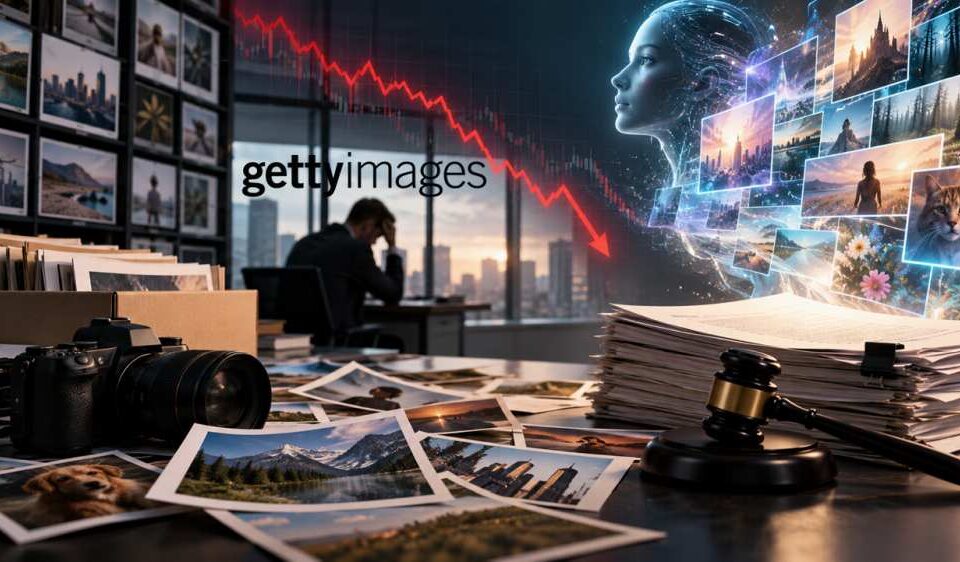
Getty Images, one of the world’s largest stock photography companies, filed for Chapter 11 bankruptcy protection on Wednesday, October 21, as mounting debt, a failed merger with rival Shutterstock, and growing competition from AI-generated images put pressure on its business. The filing marks a dramatic turn for a company that has spent decades licensing photographs and videos to news organizations, advertisers, and businesses worldwide.
The company said it initiated a prepackaged bankruptcy process in the U.S. Bankruptcy Court for the District of Delaware, moving forward with a restructuring agreement announced on October 12. The deal would bring in up to $533 million in equity investment from Getty family affiliates and Koch Equity Development, reduce outstanding debt, and eventually take the company private.
Getty Images isn’t shutting down. The company expects to continue operating throughout the bankruptcy proceedings, with no anticipated disruption to customers, photographers, employees, vendors, or business partners.
“Today’s filing is a procedural step to implement the financial restructuring previously announced. Getty Images continues to operate normally, serving customers and supporting contributors and partners around the world. This process addresses our capital structure and certain non-operating liabilities and supports expanded investment into our content and services,” said Craig Peters, Chief Executive Officer of Getty Images.
According to court filings, Getty listed estimated assets and liabilities ranging from $1 billion to $10 billion each, highlighting the scale of the financial restructuring.
The agreement has already secured support from major creditors. Holders of the company’s unsecured bonds agreed to retire $270 million in outstanding notes, and secured lenders agreed to lower interest costs and extend debt maturities.
Getty expects to finance the bankruptcy process through operating cash flow and up to $143 million in financing from a Koch affiliate. The company aims to complete the restructuring by the end of 2026, subject to court and regulatory approvals.
AI is changing the economics of stock photography
Getty’s financial troubles arrive at a difficult moment for traditional image licensing.
For decades, Getty Images built its business around an extensive library of professional photography, editorial imagery, and video footage. Publishers, advertising agencies, and businesses paid licensing fees to use that content.
Generative AI is challenging parts of that model.
Tools from OpenAI, Adobe, Midjourney, and other AI developers can produce commercially useful illustrations and marketing images from text prompts, giving businesses an alternative to purchasing conventional stock imagery.
That shift has intensified competition in a market already crowded with low-cost image libraries and subscription-based photography services.
Getty’s bankruptcy announcement does not directly blame generative AI for its financial troubles. Reuters, though, identified growing competition from AI-generated imagery as one of the pressures facing the company, alongside its heavy debt burden.
The company’s problems became more complicated after its proposed $3.7 billion merger with Shutterstock fell apart. Getty terminated the agreement in July 2026, according to its securities filings, ending a combination that could have reshaped the stock photography industry.
AI pressure creates an unusual dilemma for Getty. The company has fought to protect copyrighted imagery from unauthorized AI training, yet it has embraced generative AI technology as part of its own product offerings.
Getty has pursued legal action against AI developers, including Stability AI, over the alleged unauthorized use of copyrighted images in training AI systems. The disputes reflect a broader struggle over how creators should be compensated when their work is used to develop image-generation models.
The bigger challenge is economic. AI can produce certain types of commercial imagery in seconds, potentially reducing demand for traditional stock photography. Editorial photography, live event coverage, and verified images of real people remain harder to replace, giving Getty areas where authenticity and licensing rights still matter.
Under the restructuring plan, Getty family affiliates and Koch Equity Development affiliates will own the reorganized company, ending its run as a publicly traded business.
For Getty Images, bankruptcy offers a chance to repair its balance sheet. Whether a leaner, privately owned company can compete more effectively in an AI-driven image market remains an open question.
The filing underscores a growing reality for the creative industry: AI is changing how commercial images are produced and purchased, forcing established photography companies to reconsider the businesses they spent decades building.