Startup Funding News Today, October 21, 2026: ASI, Baba, Pigment, Eka Robotics, Otter.ai & More
 Nickie Louise
Posted On October 21, 2026
More than $1.34 billion in newly announced startup financing flowed into AI infrastructure, defense technology, robotics, enterprise software, and healthcare over the past 24 hours, alongside a separate €30 million investment in European energy technology. The largest transactions reveal a venture market moving beyond the race to build better AI models and toward companies that can make those models useful in critical infrastructure, manufacturing, business operations, and everyday work.
Boston-based ASI led the day’s equity funding activity with a $325 million Series C at a $3 billion valuation, backed by Spark Capital, Citadel Securities affiliates, and several prominent venture firms. Otter.ai secured $320 million from General Catalyst, although its financing is repayable rather than equity. Meanwhile, Paris-based Pigment raised $250 million at a $2.3 billion valuation, reinforcing investor interest in enterprise AI applications with substantial recurring revenue.
Funding activity also extended into physical AI and industrial automation. Arda Industries raised $160 million at a $1.5 billion valuation to help manufacturers turn product designs into working assembly lines. Eka Robotics secured $150 million at a $1.45 billion valuation to develop robots capable of manipulating objects with speed and precision. Developer infrastructure startup Daytona raised $60 million at a $1 billion valuation, while healthcare startup Baba secured $40 million to improve care coordination for Medicare and Medicaid patients.
Three smaller investments complete today’s selection: France’s Elax Énergie raised €30 million to turn electric water heaters into flexible energy resources; Qualitate secured $25 million to automate expert research and market intelligence; and British electronics-design startup Circuit Mind raised $18.5 million to use AI to generate and verify circuit designs.
Together, the 10 selected transactions represent $1.3485 billion in dollar-denominated financing, plus €30 million. Importantly, that is not a pure venture-equity total. Excluding Otter.ai’s $320 million repayable facility leaves $1.0285 billion in disclosed dollar-denominated equity rounds, plus €30 million.
Nine of the selected companies apply AI to business or technical problems, while Elax focuses on energy management. Seven companies are based in the United States, two in France, and one in the United Kingdom.
The Macro Environment: Venture Capital Is Moving Toward AI’s Operating Layer
The most important signal from today’s funding activity is the growing distinction between developing AI capabilities and building businesses that can deploy them reliably.
ASI, Arda Industries, and Eka Robotics are addressing problems that cannot be solved simply by placing a language model inside an application. ASI is developing systems to predict and coordinate complex infrastructure operations. Arda is trying to reduce the engineering work required to automate manufacturing. Eka is developing robotic intelligence that incorporates physical forces, allowing machines to manipulate objects rather than merely recognize them.
These companies face substantial technical and commercial risks, but their potential advantages extend beyond access to AI models. They require specialized data, engineering expertise, customer relationships, and operating experience in demanding environments.
Enterprise software is attracting capital for similar reasons. Pigment, Daytona, Otter.ai, and Qualitate are each attempting to make AI a more useful part of daily work. Pigment integrates AI into financial and operational planning. Daytona provides isolated computing environments where AI agents can execute tasks. Otter wants to turn business conversations into searchable knowledge and follow-up actions. Qualitate uses AI to conduct expert interviews and organize market intelligence.
The financial characteristics of these investments differ considerably. Pigment reports more than $100 million in annual recurring revenue. Otter surpassed that milestone in 2025, although its latest financing does not involve selling additional equity. Daytona is an earlier-stage infrastructure business being valued at $1 billion. Qualitate is developing a new approach to a research market traditionally dependent on human interviews and consulting services.
That diversity matters because investor confidence in AI is no longer expressed through a single business model. Companies are being financed through conventional venture equity, growth rounds, strategic investments, and alternative capital structures.
Otter’s financing is particularly instructive. General Catalyst’s Customer Value Fund is providing $320 million without taking an equity stake. Otter must repay the capital with interest as its growth investments generate revenue. The arrangement avoids immediate shareholder dilution but creates a financial obligation that conventional equity does not.
Europe’s activity adds another dimension. Pigment competes in enterprise planning software, Elax addresses electricity demand flexibility, and Circuit Mind automates electronics engineering.
Their businesses have little in common operationally, but each is trying to improve the economics of an established market.
The broader message is that investors are financing technologies that deliver measurable improvements in cost, speed, reliability, or operational performance. The next challenge for these companies is demonstrating that those improvements can support attractive long-term financial returns.
ASI raises $325M to bring predictive AI into critical infrastructure and national security
Boston-based ASI raised $325 million in Series C financing at a $3 billion valuation, making it the largest equity investment among today’s selected rounds. Spark Capital led the financing, with participation from affiliates of Citadel Securities, Meritech Capital, Craft Ventures, Energy Impact Partners, and Andreessen Horowitz.
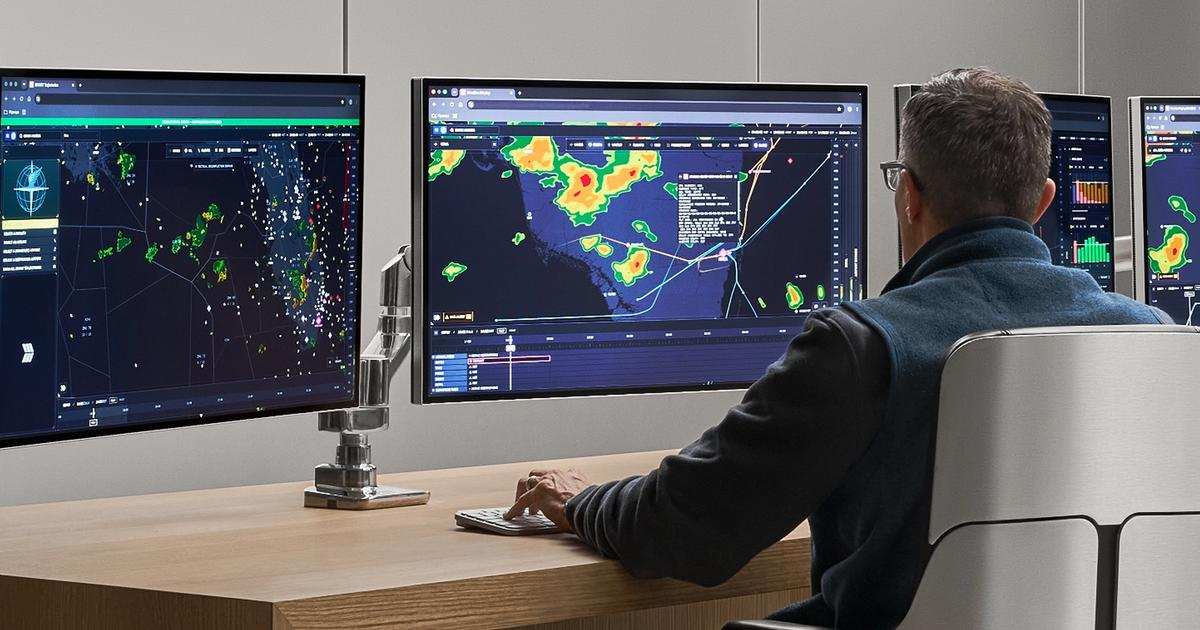
Previously known as Air Space Intelligence, the company develops AI systems that help organizations anticipate and coordinate operations across transportation networks, energy infrastructure, aviation, logistics, and national security.
Founded by CEO Phillip Buckendorf, ASI aims to solve a problem faced by organizations operating complex physical systems. Air traffic, military logistics, electricity networks, and transportation systems involve enormous numbers of interconnected decisions. A disruption in one location can affect operations elsewhere, sometimes with hard-to-predict consequences.
ASI combines forecasting, simulation, and optimization to help operators evaluate possible future conditions rather than reacting exclusively to events already underway.
Critical infrastructure becomes an AI investment category
ASI says its technology is already deployed in transportation, national security, and commercial infrastructure. The company has received major federal contract awards, including an FAA modernization program with a reported ceiling of $875 million. That figure represents the potential value of the contract program, not revenue ASI has already earned. The company has also expanded its work involving military and defense operations.
The investment is significant because it reflects demand for AI systems designed around operational constraints rather than general-purpose conversation. An AI system used to coordinate critical infrastructure must account for reliability, safety, changing conditions, and the consequences of incorrect recommendations. That creates technical and commercial barriers for new entrants.
For investors, ASI’s potential advantage lies in its domain-specific models, integration experience, customer relationships, and ability to demonstrate dependable performance.
The challenge is converting major contracts and deployments into sustainable revenue while satisfying the demanding requirements of government and infrastructure customers.
Funding Details
Startup: ASI, formerly Air Space Intelligence
Investors: Spark Capital, Citadel Securities affiliates, Meritech Capital, Craft Ventures, Energy Impact Partners, Andreessen Horowitz
Amount Raised: $325 million
Total Raised: Not disclosed on a fully reconciled basis
Funding Stage: Series C
Funding Date: October 20, 2026
Headquarters: Boston, Massachusetts, United States
Sector: Defense technology / critical infrastructure AI / operational intelligence
Valuation: $3 billion
Otter.ai raises $320M in non-equity financing to expand its enterprise voice AI business
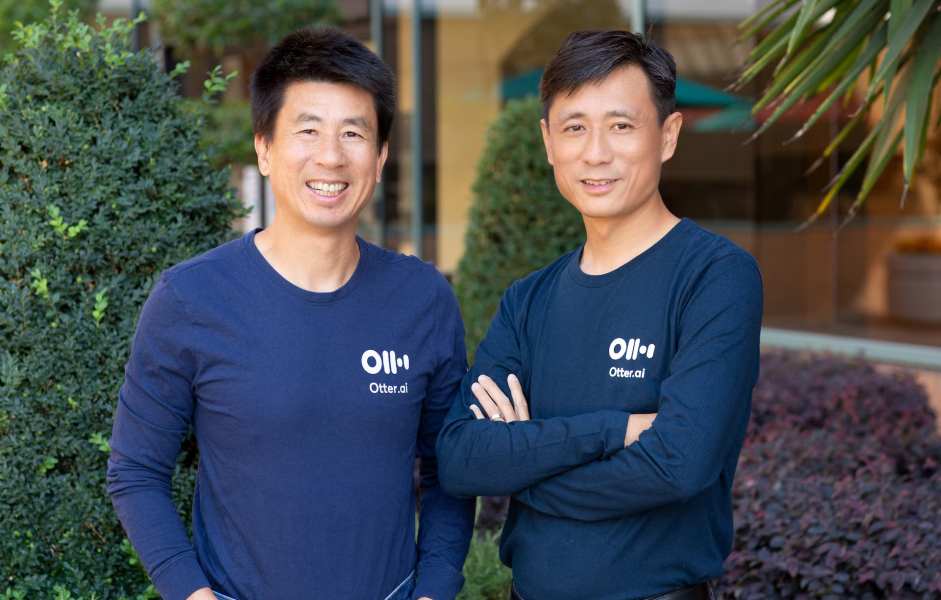
Mountain View-based Otter.ai secured $320 million in growth financing from General Catalyst’s Customer Value Fund, giving the company substantial resources to expand its enterprise business. Unlike a conventional Series C or Series D investment, the financing does not involve selling equity.
Otter CEO Sam Liang said in a blog post that the company must repay the capital with interest as its sales and marketing investments generate revenue. That distinction is important for understanding both the transaction’s financial implications and today’s overall funding statistics.
Otter began as an AI transcription and meeting-notes application. Its technology records and transcribes conversations, identifies speakers, generates summaries, and makes meeting information searchable. The company is expanding beyond note-taking toward AI agents that can retrieve information from conversations, answer questions, and perform follow-up tasks.
That creates a potential opportunity to turn spoken business information into something employees can search and use across an organization.
An alternative way to finance customer acquisition
Otter says more than 40 million people have used its products, and employees at more than 86% of Fortune 500 companies have used its technology. Those figures demonstrate substantial reach, but they do not establish that all those users are currently active or paying customers. Otter surpassed $100 million in annual recurring revenue in 2025.
The company has not disclosed its latest enterprise revenue, conversion rates, or monthly active users. The financing will support international expansion, sales hiring, marketing, and product development. General Catalyst’s structure allows Otter to invest heavily in growth without immediately diluting existing shareholders. However, the company will need to generate sufficient returns on that spending to meet its repayment obligations.
The competitive environment is demanding. Microsoft, Google, Zoom, and numerous specialized AI startups offer transcription, meeting summaries, and related capabilities. Otter must show its product delivers value beyond features customers may already get through existing productivity subscriptions.
Its opportunity lies in becoming an enduring repository of organizational conversation data and turning that information into useful enterprise workflows.
Funding Details
Startup: Otter.ai
Investors: General Catalyst Customer Value Fund
Amount Raised: $320 million
Total Raised: Approximately $50 million in previously reported equity funding, plus the newly announced $320 million non-equity facility; full historical funding figures vary by source
Funding Stage: Non-equity growth financing
Funding Date: October 20, 2026
Headquarters: Mountain View, California, United States
Sector: Enterprise AI/voice AI/meeting intelligence
Valuation: Not disclosed
Pigment raises $250M in funding at $2.3B valuation to expand AI-driven enterprise planning
Paris-based Pigment raised $250 million in Series E financing at a $2.3 billion valuation, led by the Scaleup Europe Fund managed by EQT. World Innovation Lab participated alongside existing investors Greenoaks, ICONIQ, IVP, and Meritech. Pigment also announced a planned investment from Nvidia.
That participation should be distinguished from completed investments: the company’s announcement described Nvidia’s involvement as planned rather than already finalized.
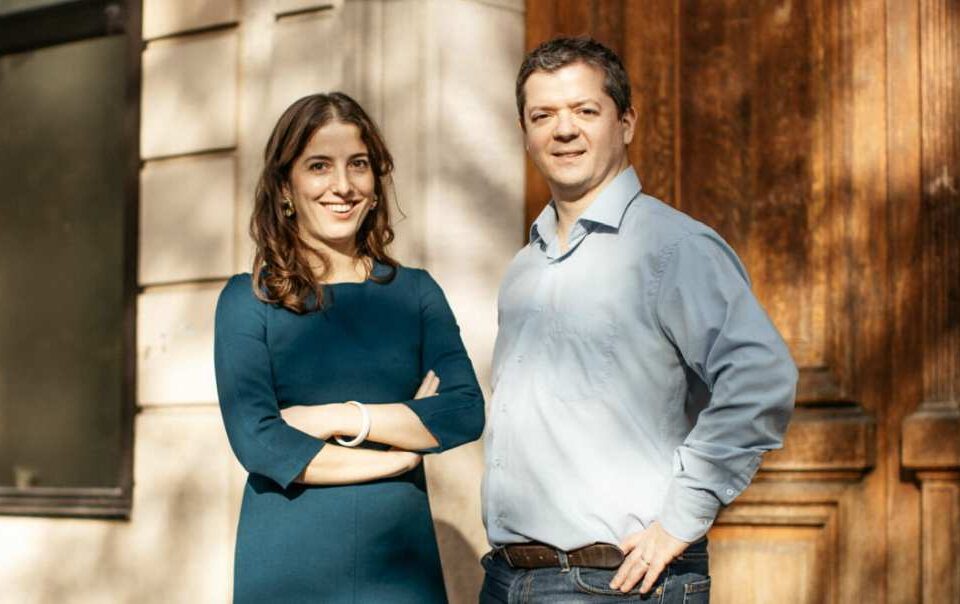
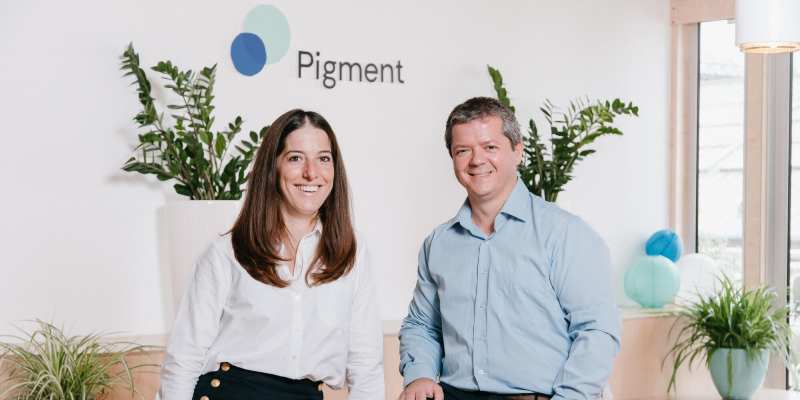
Founded by Eléonore Crespo and Romain Niccoli, Pigment develops software that helps businesses plan finances, forecast performance, evaluate operating scenarios, and coordinate decisions across departments. Its customers use the platform to work with financial and operational information that is often distributed across separate systems.
Traditional enterprise planning can depend heavily on spreadsheets, manually updated forecasts, and complex financial models. Pigment is attempting to make those processes more connected and increasingly automated.
Enterprise AI moves closer to financial decisions
Pigment says it has surpassed $100 million in annual recurring revenue, doubling year over year. Customers include Unilever, Siemens, Snowflake, Anthropic, and ElevenLabs. Those are company-reported operating figures and customer relationships.
Pigment has been introducing AI capabilities that help users construct planning models, evaluate scenarios, and work with financial information through natural-language instructions. The company says 85% of new metrics created on its platform now involve an AI agent.
That adoption figure is notable, although it does not establish that the agents independently make or execute financial decisions. The investment thesis is that businesses will increasingly want software that can prepare forecasts and identify changes rather than requiring employees to assemble every analysis manually.
Pigment’s competitors include established financial planning and enterprise software providers such as Anaplan, Oracle, SAP, and other specialized vendors. Its commercial advantage will depend on integration quality, reliability, planning flexibility, customer retention, and its ability to demonstrate that AI reduces the work required to maintain accurate business plans.
The $2.3 billion valuation signals confidence in the company’s growth, but investors will still need to assess the relationship between recurring revenue, profitability, and the costs of supporting increasingly capable AI features.
Funding Details
Startup: Pigment
Investors: EQT-managed Scaleup Europe Fund, World Innovation Lab, Greenoaks, ICONIQ, IVP, Meritech; Nvidia investment planned
Amount Raised: $250 million
Total Raised: Not disclosed on a fully reconciled basis
Funding Stage: Series E
Funding Date: October 21, 2026
Headquarters: Paris, France
Sector: Enterprise software / financial planning/enterprise AI
Valuation: $2.3 billion
Arda Industries raises $160M in funding to automate manufacturing engineering and assembly-line design
San Francisco-based Arda Industries raised $160 million in Series A financing at a $1.5 billion valuation, co-led by Altimeter, Accel, and Khosla Ventures. XYZ Venture Capital, 8VC, SV Angel, and Felicis also participated. The financing follows a previously completed $72 million seed round led by Accel and Founders Fund.
To date, the company has raised $232 million cumulatively, but only $160 million represents the newly disclosed Series A. Treating the entire $232 million as a new round would overstate today’s investment activity.
Arda was founded by Bob McGrew, a former OpenAI chief research officer who previously held senior product and engineering responsibilities at Palantir. Its technology is designed to reduce the engineering work required to turn a product design into a functioning manufacturing process. That problem is particularly difficult for companies building products that change frequently.
Traditional factory automation often requires substantial engineering work whenever a new product or component changes assembly requirements. Manufacturers must update instructions, equipment configurations, workflows, and quality-control processes.
Arda is developing AI software to help automate those steps.
Manufacturing becomes a software problem
Arda is already working with defense technology company Anduril, where its technology is deployed as part of the ArsenalOS manufacturing environment. The company is also pursuing opportunities involving electronics, defense manufacturing, and the data center supply chain.
Its longer-term ambition is to enable robotic assembly systems that can adapt when product designs change. That capability remains a development objective rather than an established commercial result. The funding is significant because modern manufacturing increasingly faces a trade-off between automation and flexibility.
Highly automated lines can perform repetitive tasks efficiently, but they may be expensive to reconfigure. Human workers can often adapt to product changes more easily, although labor availability and training create other constraints. Arda is attempting to narrow that gap.
For investors, the potential advantage combines AI software, manufacturing expertise, and accumulated experience from real factory deployments.
The company’s challenge will be demonstrating that its technology consistently reduces engineering time and production costs across different manufacturing environments.
Funding Details
Startup: Arda Industries
Investors: Altimeter, Accel, Khosla Ventures, XYZ Venture Capital, 8VC, SV Angel, Felicis
Amount Raised: $160 million
Total Raised: $232 million, including a previously completed $72 million seed round
Funding Stage: Series A
Funding Date: October 20, 2026
Headquarters: San Francisco, California, United States
Sector: Industrial AI/manufacturing software/robotics automation
Valuation: $1.5 billion
Eka Robotics raises $150M to develop robots that learn through vision and physical force
Cambridge, Massachusetts-based Eka Robotics raised $150 million in Series A financing at a $1.45 billion post-money valuation. The round was co-led by Andreessen Horowitz and F-Prime. Existing investors Obvious Ventures and E14 Fund participated alongside MFV Partners, Bison Ventures, Glasswing Ventures, Samsung Next, and strategic investors.
Eka was founded by MIT professor Pulkit Agrawal and former Google DeepMind researcher Tuomas Haarnoja. The company develops AI systems for robotic manipulation. Its technology combines visual perception, force-sensitive hardware, and reinforcement learning to help robots handle objects under changing physical conditions. That addresses one of the most persistent limitations in robotics.
A robot may recognize an object correctly but still struggle to grasp it without slipping, crushing it, or applying force in the wrong direction. Eka is attempting to improve the relationship between what a robot sees and how it responds when touching an object.
Physical intelligence becomes an investment thesis
The company has demonstrated robotic manipulation involving objects with different shapes and physical properties. According to TechCrunch, Eka’s system can pick approximately 1,500 objects per hour under specified conditions, compared with a reported human benchmark of about 600.
The company also reports a success rate exceeding 95% in relevant tests. Those figures should be interpreted as results from specific demonstrations, not proven productivity across all industrial environments. Eka is now working with industrial customers on pilot applications involving object handling and wire manipulation.
Its approach relies heavily on simulated reinforcement learning, allowing robots to practice physical interactions before operating in real environments.
For investors, the opportunity is to develop reusable robotic intelligence across multiple tasks without extensive programming. But the transition from demonstration to production remains difficult. Robots used in factories must withstand continuous operation, handle unexpected conditions, and perform economically over long periods.
Eka must also improve hardware durability and prove that its software performs consistently outside controlled settings.
The $150 million financing reflects substantial investor confidence in the technical approach, but commercial adoption will depend on reliability, integration costs, and measurable customer productivity.
Funding Details
Startup: Eka Robotics
Investors: Andreessen Horowitz, F-Prime, Obvious Ventures, E14 Fund, MFV Partners, Bison Ventures, Glasswing Ventures, Samsung Next, strategic investors
Amount Raised: $150 million
Total Raised: Not disclosed on a fully reconciled basis
Funding Stage: Series A
Funding Date: October 20, 2026
Headquarters: Cambridge, Massachusetts, United States
Sector: Physical AI/robotics / industrial automation
Valuation: $1.45 billion post-money
Daytona raises $60M in funding at $1B valuation to build cloud infrastructure for AI agents
San Francisco-based Daytona raised $60 million in Series B financing at a $1 billion valuation, led by FirstMark Growth. The round included investments from technology founders and executives associated with Stripe, Shopify, Perplexity, Zoom, Datadog, Quora, and Mercor. Qualcomm Ventures, Samsung Next, and Okta Ventures joined as strategic investors. The financing brings Daytona’s cumulative funding to $91 million.
Founded by Ivan Burazin, Daytona develops computing infrastructure designed for AI agents. The company provides isolated environments, or sandboxes, where agents can execute code, access tools, maintain working state, and perform tasks. Traditional cloud infrastructure was largely designed around applications that run continuously or operate through predictable requests.
AI agents create different demands. An agent may need to start a temporary computing environment, inspect files, run code, use a browser, interact with external systems, and preserve information across multiple steps. Daytona is building infrastructure around those workflows.
AI agents need computers, not just model access
Daytona’s investment thesis is that model inference and agent execution are separate infrastructure requirements. An AI model can determine what a task requires. But the agent may still need a secure environment in which to complete that work.
Daytona’s platform provides rapidly provisioned computing environments designed for this purpose. The company reports substantial usage growth and says its technology can create certain sandbox environments in milliseconds. Those are company-reported performance claims, and actual provisioning times will depend on workload conditions.
For investors, Daytona represents a bet that AI agents will create demand for specialized cloud services. Its competitive advantage could come from startup speed, reliability, security, developer experience, and the ability to manage large numbers of short-lived computing tasks.
However, established cloud providers and other specialized infrastructure companies are developing similar capabilities. Daytona must prove that developers gain enough economic and operational value to adopt a separate execution platform.
Funding Details
Startup: Daytona
Investors: FirstMark Growth, Qualcomm Ventures, Samsung Next, Okta Ventures, and individual investors including Patrick Collison, Tobi Lütke, Aravind Srinivas, Eric Yuan, Olivier Pomel, and others
Amount Raised: $60 million
Total Raised: $91 million
Funding Stage: Series B
Funding Date: October 20, 2026
Headquarters: San Francisco, California, United States
Sector: AI infrastructure/agent execution/developer tools
Valuation: $1 billion
Baba raises $40M in funding to improve Medicare care coordination using AI and human support teams
New York-based Baba raised $40 million in Series A financing led by FirstMark Capital. CVS Health Ventures and Valtruis participated alongside returning investors General Catalyst, Genius Ventures, and Ground Up Ventures. The funding will support the company’s AI research, clinical care teams, and partnerships with health plans.
Baba develops technology and services intended to help Medicare and Medicaid patients manage complicated healthcare needs. Patients with chronic conditions may receive care from multiple specialists while also coordinating medications, insurance benefits, transportation, and home support. Those responsibilities frequently fall on patients or family caregivers.
Baba combines AI software with human care coordinators and licensed professionals to help manage that work. Its system helps with tasks such as appointment coordination, hospital discharge follow-up, insurance administration, and access to additional services.
Healthcare AI must finish the task
Baba says it has supported more than 10,000 patients and families, with more than 100,000 families on its waiting list. The startup is also developing benchmarks intended to test whether AI agents can complete lengthy healthcare tasks rather than simply answer questions correctly.
Helping a patient resolve a billing issue may involve phone calls, paperwork, insurance verification, follow-up communication, and professional judgment. An AI agent that completes only the first step may provide limited practical value.
Baba’s investment thesis is that automation can reduce the administrative cost of coordinating care, making more personalized support financially feasible. However, its business must operate within demanding healthcare regulations.
The company must protect patient information, manage clinical responsibilities, and demonstrate that its services improve outcomes or reduce costs. Its relationships with health plans may provide distribution opportunities, but commercial success will depend on proving the economics of its care model.
Funding Details
Startup: Baba
Investors: FirstMark Capital, CVS Health Ventures, Valtruis, General Catalyst, Genius Ventures, Ground Up Ventures
Amount Raised: $40 million
Total Raised: Not disclosed
Funding Stage: Series A
Funding Date: October 20, 2026
Headquarters: New York, United States
Sector: Healthcare AI / Medicare services/care coordination
Valuation: Not disclosed
Elax Énergie raises €30M in funding to turn electric water heaters into flexible energy resources
Paris-based Elax Énergie raised €30 million in financing from Noria and the Fonds Révolution Environnementale et Solidaire, managed by Crédit Mutuel Impact. Elax plans to use the capital to expand its connected water-heater technology, develop new commercial offerings, and enter additional building-energy markets.
Founded by Jean-François Eggericx, Thomas Tirtiaux, and Samuel Beaussier, Elax develops connected controls for existing electric water heaters. Its technology adjusts heating schedules based on residents’ usage patterns and electricity conditions.
The concept is straightforward. Most households don’t need water heated at the exact moment it is consumed. An insulated tank can store hot water for later use. Elax uses that flexibility to shift electricity consumption toward periods when power is cheaper or more abundant.
Energy flexibility without building another battery
The company says its equipment is installed in nearly 100,000 homes and that it works with more than 100 social housing landlords. Elax reports that its technology can reduce electricity consumption for water heating by about 20% to 25%.
That figure applies to water-heater consumption, not a household’s total electricity bill. The company is also seeking to aggregate controllable water-heating demand to support electricity-grid flexibility. This is an important distinction from conventional battery storage.
Elax’s technology stores energy as heat in water rather than converting stored electricity back into electrical power. Its value comes from changing when electricity is consumed. As electricity systems incorporate more variable renewable generation, the ability to shift consumption may become increasingly useful.
Elax’s challenge will be maintaining customer comfort while delivering measurable savings and reliable demand flexibility. Its commercial opportunity may extend beyond individual water heaters into collective building systems and broader heating electrification.
Funding Details
Startup: Elax Énergie
Investors: Noria; Fonds Révolution Environnementale et Solidaire, managed by Crédit Mutuel Impact
Amount Raised: €30 million
Total Raised: Not disclosed
Funding Stage: Growth financing; formal series designation not disclosed
Funding Date: October 20, 2026 public announcement
Headquarters: Paris, France
Sector: Climate technology/energy management/electricity demand flexibility
Valuation: Not disclosed
Qualitate raises $25M in funding to automate expert interviews and market intelligence

New York-based Qualitate raised $25 million in Series A financing led by Insight Partners, with continued participation from IA Ventures and Crew Capital. Qualitate develops software that uses AI to conduct expert interviews, organize research findings, and help investment firms and corporations evaluate markets. The company says its platform has conducted more than one million minutes of AI-moderated interviews.
Founded by CEO Sagar Kadakia, Qualitate is targeting a research process that has traditionally depended on expert networks, consultants, and manually organized interviews. Investors frequently speak with industry professionals to understand customer behavior, competitive developments, and the financial prospects of particular companies.
Those interviews can provide information that is difficult to obtain from public financial reports. But scheduling and conducting them can be expensive and time-consuming. Qualitate is attempting to automate part of that process while converting individual conversations into a searchable body of research.
Expert knowledge becomes structured data
The company’s software uses AI interviewers that can adapt questions based on previous answers and relevant research. It then organizes the information so customers can examine changes in purchasing behavior, competitive positioning, or market demand.
Qualitate says its revenue run rate has increased more than tenfold this year and that its 12-month net revenue retention exceeds 300%. The company has not disclosed absolute revenue or the customer cohort composition behind the retention figure.
An interesting aspect of the investment is that Insight Partners became a Qualitate customer before leading the financing. That gives the investor firsthand product experience, though it does not eliminate the need for independent financial and commercial diligence.
For investors, Qualitate’s potential advantage lies in its growing research dataset, expert relationships, and integration into investment workflows.
The company must also manage questions about information accuracy, expert consent, confidentiality, and research quality. Its commercial success will depend on whether customers trust the research enough to use it for consequential business decisions.
Funding Details
Startup: Qualitate
Investors: Insight Partners, IA Ventures, Crew Capital
Amount Raised: $25 million
Total Raised: Not disclosed
Funding Stage: Series A
Funding Date: October 20, 2026
Headquarters: New York, United States
Sector: Enterprise AI / market intelligence / investment research
Valuation: Not disclosed
Source: Qualitate’s official Series A announcement
Circuit Mind raises $18.5M in funding to automate electronics design and reduce hardware development costs
London-based Circuit Mind raised $18.5 million in Series A financing led by Norwest, bringing its total funding to $33.4 million. Existing investors Third Prime, Differential, and Blackhorn participated alongside new investor Lightscape VC. Circuit Mind plans to expand its engineering platform, hire additional staff, and establish a U.S. headquarters to serve North American customers.
Founded in 2018, Circuit Mind develops software that automates parts of electronic circuit design. Hardware engineers must translate product requirements into electrical schematics, select components, evaluate physical constraints, and prepare bills of materials.
Those tasks involve considerable technical judgment. Components must satisfy requirements involving power consumption, cost, physical dimensions, availability, and electrical performance.
Circuit Mind’s platform generates design options and checks them against engineering constraints.
AI moves into hardware engineering
The company uses a combination of AI and physics-based analysis to help engineers develop circuit designs. Its ACE product can convert a hardware block diagram into a proposed schematic, bill of materials, and supporting analysis. Circuit Mind says its customers include teams at Emerson and Schneider Electric.
It also reports that its technology can reduce certain hardware design cycles from months to weeks and lower bills of materials by approximately 25%. Those are company-reported performance claims. Results will vary depending on the complexity and requirements of individual projects.
The investment is strategically interesting because electronics engineering has historically been more difficult to automate than many software-development tasks.
A software error can often be corrected through another deployment. A mistake in a circuit design may require new prototypes, manufacturing changes, and physical testing. That raises the importance of engineering validation.
For investors, Circuit Mind’s opportunity depends on whether its platform can consistently produce useful, technically sound designs that reduce development time and component costs. Its advantage may come from specialized engineering knowledge, integration with existing design tools, and accumulated experience across hardware projects.
Funding Details
Startup: Circuit Mind
Investors: Norwest, Third Prime, Differential, Blackhorn, Lightscape VC
Amount Raised: $18.5 million
Total Raised: $33.4 million
Funding Stage: Series A
Funding Date: October 21, 2026
Headquarters: London, United Kingdom
Sector: Electronic design automation/hardware engineering / industrial AI
Valuation: Not disclosed
Source: Dealroom’s October 21 Circuit Mind funding report
What Today’s Funding Activity Reveals
Today’s transactions reveal a venture market increasingly focused on the systems needed to turn AI capabilities into useful, repeatable economic activity. The deals span public infrastructure, manufacturing, robotics, enterprise planning, healthcare, energy, and specialized research. Their business models differ, but several patterns stand out.
1. AI investment is concentrating around operational responsibility
ASI, Pigment, Arda, Eka, and Baba are all attempting to help organizations perform important tasks more effectively.
ASI supports infrastructure operations.
Pigment develops business plans and forecasts.
Arda automates manufacturing engineering.
Eka is developing robotic manipulation.
Baba coordinates healthcare services.
These applications involve real-world consequences.
An incorrect chatbot recommendation may be inconvenient. An incorrect decision involving transportation systems, manufacturing equipment, or patient care can be considerably more serious.
That increases the importance of reliability, safety, professional oversight, and domain-specific knowledge.
2. AI infrastructure is developing beyond model inference
Daytona demonstrates growing demand for the systems agents need after deciding what to do. AI agents may require isolated computers, tools, persistent storage, internet access, and permission-controlled environments. Those requirements create opportunities for infrastructure companies operating outside the model-training and GPU markets.
The distinction matters because growing AI usage does not automatically translate into equal demand for every type of computing infrastructure. Different workloads create different technical and financial requirements.
3. The distinction between equity and growth financing matters
Otter.ai’s $320 million transaction illustrates why headline funding statistics require closer scrutiny. A repayable financing facility can provide substantial growth capital without increasing the company’s equity valuation or diluting existing shareholders.
But the repayment obligation changes the financial risk.
Pigment, ASI, Arda, Eka, Daytona, Baba, Qualitate, and Circuit Mind announced conventional equity rounds.
Otter announced a different form of capital. Combining them without explanation would obscure what investors are actually financing.
4. Physical AI is moving toward commercial deployment
Eka is developing robotic manipulation technology, while Arda is working on the software needed to automate production engineering. Both companies are tackling problems that require physical knowledge and operating experience.
This contrasts with AI products built largely around text or digital workflows. Physical systems must account for mechanical limitations, reliability, equipment costs, and changing environments.
Investors may see substantial opportunities, but commercialization can require more time and capital than software deployments.
5. Enterprise AI is becoming more specialized
Pigment, Qualitate, and Daytona operate in different markets, but all are developing software built around specific operational requirements.
Pigment focuses on planning.
Qualitate focuses on research.
Daytona focuses on execution infrastructure.
Their potential advantages depend on the quality of those specialized capabilities, not simply on access to a powerful language model.
This suggests that the commercial AI market is developing into multiple infrastructure and application categories.
6. Existing customer relationships provide meaningful advantages
ASI has government and infrastructure customers.
Pigment has established enterprise relationships.
Arda works with Anduril.
Baba is developing partnerships with health plans.
Circuit Mind is serving electronics engineering teams.
These relationships can provide product feedback, deployment experience, and opportunities to expand usage.
However, customer announcements should not be confused with recurring revenue or guaranteed future purchases.
The economic value depends on contract terms, usage, retention, and customer outcomes.
7. Energy flexibility is attracting capital outside the AI boom
Elax’s financing is an important counterpoint to today’s technology-heavy rounds. The company is addressing electricity demand through connected controls rather than building additional generation capacity.
Its opportunity comes from making existing electrical equipment more responsive to power availability and household needs. That creates a potentially attractive infrastructure business without requiring a major new hardware category.
8. The largest rounds do not represent the entire market
ASI, Otter, and Pigment account for $895 million of the $1.3485 billion in dollar-denominated transactions. That is approximately 66% of the total.
Excluding Otter’s repayable financing, ASI and Pigment account for $575 million of the $1.0285 billion in disclosed dollar-denominated equity funding. The concentration shows why a few large transactions can dominate daily funding statistics.
Smaller rounds, such as those involving Circuit Mind and Qualitate, may still matter because they reveal emerging applications and investment categories.
9. Geographic composition changed without forcing regional representation
Seven selected companies are based in the United States, with three in Europe. No Asian funding round made today’s final top 10. That does not indicate an absence of venture activity in Asia.
It reflects the relative significance and verification quality of the transactions identified within this particular reporting period. A global report should preserve the actual distribution rather than manufacture geographic balance.
10. Valuations reflect different kinds of investor expectations
ASI’s $3 billion valuation reflects confidence in AI for critical infrastructure and national security.
Pigment’s $2.3 billion valuation is supported by substantial reported recurring revenue.
Arda’s $1.5 billion valuation reflects expectations for manufacturing automation.
Eka’s $1.45 billion valuation is tied to promising robotics technology still moving through early industrial deployments.
Daytona’s $1 billion valuation reflects investor interest in specialized agent infrastructure.
These valuations cannot be interpreted using one common metric.
The companies’ commercial maturity and risk profiles differ substantially.
Startup Funding Table
| Startup | Amount Raised | Sector | Funding Stage | Lead/Key Investors | Country |
|---|---|---|---|---|---|
| ASI | $325M | Critical infrastructure AI/defense technology | Series C | Spark Capital, Citadel Securities affiliates, Meritech, a16z | United States |
| Otter.ai | $320M, non-equity | Voice AI/enterprise productivity | Growth financing | General Catalyst Customer Value Fund | United States |
| Pigment | $250M | Enterprise planning / AI | Series E | EQT-managed Scaleup Europe Fund, WIL, Greenoaks, ICONIQ | France |
| Arda Industries | $160M | Manufacturing AI / industrial automation | Series A | Altimeter, Accel, Khosla Ventures | United States |
| Eka Robotics | $150M | Physical AI/robotics | Series A | Andreessen Horowitz, F-Prime, Obvious Ventures | United States |
| Daytona | $60M | AI agent infrastructure/developer tools | Series B | FirstMark Growth, Qualcomm Ventures, Samsung Next | United States |
| Baba | $40M | Healthcare AI/care coordination | Series A | FirstMark Capital, CVS Health Ventures, Valtruis | United States |
| Elax Énergie | €30M | Energy management/climate technology | Growth financing | Noria, Crédit Mutuel Impact-managed fund | France |
| Qualitate | $25M | AI research/market intelligence | Series A | Insight Partners, IA Ventures, Crew Capital | United States |
| Circuit Mind | $18.5M | Electronic design automation / industrial AI | Series A | Norwest, Third Prime, Differential, Blackhorn | United Kingdom |
Strategic Takeaways for Founders and Investors
1. AI companies are increasingly being judged on operational outcomes
ASI, Pigment, and Baba demonstrate the importance of moving beyond attractive AI demonstrations. Customers need systems that help them manage infrastructure, make financial decisions, or coordinate healthcare.
For founders, the strongest commercial argument is often a measurable improvement in an existing process. For investors, that means evaluating adoption, reliability, and customer outcomes alongside technical capabilities.
2. Specialized expertise can create advantages as AI models become more accessible
Arda’s manufacturing expertise, Eka’s robotics research, and Circuit Mind’s electronics engineering capabilities are difficult to reproduce through a general-purpose model alone. Their competitive advantages may emerge from combining AI with specialized engineering knowledge.
Founders should identify the technical and operating capabilities that make their products difficult to replace.
3. Agent infrastructure is becoming a separate investment category
Daytona is building computing environments that allow agents to execute tasks. That creates opportunities in isolated execution, security, monitoring, storage, identity, and resource management.
For investors, the question is whether these services become enduring infrastructure requirements or features incorporated into existing cloud platforms.
4. Capital structure can be as important as valuation
Otter.ai’s financing shows that companies with established businesses may fund expansion without issuing new shares. But avoiding dilution does not eliminate financial risk.
Repayable capital requires a credible relationship between growth spending and future revenue.
Founders considering similar financing should examine repayment obligations, marketing efficiency, customer retention, and the consequences if expansion produces weaker-than-expected results.
5. Physical AI needs evidence from industrial environments
Eka’s technical demonstrations are promising, but investors should distinguish laboratory performance from sustained production operation. The same principle applies to Arda’s longer-term manufacturing automation ambitions.
Customer deployments, equipment reliability, maintenance requirements, and actual productivity improvements will determine commercial value.
6. Enterprise AI valuations require attention to revenue quality
Pigment has disclosed more than $100 million in annual recurring revenue. That gives investors a meaningful operating metric against which to assess its $2.3 billion valuation. For other companies, revenue figures are less complete.
Investors should distinguish contracted revenue, usage-based revenue, annualized run rates, and projected growth. Those measures can imply substantially different levels of financial predictability.
7. Healthcare AI must combine automation with accountability
Baba uses AI alongside human care teams rather than trying to eliminate professional oversight. That approach may be commercially relevant in healthcare, where patients require judgment, trust, and continuity. But it also introduces staffing and operating costs.
Investors should examine whether automation genuinely improves care economics rather than simply moving administrative work into another organization.
8. Proprietary information can become a valuable business asset
Qualitate is building a structured collection of expert research. ASI develops operational intelligence for complex infrastructure. Pigment works with customer-specific financial and operational information.
Each company may benefit from information competitors find difficult to obtain or interpret. However, defensibility depends on data rights, quality, customer permissions, and whether the information produces better results.
9. Climate technology opportunities include making existing assets more useful
Elax is attempting to improve electricity-system flexibility through water heaters already installed in homes. The company does not need to replace the entire appliance to introduce its technology.
For founders, this illustrates the potential value of products that improve existing infrastructure. For investors, relevant metrics include installation cost, customer savings, equipment lifespan, and revenue generated from demand flexibility.
10. Funding announcements should be evaluated against the milestones they finance
ASI is expanding infrastructure deployments. Pigment is scaling enterprise software. Eka is moving robotics technology toward commercial use. Circuit Mind is extending electronics design automation. These companies require different evidence of progress.
The relevant question is not simply how much each startup raised. It is whether the capital can finance the company through milestones that meaningfully reduce technical, commercial, or financial uncertainty.
Conclusion
October 21’s startup funding activity shows a venture market putting substantial capital behind companies trying to turn AI into dependable operating technology.
ASI’s $325 million Series C leads today’s equity financings, reflecting investor confidence in predictive systems for critical infrastructure and national security.
Otter.ai’s $320 million non-equity investment demonstrates how established AI companies are finding alternative ways to finance expansion without immediately diluting shareholders.
Pigment’s $250 million Series E shows continued demand for enterprise software that combines substantial recurring revenue with opportunities to automate business planning.
Arda Industries and Eka Robotics are pursuing the more difficult challenge of bringing AI into manufacturing and physical manipulation. Daytona is providing the computing environments AI agents need to complete tasks, while Baba is combining automation with human support in healthcare.
The smaller investments are equally revealing. Qualitate is automating expert research, Circuit Mind is developing AI for electronics engineering, and Elax is making existing energy equipment more responsive to electricity-market conditions.
Together, these transactions suggest that AI investment is becoming more closely connected to the practical requirements of operating businesses and physical infrastructure.
The opportunity is no longer limited to companies that develop the most capable AI models.
The next generation of valuable startups may be defined by their ability to make AI dependable inside industries where accuracy, execution, safety, and economic results matter more than impressive demonstrations.
And today’s funding activity offers an increasingly clear signal: investors are willing to finance that transition, but the lasting winners will be determined by what their technology can reliably accomplish—not by the size of their funding rounds.