Startup Funding News Today, October 19, 2026: Tenstorrent, Nouscom, Even Healthcare, Vessla & More
 Nickie Louise
Posted On October 19, 2026
Global startup funding picked up momentum on Monday, October 19, 2026, as major investments in artificial intelligence, biotechnology, healthcare, and enterprise software highlighted continued investor appetite for companies tackling complex challenges.
U.S. AI chipmaker Tenstorrent led the day’s funding activity, raising $1.5 billion in Series E funding at a $6.2 billion valuation, the largest announced round of the day. In Europe, Swiss biotechnology company Nouscom secured €120 million (approximately $135 million) to advance its cancer-prevention immunotherapy program. Meanwhile, Bengaluru-based Even Healthcare raised $50 million from Khosla Ventures and Alpha Wave at a $300 million valuation, reflecting growing investor interest in India’s healthcare sector.
Beyond these headline deals, venture capital flowed into a diverse group of startups across Europe, Asia, the Middle East, and Australia. Manchester-based sports technology company Rezzil raised $10 million, while Chinese physical-AI startup Gewu Tongzhi secured nearly RMB100 million. Other notable rounds included Saudi Arabia’s Vrtx, Sweden’s Vessla, Australia’s Syncrowin, UK-based CoComply, and Indian apparel company The Pant Project.
The biggest takeaway from today’s funding activity is where investors are placing their bets. AI semiconductor infrastructure attracted the largest investment by far, followed by European biotechnology and Indian healthcare. Smaller rounds across physical AI, enterprise software, financial technology, and consumer businesses suggest that venture capital remains active across multiple sectors and regions, even as the largest checks become increasingly concentrated in capital-intensive technologies.
Here’s a closer look at the 10 notable startup and venture capital funding rounds announced on October 19, 2026, including the companies, investors, funding amounts, and what the new capital will support.
The Macro Environment: AI Capital Is Moving Into Compute, Physical Systems, and Regulated Workflows
Tenstorrent changes the entire character of today’s funding market.
The Santa Clara company is not raising money to build another language model. It is building processors, servers, software, and licensable CPU and AI intellectual property around an open RISC-V architecture. Its $1.5 billion Series E more than doubles its valuation from its December 2024 financing and gives the company considerably more resources to challenge incumbent AI-computing ecosystems.
That fits a broader pattern visible across recent funding rounds: investors increasingly see value in the infrastructure surrounding AI, particularly where a company controls something difficult to reproduce. That can mean processor architecture, manufacturing relationships, operating data, regulatory approval, proprietary scientific evidence, or an installed customer base.
Nouscom illustrates the scientific version of that thesis. Its €120 million round is financing clinical evidence around a potential cancer-prevention therapy for Lynch syndrome. Investors are not paying for access to an algorithm. They are paying for years of biological research, intellectual property, clinical development, and the possibility of a new treatment category.
Even Healthcare shows another version. Its advantage is not simply software or insurance. The company is integrating healthcare financing with hospital ownership and salaried doctors, attempting to change the economic incentives inside private healthcare. Its $50 million round will finance additional hospitals rather than another consumer app.
Further down the list, Vessla, CoComply, Vrtx, and Syncrowin are smaller early-stage companies, but they share a similar characteristic: each uses software or AI in a specific operational environment where compliance rules, industrial data, financial licensing, or property workflows matter as much as model capability.
Tenstorrent raises $1.5B to scale open AI computing infrastructure
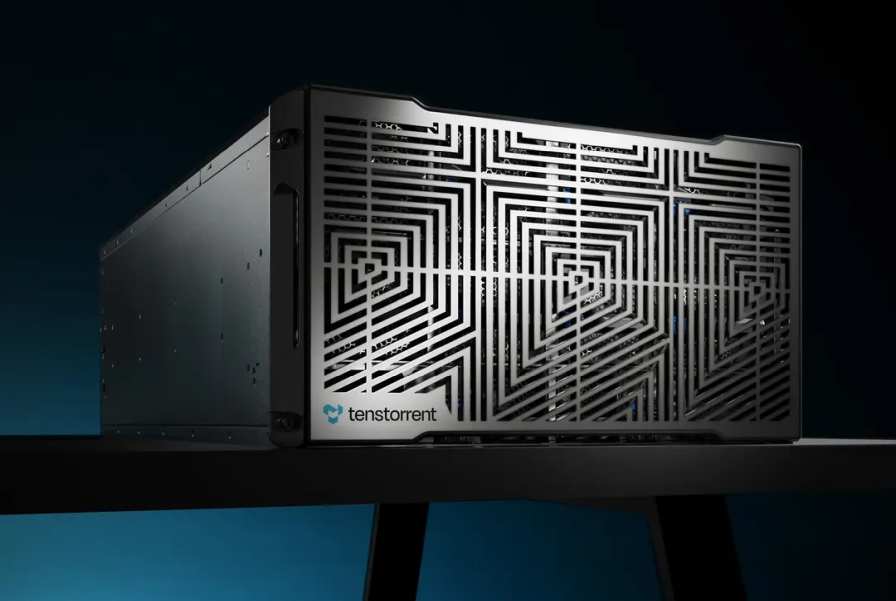
Santa Clara-based Tenstorrent raised $1.5 billion in Series E funding at a $6.2 billion post-money valuation. The round was led by Trace Capital and Innovation X, with participation from ARK Invest, Fidelity Management & Research, Morgan Stanley, T. Rowe Price, SanDisk, Cadence Ventures, Tether Investments, Eclipse, Protagonist, Maverick Silicon, XTX Markets, and others.
Tenstorrent develops AI processors, Galaxy server systems, RISC-V CPUs, and licensable chip intellectual property. CEO Jim Keller has held senior chip-design roles at Apple, AMD, and Tesla, giving the company unusual technical credibility in a market dominated by Nvidia and other established semiconductor companies.
The fresh capital will support volume manufacturing of Galaxy systems and broader commercial expansion. Tenstorrent is also licensing AI and CPU IP to companies building their own custom silicon.
The most interesting part of the investment thesis is its emphasis on open computing architecture. Tenstorrent argues that customers increasingly want greater control over the chips, software, and intellectual property underlying AI infrastructure rather than remaining entirely dependent on closed ecosystems.
That pitch is particularly relevant for sovereign computing projects and large enterprises seeking alternatives to incumbent architectures.
Still, $1.5 billion raises the commercial burden substantially. Tenstorrent must convert technical credibility into meaningful server shipments, customer deployments, software adoption, and sustainable economics.
Funding Details
Startup: Tenstorrent
Investors: Trace Capital, Innovation X, ARK Invest, Fidelity, Morgan Stanley, T. Rowe Price, SanDisk, Cadence Ventures, Tether Investments, Eclipse, Protagonist and others
Amount Raised: $1.5 billion
Total Raised: More than $2.19 billion across its latest two major rounds alone
Funding Stage: Series E
Funding Date: October 19, 2026
Headquarters: Santa Clara, California, United States
Sector: AI semiconductors / RISC-V / AI infrastructure
Valuation: $6.2 billion post-money
Nouscom raises €120M in funding to advance cancer-prevention immunotherapy

Basel-based Nouscom raised €120 million, approximately $135 million, in an oversubscribed Series D co-led by M Ventures and Revelation Partners. New investors include Angelini Industries, the European Investment Bank through the Aurea co-investment facility, and Neva SGR. Existing investors, including 5AM Ventures, Andera Partners, Bpifrance, EQT Life Sciences, Versant Ventures, CDP Venture Capital, and others, also participated.
Nouscom is developing NOUS-209, an experimental immunotherapy intended to prevent cancer in people with Lynch syndrome, an inherited condition associated with elevated risks of colorectal and other cancers.
The company plans to use the financing for a global registration-enabling clinical study.
That is what makes the round strategically interesting. Cancer treatment attracts enormous investment, but cancer interception and prevention remain much less developed commercial categories.
Nouscom has reported encouraging early clinical observations, but those findings remain preliminary. The next meaningful valuation step will depend on whether larger controlled studies confirm that the therapy can safely reduce cancer incidence.
Funding Details
Startup: Nouscom
Investors: M Ventures, Revelation Partners, Angelini Industries, EIB, Neva SGR, 5AM Ventures, Andera Partners, Bpifrance, EQT Life Sciences and others
Amount Raised: €120 million / approximately $135 million
Total Raised: Not disclosed on a fully reconciled basis
Funding Stage: Series D
Funding Date: October 19, 2026
Headquarters: Basel, Switzerland
Sector: Biotechnology/cancer immunotherapy/cancer prevention
Valuation: Not disclosed
Even Healthcare raises $50M to rethink hospital economics in India
Bengaluru-based Even Healthcare raised $50 million in an all-equity Series B led by Khosla Ventures, with Alpha Wave also participating. The financing values the company at roughly $300 million, triple its valuation 18 months ago, according to TechCrunch. Total funding now exceeds $120 million.
Even began as a managed-care company but is increasingly operating hospitals directly. Its thesis is that conventional hospital economics can reward utilization: more tests, more procedures, and longer stays can generate more revenue. Even wants to align financing and care delivery so providers are rewarded for keeping patients healthier rather than maximizing billable procedures.
The company currently operates two hospitals in Bengaluru and plans to open five more over the next six months. It says both existing hospitals are operating profitably, though it has not disclosed detailed financial information.
This is an unusually ambitious healthcare model because Even is trying to control several layers simultaneously: insurance relationships, technology, clinicians, facilities, and patient care.
That integration creates operational risk, but it could also become difficult for lighter-weight healthtech competitors to reproduce.
Funding Details
Startup: Even Healthcare
Investors: Khosla Ventures, Alpha Wave
Amount Raised: $50 million
Total Raised: More than $120 million
Funding Stage: Series B
Funding Date: October 19, 2026
Headquarters: Bengaluru, India
Sector: Healthcare / managed care/hospital operations
Valuation: Approximately $300 million
The Pant Project raises $11.M in funding to expand its omnichannel menswear business
Mumbai-based The Pant Project raised ₹109 crore ($11.5 million) in Series B equity financing led by Mirae Asset Venture Investments India. Existing investor Sorin Investments participated alongside several family offices and angel investors. The company also secured a separate venture-debt facility from Alteria Capital, though the debt amount was not disclosed.
The Pant Project began as a digitally native trousers brand and has expanded into jeans and broader casualwear. It currently operates about 25 branded stores and plans to grow that footprint to more than 150 locations over the next two to three years.
Unlike many companies in today’s report, the investment thesis is not built around frontier technology. It is built around distribution, product economics, consumer demand, and the transition from online commerce into physical retail.
That makes it a useful counterweight to the AI-heavy funding cycle. Venture investors are still willing to finance traditional consumer businesses when they see a scalable operating model.
Funding Details
Startup: The Pant Project
Investors: Mirae Asset Venture Investments India, Sorin Investments, family offices and angel investors; Alteria Capital provided separate venture debt
Amount Raised: ₹109 crore equity; additional debt undisclosed
Total Raised: More than $15 million reported
Funding Stage: Series B
Funding Date: October 19, 2026 announcement
Headquarters: Mumbai, India
Sector: Consumer retail/apparel / D2C
Valuation: Not disclosed
Gewu Tongzhi raises nearly RMB100M in funding to train robots through physical interaction
Hangzhou-based Gewu Tongzhi raised nearly RMB100 million in angel funding from Hongfu Asset Management, Peak Investment, Hangzhou Capital, and Hangzhou Talent Group.
Founded in 2026 by former Huawei engineer Cai Jia, the company develops AI for dexterous robotic manipulation. Its technical approach combines world models with learning from real physical interactions. The startup is already working with customers in textiles, optical modules, and automotive components on proof-of-concept deployments.
The opportunity sits inside one of physical AI’s hardest problems: robots need data describing how objects behave when touched, moved, bent, grasped, or manipulated.
Language models can learn from the internet. Manipulation systems need experience from the physical world. Gewu Tongzhi therefore represents another bet that real-world interaction data may become a defensible asset in robotics.
Funding Details
Startup: Gewu Tongzhi
Investors: Hongfu Asset Management, Peak Investment, Hangzhou Capital, Hangzhou Talent Group
Amount Raised: Nearly RMB100 million
Total Raised: Not disclosed
Funding Stage: Angel
Funding Date: October 19, 2026 public reporting
Headquarters: Hangzhou, China
Sector: Robotics / physical AI/world models
Valuation: Not disclosed
Rezzil raises $10M in funding to expand sports “movement intelligence”

Manchester-based Rezzil raised $10 million in funding from investors including Jobe Bellingham, Simba Investments, and other existing backers.
The company initially became known for virtual-reality training technology used in professional football. Its technology has since expanded into broadcast visualization, gaming, athlete training, and what Rezzil describes as “movement intelligence.” Rezzil’s products have been used in Premier League environments and in broadcasts from TNT Sports and the BBC.
The investment is interesting because the company’s dataset potentially becomes more valuable as it collects additional information about how athletes move and interact in sports environments. That could create applications beyond VR training, including analytics, simulation, media, gaming, and personalized coaching.
The company plans to expand its North American presence and grow its workforce.
Funding Details
Startup: Rezzil
Investors: Jobe Bellingham, Simba Investments, Phil Kenyon, and existing investors
Amount Raised: $10 million
Total Raised: Not disclosed
Funding Stage: Not disclosed
Funding Date: October 19, 2026 public announcement
Headquarters: Manchester, United Kingdom
Sector: Sports technology / VR / movement intelligence
Valuation: Not disclosed
Vrtx raises $3.6M to build embedded-finance infrastructure in Saudi Arabia
Riyadh-based Vrtx raised $3.6 million in pre-seed funding from SC Ventures, Standard Chartered’s venture-building arm, alongside Sadu Capital, BYLD, Suhail Ventures, F6 Ventures, TAZ Investment, and Palm Ventures. The startup is building infrastructure that allows companies to embed wallets, transfers, card issuing, payouts, and transaction processing into their own products.
Vrtx has also received in-principle approval from the Saudi Central Bank for an Electronic Money Institution license.
That regulatory progress matters as much as the software.
Embedded finance is technically reproducible, but operating a licensed financial infrastructure business requires compliance systems, security controls, banking relationships, and regulatory approval.
Those surrounding capabilities can become the actual barrier to entry.
Funding Details
Startup: Vrtx
Investors: SC Ventures, Sadu Capital, BYLD, Suhail Ventures, F6 Ventures, TAZ Investment, Palm Ventures
Amount Raised: $3.6 million
Total Raised: $3.6 million disclosed
Funding Stage: Pre-seed
Funding Date: October 19, 2026
Headquarters: Riyadh, Saudi Arabia
Sector: Fintech / embedded finance/payments infrastructure
Valuation: Not disclosed
Vessla raises $3.3M in funding to automate property operations with AI agents
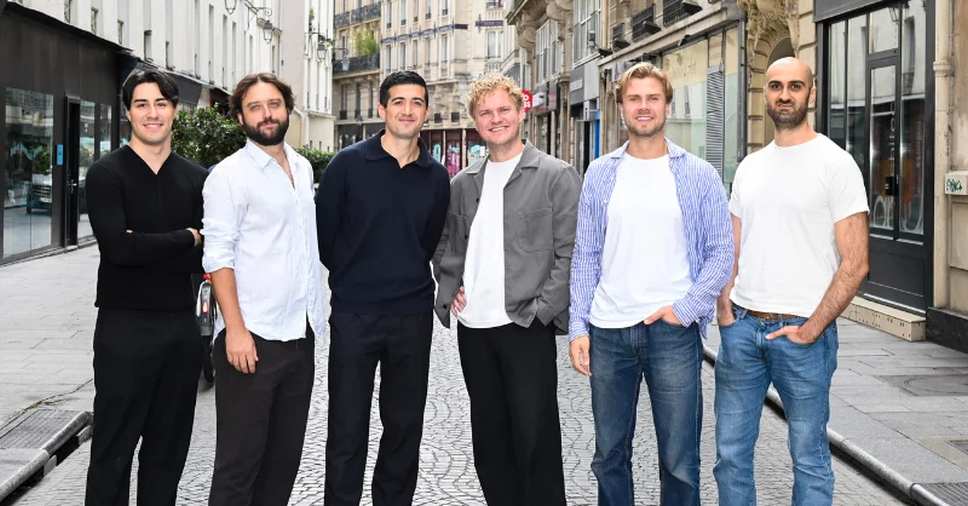
Stockholm-based Vessla launched with $3.3 million in pre-seed financing led by Seedcamp, with Inception Fund, Tiny VC-related investors, and operators from OpenAI and Lovable also participating.
Vessla is building AI agents that work across the systems property owners and managers use. Property operations involve contracts, invoices, maintenance systems, tenant communications, leasing records, and building-management software. Employees frequently move information manually between those systems.
Vessla wants agents to retrieve information, follow company policies, and execute routine workflows while preserving human approval for higher-judgment decisions. The opportunity is another example of vertical AI moving closer to actual work rather than simply producing text.
Its long-term advantage will depend on integrations, customer-specific operational knowledge, and whether the agents can perform reliably enough to earn authority inside property businesses.
Funding Details
Startup: Vessla
Investors: Seedcamp, Inception Fund, Tiny VC-related investors and operators from OpenAI, Lovable and other technology companies
Amount Raised: $3.3 million
Total Raised: $3.3 million disclosed
Funding Stage: Pre-seed
Funding Date: October 19, 2026
Headquarters: Stockholm, Sweden
Sector: Property technology/enterprise AI / AI agents
Valuation: Not disclosed
Syncrowin raises $3M in funding to predict industrial equipment failures
Australian industrial-AI startup Syncrowin raised $3 million in pre-seed funding led by Collide Capital, with Hustle Fund, POV Ventures, Co-Ventures, Ventari, and angel investors participating.
Syncrowin collects data from machinery, sensors, maintenance records, and business systems, then uses AI to identify developing equipment problems. Its target customers include factories, energy companies, and other asset-intensive industries.
Industrial AI is attractive because even small improvements in equipment uptime can have substantial financial value. But selling predictive-maintenance software requires far more than an impressive model. Customers need integrations with real machinery, reliable signals, low false-positive rates, and evidence that recommendations reduce downtime or maintenance costs.
That gives Syncrowin a pathway to defensibility through deployment history and industrial data.
Funding Details
Startup: Syncrowin
Investors: Collide Capital, Hustle Fund, POV Ventures, Co-Ventures, Ventari and angel investors
Amount Raised: $3 million
Total Raised: $3 million disclosed
Funding Stage: Pre-seed
Funding Date: October 19, 2026
Headquarters: Melbourne, Australia, with operations in San Francisco
Sector: Industrial AI / predictive maintenance/manufacturing software
Valuation: Not disclosed
CoComply raises £1.9M in funding to manage hidden contractor and workforce risk
UK compliance startup CoComply raised £1.9 million in financing led by NPIF II – Mercia Equity Finance and Haatch, with participation from several private investors.
CoComply helps companies identify contractors and external workers hidden within broader supplier relationships and determine which employment, tax, and compliance checks apply.
The timing is commercially relevant because UK rules around contractor and umbrella-company liability continue to raise the cost of getting workforce classifications wrong. The company says revenue grew 240% in 2025 and its customer base expanded 300% year over year. Those figures are company-reported. The larger investment thesis is familiar: regulation creates complexity, and complexity creates software demand.
If CoComply becomes embedded in how businesses manage their external workforce, the regulatory knowledge and operating history behind the product may become harder to replace than the software interface itself.
Funding Details
Startup: CoComply
Investors: NPIF II – Mercia Equity Finance, Haatch, Richard Law, Seb Timpson, Stephen Cann and others
Amount Raised: £1.9 million
Total Raised: Not disclosed
Funding Stage: Funding round; conventional stage not disclosed
Funding Date: October 19, 2026
Headquarters: Macclesfield, United Kingdom
Sector: Regtech / workforce compliance/enterprise software
Valuation: Not disclosed
What Today’s Funding Activity Reveals
Tenstorrent alone added $1.5 billion of U.S. AI semiconductor financing, accounting for the overwhelming majority of disclosed dollar-denominated funding. Nouscom followed as the second-largest round, while India’s Even Healthcare secured $50 million and several European startups also made the ranking. Beyond the two largest deals, funding ranged from $50 million to low-single-digit millions, highlighting the sharp divide between the biggest capital raises and smaller startup investments.
The second signal is capital concentration.
That does not imply a weak early-stage market. It shows that investors continue to operate two financing markets simultaneously: enormous late-stage checks for perceived strategic winners and smaller bets on companies proving newer business models.
Third, AI remains important, but the money is spreading across the stack.
Tenstorrent builds compute.
Gewu Tongzhi is developing intelligence for physical manipulation.
Vessla uses agents inside property operations.
Syncrowin applies AI to industrial equipment.
None competes directly with OpenAI or Anthropic. They benefit from AI adoption without training a general-purpose frontier model.
Fourth, regulated industries continue to create defensible startup opportunities.
Even operates inside healthcare financing and hospital delivery.
Vrtx needs central-bank approval.
CoComply operates inside employment and tax compliance.
Nouscom faces clinical and regulatory requirements.
Those constraints slow deployment, but once a company learns to operate inside them, they can also make the business harder to displace.
Startup Funding Table
| Startup | Amount Raised | Sector | Funding Stage | Lead/Key Investors | Country |
|---|---|---|---|---|---|
| Tenstorrent | $1.5B | AI semiconductors / AI infrastructure | Series E | Trace Capital, Innovation X, ARK, Fidelity, Morgan Stanley, T. Rowe Price + others | United States |
| Nouscom | €120M (~$135M) | Biotechnology/cancer prevention | Series D | M Ventures, Revelation Partners, EIB, Angelini + others | Switzerland |
| Even Healthcare | $50M | Healthcare / managed care/hospitals | Series B | Khosla Ventures, Alpha Wave | India |
| The Pant Project | ₹109Cr equity + undisclosed debt | Consumer retail/apparel | Series B | Mirae Asset Venture Investments, Sorin Investments | India |
| Gewu Tongzhi | ~RMB100M | Robotics / physical AI | Angel | Hongfu Asset Management, Peak Investment, Hangzhou Capital | China |
| Rezzil | $10M | Sports technology / VR / movement intelligence | Not disclosed | Jobe Bellingham, Simba Investments and others | United Kingdom |
| Vrtx | $3.6M | Embedded finance/payments | Pre-seed | SC Ventures, Sadu Capital, F6 Ventures + others | Saudi Arabia |
| Vessla | $3.3M | Property technology / AI agents | Pre-seed | Seedcamp, Inception Fund + others | Sweden |
| Syncrowin | $3M | Industrial AI / predictive maintenance | Pre-seed | Collide Capital, Hustle Fund, POV Ventures + others | Australia |
| CoComply | £1.9M | Regtech / workforce compliance | Not disclosed | Mercia, Haatch + angels | United Kingdom |
Strategic Takeaways for Founders and Investors
AI infrastructure remains one of venture capital’s highest-conviction categories. Tenstorrent’s $1.5 billion Series E demonstrates that investors will finance alternatives to incumbent compute architectures when the technical team, product vision, and addressable market are large enough.
Open architecture can itself become a strategic selling point. Tenstorrent’s RISC-V positioning appeals to companies and governments that want more control over their computing stack.
Healthcare integration can be more defensible than healthcare software. Even healthcare takes responsibility for facilities, physicians, financing, and patient outcomes. That is harder to scale than SaaS, but also harder for a lightweight competitor to copy.
Physical AI needs proprietary experience. Gewu Tongzhi’s potential advantage lies in data gathered from manipulating real objects. The longer robots operate in real factories, the more useful that deployment history becomes.
Regulation can create a moat. Vrtx, CoComply, Even, and Nouscom all operate in markets where rules slow new entrants. Founders who learn how to satisfy those requirements can turn compliance from a burden into part of the product.
Vertical AI is increasingly about authority, not conversation. Vessla and Syncrowin are trying to make AI systems responsible for real operational decisions. That raises the value of permissions, evidence, integration quality, and human escalation.
Distribution remains powerful even in a technology-heavy market. The Pant Project’s stores and Rezzil’s sports relationships illustrate advantages that cannot be reproduced by calling an AI API.
Monday deserves special treatment in the reporting workflow. Because Sunday produces fewer Western funding announcements, the 6:15 AM Monday edition will naturally lean toward Asia. A second sweep later Monday morning can materially improve global balance.
Conclusion
Tenstorrent’s $1.5 billion Series E now dominates the day, putting AI semiconductor infrastructure at the center of the story. Nouscom adds a major European biotech financing, while Even Healthcare brings a $50 million Indian healthcare round backed by one of Silicon Valley’s best-known investors.
The smaller deals tell an equally useful story. Gewu Tongzhi is building intelligence for robots. Vessla is embedding agents in property operations. Syncrowin is applying AI to industrial machinery. Vrtx is building regulated financial infrastructure. CoComply is turning employment compliance into software, while Rezzil and The Pant Project show that proprietary data, distribution, and customer relationships remain valuable even outside the AI boom.
Overall, capital is not overwhelmingly flowing to one geography. It is flowing to companies that control scarce compute, scientific evidence, regulated distribution, real-world data, or deeply embedded operating systems.