AI chip startup Tenstorrent raises $1.5 billion at $6.2 billion valuation to take on Nvidia
 Daniel Levi
Posted On October 19, 2026
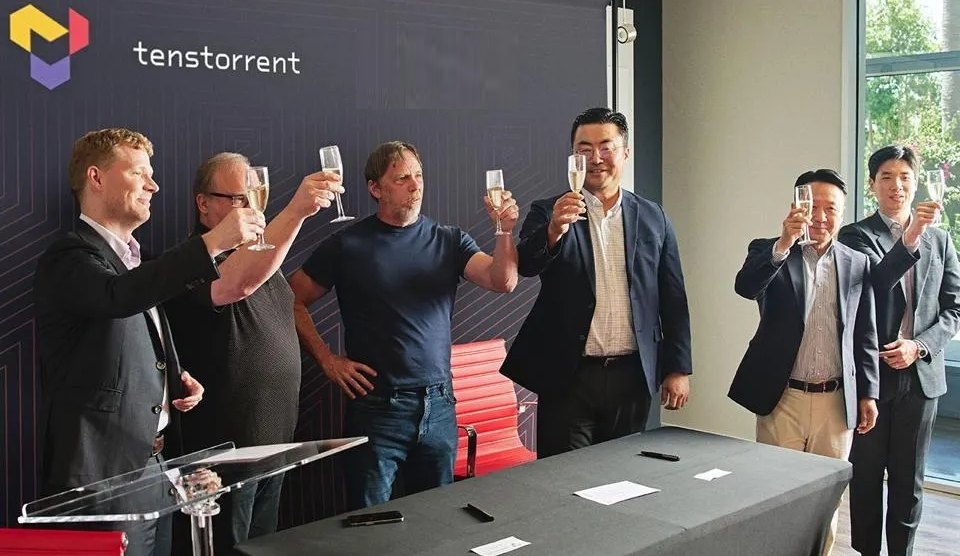
AI chip startup Tenstorrent has raised $1.5 billion in Series E funding, more than doubling its valuation to $6.2 billion as the Jim Keller-led company steps up its challenge to Nvidia’s dominance in AI computing. The funding gives Tenstorrent fresh capital to scale its AI servers and offer businesses an alternative to the proprietary hardware and software systems that dominate the market.
The Santa Clara, California-based startup announced the funding Monday, marking another major investment in AI hardware as companies search for ways to reduce their dependence on Nvidia’s expensive chips and computing systems.
The round was led by Trace Capital and Innovation X, with participation from ARK Invest, Fidelity Management & Research Company, Morgan Stanley, T. Rowe Price, SanDisk, Tether Investments, Cadence Ventures, Protagonist, and several other investors.
The new valuation represents a sharp increase from the roughly $2.6 billion Tenstorrent was valued at following its December 2024 funding round, when it raised more than $693 million, the AI chip startup announced on Monday.
The funding comes just four months after reports that Qualcomm was in talks to acquire Tenstorrent in a deal potentially worth between $8 billion and $10 billion. TechStartups reported on those discussions in June, citing The Information. No acquisition agreement was announced at the time.
Tenstorrent’s decision to raise another $1.5 billion puts the spotlight back on its ambitions as an independent AI chip company competing in a market where Nvidia has built a formidable advantage.
Tenstorrent bets on open AI computing to challenge Nvidia
Unlike Nvidia, whose CUDA software ecosystem has helped establish its position in AI infrastructure, Tenstorrent is betting that customers want greater control over the chips and software running their AI workloads.
Its processors are built around RISC-V, an open instruction set architecture that allows chip designers to develop compatible processors without paying architecture licensing fees. The company combines its chip designs with an open-source software stack to give developers more flexibility.
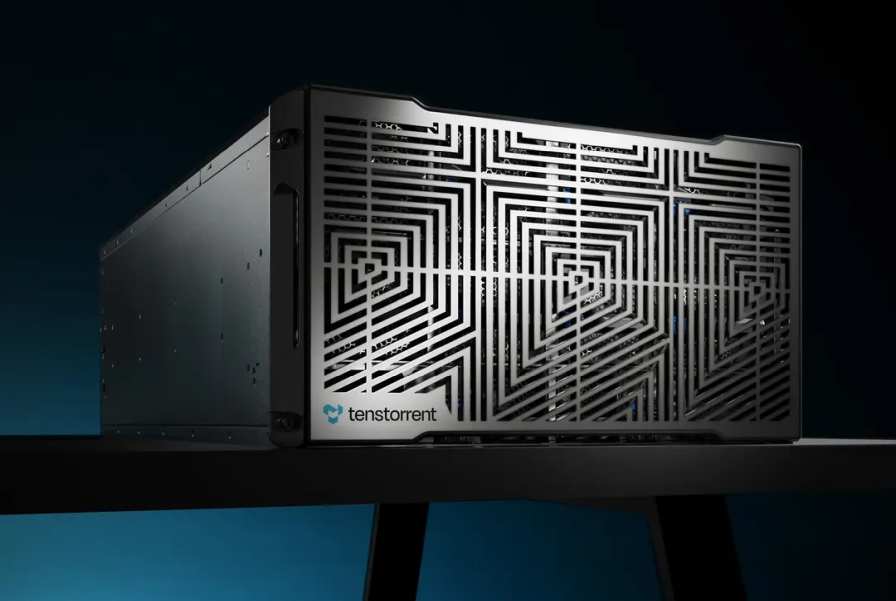
Tenstorrent (Image credit: Tenstorrent)
Tenstorrent plans to use its new funding to scale deployment of its Galaxy servers, which combine multiple AI processors to run applications such as large language models, coding assistants, and video generation systems.
The company sells AI computing hardware ranging from individual accelerator cards and workstations to server racks and large computing clusters. It licenses its TT-Ascalon RISC-V CPU and Tensix AI cores to customers designing their own chips, including Samsung and LG.
“We built one architecture and sell it at every size,” said Jim Keller, CEO of Tenstorrent. “The future of compute is open, scalable, and owned by the people building on it. Our investors believe in that model too, and we appreciate their support.”
That strategy reflects a growing debate across the AI industry: should companies continue relying on a handful of dominant chip suppliers, or invest in hardware and software systems they can customize and control?
Tenstorrent believes the latter presents a significant commercial opportunity. The challenge is turning that vision into products that can compete with Nvidia on performance, cost, software compatibility, and availability.
Jim Keller’s chipmaking legacy faces its biggest commercial test
Tenstorrent has attracted attention partly through its CEO, Jim Keller, one of the semiconductor industry’s best-known chip architects.
Keller helped develop AMD’s Zen processor architecture, contributed to Apple’s early A-series chips, and led Tesla’s custom self-driving chip efforts. His background gives Tenstorrent credibility in an industry where designing competitive processors requires years of engineering work and substantial investment.
Founded in 2016 by Ljubisa Bajic, Milos Trajkovic, and Ivan Hamer, Tenstorrent initially focused on AI acceleration before broadening its ambitions to include complete computing systems and chip intellectual property.
Keller has been outspoken about the economics of competing with Nvidia. In a Bloomberg interview last December, he argued that relying on high-bandwidth memory, or HBM, creates a major cost disadvantage for rival chipmakers.
“You can’t beat Nvidia if you use HBM,” Keller said.
His argument highlights a problem confronting the industry’s challengers. Building chips that perform well is one hurdle. Making them affordable, commercially available, and attractive to developers already invested in Nvidia’s ecosystem is another.
Tenstorrent’s latest funding gives it more financial room to pursue that goal, but the company has yet to demonstrate that its approach can challenge Nvidia at comparable commercial scale.
The company’s long-term opportunity may extend beyond replacing Nvidia GPUs. By supplying open AI systems and licensing processor designs, Tenstorrent could serve customers seeking greater control over their infrastructure without developing every component themselves.
For now, its $6.2 billion valuation reflects investor confidence in that strategy. The next test will be whether Tenstorrent can translate its engineering ambitions and billion-dollar funding into meaningful adoption in the global AI computing market.