Startup Funding News Today, October 15, 2026: Modal, Labelbox, OMass Therapeutics, Skeleton Technologies & More
 Nickie Louise
Posted On October 15, 2026
More than $1.51 billion in newly announced funding transactions flowed into 10 major startups over the past 24 hours, alongside a separate €50 million investment in France. The biggest deals reveal a venture market financing two very different priorities: the infrastructure needed to run artificial intelligence at scale and specialized technologies that can solve expensive problems in healthcare, manufacturing, energy, and enterprise operations.
San Francisco-based Modal led the day’s funding activity with a $750 million Series D at a $15.75 billion valuation, after reporting that its annualized revenue run rate surpassed $1 billion. Oxford biotech startup OMass Therapeutics secured $310 million to advance experimental treatments for hormonal and autoimmune diseases. Meanwhile, European energy-storage company Skeleton Technologies raised more than $100 million in Siemens-led financing, becoming a unicorn as it expands into the U.S. AI data center market.
The activity extends across several layers of the AI economy. Salience Labs raised $125 million to commercialize optical networking chips that connect increasingly large GPU clusters. Labelbox announced more than $100 million in financing for reinforcement learning and enterprise AI agents. Harmonic Security secured $50 million to address the security risks created by employee AI use, while Duvo raised $32 million to automate operational processes across retailers and consumer-goods companies.
Beyond AI software, India’s Scimplify raised $25 million to expand specialty-chemical and critical-materials production, with Hitachi Ventures leading the investment. France’s Dougs secured €50 million to accelerate AI-based accounting services. Boston-based Tamr raised $21 million to improve the fragmented enterprise data that increasingly autonomous AI systems depend on.
The broader signal is that investors are financing the systems that make AI commercially useful, not just the models themselves. That includes computing capacity, optical networking, energy management, reliable data, security controls, and industry-specific execution.
The 10 selected transactions represent more than $1.513 billion in disclosed dollar-denominated financing, plus €50 million. This is a headline transaction total, not a pure equity total: Labelbox’s financing includes a credit facility, while Skeleton’s transaction has not been fully broken down between primary investment and possible secondary share purchases. Those distinctions matter when measuring how much new capital actually enters startup balance sheets.
The Macro Environment: AI Infrastructure Spending Meets a Growing Demand for Financial Discipline
The latest funding activity arrives as venture investors confront an increasingly complicated AI economy.
Demand for AI computing continues to grow, but the financial requirements of building and operating that infrastructure are becoming harder to ignore. GPU clusters require enormous capital commitments, substantial electricity supplies, specialized networking, and increasingly sophisticated workload-management systems.
That creates opportunities for companies such as Modal, Salience Labs, and Skeleton Technologies. Each addresses a different constraint in the same market: Modal provides computing infrastructure developers can access without managing their own GPU clusters; Salience is developing optical switches to improve communication between processors; and Skeleton is building energy-storage systems designed to manage sudden fluctuations in data-center electricity demand.
The distinction matters because AI infrastructure economics extend far beyond GPU prices. A data center can own expensive accelerators and still operate inefficiently because of networking bottlenecks, power fluctuations, poor utilization, or software overhead.
Growing evidence also suggests public-market investors are becoming more sensitive to those costs. Shares of AI cloud provider CoreWeave fell sharply on October 14 amid concerns about borrowing costs and the sustainability of debt-financed infrastructure expansion. Financial Times reporting has also highlighted a slowdown in AI-related debt issuance as lenders become more selective.
That does not mean private investors are abandoning AI infrastructure. Modal’s $750 million financing shows strong, ongoing demand for businesses that can turn compute into commercial revenue. But it suggests investors may increasingly distinguish between companies with demonstrated customer demand and infrastructure projects whose financial returns depend on uncertain future utilization.
Outside computing infrastructure, OMass Therapeutics and Scimplify show that substantial capital remains available for difficult scientific and industrial problems.
OMass is financing clinical development, where success ultimately depends on generating convincing evidence that experimental medicines work safely in patients. Scimplify is building a distributed manufacturing network for chemicals and critical materials, where customer qualification and production consistency determine commercial value.
Those risks differ significantly from software economics. Yet both investments reflect a willingness to fund businesses whose capabilities require years of research, specialized facilities, regulatory expertise, and operating experience.
The day’s enterprise software rounds introduce another important theme: AI is moving from experimentation into operational responsibility. Labelbox, Harmonic Security, Duvo, Tamr, and Dougs address different consequences of that transition, from reinforcement learning and agent execution to data accuracy, security, and regulated professional services.
Together, the announcements suggest investors are looking beyond whether AI can perform a task. They increasingly want to know whether companies can deploy it reliably, measure its performance, control its risks, and generate durable revenue.
Modal raises $750M in funding to expand AI infrastructure as annualized revenue run rate tops $1B
San Francisco-based Modal raised $750 million in Series D financing at a $15.75 billion post-money valuation, led by Accel. Kleiner Perkins joined the investor base, while existing investors Menlo Ventures, General Catalyst, Redpoint, Lux Capital, Amplify Partners, and Bain Capital Ventures participated.
The financing follows a $355 million Series C announced five months earlier.
Modal disclosed the latest round on October 14 alongside a major operating milestone: the company says its annualized revenue run rate has surpassed $1 billion, with usage tripling since May and year-over-year growth exceeding 15x.
Founded by Erik Bernhardsson, Modal provides cloud infrastructure designed around workloads that increasingly define AI development and deployment. Its platform supports model inference, training, reinforcement learning, and isolated computing environments in which AI agents can execute code.
Instead of requiring developers to manage GPU servers, container infrastructure, scheduling systems, and networking, Modal provides software interfaces that let developers allocate computing resources as needed. The company says its infrastructure spans more than 20 cloud providers.
Customers include DoorDash, Cognition, Ramp, Linear, Hebbia, Runway, and companies developing robotics and drug-discovery applications.
A billion-dollar run rate changes the investment case
Modal’s financial milestone is important, but the terminology deserves attention. Annualized revenue run rate is not the same as annual recurring revenue. A run rate extrapolates current revenue activity into an annual figure. It does not necessarily represent contractual commitments that customers will maintain for the next 12 months.
That distinction matters most for usage-based infrastructure businesses, where customer spending can fluctuate with workloads and demand. Modal also reports that its Sandboxes product, which provides isolated environments for executing code, has reached a $300 million annualized run rate.
The product has become especially relevant as coding agents generate and execute more software.
For investors, Modal represents a bet that the next major software infrastructure category will be built around AI workloads rather than traditional application hosting.
Its competitive position depends on developer experience, workload efficiency, reliability, pricing, and the ability to manage computing capacity across different providers. However, the company faces substantial competition from established cloud platforms and specialized AI infrastructure providers.
The biggest question is whether its software architecture can maintain attractive margins as customers demand lower inference costs and greater computing capacity.
Funding Details
Startup: Modal
Investors: Accel, Kleiner Perkins, Menlo Ventures, General Catalyst, Redpoint, Lux Capital, Amplify Partners, Bain Capital Ventures
Amount Raised: $750 million
Total Raised: At least $1.105 billion across the latest two rounds; full lifetime total not independently reconciled
Funding Stage: Series D
Funding Date: October 14, 2026
Headquarters: San Francisco, California, United States
Sector: AI infrastructure/cloud computing/developer tools
Valuation: $15.75 billion post-money
OMass Therapeutics raises $310M in funding to advance treatments for hormonal and autoimmune diseases
Oxford-based OMass Therapeutics raised $310 million (£230 million) in an oversubscribed Series C financing, co-led by Bain Capital Life Sciences, Forbion, and Novo Holdings. Additional investors include Janus Henderson Investors, SV Health Investors, and Jefferson Life Sciences.
Existing shareholders Syncona, Oxford Science Enterprises, GV, Northpond Ventures, Sanofi Ventures, British Business Bank, and the University of Oxford also participated.
OMass is a biotechnology company developing small-molecule medicines for diseases involving difficult biological targets. The company originated from research conducted in Professor Dame Carol Robinson’s laboratory at the University of Oxford.
Its drug-discovery platform combines native mass spectrometry, specialized biochemistry, and chemistry techniques to study proteins and their interactions in biologically relevant environments. The goal is to identify medicines that can act on targets that have historically been difficult to address.
Investors are financing clinical evidence, not simply scientific discovery
The largest portion of OMass’s new financing will support development of OMS1620, an experimental medicine targeting the melanocortin-2 receptor. The company is developing the drug for congenital adrenal hyperplasia and ACTH-dependent Cushing’s syndrome, conditions involving abnormal hormone regulation.
OMass plans to advance the medicine through Phase 2 clinical development. It will also use the financing to support an experimental SLC15A4 inhibitor intended for lupus and other diseases associated with abnormal immune signaling.
The investment is significant because OMass is moving toward clinical milestones that could establish whether its scientific approach produces meaningful therapeutic benefits. That creates a different risk profile from AI software.
A promising discovery platform can identify potential medicines, but clinical trials must establish safety and efficacy in patients. Even substantial financing cannot eliminate that uncertainty.
The participation of Bain Capital Life Sciences, Forbion, Novo Holdings, and established biotechnology investors indicates confidence in the company’s pipeline and research approach. Still, the next material valuation events will likely depend on clinical data rather than funding announcements.
For founders, OMass illustrates the importance of financing long-duration scientific programs around specific technical milestones. For investors, it represents a bet that differentiated biology can support valuable medicines even in a market where clinical development remains expensive and uncertain.
Funding Details
Startup: OMass Therapeutics
Investors: Bain Capital Life Sciences, Forbion, Novo Holdings, Janus Henderson Investors, SV Health Investors, Jefferson Life Sciences, Syncona, Oxford Science Enterprises, GV, Northpond Ventures, Sanofi Ventures, British Business Bank, University of Oxford
Amount Raised: $310 million (£230 million)
Total Raised: Not disclosed on a fully reconciled lifetime basis
Funding Stage: Series C
Funding Date: October 15, 2026
Headquarters: Oxford, United Kingdom
Sector: Biotechnology/drug discovery/endocrinology/immunology
Valuation: Not disclosed
Salience Labs raises $125M in funding to scale optical networking chips for AI data centers
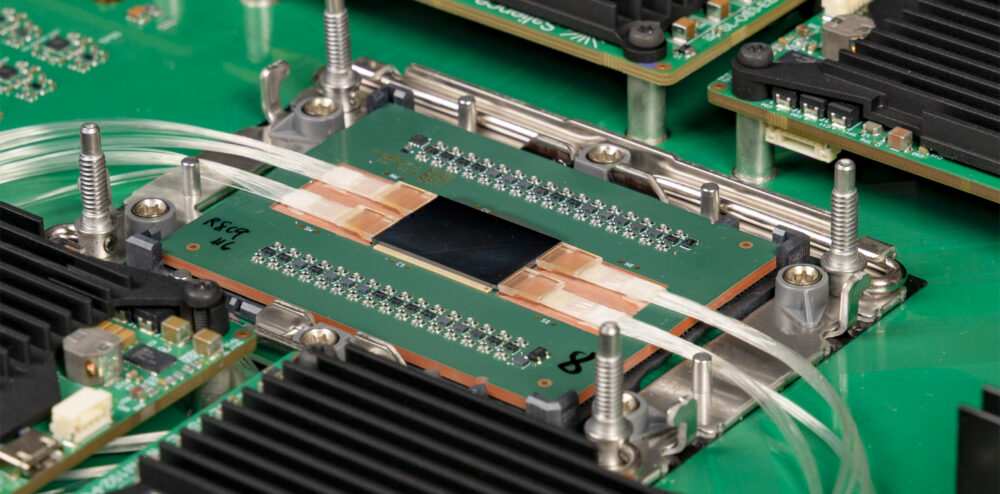
Oxford-based Salience Labs raised $125 million in Series B financing led by Bullhound Capital. AMD Ventures, Intel Capital, SBI Group, Hudson River Trading, and British Business Bank joined the round. Existing shareholders Applied Ventures, Oxford Science Enterprises, Cambridge Innovation Capital, and Silicon Catalyst Ventures also participated.
Salience develops photonic chips designed to improve communication inside AI data centers. The technology addresses a problem that becomes more significant as computing clusters grow. Thousands of GPUs may need to communicate across multiple racks while training or running increasingly complex AI models.
Traditional electrical networking systems can introduce limitations involving bandwidth, latency, energy consumption, and the cost of moving data. Salience is developing optical circuit switches that use light to connect computing resources.
Its architecture is designed to improve connectivity while reducing overhead associated with conventional switching infrastructure.
AI computing is becoming a networking problem
Salience recently demonstrated a 64-port optical circuit switch at ECOC 2026. The company plans to develop larger 128-port and 256-port products while expanding manufacturing capabilities. Its technology draws on more than a decade of research associated with the University of Oxford and the University of Münster.
The investment’s strategic significance is reinforced by AMD Ventures and Intel Capital’s participation. Both investors operate in industries directly affected by the growing complexity of AI computing infrastructure.
For investors, Salience offers exposure to AI growth without requiring the company to compete in the GPU market itself. As computing clusters grow, the network connecting processors can influence overall system performance and cost. However, optical networking technologies must meet demanding commercial requirements.
Salience will need to demonstrate manufacturing yields, reliability, integration with existing infrastructure, and measurable economic advantages. The company also faces competition from established networking vendors and other photonics startups. Its ability to move from a successful demonstration into high-volume production will determine whether the technology becomes a commercially significant part of AI infrastructure.
Funding Details
Startup: Salience Labs
Investors: Bullhound Capital, AMD Ventures, Intel Capital, SBI Group, Hudson River Trading, British Business Bank, Applied Ventures, Oxford Science Enterprises, Cambridge Innovation Capital, Silicon Catalyst Ventures
Amount Raised: $125 million
Total Raised: Not disclosed on a fully reconciled basis
Funding Stage: Series B
Funding Date: October 14, 2026
Headquarters: Oxford, United Kingdom
Sector: AI infrastructure/silicon photonics / optical networking
Valuation: Not disclosed
Skeleton Technologies secures over $100M in Siemens-led investment to expand AI data center energy systems
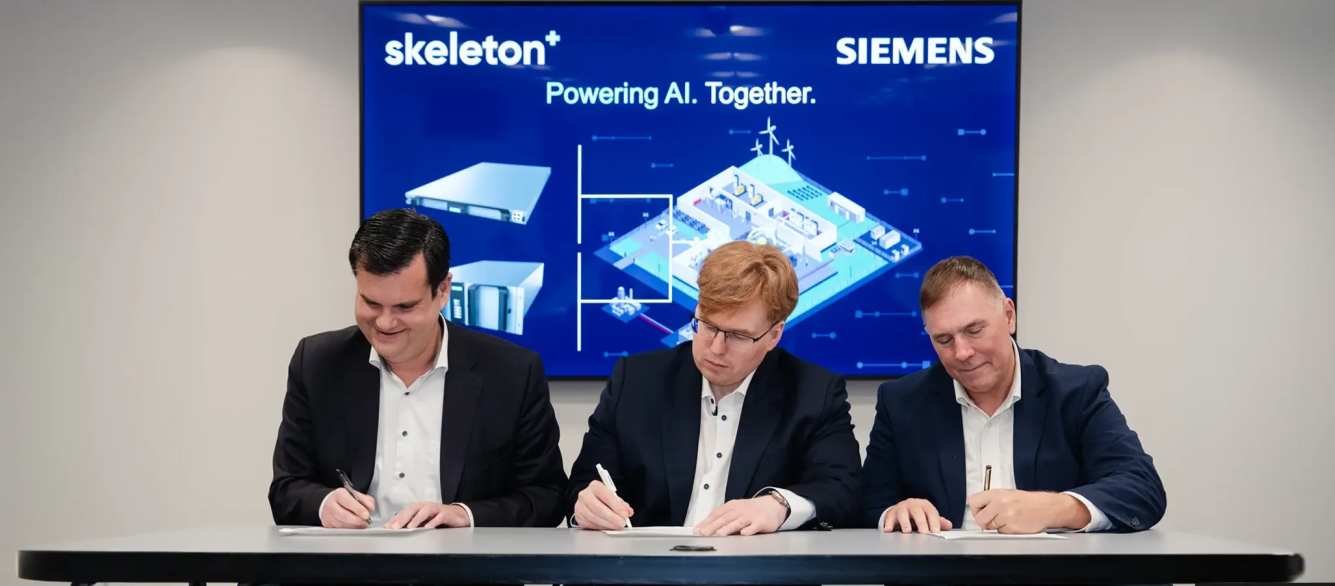
Estonian energy-storage company Skeleton Technologies secured more than $100 million in Siemens-led financing, valuing it at over $1 billion. The company disclosed the investment on October 14, alongside a strategic partnership with Siemens focused on AI data center infrastructure.
The exact financing amount was not disclosed. Skeleton described the transaction as a nine-digit investment, while Bloomberg reported it exceeded $100 million. The transaction includes a broader strategic relationship involving Siemens’s investment and rights to commercialize Skeleton technology. A separate shareholder disclosure also identified a partial secondary stake sale to Siemens, meaning the precise amount of fresh primary capital cannot be determined from the public announcements.
Skeleton develops energy-storage systems based on supercapacitors and its proprietary Curved Graphene material. Unlike conventional batteries, which are designed primarily to store large amounts of energy for extended periods, supercapacitors can respond extremely quickly to changing power demands.
That capability is becoming relevant to AI data centers. GPU clusters can shift between operating states in milliseconds, creating abrupt changes in electricity consumption. Those fluctuations can stress electrical infrastructure and complicate efficient operation of large computing systems.
Skeleton’s products are designed to manage rapid power changes close to computing workloads.
Siemens is buying access to a data center infrastructure category
Skeleton says its technology can deliver energy savings of up to 40% in certain applications and improve GPU performance by double-digit percentages. Those are company-reported performance claims, not independently established results across all AI data centers.
The Siemens partnership matters because it offers a potential route into major industrial and hyperscale infrastructure projects. Siemens plans to integrate Skeleton’s products into its broader electrical infrastructure offering, and the companies are collaborating on AI data center technologies.
Skeleton intends to invest more than $200 million in manufacturing expansion and research activities in Silicon Valley. That figure represents planned expenditure, not the amount Siemens is newly investing. The company is also planning U.S. manufacturing capacity that would support production from energy-storage cells through complete systems.
For investors, Skeleton represents a way to participate in AI infrastructure growth through electricity management.
Its competitive advantage may depend more on material science, manufacturing capability, system integration, and customer relationships than on software alone. Remaining questions include commercial margins, manufacturing expansion costs, customer concentration, and whether performance improvements translate into attractive economics for data center operators.
Funding Details
Startup: Skeleton Technologies
Investors: Siemens-led strategic investment; complete syndicate not disclosed
Amount Raised: More than $100 million; precise amount and primary-secondary allocation not disclosed
Total Raised: Not fully disclosed on a comparable basis
Funding Stage: Strategic growth financing
Funding Date: October 14, 2026
Headquarters: Tallinn, Estonia; substantial operations in Germany and the United States
Sector: AI data center infrastructure/energy storage / advanced materials
Valuation: More than $1 billion
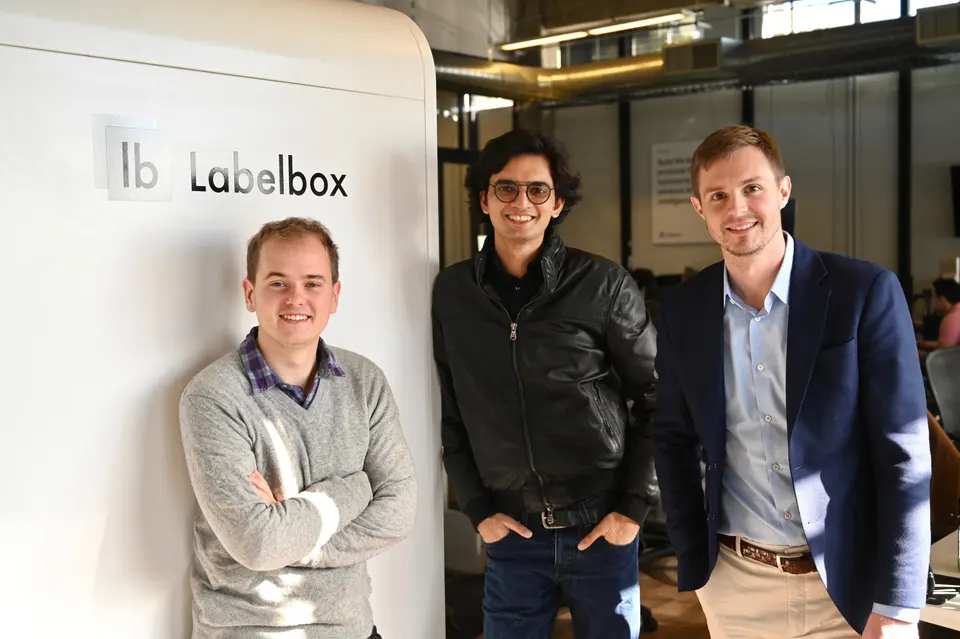
Labelbox raises over $100M in funding to expand reinforcement learning and enterprise AI agents
San Francisco-based Labelbox announced more than $100 million in Series E financing, led by Infinitum Partners. Wipro Ventures, Andreessen Horowitz, B Capital, Tau Ventures, Snowpoint Ventures, and other investors participated.
The financing combines equity with a credit facility. Labelbox did not disclose the size of each component. That distinction matters because the full announced amount should not be treated as new equity investment. Labelbox originally built its business around data-labeling tools used in machine learning.
Its current strategy extends into two related markets: improving frontier AI models through reinforcement learning and helping enterprises deploy AI agents.
The company’s Horizon platform provides training environments, feedback, and evaluation systems that allow AI models to practice complex tasks. Its Recursion Managed Agents product helps businesses deploy agents that operate within existing applications.
Reinforcement learning is becoming commercial infrastructure
As AI models improve, developers increasingly need ways to evaluate whether those models can complete complicated tasks across multiple steps. A model that performs well on a benchmark may still fail when it needs to operate business software, follow procedural constraints, or respond to unexpected situations.
Reinforcement learning environments can help developers test and improve those capabilities. Labelbox says it works with more than 400 customers, including major U.S. AI laboratories.
The company also reports reaching profitability in 2026 while growing more than fivefold year over year. Those are company-reported figures. The financing suggests investors see continued demand for the tools and environments required to improve AI systems after their initial training.
However, Labelbox operates in a market where frontier AI developers are also investing heavily in internal training and evaluation infrastructure. Its commercial position will depend on the quality of its evaluation environments, customer relationships, proprietary data, and ability to deliver measurable improvements.
The company must also demonstrate that its enterprise agent business can scale without excessive implementation and support costs.
Funding Details
Startup: Labelbox
Investors: Infinitum Partners, Wipro Ventures, Andreessen Horowitz, B Capital, Tau Ventures, Snowpoint Ventures and others
Amount Raised: More than $100 million, including equity and a credit facility
Total Raised: Not disclosed on a fully reconciled basis
Funding Stage: Series E financing
Funding Date: October 14, 2026
Headquarters: San Francisco, California, United States
Sector: AI infrastructure/reinforcement learning/enterprise agents
Valuation: Not disclosed
Dougs raises €50M to bring AI automation into regulated accounting services
French accounting technology company Dougs raised €50 million from Expedition Growth Capital, an existing investor. Based in Lyon, Dougs provides accounting, legal, and financial management services directly to small businesses.
The startup says it serves more than 50,000 businesses and generates more than €50 million in annual recurring revenue. Unlike software vendors that sell accounting tools to professional firms, Dougs operates as the accounting service provider itself.
Founded in 2015, Dougs has developed proprietary software to automate bookkeeping and financial administration. The company employs more than 100 engineers and has accumulated extensive operating information from preparing financial statements and tax filings.
Its next objective is to use AI agents to complete more of the accounting process, with qualified accountants reviewing and approving the results. The company’s regulatory status and professional responsibilities are central to its business model.
Automation is changing the economics of professional services
Dougs says its technology-enabled operations generate gross margins above 80%. That is an unusually high figure for a company delivering accounting services, although the reported margin should be evaluated in the context of the company’s accounting policies and cost classifications.
Dougs also says it has been profitable since inception. Its growth strategy is particularly interesting because it combines software automation with professional accountability. A customer does not necessarily want an AI accounting tool.
Customers want accurate financial statements, compliant filings, and reliable advice. Dougs aims to deliver that outcome directly, using automation to reduce the labor required for routine work. The investment case is therefore different from traditional accounting software.
The company controls the customer relationship and the underlying service, while its technology may allow each accountant to support more businesses. That creates potential operating advantages, but it also introduces regulatory and quality-control responsibilities.
For investors, the opportunity is to build a professional services business with more attractive software-like economics. The remaining challenge is proving that automation can improve productivity without weakening accuracy or the professional oversight customers require.
Funding Details
Startup: Dougs
Investors: Expedition Growth Capital
Amount Raised: €50 million
Total Raised: At least €75 million across its disclosed 2023 and 2026 investments
Funding Stage: Growth investment; formal round designation not disclosed
Funding Date: October 15, 2026
Headquarters: Lyon, France
Sector: Fintech/accounting technology/enterprise AI
Valuation: Not disclosed
Harmonic Security raises $50M in funding to address the security risks of workplace AI adoption
Harmonic Security raised $50 million in Series B financing led by Crosspoint Capital Partners, bringing total funding to $76 million. Existing investors also participated. The company announced the financing on October 14 and plans to expand its engineering and commercial teams in the United States and United Kingdom.
Founded in 2023 by Alastair Paterson and Bryan Woolgar-O’Neil, Harmonic develops software that helps enterprises monitor and control how employees use AI applications.
The problem is growing as workers adopt chatbots, coding assistants, desktop AI tools, and autonomous agents. Employees may share confidential documents with external systems, use personal accounts for business tasks, or allow agents to access information outside approved workflows.
Traditional security tools were not necessarily designed to interpret the context of AI interactions. Harmonic uses specialized smaller language models to analyze AI activity and identify potentially sensitive behavior.
Security is becoming a requirement for enterprise AI expansion
The company’s approach differs from simply blocking AI applications. Businesses increasingly want employees to use AI because of potential productivity benefits. The challenge is allowing useful applications while reducing the risk of sensitive information exposure.
Harmonic aims to provide visibility into which tools employees use, what tasks they perform, and where additional controls are needed. That creates an investment opportunity because enterprises must address AI security alongside broader adoption. However, Harmonic faces competition from established cybersecurity vendors and newer companies developing AI-specific security products.
Its differentiation will depend on detection accuracy, policy enforcement, compatibility with different AI systems, and whether customers can deploy the software without disrupting legitimate work. For investors, the financing reflects confidence that security spending will increasingly follow AI usage rather than remain separate.
Funding Details
Startup: Harmonic Security
Investors: Crosspoint Capital Partners and existing investors
Amount Raised: $50 million
Total Raised: $76 million
Funding Stage: Series B
Funding Date: October 14, 2026
Headquarters: United States and United Kingdom
Sector: Cybersecurity/enterprise AI security/data protection
Valuation: Not disclosed
Duvo raises $32M in funding to automate complex retail and enterprise operations
Duvo raised $32 million in Series A funding led by Balderton Capital, with participation from Index Ventures, Northzone, and Credo Ventures. The financing brings total funding to $48 million.
Duvo announced the round on October 14 and plans to expand its enterprise AI business, initially focusing on retailers and consumer packaged goods companies. Duvo develops AI agents designed to execute operational processes across business software.
Many companies use separate systems for inventory, purchasing, supplier communications, financial management, and customer operations. Employees often spend considerable time moving information between those systems.
Duvo attempts to automate that work by connecting to enterprise resource planning systems, supplier portals, spreadsheets, email, and other applications. Its technology can capture existing business processes and then execute approved steps while referring exceptions to human employees.
Enterprise AI must work across existing systems
The investment reflects growing interest in AI systems that do more than provide answers. Retailers and manufacturers operate complicated businesses where information is distributed across software platforms and external partners.
An AI agent that can reliably execute an approved process may provide measurable value by reducing errors, delays, or administrative work. Duvo’s founder has experience building technology businesses, including online grocer Rohlik. That background matters because the startup targets operational problems that software vendors often underestimate.
The company’s challenge is making automation reliable across environments where business rules and exceptions vary significantly between customers. Investors will need to evaluate implementation time, customer retention, recurring revenue, and the level of technical support each deployment requires.
Duvo must also compete with established enterprise software vendors developing their own agent capabilities. Its opportunity lies in managing processes that span multiple systems rather than staying within a single application.
Funding Details
Startup: Duvo
Investors: Balderton Capital, Index Ventures, Northzone, Credo Ventures
Amount Raised: $32 million
Total Raised: $48 million
Funding Stage: Series A
Funding Date: October 14, 2026
Headquarters: New York and London operations
Sector: Enterprise AI/workflow automation / retail technology
Valuation: Not disclosed
Scimplify raises $25M in funding to expand critical-materials manufacturing beyond China
Indian industrial technology startup Scimplify raised $25 million in an all-equity strategic financing led by Hitachi Ventures. Industrial companies Henkel and Teknor Apex joined as investors, while existing backers Accel India, Bertelsmann India Investments, Omnivore, and 3one4 Capital participated. The investment brings Scimplify’s total equity funding to $80 million.
Founded in 2023 and based in Bengaluru, Scimplify develops and manufactures specialty chemicals and critical materials. Its customers operate in sectors including semiconductors, defense, energy, and industrial manufacturing. The company combines internal scientific research with a network of manufacturing partners.
When a customer needs a specialized material, Scimplify develops the production process and identifies appropriate manufacturing facilities. Its proprietary Scinode platform uses AI to support research, manufacturing coordination, quality control, and regulatory requirements.
Supply-chain diversification is becoming an investment thesis
Scimplify’s opportunity is connected to growing demand for alternative sources of strategically important materials. Manufacturers are seeking to reduce dependence on concentrated supply chains, particularly for chemicals and materials used in advanced industrial applications.
Scimplify says it works with a network of more than 500 manufacturing facilities, with approximately 90% of its manufacturing currently taking place in India. The company plans to expand its network into the United States and Japan. Its investors include industrial customers, which may help validate demand and provide insight into commercial requirements.
TechCrunch reported that the financing valued Scimplify at approximately $250 million post-money, citing a person familiar with the transaction. The company declined to confirm that valuation, so it should be treated as reported rather than officially disclosed.
Scimplify’s long-term competitive advantage will depend on scientific expertise, manufacturing relationships, product qualification, and customer trust. AI may help accelerate the work, but the company’s ability to deliver materials consistently and economically remains the central investment question.
Funding Details
Startup: Scimplify
Investors: Hitachi Ventures, Henkel, Teknor Apex, Accel India, Bertelsmann India Investments, Omnivore, 3one4 Capital
Amount Raised: $25 million, all equity
Total Raised: $80 million in equity financing
Funding Stage: Strategic equity financing; formal stage not disclosed
Funding Date: October 14, 2026
Headquarters: Bengaluru, India
Sector: Industrial technology/specialty chemicals / critical materials
Valuation: Approximately $250 million post-money, according to TechCrunch’s source; not confirmed by the company
Tamr raises $21M in funding to improve enterprise data quality for AI applications
Boston-based Tamr raised $21 million in growth equity financing led by Volition Capital, with participation from existing investors. Tamr plans to use the financing to expand its AI-based data management technology and support enterprises deploying increasingly autonomous applications.
Founded in 2013 from research associated with MIT’s Computer Science and Artificial Intelligence Laboratory, Tamr develops software that helps companies identify, connect, and clean fragmented records. Large enterprises often maintain different versions of customer, supplier, product, and operational information across multiple systems.
Those inconsistencies create problems for ordinary business processes. They become more significant when AI agents use the same information to make recommendations or execute tasks. An AI system may produce technically sophisticated output while relying on outdated, duplicated, or incorrectly matched records.
Tamr uses machine learning and other techniques to identify relationships between records and create more consistent enterprise data.
Reliable data is becoming part of AI infrastructure
Tamr’s financing highlights a less visible consequence of enterprise AI adoption.
Businesses cannot depend on increasingly autonomous systems if the underlying information is unreliable.
For example, an AI procurement agent must distinguish between different supplier entities, contracts, locations, and payment records.
Incorrect data can lead to operational mistakes even when the agent performs its assigned steps correctly.
Tamr is positioning its technology as part of the data infrastructure required for enterprise AI.
The company says its SaaS revenue more than doubled during its previous fiscal year.
That claim indicates commercial momentum but does not disclose absolute revenue or profitability.
For investors, Tamr’s potential advantage comes from its enterprise integrations, accumulated data-management expertise, and the difficulty of replacing software embedded in business-critical workflows.
However, the company competes with established data-management vendors and cloud providers developing their own AI-assisted data products.
The investment thesis will depend on whether Tamr can demonstrate that better data quality produces measurable improvements in business outcomes and AI reliability.
Funding Details
Startup: Tamr
Investors: Volition Capital and existing investors
Amount Raised: $21 million
Total Raised: Not disclosed on a fully reconciled basis
Funding Stage: Growth equity
Funding Date: October 14, 2026
Headquarters: Boston, Massachusetts, United States
Sector: Enterprise AI/data management/master data management
Valuation: Not disclosed
What Today’s Funding Activity Reveals
Today’s funding activity is notable for both its size and the diversity of problems investors are financing. Modal’s $750 million Series D accounts for nearly half of the disclosed dollar-denominated transaction total.
That concentration is important. Interpreting the aggregate as evidence that every segment of the venture market is experiencing equally strong demand would be misleading. Nevertheless, the remaining rounds reveal several meaningful patterns.
First, the AI infrastructure market is developing distinct investment categories.
Modal operates at the computing software layer. Salience is developing photonic networking hardware. Skeleton is building energy systems to manage changes in data-center electricity demand.
These companies benefit from the same broad expansion in AI computing, but their commercial models and technical risks differ considerably.
Modal must manage usage-based infrastructure economics. Salience must manufacture reliable optical switches at scale. Skeleton must deliver measurable electrical performance and expand industrial production. Their presence in the same funding report illustrates how AI demand is creating opportunities across the infrastructure supply chain.
Second, enterprise AI is moving toward execution and accountability.
Labelbox is building training and evaluation environments. Duvo is developing agents that execute operational processes. Harmonic Security is helping businesses control employee AI usage. Tamr is improving the information those systems depend on.
Dougs is combining AI automation with professional responsibility for accounting services. The emerging investment thesis is that AI’s commercial value increasingly depends on whether it can operate inside real business processes.
Third, established industry relationships are becoming more important.
Siemens’s investment in Skeleton provides a connection to major electrical infrastructure customers. Scimplify’s industrial investors include companies that understand its manufacturing requirements. Dougs already serves tens of thousands of businesses through a regulated professional services model.
These relationships can provide distribution and operating advantages that new competitors can’t quickly reproduce.
Fourth, investors remain willing to finance expensive scientific development when the opportunity is differentiated.
OMass’s $310 million round shows that substantial biotech capital remains available for companies approaching important clinical milestones. Salience and Skeleton also require meaningful investment in manufacturing, testing, and engineering.
Their investors are accepting technical and commercialization risks that differ from conventional software startups.
Fifth, the valuation signals are selective rather than universal.
Modal disclosed a $15.75 billion valuation. Skeleton crossed $1 billion. Scimplify’s reported $250 million valuation remains unconfirmed by the company. Most other startups did not disclose valuation information.
That makes it difficult to infer a general change in private-market pricing from today’s announcements alone.
Sixth, funding structures deserve closer attention.
Labelbox’s more-than-$100-million financing combines equity and a credit facility. Skeleton’s Siemens-related investment sits alongside a disclosed secondary share transaction. Both examples show why headline transaction values should not automatically be interpreted as fresh operating capital.
Finally, geographic distribution has improved under the expanded reporting period. The selected deals include companies headquartered or operating in the United States, United Kingdom, France, Estonia, and India.
This does not imply that Asia experienced weak investment activity. Instead, the largest verified announcements in this 24-hour period were concentrated in North America and Europe, with Scimplify representing a significant Indian industrial investment. That is precisely why a global funding report should rank deals by significance rather than the time of day they appear.
Startup Funding Table
| Startup | Amount Raised | Sector | Funding Stage | Lead/Key Investors | Country |
|---|---|---|---|---|---|
| Modal | $750M | AI infrastructure/cloud computing | Series D | Accel, Kleiner Perkins, Menlo Ventures, General Catalyst | United States |
| OMass Therapeutics | $310M | Biotechnology/drug development | Series C | Bain Capital Life Sciences, Forbion, Novo Holdings | United Kingdom |
| Salience Labs | $125M | Optical networking / AI infrastructure | Series B | Bullhound Capital, AMD Ventures, Intel Capital | United Kingdom |
| Skeleton Technologies | More than $100M; exact amount undisclosed | Data center energy storage | Strategic growth financing | Siemens | Estonia |
| Labelbox | More than $100M, including a credit facility | AI training/reinforcement learning/agents | Series E financing | Infinitum Partners, Wipro Ventures, a16z, B Capital | United States |
| Dougs | €50M | Accounting technology/enterprise AI | Growth investment | Expedition Growth Capital | France |
| Harmonic Security | $50M | Cybersecurity/enterprise AI protection | Series B | Crosspoint Capital Partners | United States / United Kingdom |
| Duvo | $32M | Enterprise AI/workflow automation | Series A | Balderton Capital, Index Ventures, Northzone, Credo Ventures | United States / United Kingdom |
| Scimplify | $25M | Industrial technology / critical materials | Strategic equity financing | Hitachi Ventures, Henkel, Teknor Apex, Accel India | India |
| Tamr | $21M | Enterprise data management / AI infrastructure | Growth equity | Volition Capital | United States |
Strategic Takeaways for Founders and Investors
1. Infrastructure opportunities extend beyond GPU ownership
Modal, Salience, and Skeleton address different constraints on AI computing. Their financing suggests investors see opportunities in making existing computing resources more efficient, reliable, and accessible.
For founders, that opens possibilities in scheduling, networking, energy management, developer infrastructure, and specialized hardware. The important question is whether a product delivers measurable improvements in cost, reliability, or performance.
2. Revenue quality matters as much as revenue growth
Modal’s reported $1 billion annualized run rate is an extraordinary operating milestone. But usage-based revenue must be evaluated differently from contractual recurring revenue.
Investors should study customer concentration, workload volatility, gross margins, and how usage changes when customers optimize costs. The same principle applies to other infrastructure businesses where higher revenue can bring higher operating expenses.
3. Enterprise agents need reliable data and controls
Duvo, Tamr, and Harmonic illustrate three related requirements.
Agents must execute approved processes. They must use accurate information. And organizations need to control what those agents can access and do.
For founders building enterprise AI, reliability and operational integration may become stronger selling points than model sophistication alone.
4. Professional accountability can become an advantage
Dougs demonstrates a business model in which AI performs increasing amounts of work while qualified professionals remain responsible for the final result.
That distinction may matter in accounting, legal services, healthcare administration, and other regulated industries. Founders who combine automation with trusted professional oversight may serve customers unwilling to rely entirely on autonomous systems.
5. Industrial relationships can accelerate commercialization
Skeleton’s Siemens partnership and Scimplify’s investments from industrial customers provide more than financial support.
They may create access to technical expertise, customer requirements, supply chains, and distribution.
For deep-technology founders, an investor who can help a company manufacture and sell its product may be more valuable than one offering capital alone.
6. Biotechnology requires milestone-based financing
OMass’s $310 million round provides resources to advance clinical programs rather than relying on repeated small financings during development. That approach can reduce financing interruptions, but it does not remove clinical risk.
Investors should evaluate the milestones the capital is expected to finance and the evidence needed to support subsequent development.
7. AI training and evaluation are becoming separate commercial markets
Labelbox’s financing indicates continued demand for the environments and feedback systems used to improve AI models. As agents handle more complicated tasks, developers need to evaluate complete workflows rather than isolated answers.
The strongest companies in this category may build advantages from specialized environments, expert feedback, and long-standing relationships with AI developers.
8. Data quality can determine the value of AI investments
Tamr’s business highlights an uncomfortable reality for enterprises: advanced AI models cannot compensate for consistently incorrect operating data.
Founders building AI applications should account for entity resolution, record accuracy, data lineage, and system integration from the beginning. These capabilities may determine whether an agent can safely perform work in production.
9. Electricity management is becoming part of AI economics
Skeleton’s financing reflects the growing importance of managing rapid changes in computing electricity demand. Data center economics depend on more than total energy consumption.
Electrical stability, equipment efficiency, and the ability to use existing infrastructure effectively can influence operating costs. That creates opportunities for energy technology companies whose products improve computing performance without requiring additional generation capacity.
10. Large announced financing totals require financial interpretation
Today’s rounds demonstrate why investors and journalists should separate equity, credit facilities, secondary transactions, valuation figures, and operating metrics. Those distinctions determine how much capital a company actually receives and what obligations may accompany it.
They also help distinguish genuine business progress from impressive but incomplete headline figures.
Conclusion
October 15’s startup funding activity reveals a venture market still willing to make substantial commitments, but increasingly focused on the infrastructure and operating capabilities required to turn technology into economic value.
Modal’s $750 million financing demonstrates investor confidence in AI computing infrastructure backed by significant reported usage. Salience and Skeleton are developing the networking and energy systems needed to support increasingly demanding GPU clusters.
OMass shows that investors continue to finance difficult biotechnology research as programs advance toward clinical validation. Scimplify is building manufacturing capabilities in strategically important materials, while Dougs is combining AI automation with regulated professional services.
Labelbox, Harmonic Security, Duvo, and Tamr are addressing another stage of AI adoption: the transition from applications that produce information to systems that perform work inside organizations.
The deals differ in scale, maturity, and risk. Yet they share a common economic argument.
As AI capabilities become more widely available, investors are placing substantial capital behind companies that control the infrastructure, data, industrial processes, and customer relationships required to make those capabilities useful.
The next competitive advantage may come less from access to the most advanced technology and more from owning the systems that let it operate reliably, economically, and at scale.