Startup Funding News Today, October 14, 2026: Allara, ICON, Pluto Security, Soufflé Therapeutics, SUNMMIO & More
 Nickie Louise
Posted On October 14, 2026

Today’s funding activity shows investors continuing to pour hundreds of millions of dollars into technologies that solve expensive problems in the physical world. Austin-based ICON secured $200 million to expand its robotic construction systems, Soufflé Therapeutics raised $135 million to advance RNA-based treatments, and China’s SUNMMIO announced fresh financing for its next-generation AI chips.
Across today’s 10 selected startup funding announcements, eight companies disclosed precise dollar-denominated rounds totaling $503.5 million. Two Chinese companies announced additional funding, including a series of investments worth several hundred million yuan for robotics developer Yundie Technology. SUNMMIO also reported raising nearly RMB 2 billion across multiple financings over the past year, although it did not disclose the exact amount attributable to its newly announced rounds.
The geographic picture is markedly different from recent funding reports. Seven of today’s selected companies are based in the United States, one is Israeli, and two are Chinese. The expanded 24-hour reporting window captures more of the previous U.S. business day while retaining significant developments across Asia.
The investments also reveal where venture capital is finding new opportunities. Construction, biotechnology, chemistry, and healthcare are attracting large checks, while younger AI companies are raising money to address the operational risks and regulatory demands emerging as businesses deploy artificial intelligence.
The Macro Environment: Investors Are Moving From AI Promises to Operational Results
Today’s largest rounds share an important characteristic: investors are backing technologies tied to problems that customers already spend substantial amounts of money trying to solve.
ICON’s $200 million financing reflects interest in applying robotics and industrial automation to construction, an industry constrained by labor availability, project costs, and slow adoption of new production methods. Soufflé Therapeutics represents another capital-intensive opportunity, developing RNA therapies that require substantial spending before clinical and commercial outcomes become clear. Together, these two companies account for roughly 67% of the $503.5 million in precisely disclosed dollar funding across today’s selections.
Artificial intelligence remains central to the funding picture, but investors are increasingly applying it to specialized problems. Albert is developing AI models for chemical research. Pluto Security is addressing risks introduced by employee-created AI applications. Readily is using AI to help healthcare organizations manage regulatory obligations.
In China, capital is flowing into two different parts of the AI economy. SUNMMIO is developing chips intended to make large-model inference more efficient, while Yundie Technology is building systems that help robots perform useful work in hotels, commercial properties, and other real-world environments. Both illustrate the increasing importance of hardware, integration, and deployment alongside advances in AI models.
Healthcare represents another recurring theme. Beyond Soufflé’s therapeutics pipeline, Allara and Brellium are attracting funding for technology-enabled care delivery and clinical administration. These businesses face different risks from conventional software startups: reimbursement rules, clinical quality, privacy, and regulatory compliance can determine whether an attractive product becomes a durable business.
What emerges is a venture market increasingly willing to fund technologies with clear industrial or commercial applications, provided their technical advantages can translate into customers, efficiency, or defensible intellectual property.
Today’s Top 10 Startup Funding Rounds
ICON raises $200 million Series D to expand robotic construction and 3D-printed buildings
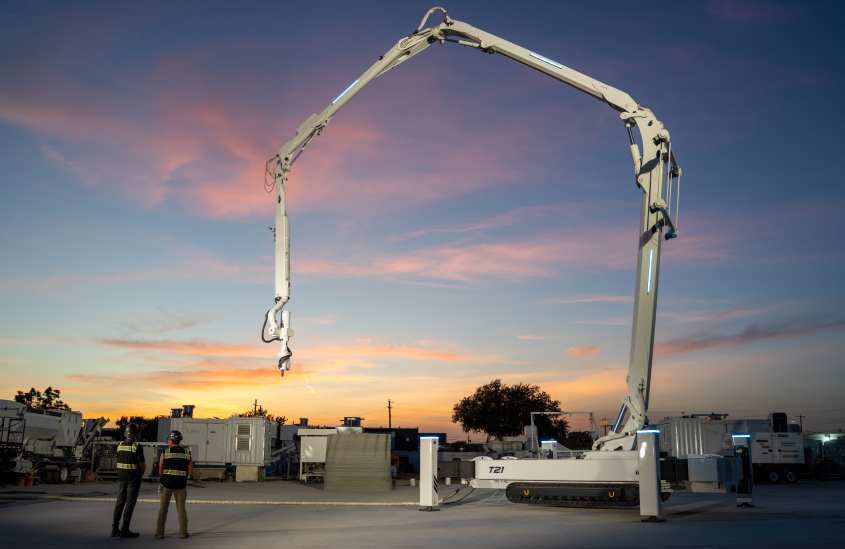
Austin-based ICON raised $200 million in Series D funding co-led by Baillie Gifford and funds managed by BlackRock. The financing will support manufacturing and deployment of the company’s robotic construction systems, a new research and development facility in Austin, and expansion into additional U.S. markets.
ICON has become one of the most recognizable companies in automated construction, using large robotic systems to print building structural components. Its technology aims to reduce the labor and production constraints associated with conventional construction methods.
The company says it has completed more than 270 3D-printed buildings and is beginning the commercial rollout of its Titan printing system. ICON also expects substantial revenue growth in 2026, although the company has not disclosed enough financial information for independent assessment.
The investment is significant because it brings major institutional capital into a sector where commercial adoption depends on more than software performance. To scale successfully, ICON must demonstrate that its robotic construction systems can consistently reduce costs, meet building standards, and perform reliably across different projects and locations.
Funding details
- Startup: ICON
- Investors: Baillie Gifford, BlackRock-managed funds, Capital Factory, Norwest, Tiger Global, and others
- Amount raised: $200 million
- Total raised: Not disclosed in the current announcement
- Funding stage: Series D
- Funding date: October 13, 2026
- Headquarters: Austin, Texas, United States
- Sector: Construction technology, robotics, industrial automation
- Valuation: Not disclosed
Soufflé Therapeutics raises $135 million Series B to develop RNA treatments beyond the liver
Boston-based Soufflé Therapeutics secured $135 million in Series B financing led by Juvia Group, with participation from TCG Crossover Management, BB Biotech, Fidelity Management & Research, Balyasny Asset Management, and other institutional investors.
Soufflé is developing RNA-based medicines using its REMEDY delivery technology. One of the biggest limitations of existing RNA therapies is delivering treatments effectively to tissues outside the liver. The company’s approach uses receptor-mediated delivery to direct therapeutic molecules toward specific cells.
Its lead programs target facioscapulohumeral muscular dystrophy, a genetic disorder affecting muscles, and heart failure. The new capital will support initial clinical studies, additional preclinical work, and further development of its drug pipeline.
The funding reflects continued investor interest in biotechnology companies that own a potentially reusable treatment platform rather than a single experimental drug. However, the scientific promise still needs to be demonstrated through clinical evidence, and progress through trials remains uncertain.
Funding details
- Startup: Soufflé Therapeutics
- Investors: Juvia Group, TCGX, BB Biotech, Fidelity, Balyasny, Amgen Ventures, ARCH Venture Partners, Bessemer Venture Partners, and others
- Amount raised: $135 million
- Total raised: Not disclosed on a comparable venture-equity basis
- Funding stage: Series B
- Funding date: October 13, 2026
- Headquarters: Boston, Massachusetts, United States
- Sector: Biotechnology, RNA therapeutics
- Valuation: Not disclosed
SUNMMIO secures fresh financing to advance China’s 3D AI chips
Beijing-based SUNMMIO, known in China as 算苗科技, announced the completion of Pre-A2 and Series A financings backed by government-affiliated investment platforms, including Yizhuang State-Owned Capital Investment.
The company reported nearly RMB 2 billion in cumulative funding over the past year. That figure covers multiple rounds and should not be mistaken for the amount raised in the newly announced transactions, whose exact combined value the company did not independently establish in its release.
SUNMMIO is developing 3D TokenPU processors designed for AI inference, the process of running trained AI models. Its approach vertically stacks memory wafers above computing circuitry to reduce the distance that data must travel. The company says its first A4E processor completed tapeout in June and is designed to deliver 16 terabytes per second of memory bandwidth.
The financing illustrates China’s effort to develop domestic alternatives for AI computing. Rather than simply reproducing conventional graphics processors, SUNMMIO is betting that a different architecture can address the memory constraints that increasingly influence inference costs and performance.
Its reported engineering milestones are promising, but tapeout and published specifications alone do not establish volume-production yields, competitive pricing, or performance in real customer deployments.
Funding details
- Startup: SUNMMIO (算苗科技)
- Investors: Yizhuang State-Owned Capital Investment and other Beijing government-backed investment platforms
- Amount raised: Not separately disclosed for the newly announced rounds; nearly RMB 2 billion raised across multiple rounds over the past year
- Total raised: Nearly RMB 2 billion over the past year, company-reported
- Funding stage: Pre-A2 and Series A
- Funding announcement date: October 14, 2026
- Headquarters: Beijing, China
- Sector: AI semiconductors, 3D chip architecture
- Valuation: Not company-confirmed
Albert raises $55 million Series B to bring specialized AI into chemical research
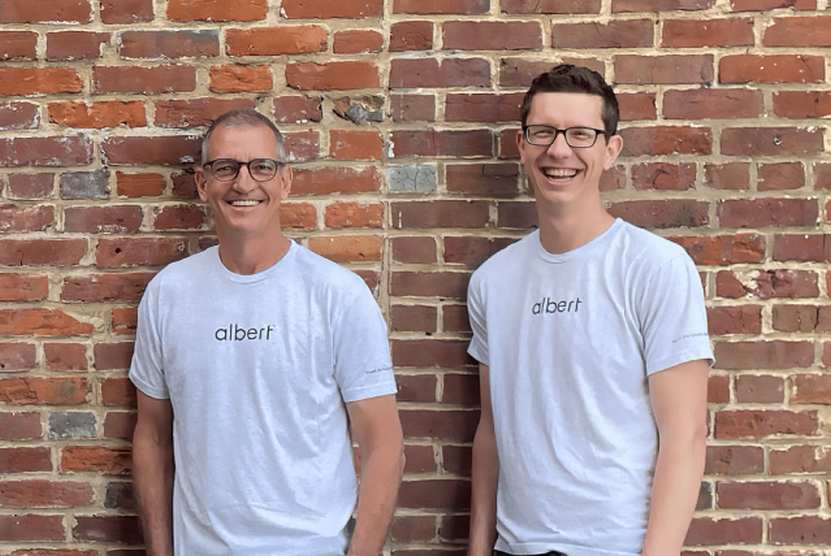
Oakland-based Albert raised $55 million in Series B funding led by TCV. New investors included Delta-v Capital, Socium Ventures, HighSage Ventures, Coral Capital, and Legion VC, while existing investors Coatue, J.P. Morgan Growth Equity, Index Ventures, and Applied Ventures also participated.
Albert develops software and AI tools for scientists working on chemical formulations and materials. These are used in products ranging from paints and adhesives to industrial materials and consumer goods.
Many research teams still store experiments in documents, spreadsheets, and disconnected databases, making it difficult to reuse past results or identify alternatives when ingredients become unavailable. Albert aims to make that accumulated research searchable and useful when designing new formulations.
The investment bets that industry-specific AI systems can outperform general-purpose assistants by combining specialized scientific data, laboratory workflows, and domain knowledge.
Forbes reported that the new round valued Albert at approximately $340 million, citing a person familiar with the transaction. The company did not publicly confirm that figure.
Funding details
- Startup: Albert (Albert Invent)
- Investors: TCV, Delta-v Capital, Socium Ventures, HighSage Ventures, Coral Capital, Legion VC, Coatue, J.P. Morgan Growth Equity, and others
- Amount raised: $55 million
- Total raised: Not disclosed in the funding announcement
- Funding stage: Series B
- Funding date: October 13, 2026
- Headquarters: Oakland, California, United States
- Sector: AI for scientific research, materials science, enterprise software
- Valuation: Approximately $340 million, reported by Forbes but not company-confirmed
Pluto Security raises approximately $34 million Series A to protect companies from employee-built AI tools
Israeli cybersecurity startup Pluto Security emerged from stealth on October 13, announcing approximately $42 million in cumulative financing, including a newly disclosed Series A of roughly $34 million led by Jump Capital.
Other backers include Skinos Ventures, Ansa Capital, and investors associated with the Israeli cybersecurity industry. TLV Partners led its earlier $8.5 million seed round.
Pluto focuses on a security problem created by the rapid adoption of AI tools inside companies. Employees are building custom applications, installing browser extensions, connecting AI agents to business systems, and creating automations that security teams may not know exist.
The startup’s software helps organizations identify those applications, assess their access to sensitive information, and monitor security exposure without blocking every new tool.
Pluto says it has already exceeded $2 million in annual recurring revenue and signed more than 30 enterprise customers. Those figures are company-reported, but they suggest real demand for products that help security teams manage AI adoption outside traditional IT approval processes.
Funding details
- Startup: Pluto Security
- Investors: Jump Capital, Skinos Ventures, Ansa Capital, TLV Partners (earlier seed), and others
- Amount raised: Approximately $34 million in the latest Series A
- Total raised: Approximately $42 million
- Funding stage: Series A
- Funding announcement date: October 13, 2026
- Headquarters: Israel, with U.S. market operations
- Sector: Cybersecurity, enterprise AI security
- Valuation: Not disclosed
Yundie Technology raises several hundred million yuan to scale AI-powered service robots
Guangzhou-based Yundie Technology announced a series of B+ financings totaling several hundred million yuan, with investors including StellarS Capital, Asia Allied Infrastructure, and Changzhe Investment.
Founded in 2019, Yundie develops embodied AI systems that help robots perform work in hotels, commercial properties, healthcare facilities, and other service environments.
Its technology connects robots with the surrounding infrastructure, including elevators, access systems, cameras, and business software. Rather than expecting a robot to operate independently in every situation, Yundie integrates the machine into a coordinated operating environment.
That distinction is commercially important. Robots working in public buildings must handle practical problems such as accessing elevators, completing deliveries, and recovering from interrupted tasks. Reliable execution can matter more to customers than impressive demonstrations.
Yundie is also pursuing a robotics-as-a-service model that combines machines, deployment, and ongoing support. The company says it has served thousands of government and enterprise customers and achieved sustained profitability, although those operating claims have not been independently verified.
Funding details
- Startup: Yundie Technology (云蝶科技)
- Investors: StellarS Capital, Asia Allied Infrastructure, Changzhe Investment, and others
- Amount raised: Several hundred million Chinese yuan across a series of B+ financings; exact amount undisclosed
- Total raised: Not disclosed
- Funding stage: Series B+ financings
- Funding announcement date: October 14, 2026
- Headquarters: Guangzhou, China
- Sector: Embodied AI, service robotics, robotics-as-a-service
- Valuation: Not disclosed
Allara raises $30 million to expand virtual healthcare for women
New York-based Allara raised $30 million in new funding, bringing its total capital raised to $75 million. Existing investors Index Ventures and GV increased their commitments, while new investors included Camino Partners, Foreground Capital, and Family Fund.
Allara provides virtual healthcare for women experiencing hormonal, metabolic, and reproductive conditions. Its approach combines access to medical professionals with ongoing care rather than relying on isolated appointments.
The company says it has served more than 120,000 women. It plans to invest the new funding in expanding access, enterprise partnerships, research, and AI-supported care workflows.
Allara’s investment case differs from that of a typical AI software startup. Success depends on earning patient trust, coordinating clinicians, working within insurance systems, and demonstrating meaningful improvements in care.
The round also suggests that investors see opportunities in specialized healthcare providers that combine technology with longitudinal patient relationships. Those relationships can support recurring care, but maintaining quality and controlling service costs remain important challenges.
Funding details
- Startup: Allara
- Investors: Index Ventures, GV, Camino Partners, Foreground Capital, Family Fund, and others
- Amount raised: $30 million
- Total raised: $75 million
- Funding stage: Venture financing; specific stage not disclosed
- Funding date: October 13, 2026
- Headquarters: New York, United States
- Sector: Women’s health, digital healthcare
- Valuation: Not disclosed
Brellium raises $23 million to automate healthcare documentation audits
New York-based Brellium raised $23 million in venture financing backed by Left Lane Capital, First Round Capital, and Digital Health Venture Partners.
Brellium develops AI software that reviews clinical documentation to identify potential compliance issues, missing information, and billing inaccuracies. Healthcare organizations must ensure that patient records support their claims, but manually reviewing large volumes of documentation is expensive and time-consuming.
The company’s software aims to identify problems before claims are submitted or regulatory audits expose errors. It has initially focused on areas including mental health and hospice care and plans to expand into primary care and additional medical specialties.
The financing highlights an emerging opportunity for AI in healthcare administration. Unlike a general-purpose chatbot, Brellium addresses a specific financial and regulatory workflow where errors can lead to rejected claims, lost revenue, or compliance exposure.
Its commercial prospects will depend on accuracy, integration with existing clinical systems, and whether automated audits produce measurable savings without generating excessive false positives.
Funding details
- Startup: Brellium
- Investors: Left Lane Capital, First Round Capital, Digital Health Venture Partners
- Amount raised: $23 million
- Total raised: Approximately $39.7 million
- Funding stage: Venture financing; specific new-round stage not confirmed
- Funding date: October 13, 2026
- Headquarters: New York, United States
- Sector: Healthcare AI, compliance, revenue cycle management
- Valuation: Not disclosed
Mogul raises $15.5 million Series A to expand AI-driven real estate investing
Washington, D.C.-based Mogul closed a $15.5 million Series A led by Draper Associates, exceeding its original $10 million fundraising target.
The company operates a platform that lets investors buy fractional interests in residential rental properties. It uses AI to assist with property sourcing, underwriting, performance analysis, and ongoing portfolio management.
Mogul says it is already cash-flow positive and manages more than 150 properties with a relatively small supply-focused team. The company plans to use its new capital to expand its property portfolio, develop additional AI capabilities, and increase its operational capacity.
The investment reflects interest in using software to improve the economics of traditionally labor-intensive financial services businesses.
However, automated real estate investing comes with risks that AI cannot eliminate. Property values, tenant demand, local regulations, maintenance costs, and investment liquidity remain fundamental drivers of performance.
Mogul reported a company valuation of $126 million following the financing, bringing total funding to more than $23.6 million.
Funding details
- Startup: Mogul
- Investors: Draper Associates, Draper Dragon, Avalanche Blizzard Fund, LAUNCH, Gaingels, Stephen Sullivan, Alex Jovanovich, and others
- Amount raised: $15.5 million
- Total raised: More than $23.6 million
- Funding stage: Series A
- Funding date: October 13, 2026
- Headquarters: Washington, D.C., United States
- Sector: Real estate technology, fintech, AI
- Valuation: $126 million, company-reported
Readily raises $11 million Series A to help healthcare organizations manage regulatory compliance
San Francisco-based Readily raised $11 million in Series A funding led by Define Ventures, with participation from Y Combinator and the California Health Care Foundation Innovation Fund.
Readily develops AI software that helps healthcare organizations identify regulatory changes, determine which internal policies are affected, assign responsibilities, and prepare audit evidence.
For health plans and other regulated organizations, compliance often requires employees to compare new rules against internal documents, coordinate changes across departments, and maintain records proving those changes were implemented.
Readily aims to connect these tasks into one system, giving managers better visibility into whether regulatory obligations have actually been addressed.
Define Ventures says the company already works with healthcare organizations serving more than 25 million Americans across 46 states. These figures are investor-reported and describe the populations served by customer organizations, rather than direct users of Readily.
The investment illustrates another promising direction for enterprise AI: products designed around specialized, recurring business processes where accuracy and accountability matter more than generating content quickly.
Funding details
- Startup: Readily
- Investors: Define Ventures, Y Combinator, California Health Care Foundation Innovation Fund
- Amount raised: $11 million
- Total raised: Not disclosed
- Funding stage: Series A
- Funding date: October 13, 2026
- Headquarters: San Francisco, California, United States
- Sector: Healthcare compliance, enterprise AI software
- Valuation: Not disclosed
What Today’s Funding Activity Reveals
The day’s largest transactions show that venture capital remains willing to commit substantial amounts to businesses whose technologies require significant development spending. ICON and Soufflé Therapeutics alone raised $335 million, an unusually high concentration among the selected dollar-denominated rounds.
The next pattern is the shift toward AI systems developed for particular industries. Albert’s chemistry software, Pluto’s security platform, and Readily’s healthcare compliance tools are all examples of companies targeting specific business processes instead of competing directly with general-purpose foundation models.
Healthcare is particularly prominent. Soufflé Therapeutics, Allara, Brellium, and Readily collectively raised $199 million. These four companies serve different parts of the healthcare system, from drug development and patient care to documentation and regulatory oversight. Their common characteristic is that they address problems with measurable medical, financial, or administrative consequences.
China’s funding activity reflects a different emphasis. SUNMMIO is pursuing semiconductor architecture that could lower the cost of AI inference, while Yundie is focusing on reliable real-world deployment of service robots. In both cases, the commercialization challenge extends beyond model quality to hardware economics, manufacturing, systems integration, and repeatable performance.
Together, the selected transactions suggest a startup market in which competitive advantage increasingly depends on combining AI with specialized expertise, physical infrastructure, proprietary workflows, or established customer relationships.
Startup Funding Table: October 14, 2026
| Startup | Amount raised | Sector | Funding stage | Lead/key investors | Country |
|---|---|---|---|---|---|
| ICON | $200M | Construction robotics | Series D | Baillie Gifford, BlackRock-managed funds | U.S. |
| Soufflé Therapeutics | $135M | RNA therapeutics | Series B | Juvia Group, TCGX, BB Biotech | U.S. |
| SUNMMIO | Undisclosed; nearly RMB 2B cumulative over past year | AI semiconductors | Pre-A2 and A | Yizhuang State-Owned Capital Investment, government-backed funds | China |
| Albert | $55M | Chemistry AI | Series B | TCV, Coatue, Index Ventures | U.S. |
| Pluto Security | ~$34M | AI cybersecurity | Series A | Jump Capital, Skinos Ventures, Ansa Capital | Israel |
| Yundie Technology | Several hundred million RMB | Embodied AI, robotics | B+ financings | StellarS Capital, Asia Allied Infrastructure | China |
| Allara | $30M | Digital healthcare | Undisclosed | Index Ventures, GV, Camino Partners | U.S. |
| Brellium | $23M | Healthcare AI | Undisclosed | Left Lane Capital, First Round Capital | U.S. |
| Mogul | $15.5M | Real estate fintech | Series A | Draper Associates | U.S. |
| Readily | $11M | Healthcare compliance AI | Series A | Define Ventures, Y Combinator | U.S. |
Source: Company announcements, investor disclosures, and original reporting published within the selected reporting window. Totals exclude previously announced financing and amounts that cannot be reliably assigned to the new rounds. Chinese yuan amounts are not converted into the U.S. dollar subtotal.
Strategic Takeaways for Founders and Investors
1. AI companies with deep industry expertise are gaining investor attention.
Albert, Brellium, and Readily illustrate a common approach: applying AI to specialized work where businesses already face substantial costs. Founders pursuing these markets may be better positioned when they have access to proprietary data, established customer relationships, or expertise that general-purpose AI products cannot easily reproduce.
2. Physical AI requires more than impressive technology demonstrations.
ICON, SUNMMIO, and Yundie are pursuing businesses where commercial success depends on manufacturing, reliability, deployment economics, and real-world performance. Investors should evaluate technical progress alongside operating costs and customer adoption.
3. Healthcare AI is expanding beyond clinical documentation.
Allara, Brellium, and Readily are using technology across patient services, financial administration, and compliance. These areas may provide attractive commercial opportunities because demand is linked to existing operational requirements rather than discretionary experimentation.
4. The growth of AI creates demand for supporting businesses.
Pluto Security provides an example of a second-order investment opportunity. As companies introduce AI applications and agents, they create new cybersecurity exposure. Similar opportunities may emerge in governance, observability, auditing, and other functions required to operate AI systems safely.
5. Large rounds still dominate the capital picture.
ICON and Soufflé Therapeutics account for approximately two-thirds of the precisely disclosed dollar funding among today’s selections. That concentration reminds us that one or two large transactions can heavily influence daily startup funding totals. A strong funding day for selected companies does not automatically indicate that financing conditions have improved across the entire startup market.
Conclusion
Today’s venture capital activity tells a story that extends beyond artificial intelligence models and software.
Investors are committing capital to robotic construction, specialized processors, new medicines, scientific research platforms, and technology that makes complex healthcare and enterprise systems more manageable.
The most revealing pattern is the growing importance of real-world execution. A construction robot must build economically. An AI chip must deliver competitive performance at scale. A healthcare application must improve outcomes or reduce costs. And enterprise AI software must solve problems customers consider worth paying to fix.
The next phase of startup competition may be defined less by who can demonstrate the most advanced technology and more by who can turn that technology into a reliable, commercially valuable product.