Germany’s Solar Sleeping Pods Are Helping Homeless People Survive Freezing Winter Nights
 Daniel Levi
Posted On October 12, 2026
Five years after TechStartups first reported on Germany’s futuristic, coffin-like sleeping pods for homeless people, the solar-powered shelters are still helping vulnerable residents survive freezing winter nights. What began as an unusual experiment in the city of Ulm has become a recurring winter assistance program, with redesigned sleeping pods offering greater comfort, privacy, and a direct connection to social workers.
In our original January 2021 report, we introduced readers to the Ulmer Nest, an insulated sleeping capsule equipped with solar panels, ventilation, and sensors. The shelters drew attention for their futuristic, coffin-like appearance, but the idea behind them was simple: give people sleeping on the streets somewhere safer to spend dangerously cold nights.
Now, five years later, the project is still going.
According to an official announcement from the City of Ulm, two Ulmer Nest sleeping pods returned to service on November 10, 2025, at Karlsplatz and the Old Cemetery. The shelters were available to people who could not, or did not want to, stay in conventional overnight accommodation.
The city confirmed on January 23, 2026, that the pods remained available as part of its efforts to protect homeless residents from freezing temperatures.
How Germany’s solar-powered sleeping pods work
At first glance, the Ulmer Nest looks like something out of a science fiction movie. But beneath its unusual appearance is a practical combination of insulation, solar energy, ventilation, and technology that connects people with assistance.
The original capsules were constructed from wood and powder-coated steel, with insulated interiors and systems that circulated fresh air. Solar panels helped supply electricity for onboard equipment, reducing dependence on external electrical connections.
The technology serves a purpose beyond keeping the shelters operational.
When someone enters a pod and locks it from the inside, sensors detect occupancy. The system sends a notification to Caritas Ulm/Alb-Donau, a local social services organization.
The following morning, a Caritas worker visits the shelter to check on the occupant, offer assistance, and explain available services, including counseling, daytime facilities, and conventional overnight accommodation.
According to the city, workers may also bring the person a cup of tea.
It’s a small detail, but it reflects something important about the project. The shelters are intended to provide immediate protection and help people connect with organizations that can offer longer-term assistance.
From coffin-like capsules to larger, more comfortable shelters
The Ulmer Nest has changed considerably since its early days.
Ulm introduced the first versions in 2019, drawing international attention for their narrow, futuristic design. But the original capsules proved too cramped for practical use.

Sleeping Capsule (2021 version)
In 2021, Ulm introduced redesigned shelters with improved functionality.
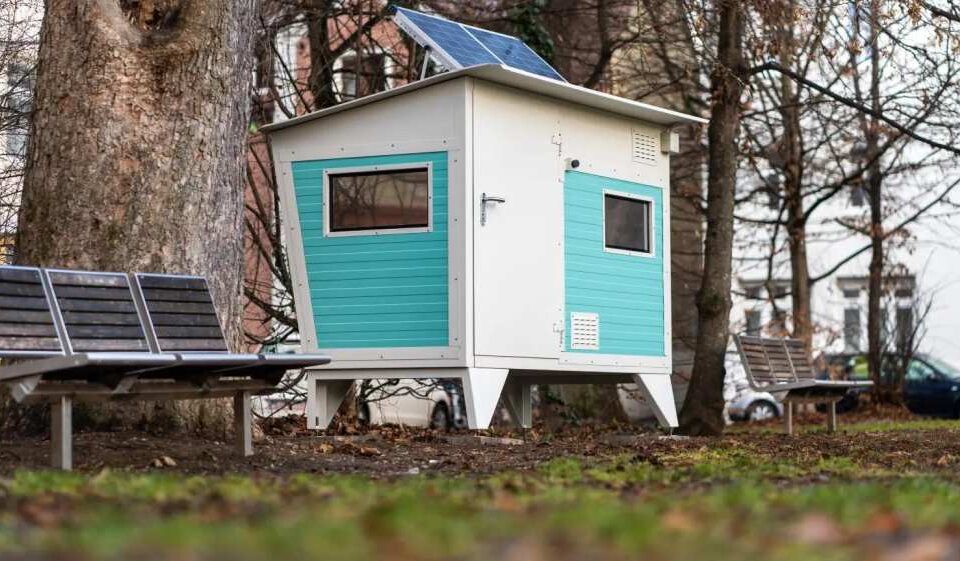
According to German public broadcaster SWR, the original coffin-shaped structures were replaced by larger white-and-turquoise units with proper doors, interior locks, and solar roofs.
The newer shelters offer greater privacy and enough room for one or two people.
Another feature makes them particularly useful: occupants can bring their dogs.
For some homeless people, leaving a pet behind is a major reason for avoiding traditional shelters. Ulm’s sleeping pods offer an alternative that lets people stay with their animals.
The shelters are intended for people who might otherwise spend the night outdoors, including those who feel uncomfortable sleeping in shared accommodations.
Five years later, the sleeping pods are still in use
The project’s continued operation is perhaps its most significant development.
In its November 2025 announcement, the City of Ulm said the redesigned sleeping pods introduced in 2021 had proved useful and would return for another winter season.
The city described the shelters as an additional part of its existing homelessness assistance program, which includes emergency accommodation, daytime support facilities, and a mobile cold-weather outreach service.
The pods are deployed during colder months and removed for storage when winter ends.
Local social service providers, including Caritas and the German Red Cross, coordinate their return. A local company, BARZ, supports shelter cleaning through donations.
In January 2026, as freezing conditions continued, Ulm again highlighted the shelters at Karlsplatz and the Old Cemetery among its available cold-weather protection measures.
The city confirmed that a mobile outreach bus was distributing warm drinks, soup, blankets, and sleeping bags to people living on the streets. An old postal facility near the railway station was available as additional overnight accommodation during subzero temperatures.
The sleeping pods remain one part of that broader effort.
A small shelter cannot solve homelessness, but it can save someone from the cold
The Ulmer Nest project highlights a problem that technology alone cannot fix.
Emergency sleeping pods cannot replace permanent housing, social support, or conventional shelters. Their small size limits how many people they can accommodate, and Ulm has deployed only two units at established locations.
No publicly available figure shows how many lives the pods have saved or whether the concept can be deployed economically across entire cities.

Still, the project’s continued use offers a practical example of how relatively modest technology can help address an immediate human need.
Instead of relying on complex infrastructure, the shelters combine basic physical protection with solar-powered equipment and a notification system that alerts outreach workers when someone needs assistance.
The result is a temporary refuge that can offer privacy, protection from the weather, and a potential connection to longer-term support.
Five years after their coffin-like appearance first made headlines, Germany’s solar sleeping pods still serve the purpose that inspired their creation: giving people with nowhere else to go a safer place to spend the night.