Real Motors: Pioneering Future Machines™ and the Next Era of Manufacturing
 Nickie Louise
Posted On November 5, 2026
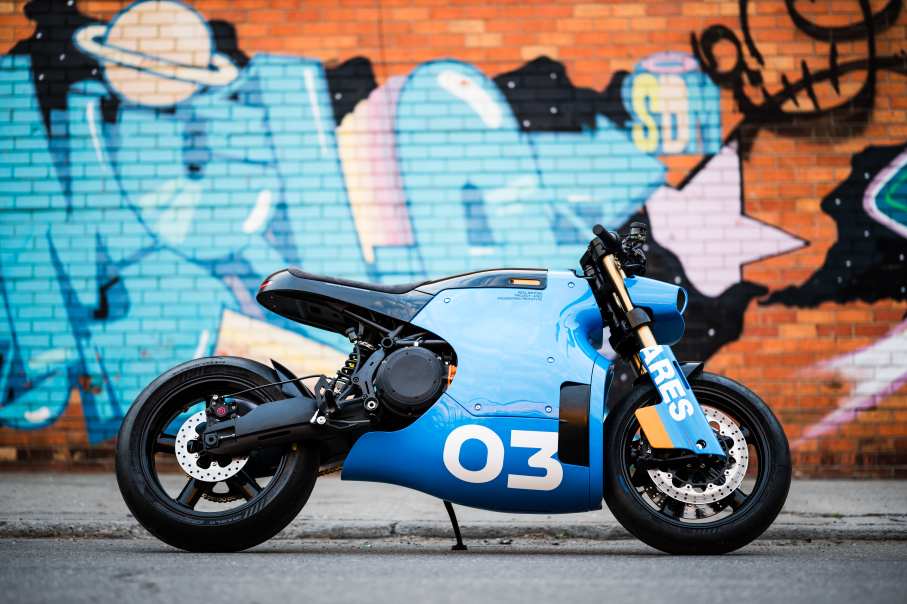
Founded by engineers Trent Dingman and Michael Feng, who bonded over science fiction while developing lawn-mower technology, they decided to push the limits of machines in general. Together, they formed Real Motors in 2022. The Greenville, South Carolina startup is focused on building Future Machines with an atelier approach to design and manufacturing, delivering its first initiative, Project : ARES, a futuristic electric motorcycle.
Recently, the company appointed former LiveWire chief technology officer Vance Strader as its first CTO. His mission is to turn Project : ARES, a retro-futuristic electric motorcycle inspired by science fiction, from a prototype into a production vehicle.
The appointment comes as Real Motors prepares a limited run of 250 motorcycles priced at $20,000 each. The company is accepting reservations with a fully refundable $500 deposit.
But there’s a bigger ambition behind the motorcycle. Real Motors wants to rethink how complex physical products are conceived, engineered, and manufactured, starting with a machine that looks like something pulled from a science-fiction film.
From Lawn Mowers to Future Machines
The story began at Techtronic Industries, where mechanical engineers Trent Dingman and Michael Feng worked on next-generation outdoor equipment.
Their engineering work contributed to inventions and patents covering mower blades, deck-mounting systems, and removable seating, according to materials the company provided. Outside their day-to-day assignments, the two discovered a shared fascination with science fiction and futuristic machines.
Dingman spent eight years at Techtronic Industries developing electric riding equipment for brands including Ryobi and HART. A mechanical engineer and former Division I rugby player, he later co-founded Makeit Inc. His engineering and entrepreneurial experience proved useful when he helped build the team behind Real Motors.
Feng brought a different perspective, combining engineering and design with graduate training in automotive engineering and economics from Clemson University. Originally from China, he shares Dingman’s fascination with science fiction and the possibility of turning fictional machines into physical products.
In 2022, they founded Real Motors around an idea they call Future Machines™, a series of mechanical projects exploring the relationship between technology, design, and human experience.
Their first project, ARES, takes inspiration from classic café-racer motorcycles and science-fiction aesthetics. Feng is a co-inventor on the U.S. design patent for Project : ARES. The company describes its design philosophy as “Electric Analogue,” an attempt to preserve the physical and emotional experience of riding in an increasingly digital vehicle industry.
“The machines of the future shouldn’t simply be smarter or more efficient. They should be objects of desire. We think of Project: ARES less as transportation and more as personal expression—the road becomes the runway, and the machine becomes a bold statement to be seen and experienced,” Feng said.
For Dingman, the project reflects a broader belief that engineers should actively shape the future rather than wait for it to arrive.
“The future isn’t something we should wait for. It’s something we should engineer. We’re entering an era where mobility moves beyond transportation and machines become more intelligent, adaptable, and personal. At Real Motors, we’re engineering for that future, not simply imagining the next vehicle, but rethinking what a machine can be.”
Why Real Motors Recruited a Harley-Davidson Veteran
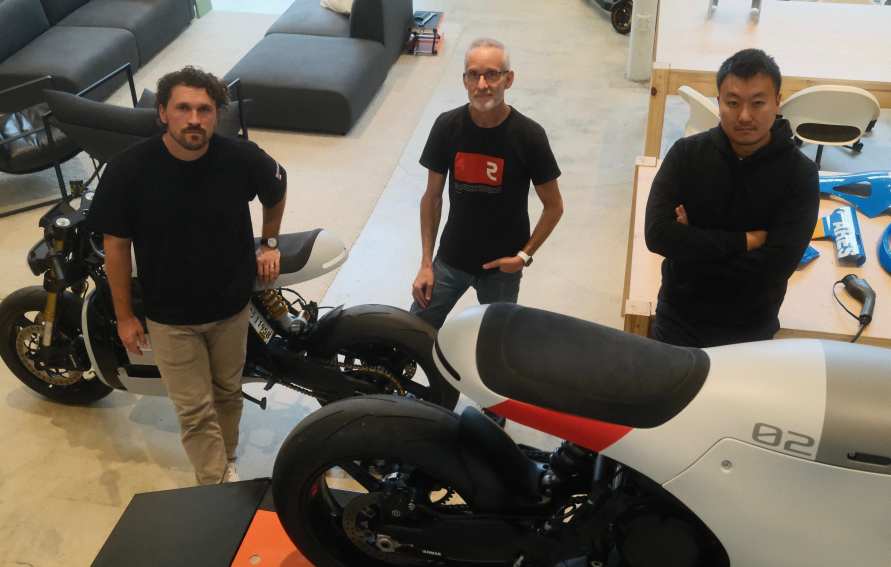
Trent Dingman, Vance Strader, Michael Feng at Real Motors Headquarters, Greenville, South Carolina.
Turning a striking prototype into a motorcycle customers can actually buy presents a different set of engineering problems.
That’s where Strader comes in.
Before joining Real Motors, Strader served as CTO of LiveWire and held engineering leadership roles at Harley-Davidson. He worked on Harley-Davidson’s electric motorcycle program through the launch of the first LiveWire motorcycle in 2019. Earlier in his career, he worked at Buell Motorcycles.
Strader’s connection to motorcycles began at age nine, when he started riding dirt bikes. He later logged approximately 45,000 miles on a 1989 Suzuki Katana 600, which served as his only transportation for four years.
At Real Motors, Strader will oversee the transition from prototype to repeatable production, including component designs, manufacturing processes, supplier relationships, engineering tolerances, and quality systems.
His experience addresses one of the hardest problems facing hardware startups: building an exciting prototype is one thing; producing hundreds of consistent, reliable machines is another.
“Our mission goes beyond crafting an exceptional motorbike; we are assembling a dedicated group united by engineering excellence and an intuitive grasp of rider desires,” stated Trent Dingman, co-founder and head of operations and communications at Real Motors. “Vance adds deep motorcycle development expertise to our lineup. We are thrilled to welcome him as we transition ARES into production and continue our broader quest to construct machines imbued with spirit.”
“A future machine isn’t defined by a spec sheet. It’s the total experience: how it’s engineered, how it’s designed, how it feels and how you connect with it,” said Strader. “Technology matters, but the real breakthrough is when all of those elements come together to create something people genuinely desire to ride.”
Inside Project ARES: A $20,000 Electric Neo Café Racer
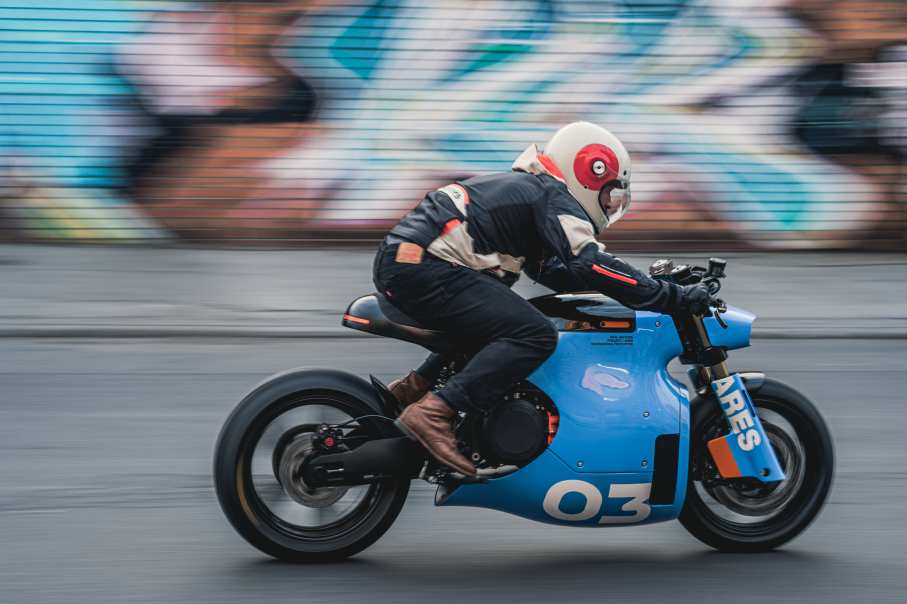
The first production-oriented version, Project ARES Lot 01, combines a 65-kW permanent-magnet synchronous motor drive with a 13.4-kWh nickel-cobalt-manganese battery.
According to Real Motors’ published specifications, ARES Lot 01 has a claimed top speed of 110 mph and an estimated weight of 474 pounds. The company has confirmed that it is targeting early 2027 for North American deliveries.
The design draws from traditional café racers but replaces the familiar combustion-engine layout with a distinctly futuristic electric architecture.
Real Motors plans to limit Lot 01 to 250 units, with reservations currently open.
The company has not provided independently verified real-world range, charging performance, or acceleration figures in the supplied announcement. Those details will matter as ARES moves closer to production and potential buyers compare it with established electric motorcycles.
ARES is scheduled to appear at the Barber Vintage Festival in Alabama from October 9 to 11. In November, Real Motors plans to make its first international appearance at EICMA in Milan, Italy, one of the world’s largest motorcycle exhibitions.
Manufacto: A New Approach to Manufacturing
Real Motors’ ambitions extend beyond electric motorcycles.
The company is developing an engineering and manufacturing approach called Manufacto, which brings research, prototyping, and production into a single environment.
The concept combines AI, robotics, additive manufacturing, and new production techniques to reduce the cost and difficulty of building sophisticated physical products.
Rather than relying exclusively on conventional large-scale factory models, Real Motors wants engineers to have greater flexibility to experiment, develop, and manufacture new machines.
“Engineering begins with imagination,” said Michael Feng, Real Motors co-founder and design engineer. “Manufacto closes the distance between what we can imagine and what we can make real. ARES is our first expression of that freedom.”
For now, Manufacto remains an ambitious manufacturing vision, with ARES serving as its first practical test. Real Motors has not disclosed production volumes beyond the initial limited edition or demonstrated the cost advantages of its manufacturing approach at commercial scale.
The challenge ahead is turning that vision into repeatable manufacturing without sacrificing the craftsmanship and rider experience that define the motorcycle.
The company is also seeking additional investment heading into 2027 as it works to bring Project : ARES into production and advance its broader manufacturing ambitions.
For a company that began with two engineers discussing science fiction while developing lawn mowers, the ambition has grown considerably.
ARES may be the first machine Real Motors brings to market, but the company sees it as the beginning of a much larger experiment: whether a small engineering team can build the kinds of machines that once existed only in fiction