Startup Funding News Today, October 5, 2026: OneByZero, Pandektes, Fleuret AI & More
 Nickie Louise
Posted On October 5, 2026

Monday’s startup funding activity is light in volume but surprisingly consistent in theme, with fresh capital flowing into companies tackling difficult, high-friction problems across enterprise AI, legal research, cybersecurity, senior healthcare, and cell therapy.
Leading today’s deals is OneByZero with a $20 million Series A, followed by Pandektes’ €13.5 million Series A, At Home Harmony’s $5 million raise, Fleuret AI’s €4 million pre-seed, and Celaid Therapeutics’ ¥400 million second close of its Series B.
Rather than signaling a broad surge in venture activity, today’s funding points to something more focused: investors are continuing to back startups applying technology to complex, costly problems where better software, automation, or scientific breakthroughs can deliver measurable value.
The five companies disclosed $25 million in U.S.-dollar rounds, €17.5 million in euro-denominated funding, and ¥400 million ($2.6 million) in Japan. Three of the five are directly AI-native, but none is training a frontier model. Instead, investors are backing the layers that make AI useful inside real organizations: deployment, governance, proprietary data, domain-specific workflows, and systems that can act rather than merely answer questions. No company in today’s selected group disclosed a new valuation.
The geography is unusually balanced for such a small sample. The five companies come from Singapore, Denmark, the United States, France, and Japan, with no country appearing twice. That breadth should not be interpreted as a sudden redistribution of global venture capital. An early Monday reporting cutoff naturally captures a full Asian and European business morning before much of the U.S. startup announcement cycle has begun.
The freshness filter removed several much larger deals still resurfacing in Monday feeds. SiMa.ai’s $150 million Series C was originally announced on September 28, while Volantis’ $88 million financing and EBO’s latest investment were announced on October 1. They are not being recycled into today’s report simply because new articles appeared around them. That distinction matters on a light Monday: publication activity can make the venture market look busier than the underlying announcement flow actually is.
The Macro Environment: Capital Follows Context, Control, and Regulatory Friction
Today’s AI rounds share a common characteristic: the model itself is not the primary asset.
OneByZero is embedding AI inside existing enterprise systems and governing what agents are allowed to do. Pandektes is building the structured legal-data layer that lawyers — and eventually other legal AI products — can query. Fleuret AI is moving penetration testing from periodic audits toward continuously operating offensive-security agents. In all three cases, customers could theoretically access similar foundation models elsewhere. The harder part is connecting those models to proprietary information, permissions, regulatory requirements, institutional workflows, and real operating systems.
That is increasingly where investors appear to see defensibility. AI capabilities available through APIs can improve quickly while simultaneously becoming cheaper and more interchangeable. Enterprise context does not commoditize as easily. A bank’s internal processes, a law firm’s trusted source hierarchy, or a company’s live attack surface has to be gathered, integrated, governed, and continuously updated.
OneByZero also lands against a useful regional backdrop. Technology companies in Southeast Asia raised $13.5 billion during the first nine months of 2026, up 176% from a year earlier, according to Tracxn data reported Monday. But the headline disguises extraordinary concentration: just three mega-rounds supplied $7.3 billion, or 54% of all regional funding, while the total number of rounds fell 28% to 189. Series A and B companies raised $3 billion across 80 deals, while seed and angel funding totaled only $270 million across 90 rounds. Singapore accounted for $12.4 billion, or 94% of the region’s capital.
That makes OneByZero’s $20 million Series A more interesting than the regional growth figure alone suggests. Southeast Asian venture capital may be booming in aggregate, but a handful of giant infrastructure and AI financings are driving much of that boom. A meaningful Series A still requires investors to make a much more specific judgment about product adoption and execution.
The two healthcare deals operate on a different clock. At Home Harmony is tying capital deployment to Medicare reimbursement and an operating network that already treats seniors in their homes. Celaid is tying financing to manufacturing, FDA preparation, and the transition of a stem-cell therapy from preclinical work toward human trials. Neither investment thesis can be reduced to software growth. Regulation, clinical evidence, reimbursement, physical service delivery, and scientific milestones determine whether capital creates value.
OneByZero raises $20M to move enterprise AI from pilots into production
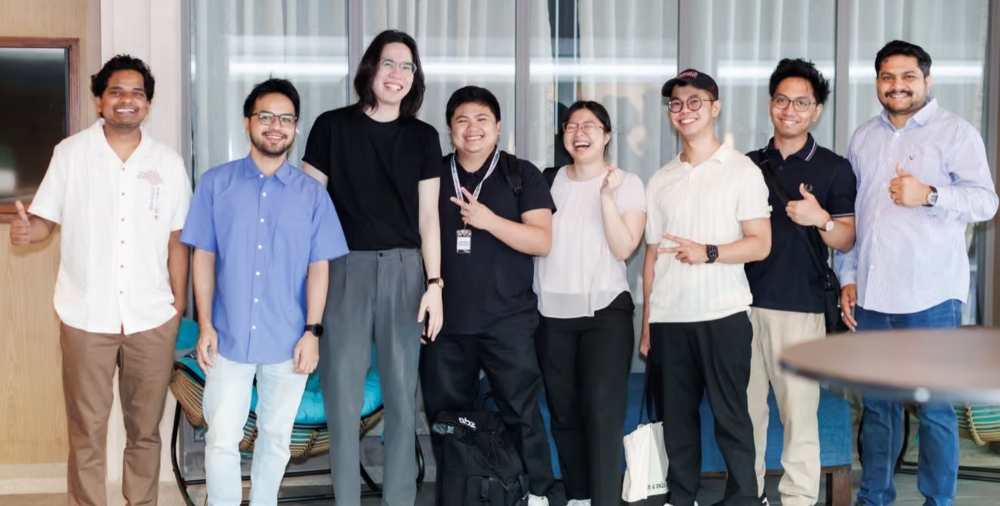
Singapore-based OneByZero raised $20 million in Series A funding led by Jungle Ventures, marking the company’s first external financing. The startup plans to use the money to expand its engineering teams across nine existing markets, establish a presence in Japan, enter healthcare and the public sector, and continue developing its NEO platform and AI Coworkers.
OneByZero takes a more hands-on approach than companies selling a standalone AI application. Its engineers work directly with customers to identify business processes where AI can be deployed, connect those systems to existing technology, and improve them after launch. The company currently operates across Australia, India, Indonesia, Malaysia, the Philippines, Singapore, Thailand, the United States, and Vietnam, with customers concentrated in financial services, telecom, and retail.
NEO acts as the control layer around those deployments. Enterprises can assign roles to AI agents, define what they may do, connect them with company systems, and maintain records of agent activity. That governance layer becomes increasingly important as enterprise AI moves from generating text to executing actions.
OneByZero says revenue has more than doubled each year for the past three years. It also claims that some deployments automate more than 90% of customer interactions and that certain data-modernization projects have been completed 50% faster. Those figures are company-reported, but Jungle Ventures is effectively betting that OneByZero has already crossed one of enterprise AI’s harder barriers: moving customers from experiments into production.
The competitive question is whether the forward-deployed model scales efficiently. Putting engineers close to customers can produce deeper integrations and high switching costs, but it is also more labor-intensive than selling pure SaaS. The prize is a richer operating history inside customer workflows — data that can make future deployments faster and harder for a generic AI vendor to replicate.
Funding Details
Startup: OneByZero
Investors: Jungle Ventures led the round; additional participants were not disclosed
Amount Raised: $20 million
Total Raised: $20 million disclosed; this is the company’s first external financing
Funding Stage: Series A
Funding Date: October 5, 2026
Headquarters: Singapore
Sector: Enterprise AI / AI agents/deployment infrastructure
Valuation: Not disclosed
Pandektes raises €13.5M to build the legal data layer beneath AI research
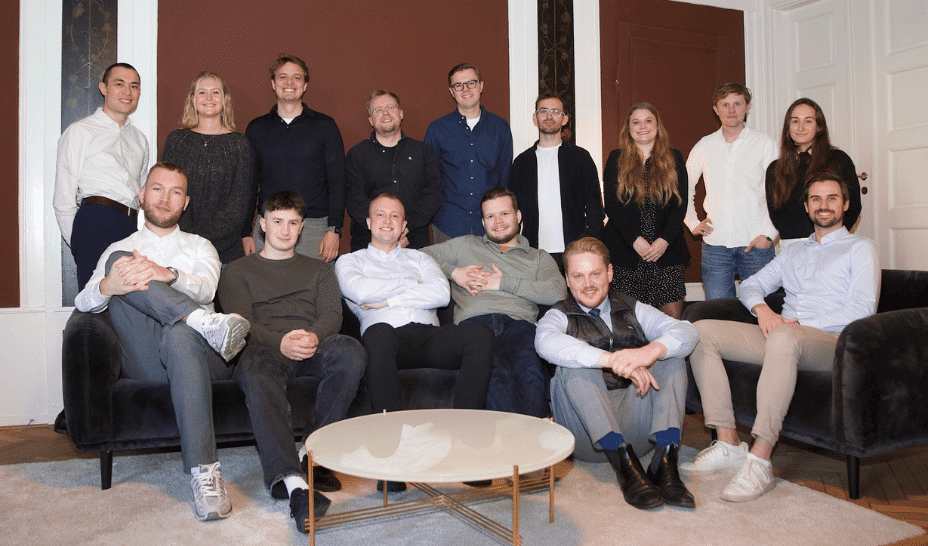
Copenhagen-based Pandektes raised €13.5 million in Series A funding led by Alstin Capital, with PROfounders, Scale Capital, and existing investors joining the round. The financing follows a €2.9 million Seed round announced last year. EU-Startups
Pandektes attacks one of legal AI’s less glamorous but more important problems: the underlying information is fragmented. Legislation, court decisions, administrative rulings, preparatory works, and firm-specific documents sit across thousands of repositories and jurisdictions. Pandektes continuously collects and structures that material so lawyers can search it and verify AI-generated answers against the underlying sources.
That puts the company in competition with entrenched legal research providers including LexisNexis, Westlaw, Beck, and Karnov. Pandektes says more than 500 law firms, enterprises, and public institutions now use its platform across Denmark, Germany, and Switzerland. It reports sixfold revenue growth over the past year and says roughly two-thirds of organizations that trial the product become paying customers. Those figures come from the company and have not been independently audited.
The more interesting strategy is what comes next. Pandektes plans to expose more of its infrastructure through an API, allowing other legal software companies and AI agents to consume its structured legal data.
That could move Pandektes from another legal AI application to infrastructure underneath applications. If dozens of legal assistants eventually compete on interface, workflow, or model quality, the company supplying reliable cross-border legal data to several of them could occupy a more durable position. The hard part is maintaining accuracy and coverage across jurisdictions where missing or misinterpreting a source has significant consequences.
Funding Details
Startup: Pandektes
Investors: Alstin Capital, PROfounders, Scale Capital, existing investors
Amount Raised: €13.5 million
Total Raised: At least €16.4 million across its disclosed Seed and Series A rounds
Funding Stage: Series A
Funding Date: October 5, 2026
Headquarters: Copenhagen, Denmark
Sector: Legaltech / legal data infrastructure / AI
Valuation: Not disclosed
At Home Harmony raises $5M to scale home-based senior care through Medicare

Henrico, Virginia-based At Home Harmony closed a $5 million funding round backed by Ziegler Link-age Funds, Claritas Capital, Pisgah Fund, individual investors, and founder Will Saunders. The company plans to use the capital to launch a new Medicare Accountable Care Organization initiative and continue expanding its clinical team.
Founded in 2022, At Home Harmony delivers primary care, remote health monitoring, personal care, pain management, and related services directly to older adults in their homes. The company says it has served more than 6,000 patients and employs more than 200 full-time staff, including physicians, nurses, and dementia specialists. Its footprint includes central Virginia, Lynchburg, and Asheville, North Carolina.
The investment case is tied more closely to reimbursement than to software adoption. The Centers for Medicare and Medicaid Services selected At Home Harmony as one of roughly 80 organizations participating in a 10-year voluntary Accountable Care Organization initiative for fee-for-service beneficiaries beginning January 1. Under an ACO structure, providers can benefit financially when coordinated care improves outcomes while reducing unnecessary spending.
That creates both opportunity and risk. Home-based care can reduce hospital visits and make treatment easier for older patients with complex medical needs, but the model requires clinicians, scheduling, compliance, working capital, and regional operating density. Saunders said the company has already invested more than $20 million in building the care model; that figure should not be confused with venture funding raised.
For investors, the moat may come from something software startups often lack: a functioning care-delivery network tied directly into Medicare economics. If At Home Harmony can demonstrate lower total care costs while maintaining clinical quality, reimbursement itself can become a distribution engine.
Funding Details
Startup: At Home Harmony
Investors: Ziegler Link-age Funds, Claritas Capital, Pisgah Fund, individual investors, Will Saunders
Amount Raised: $5 million
Total Raised: Not disclosed on a fully reconciled basis
Funding Stage: Not disclosed
Funding Date: October 5, 2026
Headquarters: Henrico, Virginia, United States
Sector: Healthtech / home-based senior care / value-based care
Valuation: Not disclosed
Fleuret AI raises €4M to turn penetration testing into a continuous AI workflow
Paris-based Fleuret AI raised €4 million in pre-seed funding led by RAISE Ventures, with Auriga Cyber Ventures, Wind Capital, Better Angle, and cybersecurity executives and founders participating. The startup was founded in 2026 by Yanis Grigy and Augustin Ponsin and currently employs roughly 10 people.
Fleuret is applying AI agents to offensive cybersecurity. Its two agents, Emile and Champollion, map a customer’s environment, inspect applications, APIs, and infrastructure, identify vulnerabilities, and attempt to exploit them. The company says each finding includes proof that the weakness can actually be exploited, after which the system can monitor the attack surface, trigger new tests, and verify whether fixes work.
The distinction between finding a vulnerability and proving exploitability matters. Security teams are already overwhelmed by alerts. A system that tells them which weaknesses an attacker can actually use may be more valuable than one that simply finds more theoretical issues.
Fleuret already counts Brevo, Stoïk, and Yogosha among its customers and plans to use the financing to hire across AI, software engineering, and offensive security. The company is also explicitly positioning itself as a European security provider running on European infrastructure.
That sovereignty angle may matter almost as much as its agents. European companies facing NIS2 and other cybersecurity obligations increasingly need to demonstrate security controls, while sensitive organizations may prefer penetration-testing infrastructure that remains under European jurisdiction.
The harder question is trust. An AI system deliberately attempting to exploit customer infrastructure needs strict permissions, reliable boundaries, audit trails, and human oversight. The more autonomous offensive-security tools become, the more their control systems become part of the product.
Funding Details
Startup: Fleuret AI
Investors: RAISE Ventures, Auriga Cyber Ventures, Wind Capital, Better Angle, cybersecurity angel investors
Amount Raised: €4 million
Total Raised: €4 million disclosed
Funding Stage: Pre-seed
Funding Date: October 5, 2026
Headquarters: Paris, France
Sector: Cybersecurity / agentic AI/penetration testing
Valuation: Not disclosed
Celaid Therapeutics raises ¥400M to move stem-cell therapy toward U.S. clinical trials
Tokyo-based Celaid Therapeutics completed a ¥400 million, roughly $2.6 million, second close of its Series B, bringing in Shionogi and Teikoku Ventures as new investors. Celaid is developing CLD-001, an ex vivo-expanded hematopoietic stem-cell therapy for severe pediatric non-malignant diseases. The company uses frozen umbilical cord blood and proprietary technology intended to expand the limited quantity of blood-forming stem cells available from that source.
The financing follows several de-risking milestones. Celaid says it has generated positive nonclinical animal data, established the manufacturing process, transferred that process to a U.S. contract development and manufacturing organization, and completed a pre-IND meeting with the FDA. It is now preparing for an Investigational New Drug application and a first-in-human U.S. trial
The Series B structure requires some care. Celaid’s first close, announced in October 2025, totaled ¥1.055 billion, but that figure included approximately ¥500 million in AMED grant funding alongside ¥555 million in private investment. The new ¥400 million second close consists of newly issued shares purchased by Shionogi and Teikoku Ventures. Celaid now reports ¥3.42 billion, or about $22.1 million, in cumulative funding including grants
A pharmaceutical company’s investment is strategically significant even though the check is small compared with software rounds. Biotech capital tends to arrive against technical and regulatory milestones, and Shionogi’s participation gives Celaid an industry investor with direct knowledge of drug development. The next major value inflection will not come from user growth. It will come from whether CLD-001 reaches human trials and produces evidence that the company’s stem-cell expansion approach works safely in patients.
Funding Details
Startup: Celaid Therapeutics
Investors: Shionogi, Teikoku Ventures in the second close
Amount Raised: ¥400 million / approximately $2.6 million
Total Raised: Approximately ¥3.42 billion / $22.1 million, including grants
Funding Stage: Series B, second close
Funding Date: October 4, 2026 at 9:30 p.m. ET / October 5 in Japan
Headquarters: Bunkyo-ku, Tokyo, Japan
Sector: Biotechnology/cell therapy / stem-cell therapeutics
Valuation: Not disclosed
What Today’s Funding Activity Reveals
The first takeaway is that this is genuinely a light funding morning. No nine-figure transaction is distorting the market, and the largest verified round is only $20 million. That makes today a poor day to draw conclusions about overall venture liquidity but a useful day to study what investors are willing to fund at the company-building level.
Second, AI funding is moving deeper into deployment infrastructure and proprietary context. OneByZero needs knowledge of the systems, policies, and workflows inside each enterprise. Pandektes needs a continuously updated map of legal information across jurisdictions. Fleuret needs live knowledge of a customer’s attack surface. None of those assets becomes commoditized simply because the underlying model improves.
Third, the same shift can be described another way: AI is moving from generating output toward taking responsibility for work. OneByZero’s agents act inside enterprise systems. Fleuret’s agents attempt attacks. Pandektes is preparing its legal data for consumption by other agents. Once software begins acting rather than merely suggesting, auditability, permissions, source quality, and proof become much more valuable.
Fourth, regulated industries are well represented despite the small sample. Legal services, cybersecurity, Medicare-funded healthcare, and cell therapy all operate inside rules that slow deployment but can also make established products harder to displace. Regulatory friction is not automatically a disadvantage; when a startup learns how to operate inside it, compliance can become part of the moat.
Fifth, investor specialization is visible across the deals. Jungle Ventures brings regional operating experience to OneByZero’s Asia-Pacific expansion. Alstin specializes in B2B software. Auriga brings cybersecurity expertise to Fleuret. At Home Harmony’s backers include healthcare-focused investors. Celaid added a pharmaceutical strategic investor. On a light funding day, this alignment between investor expertise and company category stands out more than brand-name investor clustering.
Finally, there is almost no valuation signal today. None of the five companies disclosed a new valuation. The market signal instead lies in which milestones investors chose to finance: enterprise deployments, legal-data scale, Medicare participation, production cybersecurity use, and readiness for an FDA filing.
Comparative Funding Table
| Startup | Amount Raised | Sector | Funding Stage | Lead/Key Investors | Country |
|---|---|---|---|---|---|
| OneByZero | $20M | Enterprise AI / AI agents | Series A | Jungle Ventures | Singapore |
| Pandektes | €13.5M | Legaltech / legal data / AI | Series A | Alstin Capital, PROfounders, Scale Capital | Denmark |
| At Home Harmony | $5M | Home-based healthcare / senior care | Not disclosed | Ziegler Link-age Funds, Claritas Capital, Pisgah Fund | United States |
| Fleuret AI | €4M | Cybersecurity / agentic pentesting | Pre-seed | RAISE Ventures, Auriga Cyber Ventures, Wind Capital, Better Angle | France |
| Celaid Therapeutics | ¥400M (~$2.6M) | Cell therapy/biotechnology | Series B second close | Shionogi, Teikoku Ventures | Japan |
Strategic Takeaways for Founders and Investors
Owning the workflow is becoming more valuable than owning model access. OneByZero, Pandektes, and Fleuret can all use models developed elsewhere. Their potential advantage comes from everything around the model: integrations, permissions, source data, domain knowledge, and customer operating history. Founders building AI products should ask what proprietary asset gets stronger each time the product is deployed.
The data layer may be more defensible than the AI interface. Pandektes is particularly instructive. Legal assistants may proliferate quickly, but every trustworthy legal system still needs comprehensive, current, jurisdiction-specific source material. Infrastructure suppliers can sometimes benefit regardless of which application ultimately wins the user interface.
Agentic AI needs evidence, not just confidence scores. Fleuret’s emphasis on proof of compromise reflects a broader requirement for autonomous systems. When software begins taking high-stakes actions, buyers need to know why it acted, what happened, and whether the result can be reproduced. Logs, evidence, permissions, and rollback mechanisms increasingly belong in the core product.
Regulation can become distribution. At Home Harmony’s Medicare participation may give it a pathway to patients and reimbursement that a generic healthcare app does not have. In regulated markets, understanding how money moves through the system can be every bit as valuable as the technology itself.
Biotech investors finance risk reduction one milestone at a time. Celaid has moved from nonclinical data through manufacturing transfer and FDA interaction toward an IND. Each completed step removes a specific scientific, manufacturing, or regulatory uncertainty. Deep-tech and biotech founders can make capital more compelling when a round is tied directly to the next risk-changing milestone.
Do not confuse aggregate regional funding with broad market health. Southeast Asia’s 176% funding increase sounds explosive, yet three transactions produced more than half of the region’s capital while deal count fell sharply. Founders should pay closer attention to stage-specific deal activity than to headline totals.
Conclusion
October 5 is not a blockbuster funding day, and that may make its signal easier to see.
OneByZero is financing the difficult work of putting AI inside enterprises. Pandektes is building the trusted data beneath legal AI. Fleuret is giving agents permission to test real infrastructure. At Home Harmony is combining healthcare delivery with Medicare economics. Celaid is using capital to cross the scientific and regulatory milestones separating a promising therapy from a human trial.
These companies operate in very different markets, but investors repeatedly pay for the same underlying advantage: control over something difficult to reproduce—proprietary context, trusted data, regulatory access, operating relationships, or scientific evidence.
The models themselves are becoming easier to obtain. What remains scarce is everything required to make them — or any new technology — work reliably in the real world.