Startup Funding News Today, October 1, 2026: Armadin, Foundational, FRANK, 1club, Osavul & More
 Nickie Louise
Posted On October 1, 2026

Autonomous cybersecurity dominated today’s startup funding activity, led by one outsized round, while investors spread capital across a much broader mix of companies spanning defense intelligence, sovereign voice AI, space infrastructure, financial inclusion, health screening, insurance automation, sports software, and low-carbon construction.
The standout is Armadin, the AI cybersecurity company led by Mandiant founder Kevin Mandia. It raised $255.5 million in Series B funding at a valuation above $2.5 billion, just seven months after emerging from stealth. Behind it, Ukrainian-founded threat-intelligence startup Osavul raised €8.5 million, London spacetech company Foundational emerged with €9.6 million, and Berlin voice-AI lab Deepslate secured €7.7 million to build its own speech-to-speech model.
Across the 10 selected announcements, companies disclosed $255.5 million in dollar-denominated funding, €30.9 million in euro-denominated capital, more than ₹104 crore in Indian rupees, and A$750,000 in Australian funding. OSCP did not disclose the size of its Series A. Six of today’s 10 companies are directly AI-focused or use AI as a core part of their product, while seven are pre-seed, Seed, or Series A companies. Armadin is the clear financial outlier rather than evidence of uniformly large checks across the market.
The Macro Environment: Security, Sovereignty, and the Physical World Move Up the Stack
The clearest signal from today’s funding activity is that investors are backing AI systems that do something consequential, rather than another layer of generic model access.
Armadin’s agents actively attack customer environments to find exploitable paths. Osavul attempts to identify the early digital signals behind hybrid threats before physical or cyber attacks materialize. FRANK performs administrative work inside insurer portals. Aignosis analyzes children’s behavioral responses as part of developmental screening. Deepslate is building a speech model intended to operate directly on audio. These products sit much closer to actual decisions and actions than the first generation of enterprise AI assistants.
That progression raises the value of trust, domain knowledge, permissions, and operating history. A language model that drafts an email can be wrong without causing much damage. A cybersecurity agent launching controlled attacks, an insurance agent entering customer data into carrier systems, or software screening children for developmental risk has far less margin for error. As AI moves from answering to acting, investors appear increasingly interested in the control systems and specialized knowledge surrounding the model.
A second theme is technological sovereignty. Deepslate runs its speech models on German infrastructure and supports on-premises and air-gapped deployment. OSCP manufactures ITAR-free inertial sensors in Canada. Foundational is building a commercial European network for high-precision satellite positioning. Osavul grew from Ukraine’s experience with disinformation and hybrid warfare into technology now used by governments and NATO. These businesses are being financed partly because governments and regulated industries increasingly care where critical technology runs, who controls it, and whether it remains usable when foreign infrastructure is unavailable.
Finally, outside Armadin, today’s rounds remain relatively restrained. That is important. The $255.5 million cyber round can make October 1 look like another big-ticket venture day, but most of the verified deals are single-digit-million or sub-million early-stage investments. Investors are still taking technical and market risk, but they are concentrating those bets around specific problems rather than distributing capital broadly.
Armadin raises $255.5M in funding to build autonomous AI attackers for enterprise security
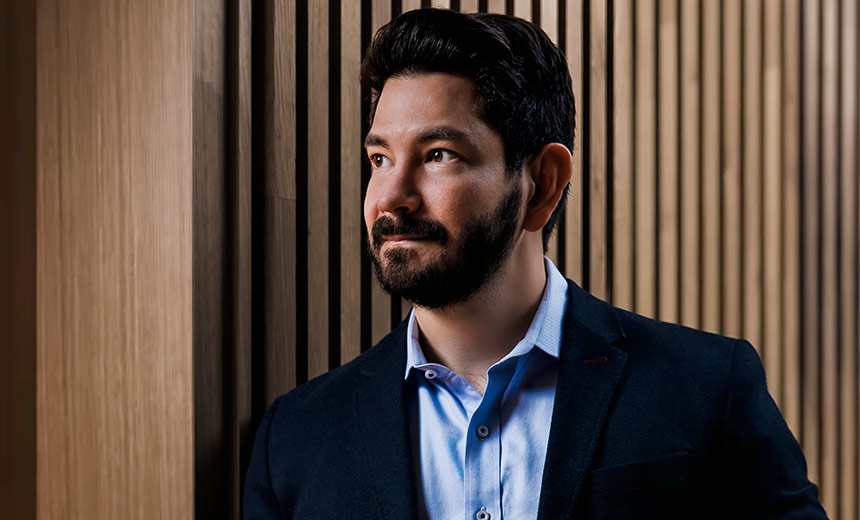
Armadin raised $255.5 million in Series B funding co-led by Andreessen Horowitz and Accel, taking total funding to $445 million and valuing the company at more than $2.5 billion. Bain Capital Ventures and Redpoint joined as new investors, while previous backers include GV, Kleiner Perkins, Menlo Ventures, In-Q-Tel, 8VC, and Ballistic Ventures.
The company is led by Kevin Mandia, who founded Mandiant and sold it to Google for $5.4 billion in 2022. Armadin approaches cybersecurity from the attacker’s side: its software deploys swarms of AI agents trained with red-team expertise to probe customer systems, combine vulnerabilities into working attack paths, and show security teams what an attacker could actually exploit rather than delivering another long list of theoretical vulnerabilities.
That distinction helps explain the size of the round. AI is lowering the cost of offensive cyber operations for both legitimate security teams and adversaries. If attackers can automate reconnaissance, exploitation, and lateral movement, periodic penetration testing begins to look increasingly mismatched to the threat.
Armadin says one recent controlled engagement involved 26,000 agents taking 17 million actions over three days and identifying 38 valid attack paths. Those are company-side results rather than independently audited performance data, but they illustrate the scale investors are underwriting.
The valuation is aggressive for a company only months out of stealth. Investors are paying heavily for Mandia’s operating history, the team’s offensive-security expertise, and the possibility that autonomous red teaming becomes a major cybersecurity category. The test now is whether Armadin can translate technical capability and founder reputation into repeatable enterprise revenue at a pace that supports a multibillion-dollar valuation.
Funding Details
Startup: Armadin
Investors: Andreessen Horowitz, Accel, Bain Capital Ventures, Redpoint, GV, Kleiner Perkins, Menlo Ventures, In-Q-Tel, 8VC, Ballistic Ventures
Amount Raised: $255.5 million
Total Raised: $445 million
Funding Stage: Series B
Funding Date: October 1, 2026
Headquarters: San Francisco Bay Area, California, United States
Sector: Cybersecurity / agentic AI / offensive security
Valuation: More than $2.5 billion
Osavul raises €8.5M in funding to detect hybrid threats before they become attacks
Luxembourg-headquartered Osavul raised €8.5 million ($10 million) in Series A funding led by cybersecurity investor 33N Ventures, with Balnord, G+D Ventures, and existing investor 42CAP participating. The financing brings total funding to approximately €12 million.
Osavul emerged from a problem its Ukrainian founders experienced firsthand. Dmytro Plieshakov and Dmytro Bilash initially applied their data-science experience to detecting disinformation following Russia’s full-scale invasion of Ukraine. The product has since broadened into a platform for identifying hybrid threats spanning information operations, cyber activity, espionage, sabotage, and other signals that may appear online before an attack becomes visible in the physical world.
The company says its systems process more than one billion data points each month across more than 100 countries and serve government customers in 10 countries, including NATO. Contract revenue has increased fourfold over the past year, according to the company. Osavul plans to use the Series A to expand further into energy, airports, ports, transportation, finance, and other industries where geopolitical threats increasingly overlap with corporate security.
The broader investment thesis is compelling: conventional cybersecurity tools usually look for malicious activity occurring inside a network. Osavul is attempting to identify the signals that appear before an operation reaches that stage. If hybrid warfare continues blending cyberattacks, information campaigns, sabotage, and physical action, early-warning intelligence could become its own enterprise security category.
Funding Details
Startup: Osavul
Investors: 33N Ventures, Balnord, G+D Ventures, 42CAP
Amount Raised: €8.5 million
Total Raised: Approximately €12 million
Funding Stage: Series A
Funding Date: October 1, 2026
Headquarters: Luxembourg
Sector: Defense technology / cybersecurity / threat intelligence
Valuation: Not disclosed
Foundational raises €9.6M to build precision positioning infrastructure for space
London-based Foundational emerged from stealth with €9.6 million, or £8.2 million, in pre-seed funding from Inflection, BACKED, Final Frontier, Adjacent, and Type One Ventures.
Founded in 2025 by Hira Virdee and Dave Gooding, the company is commercializing Satellite Laser Ranging, or SLR, a technique that fires laser pulses from ground stations toward retroreflectors attached to satellites and measures their return time to determine position with extremely high precision.
Foundational’s thesis is that the technology works but the existing infrastructure around it was never designed for an orbital economy containing thousands of satellites and growing amounts of debris. The startup is combining automated ground stations, satellite-mounted hardware, and a data platform into one commercial network.
The company claims its system can deliver millimetre-level ranging at costs up to 30 times lower than traditional stations. Those performance and cost figures come from Foundational and will need to hold as its network expands. Its customers and partners already include the European Space Agency, UK government bodies, aerospace manufacturers, research organizations, and commercial space companies.
The strategic opportunity extends beyond avoiding collisions in orbit. Accurate independent positioning data can support navigation, Earth observation, aviation, maritime operations, insurers, and infrastructure that cannot afford to depend on a single positioning system. As space becomes more crowded and satellite services more economically important, knowing precisely where everything is becomes infrastructure rather than a niche scientific service.
Funding Details
Startup: Foundational
Investors: Inflection, BACKED, Final Frontier, Adjacent, Type One Ventures
Amount Raised: €9.6 million / £8.2 million
Total Raised: €9.6 million disclosed
Funding Stage: Pre-seed
Funding Date: October 1, 2026
Headquarters: London, United Kingdom
Sector: Space technology / positioning infrastructure / satellite tracking
Valuation: Not disclosed
Deepslate raises €7.7M in funding to build Europe’s own speech-to-speech AI model
Berlin-based voice AI lab Deepslate raised €7.7 million, roughly $8.8 million, in Seed funding led by 42CAP, with Alstin Capital, SIVentures, and angel investors participating.
Rather than stitching together separate speech recognition, language, and text-to-speech systems, Deepslate is developing models that process and generate speech more directly. The company argues this approach preserves information such as tone, pronunciation, prosody, and vocal characteristics that can be lost when spoken language is converted into text in the middle of an interaction.
Independent benchmarking firm Artificial Analysis measured Deepslate’s Opal model at 0.44 seconds to first audio, while the startup itself reports a 250-millisecond response after a user finishes speaking. Deepslate also says insurers, contact centers, and platform companies are already using its technology in production, although it has not named those customers publicly.
The investment has a sovereignty angle as well. Deepslate operates its models on German infrastructure, supports customer-hosted and air-gapped deployment, and holds ISO 27001 certification. That can matter for European banks, insurers, governments, and other organizations that may be uncomfortable sending sensitive voice data through U.S.-controlled cloud services.
Its biggest strategic risk is model competition. OpenAI, Google, xAI, ElevenLabs, Deepgram, and others are investing heavily in real-time speech. Deepslate therefore needs more than a temporary latency advantage. Local deployment, regulatory fit, language coverage, data control, and lower operating costs may prove more durable than benchmark leadership alone.
Funding Details
Startup: Deepslate
Investors: 42CAP, Alstin Capital, SIVentures, angel investors
Amount Raised: €7.7 million / approximately $8.8 million
Total Raised: Not disclosed
Funding Stage: Seed
Funding Date: October 1, 2026
Headquarters: Germany; operations centered in Berlin
Sector: Artificial intelligence / voice AI / speech models
Valuation: Not disclosed
Seeds Fincap raises $10.4 million in funding to expand credit for India’s smallest businesses
Gurugram-based Seeds Fincap raised more than ₹100 crore ($10.4 million), in Series B funding led by the Michael & Susan Dell Foundation. Existing investors Z47 and Lok Capital participated alongside Norinchukin Capital and Alteria Capital.
Seeds is an RBI-registered non-bank lender focused on nano enterprises and other small businesses that often struggle to qualify for conventional bank credit. The company offers loans ranging from ₹50,000 to ₹10 lakh and says it relies more heavily on business cash flows and operating activity than traditional collateral-based underwriting.
The numbers suggest Seeds has moved well beyond experimental lending. The company reported ₹722 crore in assets under management as of August, roughly ₹620 crore in FY26 loan disbursements, 164 branches, and more than 70,000 active borrowers. It also reported profits in both FY25 and FY26. Its next target is ₹1,000 crore in AUM by March 2027.
This round highlights a different version of fintech defensibility. The software can improve underwriting, but Seeds’ real advantage may come from the combination of branch distribution, repayment history, localized underwriting data, field operations, and access to lending capital. Those capabilities are considerably harder to replicate than another lending interface.
Funding Details
Startup: Seeds Fincap
Investors: Michael & Susan Dell Foundation, Z47, Lok Capital, Norinchukin Capital, Alteria Capital
Amount Raised: More than ₹100 crore / approximately $10.4 million
Total Raised: Not formally disclosed; previous disclosed rounds include $8.5 million in 2024 and approximately $5.5 million in 2025
Funding Stage: Series B
Funding Date: October 1, 2026
Headquarters: Gurugram, India
Sector: Fintech / MSME lending / financial inclusion
Valuation: Not disclosed
Aignosis raises ₹4 crore to take AI autism screening deeper into India’s healthcare system
Jaipur-based Aignosis raised ₹4 crore in Seed funding led by Antler and Nikhil Kamath, with participation from Varun Dua, IIMA Ventures, and other angel investors.
Aignosis is developing AI-assisted screening for autism and other developmental conditions in children. Its system uses a standard laptop and webcam while children interact with visual stimuli. Computer vision then analyzes signals such as gaze, response to name, and facial reactions to produce a developmental-risk screening report.
That distinction matters: the product is a screening tool, not a diagnosis. Aignosis has completed India’s CDSCO regulatory process and received Class B certification, giving it a clearer path into clinical use.
The more interesting part of the business may be distribution. Aignosis already operates across more than 20 government primary health centers in Rajasthan, has partnered with Mankind Pharma’s network of roughly 1,300 medical representatives for screening programs, and is beginning deployment across around 125 schools through Apollo Shines. The company says it has completed more than 8,000 screenings and wants to reach at least 100,000 by the end of FY27.
For healthcare AI founders, Aignosis offers a useful lesson. A capable model is only the beginning. Regulatory clearance, physician integration, trusted distribution, and reimbursement or procurement pathways often determine whether medical AI moves beyond a demo.
Funding Details
Startup: Aignosis
Investors: Antler, Nikhil Kamath, Varun Dua, IIMA Ventures and angel investors
Amount Raised: ₹4 crore, roughly $417,000 based on reported conversion
Total Raised: Not disclosed
Funding Stage: Seed
Funding Date: October 1, 2026
Headquarters: Jaipur, India
Sector: Healthtech / AI diagnostics and screening / developmental health
Valuation: Not disclosed
FRANK raises €2.9M in funding to turn insurance paperwork over to AI operators
Lisbon-based FRANK raised €2.9 million from Armilar and Start Ventures to expand its AI platform for insurance brokers. Tech Funding News describes the financing as a Seed round, while other coverage refers to it more generally as a funding round.
FRANK’s AI Operator does more than answer questions. It can read incoming documents and messages, determine which insurance workflow applies, identify missing information, log into insurer portals, enter data, and return results such as quotes or claims updates. Brokers can review what the software has done.
The company says it is already used in more than 350 agencies and brokerages by over 1,500 users, carrying out around 70,000 back-office tasks each month. Customers report saving roughly 10 administrative hours per broker each week, according to FRANK. Those savings remain company-reported rather than independently measured.
This is where vertical AI starts to become harder to dismiss as a wrapper. FRANK has to understand insurer terminology, carrier-specific processes, broker ERP systems, documents, and permissions. Model intelligence matters, but the integration layer and accumulated knowledge of how insurance work actually gets done may become the more defensible asset.
Funding Details
Startup: FRANK
Investors: Armilar, Start Ventures
Amount Raised: €2.9 million
Total Raised: Not disclosed
Funding Stage: Seed according to Tech Funding News; stage not consistently labeled across reports
Funding Date: October 1, 2026
Headquarters: Lisbon, Portugal
Sector: Insurtech / enterprise AI / workflow automation
Valuation: Not disclosed
OSCP announces Series A to build navigation that keeps working when GPS does not
Montreal-based OSCP announced a Series A led by New Science Ventures, with participation from Emerging Ventures and 2050 Capital. The company did not disclose the financing amount. The round actually closed in August but was first publicly announced on October 1, an important distinction for today’s announcement-based cutoff.
OSCP makes photonic gyroscopes and inertial measurement units for systems that need to keep navigating when GPS and other GNSS signals are jammed, spoofed, degraded, or unavailable. Its sensors are manufactured in Canada and are ITAR-free, which can simplify procurement and export for customers outside the United States.
Demand for that capability is spreading beyond military applications. Autonomous vehicles, drones, ships, subsea systems, rail networks, robots, and aircraft all need ways to determine position when satellite navigation fails.
Since closing the round, OSCP has introduced its NavigationGate inertial-navigation system, added ArduPilot support and an open-source ROS 2 driver, and qualified as a supplier on Canada’s Defence Drone Initiative Marketplace. The new capital will expand Montreal production and fund engineering, sales, and the company’s next generation of photonic sensors.
Funding Details
Startup: OSCP / OSCPS Motion Sensing
Investors: New Science Ventures, Emerging Ventures, 2050 Capital
Amount Raised: Not disclosed
Total Raised: Not disclosed
Funding Stage: Series A
Funding Date: Closed August 2026; first publicly announced October 1, 2026
Headquarters: Montreal, Quebec, Canada
Sector: Defense technology / photonics / autonomous navigation
Valuation: Not disclosed
1club raises €2.2M in funding to modernize the software behind gyms and sports clubs
Sofia-based 1club raised €2.2 million in Seed funding from LAUNCHub Ventures and BrightCap Ventures. Like OSCP, the financing closed earlier — in August — but was publicly disclosed on October 1.
The company was founded by OfficeRnD founder Miroslav Miroslavov and former colleague Martin Kirov. Its business-facing 1club.ai platform combines memberships, payments, scheduling, marketing, websites, and mobile applications for gyms, studios, courts, and sports clubs. A connected consumer product, 1club.me, lets users discover and book activities.
The founders are applying lessons from OfficeRnD, which scaled coworking-management software to thousands of customers globally, to another fragmented service industry where many operators still use disconnected booking, payment, marketing, and administrative tools.
1club already reports paying customers in more than 10 countries and users in more than 40. The Seed capital will support hiring and expansion across markets including the U.S., Canada, the UK, Ireland, New Zealand, and Singapore.
The interesting bet is not simply better gym software. If 1club can connect enough clubs and consumer demand through its marketplace layer, the network itself could become more valuable than the underlying management software.
Funding Details
Startup: 1club
Investors: LAUNCHub Ventures, BrightCap Ventures
Amount Raised: €2.2 million
Total Raised: €2.2 million disclosed
Funding Stage: Seed
Funding Date: Closed August 2026; publicly announced October 1, 2026
Headquarters: Sofia, Bulgaria
Sector: Sports technology / vertical SaaS / AI software
Valuation: Not disclosed
R2Crete raises A$750K to turn demolished concrete back into building material
University of Melbourne spinout R2Crete raised A$750,000 in pre-seed funding from the university’s Genesis Pre-Seed Fund and research-commercialization investor Uniseed.
R2Crete is trying to solve one of construction’s least glamorous but largest material problems: what to do with demolished concrete. Its patented process separates waste concrete into clean aggregates and a material that can replace part of the cement required to make new concrete.
The company claims its process can recover up to 75% of cement from waste concrete and reduce associated carbon emissions by about 50% while maintaining conventional concrete performance. Those figures have been demonstrated at the research stage; the next question is whether they survive commercial-scale production at competitive cost.
The funding will support a pilot plant expected to be completed by the end of 2026, with field trials scheduled for early 2027. That makes the round small in dollar terms but strategically relevant: R2Crete is moving through the difficult transition from university research into an industrial process customers must be willing to adopt.
Australia alone generates an estimated seven million tonnes of waste concrete each year, according to University-linked reporting. If R2Crete can economically return a meaningful portion of those materials to new construction, the business could benefit simultaneously from landfill costs, material scarcity, and pressure to reduce cement emissions.
Funding Details
Startup: R2Crete
Investors: University of Melbourne Genesis Pre-Seed Fund, Uniseed
Amount Raised: A$750,000
Total Raised: Not disclosed; prior grant and university support are separate from this equity round
Funding Stage: Pre-seed
Funding Date: October 1, 2026
Headquarters: Melbourne, Australia
Sector: Climate technology / construction materials / recycling
Valuation: Not disclosed
What Today’s Funding Activity Reveals
The first pattern is extreme capital concentration. Armadin’s $255.5 million Series B is in a different financial category from every other qualifying announcement. Without it, October 1 becomes a collection of mostly sub-$11 million early-stage rounds. Investors are not indiscriminately writing enormous checks across startup markets; one company with a famous repeat founder and a timely cybersecurity thesis is pulling the average dramatically upward.
Second, cybersecurity is broadening beyond traditional endpoint protection and vulnerability scanning. Armadin is automating the attacker. Osavul is looking for the signals preceding hybrid attacks. OSCP is protecting navigation when satellite signals are compromised. These companies address different technical layers, but all assume adversaries are becoming more automated, more capable, and less confined to conventional network boundaries.
Third, sovereignty is becoming a commercial product feature. Deepslate emphasizes German hosting and on-premises deployment. OSCP emphasizes Canadian manufacturing and freedom from ITAR restrictions. Foundational is building European-controlled space-positioning infrastructure. Geopolitical independence is no longer solely a government procurement requirement; it is becoming part of startup product positioning.
Fourth, vertical AI continues to attract capital where founders can combine models with specialized workflows. FRANK has insurance systems and carrier processes. Aignosis has healthcare regulation and screening distribution. 1club has sports-business operations and, potentially, a consumer network. The closer AI gets to taking real actions, the more valuable those surrounding systems become.
Fifth, today’s geographic spread is unusually broad. The 10 companies span the United States, Luxembourg, the United Kingdom, Germany, India, Portugal, Canada, Bulgaria, and Australia. India is the only country represented twice. Yet the geographic distribution of capital is far less balanced because Armadin alone dominates the disclosed dollars.
Finally, two of the selected rounds — OSCP and 1club — closed in August but were publicly announced for the first time today. That distinction matters for anyone using funding headlines as a real-time proxy for venture deployment. Announcement flow and actual cash-closing activity are related, but they are not identical.
Startup Funding Table
| Startup | Amount Raised | Sector | Funding Stage | Lead/Key Investors | Country |
|---|---|---|---|---|---|
| Armadin | $255.5M | Cybersecurity / agentic AI | Series B | Andreessen Horowitz, Accel, Bain Capital Ventures, Redpoint + existing investors | U.S. |
| Foundational | €9.6M | Space positioning / satellite infrastructure | Pre-seed | Inflection, BACKED, Final Frontier, Adjacent, Type One Ventures | U.K. |
| Osavul | €8.5M | Defense intelligence / cybersecurity | Series A | 33N Ventures, Balnord, G+D Ventures, 42CAP | Luxembourg |
| Deepslate | €7.7M | Voice AI / foundation models | Seed | 42CAP, Alstin Capital, SIVentures | Germany |
| Seeds Fincap | >₹100Cr (~$10.4M) | Fintech / MSME lending | Series B | Michael & Susan Dell Foundation, Z47, Lok Capital, Norinchukin Capital, Alteria | India |
| Aignosis | ₹4Cr | AI health screening | Seed | Antler, Nikhil Kamath, Varun Dua, IIMA Ventures | India |
| FRANK | €2.9M | Insurtech / AI workflow automation | Seed* | Armilar, Start Ventures | Portugal |
| OSCP | Undisclosed | Photonics / defense navigation | Series A | New Science Ventures, Emerging Ventures, 2050 Capital | Canada |
| 1club | €2.2M | Sports tech / vertical SaaS | Seed | LAUNCHub Ventures, BrightCap Ventures | Bulgaria |
| R2Crete | A$750K | Climate tech / construction recycling | Pre-seed | Genesis Pre-Seed Fund, Uniseed | Australia |
*FRANK is described as Seed by Tech Funding News; other coverage does not consistently specify the stage.
Strategic Takeaways for Founders and Investors
Security spending is moving from detection toward proof. Armadin does not simply tell a CISO that a vulnerability exists; its agents attempt to demonstrate a working attack path. Osavul looks upstream for signs that an operation is forming. Investors appear willing to finance tools that reduce uncertainty about what will actually happen rather than adding more alerts.
Sovereignty can create pricing power. Deepslate, OSCP, and Foundational are all benefiting from customers wanting greater control over critical technology. Founders building infrastructure should pay attention to where customers may value local deployment, exportability, supply-chain independence, or domestic control enough to pay a premium.
Autonomy increases the value of accountability. FRANK’s AI can perform administrative actions inside real insurance systems. Armadin’s agents conduct offensive security operations. Aignosis influences clinical screening. Products in these categories need logs, permissions, human oversight, reproducibility, and clear boundaries around what the software may do. Those controls are part of the commercial product, not an afterthought.
Distribution remains a powerful defense against model commoditization. Aignosis has government clinics, Mankind Pharma’s medical-representative network, and Apollo schools. Seeds Fincap has 164 branches and tens of thousands of borrowers. 1club is connecting business software with consumer discovery. Those channels take years to build even when competitors can access similar AI models.
Founder history still changes the price of capital. Armadin’s valuation cannot be separated from Kevin Mandia’s record building and selling one of cybersecurity’s best-known companies. 1club similarly raised early capital around a founder who previously scaled OfficeRnD globally. Investors will still take technology risk more aggressively when management has already demonstrated category-specific execution.
Deep tech has to finance the transition from proof to production. Foundational is building ground stations and space hardware. OSCP is scaling sensor production. R2Crete is constructing a pilot plant. For these companies, the next value-changing milestone is not another software release; it is manufacturing performance, operating reliability, unit economics, and deployment.
Be careful reading daily funding totals. One $255.5 million deal can make an otherwise early-stage day appear flush with capital. Likewise, financing announced today may have closed months earlier. Founders and investors looking for market signals should examine deal distribution, stage, and financing dates rather than relying on aggregate headline dollars.
Conclusion
October 1’s startup funding activity is dominated by Armadin, but the more interesting story emerges below the $255.5 million headline.
Osavul is turning geopolitical threat detection into software. Foundational is commercializing precision infrastructure for an increasingly crowded orbit. Deepslate is betting Europe will pay for sovereign voice AI. OSCP is building navigation hardware for a world in which GPS interference is becoming normal. Aignosis and FRANK are taking AI into regulated workflows, while Seeds Fincap, 1club, and R2Crete are building defensibility around distribution, industry knowledge, and physical infrastructure.
The pattern is increasingly difficult to ignore: access to intelligence is getting cheaper, while control over trusted systems, proprietary operating data, distribution, infrastructure, and real-world execution is becoming more valuable.
Today’s largest checks are not simply financing smarter software. They are financing companies that can make intelligence work where failure actually costs something.