Venture Capital & Startup Funding Roundup, September 28, 2026: Amplify Partners, Fidelity Management, Insight Partners, Toyota Ventures & More
 Nickie Louise
Posted On September 28, 2026

Today’s funding activity underscores a clear shift toward physical AI and autonomous systems, as deep-pocketed investors chase innovations that bridge software AI and real-world platforms. Three of the day’s largest rounds – in robotics-related sensors, physical AI chips, and autonomous delivery – highlight how capital is flowing not just into generative AI models, but into applications at the network edge, in hardware, and in infrastructure.
Insurtech and fintech also saw notable investment, suggesting continued faith in AI-driven enterprise solutions. Top-line, sovereign and defense-related plays (maritime sensors), robotics acceleration (AI chips for drones/robots), and embedded AI (edge chips) dominated. This signals that 2026’s funding environment remains hungry for practical AI deployments and resilient tech trends (autonomy, data infrastructure, and fintech disruption) over pure hype.
In sum, today’s deals illustrate investors doubling down on tech that augments industry operations – from shipping logistics and manufacturing to insurance paperwork – as much as on cloud or model-layer software. These rounds reveal venture capital favoring startups that promise real-world impact: smarter autonomy (on water and land), hardware-software synergy, and data-fueled enterprise tools. Founders and investors alike should note the day’s emphasis on applied AI, infrastructure-enabling tech, and AI-meets-physical products.
The Macro Environment: Infrastructure Meets AI
Venture funding today reflects a melding of AI ambitions with infrastructure and hardware. Capital is pouring into startups building physical platforms or devices powered by AI – from smart sensors to next-gen chips – rather than into purely software or consumer apps. This suggests investors see value in companies that tie AI’s potential to tangible assets: maritime sensors (for national security and trade), edge AI chips (for robots, drones, industrial IoT), and autonomous logistics platforms. These themes echo larger trends: governments funding “sovereign AI” capabilities, and industries seeking to embed intelligence into their physical operations.
The psychology driving this environment blends defensive strategic positioning with infrastructure optimism. For example, defense and government interest in maritime domain awareness has created an opening for startups like Quartermaster. Meanwhile, pressure from data-center limits and demand for local AI compute is fueling investments in dedicated AI hardware (as seen with SiMa.ai’s raise). Investors are signaling that the next phase of the AI arms race isn’t just about LLMs, but about specialized chips and hardware networks.
Macro factors play a role too. With public markets choppy and interest rates moderate, VCs are looking for differentiated bets. The concentration of capital in today’s rounds (often with new and repeat lead investors) shows a flight to quality in capital deployment – big, traditional firms (Insight Partners, Fidelity, Toyota’s funds, Mubadala, etc.) are willing to write large checks into proven teams and sectors. This concentration suggests limited liquidity driving up round sizes for standout players.
Importantly, today’s activity confirms that AI’s spillover effects on other industries are front and center: expect AI chips to intertwine with manufacturing, shipping, and defense; and expect enterprise AI models to keep disrupting sectors like insurance and fintech. Founders will note that investors want startups that can demonstrate clear applications of AI to large markets. For capital allocators and startups, the message is that funding is rewarding companies that solve concrete problems (e.g., charting maritime routes, automating insurance advice, or providing AI compute for robots) rather than generic “AI platforms.”
Quartermaster raises $140M in funding to track every ship at sea
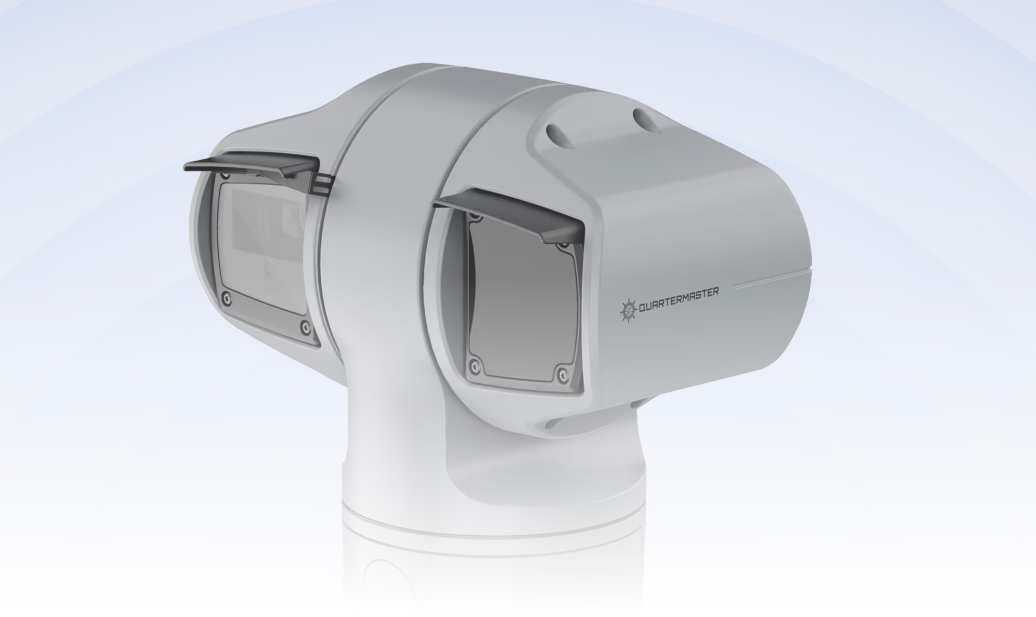
Quartermaster’s maritime sensor and analytics network draws massive defense interest. Quartermaster, a U.S. startup deploying AI-enabled sensor “SmartMasts” on ships and buoys, landed a $140 million Series B at a reported ~$200 million valuation. The round, led by Insight Partners (with participation from Overmatch Ventures and others), underscores a renewed focus on maritime domain awareness amid rising geopolitical tensions. Quartermaster’s devices capture HD imagery and radio-frequency data from hundreds of sea vessels, feeding AI models that help navies and commercial operators monitor maritime traffic and security.
Investors care because Quartermaster sits at the nexus of defense, AI, and physical infrastructure. The Middle East conflicts and crowded shipping lanes have prompted governments and fleets to seek real-time tracking and anomaly detection at sea. Quartermaster’s network effectively creates a “mesh” of low-cost satellites and ship-mounted devices, stitching together a global view of maritime activity. Its AI alerts can quickly flag suspicious vessels or unsafe conditions, a problem that legacy radar and satellite systems only partly solve.
This round matters because it signals big capital flows into non-traditional AI applications. Unlike consumer AI startups, Quartermaster’s market is strategic – governments and large enterprises are paying for actionable data on global trade and security. The fresh funding will accelerate deployment of more SmartMasts and R&D in analytics. Competitors include companies like D-Fend Solutions (RF surveillance) or private satellite firms, but Quartermaster’s integrated hardware-software bundle is rare.
Strategically, Insight’s lead role highlights major VCs’ growing interest in security tech. For Quartermaster, the cash infusion comes as governments beef up supply chain and border monitoring. Its earlier Series A ($43M in May 2022) was led by First Round Capital; adding Insight and Overmatch now brings in players focused on next-generation defense tech. Total funding is now ~$183M. While valuation details are private, the size suggests strong investor confidence.
Funding Details:
Startup: Quartermaster
Investors: Insight Partners (lead), Overmatch Ventures, First Round Capital, Stifel (debt), others
Amount Raised: $140M
Total Raised: ~$183M (including debt)
Funding Stage: Series B
Funding Date: Sep 28, 2026
Headquarters: Arlington, VA (USA)
Sector: Maritime Defense / AI Sensors
SiMa.ai raises $150M in funding as valuation hits $1.45B

SiMa.ai, a chipmaking startup that enables on-device AI in robotics and autonomous systems, closed a $150 million Series C (co-led by Fidelity Management & Research and Amplify Partners) at a post-money valuation of about $1.45 billion. The Sunnyvale, CA company’s mission is to let machines like drones and factory robots run AI models with low power on custom “AI Fire” chips and tooling software.
Why now? The investor narrative is that as large models proliferate, not every use case needs a massive datacenter GPU. There’s a physical-AI hardware arms race: companies like SiMa.ai are positioning their chips as the “NPUs for physical AI” – able to embed vision and neural network inference into energy-constrained machines. The substantial round suggests investors (including Dell Technologies Capital, StepStone, Amplify, etc.) see SiMa’s energy-efficient approach as a threat to Nvidia’s dominance in AI hardware, especially for edge use. Notably, SiMa’s founder Krishna Rangasayee was Groq’s COO, underlining pedigree.
This Series C builds on SiMa’s rapid growth: just a year ago it raised $85M Series B at a $340M valuation. The leap to $1.45B indicates strong momentum. The new capital will fund chip production scale-up and a software toolkit called MLZ for developers. It also reflects the strategic premium on chip startups: chipmakers addressing AI needs are among the few areas seeing mega-rounds in 2026 (akin to the decade’s chip funding surge).
In terms of competition, SiMa.ai faces incumbents like Nvidia (Jetson for edge), newer entrants like Graphcore, and other physical-AI chip startups (e.g., Syntiant, Gyrfalcon). But its pitch – combining high throughput for vision/AI with low power – resonates in markets from warehouse robots to solar-powered drones. Dell and others in this round suggest strong ties to enterprise computing markets.
Funding Details:
Startup: SiMa.ai
Investors: Fidelity Management & Research Co (lead), Amplify Partners (lead), Dell Technologies Capital, StepStone Group, Alter Venture Partners
Amount Raised: $150M
Total Raised: $250M (est.)
Funding Stage: Series C
Funding Date: Sep 28, 2026
Headquarters: Campbell, CA (USA)
Sector: AI Hardware / Edge Computing
Outmarket raises $34.5M in funding to automate insurance sales
An AI-driven insurance broker platform moves quickly to scale. Insurtech Outmarket of San Francisco announced a $34.5 million Series B led by SignalFire (with Fika Ventures, TTV Capital, and others). The startup provides an automated marketplace and brokerage for small business insurance, using AI to match customers with plans and automate paperwork.
Investors care because Outmarket tackles a massive pain point: small and mid-size businesses spend billions on benefits and insurance, but most of those purchases still happen through traditional brokers and manual processes. Outmarket’s AI agents can quote, compare, and bind policies digitally, streamlining a traditionally low-tech workflow. In fact, the round comes just four months after a $17M Series A, implying aggressive growth (Outmarket claims a $335M valuation).
This funding matters as an example of AI monetization in back-office industries. It’s not “sexy” consumer AI, but automating B2B insurance operations. Key backers like SignalFire (lead) and others see an opportunity to replace human brokers. The round should let Outmarket expand beyond its initial markets (California, Texas) and fund deeper underwriting ML models.
Competition-wise, Outmarket sits alongside incumbents like Insurify and Advanced Insurance, but focuses on commercial lines rather than consumer car insurance. The startup’s ability to build licensed agent networks and integrate carriers is a moat. The participation of enterprise- and finance-focused VCs suggests both investor confidence and a likely high total addressable market (the U.S. small-business insurance market is ~$100B+).
Funding Details:
Startup: Outmarket
Investors: SignalFire (lead), Fika Ventures, Permanent Capital Ventures, TTV Capital, Dash Fund
Amount Raised: $34.5M
Total Raised: $51.5M (incl. prior seed/Series A)
Funding Stage: Series B
Funding Date: Sep 28, 2026
Headquarters: San Francisco, CA (USA)
Sector: Fintech / Insurtech
CargoX raises $250M in funding for driverless delivery network
An autonomous logistics startup doubles down on the Middle East. CargoX, a UAE-based self-driving delivery vehicle platform, announced it has raised $250 million from an investor group led by BlueFive Capital. Notably, BlueFive, a $15B firm, will also see former Talabat CEO Tomaso Rodriguez take over as CargoX CEO.
CargoX deploys driverless delivery robots in urban and highway settings. The company has been piloting compact autonomous vehicles on public roads in Abu Dhabi and Dubai. This fresh funding will expand its network across the UAE and beyond, build out physical infrastructure (charging hubs, depots), and advance the vehicle technology. It reflects a major bet on autonomous logistics infrastructure: online retail and food delivery demand in the Middle East is surging, and CargoX aims to capture that with robotics.
Strategically, this round is significant for the region’s tech scene: it’s one of the largest Middle Eastern autonomous-vehicle investments to date. Investors like BlueFive and Mubadala (via Moove, see table) are signaling that autonomous mobility is central to their growth plans. CargoX cites regulatory support (from Dubai’s RTA) and partnerships with local e-commerce and logistics giants as foundations.
Competitively, CargoX will be measured against global peers like Nuro or Starship Technologies, but with a focus on dense urban routes in the Gulf. The emphasis on a comprehensive network (fleet plus operations) mirrors Moove’s model in human-driven ride-hailing. For founders in autonomous systems, CargoX’s round shows how much capital can be marshaled when a venture aligns closely with national infrastructure goals (smart cities, reduced labor costs) in oil-rich regions.
Funding Details:
Startup: CargoX
Investors: BlueFive Capital (lead), Mubadala (via Moove), Ion Pacific, Woven Capital, Toyota Ventures, others
Amount Raised: $250M
Total Raised: Not publicly disclosed (this is the first major round)
Funding Stage: Growth/Series A? (first large equity round)
Funding Date: Sep 28, 2026 (press reported 27 Sep)
Headquarters: Abu Dhabi, UAE
Sector: Autonomous Vehicles / Logistics
What Today’s Funding Activity Reveals
The tenors of today’s deals spotlight several emerging patterns. First, AI is eating the world at the edge. Startups embedding AI into sensors, chips, and autonomous machines are commanding the biggest tickets. Quartermaster (sensor networks) and SiMa.ai (AI chips) exemplify a shift: investors are treating infrastructure and hardware as critical enablers of AI, not just new cloud apps. We’re seeing an AI plus hardware convergence.
Second, geopolitics and strategic tech trends matter. Quartermaster’s national-security bent and CargoX’s alignment with the UAE’s autonomy goals show capital flowing toward tech with government tailwinds. The mix of U.S. and Gulf investors suggests funding hotspots are diversifying beyond Silicon Valley.
Third, enterprise AI applications remain hot. Outmarket’s insurtech raise underscores sustained VC interest in vertical B2B AI plays. Many of today’s rounds (like Outmarket) follow a model: automating a complex industry workflow (insurance brokerage, maritime monitoring) with AI. For founders, this is a reminder that VCs still prize clear revenue paths – they funded an insurance automation startup, not just a consumer AI chatbot.
Fourth, concentration of capital persists. Large, later-stage rounds are led by mega-funds (Insight, Fidelity, Mubadala, venture arms of tech giants). Seed deals or modest rounds didn’t make today’s list; instead, it’s the well-funded Series Bs/Cs and strategic plays. The data suggest funding is focusing on winners.
Finally, cross-sector echoes: we see the military and climate tech zeitgeists (maritime defense sensors, fusion energy, logistics decarbonization) just beneath the surface. Even if direct climate rounds weren’t prominent today, the rise of autonomous and AI-enabled efficiency hints at long-term trends (smarter supply chains, less reliance on manual labor) that tie into sustainability and resilience themes.
Venture Funding Table
| Startup | Amount Raised | Sector | Funding Stage | Lead Investors | Country |
|---|---|---|---|---|---|
| Quartermaster | $140M | Maritime Intelligence / Defense | Series B | Insight Partners (lead), Overmatch Ventures, First Round Capital | USA (VA) |
| SiMa.ai | $150M | AI Hardware / Edge | Series C | Fidelity Mgt (lead), Amplify Partners (lead), Dell Capital | USA (CA) |
| CargoX | $250M | Autonomous Delivery / IoT | Growth | BlueFive Capital (lead), Mubadala (via Moove), Ion Pacific, Toyota Ventures | UAE (Abu Dhabi) |
| Outmarket | $34.5M | Fintech / Insurtech | Series B | SignalFire (lead), Fika Ventures, Permanent Capital, TTV Capital | USA (CA) |
| Others (e.g. Quantum Motion, Rightway, etc.) | — | Various (quantum, healthtech, etc.) | –– | –-* |
(Table notes: Only deals announced in the last day are individually detailed above. Other recent rounds of note include London’s Quantum Motion ($160M Series C announced Sep 7) and NYC’s Rightway ($155M Series E on Sep 24), though outside the 24-hour window.)
Strategic Takeaways for Founders and Investors
-
Founders: Focus on real-world impact and clear ROI. The largest checks went to startups solving concrete industry problems (monitoring ships, automating insurance processing) using AI as an enabler. Show how your tech plugs into existing infrastructure or regulations. Highlight data/control locked up by legacy players (e.g. shipping companies, insurance brokers) that you can unlock with AI.
-
Investors: There’s appetite for vertical AI plays especially when paired with new hardware or infrastructure. Keep an eye on “physical AI” – chips, sensors, robotics – not just on cloud apps. Today’s rounds suggest investors will pay premium valuations for startups that diminish big companies’ logistical or operational costs. Also, cross-border opportunities (U.S. tech in Middle East markets, or vice versa) can attract strategic capital, as with CargoX.
-
Market signals: The rapid follow-on round for Outmarket (4 months after Series A) indicates investor confidence can be high when initial traction is proven. High valuations (SiMa.ai at $1.45B) show that the hardware space has not repriced to all-time lows — at least in certain niches. However, the concentration of capital into few companies may make it harder for smaller raises to stand out; startups should aim to establish clear product-market fit to draw such large lead investors.
-
Capital efficiency: In deals like Quartermaster and SiMa.ai, note significant R&D capital behind complex tech. But Outmarket’s funding path shows there’s still room for lean AI plays in enterprise markets. If you can demonstrate revenue growth (even modest) in insurance or fintech, VCs will fund. Conversely, capital-intensive hardware startups need world-class teams and investor alignment (defense or government backing, strategic corporate VCs).
-
Valuation discipline: Some rounds (like SiMa.ai’s) have more than tripled valuation in a year. That’s notable – it suggests that for frontier tech, big jumps are possible. Founders should ensure milestones keep pace (chip delivery, proven deployments). Investors, beware of FOMO; but today’s large rounds were for startups with strong sales pipelines (Sima.ai’s reported deployments) or strategic importance (maritime security, autonomous fleet ops).
-
Thematic consistency: Cybersecurity and biotech were not prominent today, which might indicate capital is currently steered more toward AI/robotics and infrastructure. For those sectors, expect smaller or slower funding news. Meanwhile, enterprise software is still relevant (Outmarket) but it must be AI-augmented or fintech-adjacent.
Conclusion
The funding story of the day is clear: investors are chasing AI’s industrial frontier. This isn’t about consumers trying a new app, it’s about embedding intelligence into fleets of robots, ships, and delivery vehicles. If you take away a lesson, it’s that 2026’s venture dollar is attracted by startups that merge AI with heavy industry and critical infrastructure.
Growth-stage startups in these domains are finding that strategic and deep-pocketed investors are prepared to write big checks. The ubiquity of AI hype has translated into serious bets on enabling tech – advanced chips, autonomous platforms, and data analytics networks. In turn, founders should gear their pitches to highlight real, measurable impact in large markets.
Looking ahead, we expect more of this pattern: AI projects tied to tangible outcomes (e.g. efficiency, security, automation) will continue to outperform general-purpose software in fundraising. The ecosystem is signaling that the “AI boom” is maturing into an industrial AI economy – and today’s roundups confirm where those boom dollars are flowing: into the engines of industry, transportation, and infrastructure themselves.