Startup Funding News Today, September 24, 2026: 50Skills, ByteAsk, Pilgrim, Kasvu Therapeutics, Puxi Optoelectronics & More
 Nickie Louise
Posted On September 24, 2026

Today’s startup funding activity centers on a different kind of scarcity: biosecurity, specialized semiconductors, proprietary healthcare data, vertical AI workflows, and the infrastructure needed to run increasingly capable software inside real businesses.
The largest newly surfaced financings are coming from China’s semiconductor sector. Hangzhou-based Puxi Optoelectronics completed a Series C worth several hundred million yuan to expand extreme-temperature power chips and gallium-oxide technology, while Shanghai’s Langxi Technology raised nearly RMB200 million for silicon passive components used close to high-performance CPU and GPU packages. In Europe, Kasvu Therapeutics raised €30 million to advance a non-hallucinogenic neuroplasticity drug toward human trials, and French wealthtech company Wealthcome raised €15 million to push its software deeper into banks, insurers and large financial networks.
The earlier-stage deals are just as telling. Pilgrim raised $25 million at a reported $150 million valuation for an airborne biological-threat detection system. Iceland’s 50skills secured €5.3 million for AI-powered HR workflows, Switzerland’s Prevision Medicine raised $5.4 million for functional precision oncology, Mistral backed Italy’s Clastix in a €2.9 million Kubernetes infrastructure round, ByteAsk raised $1 million for C and C++ coding agents, and Japan’s AIONA assembled ¥140 million in equity-like financing and bank debt for industrial-design AI.
Across the 10 selected companies, the fresh disclosures total $31.4 million in dollar-denominated rounds, €53.2 million in euro-denominated rounds, nearly RMB200 million plus Puxi’s separate several-hundred-million-yuan Series C, and ¥140 million in AIONA’s mixed financing package. Five are European, three are Asian, and two are headquartered in the United States. At least seven are directly tied to AI or the infrastructure surrounding it.
The Macro Environment: Capital Is Moving Toward What AI Cannot Easily Replicate
Today’s rounds reinforce a theme building across venture markets: as access to capable AI models becomes easier, investors are assigning more value to assets competitors cannot simply copy.
Sometimes that asset is physical. Puxi is building semiconductor devices that must operate at temperatures above what conventional electronics can tolerate. Langxi is manufacturing passive components that sit extremely close to expensive processors inside advanced packages. Clastix manages the Kubernetes infrastructure underneath large AI workloads. Those businesses benefit from rising AI demand without needing to train their own frontier model.
Sometimes the scarce asset is proprietary context. Wealthcome sits inside wealth-management data and regulated financial workflows. 50skills connects employee processes across existing corporate systems. AIONA is trying to capture engineering knowledge that often exists only in experienced designers’ heads. ByteAsk specializes in C and C++, languages deeply embedded in aerospace, defense, automotive, semiconductor, and high-performance systems where reliability matters more than conversational fluency.
Healthcare makes the same point more sharply. Prevision Medicine is building its advantage around living patient tumor cells, clinical evidence, and treatment-response data. Kasvu’s value will ultimately depend on whether its TrkB-targeting compound produces a useful therapeutic effect in patients. Pilgrim’s ARGUS system has to detect biological threats reliably in real environments. In each case, software may help, but the final evidence exists outside the model.
The geographic mix also deserves restraint. Europe accounts for half of today’s selections, but the morning cutoff captures a full European and Asian business morning before most U.S. startups begin Thursday announcements. The stronger conclusion is not that capital has suddenly shifted away from the United States. It is that specialized AI, semiconductor infrastructure and science-heavy startups are finding serious investors across several ecosystems at once.
Pilgrim raises $25M in funding to build an early-warning system for biological threats
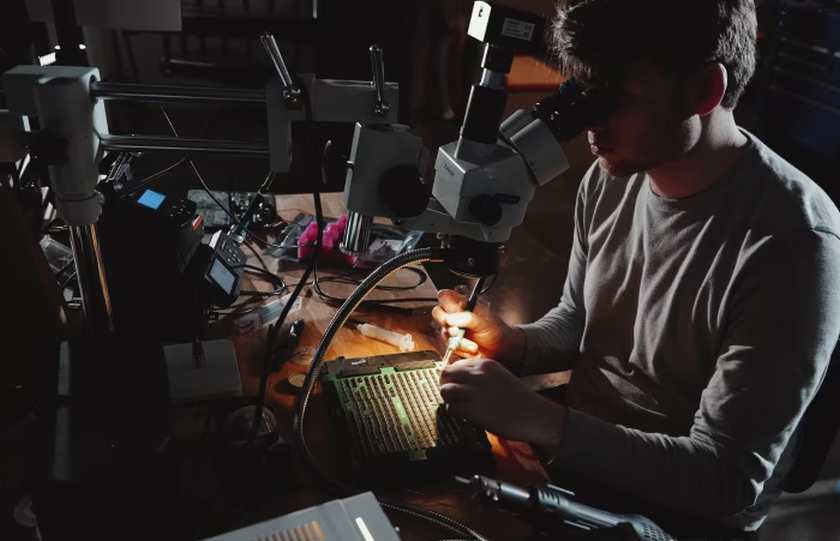
U.S. biosecurity startup Pilgrim raised $25 million in Seed funding at a reported $150 million valuation, according to reporting based on The Wall Street Journal. Buckley Ventures led the round, while Anthropic frontier-red-team leader Logan Graham and technical staff member Sholto Douglas invested personally. Other backers reported in the financing include Fred Ehrsam and several prominent technology investors.
Pilgrim is developing ARGUS, an approximately 50-pound system that combines air sampling with genomic sequencing to detect biological threats in the environment. The concept is straightforward but technically difficult: instead of waiting for people to become sick and then identifying a pathogen, detect dangerous biological material circulating in the air earlier.
That mission becomes more interesting as biological design tools improve. AI safety companies can restrict what models generate, but software controls cannot eliminate every natural outbreak, laboratory accident or deliberate threat. Physical biosurveillance provides another defensive layer.
Pilgrim says it is working with the U.S. Centers for Disease Control and Prevention on airborne biosurveillance. Public reporting does not establish that relationship as a broad procurement deployment, so it is better interpreted as active collaboration rather than proof of large-scale government adoption. The commercial test will be whether ARGUS can deliver reliable detection at a cost and operating burden that governments, hospitals, ports and other high-risk sites will pay for repeatedly.
Funding Details
Startup: Pilgrim
Investors: Buckley Ventures led; Logan Graham, Sholto Douglas, Fred Ehrsam and other technology investors participated
Amount Raised: $25 million
Total Raised: More than $30 million, according to founder disclosures
Funding Stage: Seed
Funding Date: September 23, 2026
Headquarters: Redwood City, California, United States
Sector: Biosecurity / genomic biosurveillance/defense biotechnology
Valuation: Approximately $150 million, according to reported deal terms
Kasvu Therapeutics raises €30M to pursue neuroplasticity without the psychedelic experience
Helsinki-based Kasvu Therapeutics raised €30 million, roughly $34 million, in Series A funding led by Hadean Ventures. Finnish Industry Investment, or Tesi, made a significant investment alongside existing backer Innovestor Life Science Fund. The Finnish Drug Discovery Center and Stephen Industries joined as new investors, while Nordic Science Investments and Helsinki University Funds returned.
Kasvu is developing small molecules that act on TrkB, a receptor involved in brain-derived neurotrophic factor signaling and neural plasticity. Its lead candidate, KTX-0141, is designed to amplify the brain’s own BDNF signaling without activating the 5-HT2A serotonin receptor associated with the hallucinogenic effects of classic psychedelics.
That gives Kasvu a potentially interesting position inside the renewed investment cycle around depression and neuroplasticity. Psychedelic compounds have attracted attention partly because some studies suggest unusually fast antidepressant effects, but the psychedelic experience complicates dosing, supervision, and commercialization. Kasvu is asking whether some of the underlying biological benefit can be separated from the hallucination.
That remains a scientific thesis, not a demonstrated clinical result. KTX-0141 is still preclinical. The company plans to use the Series A for IND- and CTA-enabling work and then Phase I/1b studies in major depressive disorder, with clinical development expected to begin in the second half of 2027. For investors, the important milestones are now toxicology, pharmacology, regulatory clearance, and human data rather than another improvement to the discovery platform.
Funding Details
Startup: Kasvu Therapeutics
Investors: Hadean Ventures, Tesi, Innovestor Life Science Fund, Finnish Drug Discovery Center, Stephen Industries, Nordic Science Investments, Helsinki University Funds
Amount Raised: €30 million / approximately $34 million
Total Raised: Not disclosed
Funding Stage: Series A
Funding Date: September 24, 2026
Headquarters: Helsinki, Finland
Sector: Biotechnology/neuropsychiatry/neuroplasticity therapeutics
Valuation: Not disclosed
Puxi Optoelectronics raises several hundred million RMB for extreme-environment power chips
Hangzhou-based Puxi Optoelectronics completed a Series C worth several hundred million yuan, according to 36Kr. Ten state-owned and industrial investors joined the round, including Zhejiang Jiahe Changyue, Chengdu Venture Capital, the Shanghai Semiconductor Equipment and Materials Industry Investment Fund, funds affiliated with Shandong Finance Group and Guizhou Guochuang.
Puxi builds specialized power semiconductors and systems for environments where ordinary electronics begin to fail. The company is developing gallium-oxide devices, 230°C-grade high-temperature chip modules, and electronics for extreme applications ranging from deep underground operations to robotics, space computing, and power supplies for controlled nuclear-fusion research.
That breadth sounds unusual until you consider the underlying technical requirement: electronics operating near extreme heat, radiation, high voltage, or demanding mechanical environments need different materials and packaging than everyday chips.
Puxi reported RMB230 million in 2025 revenue, and 36Kr describes the company as one of the relatively small number of players in its segment already operating profitably. The Series C will fund manufacturing expansion and further work on fourth-generation gallium-oxide chips and high-temperature robot joints. The next challenge is manufacturing consistency. In semiconductor hardware, an impressive device in the lab has limited commercial value if yield and quality cannot survive high-volume production.
Funding Details
Startup: Puxi Optoelectronics
Investors: Zhejiang Jiahe Changyue, Chengdu Venture Capital, Shanghai Semiconductor Equipment and Materials Industry Investment Fund, Shandong Finance Group-affiliated funds, Guizhou Guochuang and other state-owned and industrial investors
Amount Raised: Several hundred million RMB; exact amount not disclosed
Total Raised: Not disclosed
Funding Stage: Series C
Funding Date: September 24, 2026 announcement; closing date not separately disclosed
Headquarters: Hangzhou, China
Sector: Semiconductors/power electronics / extreme-environment computing
Valuation: Not disclosed
Langxi Technology raises nearly RMB200M to put power components closer to AI chips
Shanghai-based Langxi Technology raised nearly RMB200 million in a Pre-A+ round, taking cumulative financing to nearly RMB300 million. Investors include GL Ventures, Zhiwei Capital, SenseTime Guoxiang Capital, Jiayi Venture Capital, Feitu Venture Capital and Zhongqi Capital, with existing investor Oriental Fortune Capital adding to its position.
Langxi develops silicon-based passive components, particularly silicon capacitors, using semiconductor manufacturing processes. That may sound mundane compared with GPUs, but power delivery has become a major design constraint as processors grow more power-hungry and advanced packages place more compute into smaller areas.
Traditional capacitors located farther from a processor introduce parasitic effects and electrical losses. Components embedded closer to the chip can help stabilize power delivery while using less package space. Langxi says its multi-terminal embedded capacitor products are already being delivered for CPU and GPU applications.
The company will use the new capital to expand R&D across silicon capacitors, resistors and inductors, buy production equipment, build its team and increase delivery capacity. Langxi remains early commercially—the company has said revenue was only in the millions of yuan in 2025 and expects tens of millions in 2026—but reported production orders around its embedded-capacitor products suggest the business is moving from qualification toward higher-volume supply.
This is another example of AI capital moving into the less visible parts of the semiconductor stack. Faster processors are useful only if packaging, memory, networking, power delivery, and thermal systems can keep up.
Funding Details
Startup: Langxi Technology
Investors: GL Ventures, Zhiwei Capital, SenseTime Guoxiang Capital, Jiayi Venture Capital, Feitu Venture Capital, Zhongqi Capital, Oriental Fortune Capital
Amount Raised: Nearly RMB 200 million
Total Raised: Nearly RMB 300 million
Funding Stage: Pre-A+
Funding Date: September 24, 2026
Headquarters: Shanghai, China
Sector: Semiconductor components / advanced packaging / AI hardware supply chain
Valuation: Not disclosed
Wealthcome raises €15M to push AI deeper into wealth-management workflows
French wealth-management software company Wealthcome raised €15 million in Series B funding led by Breega, with existing investor BlackFin Capital Partners also participating. The company previously raised €7 million from BlackFin in March 2025.
Wealthcome serves wealth advisers and other financial professionals through WealthPro while developing Binom, an AI environment intended to work across portfolio data, compliance information, documents and adviser workflows. The company says it now serves roughly 800 organizations and more than 6,000 professionals, up significantly from a little more than 300 organizations and 2,500 users around its prior funding round.
The Series B is about changing customer size. Wealthcome wants to move from independent wealth-management firms into banks, insurers, mutual groups and large financial networks.
That shift changes the product requirements. A tool that works for a 10-person advisory firm must handle far more complicated permissions, security, auditability, migrations, and system integrations before a major bank will deploy it to hundreds or thousands of employees.
That is also where AI defensibility may emerge. The value is not simply an assistant that can answer financial questions; it is an operating system that already knows which data the adviser is permitted to see, how client information is structured, and where regulatory checks must occur.
Funding Details
Startup: Wealthcome
Investors: Breega, BlackFin Capital Partners
Amount Raised: €15 million
Total Raised: At least €22 million disclosed across its 2025 and 2026 rounds
Funding Stage: Series B
Funding Date: September 24, 2026
Headquarters: Paris, France
Sector: Wealthtech / enterprise AI / financial software
Valuation: Not disclosed
50skills raises €5.3M to orchestrate HR workflows between people and AI agents

Reykjavík-based 50skills raised €5.3 million, or about $6 million, in a financing co-led by Frumtak Ventures, Swiss Post Ventures, Avant and DRD Investments. The formal round label was not disclosed in current reporting.
The company operates Hire, an applicant-tracking system, and Journeys, a workflow platform for employee processes. Its design centers on three kinds of work: deterministic automation for steps that should always happen the same way, and AI agents for tasks requiring interpretation and human intervention where judgment remains necessary.
That separation is commercially important. HR departments deal with identity, employment agreements, payroll information, permissions, background checks, and personnel decisions. Customers may want more automation without allowing a probabilistic model to control every consequential action.
50skills says its platform completed more than 4 million actions during the past 12 months. Customers include Icelandair, Eimskip, Blue Lagoon, Domino’s and Securitas, along with public-sector organizations such as Iceland’s Ministry for Foreign Affairs and the City of Reykjavík. Those numbers come from the company, but they show the new financing is entering a product with an installed operating base rather than a newly launched AI assistant.
Funding Details
Startup: 50skills
Investors: Frumtak Ventures, Swiss Post Ventures, Avant, DRD Investments
Amount Raised: €5.3 million / approximately $6 million
Total Raised: Not disclosed
Funding Stage: Funding round; formal stage not disclosed
Funding Date: September 24, 2026
Headquarters: Reykjavík, Iceland
Sector: HR technology/enterprise AI/workflow automation
Valuation: Not disclosed
Prevision Medicine raises $5.4M to test cancer treatments against living patient cells
Swiss precision-oncology startup Prevision Medicine raised $5.4 million in Seed funding led by ACE Ventures, with GoHub Ventures, SICTIC and healthcare-focused angel investors participating. The financing will support regulatory clearances, reimbursement efforts, and expansion across Europe.
Prevision uses a technique known as pharmacoscopy. Instead of relying solely on a tumor’s genomic profile to infer which treatment might work, the company exposes living tumor-derived cells from an individual patient to a large library of drugs and measures what actually happens.
Its system can test roughly 100 oncology treatments in parallel and return ranked results to clinicians in around three days, according to investor GoHub. AI analyzes cellular images and distinguishes cancer cells based on morphology, allowing the company to use conventional Giemsa staining rather than more expensive fluorescent methods.
That architecture creates an interesting biotech-data flywheel. Partner laboratories can process samples locally while Prevision retains the analytical model and accumulated response data. Geographic expansion therefore does not necessarily require the company to build a new proprietary lab in every market.
The important caveat is clinical adoption. Functional testing may provide valuable additional evidence, but physicians and insurers will demand reproducible clinical outcomes before it becomes routine. Prevision points to published interventional studies and ongoing clinical work; the Seed round is intended to move that evidence toward broader regulatory and reimbursement acceptance.
Funding Details
Startup: Prevision Medicine
Investors: ACE Ventures, GoHub Ventures, SICTIC, and angel investors
Amount Raised: $5.4 million
Total Raised: Not disclosed
Funding Stage: Seed
Funding Date: September 24, 2026
Headquarters: Schlieren / Zurich, Switzerland
Sector: Precision oncology/diagnostics / AI-enabled functional medicine
Valuation: Not disclosed
Clastix raises €2.9M with Mistral backing to build sovereign Kubernetes infrastructure
Naples-based Clastix raised €2.9 million in Seed funding, its first external financing. CDP Venture Capital led the round, with participation from Mistral and Vertis SGR through the Vertis Venture 6 Digital Sud fund.
Clastix works underneath the AI model layer. Its open-source Kamaji project lets organizations run Kubernetes control planes on shared infrastructure, while its commercial kMetal product manages large fleets of clusters.
That becomes more valuable as AI labs and enterprises operate growing numbers of training and inference clusters. Every cluster creates infrastructure overhead, permissions, networking, upgrades, and operational complexity that somebody has to manage.
Mistral’s participation is particularly meaningful because it is both investor and user. Mistral co-founder and CTO Timothée Lacroix said Clastix technology supports the company’s Kubernetes infrastructure for training and inference workloads. That is stronger evidence than a purely financial endorsement: Clastix has a technically demanding AI customer using the system in production.
The company plans to keep Kamaji open under the Apache 2.0 license while building commercial value through kMetal, customer support, and infrastructure management. That open-core structure has produced large developer-infrastructure businesses before, though Clastix will still have to prove that organizations running Kubernetes at scale will pay enough to support a stand-alone company.
Funding Details
Startup: Clastix
Investors: CDP Venture Capital, Mistral, Vertis SGR / Vertis Venture 6 Digital Sud
Amount Raised: €2.9 million
Total Raised: €2.9 million in disclosed external funding
Funding Stage: Seed
Funding Date: September 24, 2026
Headquarters: Naples, Italy
Sector: Cloud infrastructure / Kubernetes / sovereign AI infrastructure
Valuation: Not disclosed
ByteAsk raises $1M in funding to build coding agents for the C and C++ systems AI assistants often struggle with
San Francisco-based ByteAsk raised $1 million in pre-seed funding led by Y Combinator and Entrepreneur First, with angel investors also participating. IIT Delhi alumni Anirudha Kulkarni and Pratyush Saini founded the company in June, and it is part of Y Combinator’s Fall 2026 batch.
ByteAsk is concentrating on C and C++, two languages that remain deeply embedded in aerospace, defense, robotics, automotive systems, semiconductor software, and high-frequency trading.
That specialization matters because coding agents trained around modern web-development repositories do not automatically perform equally well inside huge C++ systems with custom build environments, hardware dependencies, strict latency requirements, and decades of legacy code.
ByteAsk plans to spend the capital on engineering and research teams in San Francisco and Bengaluru, GPU capacity, training data, enterprise security, and on-premises deployment. The company is also developing a post-trained C++ model.
The startup reports strong early internal benchmarks, but those results have not been independently validated. The more important thesis is whether specialized context can beat general coding agents in environments where an incorrect change can crash a vehicle controller, break a trading system or corrupt embedded software. If so, coding agents may fragment by technical domain much as enterprise AI is already fragmenting by business workflow.
Funding Details
Startup: ByteAsk
Investors: Y Combinator, Entrepreneur First, and angel investors
Amount Raised: $1 million
Total Raised: $1 million disclosed
Funding Stage: Pre-seed
Funding Date: September 24, 2026
Headquarters: San Francisco, California, with operations in Bengaluru, India
Sector: Developer tools / AI coding/systems software
Valuation: Not disclosed
AIONA raises ¥140M to capture the engineering knowledge disappearing from Japanese factories
Tokyo-based AIONA secured ¥140 million in financing through a combination of J-KISS equity-like warrants and bank loans. ON&BOARD led the investment portion alongside GxPartners, Crest Skill Partners and Mizuho Capital, while Aichi Bank and Mizuho Bank provided lending. The company did not disclose the split between investment and debt, so the full ¥140 million should not be treated as venture equity.
AIONA develops REVY, an AI agent aimed at industrial design work. Its thesis starts with a problem familiar across Japanese manufacturing: highly experienced engineers retire while much of the reasoning behind past design decisions exists only in documents, review meetings, and individual memory.
REVY is intended to help with work such as quality-function deployment, reuse of previous designs, FMEA and DRBFM analysis, and drawing checks. The company is not positioning the system as a replacement for the engineer signing off on a design. Instead, it wants the software to surface prior knowledge and perform repetitive analysis while people retain final technical judgment.
That distinction matters in manufacturing. A hallucinated marketing sentence can be edited. A mistaken tolerance, material assumption, or safety calculation can create a product failure. Industrial AI therefore has to earn trust through traceability, domain context and controlled workflows rather than simply producing plausible answers.
The financing will primarily expand AIONA’s development organization and commercial deployment of REVY. The company was founded in October 2024, making the ¥140 million package an early bet that Japan’s manufacturing-knowledge transfer problem can become a meaningful enterprise AI category.
Funding Details
Startup: AIONA
Investors: ON&BOARD, GxPartners, Crest Skill Partners, Mizuho Capital; loans from Aichi Bank and Mizuho Bank
Amount Raised: ¥140 million total financing package; equity-like/debt split not disclosed
Total Raised: Not disclosed on a cumulative basis
Funding Stage: J-KISS financing plus bank debt; formal stage not disclosed
Funding Date: September 24, 2026
Headquarters: Shibuya, Tokyo, Japan
Sector: Industrial AI/engineering design/manufacturing software
Valuation: Not disclosed
What Today’s Funding Activity Reveals
The first signal is that the AI trade is moving deeper into specialized infrastructure.
Langxi does not sell AI software. It sells the tiny power-delivery components increasingly needed inside high-performance chip packages. Clastix does not train models. It manages the Kubernetes control planes underneath them. Puxi is developing extreme-temperature semiconductor technology that can operate in environments where ordinary devices cannot.
These companies benefit from AI expansion without having to predict whether OpenAI, Anthropic, Google, Meta, Mistral, or somebody else owns the dominant model.
The second signal is the continuing rise of vertical context as a moat.
Wealthcome has wealth-management data and regulated financial workflows. 50skills understands employee processes. AIONA wants to preserve design knowledge accumulated inside manufacturing organizations. ByteAsk is focusing on C and C++ environments where the repository, compiler, build process, and surrounding system matter as much as the language itself.
A competitor can gain access to the same foundation model. It cannot instantly reproduce years of customer data, system integrations, engineering history, or operational permissions.
Third, healthcare investors are still funding companies where value ultimately depends on evidence rather than software adoption. Kasvu has to move a molecule successfully from preclinical research into humans. Prevision must show that functional testing changes oncology decisions and outcomes enough for physicians and payers to adopt it. Pilgrim has to prove that its physical biosurveillance system detects threats reliably outside controlled demonstrations.
Fourth, early-stage deals dominate today’s funding activity. Pilgrim is Seed; Kasvu is Series A; Prevision is Seed; Clastix is Seed; ByteAsk is pre-seed; Langxi is Pre-A+; AIONA is still using J-KISS instruments. Only Puxi and Wealthcome are clearly into later venture stages.
That tells us something different from a day dominated by $500 million growth rounds. Investors are taking technical and market risk around categories they believe could become important rather than simply bidding up companies whose winners are already obvious.
Fifth, the Chinese semiconductor rounds reflect a widening definition of semiconductor sovereignty. The conversation often focuses on lithography tools and AI accelerators, but advanced computing also depends on capacitors, power devices, interconnects, packaging materials and specialty components. Langxi and Puxi sit in those less visible layers.
Finally, Europe’s prominence today should not be overstated as a structural capital shift. The report closes before the U.S. Thursday funding cycle begins. What matters is the type of European companies being financed: neuropsychiatric biotech, precision oncology, regulated financial software, enterprise automation, and AI infrastructure. These categories can create barriers beyond access to general-purpose AI, where scientific depth, regulation, and domain data matter.
Startup Funding Table
| Startup | Amount Raised | Sector | Funding Stage | Lead/Key Investors | Country |
|---|---|---|---|---|---|
| Pilgrim | $25M | Biosecurity / genomic biosurveillance | Seed | Buckley Ventures; Anthropic executives and tech angels | U.S. |
| Kasvu Therapeutics | €30M | Neuropsychiatry/biotech | Series A | Hadean Ventures, Tesi, Innovestor | Finland |
| Puxi Optoelectronics | Several hundred million RMB | Power semiconductors / deep tech | Series C | Zhejiang Jiahe Changyue, Chengdu Venture Capital, semiconductor and state-backed funds | China |
| Langxi Technology | Nearly RMB200M | Semiconductor components/advanced packaging | Pre-A+ | GL Ventures, Zhiwei, SenseTime Guoxiang + others | China |
| Wealthcome | €15M | Wealthtech/enterprise AI | Series B | Breega, BlackFin Capital Partners | France |
| 50skills | €5.3M | HR technology/AI workflow automation | Not disclosed | Frumtak, Swiss Post Ventures, Avant, DRD Investments | Iceland |
| Prevision Medicine | $5.4M | Precision oncology/diagnostics | Seed | ACE Ventures, GoHub Ventures, SICTIC | Switzerland |
| Clastix | €2.9M | Kubernetes / AI infrastructure | Seed | CDP Venture Capital, Mistral, Vertis | Italy |
| ByteAsk | $1M | AI coding/developer tools | Pre-seed | Y Combinator, Entrepreneur First | U.S. |
| AIONA | ¥140M mixed financing | Industrial AI/engineering design | J-KISS + debt | ON&BOARD, GxPartners, Mizuho Capital, Aichi Bank, Mizuho Bank | Japan |
Strategic Takeaways for Founders and Investors
Build around something competitors cannot obtain from the same model API. Today’s strongest examples are Langxi’s semiconductor manufacturing, Prevision’s patient-derived biological data, Wealthcome’s financial workflows, AIONA’s accumulated engineering knowledge, and Pilgrim’s physical biosurveillance infrastructure. As model capability converges, those surrounding assets matter more.
AI infrastructure opportunities exist far below the GPU. Langxi’s silicon capacitors and Clastix’s Kubernetes control-plane software illustrate two very different bottlenecks created by the same expansion in AI compute. Founders should look at what becomes harder as AI deployment grows: power delivery, packaging, cooling, networking, orchestration, permissions, observability, and data movement can all become independent markets.
Specialization can beat breadth in high-consequence software. ByteAsk is not trying to become another general coding assistant. It is attacking C and C++ systems where customers care deeply about build environments, latency, hardware interaction, and reliability. AIONA is making a similar bet around engineering design. General models may keep improving, but they still leave room for products that understand a narrow operating environment far better.
Human control remains valuable where mistakes are expensive. AIONA retains engineers in final design decisions. 50skills separates deterministic processes, probabilistic AI work, and human judgment. Prevision produces evidence for physicians rather than prescribing treatment itself. In regulated or safety-sensitive industries, knowing when the AI should stop can be part of the moat.
Healthcare financing should be mapped to the next evidence milestone. Kasvu’s Series A goal is clear: get KTX-0141 through enabling work and into humans. Prevision needs regulatory and reimbursement progress. Pilgrim needs deployment evidence. Founders in science-heavy markets should raise enough to reach a milestone that materially changes the company’s value, rather than simply matching software fundraising patterns.
Industrial AI may become a knowledge-preservation market. AIONA’s underlying problem—experienced engineers retiring with undocumented judgment—is not unique to Japan. Factories, utilities, aerospace companies, and industrial suppliers worldwide hold large amounts of knowledge in people rather than databases. AI systems that can convert that tacit knowledge into controlled, traceable workflows could become far more valuable than generic enterprise assistants.
Do not confuse headline financing with equity capital. AIONA’s ¥140 million package combines J-KISS instruments and bank lending. That distinction matters for founders and investors comparing deals. Financing structure increasingly tells us something about the underlying business: predictable expenses and assets can sometimes be funded more cheaply than by selling additional ownership.
Conclusion
Today’s funding activity is smaller in headline dollars than the giant rounds still circulating from yesterday, but the fresh deals tell a coherent story.
Puxi and Langxi are financing semiconductor technologies around increasingly demanding computing systems. Kasvu is trying to separate neuroplasticity from psychedelic hallucinations. Prevision is turning living tumor cells into treatment-response data. Clastix is building Kubernetes infrastructure for an AI lab. Wealthcome, 50skills, ByteAsk and AIONA are taking AI into specific professional environments where customer context matters more than a generic chat interface. Pilgrim is investing in physical detection for biological threats.
The common thread is scarcity.
AI models are becoming easier to access. What remains hard to copy is the semiconductor process, patient data, regulatory evidence, customer workflow, engineering history, the physical sensor, and the infrastructure already embedded in production.
That is where much of today’s venture capital is going—and increasingly, where durable value appears to be accumulating.