Startup Funding News Today, September 22, 2026: Benford, CellPoint, HighLife, BCI-Sonics, Spott & More
 Nickie Louise
Posted On September 22, 2026

Today’s startup funding cycle is shaped less by another billion-dollar foundation-model raise and more by AI entering regulated, operational, and physical systems where software must do more than generate an answer. Paris-based medical-device company HighLife leads the latest 16-hour window with more than $90 million to expand its transcatheter mitral-valve business in Europe and advance a U.S. pivotal study. London payments company CellPoint added $34 million as it pushes AI deeper into travel payments, while Shanghai’s BCI-Sonics raised RMB200 million for a non-invasive brain-computer interface built around ultrasound and neural decoding.
The early-stage market is equally instructive. Belgium’s Spott secured €18.3 million for an AI-native recruiting operating system. Dallas-based AI Hospitality Group raised $7.5 million to build an actual hotel-management company around autonomous back-office agents rather than sell another software dashboard. Norway’s Benford landed €5 million at pre-seed to become a licensed technology-driven audit firm. China added an AI-assisted cell-reprogramming biotech round, while India, Australia, and Singapore contributed fresh financings across trading infrastructure, debt recovery, and tactile AI.
Across the selected deals, companies disclosed more than $133 million in dollar-denominated financing, plus €23.3 million, RMB200 million plus another undisclosed tens-of-millions-of-yuan biotech round, ₹22 crore, and A$2 million. Seven of the 10 companies are explicitly AI-led or place AI at the center of the product being financed. Yet almost none is betting on building the largest general-purpose model.
The Macro Environment: AI Moves Into Regulated and Operational Workflows
The clearest signal from September 22 is that venture investors are getting more interested in where intelligence meets responsibility.
BCI-Sonics wants algorithms interpreting brain signals. OpenDebt wants autonomous agents talking to people about money they owe. Benford wants software performing much of the groundwork behind legally required audits. CellPoint wants AI making payment-routing and commercial decisions for airlines and hotels. ZhiYin Bio is using AI inside a cell-reprogramming platform intended eventually to enter human medicine. These are environments where a wrong answer can create clinical, legal, financial, or reputational consequences.
That changes what makes a company defensible. Access to a strong model helps, but investors also need to care about regulatory permission, data provenance, audit trails, human escalation, domain expertise, institutional integration, and who assumes responsibility when software acts. Benford holds an audit license. OpenDebt verifies identity before disclosing debt information and escalates sensitive or hardship cases to people. Spott deliberately keeps consequential candidate decisions in human hands. These operating choices can become part of the product itself.
The second signal is the continued movement from AI software toward AI-enabled service companies. AI Hospitality Group does not want to sell automation to traditional hotel managers; it wants the management agreement and the hotel P&L. Benford is not selling AuditOS to existing audit firms; it is becoming the auditor. OpenDebt can communicate with borrowers directly rather than merely assist collection agents. The economic opportunity is larger because these companies are attacking the full-service revenue pool rather than charging for a software seat, but they also inherit far more operational responsibility.
Finally, physical intelligence continues to create new infrastructure categories. TacnIQ.ai is building tactile foundation models because robots cannot rely on vision alone. BCI-Sonics needs ultrasound, neuroscience, clinical work, sensors, and AI to operate together. HighLife’s financing sits outside the AI story entirely, yet it reinforces the broader capital-allocation pattern: investors remain willing to fund technically difficult products when years of engineering, regulatory work, and clinical validation make entry difficult.
HighLife raises more than $90M in funding to move mitral-valve replacement deeper into the U.S. market
Paris-based HighLife completed a financing of more than $90 million (€80 million), co-led by Andera Partners, Sofinnova Partners, Supernova Invest, and Mérieux Equity Partners. New investors include the European Investment Bank, BNP Paribas Développement, Capricorn Partners, Critical Path Ventures, Pro Benefis Familiae, SPRIM Global Investments, and an unnamed strategic investor. Existing investors USVP, Sectoral, and VI Partners also participated.
HighLife develops a transcatheter mitral valve replacement, or TMVR, system for patients with severe mitral regurgitation who are not suitable for conventional surgery or other transcatheter repair approaches. The system received CE Mark approval in January, allowing a limited European market release, while the company’s newer Clarity valve received its own CE Mark in July. HighLife says Clarity is specifically designed to reduce the risk of left ventricular outflow tract obstruction, one of the technical barriers to broader TMVR use.
The new money therefore sits at a meaningful transition point. HighLife is moving from development and regulatory validation into European commercialization while simultaneously financing a U.S. pivotal study. That combination is expensive: medical-device startups often need to fund engineering, clinical trials, regulatory submissions, physician training, manufacturing, and a commercial organization before revenue can support the business.
Investors are effectively underwriting the possibility that mitral-valve replacement becomes a large structural-heart category alongside other catheter-based cardiac procedures. But unlike a software market, competitive advantage here depends on clinical outcomes and physician adoption. Another financing round cannot substitute for those results.
Funding Details
Startup: HighLife
Investors: Andera Partners, Sofinnova Partners, Supernova Invest, Mérieux Equity Partners, EIB, BNP Paribas Développement, Capricorn Partners, Critical Path Ventures, Pro Benefis Familiae, SPRIM Global Investments, USVP, Sectoral, VI Partners and others
Amount Raised: More than $90 million / €80 million
Total Raised: Not disclosed
Funding Stage: Growth financing; formal round label not disclosed
Funding Date: September 22, 2026
Headquarters: Paris, France
Sector: Medtech / structural heart disease / cardiovascular devices
Valuation: Not disclosed
CellPoint raises $34M in funding to put AI above the travel-payment stack
Travel-payments specialist CellPoint secured $34 million in new funding from Toscafund, managed through private-equity affiliate Penta Capital. The company also introduced Zenith, an AI-based decision engine aimed at airlines and hospitality companies. The financing follows another $30 million investment from Toscafund in late 2024.
CellPoint already operates payment-orchestration infrastructure. Zenith sits above that layer and is intended to decide how to route and manage transactions based on variables such as authorization rates, payment costs, and revenue recovery.
That is a useful distinction. Payment orchestration tells a merchant which rails are available. Decisioning software determines which rail to use for a particular transaction.
For airlines and hotels, those decisions can have direct P&L consequences. A few percentage points of additional payment approval or a small reduction in processing expense can become material at global transaction volumes. CellPoint plans to hire 50 people across product, data, AI, sales, and partnerships in Europe, the Americas, and Asia as part of the expansion.
The round also demonstrates why incumbency can matter in vertical AI. A startup may build a better decision model, but CellPoint already sits inside payment infrastructure used by travel companies. Distribution, integrations, transaction history, and relationships with payment providers give the AI something to act on.
Funding Details
Startup: CellPoint
Investors: Toscafund / Penta Capital
Amount Raised: $34 million
Total Raised: Not disclosed; the company also raised $30 million from Toscafund in late 2024
Funding Stage: Growth investment
Funding Date: September 22, 2026
Headquarters: London, United Kingdom, with a second headquarters in Copenhagen
Sector: Fintech/travel payments / AI decisioning
Valuation: Not disclosed
BCI-Sonics raises $29.87M to build a non-invasive AI brain-computer interface
Shanghai-based BCI-Sonics, known in China as Huachao Shenkong, raised RMB200 million ($29.87 million ) in a Pre-Series A round co-led by HSG, formerly Sequoia China, and Yunqi Capital. Proxima Investment, Yuanhe Holdings, Xuhui Science and Technology Venture Capital, and Deshi Investment participated, while existing investors Matrix Partners China and Delian Capital increased their positions. Total financing since the company’s 2025 founding is now close to RMB300 million.
BCI-Sonics is pursuing a non-invasive approach to brain-computer interfaces built around three pieces: focused-ultrasound neuromodulation, multimodal brain-signal reading, and AI neural decoding. Instead of surgically implanting electrodes, the company wants to write signals into the brain through ultrasound and interpret brain activity through external sensing.
That distinction creates a very different commercialization path from invasive BCI companies. Avoiding brain surgery could dramatically widen the eventual customer population, but non-invasive systems generally face a harder signal-quality problem. BCI-Sonics’ thesis is that better sensing, multimodal data, and AI decoding can close enough of that gap to make a useful closed-loop system possible.
The company says two generations of its FUS-BCI research products have completed development and safety reporting, and it plans to move a closed-loop ultrasound BCI into clinical work in the first quarter of 2027. A consumer-oriented closed-loop product is also undergoing batch validation, while the company says it has established a strategic collaboration with a large international pharmaceutical company. Those are company-reported milestones rather than independent evidence of clinical effectiveness.
This is one of today’s highest-conviction technical bets. Investors are funding a young company before clinical validation because the upside of non-invasive bidirectional brain interfaces could span neuroscience research, central-nervous-system therapeutics, medical devices, and eventually consumer applications.
Funding Details
Startup: BCI-Sonics / Huachao Shenkong
Investors: HSG, Yunqi Capital, Proxima Investment, Yuanhe Holdings, Xuhui Science and Technology Venture Capital, Deshi Investment, Matrix Partners China, Delian Capital
Amount Raised: RMB 200 million
Total Raised: Nearly RMB 300 million
Funding Stage: Pre-Series A
Funding Date: September 22, 2026
Headquarters: Shanghai, China
Sector: Brain-computer interfaces / NeuroAI / medical technology
Valuation: Not disclosed
Spott raises €18.3M to replace fragmented recruiting software with an AI-native system
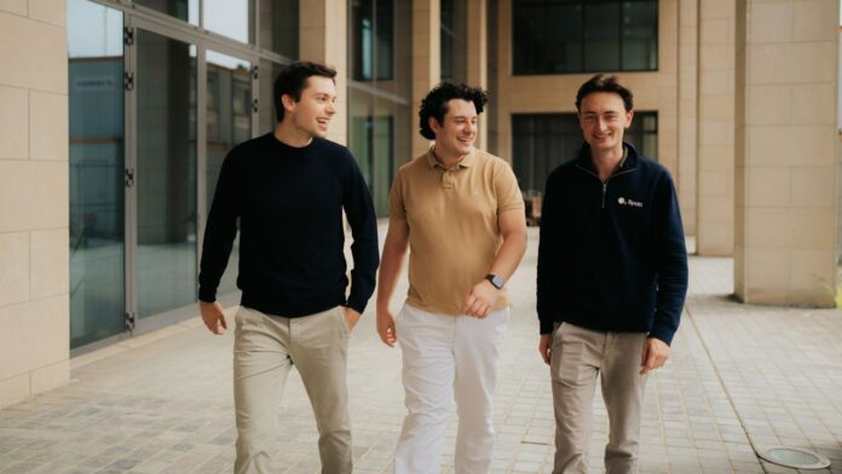
Belgian recruiting-software startup Spott raised €18.3 million ($21 million) in Series A funding led by Balderton Capital, with participation from Base10 Partners, Y Combinator, and Fortino. The round follows a €2.8 million Seed completed in March 2025 and brings disclosed funding to approximately €21.1 million.
Spott combines the applicant-tracking and customer-relationship functions used by recruitment agencies with candidate search, outreach, note-taking, scheduling, and automation. It converts information from emails, CVs, calls, and hiring pipelines into searchable data rather than leaving it across several disconnected products.
That creates a stronger AI proposition than adding a chatbot to an old database. Recruitment firms accumulate years of candidate conversations, placements, notes, client relationships, and career histories. Once that information is structured and searchable by context rather than keywords, the historical database itself can become more valuable.
Spott says revenue has increased more than tenfold since the beginning of 2026 and that hundreds of agencies now use the product. Customers include H.W. Anderson and 200-person CGP Group, which uses Spott across 12 countries. Roughly 20% of current revenue comes from APAC and 15% from the U.S., the company says. It plans offices in Sydney and New York and expects headcount to increase from 44 to roughly 60 by year-end.
One product decision is worth watching: Spott does not allow the AI to autonomously advance candidates or present them to clients without human approval. That boundary may become a useful feature as AI enters employment decisions where customers care about accuracy, bias, and accountability.
Funding Details
Startup: Spott
Investors: Balderton Capital, Base10 Partners, Y Combinator, Fortino
Amount Raised: €18.3 million / approximately $21 million
Total Raised: Approximately €21.1 million disclosed
Funding Stage: Series A
Funding Date: September 22, 2026
Headquarters: Leuven, Belgium
Sector: Enterprise AI/recruiting software / HR technology
Valuation: Not disclosed
AI Hospitality Group raises $7.5M to become the hotel operator, not the software vendor
Dallas-based AI Hospitality Group launched with $7.5 million in Seed funding led by Rackhouse Venture Capital, with Sierra Ventures, Dynamo Ventures, and hospitality-industry angel investors participating.
Former Remington Hospitality CEO Sloan Dean founded the startup, which is taking an unusual route into hotel AI. It does not plan to sell an automation product to existing hotel managers. Instead, AIHG signs the management agreement itself and becomes responsible for the property’s operating performance.
Its technology pulls information from more than 20 hotel systems into a common data model and uses more than 60 autonomous agents for functions including recruiting, accounting, revenue management, marketing, RFP processing, and other back-office work. Guest-facing teams remain human.
The investment thesis is effectively services-as-software economics turned inside out. A SaaS vendor might collect a small percentage of what a hotel spends operating the property. An AI-native operator can potentially capture part of the entire management-fee pool and share directly in profit improvement.
But AIHG still has to prove the model. The company is working with The Ameswell Hotel and two Parable Hospitality properties as design partners and plans to take over its first managed properties later this year. Dean is targeting more than 500 basis points of gross operating profit margin improvement, but that remains a target rather than a demonstrated portfolio-wide result.
Funding Details
Startup: AI Hospitality Group
Investors: Rackhouse Venture Capital, Sierra Ventures, Dynamo Ventures, and strategic angels
Amount Raised: $7.5 million
Total Raised: $7.5 million disclosed
Funding Stage: Seed
Funding Date: September 21, 2026
Headquarters: Dallas, Texas
Sector: Hospitality technology / agentic AI/hotel operations
Valuation: Not disclosed
Benford raises €5M to rebuild statutory audit as a technology company
Oslo- and London-based Benford raised €5 million in pre-seed funding from firstminute capital, Global Founders Capital, Sondo, and financial-technology founders and executives including Peter ter Maaten of HSO; Arthur Waller and Quentin de Metz of Pennylane; Alexandre Prot of Qonto; and the Spandow family of Amesto.
Benford’s unusual decision is to become the audit firm instead of selling software to auditors.
The company is registered to perform statutory audits in Norway, employs qualified auditors, and uses its internally developed AuditOS to connect with ERP systems, bank records, invoices, subledgers, and other client information. Software handles data collection, testing, logging, and workflow, while licensed auditors remain responsible for judgment, exceptions, and the signed audit opinion.
That business structure opens a much larger revenue pool than an audit-software subscription, but it also means Benford assumes professional liability, staffing requirements, licensing obligations, and the operational burden of service delivery.
The timing may work in its favor. European small and midsized companies still face mandatory audits in many circumstances while traditional audit firms struggle with staffing and consolidation. If the software meaningfully reduces hours per engagement without weakening audit quality, Benford could improve both pricing and auditor capacity.
The company will use the round to grow its Oslo and London teams and expand into Sweden and other European markets.
Funding Details
Startup: Benford
Investors: firstminute capital, Global Founders Capital, Sondo, Peter ter Maaten, Arthur Waller, Quentin de Metz, Alexandre Prot, Spandow family and others
Amount Raised: €5 million
Total Raised: €5 million disclosed
Funding Stage: Pre-seed
Funding Date: September 22, 2026
Headquarters: Oslo, Norway, with operations in London
Sector: Audit technology/fintech / professional services
Valuation: Not disclosed
ZhiYin Bio raises tens of millions of yuan to develop AI-assisted cell reprogramming
Beijing-based ZhiYin Bio completed a Seed round worth tens of millions of yuan, with Shaanxi Growth Enterprise Guidance Fund Management investing as the sole lead investor. The financing will support preclinical research, investigational new drug filings, GMP laboratory construction, and equipment purchases.
The company is developing an AI-assisted cell-reprogramming platform called iCellFate. Its approach aims to alter cellular identity and state through epigenetic regulation without modifying the underlying DNA sequence.
That is an important biological distinction. Much of modern cell and gene therapy involves editing genetic material or introducing engineered genes. ZhiYin is exploring whether cells can instead be pushed into therapeutically useful states by modifying the regulatory processes that determine which genes are active.
The team is targeting oncology and regenerative medicine and says its research combines cell-fate biology with AI-assisted screening and molecular design. Members of the scientific team have backgrounds at Capital Medical University, while industry personnel include people with prior experience at cell-therapy companies including Legend Biotech.
This remains very early-stage biotechnology. The round is financing preclinical work and an eventual IND filing, not commercial deployment. The relevant milestones will therefore be reproducible biological effects, safety, manufacturing feasibility, and eventually clinical data—not the sophistication of the AI layer alone.
Funding Details
Startup: ZhiYin Bio
Investors: Shaanxi Growth Enterprise Guidance Fund Management
Amount Raised: Tens of millions of RMB; exact amount not disclosed
Total Raised: Not disclosed
Funding Stage: Seed
Funding Date: September 22, 2026
Headquarters: Beijing, China
Sector: Biotechnology/cell reprogramming / AI-enabled drug development
Valuation: Not disclosed
Definedge raises ₹22 crore to expand its investing and trading ecosystem
Pune-based financial-technology company Definedge Securities raised ₹22 crore in Pre-Series A funding, with existing investors Nitin Agarwal and D. Prasad participating alongside new investors Anant Jain and Sachin Kasera.
Definedge operates a broad set of investing, trading, research, education, and analytics products. The company plans to put the new capital into margin funding, marketing and distribution, technology infrastructure, and further development of AI and automation across its product suite.
The business is an interesting counterpoint to startups built around one narrow AI agent. Definedge already has brokerage revenue, premium software subscriptions, and an education business. It is introducing AI into an existing financial operating system rather than asking investors to finance AI before it has a distribution channel.
The company says its user base increased 125% over the past 14 months and tenfold over the past 36 months. It is also applying for full GIFT City membership and initially plans to make more international market data available to Indian investors before exploring broader global distribution.
Definedge has also introduced a Model Context Protocol interface exposing market data, indicators, patterns, and other tools through APIs. That may become strategically useful if investment research increasingly shifts from humans querying dashboards to agents querying structured financial infrastructure.
Funding Details
Startup: Definedge Securities
Investors: Nitin Agarwal, D. Prasad, Anant Jain, Sachin Kasera
Amount Raised: ₹22 crore
Total Raised: Not disclosed in the current financing report
Funding Stage: Pre-Series A
Funding Date: September 22, 2026
Headquarters: Pune, India
Sector: Fintech/brokerage technology/investment software
Valuation: Not disclosed
OpenDebt raises A$2M to automate debt recovery without removing human escalation
Sydney-based OpenDebt raised A$2 million in pre-seed funding from Blackbird Ventures and Antler. Founded in 2025 by former Westpac banker Norman Yan and Jonas Tischer, the company builds AI systems for lenders and debt-collection agencies.
OpenDebt can either assist human collectors or communicate directly with borrowers through voice, SMS, and email. Before discussing an account, the system verifies identity. Cases involving hardship, sensitive situations, or requests for a person can be routed to human specialists.
That workflow illustrates why financial AI is becoming a governance problem as well as a model problem.
Debt collection is highly sensitive. An autonomous agent must know not simply what to say, but when to stop acting. Customer-specific policies, consumer-protection rules, accurate balances, documentation, identity, and escalation rules all matter. The product’s value therefore depends partly on encoding those constraints reliably around the model.
OpenDebt is already expanding deployments with Australian lenders and collection agencies and plans early U.S. partnerships. The opportunity is particularly large in smaller delinquent balances that are often uneconomic for labor-intensive collection teams.
Funding Details
Startup: OpenDebt
Investors: Blackbird Ventures, Antler
Amount Raised: A$2 million
Total Raised: A$2 million disclosed
Funding Stage: Pre-seed
Funding Date: September 22, 2026
Headquarters: Sydney, Australia
Sector: Fintech / AI debt recovery / financial operations
Valuation: Not disclosed
TacnIQ.ai raises $1.5M first close to teach machines the missing sense of touch
Physical-AI startup TacnIQ.ai raised $1.5 million from In Group Holdings as the first disclosed portion of a planned $3 million pre-seed round. That distinction matters: $1.5 million is the capital currently announced as raised, while $3 million is the intended full round.
TacnIQ is developing tactile foundation models intended to let robots and machines interpret physical contact. Its sensor systems gather information about touch and interaction, which can then be used across applications in logistics, construction, e-commerce, hospitality, healthcare, and robotics.
Vision models inherited an enormous supply of images and video from the internet. Robotics has no equivalent global dataset for grip, force, pressure, texture, slippage, and other contact events.
TacnIQ says it has accumulated more than 5,000 hours of tactile-interaction data from experiments and commercial deployments and is training models intended to work across several industries, rather than building a separate model for each use case. That figure is company-reported, but the underlying data thesis is important.
If physical AI grows, tactile information could become a separate infrastructure market, much like labeled images helped create the computer-vision industry. Robot builders may compete over complete machines, but many will need better data and models for manipulating real objects.
Funding Details
Startup: TacnIQ.ai
Investors: In Group Holdings
Amount Raised: $1.5 million closed as part of a planned $3 million round
Total Raised: $1.5 million currently disclosed
Funding Stage: Pre-seed
Funding Date: September 22, 2026
Headquarters: Singapore and California, United States
Sector: Physical AI/robotics / tactile intelligence
Valuation: Not disclosed
What Today’s Funding Activity Reveals
The first pattern is AI moving into categories where mistakes have direct economic or physical consequences.
A recruiting error can affect a hiring decision. A collection agent can violate consumer-protection rules. A payment-routing mistake can destroy transaction margin or lose a booking. An audit error can carry legal consequences. A neural-decoding system or cell therapy can eventually affect a patient. That is different from building another productivity assistant whose main failure mode is producing an unhelpful paragraph.
The second pattern is that human oversight is becoming part of product architecture rather than evidence of AI failure. Spott keeps final candidate decisions with recruiters. OpenDebt routes sensitive cases to specialists. Benford keeps qualified auditors responsible for judgments and signatures. These startups don’t assume maximum autonomy automatically creates the best product.
Third, investors are financing companies that own the workflow instead of merely supplying another tool. AI Hospitality Group wants the hotel-management contract. Benford wants the audit engagement. OpenDebt can execute collection conversations. CellPoint wants to make payment decisions rather than simply display payment data.
That changes the size of the potential business. Software has historically captured only a fraction of the labor or service market it supports. If AI lets a startup perform the service itself, the addressable revenue pool can expand substantially. The tradeoff is equally important: the startup now owns the outcome.
Fourth, today’s biotechnology and physical-AI financings show that proprietary data remains one of the stronger defenses against model commoditization. BCI-Sonics can accumulate neural data. ZhiYin can build experimental cell-reprogramming datasets. TacnIQ can accumulate tactile interactions. Spott’s recruiting system becomes more useful as agency-specific candidate history is structured around it.
Those data pools cannot simply be recreated by downloading the newest public model.
Fifth, the capital distribution does not support the conclusion that venture markets have broadly reopened. HighLife’s $90 million-plus financing represents a large portion of today’s disclosed dollars, while much of the remaining activity sits between pre-seed and Series A. The better interpretation is selective conviction: investors will fund technically or operationally difficult categories when they can identify a credible moat.
Finally, the geographic breadth is notable. The 10 companies span France, the United Kingdom, China, Belgium, the United States, Norway, India, Singapore, and Australia. Silicon Valley remains important, but today’s strongest early-stage theses around brain interfaces, audit automation, tactile AI, recruitment software, and regulated financial operations are forming across several startup ecosystems.
Startup Funding Table
| Startup | Amount Raised | Sector | Funding Stage | Lead/Key Investors | Country |
|---|---|---|---|---|---|
| HighLife | $90M+ / €80M | Structural-heart medtech | Growth financing | Andera, Sofinnova, Supernova, Mérieux + others | France |
| CellPoint | $34M | Travel payments / AI decisioning | Growth investment | Toscafund / Penta Capital | UK |
| BCI-Sonics | RMB200M | Brain-computer interfaces / NeuroAI | Pre-Series A | HSG, Yunqi Capital + others | China |
| Spott | €18.3M | Recruiting AI / HR software | Series A | Balderton, Base10, YC, Fortino | Belgium |
| AI Hospitality Group | $7.5M | Agentic AI/hotel operations | Seed | Rackhouse, Sierra Ventures, Dynamo Ventures | U.S. |
| Benford | €5M | Audit technology/fintech | Pre-seed | firstminute, GFC, Sondo + angels | Norway / UK |
| ZhiYin Bio | Tens of millions RMB | AI biotech/cell reprogramming | Seed | Shaanxi Growth Enterprise Guidance Fund | China |
| Definedge | ₹22Cr | Brokerage/investment technology | Pre-Series A | Nitin Agarwal, D. Prasad, Anant Jain, Sachin Kasera | India |
| OpenDebt | A$2M | AI debt recovery/fintech | Pre-seed | Blackbird Ventures, Antler | Australia |
| TacnIQ.ai | $1.5M first close | Tactile AI/robotics | Pre-seed | In Group Holdings | Singapore / U.S. |
Strategic Takeaways for Founders and Investors
Regulated AI may be harder to build but easier to defend. Benford, OpenDebt, CellPoint, BCI-Sonics, and ZhiYin all operate where customers care about permissions, reliability, traceability, or regulatory approval. The barriers slow companies down, but they also slow competitors down.
Owning the service can create a much larger business than selling the tool. AI Hospitality Group and Benford illustrate the emerging AI-native services model. Instead of taking a small software fee from an incumbent service provider, they are trying to collect the service revenue themselves. Founders pursuing this model need operating expertise alongside software talent because they inherit the customer’s expectations around delivery, liability, and quality.
Human-in-the-loop design can be a competitive advantage. OpenDebt’s escalation rules, Benford’s licensed auditors, and Spott’s human-controlled hiring decisions show that autonomy should be applied selectively. In high-consequence workflows, the product that knows when not to automate may earn more trust than the one promising complete automation.
Proprietary interaction data compounds. TacnIQ’s tactile information, BCI-Sonics’ eventual neural datasets, Spott’s recruiting history, and ZhiYin’s experimental biological data can become richer with deployment. Investors increasingly want to know what a startup learns from each customer that the next competitor cannot instantly purchase.
Distribution can matter more than model sophistication. CellPoint already sits inside travel payments. Definedge already has brokerage users. Spott has recruiting agencies operating across several regions. A technically superior new entrant still has to recreate those customer relationships, integrations, migration processes, and trust.
Physical AI is creating infrastructure markets before general-purpose robots have been settled. TacnIQ does not need to manufacture the winning humanoid robot. If many robot builders need touch models and tactile datasets, it can sell into the category regardless of which robot platform wins. The same pick-and-shovels logic increasingly applies to sensors, simulation, actuators, data collection, and control systems.
Clinical capital remains milestone capital. HighLife’s $90 million-plus financing is tied to European commercialization and a U.S. pivotal study. ZhiYin’s much earlier Seed round is tied to preclinical work and an eventual IND. Founders in biotech and medtech should judge financing capacity against the next value-changing scientific or regulatory milestone rather than against software-company fundraising benchmarks.
Conclusion
Todyy’s funding activity does not produce another $2 billion AI company. It produces something arguably more useful for understanding where venture capital is going next.
HighLife is financing clinical validation and commercialization. BCI-Sonics is combining ultrasound with AI to pursue a non-invasive brain interface. Spott is turning recruiting data into an operating system. AI Hospitality Group and Benford are using software to challenge entire service businesses rather than sell tools into them. TacnIQ is building the touch-data layer robots may eventually need, while OpenDebt and CellPoint are bringing AI into financial workflows where rules and outcomes matter.
The common thread is responsibility.
As access to capable intelligence gets cheaper, investors are placing more value on the companies they can trust to use it inside the real systems where money moves, people are hired, financial statements are signed, patients are treated, hotels are operated, and machines interact with the physical world.
The next AI premium may belong less to whoever has the smartest model and more to whoever owns the workflow, the data, the permission, and the outcome.