Venture Capital & Startup Funding Roundup, September 21, 2026: Bain Capital Ventures, Dream Ventures, Morgan Stanley & More
 Nickie Louise
Posted On September 21, 2026

Venture money today is moving down the technology stack and out into the physical world. The largest financings in the past 12 hours aren’t dominated by another crop of thin AI application layers. They are going into weather modification, advanced nuclear power, domestic AI chips, electricity orchestration, space intelligence, robot interoperability, and the power electronics sitting underneath AI servers. That is a meaningful shift in what investors appear willing to pay for: infrastructure that becomes harder to replace as compute, energy demand, automation, and geopolitical competition intensify.
The 10 rounds selected below represent roughly $442 million of disclosed equity and venture funding, using reported dollar conversions and counting only the $70 million equity component of Samsung C&T’s Kairos Power agreement rather than the additional in-kind engineering support. About three-quarters of that capital went to U.S. and Chinese companies, while Australia produced two unusually strategic climate-and-space rounds. The result is a funding tape that looks less like a broad risk-on revival and more like a concentrated search for bottlenecks with real pricing power.
The Macro Environment: Capital Moves Down the Stack
Today’s deal flow points to a venture market increasingly separating AI exposure from AI defensibility. Investors can buy exposure to generative AI through hundreds of software companies; what is scarcer is control over the systems AI depends on. Kairos Power sits in electricity generation. Xingyun sits in semiconductors. Jierendi sits in power delivery for compute. Zhongyi is trying to become an interoperability layer for robots. HEO sells visibility into increasingly strategic orbital infrastructure. Rainmaker attacks freshwater supply. Those businesses have very different revenue models, but they share one attribute: their value is tied to physical or technical constraints that another model can’t reproduce through prompting.
That helps explain the unusually prominent role of strategic capital. Samsung C&T is not simply buying a financial stake in Kairos; it is bringing nuclear engineering and construction capabilities alongside its investment. CATL-linked capital is backing Xingyun’s domestic chip effort. SMIC Capital and solar-and-power electronics company GoodWe are backing Jierendi. Australia’s National Reconstruction Fund is part of HEO’s financing. These investors’ operating interests overlap with what the startups are building, which can be more valuable than an additional generalist venture logo when manufacturing, procurement, qualification, and government relationships determine time to market.
The software deals that made the list tell a different story. Corridor’s $25 million seed round is large because investors are betting AI can remove labor from an expensive healthcare-administration workflow rather than sell another horizontal productivity tool. Kheops is turning transactional retail data into assortment decisions. Sprive has a more traditional consumer-fintech proposition, but its reported user base, revenue run rate, and cash-flow-positive position give investors operating evidence rather than an AI narrative alone.
It also has a public-market connection. Late-stage private investors have more current valuation reference points as companies begin testing the IPO market again: Oura has been targeting a valuation of as much as $15.6 billion in its offering, while biotech company ADARx has pursued an IPO that could value it at up to roughly $1.74 billion. An opening exit window does not make venture capital indiscriminate; it can instead make investors more valuation-conscious because private marks can once again be compared with live public demand.
The Top Funding Rounds
Rainmaker raises $100M to scale cloud-seeding water infrastructure
Rainmaker’s $100 million Series B is one of the clearest expressions of today’s move toward climate adaptation rather than climate accounting. The El Segundo, California startup develops cloud-seeding systems intended to increase precipitation and freshwater availability. The round includes NOA VC, Upfront Ventures, DCVC, Lowercarbon Capital, and Dream Ventures.
Why does a weather-modification company command a nine-figure Series B? Water is becoming an infrastructure problem with direct economic consequences for agriculture, municipalities, industry, and energy. Unlike many climate-software businesses, Rainmaker is trying to alter physical supply. That makes the technical, regulatory, and execution risk higher, but it also creates the possibility of an asset and operating network that is harder to copy than pure software. The investor roster is notable because it brings together climate-focused capital and deep-tech investors rather than relying on a single thematic fund.
The strategic question is whether Rainmaker can turn cloud seeding from a project-based intervention into repeatable water infrastructure with measurable economics. The financing gives it substantial resources to pursue that transition. The announcement did not disclose a new valuation.
Funding Details
Startup: Rainmaker
Investors: NOA VC, Upfront Ventures, DCVC, Lowercarbon Capital, Dream Ventures, and others
Amount Raised: $100 million
Total Raised: Not fully disclosed in today’s announcement
Funding Stage: Series B
Funding Date: September 21, 2026
Headquarters: El Segundo, California, U.S.
Sector: Climate tech/water infrastructure/weather technology
Xingyun Integrated Circuit raises about $110M to expand China’s domestic AI-chip capacity
Beijing-based Xingyun Integrated Circuit has raised nearly $110 million in a late-stage financing, according to Dealroom’s live funding report. CATL led through investment platform Puquan Capital and its own capital, with Primavera among the disclosed participants. Dealroom’s headline rounds the transaction to nearly $120 million while its underlying description states nearly $110 million; this report uses the more conservative figure.
The strategic signal is more interesting than the numerical discrepancy. A battery giant’s capital flowing into AI semiconductors illustrates how China’s industrial groups are becoming investors in the computing supply chain. Chips now sit at the intersection of automotive intelligence, industrial automation, data-center demand, and national technology policy. For an industrial company such as CATL, owning exposure to domestic semiconductor capability can be both a financial bet and a supply-chain hedge.
That also distinguishes Xingyun from conventional fabless semiconductor financing. Strategic investors may offer design feedback, customer pathways, manufacturing relationships, and adoption channels. The round’s valuation was not disclosed, so it is impossible to judge how aggressively investors priced those advantages.
Funding Details
Startup: Xingyun Integrated Circuit
Investors: CATL-linked Puquan Capital and CATL-affiliated capital; Primavera and other participants
Amount Raised: Nearly $110 million, as reported
Total Raised: Not disclosed
Funding Stage: Late-stage financing; series not disclosed
Funding Date: September 21, 2026
Headquarters: Beijing, China
Sector: Semiconductors / AI chips
Kairos Power raises $70M in equity to advance its Google-linked nuclear buildout
Kairos Power’s headline number requires some precision. Samsung C&T agreed to provide up to $100 million of combined support, but Kairos told TechCrunch that approximately $70 million is equity investment and the remainder consists of in-kind engineering services. Samsung will also join the integrated engineering, procurement, and construction effort around Kairos’ planned 50-megawatt reactor.
For venture investors, this is a textbook example of why energy infrastructure has moved back to the center of technology investing. Kairos is part of Google’s plan to obtain roughly half a gigawatt of nuclear generation by 2035, with the first 50 MW targeted through the company’s reactor program. Kairos is currently developing Hermes 1 and Hermes 2 in Oak Ridge, Tennessee, as it works toward commercial deployment.
Samsung’s engineering participation may matter at least as much as its cash. Advanced nuclear companies do not fail because they lack slide decks; they face long construction schedules, licensing requirements, supply chains, and first-of-a-kind engineering risk. Capital paired with a contractor that has nuclear construction experience can attack those execution constraints directly. The deal therefore says something broader about AI infrastructure: technology companies increasingly need to finance the electricity system alongside the compute system.
Funding Details
Startup: Kairos Power
Investors: Samsung C&T Engineering & Construction Group
Amount Raised: $70 million equity; up to $100 million including in-kind engineering support
Total Raised: Comprehensive cumulative equity total not disclosed with this agreement
Funding Stage: Strategic late-stage investment; no priced-series label disclosed
Funding Date: September 21, 2026
Headquarters: Alameda, California, U.S.
Sector: Advanced nuclear / energy infrastructure
Amber Electric raises $56.2M to take residential energy automation into Europe

Australian energy company Amber Electric raised €49 million, or about $56.2 million (A$78.5 million), in a Series E led by Morgan Stanley Investment Management’s 1GT climate strategy. Existing investors including ETF Partners, Innovation Victoria, and E.ON also participated, according to Australian reporting.
Amber’s proposition sits at an increasingly valuable point in the electricity system: coordinating households, batteries, wholesale prices, and a grid with much more intermittent generation. Rather than treating residential batteries as passive backup equipment, Amber uses software to automate when customers buy, store, and sell electricity. Startup Daily reported that the company has built a significant position in Australia’s residential battery-automation market.
The Series E is therefore less a bet on another electricity retailer than on software becoming the control layer for distributed energy. As solar panels, home batteries, electric vehicles, and dynamic tariffs proliferate, the entity deciding when energy moves can capture more economic value. Morgan Stanley’s entry also signals that the opportunity has matured beyond early climate VC and into larger institutional climate-capital pools. The valuation was not disclosed.
Funding Details
Startup: Amber Electric
Investors: Morgan Stanley Investment Management’s 1GT strategy; ETF Partners, Innovation Victoria, E.ON, and existing investors
Amount Raised: €49 million / approximately US$56.2 million / A$78.5 million
Total Raised: Not disclosed in the current announcement
Funding Stage: Series E
Funding Date: September 21, 2026
Headquarters: Melbourne, Australia
Sector: Climate tech / distributed energy/battery software
HEO raises $25M in funding to extend satellite inspection into geostationary orbit
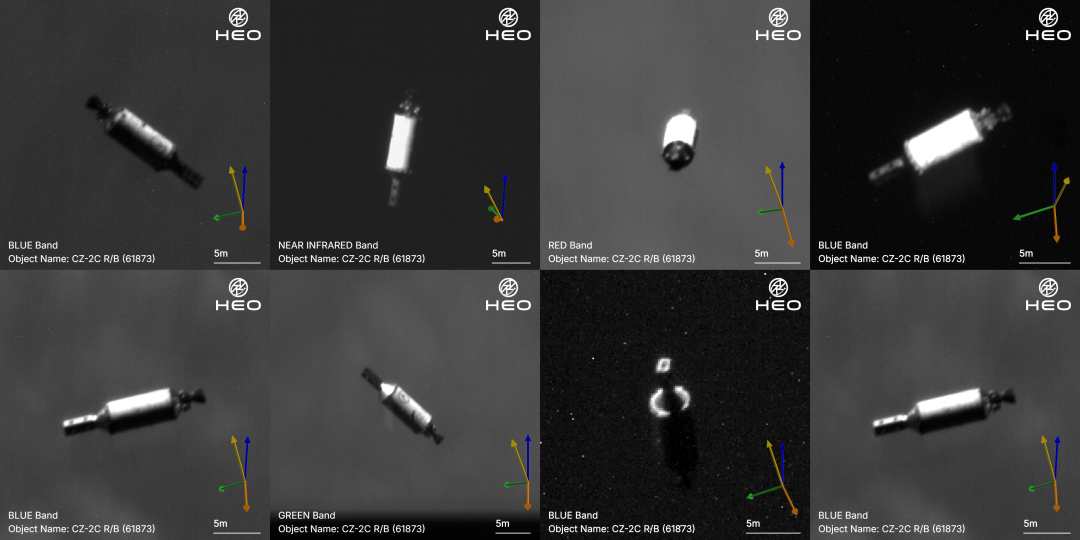
Sydney-based HEO raised US$25 million, roughly A$37 million, in Series B funding to expand its space-imaging network, including into geostationary orbit. Beaten Zone Venture Partners led the round; Australia’s National Reconstruction Fund Corporation contributed A$10 million, while SpaceX alumni and other angel investors also participated, according to Australian reporting.
HEO takes an unusual approach to space situational awareness. Rather than observing every spacecraft from the ground, it uses cameras and sensors carried by satellites to obtain close-range “flyby” imagery of other objects in orbit. That can give operators and governments visual information about spacecraft condition and behavior that conventional tracking alone cannot provide. Axios reported that the new capital will support expansion into geostationary orbit, where communications and other strategically important satellites operate.
The investor mix shows why space intelligence increasingly sits between commercial space and defense technology. HEO reportedly serves customers including the U.S. National Reconnaissance Office, the Australian Department of Defence, and Japanese government users. For investors, that creates exposure to a market where satellite proliferation raises the value of knowing not just where an object is, but what it looks like and what it is doing.
Funding Details
Startup: HEO
Investors: Beaten Zone Venture Partners; National Reconstruction Fund Corporation; SpaceX alumni and other investors
Amount Raised: US$25 million, approximately A$37 million
Total Raised: Not disclosed in the current announcement
Funding Stage: Series B
Funding Date: September 21, 2026
Headquarters: Sydney, Australia
Sector: Space intelligence/defense technology/satellite imaging
Corridor raises $25M in funding to rebuild small-business health benefits around AI-assisted service
Corridor has raised a $25 million seed round led by Bain Capital Ventures to build a health-benefits brokerage for small and midsize employers. Its customers still interact with human advisers, but Corridor uses AI agents behind the scenes for administrative work such as verifying whether physicians are in-network, scheduling care, and updating insurance information.
The round is large for a seed deal, but the thesis helps explain the check size. Employee benefits is a high-spend category burdened by fragmented information, repetitive administrative tasks, and service work. Corridor is not asking employers to replace the entire benefits system with a chatbot. It is using automation to change the labor economics of the brokerage and concierge layer while keeping humans at the customer interface.
That model reflects a broader evolution in enterprise AI investing. The question is shifting from “can an agent perform a task?” toward “can an agent alter the gross-margin structure of a service business?” Healthcare administration is particularly attractive because reducing labor per account can translate directly into operating leverage, assuming accuracy and service quality hold up. Bain’s seed-stage commitment suggests investors see enough room for a new technology-enabled intermediary despite entrenched benefits brokers.
Funding Details
Startup: Corridor
Investors: Bain Capital Ventures led; additional participants were not disclosed in the cited report
Amount Raised: $25 million
Total Raised: At least $25 million in disclosed funding
Funding Stage: Seed
Funding Date: September 21, 2026
Headquarters: United States; specific headquarters was not identified in the cited announcement
Sector: Healthtech / employee benefits / AI-enabled services
Kheops raises €15M to turn retail transaction data into assortment intelligence
French retail-technology startup Kheops raised €15 million, approximately $17 million, from Odyssée Venture, ISAI, and Elaia. Founded in 2021 by Caroline Poinsignon and Thibault Boyeux, Kheops began by simplifying direct purchases between stores and suppliers outside retailers’ centralized purchasing systems.
The interesting part is what comes next. Kheops says its platform now links more than 500 stores, 3,000 suppliers, and roughly 200,000 products. Order volume has quadrupled over the past year while revenue has tripled, according to Dealroom’s source report. The company now wants to use the resulting dataset to recommend store-level assortments and anticipate ordering demand.
That progression—from workflow software to decision software—is one of the more defensible ways for vertical SaaS companies to incorporate AI. The value is not simply access to a model; it is the proprietary transaction history generated by the workflow. If Kheops can use that information to tell a retailer what to stock rather than merely process how it buys, its potential revenue per customer and switching cost both rise. The financing will support about 30 hires, further French expansion, and eventual international growth.
Funding Details
Startup: Kheops
Investors: Odyssée Venture, ISAI, Elaia
Amount Raised: €15 million, approximately $17 million
Total Raised: Not disclosed
Funding Stage: Early-stage financing; specific series not disclosed
Funding Date: September 21, 2026
Headquarters: France; city not specified in the cited announcement
Sector: Retail technology/enterprise software/data intelligence
Zhongyi Embodied Intelligence raises about $15M to build an interoperability layer for robots
China’s Zhongyi Embodied Intelligence has raised nearly CNY100 million, or roughly $15 million, in an angel round led by Anda Intelligent with participation from Shengangtong Capital. Zhongyi is positioning itself as infrastructure for embodied AI rather than another robot manufacturer: it wants to provide an operating layer that lets robots from different vendors work together.
That interoperability problem is likely to become more visible as factories, warehouses, hotels, and other physical environments deploy machines from multiple suppliers. A robot ecosystem in which every manufacturer runs a closed stack resembles computing before common operating systems and networking standards reduced integration costs. Zhongyi is effectively betting that orchestration becomes a separate value layer as the installed base grows.
The size of the angel round is a signal in itself. Nearly $15 million at that stage suggests investors are willing to fund infrastructure bets before the embodied-AI market has settled on standards or dominant platforms. Zhongyi, whose Shenzhen entity has also entered robotics and AIoT collaborations this year, will still need to prove that manufacturers have an incentive to support a neutral coordination layer rather than their own proprietary ecosystems.
Funding Details
Startup: Zhongyi Embodied Intelligence
Investors: Anda Intelligent, Shengangtong Capital
Amount Raised: Nearly CNY 100 million, approximately $15 million
Total Raised: Approximately CNY 100 million in the disclosed angel round; broader cumulative total not disclosed
Funding Stage: Angel
Funding Date: September 21, 2026
Headquarters: Shenzhen, China
Sector: Robotics / embodied AI/automation infrastructure
Jierendi Electronic Technology raises about $13.8M to target power systems for AI servers
Jierendi Electronic Technology, also known as JND Tech, has raised about $13.8 million in Series B financing, co-led by SMIC Capital and GoodWe, with Hengdian Capital and Lianhe Capital participating. The Shanghai company develops digital intelligent power-supply technology and related industrial power solutions.
This is a smaller financing than the headline AI-chip rounds, but it sits beside one of the industry’s most important constraints: delivering power efficiently and reliably to increasingly dense compute systems. AI infrastructure spending does not stop at GPUs. Server power conversion, cooling, networking, substations, and grid connections must all scale with compute, creating opportunities for suppliers that historically would have been treated as industrial electronics companies rather than technology startups.
The syndicate is informative. SMIC Capital brings semiconductor exposure, while GoodWe operates in power electronics. That combination suggests the investment case is tied not only to financial growth but also to the convergence of semiconductor and electricity infrastructure. Jierendi was founded in 2020 and, according to its Dealroom company profile, disclosed a CNY 20 million Series A in 2023.
Funding Details
Startup: Jierendi Electronic Technology / JND Tech
Investors: SMIC Capital, GoodWe, Hengdian Capital, Lianhe Capital
Amount Raised: Approximately $13.8 million
Total Raised: Not fully disclosed; Dealroom separately records a CNY20 million 2023 Series A
Funding Stage: Series B
Funding Date: September 21, 2026
Headquarters: Shanghai, China
Sector: Power electronics/semiconductor infrastructure / AI-server power
Sprive raises $10M to turn mortgage overpayment into a consumer-fintech habit
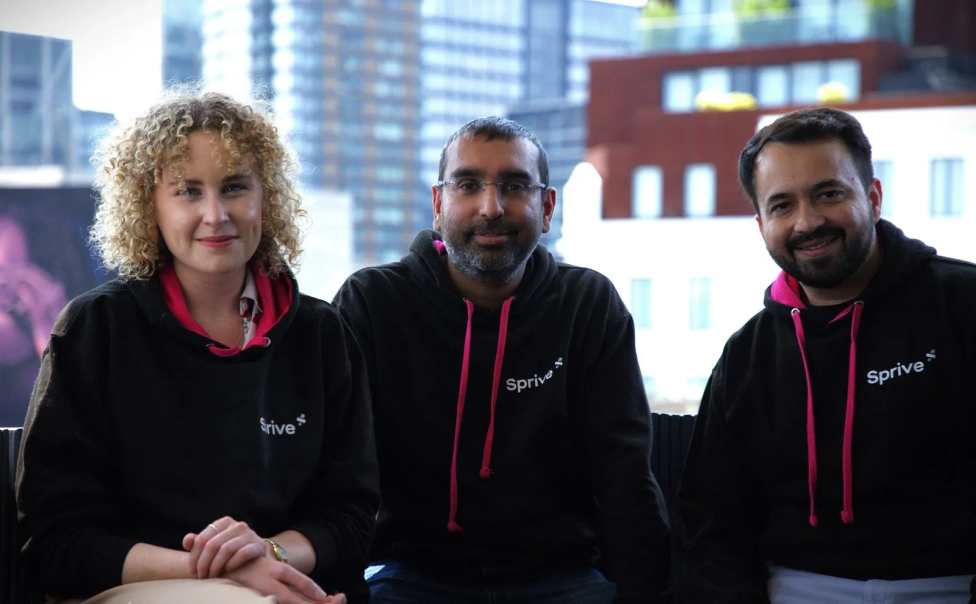
London-based Sprive has secured $10 million, about £7.7 million, in Series A financing, bringing total reported funding to over $15 million. Existing investors Ascension, Channel 4 Ventures and the Velocity EIS Technology Fund returned, while Active Partners, Wealth Club and Rank Ventures joined as new backers.
Sprive helps homeowners reduce mortgage debt through automated overpayments and cashback earned from retail spending. The Times reports that it works with 16 UK lenders, has 567,000 users and supports around £42 billion of mortgages. Since January 2025, annualized spending through the product has reportedly grown 35-fold to £328 million; the company says it has reached cash-flow positivity and an £18 million annual revenue run rate.
Those operating numbers matter more than the category label. Consumer fintech is a difficult market when customer acquisition costs are high and users have little reason to remain inside a standalone app. Sprive’s attempt to tie everyday shopping rewards directly to a large household liability gives it a recurring financial objective rather than a one-off transaction. The new capital is therefore a bet on distribution and engagement economics, not simply financial-product aggregation. The valuation was not disclosed.
Funding Details
Startup: Sprive
Investors: Ascension, Channel 4 Ventures, Velocity EIS Technology Fund, Active Partners, Wealth Club, Rank Ventures
Amount Raised: $10 million, approximately £7.7 million
Total Raised: More than $15 million
Funding Stage: Series A, as reported
Funding Date: September 21, 2026
Headquarters: London, United Kingdom
Sector: Fintech/mortgages / consumer finance
What Today’s Funding Activity Reveals
The first pattern is infrastructure concentration. Six of the ten selected companies—Rainmaker, Kairos, Xingyun, HEO, Zhongyi, and Jierendi—are directly tied to hardware or physical infrastructure. Amber adds a seventh company whose software controls physical energy assets. Together, that is a notably different capital profile from a funding day led by conventional SaaS.
The second pattern is that AI is increasingly an upstream capital story. Xingyun is about chips; Jierendi is about electrical power around compute; Kairos is about generation capacity; Zhongyi is about the operating layer for physical robots. Even Kheops and Corridor are using AI in ways tied to proprietary workflows rather than competing directly at the foundation-model layer. Investors appear more interested in owning the constraint around intelligence than another interface to intelligence.
Third, industrial and sovereign investors are becoming more visible. Samsung C&T’s Kairos package joins capital with engineering execution. CATL-linked money in Xingyun connects semiconductors with one of the world’s major battery and manufacturing ecosystems. Australia’s National Reconstruction Fund participating in HEO connects venture growth with national space and defense capability. That is venture capital behaving increasingly like industrial policy—sometimes through governments, sometimes through corporate balance sheets, and often through both.
Geographically, the group is remarkably balanced despite the capital concentration. Three selected startups are U.S.-based, three are Chinese, two are Australian, one is French, and one is British. Using reported dollar equivalents, U.S. and Chinese companies together account for roughly $334 million, or about 76% of the selected total of roughly $442 million. Yet Australia punches well above its startup-market size because both Amber and HEO address internationally relevant infrastructure problems: distributed electricity and orbital intelligence.
The final pattern is stage dispersion. Today’s largest checks range from an angel round at Zhongyi to Series B rounds at Rainmaker and HEO, Amber’s Series E, and strategic late-stage capital at Kairos and Xingyun. Capital is therefore not simply moving “later.” It is moving earlier when investors believe a technical layer could become foundational, and later when a company needs large sums to deploy real infrastructure.
Comparative Funding Table
| Startup | Amount Raised | Sector | Funding Stage | Lead Investors | Country |
|---|---|---|---|---|---|
| Rainmaker | $100M | Climate/water infrastructure | Series B | NOA VC, Upfront Ventures, DCVC, Lowercarbon, Dream Ventures | U.S. |
| Xingyun Integrated Circuit | ≈$110M reported | AI semiconductors | Late stage | CATL-linked Puquan Capital / CATL-affiliated capital | China |
| Kairos Power | $70M equity; up to $100M package | Advanced nuclear | Strategic late stage | Samsung C&T | U.S. |
| Amber Electric | $56.2M / A$78.5M | Distributed energy | Series E | Morgan Stanley 1GT | Australia |
| HEO | $25M / ≈A$37M | Space intelligence | Series B | Beaten Zone Venture Partners | Australia |
| Corridor | $25M | Health benefits / AI services | Seed | Bain Capital Ventures | U.S. |
| Kheops | €15M / ≈$17M | Retail software/data | Early stage | Odyssée Venture, ISAI, Elaia | France |
| Zhongyi Embodied Intelligence | ≈CNY100M / ≈$15M | Robotics / embodied AI | Angel | Anda Intelligent | China |
| Jierendi / JND Tech | ≈$13.8M | AI-server power electronics | Series B | SMIC Capital, GoodWe | China |
| Sprive | $10M / ≈£7.7M | Consumer fintech | Series A | Existing and new investor syndicate | U.K. |
Strategic Takeaways for Founders and Investors
For founders, the strongest signal is that “AI company” is becoming a weaker fundraising identity by itself. The better question is what scarce resource, proprietary workflow, installed network, technical qualification, or customer relationship compounds as AI becomes cheaper. Corridor has healthcare-administration workflows. Kheops has store-supplier transaction data. Zhongyi is trying to own robot interoperability. Jierendi sits in power electronics. These are positions from which AI can improve economics without being the whole moat.
Physical bottlenecks are attracting software-like venture ambition. Power generation, water availability, satellite inspection, chip supply, and robot orchestration were once treated as separate industrial sectors. AI-driven demand is linking them. For founders, that creates opportunities in less fashionable layers—power conversion, thermal management, grid software, construction automation, testing, manufacturing tooling, sensing, and component supply—where customer pain may be stronger and competitive density lower than in horizontal AI applications. Today’s Kairos, Rainmaker, HEO, and Jierendi rounds reflect that shift.
Strategic investors matter most when they remove a non-capital constraint. Samsung brings engineering and construction experience to Kairos. CATL-linked capital can connect Xingyun to industrial demand. SMIC Capital and GoodWe give Jierendi semiconductor and power-system adjacency. Founders in deep tech should therefore evaluate an investor not only by check size and valuation, but by whether it shortens qualification cycles, secures supply, creates customer access, or reduces deployment risk.
Capital efficiency still matters even in a large-round market. Sprive’s reported cash-flow positivity and revenue traction stand out because they reduce dependence on future financing. Kheops is raising after reported revenue tripled and order volume quadrupled. Those examples suggest that outside the most capital-intensive frontier sectors, investors continue to reward measurable operating leverage rather than growth financed indefinitely by venture dollars.
For investors, AI commoditization raises the value of complements. As foundation-model access broadens, returns may migrate toward businesses that own energy, data, distribution, specialized hardware, regulated workflows, or hard-to-replicate physical networks. That does not mean every infrastructure company deserves an AI premium. It means underwriting has to focus on which constraint remains scarce after models get better and cheaper. Today’s funding mix suggests many sophisticated investors believe electricity, semiconductors, industrial integration, high-quality proprietary data, and real-world deployment capacity will remain scarce longer than model access itself.
Conclusion
Today’s funding activity does not look like indiscriminate venture exuberance. It looks like capital concentrating around systems other technologies increasingly depend on.
Rainmaker is financing water production. Kairos is financing nuclear generation. Xingyun is financing domestic compute. Amber is financing the orchestration of distributed electricity. HEO is financing orbital visibility. Zhongyi is financing coordination among physical machines. Jierendi is financing the power layer beneath AI servers. Even the software companies in the group—Corridor, Kheops, and Sprive—are anchored in workflows where technology can alter the underlying economics of healthcare administration, retail procurement, or household finance.
That is the day’s strongest market signal. Venture capital is not abandoning AI; it is broadening the definition of the AI trade. The next set of valuable companies may not be the ones generating the most tokens. They may be the ones supplying the electricity, chips, data, water, sensing, industrial coordination, and trusted workflows required for intelligence to become economically useful at scale.