Startup Funding News Today, September 21, 2026: Amber Electric, Paymob, Unit1 Studio, Spiro & More
 Nickie Louise
Posted On September 21, 2026

Venture capital opened Monday with a very different profile from the giant AI-model rounds that have dominated much of 2026. Fresh money is moving into the systems that control energy, payments, transportation, healthcare, household finance, entertainment infrastructure and physical supply chains. The largest cleanly verified round in the latest 16-hour window is Melbourne-based Amber Electric’s €49 million Series E, led by Morgan Stanley Investment Management’s 1GT climate strategy. Egypt-born payments company Paymob followed with a $35 million pre-Series C co-led by Mubadala and the European Bank for Reconstruction and Development, while London’s Unit1 Studio disclosed £20 million (€23.3 million) in equity and production financing for relocatable avatar concerts.
Across the 10 selected transactions, companies disclosed at least €87.05 million, $63.8 million and ₹135 crore in named financing, plus an undisclosed biotech pre-seed. That figure deliberately keeps currencies separate because today’s capital is not directly comparable: Spiro and BharatPe raised debt, Novadip used convertible financing, and part of Unit1’s package is production capital rather than conventional venture equity. Treating it all as one VC total would overstate what equity investors actually deployed.
The sector pattern is more interesting than the total. Amber and Metris are building operating layers for increasingly decentralized energy systems. Paymob is consolidating fragmented payment rails across MENA. Sprive is connecting consumer spending to mortgage reduction. Spiro is financing electric motorcycles and battery swapping as infrastructure rather than selling EVs alone. Novadip and Anacalypsis are taking capital into difficult clinical and neurodegenerative disease programs. Bekia is attempting to turn informal recycling transactions into verifiable data.
The Macro Environment: Investors Are Funding the Control Points Around Real Assets
Today’s rounds share a useful characteristic: most of these businesses become more valuable as the underlying physical or financial system becomes harder to coordinate.
Amber Electric is a good example. Rooftop solar, home batteries and electric vehicles give households more energy assets than ever, but they also turn millions of homes into tiny distributed power systems. Amber’s software automatically decides when batteries should charge, discharge or interact with wholesale electricity markets. Morgan Stanley’s climate fund is therefore investing less in electricity retail and more in control of flexible energy capacity distributed across thousands of homes. According to the financing announcement, Amber already controls more than half of Australia’s automated residential-battery market.
Metris approaches the same shift from the commercial side. Renewable-energy owners operate solar plants, meters, inverters, SCADA systems, market data, and financial systems that often don’t speak cleanly to one another. Metris is turning that fragmented information into a single operating record that automation and AI agents can act on. Its €4.35 million Seed is small next to Amber’s Series E, but both companies are effectively betting that the energy transition creates a software-control problem alongside a generation problem.
Payments show the same economics. MENA merchants may need separate relationships with cards, BNPL providers, local networks, and bank-installment systems. Paymob’s value rises as it hides that complexity behind one contract and API. BharatPe is using debt capital around another merchant-finance ecosystem in India. Sprive sits one layer closer to consumers, redirecting cashback and spare cash toward mortgages. In each case, financial software is being funded where it connects directly with the movement or cost of money rather than where it simply displays financial information.
A final pattern is the increasing sophistication of startup financing itself. Spiro is funding vehicles and swap infrastructure with debt. Novadip is using convertible capital that also gives it access to an existing European Investment Bank facility. Unit1 combines corporate equity with production financing because creating a concert is economically different from developing the underlying technology. As startups move deeper into the physical economy, one type of capital increasingly does not fit every type of risk.
Amber Electric raises €49M in funding to turn home batteries into flexible grid infrastructure
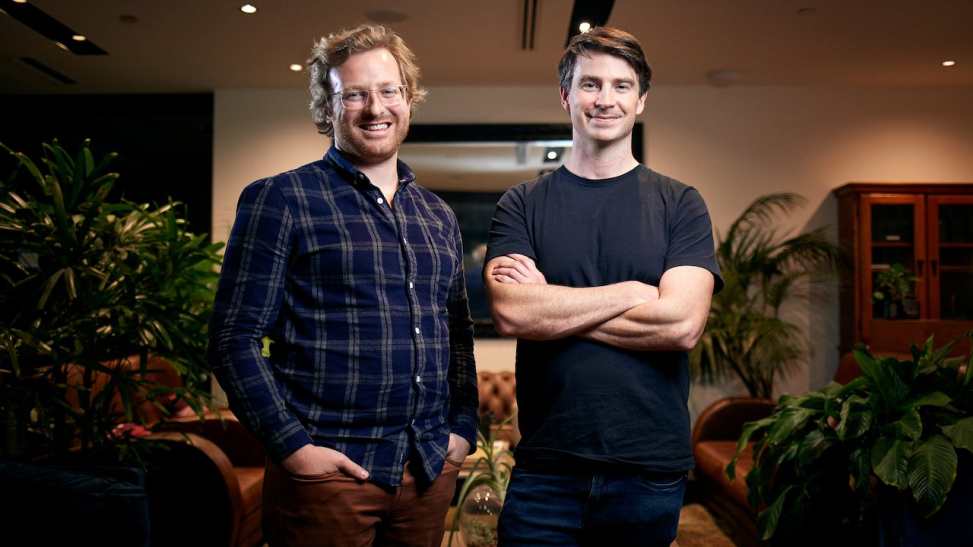
Melbourne, Australia-based Amber Electric raised €49 million in Series E funding led by Morgan Stanley Investment Management’s 1GT private climate-equity strategy, with European energy group E.ON also participating. Reuters puts the round at roughly $56.2 million. The financing will support continued Australian growth and an expansion into Europe following Amber’s partnership with E.ON.
Amber sits at the intersection of household energy and grid economics. Its customers receive exposure to wholesale electricity pricing while its SmartShift software automatically controls home batteries and other distributed energy assets. That can mean charging when electricity is abundant and cheap and exporting energy when grid prices rise.
The round matters because battery ownership is expanding. A battery inside one house is a consumer product. Tens of thousands of batteries controlled together begin to resemble a dispatchable energy resource.
Amber says it has more than 50% of Australia’s automated home-battery market. Capital Brief estimates its cumulative disclosed equity funding at roughly A$209 million after the new round. If Amber can carry that operating model into European power markets, it could effectively become a software intermediary between utilities, electricity markets and distributed household assets.
Funding Details
Startup: Amber Electric
Investors: Morgan Stanley Investment Management’s 1GT; E.ON; existing investors reported to include ETF Partners and Innovation Victoria
Amount Raised: €49 million
Total Raised: About A$209 million in disclosed equity financing, according to Capital Brief
Funding Stage: Series E
Funding Date: September 21, 2026
Headquarters: Melbourne, Australia
Sector: Climate tech/energy flexibility / distributed energy infrastructure
Valuation: Not disclosed
Paymob raises $35M as MENA payments consolidate around fewer infrastructure layers
Paymob raised $35 million in pre-Series C funding co-led by Mubadala and the European Bank for Reconstruction and Development, with British International Investment, Global Ventures and DPI Ventures participating. The financing takes the company’s disclosed funding above $125 million.
Founded in Cairo in 2015, Paymob gives merchants access to more than 60 payment methods through one integration. That solves a particularly difficult MENA problem: merchants expanding regionally may otherwise have to integrate separately with cards, local payment networks, installment products and BNPL providers.
The company’s recent growth helps explain why Mubadala is entering now. Paymob says consolidated revenue tripled during the past 18 months, while GCC revenue increased sevenfold and now represents close to half of group revenue. Since obtaining its UAE Retail Payment Services License in January 2025, the company says it has added roughly 20,000 merchants across its three GCC markets and now serves more than 390,000 merchants across MENA.
Paymob is also positioning the platform for agentic commerce, where AI systems may search for products and eventually initiate transactions. The important infrastructure question is not whether an AI agent can decide what to buy. It is whether the transaction can be authenticated, routed, settled, and reconciled across multiple countries. That is the layer Paymob wants to own.
Funding Details
Startup: Paymob
Investors: Mubadala, EBRD, British International Investment, Global Ventures, DPI Ventures
Amount Raised: $35 million
Total Raised: More than $125 million disclosed
Funding Stage: Pre-Series C
Funding Date: September 21, 2026
Headquarters: Cairo, Egypt
Sector: Fintech/payment infrastructure
Valuation: Not disclosed
Unit1 Studio raises £20M in funding to make avatar concerts portable
London-based Unit1 Studio secured £20 million (€23.3 million) in new financing, combining an oversubscribed equity round led by Balderton Capital with additional production financing. Existing investors Mercuri, Gilston Music and former U2 manager Paul McGuinness participated.
Unit1 is trying to change the economics demonstrated by ABBA Voyage. That production proved that audiences will buy tickets to high-end avatar performances, but it also requires a dedicated venue and enormous production investment. Unit1’s technology is designed to let a digital concert move between existing venues and eventually run in more than one location.
A KT Tunstall demonstration provides the company’s first operating proof point. Unit1 says it transferred that avatar production between venues in four days. The commercial opportunity extends beyond artists who no longer perform; musicians who are alive but no longer touring can license shows without returning to a full touring schedule.
The company therefore looks less like a traditional visual-effects studio and more like intellectual-property and production infrastructure for touring. If the same digital performance can be replicated across cities while live musicians, staging and venue operations remain local, Unit1 could lower the fixed cost per performance.
A reporting discrepancy is worth noting. An earlier Guardian story described the financing as approximately $20 million, while the more detailed September 21 financing reports put the package at £20 million, or €23.3 million. I use the latter because those reports provide the equity-and-production-financing breakdown.
Funding Details
Startup: Unit1 Studio
Investors: Balderton Capital, Mercuri, Gilston Music, Paul McGuinness
Amount Raised: £20 million / €23.3 million combined equity and production financing
Total Raised: Not disclosed
Funding Stage: Equity plus production financing; formal venture stage not disclosed
Funding Date: September 21, 2026
Headquarters: London, United Kingdom
Sector: Entertainment technology / mixed reality / digital production
Valuation: Not disclosed
Spiro adds $18M in debt to expand Africa’s battery-swapping network
African electric-mobility company Spiro secured an additional $18 million in debt financing from the Africa Go Green Fund, doubling the fund’s commitment to $36 million. The financing builds on a December 2025 facility in which AGG committed $18 million, and Nithio supplied another $7 million.
The fresh debt will fund electric-motorcycle deployments and battery-swapping infrastructure in Uganda and Rwanda. Spiro says it now has more than 135,000 electric motorcycles in operation, more than 2,500 swap stations and over 50 million completed battery swaps across seven African markets. Those are company-reported operating figures.
Battery swapping changes the economics of electric motorcycles because commercial riders do not have to wait hours for batteries to recharge. It also shifts part of the vehicle cost into infrastructure Spiro operates.
Debt is an increasingly logical financing tool for that infrastructure. Once motorcycles, batteries, and swap stations have measurable utilization and recurring cash flows, financing all of them with venture equity becomes expensive for shareholders. The additional AGG facility suggests lenders are becoming more comfortable underwriting those physical assets.
Funding Details
Startup: Spiro
Investors: Africa Go Green Fund, managed by Cygnum Capital
Amount Raised: $18 million additional debt
Total Raised: Not disclosed on a directly comparable equity-and-debt basis
Funding Stage: Debt financing
Funding Date: September 21, 2026
Headquarters: Dubai, UAE; principal African operations hub in Nairobi, Kenya
Sector: Electric mobility/battery swapping/transport infrastructure
Valuation: Not disclosed
BharatPe raises $1.55 million in debt as it prepares its balance sheet for the next phase
Indian fintech company BharatPe raised ₹135 crore ($1.55 million) in debt funding from InnoVen Capital, Neo Group and Alteria Capital, according to financing disclosures reported Monday by MediaNama.
BharatPe built its business around payments and financial services for Indian merchants, including UPI acceptance, point-of-sale infrastructure and credit products. The new financing is debt rather than equity, an important distinction for a company that has already raised substantial institutional capital and has periodically discussed eventual public-market plans.
Debt makes particular sense for merchant lending or mature operating requirements. Unlike early venture equity, lenders expect defined repayment economics. Continued access to venture debt can therefore signal that capital providers are willing to underwrite the company’s balance sheet without demanding another ownership repricing.
The financing also illustrates how later-stage startup funding increasingly resembles conventional corporate finance. Once a company reaches BharatPe’s scale, the question is no longer simply whether it can raise another venture round; it is whether it can combine debt, operating cash flow, and equity efficiently as it matures.
Funding Details
Startup: BharatPe
Investors: InnoVen Capital, Neo Group, Alteria Capital
Amount Raised: ₹135 crore
Total Raised: Not disclosed on a consistently comparable equity-and-debt basis
Funding Stage: Debt financing
Funding Date: September 21, 2026 disclosure
Headquarters: New Delhi, India
Sector: Fintech / payments / merchant financial services
Valuation: Not disclosed for the debt financing
Novadip Biosciences raises €10.4M in funding to push regenerative bone therapy through Phase 3
Belgian biotech Novadip Biosciences closed €10.4 million in convertible financing led by New Science Ventures, with Fund+, Wallonie Entreprendre, VIVES Fund, ORSA Tech, Sambrinvest, Noshaq, and Invest.BW participating. The round brings convertible financing since June 2025 to €20 million.
Novadip is developing regenerative therapies to repair severe bone defects. The immediate financing target is NVD003, its autologous cell-based therapy for congenital pseudarthrosis of the tibia, a rare pediatric condition in which fractured bone fails to heal properly.
Unlike an early discovery-stage biotech raise, this money is tied to a late clinical milestone. Novadip is already running a pivotal Phase 3 study in the United States and Europe. The financing will fund completion of that program and preparation of a U.S. Biologics License Application.
Closing the €10.4 million round also gives Novadip access to another tranche of an €18 million European Investment Bank venture-debt facility signed in 2023. The company says it has raised €137 million in equity and non-dilutive funding since inception. That blended model is common in European biotech because clinical trials consume capital long before product revenue arrives.
Funding Details
Startup: Novadip Biosciences
Investors: New Science Ventures, Fund+, Wallonie Entreprendre, VIVES Fund, ORSA Tech, Sambrinvest, Noshaq, Invest.BW
Amount Raised: €10.4 million
Total Raised: €137 million in equity and non-dilutive funding since inception, according to the company
Funding Stage: Convertible financing
Funding Date: September 21, 2026
Headquarters: Louvain-la-Neuve, Belgium
Sector: Biotechnology / regenerative medicine
Valuation: Not disclosed
Sprive raises $10M to turn everyday spending into mortgage reduction
UK fintech Sprive raised $10 million, or roughly £7.7 million, in Series A funding. New investors Wealth Club, Active Partners and Rank Ventures joined existing backers Channel 4 Ventures and Ascension, taking total financing above $15 million.
Sprive connects everyday consumer spending with mortgage repayment. Users buy digital gift cards from retailers and receive cashback that can automatically be directed toward mortgage overpayments. The app also tracks mortgage rates and can alert borrowers when refinancing may save money.
The company says it now has 567,000 users and manages £42 billion of mortgages, while its customers have avoided more than £300 million in interest. Sprive also reports that annualized monthly spending through the platform has reached £328 million and that annual revenue run rate is above £18 million. Those are company-reported figures, but together they suggest the Series A is financing scale rather than initial product discovery.
There is a strong distribution logic here. Mortgage customers remain borrowers for years, and Sprive can sit between them, lenders, and retailers throughout that period. If the platform can consistently reduce borrowing costs, it may build a much deeper financial relationship than a conventional cashback app.
Funding Details
Startup: Sprive
Investors: Wealth Club, Active Partners, Rank Ventures, Channel 4 Ventures, Ascension
Amount Raised: $10 million / approximately £7.7 million
Total Raised: More than $15 million
Funding Stage: Series A
Funding Date: September 21, 2026
Headquarters: United Kingdom
Sector: Fintech/mortgage technology/consumer finance
Valuation: Not disclosed
Metris Energy raises €4.35M in funding to give AI agents a usable record of renewable assets
London-based Metris Energy raised €4.35 million, roughly $5 million, in Seed funding led by PT1 Ventures, Octopus Ventures, AENU and Blackfinch Ventures. Plug and Play and Love Ventures also participated, taking total funding to €6.53 million. The round was published at 5:07 a.m. ET on September 21, placing it cleanly inside today’s 16-hour window.
Metris addresses one of renewable energy’s less visible problems: fragmented operating data. Asset owners may have information spread among meters, inverters, SCADA systems, GIS platforms, spreadsheets, energy markets, and finance tools.
The company builds a continuously updated operating record of each asset, then layers automation and its new Metria AI interface on top. The idea is straightforward: an AI agent cannot reliably optimize a solar or wind portfolio without clean access to what each physical asset is doing.
Metris says revenue grew eightfold year over year and that its platform now manages more than 10,000 solar plants representing 500 MW of capacity. The company plans to extend into wind and combined heat and power systems while pushing further into Europe, particularly Germany.
That makes Metris another picks-and-shovels play on the energy transition. The generation assets already exist. Its value comes from making them observable and operable enough for software—and eventually AI agents—to manage.
Funding Details
Startup: Metris Energy
Investors: PT1 Ventures, Octopus Ventures, AENU, Blackfinch Ventures, Plug and Play, Love Ventures
Amount Raised: €4.35 million / approximately $5 million
Total Raised: €6.53 million
Funding Stage: Seed
Funding Date: September 21, 2026
Headquarters: London, United Kingdom
Sector: Energy software / renewable infrastructure / AI
Valuation: Not disclosed
Anacalypsis Therapeutics raises pre-seed funding to pursue disease-modifying Parkinson’s treatments
Greek biotech Anacalypsis Therapeutics raised an undisclosed pre-seed round led by Metavallon VC through its €5 million Brain Gain Fund. Dealroom reported the investment on September 21 and described it as the first investment by a Greece-based venture fund into a homegrown drug-discovery biotech.
The company develops treatments and biomarkers for neurodegenerative diseases, with a particular focus on Parkinson’s disease. Its approach uses genetically linked targets and structure-based drug design to interfere with protein interactions and signaling pathways associated with neurodegeneration.
The round is small enough that the amount was not disclosed, but it is strategically interesting for a different reason: drug discovery remains one of the hardest technology categories for smaller European startup ecosystems to finance locally. Clinical development requires longer timelines, specialist diligence and substantially more follow-on capital than conventional software.
Anacalypsis has recently relocated its operations to the Athens LifeTech Park. The real test for the company will be whether early disease-modifying programs generate enough preclinical evidence to attract the larger international biotech investors required for later development.
Funding Details
Startup: Anacalypsis Therapeutics
Investors: Metavallon VC / Brain Gain Fund
Amount Raised: Not disclosed
Total Raised: Not disclosed
Funding Stage: Pre-seed
Funding Date: September 21, 2026
Headquarters: Athens area, Greece
Sector: Biotechnology/neurodegeneration / Parkinson’s disease
Valuation: Not disclosed
Bekia raises $765K in funding to turn Egypt’s informal recycling flows into data
Cairo-based Bekia raised $765,000 in Seed funding led by Madica, the Africa-focused investment program affiliated with Flourish Ventures. Catalyst Fund and Dakar-based Jambaar Capital also participated.
Bekia digitizes a process that is still largely informal in Egypt. Consumers book waste pickups, collectors weigh material at the point of collection, and payments are sent to bank accounts or digital wallets.
The startup’s next product is more interesting from a venture perspective. Bekia Next, launching in October, will convert collection records into verified CO₂-avoidance certificates for corporate customers. That shifts Bekia from a transaction service toward recurring B2B software and data.
The underlying defense is not the pickup app itself. It is the transaction history connecting households, collectors, recyclers, and factories. If Bekia becomes the system that records where recyclable material came from and where it went, it could sell traceability and carbon-accounting data alongside the collection service.
The round will fund engineering, commercialization of Bekia Next, and tests in a second African market.
Funding Details
Startup: Bekia
Investors: Madica, Catalyst Fund, Jambaar Capital
Amount Raised: $765,000
Total Raised: Not reliably disclosed
Funding Stage: Seed
Funding Date: September 21, 2026
Headquarters: Cairo, Egypt
Sector: Climate tech/recycling / circular-economy software
Valuation: Not disclosed
What Today’s Funding Activity Reveals
Today’s strongest pattern is control over fragmented systems.
Amber needs to coordinate thousands of distributed batteries. Metris coordinates renewable-energy data. Paymob coordinates payment rails. Sprive coordinates the relationship among consumer spending, mortgage debt, and lenders. Bekia coordinates informal waste flows. These companies operate in categories where the underlying assets already exist but remain difficult to observe or control as one system.
That is an important investment theme because AI can increase the value of these platforms without necessarily threatening them. A better model does not automatically gain access to a household battery, a merchant’s payment routing, a solar farm’s SCADA system, a mortgage account, or a verified waste-collection network.
The second pattern is returning capital structure as strategy. Spiro’s new $18 million is debt. BharatPe’s ₹135 crore is debt. Novadip’s €10.4 million is convertible financing tied partly to access to EIB venture debt. Unit1’s £20 million combines equity and production financing.
That tells founders something useful. Equity is expensive capital. Once a company owns assets, recurring receivables, productions or predictable infrastructure, financing everything by selling more common shares may no longer make sense.
Third, Europe and MENA dominate the fresh announcement set. That is partly timing: Monday’s 6:15 a.m. Eastern cutoff captures European, African, Middle Eastern and Australian business hours before the U.S. Monday financing cycle begins. It should not be interpreted as evidence that U.S. startup funding suddenly weakened overnight.
Fourth, today’s deals show AI moving inside existing operating systems rather than creating the headline itself. Amber uses automation to control energy. Metris is building an agent-ready energy data layer. Paymob is preparing payments for agentic commerce. None is raising capital to train a general-purpose frontier model.
Finally, the two smallest rounds deserve attention because they expose where new startup ecosystems are forming. Metavallon’s Anacalypsis investment brings domestic Greek venture capital into drug discovery. Madica’s Bekia investment brings institutional capital into waste infrastructure that has traditionally operated informally. Neither will change aggregate venture statistics, but both can create new investable categories if the first companies work.
Startup Funding Table
| Startup | Amount Raised | Sector | Funding Stage | Lead/Key Investors | Country |
|---|---|---|---|---|---|
| Amber Electric | €49M | Energy flexibility / climate tech | Series E | Morgan Stanley 1GT, E.ON | Australia |
| Paymob | $35M | Payments infrastructure/fintech | Pre-Series C | Mubadala, EBRD, BII, Global Ventures, DPI Ventures | Egypt |
| Unit1 Studio | £20M / €23.3M package | Entertainment tech/avatar concerts | Equity + production financing | Balderton Capital, Mercuri, Gilston Music, Paul McGuinness | UK |
| Spiro | $18M debt | Electric mobility/battery swapping | Debt | Africa Go Green Fund | UAE / Africa |
| BharatPe | ₹135Cr debt | Payments/merchant finance | Debt | InnoVen Capital, Neo Group, Alteria Capital | India |
| Novadip Biosciences | €10.4M | Regenerative medicine/biotech | Convertible financing | New Science Ventures + existing investors | Belgium |
| Sprive | $10M | Mortgage fintech | Series A | Wealth Club, Active Partners, Rank Ventures + existing investors | UK |
| Metris Energy | €4.35M | Renewable-energy software / AI | Seed | PT1, Octopus Ventures, AENU, Blackfinch | UK |
| Anacalypsis Therapeutics | Not disclosed | Neurodegeneration biotech | Pre-seed | Metavallon VC | Greece |
| Bekia | $765K | Recycling/climate tech | Seed | Madica, Catalyst Fund, Jambaar Capital | Egypt |
Strategic Takeaways for Founders and Investors
- Own the control layer, not merely an interface. Amber and Metris become more valuable because they connect directly to physical energy assets. Paymob connects directly to payment rails. Bekia records physical material movement. Those integrations hold up better than a standalone AI feature.
- AI agents will create infrastructure opportunities underneath them. Paymob is already talking about agentic commerce, while Metris is building an operating record that agents can use. Agents may get the headlines, but payments, permissions, data normalization, and physical-system access are where many durable businesses can form.
- Use debt when the risk starts looking like an asset rather than an experiment. Spiro’s battery infrastructure, BharatPe’s mature financial operations and Novadip’s structured financing show why equity should not automatically fund every stage of growth. The more predictable the underlying asset or cash flow becomes, the stronger the case for cheaper capital.
- Regulation and operational difficulty can create defenses. Paymob’s payment licenses, Novadip’s Phase 3 program and Anacalypsis’ drug-development work require years of work a new competitor cannot shortcut by shipping faster software.
- Distribution compounds. Amber already has a dominant position in Australian battery automation. Sprive has hundreds of thousands of users. Paymob serves hundreds of thousands of merchants. Metris sits across thousands of renewable assets. Investors increasingly fund companies once the distribution channel becomes an asset in its own right.
- The physical economy creates better AI tests than demos do. Amber ultimately has to lower energy costs and manage batteries correctly. Metris has to improve renewable-asset operations. Bekia has to move actual recyclable material. In these businesses, model quality matters only if it changes an operational or financial outcome.
- Small rounds can reveal emerging categories before the big checks arrive. Bekia’s $765,000 Seed will barely register in global funding totals, but waste traceability could become valuable as corporations face tighter carbon and supply-chain reporting requirements. Anacalypsis’ undisclosed Greek biotech round similarly matters more for ecosystem formation than for capital volume.
Conclusion
Today’s funding cycle is quieter than the billion-dollar AI days of the past few weeks, but it may be more useful for seeing what investors want beneath the headline boom.
Amber Electric is turning household batteries into programmable energy infrastructure. Paymob is consolidating MENA’s fragmented payment systems. Unit1 is turning digital concerts from one-off spectacles into repeatable productions. Spiro is financing the physical battery network behind electric mobility in Africa. Novadip is moving a regenerative therapy through Phase 3, while Metris is creating the data layer from which AI can operate renewable-energy assets.
These companies have little in common at first glance.
The shared investment thesis is control over something fragmented, regulated, or physical.
Software intelligence is becoming abundant. Batteries, payment licenses, clinical programs, production rights, distribution networks, operating data, and trusted physical infrastructure are not.
Today’s capital is moving toward the companies that can connect intelligence to assets the real economy already depends on.