Startup Funding News Today, September 14, 2026: Chift, Qupital, Tandem Health, Fortaegis & More
 Nickie Louise
Posted On September 14, 2026

Startup funding opened the week with a surprisingly coherent message: investors are backing AI where it sits inside hard financial, clinical, security, and data infrastructure rather than financing another wave of generic model wrappers.
Hong Kong fintech Qupital announced $300 million in combined new capital commitments, anchored by a Series C and supplemented with asset-backed financing from MUFG and Quester Capital. Stockholm-based Tandem Health raised $100 million to push its AI medical assistant toward a broader operating system for European clinics. Amsterdam cybersecurity startup Fortaegis secured a $50 million Series A to commercialize silicon-level security for AI systems, defense equipment, satellites and autonomous machines.
Those three financings alone represent $450 million of disclosed dollar-denominated capital, although that figure needs an important qualification: Qupital’s $300 million package includes asset-backed commitments as well as Series C equity, and the company did not disclose the split. Additional fresh rounds include Chift’s €10.5 million Series A, UniqYou’s ₹15.8 crore seed round and an undisclosed Seed extension for Swiss preventive-health company Aeon that pushes its total Seed financing above €12 million.
AI touches every company in today’s verified group, but the more interesting pattern is what surrounds the AI: proprietary commerce data at Qupital, regulated clinical workflows at Tandem, silicon-rooted security at Fortaegis, fragmented European financial integrations at Chift, longitudinal health data at Aeon and consumer-demand intelligence at UniqYou.
This morning, there is also an important editorial constraint. After a second global sweep across North America, Europe, Asia, India, China, Japan, Korea and MENA, only six rounds could be verified strongly enough to satisfy the strict previous-16-hours rule. I am not turning four older financings into September 14 funding news simply to reach ten. Ayar Labs, for example, appeared in fresh feeds with a $150 million financing, but the original Business Wire announcement dates to September 10. Charikaty’s Moroccan pre-seed also resurfaced, but it was announced September 10. Accuracy wins.
The Macro Environment: AI Capital Moves Toward Infrastructure With Friction
Today’s deals are unusually instructive because none is a frontier-model financing.
Qupital uses AI to underwrite working-capital loans against real-time merchant activity from platforms such as Amazon, TikTok Shop, Tmall and JD.com. Tandem uses AI inside healthcare, where medical-device regulation, clinical integration and privacy requirements create barriers that a general chatbot cannot simply bypass. Chift sits between fragmented financial systems and the software — increasingly AI agents — that needs permissioned access to them.
Fortaegis moves even further down the stack. Rather than securing AI applications after deployment, the company is putting security into the hardware layer itself. Its technology derives changing cryptographic keys from the physical properties of silicon rather than storing static keys on a device. As AI moves into defense systems, autonomous machines, telecom networks and satellites, the consequences of compromised hardware rise sharply.
Healthcare offers another version of the same investment thesis. Tandem has regulatory certifications around individual clinical functions, while Aeon is building a longitudinal health record by combining MRI, recurring blood diagnostics, genetic risk information and AI. The barriers here are data quality, clinical trust, regulation, and patient relationships rather than access to a foundation model.
Capital structure also matters. Qupital is pairing equity with asset-backed financing because lending businesses should not fund every dollar of loan-book growth with venture equity. That financing architecture may become more common as venture-backed fintech companies mature: equity finances technology and company risk, while structured credit finances predictable lending assets.
The larger signal is straightforward. AI is becoming less interesting to investors as a standalone label and more valuable when paired with scarce data, regulated access, financial infrastructure, security architecture, or entrenched workflows.
Qupital secures $300M in combined capital commitments to finance global e-commerce sellers
Hong Kong-based Qupital announced $300 million in combined new capital commitments, anchored by a Series C led by M Capital and supplemented with new asset-backed securities commitments from Mitsubishi UFJ Financial Group and Quester Capital. The company did not disclose how much of the $300 million represents Series C equity versus structured financing, so it should not be described as a $300 million pure venture round.
Qupital provides working capital to businesses selling through marketplaces including Amazon, TikTok Shop, Tmall, JD.com and Pinduoduo. Its underwriting system uses live merchant sales and operating data rather than relying solely on conventional financial statements and manual credit review.
That data advantage matters because cross-border e-commerce sellers often face a mismatch between when they must purchase inventory and when marketplaces release sales proceeds. Traditional banks can struggle to evaluate these companies quickly, particularly when merchants operate across multiple platforms and jurisdictions.
Qupital says it has served tens of thousands of businesses and processed more than $9.5 billion in cumulative loans. It also says the business has been profitable for the past two years. The new capital will expand lending across China, the United States, Japan, and Southeast Asia while supporting further development of its AI risk engine.
The more interesting investor signal is MUFG’s involvement. Banks don’t need fintechs just to build prettier interfaces; they can use them as origination and underwriting infrastructure for customer segments that are hard to serve efficiently through traditional processes.
Qupital says it is also exploring future capital-market options, including an IPO, additional fundraising, and acquisitions.
Funding Details
Startup: Qupital
Investors: M Capital; asset-backed commitments from MUFG and Quester Capital
Amount Raised: $300 million in combined new capital commitments; equity/ABS split not disclosed
Total Raised: Not disclosed
Funding Stage: Series C plus asset-backed financing
Funding Date: September 13, 2026
Headquarters: Hong Kong
Sector: Fintech/trade finance / AI underwriting
Valuation: Not disclosed
Tandem Health raises $100M to build an AI operating system for European clinics
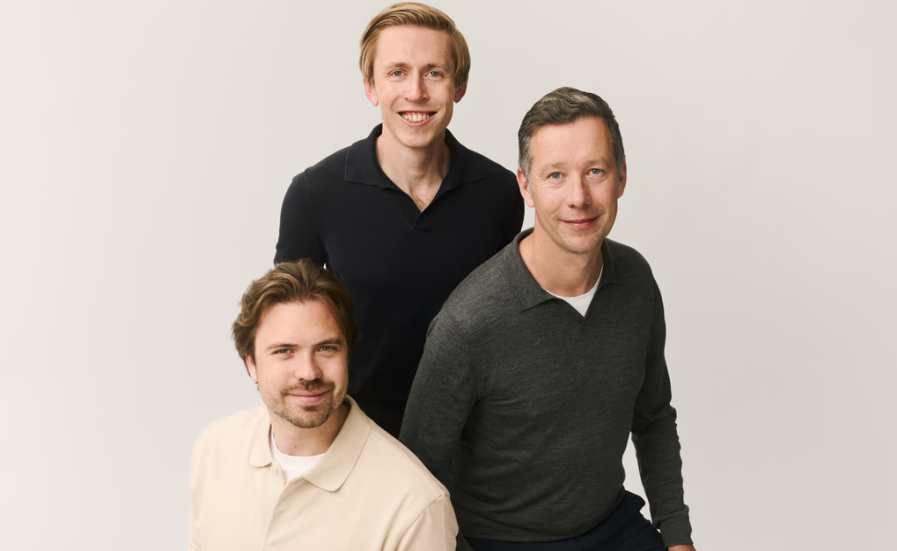
Stockholm-based Tandem Health raised €86.49 million, or $100 million, in Series B funding led by the Scaleup Europe Fund managed by EQT. Existing investors Kinnevik, Northzone, Amino Collective and Visionaries also participated. The round brings total funding to approximately €138.38 million, or $160 million.
Tandem began with AI-assisted medical documentation but is expanding into a wider clinical operating system. Its technology prepares patient summaries before appointments, assists clinicians during consultations, and automates documentation and coding afterward.
The distinction between a scribe and an operating system matters.
Clinical documentation is a useful entry point because it solves an immediate administrative burden. But the larger opportunity lies in owning more of the workflow surrounding the patient visit: coding, clinical decision support, patient flow and eventually software agents that complete additional tasks.
Tandem says its AI scribe, coding assistant and clinical decision-support product are each independently certified as Class IIa medical devices under the EU Medical Device Regulation. The company also holds several security and health-data certifications across European markets.
EQT said Tandem is already supporting more than 10,000 care organizations. That distribution matters because European healthcare is fragmented across countries, languages, reimbursement systems, and regulatory structures. A company that has already built integrations and earned institutional trust across multiple health systems owns something a new AI entrant cannot reproduce simply by accessing a stronger model.
Today’s round is therefore less a bet that AI can write doctors’ notes and more a bet that Tandem can become the software layer through which a larger share of clinical work is coordinated.
Funding Details
Startup: Tandem Health
Investors: Scaleup Europe Fund/EQT, Kinnevik, Northzone, Amino Collective, Visionaries
Amount Raised: €86.49 million / $100 million
Total Raised: €138.38 million / approximately $160 million
Funding Stage: Series B
Funding Date: September 14, 2026
Headquarters: Stockholm, Sweden
Sector: Healthcare AI / clinical software
Valuation: Not disclosed
Fortaegis raises $50M in funding to put cybersecurity directly into silicon
Amsterdam-based Fortaegis raised an oversubscribed $50 million Series A led by Singapore’s Serendipity Capital. TEL Venture Capital, the corporate venture arm of semiconductor-equipment giant Tokyo Electron, also participated alongside investors connected to defense, manufacturing, quantum computing and critical infrastructure.
Fortaegis is trying to change where cybersecurity begins.
Instead of storing cryptographic keys somewhere inside a device, its technology uses unique physical characteristics within silicon to generate changing keys. That makes the security architecture part of the hardware itself rather than another layer added later.
The startup is targeting AI infrastructure, defense systems, telecom networks, satellites and autonomous machines — sectors where compromised hardware can create consequences far beyond a stolen password.
Fortaegis plans to expand production of FPGA-based products and begin commercial manufacturing in 2027 while developing application-specific chips. The company says it is already working with more than 25 companies and governments across Europe, the United States and Asia.
Tokyo Electron’s participation is particularly interesting. Chip-security companies ultimately have to survive semiconductor manufacturing realities, not just cryptographic theory. An investor connected directly to one of the semiconductor industry’s largest equipment suppliers brings technical and industrial relevance to the cap table.
The broader thesis is timely. As AI systems become more autonomous and move into military equipment, vehicles, robots and critical networks, security failures increasingly migrate from the software layer into the physical economy.
Funding Details
Startup: Fortaegis
Investors: Serendipity Capital, TEL Venture Capital and other strategic investors
Amount Raised: $50 million
Total Raised: Not disclosed
Funding Stage: Series A
Funding Date: September 14, 2026
Headquarters: Amsterdam, Netherlands
Sector: Semiconductor security/cybersecurity / AI infrastructure
Valuation: Not disclosed
Chift raises €10.5M to become the connectivity layer for European financial software
Brussels-based Chift raised €10.5 million in Series A funding led by BlackFin Capital Partners, with existing investors Entourage, Shapers, Seeder Fund and Wallonie Entreprendre participating.
Chift connects business-software products with accounting systems, invoicing tools, payment providers, point-of-sale platforms, e-commerce services and property-management software through a unified API.
That sounds like infrastructure plumbing because it is.
Europe’s financial-software market is fragmented across countries and legacy systems. A software company that wants to serve customers across the continent can otherwise spend years building and maintaining individual integrations.
Chift says it now connects more than 120 financial systems. More than 150 software companies use its infrastructure to serve over 50,000 SMEs across more than 10 European countries, with customers including Revolut, Qonto, Pennylane and Mollie. The company reports revenue has grown more than tenfold since its €2.3 million Seed round in 2024.
AI makes those integrations more strategically valuable, not less. Chift has added a Model Context Protocol server that lets agents retrieve and update financial information while managing authentication and access control across underlying systems.
That points to an infrastructure opportunity that receives less attention than model development: AI agents cannot execute useful financial work if they cannot safely reach the accounting, invoicing and payment systems where the work actually occurs.
Funding Details
Startup: Chift
Investors: BlackFin Capital Partners, Entourage, Shapers, Seeder Fund, Wallonie Entreprendre
Amount Raised: €10.5 million
Total Raised: At least €12.8 million in disclosed Seed and Series A financing
Funding Stage: Series A
Funding Date: September 14, 2026
Headquarters: Brussels, Belgium
Sector: Fintech infrastructure / APIs / enterprise software
Valuation: Not disclosed
Aeon closes Seed extension to combine MRI, blood diagnostics and longitudinal AI
Zurich-based preventive-health startup Aeon closed a Seed extension co-led by Araya Ventures, with Concentric, GoHub Ventures, Kadmos Capital, Calm/Storm Ventures, N&V Capital and Bigwave Capital participating. The company did not disclose the exact size of the extension, but said the financing takes total Seed funding above €12 million.
Alongside the financing, Aeon acquired German blood-diagnostics company Aware Health.
That acquisition is more strategically interesting than adding another health feature. Aeon already uses whole-body MRI, genetic risk analysis and AI to identify potential health risks. Aware adds recurring blood testing, laboratory integrations, more than 45 blood-draw locations and an existing customer base.
The combined model gives Aeon something preventive-health companies increasingly want: longitudinal data.
A whole-body scan is episodic. Blood biomarkers can be measured repeatedly. Tracking those measurements alongside imaging and genetic information over time could give predictive models far richer signals than a single annual examination.
Aeon says its MRI system can screen for more than 500 possible anomalies and its blood offering covers more than 100 biomarkers. Aware had served close to 10,000 active customers before the acquisition. Those operating figures come from the companies and should be treated as such.
The investment thesis resembles Tandem’s in one important way: the value is not simply the algorithm. It is the combination of regulated healthcare infrastructure, proprietary longitudinal data and repeated relationships with patients.
Funding Details
Startup: Aeon
Investors: Araya Ventures, Concentric, GoHub Ventures, Kadmos Capital, Calm/Storm Ventures, N&V Capital, Bigwave Capital
Amount Raised: Seed extension amount not separately disclosed
Total Raised: More than €12 million in Seed funding
Funding Stage: Seed extension
Funding Date: September 14, 2026
Headquarters: Zurich, Switzerland
Sector: Preventive healthcare / AI diagnostics
Valuation: Not disclosed
UniqYou raises $1.65 million in funding to apply AI to India’s women’s fashion market
Bengaluru-based UniqYou raised ₹15.8 crore ($1.65 million) in Seed funding led by Arkam Ventures and Antler, with angel investors also participating. Regulatory filings show Arkam contributed ₹9.3 crore and Antler invested ₹4.96 crore.
The company was founded in 2026 and is building a technology-led women’s-fashion platform that uses AI to identify emerging consumer trends.
UniqYou’s financing is far smaller than today’s infrastructure rounds, but it reflects a different AI thesis: using models and data not as the product itself, but as input to merchandising and inventory decisions.
That distinction matters in fashion because prediction errors become physical inventory. A software company can release a bad feature and patch it. A fashion company that misreads demand can end up discounting unsold products.
The post-money valuation is approximately ₹64 crore, according to Entrackr estimates based on the company’s share allotment filings. That gives investors a large stake at an unusually early stage: Arkam is expected to own roughly 14.9% and Antler about 8%.
The round therefore looks less like investors chasing an established consumer brand and more like an early bet that data-driven merchandising and digital distribution can produce a more capital-efficient fashion company.
Funding Details
Startup: UniqYou
Investors: Arkam Ventures, Antler, Ankit Garg, Abhishek Goyal, Chaitanya Ramalingegowda, Raveen Sastry, Nandita Sinha and others
Amount Raised: ₹15.8 crore
Total Raised: Not disclosed
Funding Stage: Seed
Funding Date: September 14, 2026
Headquarters: Bengaluru, India
Sector: Fashion technology/consumer / AI
Valuation: Approximately ₹64 crore post-money, based on regulatory-filing estimates
What Today’s Funding Activity Reveals
The first pattern is AI’s migration into infrastructure with friction.
Qupital deals with credit risk. Tandem operates inside regulated clinical workflows. Fortaegis secures hardware. Chift connects fragmented financial systems. Aeon combines medical diagnostics. Even UniqYou’s problem eventually touches physical inventory.
None of those businesses becomes valuable merely because the underlying model improves.
The second pattern is that proprietary data is becoming more important as model access becomes less differentiated. Qupital sees live merchant transaction behavior. Aeon wants longitudinal imaging and biomarker records. Tandem sits inside clinical workflows. Chift sees how financial systems connect. Those data relationships become more valuable as they deploy.
Third, the deals show several distinct financing models hiding under the phrase “startup funding.” Tandem and Fortaegis announced conventional equity rounds. Qupital combined Series C equity with asset-backed commitments. Aeon paired a Seed extension with an acquisition. UniqYou’s round emerged through regulatory share-allotment filings.
That distinction matters for institutional readers. Capital raised is not always venture equity, and treating every financing headline as comparable can badly distort market analysis.
Fourth, Europe is unusually prominent today. Tandem, Fortaegis, Chift and Aeon are headquartered in Sweden, the Netherlands, Belgium and Switzerland. All four operate in markets where regulation, interoperability, or security requirements make local expertise commercially useful.
Finally, today’s small number of qualifying rounds is part of the data, not a flaw to hide. The strict rolling window crosses a Sunday in the U.S. and Europe. Fresh Monday announcements are only beginning to hit the wires, which naturally produces fewer verified transactions than a Tuesday or Wednesday morning.
Comparative Funding Table
| Startup | Amount Raised | Sector | Funding Stage | Lead/Key Investors | Country |
|---|---|---|---|---|---|
| Qupital | $300M combined commitments | Fintech/trade finance / AI underwriting | Series C + ABS | M Capital, MUFG, Quester Capital | Hong Kong |
| Tandem Health | $100M / €86.49M | Healthcare AI | Series B | Scaleup Europe Fund/EQT, Kinnevik, Northzone | Sweden |
| Fortaegis | $50M | Semiconductor security/cybersecurity | Series A | Serendipity Capital, TEL Venture Capital | Netherlands |
| Chift | €10.5M | Financial connectivity / APIs | Series A | BlackFin, Entourage, Shapers, Seeder Fund | Belgium |
| Aeon | Undisclosed extension; Seed total >€12M | Preventive health / AI diagnostics | Seed extension | Araya Ventures, Concentric, GoHub + others | Switzerland |
| UniqYou | ₹15.8 crore | Fashion tech / AI | Seed | Arkam Ventures, Antler + angels | India |
Strategic Takeaways for Founders and Investors
Build where AI meets an existing budget. Qupital connects AI directly to credit underwriting. Tandem connects it to clinician time. Chift connects it to costly integration work. Products that improve a measurable economic line item have a clearer path to enterprise spending than generalized productivity promises.
The data around the model may become more valuable than the model itself. Qupital’s merchant transaction history and Aeon’s longitudinal health data improve with use. Founders should ask what proprietary information accumulates every time a customer uses the product.
Regulation can become a barrier in your favor. Tandem’s medical-device certifications and Aeon’s diagnostics infrastructure require time and specialized expertise. Once those barriers have been crossed, a technically capable competitor still has substantial work to do before it can sell into the same market.
AI agents create demand for infrastructure below them. Chift is a useful case. If agents are going to perform financial work, someone has to securely connect them to hundreds of accounting, payment and invoicing systems. Agent adoption may therefore create valuable companies one or two layers below the visible application.
Hardware security may become more valuable as AI gains agency. Fortaegis is effectively betting that autonomous systems need security embedded into compute rather than bolted on afterward. As software begins controlling vehicles, factories and defense systems, hardware trust becomes an economic requirement rather than an IT concern.
Match the financing structure to the business model. Qupital should not fund an expanding loan book entirely with venture equity. Using asset-backed capital for lending capacity leaves equity available for technology, hiring and company-building. Similar logic applies to asset-heavy climate, mobility and infrastructure startups.
Be wary of “AI” differentiation in consumer businesses. UniqYou’s AI trend analysis may improve merchandising, but the company still has to win on brand, product, supply chain and customer acquisition. AI can improve the operating model; it does not erase consumer-business economics.
Conclusion
Today’s funding activity is smaller in deal count than several recent mornings, but the capital tells a consistent story.
Qupital is using AI and marketplace data to finance international commerce. Tandem Health is building a regulated clinical operating layer. Fortaegis is moving cybersecurity directly into silicon. Chift connects the financial systems AI agents need to reach. Aeon is assembling longitudinal health data around preventive medicine.
The common thread is not simply artificial intelligence.
It is AI attached to assets that are difficult to copy: credit data, regulatory approval, silicon architecture, financial integrations, clinical relationships and proprietary health records.
As foundation models become cheaper and more interchangeable, the investment premium continues to migrate toward the infrastructure, data, and institutional access that determine whether intelligence can actually be trusted and used.