Pentagon in talks to lend $5 billion to AI cloud startup Fluidstack to shore up US data center supply chain
 Daniel Levi
Posted On September 11, 2026

The Pentagon is in talks to lend about $5 billion to AI cloud startup Fluidstack, a striking sign that the infrastructure behind artificial intelligence is moving from a Silicon Valley spending race into the heart of U.S. industrial strategy.
The proposed financing would come through the Pentagon’s Office of Strategic Capital and would strengthen U.S. manufacturing capacity and supply chains for data center components, rather than directly funding a new AI facility, the Wall Street Journal reported Thursday, citing people familiar with the matter. Reuters subsequently reported the talks.
“The Pentagon is in talks to lend roughly $5 billion to AI cloud-computing startup Fluidstack,” the Wall Street Journal reported, citing people familiar with the matter, “adding the U.S. military to the growing list of financiers of artificial-intelligence infrastructure.”
“The money would come from the Pentagon’s Office of Strategic Capital, which provides loans to companies working in areas deemed critical to U.S. national security. A $5 billion loan would be, by far, the office’s largest to date,” the Journal added.
Neither the Pentagon nor Fluidstack immediately commented on the report.
The potential loan’s size stands out. Fluidstack raised an $830 million Series A at a $7.5 billion valuation earlier this year, according to the company. A $5 billion Pentagon loan would be roughly six times that funding round and put the government behind one of the companies building the physical backbone of the AI boom.
Fluidstack is not a conventional cloud startup. Founded in 2017 at Oxford University and now headquartered in New York, the company builds and operates large-scale AI infrastructure, including GPU clusters and custom data centers used for training and running advanced AI models. The company has said it manages more than 100,000 GPUs.
Its customer list helps explain why Washington may be interested.
Anthropic selected Fluidstack last year to build custom data centers in New York and Texas as part of a $50 billion investment in U.S. computing infrastructure, Reuters reported. Fluidstack has worked with AI companies including Mistral, Character.AI, Poolside and Black Forest Labs, and its website lists Anthropic, Nvidia and Meta among companies associated with its infrastructure business.
AI infrastructure is becoming strategic infrastructure
The reported Fluidstack talks point to a larger shift taking place beneath the AI boom.
Building frontier AI systems increasingly depends on far more than GPUs. Data centers require electrical equipment, cooling systems, networking hardware, transformers, generators, and a long chain of components that can become bottlenecks when thousands of GPUs are deployed at once.
That dependency is starting to collide with national security policy.
President Donald Trump signed an executive order last month declaring a national emergency and restricting the use of some foreign equipment in the U.S. electricity grid, Reuters reported. The grid has become closely tied to the AI race as data centers consume more electricity.
The Office of Strategic Capital has already backed companies in sectors Washington considers strategically important. Previous deals have involved rare earth companies Vulcan Elements, Phoenix Tailings and Energy Fuels, along with drone companies including Unusual Machines and Sequoia Capital-backed Neros.
Fluidstack would push that strategy deeper into AI infrastructure.
The significance goes beyond one startup or one $5 billion loan. For years, the AI race centered on who could build the best models and secure the most advanced chips. The competition is now moving down the stack, into the factories, electrical systems, data centers, and supply chains required to keep those chips running.
If the Fluidstack financing goes through, it would send a clear signal about where Washington believes the next AI bottleneck may emerge: not inside the model, but in the physical infrastructure underneath it.
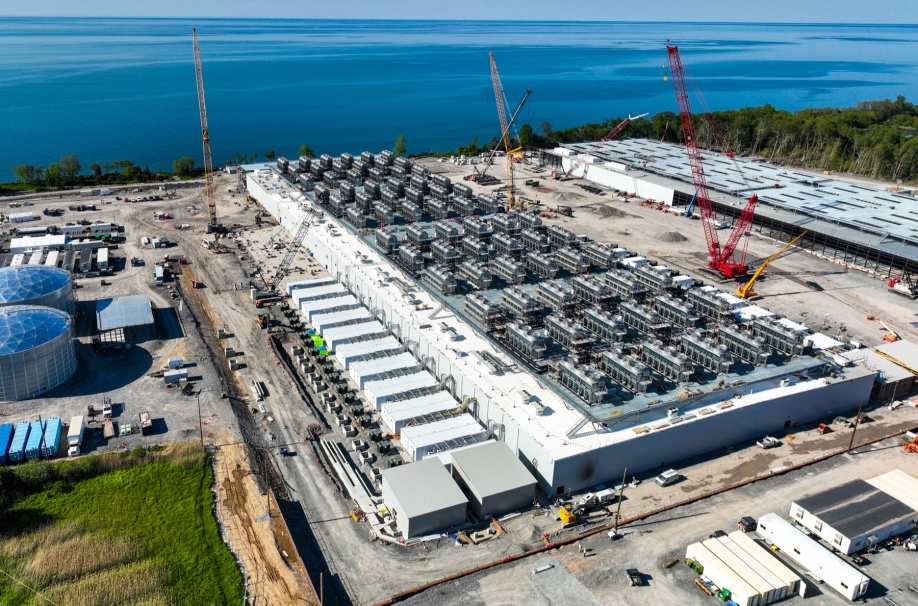
Credit: FluidStack