Venture Capital & Startup Funding Roundup, September 10, 2026: Andreessen Horowitz, Bessemer, Insight Partners, Sequoia Capital & More
 Nickie Louise
Posted On September 10, 2026
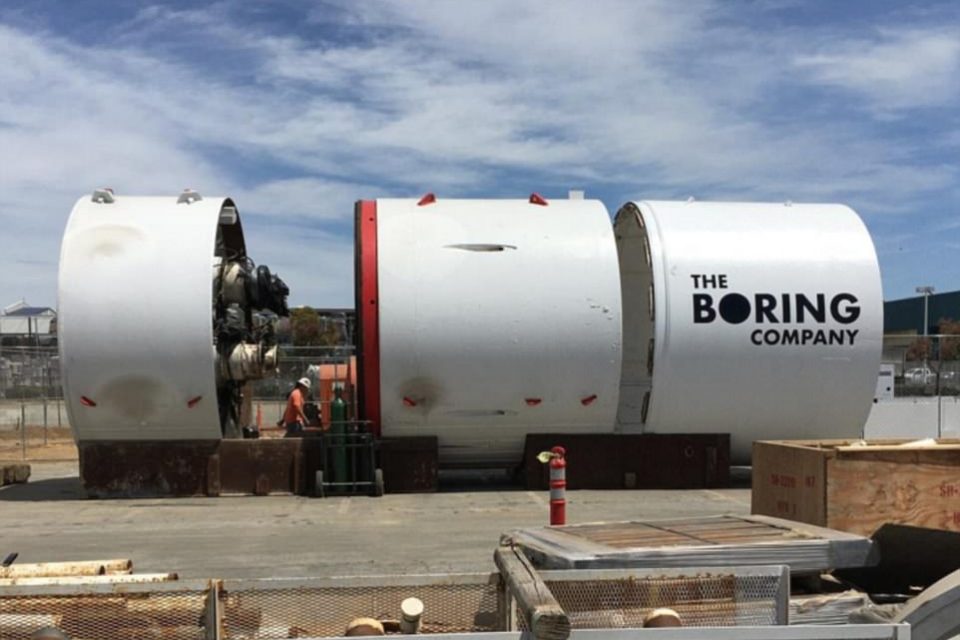
Venture capital did not spread evenly across the startup market today. It piled into a small number of companies near physical constraints: tunnels, weapons manufacturing, AI inference chips, and the optical links that connect compute. Across the ten financings selected for this roundup, approximately $4.81 billion of new capital was announced, and roughly 93% went to just three companies: The Boring Company, Positron AI, and Mach Industries. That is not a broad risk-on market. It is a market willing to write enormous checks when investors believe a startup owns a scarce technological or industrial capability.
The more revealing story sits underneath those mega-rounds. Positron and Ayar Labs are attacking different pieces of the AI-compute bottleneck—memory-intensive inference and chip-to-chip optical connectivity—while Inspiren, Rogo, and Graph AI are being financed around narrower business problems where AI ties to operating outcomes. Mach Industries, meanwhile, shows how quickly defense technology has moved from a specialist venture category into a capital-intensive manufacturing race.
The pattern is increasingly clear: investors are paying premiums for control over bottlenecks, whether those bottlenecks involve compute, bandwidth, manufacturing capacity, regulated workflows, distribution relationships, or physical infrastructure. The market is much less forgiving when a startup’s only differentiation is access to the same models, APIs, or software primitives that competitors can buy. Today’s rounds put that divide in unusually sharp relief.
The Macro Environment: Capital Is Buying Bottlenecks
The headline number, $4.81 billion across these ten financings, overstates how broadly favorable today’s funding market is. The Boring Company alone represents roughly 62% of the selected capital, while Boring, Positron, and Mach together account for about 93%. The practical implication is a barbell market: exceptionally large pools of money remain available for companies that can make a credible claim on strategic infrastructure, while most startups are still competing for much smaller checks.
AI infrastructure provides the strongest example. Positron raised $875 million as it tries to commercialize an inference-focused processor architecture; Ayar Labs added $150 million to a Series E for optical interconnect technology; and, separately, d-Matrix said today that its inference processors will connect directly into Nvidia data-center systems using NVLink Fusion. These are different products, but they point in the same technical direction. As AI workloads move from simply training models toward serving models continuously, memory capacity, data movement, latency, and power consumption are becoming investment categories in their own right.
The demand signal from public companies helps explain why private investors are willing to absorb such heavy hardware risk. Oracle reported quarterly capital expenditure of $28.49 billion, more than triple the year-earlier level, while cloud-infrastructure revenue rose 121%; it still expects $90 billion to $95 billion of capital expenditure for the full year. Investors pushed Oracle shares higher after the results despite negative free cash flow, suggesting public markets still reward infrastructure spending when it is paired with rapid cloud growth.
But the financing burden is becoming impossible to ignore. Reuters estimates that Alphabet, Amazon, Meta, Microsoft, and Oracle have issued roughly $220 billion of bonds during the past year as hyperscalers finance data-center expansion. That matters for venture investors because the private AI-infrastructure boom is ultimately tied to customers that are themselves becoming far more capital intensive. The upside is an enormous procurement cycle. The risk is that any slowdown in hyperscaler investment, credit-market appetite, or AI monetization can propagate quickly into hardware startups with large fixed-cost bases.
Away from pure compute, today’s deals show investors applying the same thinking to other sectors. Mach is being funded to manufacture military systems, Boring is pairing sovereign capital with a major infrastructure commitment in the UAE, Rogo is bringing banks onto its cap table as strategic investors, and Graph AI is selling automation into a pharmaceutical workflow where audit trails and human review matter. These are businesses where distribution, regulatory integration, factories, contracts, or technical systems create friction that a new entrant cannot reproduce by simply writing more software.
Today’s Top 10 Funding Rounds
The Boring Company raises $3 billion to expand tunnel infrastructure

The Boring Company announced a $3 billion Series D at a $23 billion valuation, led by the United Arab Emirates, with Sequoia Capital, Andreessen Horowitz, and Baron Capital participating. The financing coincides with an agreement to build more than 150 kilometers of tunnels across the UAE, which makes this a useful example of strategic capital and commercial demand arriving together rather than as separate events.
That linkage matters more than the valuation headline. Tunneling is a capital-heavy business governed by permitting, construction execution, utilization, and project economics. Boring’s main operating showcase remains the Vegas Loop, while it shelved or canceled previously proposed projects in Los Angeles, Washington, D.C., and Chicago. The financing therefore represents a substantial bet that the company can translate its tunneling technology into a repeatable infrastructure business outside the Musk corporate network. Sovereign backing can lower customer-acquisition risk by pairing financing with large-scale deployment, but it does not remove engineering or project-delivery risk.
The deeper investor signal is that infrastructure startups can now attract venture-style valuations when they have the technology, political access, and ability to bid for projects measured in tens or hundreds of kilometers. This risk model differs from software: the moat may be strong, but capital requirements remain persistent.
Funding Details
Startup: The Boring Company
Investors: United Arab Emirates-led financing; Sequoia Capital, Andreessen Horowitz, Baron Capital
Amount Raised: $3 billion
Total Raised: Not disclosed in the announcement reviewed
Funding Stage: Series D
Funding Date: September 10, 2026 public announcement; timing discrepancy noted above
Headquarters: United States, with major operations in Texas and Nevada
Sector: Infrastructure technology/tunneling
Positron AI raises $875 million to challenge the economics of AI inference
Positron AI raised $875 million at a $5 billion valuation, only seven months after raising $230 million at a $1.06 billion valuation. The new financing was divided into a $375 million Series C and a Series C-1 of up to $500 million. NEA, Atreides Management, Valor Equity Partners, Andra Capital, SemiAnalysis Capital, and Jim Clark co-led the round, while Qatar Investment Authority, Cisco Investments, and Naver Ventures participated.
The Reno startup is not trying to beat Nvidia across every AI workload. Its thesis is narrower: inference is increasingly constrained by moving enormous quantities of model data through memory. Positron’s Asimov processor uses what the company describes as a memory-first architecture, with as much as 2.3 terabytes of memory per chip, and is designed for its Titan server platform. Positron is targeting production in the second half of 2027 and says it is already deploying more than 50 racks of its earlier Atlas system at Oracle Cloud Infrastructure.
That commercial connection is why the round is more interesting than another “Nvidia challenger” headline. AI accelerators fail as venture investments if customers are unwilling to redesign infrastructure around them. Positron is trying to prove that inference economics differ enough from training economics to support a specialized architecture. The competitive field includes Nvidia, AMD, Google, and several well-funded startups, so its $5 billion valuation embeds a very aggressive assumption: not just that inference demand explodes, but that meaningful market share remains available to alternative silicon.
Funding Details
Startup: Positron AI
Investors: NEA, Atreides Management, Valor Equity Partners, Andra Capital, SemiAnalysis Capital, Jim Clark; additional investors include Qatar Investment Authority, Cisco Investments, and Naver Ventures
Amount Raised: $875 million
Total Raised: At least $1.105 billion across its two disclosed 2026 rounds
Funding Stage: Series C / Series C-1
Funding Date: September 10, 2026
Headquarters: Reno, Nevada, U.S.
Sector: AI semiconductors/inference infrastructure
Mach Industries raises $600 million to scale vertically integrated defense manufacturing
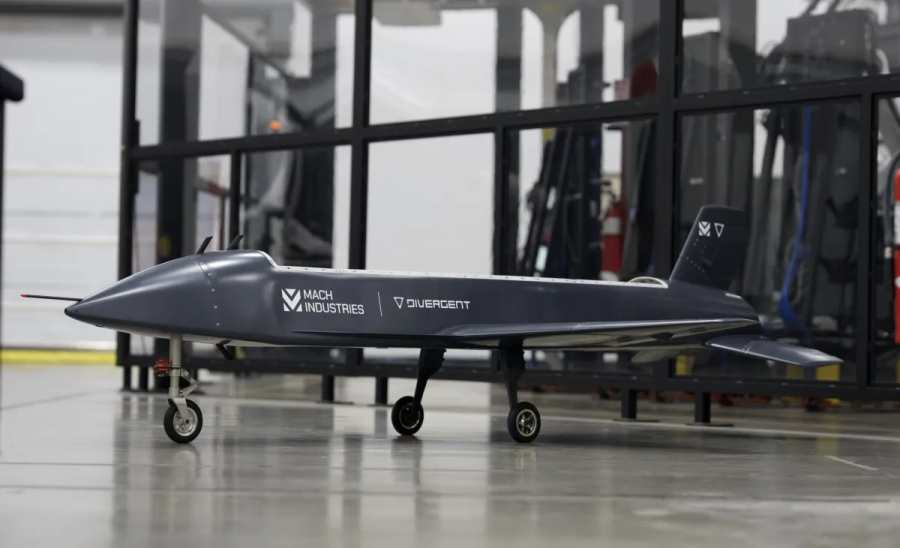
Mach Industries added $600 million to its Series C, taking the financing to roughly $900 million after an initial $300 million tranche in June. Its valuation has risen from about $1.8 billion at that earlier closing to $3.7 billion. Ribbit Capital, Infinite Capital, Bedrock Capital, and Sequoia participated across the Series C financing.
Mach manufactures unmanned military systems and weapons, spanning vertical-takeoff drones, long-range strike systems, and counter-drone products. The company operates a 115,000-square-foot facility in Huntington Beach and has been expanding deeper into propulsion and energetics, including through its acquisition of rocket-motor startup Exquadrum. It has also won U.S. Army business.
What investors appear to be financing is not a single weapon platform but an industrial base. The defense startup model is moving toward owning more of the production stack—vehicles, propulsion, energetics, software, and manufacturing—because dependence on legacy suppliers can erase the speed advantage startups promise the Pentagon. That strategy requires much more cash than traditional venture-backed software, but it can create stronger barriers once facilities, government relationships, testing history, and supply chains are established.
The valuation doubling in roughly three months also shows how aggressively investors are pricing companies that can plausibly become next-generation defense primes. The risk is equally clear: manufacturing scale is far harder to accelerate than software adoption, and a large private valuation raises the revenue and contract milestones Mach will eventually need to justify.
Funding Details
Startup: Mach Industries
Investors: Ribbit Capital, Infinite Capital, Bedrock Capital, Sequoia
Amount Raised: $600 million Series C extension
Total Raised: Approximately $900 million across the 2026 Series C tranches; lifetime total is higher
Funding Stage: Series C extension
Funding Date: September 10, 2026
Headquarters: Huntington Beach, California, U.S.
Sector: Defense technology / autonomous systems / advanced manufacturing
Ayar Labs raises $150 million to move AI interconnects from copper to light
Ayar Labs added $150 million to the $500 million Series E it announced in March, bringing total financing to $650 million and lifting its reported valuation to about $5 billion, up from $3.8 billion earlier this year.
The startup develops silicon-photonics and co-packaged optical technology designed to replace electrical copper connections between processors with optical links. The technical problem sounds obscure until one considers what happens inside a large AI cluster: thousands of accelerators must continuously exchange data, and as compute density rises, the power and bandwidth cost of those connections becomes a limiting factor. Ayar argues that photons can move data farther and more efficiently than electrical signaling as systems scale.
That positions Ayar at one of the less visible choke points in the AI buildout. Nvidia, AMD, MediaTek, and Qatar Investment Authority were among the strategic and institutional names associated with its March financing, reflecting how important connectivity has become to semiconductor companies themselves. The additional financing suggests investors see optical I/O moving from a research problem toward a production and packaging problem.
The strategic point is broader: AI infrastructure value is spreading outward from the GPU. Memory, networking, photonics, cooling, power electronics, and data-center construction can all capture spending when adding more raw compute no longer solves the entire system problem. Ayar is one of today’s clearest expressions of that shift.
Funding Details
Startup: Ayar Labs
Investors: Investor roster for the $150 million extension was not fully specified in the accessible announcement; existing Series E backers include Nvidia, AMD, Neuberger Berman, MediaTek, and Qatar Investment Authority
Amount Raised: $150 million extension
Total Raised: $650 million in the current Series E including the March tranche; lifetime total not independently verified here
Funding Stage: Series E extension
Funding Date: September 10, 2026
Headquarters: Emeryville, California, U.S.
Sector: Semiconductors/silicon photonics / AI interconnect
Inspiren raises $70 million to bring AI into senior-living operations
Inspiren announced a $70 million Series C at a $550 million valuation, led by NewView Capital. Insight Partners, Primary Venture Partners, Scale Venture Partners, Vintage Investment Partners, Lightbank, Avenir Growth, Story Ventures and Camber Creek also participated.
The New York company builds AI-powered technology for senior-living facilities, where operators face a combination of resident-safety demands, labor pressure and fragmented care workflows. Unlike horizontal enterprise-AI products, Inspiren is embedding software into a setting where customers can judge it against concrete operating outcomes: staff productivity, resident monitoring, workflow coordination and quality of care.
The $550 million valuation is noteworthy because it shows applied AI can still command substantial multiples without competing at the foundation-model layer. But investors appear to be demanding vertical specialization. A senior-living platform that accumulates workflow data, integrates into facility operations, and becomes familiar to frontline staff can build switching costs that a generic AI assistant cannot easily reproduce.
Inspiren also illustrates how sector expertise is becoming part of AI defensibility. The hard part is increasingly not generating an answer from a model; it is fitting that output into a high-stakes operational process where customers trust the system enough to use it every day.
Funding Details
Startup: Inspiren
Investors: NewView Capital; Insight Partners, Primary Venture Partners, Scale Venture Partners, Vintage Investment Partners, Lightbank, Avenir Growth, Story Ventures, Camber Creek
Amount Raised: $70 million
Total Raised: Not disclosed in the current announcement reviewed
Funding Stage: Series C
Funding Date: September 10, 2026
Headquarters: New York, U.S.
Sector: Health technology / senior living / applied AI
Vheda Health raises $47 million to reduce the cost of caring for high-risk patients
Healthcare investor Agora is putting $47 million into Vheda Health, its first transaction since launching and Vheda’s first institutional financing since the company was founded in 2013. Vheda, based in Columbia, Maryland, supplies data and analytics technology that health plans use to identify higher-risk patients and intervene in areas including chronic disease and maternal care.
This is one of the day’s more revealing deals precisely because it is not a newly formed AI company with a giant valuation. Vheda spent more than a decade operating before taking institutional capital. Agora founder Neil Vangala has framed the firm’s healthcare investment approach around businesses that can take costs out of the system, and its typical equity targets sit roughly in the $30 million to $60 million range.
For founders, that is a useful counterpoint to the mega-rounds. Capital can still arrive late in a company’s life when a business has established a product, market relationships, and an identifiable economic problem. In healthcare especially, investors may prefer evidence that a product can survive long procurement cycles and complicated operating environments before financing aggressive expansion.
Funding Details
Startup: Vheda Health
Investors: Agora
Amount Raised: $47 million
Total Raised: $47 million of institutional capital disclosed
Funding Stage: Growth investment / first institutional financing
Funding Date: September 10, 2026
Headquarters: Columbia, Maryland, U.S.
Sector: Healthcare analytics/population health
Rogo Technologies raises roughly $30 million to push financial AI deeper into Wall Street
Rogo Technologies disclosed approximately $30 million in new strategic investments from Citi, Barclays, BNP Paribas, MUFG, Société Générale, and senior finance executives, including Moelis co-founders and Sixth Street co-founder Josh Easterly. The company already supplies AI tools to institutions including JPMorgan Chase and Bank of America.
Rogo is moving from investment-banking workflows into wealth management, with its software used for tasks such as building presentations, working with financial models, and supporting advisers. The company had previously completed a $160 million Series D that valued it at approximately $2 billion.
The interesting feature of the new money is who supplied it. Banks aren’t just financial backers; they are potential customers, reference accounts, and distribution channels. In enterprise AI, that alignment can be more valuable than maximizing the headline valuation. A startup that turns major customers into shareholders can shorten trust-building cycles while learning directly from the institutions whose workflows it hopes to standardize.
There is also a defensibility lesson. Financial AI is crowded, and model capabilities will keep converging. Rogo’s stronger position, if it sustains one, will come from integration with financial data, permissions, compliance procedures, and institutional workflows—not from access to any one model.
Funding Details
Startup: Rogo Technologies
Investors: Citi, Barclays, BNP Paribas, MUFG, Société Générale; finance-industry executives including Moelis co-founders and Josh Easterly
Amount Raised: Approximately $30 million
Total Raised: At least $190 million across the recently reported $160 million Series D and this strategic financing; earlier funding not included
Funding Stage: Strategic financing following Series D
Funding Date: September 10, 2026 announcement
Headquarters: New York, U.S.
Sector: Enterprise AI / financial technology
Swish raises $24 million to scale ten-minute food delivery in India
Indian food-delivery startup Swish raised $24 million in a Series B led by Bertelsmann India Investments, financing a push to scale its ten-minute prepared-food delivery model. The Economic Times framed the company’s growth strategy around increasing repeat orders, a telling choice of metric in a sector where delivery speed means little if customer frequency and basket economics cannot absorb the cost of dense local operations.
Swish sits at the intersection of India’s quick-commerce boom and restaurant delivery. The central investment question is whether the operational infrastructure built for ultra-fast grocery delivery can support an adjacent prepared-food category with enough order density and repeat purchasing to generate attractive contribution margins. Bertelsmann’s participation suggests investors still see room for category expansion despite the capital consumed by fulfillment and delivery networks.
The round also provides a useful contrast with today’s U.S. mega-financings. Indian consumer startups can still attract meaningful growth capital, but investors appear focused on operating metrics rather than rewarding expansion for its own sake. For Swish, repeat usage is likely to matter more than how many neighborhoods it can claim on a map.
Funding Details
Startup: Swish
Investors: Bertelsmann India Investments led; existing investors also participated, according to reporting
Amount Raised: $24 million
Total Raised: Not disclosed in the sources reviewed
Funding Stage: Series B
Funding Date: September 10, 2026
Headquarters: Bengaluru, India
Sector: Food delivery / quick commerce
Graph AI raises $13.3 million to automate pharmaceutical safety operations
Graph AI raised $13.3 million led by Insight Partners, with existing investor Bessemer Venture Partners participating. Founded in 2024, the company develops pharmacovigilance software—the systems pharmaceutical companies use to collect, investigate, and report adverse reactions and other medicine-safety events.
Its Graph Safety platform receives adverse-event reports, sorts them, processes cases, retains links to source material, and generates audit trails for specialist and regulatory review. Graph says live deployments have reduced the time to process an individual case from more than three hours to under ten minutes and lowered operating costs by as much as 66%; those performance figures are company claims, not independently audited benchmarks.
This is the type of applied-AI deal investors increasingly favor: a costly, repetitive workflow in a regulated industry where automation can be measured but human judgment remains in the loop. Pharmaceutical safety has historically depended on a mixture of legacy software and labor-heavy service providers. If Graph can consolidate those functions without weakening traceability, it has an argument for both lower cost and better software economics.
Insight Partners’ presence here and in Inspiren is also notable. Both companies apply AI to industry-specific operational systems rather than selling general-purpose assistants. That overlap suggests investors are looking beyond model differentiation toward software that owns a workflow and the data it generates.
Funding Details
Startup: Graph AI
Investors: Insight Partners, Bessemer Venture Partners
Amount Raised: $13.3 million
Total Raised: Not disclosed
Funding Stage: Post-seed venture round; formal series label not disclosed in reporting reviewed
Funding Date: September 10, 2026
Headquarters: India, with expansion focused on the U.S. and Europe
Sector: Pharmaceutical software/pharmacovigilance / applied AI
Safebox raises $1.11 million to build a family-wealth protection platform in India
Safebox raised $1.11 million in seed funding for a product designed to help Indian families track assets spread across investments, insurance, property, and other holdings. The company describes the category as “family wealth protection,” addressing problems such as fragmented financial records and assets that can become difficult for families to locate or transfer.
The check is tiny compared with the billions committed to infrastructure today, but that is precisely why it is informative. Seed markets have not disappeared; they exist alongside mega-rounds with a completely different underwriting model. A company like Safebox does not need to finance chip fabrication or factories. Its challenge is proving that a financial organization problem households face can become a product people will pay for and keep over long periods. The company says it will use the financing for product development, team expansion and customer growth.
That makes Safebox the small end of today’s funding barbell. Capital remains available for new categories, but early-stage companies must establish demand before they can expect the valuation acceleration seen higher up the market.
Funding Details
Startup: Safebox
Investors: Investor identities were not specified in the accessible report reviewed
Amount Raised: $1.11 million
Total Raised: $1.11 million disclosed in the current seed financing
Funding Stage: Seed
Funding Date: September 10, 2026
Headquarters: India; city not disclosed in the source reviewed
Sector: Wealth technology/household financial infrastructure
What Today’s Funding Activity Reveals
The center of gravity has shifted from AI models toward the systems required to operate them. Positron focuses on inference compute; Ayar on optical data movement; and d-Matrix’s separate Nvidia integration illustrates the same shift toward inference-oriented architectures. The industry is discovering that an AI system is only as economically useful as its memory, interconnect, power, networking and serving costs allow. That creates an expanding set of investable bottlenecks around the model itself.
Physical technology is absorbing software-scale venture checks. Mach’s $600 million extension and Boring’s $3 billion financing would have looked unusually large for industrial startups in earlier venture cycles. Today investors are underwriting manufacturing, weapons systems, propulsion, construction and infrastructure because geopolitical demand and strategic procurement can create very large markets. The trade-off is that these companies cannot scale purely through code; each new level of revenue can require additional plants, equipment, supply agreements, regulatory approvals or project capital.
The best application-layer AI deals are becoming highly specific. Inspiren is focused on senior living, Rogo on institutional finance, and Graph on pharmaceutical safety. None is trying to win by building a general chatbot. Their potential defenses come from embedded workflows, proprietary operational data, customer trust, auditability, and distribution. That distinction matters as access to capable foundation models becomes less scarce.
Strategic capital is increasingly indistinguishable from go-to-market strategy. The UAE is simultaneously financing Boring and providing a giant prospective infrastructure market. Global banks are financing Rogo while representing exactly the institutions it wants to serve. Oracle is already deploying Positron’s first-generation inference systems while the startup raises capital for its next processor. Capital attached to a customer, procurement relationship, supply agreement, or industry endorsement can reduce commercial risk far more effectively than a higher valuation from a purely financial investor.
Geographically, the market remains global, but the giant checks remain heavily U.S.-weighted. The Boring Company, Positron, Mach, Ayar, Inspiren, Vheda and Rogo account for nearly all of the capital in this group, while the qualifying Indian rounds—Swish, Graph AI and Safebox—are far smaller. India’s activity is nevertheless diverse, covering consumer logistics, regulated pharmaceutical software and wealth technology. Today’s data therefore shows globalization of startup formation without anything close to equal globalization of late-stage capital concentration.
Tech Funding Table
| Startup | Amount Raised | Sector | Funding Stage | Lead Investors | Country |
|---|---|---|---|---|---|
| The Boring Company | $3.0B | Infrastructure/tunneling | Series D | United Arab Emirates; Sequoia, a16z, Baron participating | U.S. |
| Positron AI | $875M | AI semiconductors/inference | Series C / C-1 | NEA, Atreides, Valor, Andra, SemiAnalysis Capital, Jim Clark | U.S. |
| Mach Industries | $600M | Defense tech / autonomous systems | Series C extension | Ribbit, Infinite Capital, Bedrock, Sequoia | U.S. |
| Ayar Labs | $150M | Silicon photonics / AI interconnect | Series E extension | Extension roster not fully disclosed in sources reviewed | U.S. |
| Inspiren | $70M | Senior living / applied AI | Series C | NewView Capital | U.S. |
| Vheda Health | $47M | Healthcare analytics | First institutional / growth | Agora | U.S. |
| Rogo Technologies | ~$30M | Financial AI | Strategic financing | Citi, Barclays, BNP Paribas, MUFG, Société Générale and others | U.S. |
| Swish | $24M | Quick food delivery | Series B | Bertelsmann India Investments | India |
| Graph AI | $13.3M | Pharma safety / applied AI | Post-seed venture round | Insight Partners | India |
| Safebox | $1.11M | Wealth technology | Seed | Not disclosed in accessible report | India |
The table makes the concentration explicit: of approximately $4.81 billion represented here, about $4.48 billion sits in the top three deals alone. That concentration is not an accounting curiosity; it is today’s clearest market signal. Investors have ample money, but increasingly large portions are being reserved for companies believed to have scarce assets, deep technical differentiation, manufacturing capacity, or privileged customer access.
Strategic Takeaways for Founders and Investors
For founders, “AI-powered” is no longer a financing thesis. Owning a painful workflow is. Inspiren, Rogo and Graph provide the strongest application-layer examples. Investors can point to defined customers, defined operating processes, and a plausible economic reason for adoption. Founders building on foundation models should therefore spend less time proving that a model can perform a task and more time demonstrating why their company will retain the customer after every competitor has access to models of similar quality.
That typically means accumulating advantages somewhere outside the model: proprietary data, workflow integration, regulatory knowledge, distribution, hardware, customer relationships, compliance history, or switching costs. Graph’s audit trails in pharmacovigilance, Rogo’s relationships with global banks, and Inspiren’s placement inside senior-living operations illustrate three different versions of that strategy.
Capital efficiency has not disappeared as an investor concern; investors are redefining when inefficiency is acceptable. Mach, Positron and Ayar are capital intensive by design, yet investors are financing them because the money buys physical assets, product development and technical capacity that can make replication difficult. Burning $500 million to subsidize an easily copied software product is very different from spending it to qualify a semiconductor architecture, build weapons-production capacity or commercialize optical interconnects.
For hardware founders, that does not mean capital discipline is irrelevant. It means investors want evidence that each tranche of capital retires a specific class of risk: design risk, manufacturing risk, production yield, customer qualification, supply-chain availability or deployment scale. Positron’s move toward final Asimov design and 2027 production, and Ayar’s move toward high-volume optical systems, show rounds tied to commercialization milestones rather than abstract research spending.
Strategic investors can function as distribution. Founders should pay closer attention to what an investor can do after wiring the money. A global bank on the cap table can open doors for a financial-software company. A sovereign investor can become an infrastructure customer. A semiconductor company can help validate an interconnect supplier inside an ecosystem. When strategic capital materially reduces go-to-market friction, accepting it can be more valuable than squeezing another valuation turn from a financial investor.
For investors, AI commoditization increases the value of scarcity elsewhere. If intelligence itself becomes cheaper, companies controlling scarce memory, optical bandwidth, electrical power, physical manufacturing, regulated data, and customer distribution may capture a disproportionate share of economic value. Positron and Ayar are effectively bets on that thesis from the infrastructure side; Graph and Rogo approach it from the workflow side.
Pricing power will therefore depend less on the presence of AI and more on the cost of replacing the product. A pharmaceutical company may tolerate high software pricing when replacing a safety system creates compliance and operational risk. A bank may pay for software embedded in analyst and adviser workflows. A hyperscaler may pay heavily for silicon or photonics that materially improves throughput per watt. In each case, the relevant question is not “How advanced is the AI?” It is “What becomes painful if the customer removes the company from its stack?” Today’s strongest rounds can be read through that lens.
Conclusion
September 10’s funding activity points toward a venture market with plenty of capital but increasingly narrow conviction. The largest checks are flowing to companies that promise control over things the technology economy cannot easily manufacture on demand: compute capacity, memory bandwidth, optical connectivity, defense production, physical infrastructure, and deeply embedded operational systems. Positron, Mach and Ayar embody that shift at the technical and industrial layers, while Inspiren, Rogo and Graph show the application-layer version—AI attached to a specific workflow, buyer and economic outcome.
At the same time, public-market spending suggests the private financing boom is not occurring in isolation. Oracle is accelerating infrastructure expenditure, and hyperscalers have tapped bond markets for roughly $220 billion over the past year. Private investors are effectively positioning startups around one of the largest capital-expenditure cycles the technology industry has experienced. That can support extraordinary outcomes, but it also ties venture returns more directly to power availability, financing conditions, corporate AI budgets, and customers’ ability to turn vast infrastructure spending into revenue.
The strongest message for founders, then, is not that capital has become easy again. It has not. The message is that capital is abundant, but scarcity remains. Companies that control a hard-to-reproduce technical capability, manufacturing base, distribution channel, regulated workflow, or customer relationship can still raise at extraordinary speed and scale. Companies whose differentiation can be copied with the next model release face a very different market. Today’s funding rounds are less a celebration of startup exuberance than a map of what investors currently believe will remain difficult to replicate.