Startup Funding News Today, September 9, 2026: Cognition AI, Algomatic Dynamics, QNu Labs, VideoGen & More
 Nickie Louise
Posted On September 9, 2026

Today’s funding activity offers a revealing snapshot of where VC firms are placing their biggest bets. Investors will still write enormous checks for AI companies showing extraordinary commercial velocity, but below the megadeals, money is moving toward harder-to-copy workflows, industrial systems, cybersecurity, and physical AI. Cognition AI dominates today’s numbers with a $2 billion Series E at a $48 billion valuation, nearly doubling its valuation in four months as company-reported run-rate revenue approaches $900 million.
The rest of the funding map is far more varied. Japan’s newly formed Algomatic Dynamics raised ¥5 billion from DMM.com to develop robotics and physical-AI technology. India’s QNu Labs secured ₹200 crore in Series A1 funding, alongside a separate ₹150 crore convertible facility, to expand quantum-safe cybersecurity infrastructure. CloudNC added $20 million for AI-assisted precision manufacturing, while Germany’s Limetax paired €6 million of equity with a €30 million bank facility to combine AI software with the acquisition of traditional tax firms.
Across the selected companies, dollar-denominated rounds alone exceed $2.04 billion, before counting the yen, euro and rupee financings, Tanda’s undisclosed Thoma Bravo investment, Limetax’s €30 million credit facility, or QNu’s separate ₹150 crore convertible financing. Cognition accounts for almost all of those dollars, which means the aggregate number dramatically overstates the typical deal size today.
The Macro Environment: Capital Rewards Workflow Ownership and Strategic Infrastructure
Cognition is today’s outlier, but it also explains what investors are willing to pay for. AI coding has moved from an experimental developer tool into one of the clearest enterprise applications of generative AI. Cognition says run-rate revenue rose from $492 million in May to nearly $900 million, while its valuation jumped from $26 billion to $48 billion over roughly the same period. Andreessen Horowitz and Accel led the new round, joined by existing investors including Founders Fund, General Catalyst and Avenir.
That is aggressive pricing, but investors are not valuing a speculative consumer chatbot. They are betting on software engineering as a measurable productivity market where customers can compare AI spending against developer hours, release cycles and software output. The open question is whether Cognition can sustain its economics as competition among coding agents intensifies and foundation models continue improving.
A second theme sits further down the technology stack. Algomatic Dynamics is financing robot hardware, control systems, and motion data. CloudNC is embedding AI into CNC machining. QNu Labs is building quantum-security infrastructure. Allogenetics is engineering donor organs before transplantation. These are businesses where software has to interact with manufacturing, physics, biology, or regulated infrastructure. Their moats cannot be reduced to access to the same model API.
Today’s investor mix also says something about how strategic technology is being financed. DMM.com, India’s National Quantum Mission, Sony Innovation Fund, Lockheed Martin’s venture arm and Uber all appear in the selected rounds. Thoma Bravo, meanwhile, is making Tanda’s first outside investment after the workforce-software company spent roughly 14 years bootstrapped. Strategic and specialist capital is appearing alongside conventional venture funds because investors increasingly want exposure to technologies connected directly to supply chains, customers or national priorities.
Finally, capital structure is getting more sophisticated. Limetax is not using venture equity to fund every acquisition: it raised €6 million of equity and arranged €30 million of credit from German banks. QNu’s ₹200 crore Series A1 sits alongside a separate ₹150 crore convertible facility tied to India’s R&D initiative. As startups move into acquisitions, infrastructure and asset-heavy businesses, the question is increasingly not just how much capital they can raise, but which type of capital should finance which risk.
Cognition AI raises $2B as its valuation jumps to $48B
AI coding startup Cognition AI raised $2 billion in Series E funding at a $48 billion valuation, led by new investors Andreessen Horowitz and Accel. Existing backers Founders Fund, General Catalyst and Avenir also participated, alongside a broader syndicate of major venture and growth investors.
Cognition is best known for Devin, its autonomous software-engineering agent. Unlike a conventional coding assistant focused on autocomplete, the company positions Devin as an agent that can plan development tasks, write and test code, and execute portions of a software project with limited human intervention.
What makes the round remarkable is not simply the valuation. Cognition raised $1 billion at a $26 billion valuation in May, meaning investors have almost doubled the company’s valuation in roughly four months. Cognition says its run-rate revenue climbed from $492 million in May to nearly $900 million during that period. Those are company-reported run-rate figures rather than audited annual revenue, but the acceleration helps explain why investors were willing to reprice the company so quickly.
The broader bet is that coding may become one of AI’s first truly enormous enterprise markets. Software development is expensive, measurable, and universal across technology-heavy companies. If an AI agent materially increases developer output, buyers can calculate the return more easily than they can for many general-purpose AI tools.
The risk is equally clear. Coding agents are now one of the industry’s most competitive categories. Cognition’s $48 billion valuation assumes that its current adoption translates into a durable platform position rather than becoming a feature battle among foundation-model providers and developer-tool incumbents.
Funding Details
Startup: Cognition AI
Investors: Andreessen Horowitz, Accel, Founders Fund, General Catalyst, Avenir and others
Amount Raised: $2 billion
Total Raised: Not disclosed
Funding Stage: Series E
Funding Date: September 8, 2026
Headquarters: San Francisco, California
Sector: Artificial intelligence / AI coding/software agents
Valuation: $48 billion
Algomatic Dynamics raises ¥5B to push AI deeper into robotics
Tokyo-based Algomatic Dynamics raised ¥5 billion from DMM.com in its first financing as the newly established company begins work across robotics and physical AI. The announcement was published September 9 at 11:00 a.m. JST.
The startup is working on several pieces of the physical-AI stack: collecting motion data, developing AI-powered multi-finger robotic hands, controlling bipedal systems, and analyzing video to extract forms of human know-how that are difficult to encode manually. It plans to release an AI multi-finger hand platform in Japan during 2026.
The strategic opportunity is larger than building another humanoid robot. One of physical AI’s hardest problems is teaching machines how to manipulate unpredictable objects and perform tasks that humans learn through observation and experience. High-quality motion data, dexterous hands, and control software could therefore become infrastructure used across multiple robotic platforms.
There is an important financing nuance. This is not a conventional external venture syndicate validating a newly independent startup. Algomatic Dynamics emerged from a restructuring within the DMM/Algomatic group, and DMM.com itself provided the ¥5 billion financing. The check size is still notable, but it should be read as a strategic corporate commitment to physical AI rather than broad VC price discovery.
Japan’s demographics make that commitment particularly interesting. Manufacturing, logistics, healthcare, and service industries face persistent labor constraints, creating a domestic incentive to commercialize robots capable of handling a wider range of real-world tasks.
Funding Details
Startup: Algomatic Dynamics
Investors: DMM.com
Amount Raised: ¥5 billion
Total Raised: ¥5 billion
Funding Stage: First financing; formal stage not disclosed
Funding Date: September 9, 2026
Headquarters: Tokyo, Japan
Sector: Physical AI / robotics
Valuation: Not disclosed
QNu Labs raises $21 million to scale quantum-safe cybersecurity
Bengaluru-based QNu Labs raised ₹200 crore ($21 million) in Series A1 funding, led by India’s National Quantum Mission and Speciale Invest, with Sony Innovation Fund, Gaja Capital, Artha Ventures and other investors participating. The company has also secured a separate ₹150 crore convertible-debt facility approved under India’s Research, Development and Innovation fund.
That distinction matters because some reports say the company raised more than ₹350 crore in the latest financing. The conventional Series A1 round is ₹200 crore; the additional ₹150 crore is a different capital instrument. QNu says cumulative capital raised has reached ₹375 crore.
QNu develops quantum-security hardware and software, including quantum key distribution systems intended to protect high-value communications and critical infrastructure. One planned deployment under the National Quantum Mission is a roughly 2,000-kilometer live QKD network connecting Bengaluru and Delhi.
Investor composition matters as much as the amount. Quantum-safe security is becoming both a cybersecurity market and a sovereignty issue. Governments are preparing for a future in which sufficiently capable quantum computers could undermine widely used cryptographic systems. State involvement can therefore act as both financing support and a signal of prospective demand.
QNu does not need fault-tolerant quantum computing to arrive tomorrow for the market to form. Banks, governments and infrastructure operators often migrate security architectures years before a theoretical threat becomes operational because cryptographic upgrades themselves can take years.
Funding Details
Startup: QNu Labs
Investors: National Quantum Mission, Speciale Invest, Sony Innovation Fund, Gaja Capital, Artha Ventures and others
Amount Raised: ₹200 crore Series A1; separate ₹150 crore convertible facility
Total Raised: ₹375 crore reported
Funding Stage: Series A1
Funding Date: September 9, 2026
Headquarters: Bengaluru, India
Sector: Quantum cybersecurity / quantum communications
Valuation: Not disclosed
CloudNC raises $20M in funding to automate precision manufacturing with AI
UK manufacturing-software company CloudNC raised $20 million in a Series B extension led by Nimble Ventures, with Calculus Venture Capital, Entrepreneur First and LM Ventures, Lockheed Martin’s venture arm, participating. The financing brings total capital raised to $128 million.
CloudNC’s CAM Assist software automates parts of the programming process for operating computer numerical control machines. CNC systems make precision components for industries including aerospace, automotive, defense and consumer hardware, but configuring how a part should be machined still requires substantial skilled human input.
That makes CloudNC’s AI proposition unusually concrete. Rather than attempting to eliminate machinists, the software generates a first-pass manufacturing strategy that operators can inspect, modify and approve. The company says more than 1,000 machine shops use CAM Assist, with around 80% of its customers in the United States.
CloudNC is also extending beyond machining instructions. A new product called Quote Agent is intended to automate parts of estimating and quoting, another workflow that consumes experienced employee time before a machine ever begins cutting metal.
Lockheed Martin’s participation is worth watching. Defense manufacturing has become constrained by skilled labor, supplier capacity and long production lead times. Software that lets existing factories produce more from the same equipment and workforce can therefore have strategic value beyond ordinary manufacturing productivity.
Funding Details
Startup: CloudNC
Investors: Nimble Ventures, Calculus Venture Capital, Entrepreneur First, LM Ventures
Amount Raised: $20 million
Total Raised: $128 million
Funding Stage: Series B extension
Funding Date: September 9, 2026
Headquarters: London, United Kingdom
Sector: Industrial AI/precision manufacturing / CNC software
Valuation: Not disclosed
Limetax raises €6M equity and secures €30M credit to reinvent German tax firms
Berlin-based Limetax raised €6 million in pre-seed equity and secured a €30 million credit facility, giving the company €36 million of new financing capacity. Motive Partners led the equity round, joined by Activant and Heliad, while a consortium of German banks provided the credit facility.
The structure says more about Limetax than a simple €36 million headline would. The startup is pursuing a software-enabled roll-up: acquiring or partnering with German accounting and tax firms, then deploying its own AI systems across their bookkeeping, payroll and financial-statement workflows.
Eight months after launch, the company says it has assembled four firms across seven locations, employs about 150 people and generates annualized revenue in the double-digit millions of euros. Limetax says early deployments have reduced monthly bookkeeping processing time from around 20 hours to six hours. Those productivity figures are company claims and still need to prove durable across a much larger operation.
The financing model is smart if the operating model holds. Venture equity can finance product development and organizational risk; cheaper bank credit can fund acquisitions of established accounting practices with recurring revenue. Using venture equity for every acquisition would be unnecessarily dilutive.
Limetax also reflects a broader opportunity created by aging professional-services industries. Germany’s tax market is fragmented and labor-constrained, while professional responsibility still requires human advisers. That gives AI a natural role as a capacity multiplier rather than a complete replacement for regulated professionals.
The harder challenge is integration. Buying firms is easier than standardizing processes, culture, and customer experience across them. Limetax is effectively betting that software can turn a traditionally local professional-services business into a scalable operating platform.
Funding Details
Startup: Limetax
Investors: Motive Partners, Activant, Heliad, and angel investors; German banking consortium providing credit
Amount Raised: €6 million equity plus €30 million credit facility
Total Raised: €6 million disclosed equity; €30 million new credit facility
Funding Stage: Pre-seed plus acquisition credit facility
Funding Date: September 9, 2026
Headquarters: Berlin, Germany
Sector: AI/tax technology/accounting services
Valuation: Not disclosed
Carrum Mobility raises $10M from Uber to expand its managed vehicle fleet
India’s Carrum Mobility raised $10 million, or roughly ₹96 crore, from Uber, marking the ride-hailing company’s second investment in Carrum this year. Uber previously invested $7 million in January.
The latest transaction values Carrum at approximately ₹1,505 crore pre-money and ₹1,600 crore post-money, according to founder and CEO Karan Jain. The company currently operates about 5,100 vehicles across six Indian cities and plans to use the new capital for fleet expansion, technology development and scaling services such as Uber Black.
Carrum sits in an interesting position between a software company, fleet operator, and mobility infrastructure provider. For Uber, the investment can help increase access to professionally managed vehicles on its platform, particularly in premium categories where vehicle quality and service consistency matter.
That makes Uber more than a financial investor. It is part of Carrum’s demand environment.
Strategic customer-investors can give startups something a conventional VC cannot: distribution and operational data. But they can also create concentration risk if too much of the company’s future becomes tied to one platform. Carrum’s longer-term value will therefore depend partly on whether its fleet-management infrastructure remains useful beyond a single strategic relationship.
Funding Details
Startup: Carrum Mobility
Investors: Uber
Amount Raised: $10 million
Total Raised: Not disclosed; Uber has invested $17 million across two disclosed 2026 rounds
Funding Stage: Not disclosed
Funding Date: September 9, 2026
Headquarters: Gurugram, India
Sector: Mobility technology/fleet management
Valuation: Approximately ₹1,600 crore post-money
ZeroRisk raises $10M to give payment companies continuous merchant cyber visibility
Irish cybersecurity startup ZeroRisk raised $10 million in Series A funding led by MiddleGame Ventures, with existing investor Elkstone also participating. The company operates from Ireland and the United States and focuses specifically on cybersecurity risk across merchant portfolios owned by banks, payment processors, and payment facilitators.
Traditional merchant-security programs have often centered on periodic compliance exercises. ZeroRisk’s thesis is that payment providers need continuous visibility into risks such as stolen credentials, vulnerable websites, scams, and compromised connected devices.
The distribution model is particularly interesting. Instead of selling cybersecurity tools one small merchant at a time, ZeroRisk sells through institutions that may already serve thousands or millions of merchants. Its customers include Bank of America, Global Payments, Checkout.com and Trust Payments, according to the company.
That can materially change customer-acquisition economics. A single payment-provider contract can distribute security services across a large downstream merchant base.
ZeroRisk says it expects revenue to triple during 2026 as contracted programs move into deployment. That is a company forecast, not realized revenue, but it suggests the Series A is primarily about scaling already-won enterprise distribution rather than discovering a first use case.
Funding Details
Startup: ZeroRisk
Investors: MiddleGame Ventures, Elkstone
Amount Raised: $10 million
Total Raised: Not disclosed
Funding Stage: Series A
Funding Date: September 9, 2026
Headquarters: Dublin, Ireland
Sector: Cybersecurity/payments infrastructure/merchant risk
Valuation: Not disclosed
Tanda raises undisclosed growth capital from Thoma Bravo after 14 years bootstrapped
Australian workforce-management company Tanda secured a strategic growth investment from Thoma Bravo, the software-focused private equity firm. Financial terms were not disclosed.
The amount may be unknown, but the deal deserves inclusion because of what it represents. Founded in 2012, Tanda says it spent approximately 14 years without outside capital before choosing Thoma Bravo as its first external investor. The founders remain significant shareholders, and co-founder Jake Phillpot will continue as CEO.
Tanda, which operates internationally as Workforce.com, provides rostering, time-and-attendance, payroll, HR onboarding and compliance software for businesses with hourly or shift-based employees. It serves about 8,000 businesses globally across hospitality, retail, quick-service restaurants, healthcare and other frontline industries.
This is almost the opposite of Cognition’s financing story today. Cognition has consumed billions of venture capital while scaling at extraordinary speed. Tanda built for more than a decade before accepting institutional money.
Both paths can create valuable technology companies. Tanda’s financing reminds us that vertical software with durable customer economics can reach meaningful scale before optimization for venture fundraising becomes necessary. Thoma Bravo’s capital will support product development, AI capabilities, and international expansion.
Funding Details
Startup: Tanda / Workforce.com
Investors: Thoma Bravo
Amount Raised: Not disclosed
Total Raised: Not disclosed; the company says this is its first outside capital
Funding Stage: Strategic growth investment
Funding Date: September 8, 2026
Headquarters: Brisbane, Australia
Sector: Workforce management/payroll / HR software
Valuation: Not disclosed
Allogenetics raises €3.8M to engineer donor organs before transplantation
Hanover-based biotechnology startup Allogenetics raised €3.8 million in Pre-Series A funding led by NBank Capital, with CARMA FUND, Life Science Valley Wachstumsfonds and other corporate and private investors participating.
Its scientific strategy differs from many gene-therapy companies because it applies the treatment outside the patient’s body to a donor organ before transplantation. The company’s lead program, ALG-115, is being developed for lung transplantation and aims to alter the donor organ in ways that reduce the recipient’s immune rejection response.
The potential payoff is substantial. Transplant recipients typically require long-term immunosuppressive therapy, which carries significant medical trade-offs. If modifying an organ before transplantation could meaningfully reduce that dependence, the therapy could change both transplant outcomes and lifetime treatment economics.
But this remains a high-risk biotechnology investment. The new financing is intended to take ALG-115 through IND-enabling studies, with first-in-human lung-transplant evaluation planned for late 2027 or early 2028. Preclinical evidence cannot establish whether the approach will produce equivalent effects in humans.
That is precisely why the relatively small €3.8 million round can still be strategically meaningful. Investors are financing the next scientific de-risking milestone rather than commercial scale. A successful clinical transition would dramatically alter the company’s financing profile; failure at that stage would do the opposite.
Funding Details
Startup: Allogenetics
Investors: NBank Capital, CARMA FUND, Life Science Valley Wachstumsfonds and others
Amount Raised: €3.8 million
Total Raised: Not disclosed
Funding Stage: Pre-Series A
Funding Date: September 9, 2026
Headquarters: Hanover, Germany
Sector: Biotechnology/gene therapy/transplantation
Valuation: Not disclosed
VideoGen raises $3.3M in funding after passing 5 million AI-video users
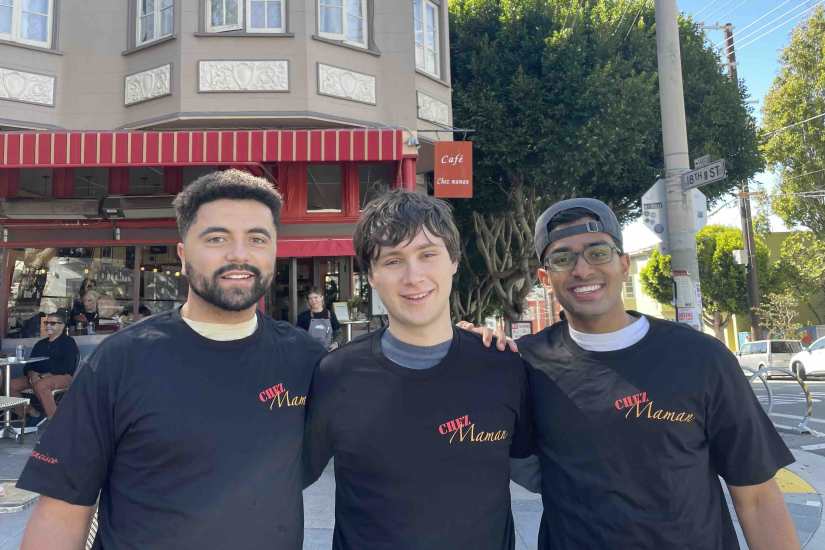
San Francisco-based VideoGen raised $3.3 million in seed funding from Y Combinator, Rebel Fund, Lobster Capital and Stretford End Capital, with Mento VC, Pioneer Fund and Decacorn VC also participating.
The company says its AI video platform has surpassed 5 million users across more than 190 countries. VideoGen began in 2023 with $30,000 of the founders’ internship savings, bootstrapped through its first year and later joined Y Combinator’s S24 batch.
The small financing relative to reported user scale is what makes this round interesting.
AI video is becoming crowded quickly. Companies including well-capitalized specialists and major foundation-model providers can now generate increasingly convincing video. That makes pure model capability a difficult long-term moat for a small startup.
VideoGen is instead pushing toward complete video workflows, browser editing, reusable assets, and programmatic creation through its API and MCP integration. If AI-generated media becomes commoditized, owning the process around the generation step may prove more durable than owning the generation step itself.
Its reported 5 million-user distribution gives investors something many seed-stage AI companies lack: evidence that users already care. The next test is whether that reach can translate into sustained paid usage as competition in AI video intensifies.
Funding Details
Startup: VideoGen
Investors: Y Combinator, Rebel Fund, Lobster Capital, Stretford End Capital, Mento VC, Pioneer Fund, Decacorn VC
Amount Raised: $3.3 million
Total Raised: $3.3 million disclosed
Funding Stage: Seed
Funding Date: September 8, 2026
Headquarters: San Francisco, California
Sector: Generative AI/video software
Valuation: Not disclosed
What Today’s Funding Activity Reveals
The first pattern is extreme capital concentration. Cognition’s $2 billion financing dwarfs the other nine selected transactions. It would be misleading to look at today’s aggregate capital and conclude that funding conditions have suddenly loosened equally across the startup market. Investors are concentrating very large amounts of money into a small number of companies where they believe market leadership is becoming visible.
What makes Cognition different from many previous AI megadeals is the commercial signal accompanying the financing. A reported run-rate approaching $900 million gives investors a revenue narrative to attach to the $48 billion valuation. The valuation is still demanding, but this is no longer a purely technical bet on future adoption.
The second pattern is AI migrating into specific operational systems. CloudNC applies it to machining. Limetax applies it inside accounting firms. Algomatic Dynamics connects it to robotic hands and motion control. VideoGen is trying to own the entire media-production workflow rather than a single generation model. Tanda intends to add AI inside payroll and workforce management rather than reinvent itself as an AI company.
That matters because foundation-model access is becoming easier. The harder parts are increasingly customer context, proprietary data, regulatory permission, physical deployment, and distribution.
Third, strategic capital is unusually prominent. DMM finances Algomatic Dynamics. India’s National Quantum Mission backs QNu. Sony appears in the same syndicate. Lockheed Martin’s venture arm backs CloudNC. Uber invests directly in a fleet company that supports the ride-hailing ecosystem. Thoma Bravo steps into Tanda after 14 years of bootstrapped growth.
That suggests investors are increasingly looking beyond financial returns alone. Industrial companies want access to automation. Governments want domestic security technology. Platforms want reliable supply. Private equity wants mature vertical software with established economics.
The fourth pattern is capital specialization. Limetax uses venture equity for technology and bank credit for acquisitions. QNu combines venture funding with a government-supported convertible facility. This is what happens as venture-backed businesses move beyond conventional software: one kind of capital no longer fits every job.
Finally, geography is strikingly distributed. Only Cognition and VideoGen are U.S.-headquartered. The rest of today’s selected deals come from Japan, Germany, India, the UK, Ireland and Australia. The largest check is American, but experimentation in physical AI, quantum security, industrial software, and regulated services is global.
Comparative Funding Table
| Startup | Amount Raised | Sector | Funding Stage | Lead/Key Investors | Country |
|---|---|---|---|---|---|
| Cognition AI | $2B | AI coding/software agents | Series E | Andreessen Horowitz, Accel, Founders Fund, General Catalyst | U.S. |
| Algomatic Dynamics | ¥5B | Physical AI/robotics | First financing | DMM.com | Japan |
| QNu Labs | ₹200 crore + separate ₹150 crore convertible facility | Quantum cybersecurity | Series A1 | National Quantum Mission, Speciale Invest, Sony Innovation Fund, Gaja Capital | India |
| CloudNC | $20M | Industrial AI / CNC manufacturing | Series B extension | Nimble Ventures, Calculus VC, Entrepreneur First, LM Ventures | UK |
| Limetax | €6M equity + €30M credit | AI/tax and accounting | Pre-seed + credit facility | Motive Partners, Activant, Heliad, German banks | Germany |
| Carrum Mobility | $10M | Fleet technology/mobility | Not disclosed | Uber | India |
| ZeroRisk | $10M | Cybersecurity/payments | Series A | MiddleGame Ventures, Elkstone | Ireland |
| Tanda | Not disclosed | Workforce management / HR software | Strategic growth | Thoma Bravo | Australia |
| Allogenetics | €3.8M | Biotech/gene therapy | Pre-Series A | NBank Capital, CARMA FUND, Life Science Valley Wachstumsfonds | Germany |
| VideoGen | $3.3M | Generative AI/video | Seed | Y Combinator, Rebel Fund, Lobster Capital, Stretford End Capital | U.S. |
Strategic Takeaways for Founders and Investors
Revenue velocity can still overwhelm valuation anxiety. Cognition’s financing shows that investors will tolerate a very high private valuation when adoption appears to be accelerating fast enough. But this works only when the growth story is measurable. “We have AI” is no substitute for customer spending.
The next AI moat increasingly sits inside the workflow. CloudNC owns machining context. Limetax embeds software into operating tax firms. VideoGen is building around the complete video-production process. As models become interchangeable inputs, knowledge of how work actually gets done becomes more valuable.
Physical AI is broader than humanoid robots. Algomatic Dynamics’ focus on hands, motion data, biped control and tacit-knowledge extraction shows where some of the harder technical problems sit. Investors looking at robotics should distinguish impressive demonstrations from the components and training systems required to make robots economically useful.
Strategic investors can solve distribution problems that money alone cannot. Uber can feed demand into Carrum. Lockheed Martin sits inside a major manufacturing and defense ecosystem relevant to CloudNC. Government participation can help QNu reach infrastructure deployments. In these markets, the investor’s identity may matter almost as much as the size of the check.
Use the right capital for the right risk. Limetax’s structure is especially instructive: equity funds uncertain technology and organizational development; bank credit finances acquisitions with existing cash flows. Founders who finance predictable assets entirely with equity may surrender more ownership than necessary.
Regulation and scientific difficulty can become barriers rather than disadvantages. ZeroRisk operates inside payments. QNu sells security infrastructure. Allogenetics must cross biotechnology and clinical-development hurdles. These companies are harder to build, but successful execution produces defenses that another startup cannot recreate by shipping a similar interface.
Bootstrapping remains a viable path to institutional scale. Tanda waited roughly 14 years before accepting outside capital. Its Thoma Bravo deal is a useful counterweight to the idea that every serious software company must maximize venture funding from inception. Capital is valuable when it accelerates something already working; it is not proof that the business works.
Conclusion
September 9’s funding cycle begins with one extraordinary number: $2 billion for Cognition AI at a $48 billion valuation. But treating today’s activity simply as another example of investors pouring money into AI would miss most of the signal.
Below Cognition, capital is moving into robotic dexterity, quantum cybersecurity, precision manufacturing, merchant security, regulated accounting, fleet infrastructure, and gene therapy. Even the smaller AI-video round is being financed against distribution and workflow rather than an attempt to train the industry’s largest model.
The common denominator is increasing control over something difficult to reproduce: a developer workflow, a factory process, a robotic control stack, a quantum-security network, a regulated customer relationship, an installed fleet or specialized scientific know-how.
That is where the premium appears to be moving.
Access to intelligence is becoming cheaper. Owning the place where that intelligence gets turned into code, machinery, regulated decisions, or physical action is becoming more valuable.