OpenAI says it solved the 90-year-old Navier-Stokes math problem in 88 hours. Now it faces accusations of stealing researchers’ work
 Daniel Levi
Posted On September 9, 2026

OpenAI says that it solved the 90-year-old Navier–Stokes mathematics problem in just 88 hours, using 10,000 AI agents and a new artificial intelligence model to crack one of mathematics’ most famous unsolved problems. What should have been a victory lap for artificial intelligence has instead opened an uncomfortable debate over whether an AI company can end up competing with researchers who use its models.
The company said late Tuesday that a group of agents running on a next-generation OpenAI model produced a proposed solution to the Navier-Stokes Millennium Prize Problem, one of mathematics’ most famous unsolved questions.
“We’re sharing a solution to the Navier-Stokes Millennium Prize Problem, one of the deepest problems at the frontier of mathematics. The proof was produced by a group of agents, using an OpenAI next-generation model significantly more capable than GPT-6 Astra,” OpenAI said on X.
The Clay Mathematics Institute, which created the Millennium Prize Problems and offers $1 million for a solution to each, has not yet validated the result. That distinction matters. OpenAI says it has a solution. The mathematical community has yet to establish that the proof is correct.
Still, the scale and speed of OpenAI’s experiment are striking.
“The agents had access to tools such as the ability to read from a cached version of the internet and the ability to run code. Agents were subdivided into groups with the ability to communicate within the group,” OpenAI said. “The groups varied in size, and the group that produced the Navier–Stokes resolution involved on the order of 10,000 concurrent agents.”
OpenAI said the agents reached their proposed resolution on Saturday, September 5, roughly 88 hours after the first agents began working.
The model behind the effort may be just as significant. OpenAI described it as a next-generation system “significantly more capable than GPT-6 Astra,” suggesting the company has already moved beyond its recently released frontier model internally.
From AI breakthrough to research controversy
The story took a sharp turn after OpenAI CEO Sam Altman explained what prompted the experiment.
“It is true that we tried this because there were rumors on the internet last week that Anthropic’s models had solved a millennium problem and we were curious if ours could do it too.”
Those rumors were connected to work by New York University mathematician Tristan Buckmaster and Levent Alpöge, a mathematician at Anthropic. Buckmaster said the two had been privately collaborating on Navier-Stokes and other mathematical problems.
Buckmaster later wrote on his website that Alpöge received “tips” suggesting information about their progress had reached OpenAI. He said OpenAI’s route appeared similar to their approach and was “not the direction one arrives at in a few days by giving a model the problem statement.”
That raised a more serious question: could data generated by researchers using OpenAI products have contributed, directly or indirectly, to the company’s own research?
Buckmaster stopped short of making that accusation as fact.
“I would like to be clear about what I am not claiming. I have not seen OpenAI’s proof. I do not know what their model did, or how. I do not know whether our data was used,” Buckmaster wrote.
OpenAI denied accessing the researchers’ private work to solve the problem. The company said its effort began September 1 after hearing rumors about progress elsewhere.
“We (the researchers and the agents) did not see any of their work through any means until they released it publicly — in particular, no specific user data was accessed in order to solve this problem. While unlikely, we cannot rule out that de-identified data derived from their usage of our products helped improve our models,” OpenAI said.
That final sentence is likely to keep the controversy alive.
A July warning suddenly looks different
The dispute has revived scrutiny of OpenAI’s July 29 offer of free access to its frontier models for scientists, mathematicians and engineers. The program started with 10,000 researchers and is expected to reach 100,000 by 2027.
One X user named Nik responded to that announcement with a prediction that attracted little attention at the time.
“I think the plan is to get researchers to start using their AI with a limited compute budget, then once they have all the academic data, they’ll basically steal all their ideas from underneath them and run the research internally with their unlimited compute budget!”
I think the plan is to get researchers to start using their AI with a limited compute budget, then once they have all the academic data, they’ll basically steal all their ideas from underneath them and run the research internally with their unlimited compute budget! https://t.co/yBpzh0t0tJ
— NIK (@ns123abc) July 29, 2026
The comment has since gone viral as users connect it to the Navier-Stokes dispute. No evidence currently shows that OpenAI stole Buckmaster and Alpöge’s research, and Buckmaster has made no such definitive claim.
this guy fucking called this months ago.
openai asked researchers to come use their models and do research with them.
now, a few months later:
math researchers getting fucking scooped by the lab they trusted with their work.
what a fucking precedent. https://t.co/07Q8N4Qc6b pic.twitter.com/O2ys9p5H0G
— Ryan Orhan (@rynorhn) September 8, 2026
Yet the episode exposes a problem that extends far beyond one mathematical proof.
Researchers are increasingly being encouraged to use frontier AI systems as collaborators in scientific work. Those interactions can contain hypotheses, failed approaches, promising directions, and unpublished discoveries. If the companies operating those systems are simultaneously racing to make discoveries with their own models, the boundary between tool provider and research competitor becomes difficult to ignore.
For OpenAI, proving Navier-Stokes would be an extraordinary scientific achievement. Proving that its agents reached the result independently may now matter almost as much.
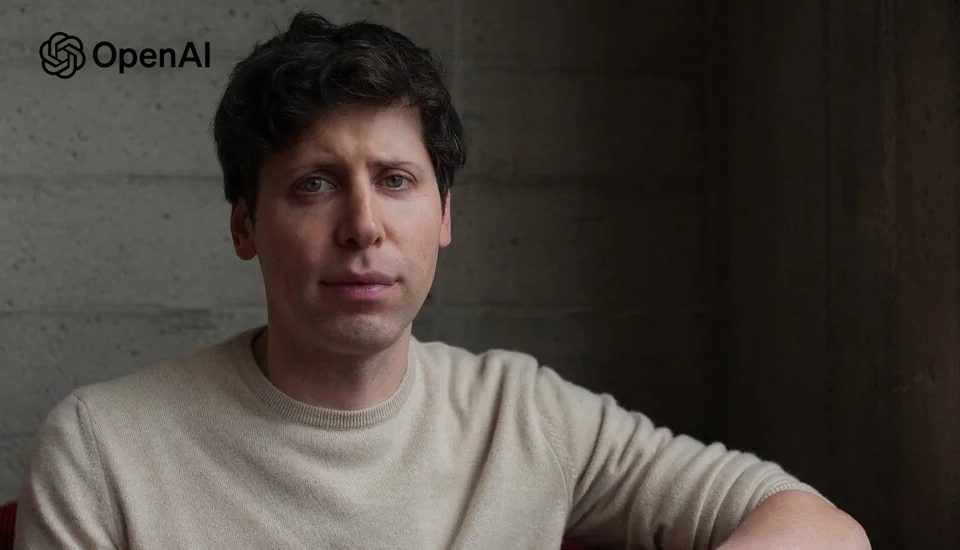
OpenAI CEO Sam Altman