Venture Capital & Startup Funding Roundup, September 8, 2026: Accel, Atomico, Bessemer, General Catalyst, Thrive Capital, Y Combinator & More
 Nickie Louise
Posted On September 8, 2026

Venture capital’s clearest signal today isn’t AI by itself. It is capital moving toward systems that control scarce physical capacity, regulated workflows, or hard-to-replicate operating networks. In just the past 12 hours, investors poured some of the day’s biggest rounds into reusable rockets and autonomous aircraft, backed a new approach to nuclear energy, and committed serious capital to experimental treatments for cancer and obesity. On the software side, the strongest financings went to AI embedded inside healthcare operations, consumer underwriting, and enterprise compliance rather than to another general-purpose model company.
The ten rounds selected below account for approximately $2.07 billion in disclosed financing. Stoke Space and The Exploration Company alone represent about 70% of that total; adding Poseidon Aerospace takes aerospace and space-related financing to roughly $1.51 billion, or 73%. That concentration is unusually instructive: investors are increasingly willing to finance technology companies whose path to scale requires factories, test programs, regulatory approvals, specialized hardware, and very large upfront capital commitments—provided the potential market is strategic enough.
The Macro Environment: Capital Is Paying for Control of Bottlenecks
The venture market is behaving as though money is plentiful for a small group of companies and expensive for almost everyone else. Growth investors continue to raise large pools: Menlo Ventures, for example, raised $3 billion this year, including $2.25 billion for vehicles aimed largely at Series B and later investments. That supply of private capital helps explain how proven companies can continue raising nine-figure rounds without immediately turning to public markets.
But the cost of money has not returned to the conditions that produced the 2020–2021 startup boom. The federal funds target remains 3.5%–3.75%, and markets are still debating whether the Federal Reserve will raise rates at its September meeting. Higher benchmark rates raise the hurdle rate for companies whose payoff lies many years away, which makes today’s billion-dollar bets on reusable rockets especially notable: investors are accepting long development cycles because launch capacity itself is viewed as strategically scarce.
The same tension is appearing in AI infrastructure. Reuters also reported that AI-linked debt issuance approached $500 billion by August, while lenders grew more demanding about leases, permits, and other protections as grid connections and construction schedules slipped. In other words, capital remains available, but financing is moving from “AI demand will be enormous” toward “show us exactly where the power, customers and operating assets come from.”
Public markets are reinforcing part of the private-market thesis. HSBC raised its S&P 500 year-end target today, citing earnings strength and continued AI infrastructure investment, while the S&P 500 was up roughly 12.75% for 2026 at the time of the report. Strong public-market valuations give growth investors better potential exit economics, but the widening scrutiny of AI infrastructure financing also discourages undifferentiated projects.
That combination—ample growth capital, a relatively high cost of money, strong technology-equity valuations, and tighter infrastructure underwriting, produces a barbell market. Capital is concentrating in companies that can control a scarce resource or become deeply embedded in a valuable workflow. Today’s rounds fit that pattern unusually well.
The Top Funding Rounds
Stoke Space raises $1B in funding to challenge the economics of reusable launch
Stoke Space completed the initial closing of a $1 billion Series E, co-led by Point72 Ventures and Spark Capital, taking total capital raised to $2.3 billion. The Kent, Washington, company is developing Nova, a launch vehicle designed around full reuse of both stages rather than recovery of only the booster. Its first Nova Pathfinder orbital mission is targeted for early 2027, while a larger Nova Block 2 is planned to carry about 15 metric tons to low Earth orbit.
Why does a pre-orbital rocket company merit a billion-dollar private round? Because launch has become infrastructure. Satellite constellations, national-security missions, communications networks and sovereign space programs all need reliable access to orbit, yet the market remains heavily dependent on a small number of providers. Stoke’s second-stage technology—including active cooling and an architecture built around rapid reuse—aims to attack the part of rocket economics that remains hardest to reproduce.
The competitive benchmark is obvious: SpaceX. Rocket Lab, Relativity Space, Firefly, and other launch companies are also pursuing portions of the market. Stoke therefore is not being financed simply to reach orbit; it is being financed to demonstrate that a second company can build a repeatable, fully reusable orbital transportation system. That is a far more valuable outcome, but also a much harder one.
Funding Details
Startup: Stoke Space
Investors: Point72 Ventures, Spark Capital, General Innovation, Glade Brook Capital, US Innovation Technology, Washington Harbour Partners, Woven Capital, Y Combinator, and others
Amount Raised: $1 billion initial closing
Total Raised: $2.3 billion
Funding Stage: Series E
Funding Date: September 8, 2026
Headquarters: Kent, Washington, United States
Sector: Space technology / reusable launch
Valuation: Not disclosed
The Exploration Company raises $450M to build a European orbital-logistics stack
The Exploration Company, or TEC, raised $450 million in Series C funding, with Bessemer Venture Partners, Atomico and the Scaleup Europe Fund jointly leading the round. Balderton, Plural, Cherry and Red River West also participated. The financing brings disclosed funding to roughly $680 million and will fund the company’s Nyx reusable spacecraft, its Storm propulsion program, and broader space-transport ambitions.
TEC matters because Europe’s space problem is increasingly less about engineering talent than about whether it has enough independent transportation capacity. Nyx is intended to carry cargo to orbital stations and return to Earth, eventually putting the company in a market currently served by systems such as SpaceX’s Dragon and Northrop Grumman’s Cygnus. TEC says it has accumulated more than $2 billion in contracts and commitments, giving investors something more concrete than a purely speculative hardware roadmap.
The investor mix is also worth watching. Scaleup Europe Fund participation makes this partly an industrial-policy transaction: Europe increasingly views launch, spacecraft, and AI infrastructure as strategic capabilities rather than ordinary technology categories. For founders building capital-intensive European companies, the lesson is that sovereign and institutional capital can enter the financing stack when the technology maps onto regional autonomy.
Funding Details
Startup: The Exploration Company
Investors: Bessemer Venture Partners, Atomico, Scaleup Europe Fund, Balderton, Plural, Cherry, Red River West and existing investors
Amount Raised: $450 million
Total Raised: Approximately $680 million
Funding Stage: Series C
Funding Date: September 8, 2026
Headquarters: Munich, Germany, with a broader pan-European operating footprint
Sector: Space technology / reusable spacecraft/propulsion
Valuation: Not disclosed
Forus raises $150M at a $3B valuation to automate the path from prescription to treatment
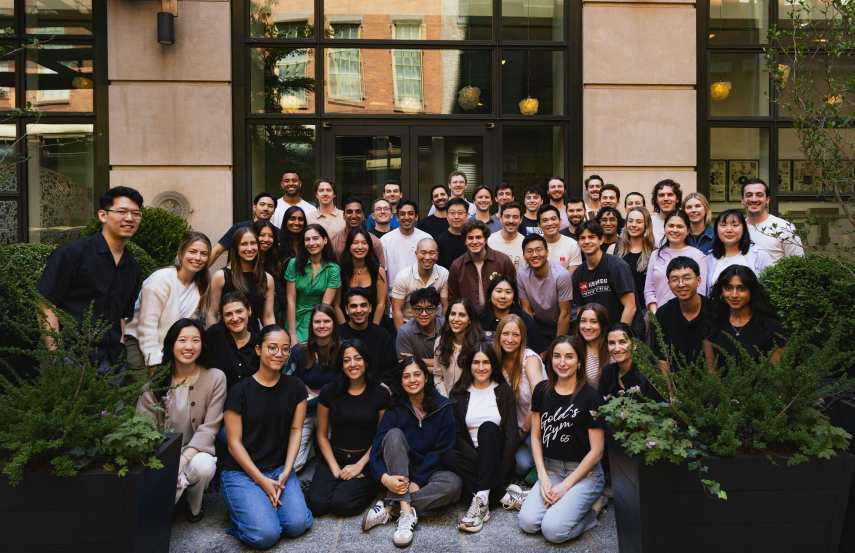
Forus, previously known as Tandem, raised $150 million in Series C financing at a $3 billion valuation, roughly tripling its valuation in about four months. Bain Capital Ventures led the round, with existing investors including Thrive Capital, General Catalyst and Accel participating. Reuters reports that the company has now raised more than $300 million.
Forus uses AI agents to manage the operational steps that often occur between a doctor writing a prescription and a patient receiving treatment: insurer approvals, financial-assistance processes, and medication-supply coordination. It already works with nine of the 15 largest biopharma companies and supports providers across all 50 U.S. states.
That is a revealing AI investment thesis. Forus is not competing primarily on who has the best general-purpose model. It is building around a workflow where errors, delays, and administrative friction have direct economic consequences for providers, pharmaceutical companies, and patients. The $3 billion valuation suggests investors increasingly believe the most valuable enterprise AI companies are those that own an operating process and can measure the financial outcome of automating it.
Funding Details
Startup: Forus
Investors: Bain Capital Ventures, Thrive Capital, General Catalyst, Accel, and others
Amount Raised: $150 million
Total Raised: More than $300 million
Funding Stage: Series C
Funding Date: September 8, 2026
Headquarters: New York, United States
Sector: Healthcare AI/patient access/care operations
Valuation: $3 billion
Split Pay raises $125M in funding to reprice the timing mismatch in household bills
Split Pay disclosed $125 million across its Series A and Series B financings. Khosla Ventures led both rounds, while Thrive Capital and PayPal co-founder Max Levchin joined the investor group. The company previously raised a $15 million seed round in 2023; its Series A was $25 million, and its Series B is roughly $100 million, for about $140 million in disclosed funding.
The product addresses a deceptively simple consumer-finance mismatch. Rent and mortgage payments are usually due once a month, while many workers receive income on different schedules. Split Pay pays the housing obligation on time and lets customers defer up to half for up to 30 days. The company charges a percentage of the bill plus a monthly fee rather than conventional late fees or interest, and it has expanded into student-loan and vehicle-payment use cases.
The deeper investor bet is underwriting. CEO Andrew Borovsky, a former Block/Cash App executive, told Axios that Split Pay spent its early years building AI-based underwriting focused on consumers under 40. If the company can estimate short-duration repayment risk better than conventional credit models, the value sits not in the payment interface but in the risk engine underneath it. The counterpoint is equally important: credit startups can grow quickly in favorable cohorts and discover weaknesses only as the book seasons. Investors are therefore betting as much on loss prediction as on customer acquisition.
Funding Details
Startup: Split Pay
Investors: Khosla Ventures, Thrive Capital, Max Levchin
Amount Raised: $125 million disclosed across Series A and Series B
Total Raised: Approximately $140 million disclosed
Funding Stage: Series B / combined Series A and B disclosure
Funding Date: September 8, 2026
Headquarters: United States; city not confirmed in the sources reviewed at cutoff
Sector: Consumer fintech/credit / AI underwriting
Valuation: Not disclosed
BrainChild Bio raises $116M in funding to push pediatric brain-cancer CAR-T into pivotal development
BrainChild Bio raised a $116 million Series A while advancing BCB-276, a CAR-T therapy in pivotal development for diffuse intrinsic pontine glioma, or DIPG. BioSpace describes DIPG as a rare, fatal pediatric brain tumor affecting roughly 300 children in the United States each year.
This is one of the day’s most important rounds despite being much smaller than the space financings. A $116 million Series A in biotech is not simply venture capital funding discovery work; it is financing clinical execution in an indication where both the medical need and development risk are extremely high. Investors in such programs are underwriting manufacturing, trial enrollment, regulatory execution and biological efficacy simultaneously.
The broader signal is that venture investors remain willing to fund cell therapy when there is a focused disease target and a clear clinical program. That differs from the earlier biotech cycle, when large platform narratives could sometimes raise substantial capital before a lead asset became the central value driver. Here, the asset and trial are the investment story.
Funding Details
Startup: BrainChild Bio
Investors: Investor syndicate not independently confirmed in the sources available at the report cutoff
Amount Raised: $116 million
Total Raised: At least $116 million disclosed in the current financing
Funding Stage: Series A
Funding Date: September 8, 2026
Headquarters: Not independently confirmed in the sources reviewed before the cutoff
Sector: Biotechnology/cell therapy / pediatric oncology
Valuation: Not disclosed in the sources reviewed
Moonwalk Biosciences raises $70M in funding to go after obesity through adipose-targeted RNAi
Moonwalk Biosciences closed a $70 million Series B to advance RNA-interference therapies directed at adipose tissue for obesity and cardiometabolic disease. The company combines human genetics, epigenetics and a proprietary adipose-targeted siRNA approach, with MW101 emerging as its lead obesity program. The company’s stated goal is to reduce fat while preserving lean mass and potentially permit much less frequent dosing than today’s leading obesity drugs.
That puts Moonwalk inside one of biotech’s most competitive markets—but with a deliberately different mechanism from the dominant incretin class. GLP-1 therapies have transformed obesity treatment, yet issues including gastrointestinal tolerability, lean-mass loss, weight regain after discontinuation and repeated dosing continue to create room for alternative approaches. Moonwalk says MW101 is expected to enter first-in-human studies in late 2027.
For investors, the opportunity is not necessarily to displace GLP-1s. A therapy that complements incretins, improves body composition or supports less frequent maintenance dosing could occupy a large market even if semaglutide- and tirzepatide-like drugs remain dominant. The risk is that obesity pipelines are now crowded enough that differentiation will need to appear in clinical data, not merely in a distinct mechanism.
Funding Details
Startup: Moonwalk Biosciences
Investors: Current Series B syndicate not independently confirmed in the sources available at cutoff
Amount Raised: $70 million
Total Raised: Not independently confirmed from the current sources reviewed
Funding Stage: Series B
Funding Date: September 8, 2026
Headquarters: Company announcement materials reference South San Francisco and San Diego, California
Sector: Biotechnology / RNAi / obesity and cardiometabolic disease
Valuation: Not disclosed
Poseidon Aerospace raises $60M in funding to make autonomous cargo aircraft economically boring
Poseidon Aerospace closed an oversubscribed $60 million Series A led by TQ Ventures, with JAWS, G Squared, Hanwha Asset Management USA, Starship Ventures, Drover Ventures and Draper Associates participating. Added to its $11 million seed financing, the round takes disclosed funding to about $71 million. The company will use the money for flight testing, its first production line, hiring, and customer programs.
Its strategy is unusually pragmatic for advanced aviation. Poseidon’s Egret aircraft is a conventional fixed-wing design using combustion engines, but removes the onboard pilot and redesigns the aircraft around cargo rather than passengers. A roughly 50-foot-wingspan full-scale Egret is targeted for its first uncrewed flight by the end of 2026. The company plans to operate aircraft itself rather than simply selling them, targeting both regional freight and contested defense logistics.
That operating model is the strategic point. Removing pilots can affect payload, aircraft utilization, crew scheduling, and route economics at once. Poseidon is therefore not asking investors to finance a breakthrough battery or hydrogen propulsion system on top of a new aircraft. It is concentrating the technological risk in autonomy and certification while using mature propulsion. In aerospace, reducing the number of simultaneous inventions can itself be a competitive strategy.
Funding Details
Startup: Poseidon Aerospace
Investors: TQ Ventures, JAWS, G Squared, Hanwha Asset Management USA, Starship Ventures, Drover Ventures, Draper Associates and others
Amount Raised: $60 million
Total Raised: Approximately $71 million
Funding Stage: Series A
Funding Date: September 8, 2026
Headquarters: Alameda, California, United States
Sector: Autonomous aviation/logistics / defense technology
Valuation: Not disclosed
Bluecore Energy raises $50M to put nuclear generation offshore
Bluecore Energy announced $50 million in seed financing, inclusive of a $10 million pre-seed round led by Slauson & Co. Silverton Partners led the seed round. The company is developing small nuclear reactors mounted on barges that could sit offshore, transmit power to ports through subsea cables, and use ocean water for cooling.
CEO Kofi Asante told Axios that the Port of Long Beach is Bluecore’s initial priority and that the company has also received interest from other ports and data-center developers. The funding may allow Bluecore to begin ordering nuclear fuel and move toward reactor criticality.
The significance goes well beyond a $50 million seed check. AI data centers, electrified industrial facilities and ports are creating new demand for dependable electricity at the same time that grid interconnections have become a financing constraint. Bluecore is trying to make siting part of the product. Offshore nuclear could avoid some land constraints, but the company will still face the deep technical, licensing, construction, and project-finance challenges inherent to nuclear generation. This is venture investing approaching infrastructure finance.
Funding Details
Startup: Bluecore Energy
Investors: Silverton Partners; Slauson & Co. led the earlier $10 million pre-seed; additional reported backers include Kevin Hart and Simu Liu
Amount Raised: $50 million, inclusive of the $10 million pre-seed
Total Raised: $50 million disclosed
Funding Stage: Seed
Funding Date: September 8, 2026
Headquarters: United States; city not independently confirmed in the sources reviewed at cutoff
Sector: Nuclear energy/power infrastructure
Valuation: Not disclosed
ARC Ride raises $33.3M in funding to turn battery swapping into African transport infrastructure
Nairobi-based ARC Ride raised $33.3 million in equity and debt financing, co-led by Norrsken22 and Novastar Ventures. IFC, British International Investment and Proparco participated, alongside existing investors Musashi Seimitsu and Talanton; the financing also includes debt support associated with BII’s Kinetic program and Mirova.
ARC Ride combines electric motorcycles with a battery-as-a-service network. Riders swap depleted packs rather than waiting to recharge, shifting the economics from battery ownership to vehicle utilization. That distinction matters in commercial two-wheel transport: for a rider earning daily income, charging downtime is an operating expense, not merely an inconvenience.
The capitalization is particularly instructive. Development-finance institutions are better matched than conventional software-only VC funds to assets such as batteries and swap stations that require upfront deployment and produce returns over longer periods. ARC Ride therefore offers a template for climate and mobility founders in emerging markets: the financing architecture may need to be as carefully designed as the product, combining venture equity with development and asset-linked capital.
Funding Details
Startup: ARC Ride
Investors: Norrsken22, Novastar Ventures, IFC, British International Investment, Proparco, Musashi Seimitsu, Talanton; debt support involving BII and Mirova
Amount Raised: $33.3 million
Total Raised: Not disclosed
Funding Stage: Series A financing reported, including debt facilities
Funding Date: September 8, 2026
Headquarters: Nairobi, Kenya
Sector: Electric mobility/battery infrastructure
Valuation: Not disclosed
Blee raises $20M in funding to make AI-generated marketing governable

New York-based Blee raised a $20 million Series A co-led by Fin Capital and SMBC Fin Atlas Beyond Fund, taking total funding to $27 million. Hannah Grey VC and National Bank of Canada joined existing backers, including Y Combinator, Penny Jar Capital, Cardumen Capital, and Treasury.
Blee sells software to legal, compliance, and brand teams that review customer-facing materials before and after publication. Its system checks content against regulatory, legal, and brand requirements while maintaining approval workflows and audit trails. Customers reported in current coverage include SoFi and Expedia Group.
The timing is important. Generative AI is making content production cheaper and faster; that does not remove regulated review. It can actually increase the amount of material that compliance teams need to inspect. That creates a second-order AI market: software that controls, verifies, and records the output of other AI systems. Blee’s defensibility will depend less on having exclusive access to an underlying model and more on integrations, policy data, workflow history, and the institutional cost of replacing a compliance system once it becomes embedded.
Funding Details
Startup: Blee
Investors: Fin Capital, SMBC Fin Atlas Beyond Fund, Hannah Grey VC, National Bank of Canada, Y Combinator, Penny Jar Capital, Cardumen Capital, Treasury, and others
Amount Raised: $20 million
Total Raised: $27 million
Funding Stage: Series A
Funding Date: September 8, 2026
Headquarters: New York, New York, United States
Sector: Enterprise AI / regulatory technology/marketing compliance
Valuation: Not disclosed
What Today’s Funding Activity Reveals
Capital is moving back into atoms, but selectively. By this report’s tally, roughly 73% of the disclosed capital in the ten selected rounds went to Stoke Space, The Exploration Company and Poseidon Aerospace. Add Bluecore Energy and ARC Ride, and an even larger share of the day’s financing is tied to rockets, aircraft, power systems, batteries, or other physical assets rather than conventional SaaS.
This does not mean software has lost investor interest. It means the bar for software is moving upward. Forus, Blee and Split Pay all use AI, but AI is not the whole product proposition. Forus owns an administrative healthcare workflow; Blee sits inside regulated content approval; Split Pay combines underwriting with the movement and timing of household payments. In each case, investors are financing proprietary operating context around AI rather than access to models alone.
Space is becoming a sovereignty category. Stoke represents an American bet on additional reusable-launch capacity; TEC represents Europe’s attempt to own more of its orbital logistics and propulsion stack. Europe’s Scaleup Europe Fund participating in TEC reinforces the growing overlap between venture investing and industrial strategy. These companies may ultimately sell commercially, but the ability to move satellites, cargo, and national-security payloads has value that cannot be measured solely through near-term software-style revenue multiples.
Energy constraints are becoming startup opportunities. Bluecore’s nuclear-barge proposal and ARC Ride’s battery network sit at different ends of the energy system, but both respond to the same underlying problem: electrification does not scale by improving software alone. It requires generation, storage, interconnections, and physical distribution. AI infrastructure is adding to that pressure; Reuters reports that power and grid delays are already changing how lenders underwrite data-center construction.
Biotech capital remains highly concentrated around specific clinical propositions. BrainChild Bio’s $116 million Series A and Moonwalk’s $70 million Series B are not broad “biology plus AI” financings. One targets a devastating pediatric brain cancer through CAR-T; the other is pursuing adipose-targeted RNAi as a differentiated obesity approach. The capital is following identifiable assets and clinical milestones.
Geographically, the group is also notable. The United States still accounts for most of the large rounds, but Germany, Kenya, and European institutional capital are material parts of the day’s activity. TEC and ARC Ride demonstrate two different international financing models: strategic European scale-up capital for sovereign technology, and blended venture/development financing for African infrastructure.
Comparative Funding Table
| Startup | Amount Raised | Sector | Funding Stage | Lead Investors | Country |
|---|---|---|---|---|---|
| Stoke Space | $1B | Reusable launch/space | Series E | Point72 Ventures, Spark Capital | United States |
| The Exploration Company | $450M | Spacecraft/propulsion | Series C | Bessemer Venture Partners, Atomico, Scaleup Europe Fund | Germany |
| Forus | $150M | Healthcare AI | Series C | Bain Capital Ventures | United States |
| Split Pay | $125M disclosed across A+B | Consumer fintech / AI underwriting | Series B / combined disclosure | Khosla Ventures | United States |
| BrainChild Bio | $116M | CAR-T / pediatric oncology | Series A | Not independently confirmed at cutoff | United States* |
| Moonwalk Biosciences | $70M | RNAi / obesity biotech | Series B | Not independently confirmed at cutoff | United States |
| Poseidon Aerospace | $60M | Autonomous aviation/defense logistics | Series A | TQ Ventures | United States |
| Bluecore Energy | $50M | Nuclear energy infrastructure | Seed | Silverton Partners | United States |
| ARC Ride | $33.3M | EV / battery swapping | Series A financing incl. debt | Norrsken22, Novastar Ventures | Kenya |
| Blee | $20M | Enterprise AI/compliance | Series A | Fin Capital, SMBC Fin Atlas Beyond Fund | United States |
*BrainChild Bio’s current financing and clinical program were confirmed in same-day biotech coverage; full headquarters and syndicate information were not exposed in the sources available before this report’s cutoff.
Strategic Takeaways for Founders and Investors
For founders, today’s financings make one point particularly clear: AI is becoming less persuasive as a category label and more valuable as a component of a defensible system. Forus can tie automation to treatment access. Blee can tie it to regulatory review. Split Pay can tie it to underwriting outcomes. The founder question is therefore shifting from “How much AI does the product use?” to “What economically meaningful process becomes ours if the AI works?”
Defensibility is also becoming more physical. Stoke needs engines, reusable stages, launch infrastructure, and flight history. Poseidon needs aircraft, certification and operating data. ARC Ride needs dense battery-swap networks. Bluecore needs nuclear engineering and project execution. These companies may be expensive to build, but once functioning, the assets and regulatory knowledge can create barriers that cannot be copied by prompting a foundation model.
For investors, that changes how you judge capital efficiency. A rocket company should not be evaluated by the same burn-rate expectations as a software company. The more useful question is whether each additional dollar retires a meaningful technical, regulatory or commercial risk. A reusable-launch test, a pivotal oncology trial, an FAA certification milestone, or a high-utilization battery network can increase enterprise value even before the business reaches conventional profitability. That is the logic behind many of today’s large checks.
Founders building physical infrastructure should also pay attention to capital matching. ARC Ride combines venture funding with development-finance and debt sources. TEC brings private venture investors together with a European strategic fund. The implication is that large infrastructure startups do not necessarily need to finance every asset with expensive preferred equity. Companies that can separate technology risk from asset risk can eventually bring in lenders, strategic investors, government programs, or project capital for the latter.
Pricing power will increasingly come from owning a bottleneck. For Stoke, that bottleneck is reusable access to orbit. Forus targets patient-access administration. Blee targets regulated approval capacity. Bluecore is targeting dependable generation near electricity-intensive users. A founder operating in an easily substituted software category faces the opposite condition: if multiple teams can reproduce the core feature set using the same underlying models, price competition is likely to arrive quickly.
Investors should therefore be careful not to confuse AI adoption with AI defensibility. The underlying model layer is becoming more accessible, while capital flows toward proprietary data, regulated workflows, distribution, physical systems, and embedded customer processes. Current credit-market behavior around AI infrastructure reinforces that shift: lenders are increasingly requiring evidence such as leases and permits rather than financing capacity purely on projected demand.
Finally, market timing matters. Large private companies continue to benefit from deep growth funds while public technology valuations remain supportive. Menlo’s $2.25 billion growth pool indicates investors still want exposure to late-stage private winners, while strong public-equity performance keeps eventual IPO economics alive. But higher rates mean investors can earn meaningful returns elsewhere, so companies without a convincing path to market power face a higher standard than they did during the zero-rate cycle.
Conclusion
September 8’s 12-hour funding window is a snapshot of a venture market becoming simultaneously more ambitious and more selective. Investors wrote a billion-dollar check to a rocket company that has yet to complete its first orbital mission, hundreds of millions more into European reusable space transportation, and substantial rounds into autonomous aircraft, nuclear generation, cell therapy and RNA medicine. Those are not low-risk investments. What they share is the chance to control capabilities that are hard to reproduce once established.
At the same time, the software financings show that the market has not turned away from AI. It is asking AI startups to prove something harder: that intelligence can be converted into ownership of a workflow, better underwriting, lower administrative cost or a compliance function that enterprises will keep paying for. Forus, Split Pay and Blee fit that description far better than a generic model wrapper would.
The strongest through-line, then, is not “AI” or even “deep tech.” It is scarcity. Scarce launch capacity. Scarce dependable power. Scarce clinical solutions for difficult diseases. Scarce regulatory expertise. Scarce operational data inside complex industries. Venture investors appear increasingly willing to finance expensive businesses when those businesses can plausibly turn one of those shortages into durable market power.
For founders, that is a demanding but useful signal. The next phase of the startup cycle is unlikely to reward companies merely for being technologically impressive. It is rewarding companies that can explain, and eventually prove, which bottleneck they will own when the technology works.