It’s Tuesday, June 23, 2026, and another day where artificial intelligence didn’t just iterate; it forced real-world consequences at unprecedented scale. Oracle cut 21,000 roles explicitly because of AI deployment. China seized the global supercomputing lead with domestically built hardware. Meta had to pause an internal employee-tracking program built to train AI agents after a data exposure. And SpaceX dropped a $60 billion bet on an AI coding startup. These aren’t isolated headlines. They’re connected signals of a tech ecosystem moving faster than most organizations can adapt — where compute power, talent wars, security risks, clean energy breakthroughs, and regulatory pressure are colliding in real time.
Today’s biggest tech stories show an industry moving deeper into the physical world. Anthropic is locking down chip supply. AI data centers are drawing scrutiny from the UN. SpaceX is turning compute into a multibillion-dollar business. China is back on top in supercomputing. And regulators, investors, and cyber agencies are all trying to keep pace with a technology stack that is expanding faster than the institutions around it.
Here are the top tech news stories making waves today, from AI and startups to regulation and Big Tech.
Technology News Today
Micron and Anthropic sign AI infrastructure supply deal
Micron has signed a strategic AI infrastructure agreement with Anthropic, giving the memory chipmaker a closer role in supporting Claude’s training and deployment needs. The deal includes Micron supplying memory and storage products, as well as an investment in Anthropic’s latest funding round.
The move shows how AI companies are no longer just competing on models. They are locking down the hardware stack behind those models, especially high-performance memory, storage, and compute capacity. For Micron, the partnership strengthens its position in the AI infrastructure race as demand for high-bandwidth memory continues to rise.
Why It Matters: AI competition is becoming a supply-chain battle, and memory is now one of the most valuable layers of the stack.
Source: Reuters.
Oracle cuts 21,000 jobs, citing AI adoption amid broader tech layoff wave
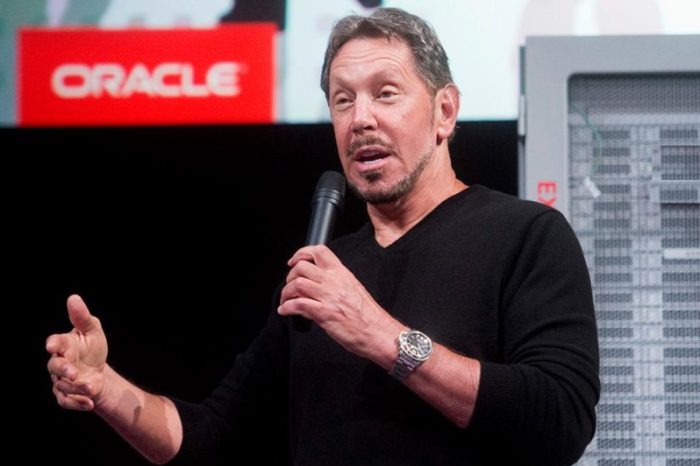
Oracle reduced its workforce by 21,000 roles — nearly 13% — over the past year, bringing its full-time employee count down to 141,000 as of May 2026. The company disclosed the cuts in its annual regulatory filing, explicitly linking them to the adoption and deployment of AI technologies across operations. It spent $1.8 billion on restructuring costs, including severance, up sharply from the prior year, while capital expenditures surged 162% to $55.7 billion, driven by heavy investment in AI infrastructure.
The moves mirror actions at other tech giants facing similar pressures from massive AI-related spending. Oracle joins Meta, Microsoft, Google, and Amazon in optimizing headcount to manage costs tied to data center buildouts and AI capabilities. Executives noted potential disruptions, including productivity dips, skill shortages, and impacts on morale.
Why It Matters: Oracle’s AI-driven layoffs underscore how even established tech firms are restructuring their workforces to fund the enormous capital demands of AI infrastructure, signaling a sector-wide shift in which automation efficiencies come at the expense of jobs.
Source: CNBC.
Meta pauses employee-tracking AI program after security issues
Meta has paused an employee-tracking program intended to train AI models after internal security issues exposed sensitive data from employees’ laptops. The pause raises questions about how companies collect workplace data for AI development.
The incident is a reminder that enterprise AI training can create new privacy and security risks within companies. As firms seek more proprietary data to improve models, the line between productivity tooling, surveillance, and data exposure is becoming harder to manage.
Why It Matters: AI training programs built on internal workplace data can create serious trust, privacy, and security problems.
Source: Wired.
Meta reportedly hires four more researchers from OpenAI
Meta is bringing on four additional AI researchers previously at OpenAI, continuing its aggressive talent acquisition in the competitive AI research space. The hires include specialists with expertise aligned to large model development. This follows similar moves by other labs and underscores the intense competition for top AI talent across Big Tech.
Why It Matters: Meta’s continued poaching from OpenAI highlights the fierce talent war driving the velocity of innovation in generative AI while raising questions about knowledge transfer and competitive dynamics among leading labs.
Source: Economic Times.
SoftBank’s Masayoshi Son dismisses Elon Musk’s orbital data center concept
SoftBank CEO Masayoshi Son publicly rejected Elon Musk’s proposal for orbital data centers, arguing that practical and technical challenges outweigh the potential benefits. The comments came amid broader discussions on AI infrastructure scaling. Son’s stance contrasts with the industry’s ongoing exploration of novel compute locations to address energy and land constraints on Earth.
Why It Matters: High-profile skepticism from one of tech’s most visionary investors casts caution on speculative ideas about space-based AI infrastructure, refocusing attention on terrestrial energy and efficiency solutions.
Source: Bloomberg.
AI startup Baseten hits a $13 billion valuation after a $1.5 billion raise
AI infrastructure startup Baseten has raised $1.5 billion at a $13 billion valuation, marking one of the largest recent funding rounds for a company focused on AI model deployment. The round was led by Sands Capital and Wellington Management, with participation from Australia’s Blackbird VC.
Baseten helps companies run and customize AI models more efficiently, a growing need as enterprises move from experiments to production. Its reported 20-fold revenue growth over the past year points to a shift in the market: businesses want cheaper and more controllable AI infrastructure, not just access to frontier models.
Why It Matters: The next wave of AI winners may be infrastructure startups that help companies reduce inference costs and deploy models at scale.
Source: Reuters.
UN chief pushes AI companies to disclose energy and water use
UN Secretary-General António Guterres urged AI companies to disclose the environmental impact of their data centers, including emissions, water use, land use, and energy sources. Speaking during London Climate Action Week, he called for greater transparency as AI workloads drive up power demand.
The remarks add pressure on AI companies and cloud providers as governments, utilities, and local communities scrutinize the physical cost of the AI boom. Data centers are becoming a major energy-policy issue, especially as tech companies race to secure electricity, land, cooling systems, and grid access.
Why It Matters: AI’s environmental footprint is moving from a side issue to a core business and regulatory risk for the tech industry.
Source: Associated Press.
SpaceX signs $6.3 billion AI compute deal with Reflection AI
SpaceX has signed a computing agreement with Reflection AI worth up to $6.3 billion for access to Nvidia GB300 systems at Colossus 2. Under the agreement, Reflection AI is expected to pay about $150 million per month through 2029.
The deal shows how the AI infrastructure boom is pulling nontraditional players deeper into the data center market. SpaceX is best known for rockets and satellite broadband, but AI compute has become valuable enough to turn large-scale infrastructure owners into cloud-like suppliers.
Why It Matters: AI compute demand is creating new revenue streams for companies with power, land, chips, and large-scale infrastructure capacity.
Source: TechStartups via CNBC.
Netherlands joins the US-led Pax Silica AI supply-chain initiative
The Netherlands has joined the US-led Pax Silica initiative, aligning with South Korea and Japan to coordinate AI and semiconductor supply chains. Taiwan has endorsed the effort as a non-signatory, adding weight to the initiative’s role in the global chip ecosystem.
The move matters because the Netherlands is home to ASML, one of the most important companies in advanced semiconductor manufacturing. As AI chips become strategic assets, governments are treating supply chains as national security infrastructure, not just private-sector logistics.
Why It Matters: AI supply chains are becoming geopolitical alliances, with chip equipment, advanced manufacturing, and export controls at the center.
Source: Reuters.
ByteDance unveils Seedance 2.5 AI video model
ByteDance has introduced Seedance 2.5, a new AI video model that can generate clips up to 30 seconds long from as many as 50 reference materials. That is a significant jump from Seedance 2.0, which supported shorter clips and fewer inputs.
The release keeps ByteDance in the middle of the AI video race, where companies are competing to serve creators, advertisers, entertainment studios, and social platforms. The broader trend is clear: AI video is moving from novelty demos toward tools that can support more controlled production workflows.
Why It Matters: Longer, reference-based AI video generation could reshape creative production, advertising, and short-form entertainment.
Source: The Information.
Google plans AI startup incubator for former employees
Google is planning a 12-week incubator for AI startups founded by former employees, according to Bloomberg. The program would select 10 to 20 companies and provide up to $350,000 in cloud credits and $100,000 in direct funding.
The incubator reflects a broader Big Tech strategy: keep talented alumni close, even after they leave to build startups. For Google, the program could create a pipeline of AI companies that remain tied to its cloud infrastructure, developer tools, and investor ecosystem.
Why It Matters: Big Tech is turning alumni networks into startup pipelines as the AI talent war intensifies.
Source: Bloomberg.
China’s LineShine becomes the world’s fastest supercomputer
China’s Arm-based LineShine supercomputer has passed the US system El Capitan to become the world’s fastest machine, according to the latest Top500 ranking. The milestone marks China’s first return to the top spot since 2017.
The result carries strategic weight beyond raw computing performance. Supercomputers support AI research, climate modeling, weapons simulations, drug discovery, and industrial design. China’s return to the top of the ranking signals that the competition in advanced computing remains global, even as export controls reshape access to chips.
Why It Matters: Supercomputing remains a key measure of national technology strength in the AI era.
Source: The New York Times.
South Korea tech stocks tumble as chip pressure hits markets
South Korea’s tech-heavy Kospi index fell sharply, dragged down by major chip names including SK Hynix and Samsung. European semiconductor stocks such as STMicro and ASML also declined, while US tech shares weakened in pre-market trading.
The sell-off shows how exposed global markets have become to expectations around AI and semiconductors. Investors have rewarded chipmakers heavily during the AI boom, but that also leaves tech indexes vulnerable when concerns rise over valuations, supply chains, demand, or policy risk.
Why It Matters: AI-linked chip stocks are now central to global market sentiment, making semiconductor swings a broader economic signal.
Source: CNBC.
Sakana AI launches Fugu multiagent orchestration system
Sakana AI has launched Fugu, a multiagent orchestration system accessible through an OpenAI-compatible API. The company says its Fugu Ultra system performs competitively against leading frontier models on benchmarks.
The release highlights growing interest in systems that coordinate multiple AI agents rather than relying on a single model response. For startups and enterprises, orchestration tools could become a key layer for building AI workflows that handle research, coding, planning, operations, and decision support.
Why It Matters: Multiagent systems are emerging as a major AI software layer for enterprise automation.
Source: VentureBeat.
Five Eyes agencies warn of near-term AI cyber threats
Five Eyes intelligence agencies warned that AI models capable of taking down governments and businesses may be only months away. The warning urged leaders to act now as AI-enabled cyber capabilities become more powerful.
The concern is that AI could lower the barrier for sophisticated attacks, automate vulnerability discovery, and help adversaries scale campaigns against public and private infrastructure. For startups and enterprises, the message is clear: cybersecurity planning now has to account for AI-accelerated threats.
Why It Matters: AI is changing the cyber threat timeline from years to months, raising the urgency for stronger defenses.
Source: The Guardian.
Eli Lilly builds AI “App Store” for biotech scientists
Eli Lilly plans to use part of its $7.3 billion cash reserve to fund an “App Store” for biotech scientists, following the launch of a data center powered by 1,016 Nvidia Blackwell chips. The effort reflects the growing overlap between AI infrastructure and drug discovery.
Pharma companies are increasingly treating AI as a core research platform rather than an experimental tool. If successful, Lilly’s approach could give scientists faster access to models, simulations, and discovery tools while making AI infrastructure a competitive advantage in biotech.
Why It Matters: AI infrastructure is becoming a strategic weapon in drug discovery and biotech R&D.
Source: Financial Times.
Kyber raises $5 million for low-latency remote device control
Paris-based Kyber has raised $5 million in a round led by Lightspeed. The startup, founded by VLC lead developer Jean-Baptiste Kempf, is building a low-latency SDK for remote device control.
The company sits at the intersection of real-time computing, remote operations, and developer infrastructure. Low-latency control matters for robotics, edge devices, industrial systems, gaming, and cloud-connected hardware. For Europe’s startup ecosystem, Kyber is another example of deep technical founders building infrastructure products with global reach.
Why It Matters: Remote device control is becoming more important as robotics, edge computing, and connected hardware move into production.
Source: TechCrunch.
UK data and AI regulator resigns after workplace investigation
John Edwards, the UK Information Commissioner and chair of the ICO, has resigned following a workplace investigation. The ICO is one of the UK’s most important regulators for data protection and AI oversight.
The resignation comes at a sensitive time for AI governance in Britain. Regulators are being asked to handle privacy, model training, biometric data, children’s safety, workplace monitoring, and platform accountability. Leadership changes at the ICO could affect how quickly the UK moves on data and AI enforcement.
Why It Matters: AI regulation depends heavily on credible institutions, and leadership instability can slow policy execution.
Source: BBC.
Trending Now