Venture Capital & Startup Funding Roundup, June 22, 2026
 Nickie Louise
Posted On June 22, 2026
Nickie Louise
Posted On June 22, 2026
It’s Monday, June 22, 2026, and the venture market did not spend the day spraying checks across the startup stack. It did what it has been doing more often in 2026: concentrating capital into the infrastructure, semiconductor, and workflow layers that sit underneath AI adoption, while still leaving room for a handful of sharply defined biotech and fintech bets. Across the 10 rounds below, companies disclosed roughly $3.37 billion in new capital, and nearly $3.0 billion of that was allocated to just four deals: Baseten, CRED, Nearfield Instruments, and Upscale AI. That is not breadth. It is a targeted conviction.
The common thread was not “AI” in the abstract. It was a bottleneck. Investors funded inference capacity, AI networking, semiconductor metrology, healthcare operations, industrial certification, and middle-mile fleet economics. In other words, they funded the hard parts that determine whether software actually turns into revenue, throughput, or defensibility. That matters because the market is increasingly distinguishing between startups that benefit from AI excitement and startups that remove the friction preventing AI from being deployed at scale.
There was also a second signal hiding in plain sight: who showed up. The day’s cap tables featured Altimeter, Wellington, Fidelity, Temasek, Meta, Andreessen Horowitz, Jeito Capital, Sofinnova Partners, AVP, Index Ventures, Union Square Ventures, NVIDIA, Salesforce Ventures, and Qatar Investment Authority. That mix of crossover funds, sovereign capital, strategic investors, and brand-name venture firms suggests the market is rewarding companies that look less like speculative concept bets and more like infrastructure assets, category platforms, or assets with a clear path to market power.
The Macro Environment: Capital Is Chasing Bottlenecks, Not Stories
What stood out most today was the concentration of capital around choke points. Baseten’s $1.5 billion Series F and Upscale AI’s $190 million Series A-1 both targeted AI infrastructure, but at different layers: one at inference orchestration and deployment, the other at networking fabric. Nearfield Instruments added another $380 million for semiconductor metrology, effectively extending the same thesis one step deeper into the stack. Investors are no longer just backing model creators or app wrappers. They are financing the systems that determine latency, utilization, yield, and reliability.
That helps explain the size of the day’s step-ups. Baseten said its new round was priced across two tranches at $13 billion and $11 billion, only months after announcing a $300 million Series E at a $5 billion valuation. Nearfield reached a $1.6 billion valuation. Upscale AI hit $2 billion. Those are not ordinary venture marks; they imply that investors see these companies as controlling scarce positions in markets where demand is growing faster than incumbent supply can comfortably absorb.
The biotech deals were telling in a different way. Bionyra and Nura Bio were not financed on vague “AI for biology” rhetoric. They were financed around clearly articulated therapeutic assets, disease targets, and clinical progression. Bionyra launched with clinical- and IND-stage biologics focused on inflammatory disease, while Nura tied its Series B to ongoing SARM1 programs in ALS and neuroprotection. That is a reminder that life sciences capital remains available when investors can underwrite the mechanism, asset quality, and development logic.
The public-private relationship also matters here. In a market where listed AI infrastructure names have already pushed investors toward the picks-and-shovels trade, private rounds are increasingly behaving like pre-IPO positioning. Fidelity, Wellington, M&G, Temasek, and QIA are not showing up to admire slide decks. They are buying exposure to infrastructure layers they believe will matter even more if public markets remain selective and reward only scaled, category-defining companies.
At the same time, today’s fintech and consumer-facing rounds showed that risk appetite has not disappeared. It has simply become choosier. CRED’s round came with a strategic relationship with Meta and a leadership crossover into WhatsApp. Fomo’s round paired consumer crypto with elite investors and a product thesis centered on lower-friction trading distribution. Those are not broad-based endorsements of consumer startups. They are bets that distribution, engagement, and platform adjacency can still justify growth capital when the product already has clear usage velocity.
The Funding Rounds
Baseten raises $1.5 billion in funding to power the next era of AI inference
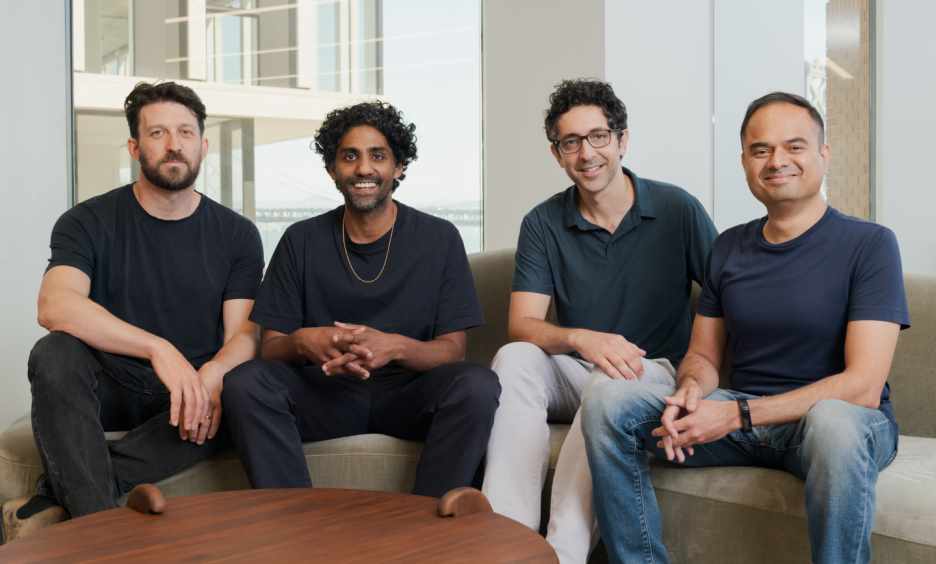
Baseten, the AI inference startup behind some of the world’s most advanced AI applications, has raised $1.5 billion in Series F funding led by Altimeter Capital, Conviction, and Spark Capital. Sands Capital and Wellington Management joined as co-leads, with additional backing from IVP, Greylock, 01A, Blackbird, Durable Capital Partners, Verified Capital, Battery Ventures, D. E. Shaw Ventures, and existing investors.
Baseten’s new round is the clearest statement of the day’s market logic. The company sits at the inference layer, where AI businesses actually make models work in production, not just in demos. That position matters more now that the industry is shifting from a world dominated by a few frontier models to one where enterprises increasingly mix foundation models with custom and post-trained systems. Baseten argues that specialized, post-trained models are taking a larger share of model spend, and its own customer list now includes companies such as Abridge, Cursor, and OpenEvidence.
Why investors care is easy to see. Inference is becoming the operating system of commercial AI: cost, speed, reliability, and multi-cloud flexibility all sit there. Baseten said revenue grew about 20x year over year and that its platform now processes more than 1 billion inference calls a day across 87 clusters and 18 clouds. Even allowing for company-provided figures, the scale of the capital raise and the valuation jump from its $5 billion Series E three months ago to new tranches at $11 billion and $13 billion show how aggressively investors are repricing the app-layer infrastructure tier.
This round also says something broader about where the AI stack is headed. The market is treating inference less like a feature and more like a control point. If training is expensive and episodic, inference is recurring and operational. That economic profile is exactly why crossover investors and late-stage VCs are willing to fund Baseten at a size that increasingly resembles strategic infrastructure financing rather than standard venture growth capital.
Funding Details
Startup: Baseten
Investors: Altimeter Capital, Conviction, Spark Capital, Sands Capital, Wellington Management, IVP, Greylock, 01A, Blackbird, Durable Capital Partners, Verified Capital, Battery Ventures, D. E. Shaw Ventures, and existing investors
Amount Raised: $1.5 billion
Total Raised: Over $2 billion
Funding Stage: Series F
Funding Date: June 22, 2026
Headquarters: San Francisco, California, U.S.
Sector: AI inference infrastructure
CRED raises capital to deepen India’s high-end fintech operating layer
CRED’s round was the other outsize headline, but for different reasons. This was not just a large fintech financing; it was a strategic transaction that ties one of India’s most established consumer fintech platforms more closely to Meta while also sending founder Kunal Shah into a WhatsApp leadership role. CRED said Meta’s investment will be structured through a mix of primary and secondary share purchases, which is important because it means the deal is partly about company financing and partly about shareholder liquidity and strategic alignment.
Operationally, CRED is no longer just a slick bill-pay app. The company said it serves 17 million monthly members, processes more than 40% of India’s credit card bill payments, and has grown its lending business to roughly ₹24,000 crore in managed AUM. Those metrics help explain why this round matters beyond size. Investors are increasingly rewarding fintech companies that have moved from user-acquisition narratives to financial-infrastructure positions, with repeat engagement, distribution leverage, and room to expand into adjacent products such as lending, insurance, and wealth.
The deeper strategic angle is that this is a platform bet on affluent financial behavior in India. Meta is not simply buying exposure to a startup; it is buying proximity to a high-value payments and commerce audience in its largest messaging market. For founders, that is the takeaway: consumer fintech remains financeable when it controls a premium behavior set, not when it merely subsidizes commodity transactions.
Funding Details
Startup: CRED
Investors: Meta; existing backers include PeakXV Partners
Amount Raised: About $900 million
Total Raised: Not publicly updated in the announcement
Funding Stage: Series H
Funding Date: June 22, 2026
Headquarters: Bengaluru, India
Sector: Fintech
Nearfield Instruments raises capital to become a semiconductor bottleneck winner
Nearfield Instruments is the least consumer-visible company in this roundup and one of the most strategically important. The company develops advanced 3D metrology and process-control systems used to inspect the microscopic features of advanced chips. That sounds specialized because it is. It is also exactly the kind of specialization that becomes more valuable as AI chip manufacturing pushes into High-NA EUV, gate-all-around structures, CFET architectures, and hybrid-bonded 3D integration.
Investors backed the company accordingly. Nearfield said the $380 million Series D valued the business at $1.6 billion, and Reuters noted that the capital is being used to expand manufacturing and customer support as demand from advanced chipmakers rises. This is the kind of deal that tells you where the AI boom is getting physical. Model growth depends on chip growth; chip growth depends on manufacturing precision; manufacturing precision depends on metrology and inspection companies that most of the public will never recognize.
The geopolitical composition of the cap table is also revealing. Fidelity, Temasek, M&G, Invest-NL, Walden Catalyst, and QIA all participated. That is a sign that the market increasingly sees semiconductor tooling not simply as a venture category but as a strategic industrial capacity asset. When sovereign and crossover investors show up in a Dutch chip-equipment company, they are underwriting more than upside. They are in an underwriting position in the AI supply chain itself.
Funding Details
Startup: Nearfield Instruments
Investors: Fidelity Management & Research Company, Temasek, Walden Catalyst Ventures, Innovation Industries, M&G Investments, Invest-NL, Qatar Investment Authority, TNO Ventures, ING
Amount Raised: $380 million
Total Raised: At least about $527.6 million in disclosed Series C and Series D funding
Funding Stage: Series D
Funding Date: June 22, 2026
Headquarters: Rotterdam, the Netherlands
Sector: Semiconductor metrology and inspection
Upscale AI raises $190M from Nvidia, Salesforce Ventures for AI networking infrastructure, hits $2B valuation

Upscale AI, a startup building networking infrastructure for large AI clusters, has raised $190 million in fresh funding from backers including Nvidia and Salesforce Ventures, pushing its valuation to $2 billion as investors pour money into one of the least glamorous but most important layers of the AI stack.
If Baseten sits at inference, Upscale AI sits at another pressure point: networking. The company describes itself as a full-stack AI networking infrastructure company spanning silicon, systems, and software, built to connect accelerators, memory, and storage into a high-performance AI fabric. That may sound esoteric, but anyone who has watched large-scale training or inference clusters choke on interconnect limits knows why investors are leaning in.
The composition of the round matters almost as much as the amount. Premji Invest led, while NVIDIA, Salesforce Ventures, Temasek, Tiger Global, Mayfield, and Prosperity7 Ventures participated. When both strategic names and financial investors back a networking startup, the signal is that the market sees network architecture as one of the key places where value will accrue in the next leg of AI infrastructure. Upscale said the new financing brings total funding to $500 million and values the company at $2 billion.
The competitive context is also worth noting. Fortune reported that direct rival Nexthop AI raised $500 million in Series B funding in March at a $4.2 billion valuation. That comparison matters because it suggests the networking layer is becoming a serious battleground for venture capital. Investors appear willing to finance multiple contenders here, which usually means they believe the market is large enough for more than one winner but constrained enough that the category itself will matter.
Funding Details
Startup: Upscale AI
Investors: Premji Invest, NVIDIA, Salesforce Ventures, Seligman Ventures, Temasek, Maverick Silicon, Mayfield, Prosperity7 Ventures, StepStone Group, Tiger Global
Amount Raised: $190 million
Total Raised: $500 million
Funding Stage: Series A-1
Funding Date: June 22, 2026
Headquarters: Santa Clara, California, U.S.
Sector: AI networking infrastructure
Bionyra Pharma raises $165 million in Series A funding to build a concentrated inflammatory-disease biotech
Bionyra’s launch was one of the day’s most important biotech signals because it paired a very large first institutional round with a pipeline investors can actually underwrite. The company emerged from the process with an oversubscribed $165 million Series A and a portfolio focused on mono- and multispecific antibodies for immune-mediated inflammatory diseases, with an early emphasis on atopic dermatitis and inflammatory bowel disease. That is an area of enormous commercial interest, but also one where incumbent competition is real.
What makes the round notable is that it is not a broad “platform” story in disguise. Bionyra is being built around specific assets, specific pathways, and a clear view of how half-life extension and multispecific design could improve disease control and dosing durability. That kind of precision is exactly what life sciences investors want in a tighter market. Jeito and Sofinnova did not simply fund a team; they funded a clinical strategy.
There is also a European market signal here. A French-based biotech attracting a round of this size, with participation from Sanofi Ventures and other specialist investors, suggests that Europe’s biotech market can still produce outsized financings when the science is concrete and the syndicate is built around domain expertise rather than generalist growth capital.
Funding Details
Startup: Bionyra Pharma
Investors: Jeito Capital, Sofinnova Partners, Arkin Bio, Sanofi Ventures, Sixty Degree Capital, Vives Partners, Apollo Health Ventures
Amount Raised: $165 million
Total Raised: At least $165 million publicly disclosed; prior seed financing from Sofinnova was undisclosed
Funding Stage: Series A
Funding Date: June 22, 2026
Headquarters: Paris and Boston
Sector: Biotech
Fomo raises $75 million at a $550 million valuation to turn crypto trading into a social consumer product
Fomo was the consumer outlier in an otherwise infrastructure-heavy day, and that is what makes it interesting. The company raised $75 million at a $550 million valuation in a Series B led by Index Ventures, with Union Square Ventures participating and high-profile angels including Mark Pincus, Humam Sakhnini, and Kevin Hartz. Consumer crypto is not exactly where the broad market has been rushing to write checks lately, which makes the syndicate quality more meaningful.
Why now? Because Fomo is not pitching generic exchange functionality. It is pitching frictionless, social-first, multichain trading, with gasless execution, copy-trading mechanics, and one-click onboarding through Apple Pay. That product design is fundamentally a distribution argument: make onchain trading feel closer to social media behavior and mobile-first finance, and you can widen the addressable user pool beyond crypto power users.
The round is also a reminder that investors are still willing to back consumer finance products when the wedge is native behavior rather than feature parity. Fomo’s founders are dYdX alumni, and the company says it is adding roughly 3,500 new users a day. That does not make the category safe, but it does show the market is still willing to fund breakout consumer velocity if the product embeds network effects and habit formation.
Funding Details
Startup: Fomo
Investors: Index Ventures, Union Square Ventures, Mark Pincus, Humam Sakhnini, Kevin Hartz; Benchmark led the prior round
Amount Raised: $75 million
Total Raised: Roughly $94 million in disclosed funding
Funding Stage: Series B
Funding Date: June 22, 2026
Headquarters: New York, New York, U.S.
Sector: Consumer crypto trading and fintech
Nura Bio raises $73.8 million in Series B funding to turn neuroprotection into a financeable biotech thesis
Nura Bio’s $73.8 million Series B is exactly the sort of biotech financing that tends to survive tougher markets: a company organized around a sharply defined biological mechanism, with tangible clinical progress and a syndicate that knows how to price scientific risk. The company is advancing SARM1 inhibitors to halt axon degeneration, and the financing comes alongside the first patient dosed in a Phase Ib/IIa ALS study of NB-4746.
What investors are buying here is not simply the ALS opportunity. They are buying into the idea that axon degeneration is a central pathway across multiple neurological conditions, which could give Nura more than one shot on goal if the mechanism holds up. The Column Group led the round, joined by Euclidean Capital, Samsara BioCapital, and Sanofi Ventures, a syndicate that signals fundamental conviction rather than tourist capital.
Strategically, Nura shows that biotech capital is available for neuroscience again when the story is disciplined enough. For several years, neuro investing suffered from long timelines and messy readouts. Mechanism-first companies that can frame their programs around tractable translational milestones are now finding a funding window again.
Funding Details
Startup: Nura Bio
Investors: The Column Group, Euclidean Capital, Samsara BioCapital, Sanofi Ventures
Amount Raised: $73.8 million
Total Raised: Not publicly disclosed beyond the Series B announcement
Funding Stage: Series B
Funding Date: June 22, 2026
Headquarters: South San Francisco, California, U.S.
Sector: Biotech and neurodegeneration therapeutics
Isometric raises $40 million in Series A funding to industrialize trust and certification
Isometric’s $40 million Series A may look small compared with billion-dollar AI infrastructure deals, but it addresses one of the more underappreciated operational constraints in the industrial economy: certification. The company is applying AI-driven workflows to processes that can take a year or more, compressing them into timelines more in line with software timelines. That matters not only in carbon markets, where Isometric built its initial position, but in energy, materials, fuel, and a much wider industrial certification market.
This is the kind of company that sits at the intersection of regulation, procurement, and capital formation. Buyers will not pay a premium, regulators will not grant permits, and investors will not underwrite projects unless claims can be certified. That means Isometric is not selling a nice-to-have automation tool. It is selling a mechanism that makes projects and products financeable and commercially acceptable. That is why the round brought in AVP, Plural, Lowercarbon Capital, John Doerr, and Walter Kortschak.
For operators, this is the day’s clearest reminder that “infrastructure” increasingly includes trust infrastructure. As industrial systems digitize and decarbonize, the winners may not be just the companies building the products. They may also be the companies that validate the product fast enough for capital and customers to move.
Funding Details
Startup: Isometric
Investors: AVP, Plural, Lowercarbon Capital, John Doerr, Walter Kortschak
Amount Raised: $40 million
Total Raised: About $65 million in disclosed funding
Funding Stage: Series A
Funding Date: June 22, 2026
Headquarters: London, United Kingdom
Sector: Industrial certification and compliance software
Prosper AI raises $30 million in Series A funding to automate the patient journey, not just the first call
Prosper AI’s $30 million Series A is part of a broader pattern in healthcare AI: funding is shifting away from narrow point tools and toward companies that can own entire operational workflows. Prosper is going after the patient journey from scheduling through insurance verification, billing, and payer interactions. That is a more demanding product thesis than “AI receptionist,” but also one with a stronger chance of being embedded into provider operations and measured against revenue outcomes.
The company said revenue has grown 5x since its previous financing, that it has added more than 40 healthcare organizations, and that its platform now spans more than 150,000 providers and over $1.3 billion in patient care. Those metrics are company-reported, but they help explain why Andreessen Horowitz led the round and why Prosper won support beyond seed-stage experimentation. Healthcare buyers do not change workflow vendors lightly; if they adopt, the result can be sticky.
This deal fits a larger founder lesson. Healthcare AI will keep getting funded, but increasingly on the basis of operational depth, integration, and proven cost reduction. Prosper says it targets the administrative waste around care delivery, not the clinical decision itself. That may sound less glamorous, but it is where budgets often sit.
Funding Details
Startup: Prosper AI
Investors: Andreessen Horowitz, Base10, Emergence Capital, Y Combinator, Company Ventures
Amount Raised: $30 million
Total Raised: About $35 million in disclosed funding
Funding Stage: Series A
Funding Date: June 22, 2026
Headquarters: New York, New York, U.S.
Sector: Healthcare AI and enterprise software
Superlight raises $21 million in Series A funding to attack an overlooked logistics problem
Superlight’s $21 million Series A is small relative to the day’s megadeals, but strategically important because it focuses on an industrial gap that many climate-tech founders have ignored: the middle mile. Venture money in transport has often clustered around passenger EVs, long-haul trucking, or last-mile delivery. Superlight is instead building electric trucks specifically for goods movement between regional distribution hubs and local sorting facilities.
That distinction matters because design choices change the economics. Superlight says its OV-1 vehicle is purpose-built for electric operation and can deliver more cargo capacity and lower energy cost per pallet than conventional competitors. The company also claims it can build with a digital-first manufacturing system that uses less capital than traditional truck production. Even if those claims need to be proven at scale, investors clearly think the design-first approach is worth financing. Engine Ventures and 2150 co-led the oversubscribed round.
The broader lesson is that climate and industrial mobility capital remain available when founders show where incumbents have made the wrong assumptions. Retrofitting diesel-era designs with batteries is one thesis. Rebuilding the vehicle around the physics and software advantages of electric power is another. Today’s market funded the second one.
Funding Details
Startup: Superlight
Investors: Engine Ventures, 2150
Amount Raised: $21 million
Total Raised: $33 million
Funding Stage: Series A
Funding Date: June 22, 2026
Headquarters: Yateley, England, and Seattle, Washington
Sector: Climate tech and electric commercial vehicles
What Today’s Funding Activity Reveals
The first pattern is obvious: infrastructure-dominated. Baseten, Upscale AI, and Nearfield alone accounted for about $2.07 billion, or roughly 61% of the capital in this roundup by my calculation. Add Isometric’s certification layer, and you get an even stronger picture of what the venture market wants now: not just AI applications, but the core systems that let AI systems run, scale, comply, and get bought.
The second pattern is capital concentration. The top four rounds in this report represented about 88% of the day’s disclosed funding. That means the market is not merely favoring certain sectors; it is favoring a small number of companies in those sectors with unusual force. Founders should read that as both an opportunity and a warning. Breakout capital is available, but it is increasingly reserved for companies that appear to be clear category leaders or strategic choke-point owners.
The third pattern is geographic breadth with thematic concentration. The U.S. still dominated the largest AI infrastructure and enterprise-software financings, India produced one of the biggest fintech rounds of the year through CRED, and Europe showed real depth through Nearfield, Bionyra, Isometric, and Superlight. Europe’s share of today’s mix is especially notable because these were not small seed rounds; they were serious industrial, biotech, and deep-tech financings.
The fourth pattern is investor composition. Sovereign investors and strategic corporates showed up where the startup controls leverage over national, industrial, or ecosystem bottlenecks. QIA and Temasek in semiconductors, Meta in Indian fintech, NVIDIA and Salesforce Ventures in AI networking, and Andreessen Horowitz in healthcare operations all point to a market where financial return is increasingly tied to structural positioning.
The fifth pattern is that biotech funding remains selective but healthy when linked to concrete assets. Bionyra and Nura were both financed around defined therapeutic programs, not abstract discovery promises. In a market that often claims to want “AI-biotech convergence,” today’s biotech capital still looks much more traditional: back the asset, back the development plan, back the team that can navigate the clinic.
Comparative Funding Table
| Startup | Amount Raised | Sector | Funding Stage | Lead Investors | Country |
|---|---|---|---|---|---|
| Baseten | $1.5B | AI inference infrastructure | Series F | Altimeter, Conviction, Spark; Sands, Wellington | U.S. |
| CRED | $900M | Fintech | Series H | Meta | India |
| Nearfield Instruments | $380M | Semiconductor metrology | Series D | Fidelity; broad institutional syndicate | Netherlands |
| Upscale AI | $190M | AI networking infrastructure | Series A-1 | Premji Invest | U.S. |
| Bionyra Pharma | $165M | Biotech | Series A | Jeito Capital, Sofinnova Partners | France/U.S. |
| Fomo | $75M | Consumer crypto fintech | Series B | Index Ventures | U.S. |
| Nura Bio | $73.8M | Biotech | Series B | The Column Group | U.S. |
| Isometric | $40M | Industrial certification software | Series A | AVP | U.K. |
| Prosper AI | $30M | Healthcare AI software | Series A | Andreessen Horowitz | U.S. |
| Superlight | $21M | Climate tech and electric trucks | Series A | Engine Ventures, 2150 | U.K./U.S. |
Strategic Takeaways for Founders and Investors
Founders should notice that the best-funded companies today are not merely “AI-native.” They sit at leverage points where budgets are sticky, and pain is obvious: inference, networking, chip inspection, certification, billing, and regulated therapeutics. If a startup cannot explain where it sits in a customer’s bottleneck chain, it will be much harder to attract premium capital in this market.
Investors, meanwhile, are prioritizing defensibility that comes from integration depth, supply-chain position, or domain-specific trust. Baseten’s cloud and inference fabric, Nearfield’s process-control position, CRED’s affluent user base and financial engagement, and Prosper AI’s workflow integration all share a common quality: they are hard to swap out once embedded. That is the common denominator. Not novelty. Not branding. Switching costs and strategic position.
The market is also signaling that efficiency is no longer just about lower burn. It is about shrinking time-to-value inside large systems. Isometric reduces certification time. Prosper reduces administrative waste. Superlight is trying to lower the energy cost per pallet. Nearfield helps improve chip yields. These are companies promising measurable operating leverage, which is exactly the kind of pitch that resonates when capital is available but not indiscriminate.
There is a final warning embedded in today’s mix. AI application layers are getting more commoditized, so investors are moving either down the stack into infrastructure or sideways into adjacent moats such as distribution, regulation, and proprietary workflow data. Founders building in crowded AI categories will need to show more than feature velocity. They will need to show why the product becomes harder, not easier, to replace as the model ecosystem gets cheaper and more capable.
Conclusion
Today’s funding activity was not a celebration of startup abundance. It was a map of where scarcity still lives. Scarce inference capacity. Scarce networking performance. Scarce semiconductor precision. Scarce trust in industrial claims. Scarce clinical conviction. Scarce consumer platforms with enough engagement to matter.
That is the deeper read on June 22’s market. Venture capital is still writing very large checks, but it is doing so where startups can control the terms of execution for much larger industries. The companies that won today were not promising to ride the next cycle. They were pitching themselves as the systems the next cycle will have to run through.