Venture Capital & Startup Funding Roundup, June 10, 2026
 Nickie Louise
Posted On June 10, 2026
Nickie Louise
Posted On June 10, 2026
It’s Tuesday, June 9, 2026, and venture funding is surging around a few clear themes. On one side, AI infrastructure and “physical AI” – robots and industrial automation – are dominating headlines. Deals like Cyera’s $600M raise and TensorWave’s $350M round underscore investors’ doubling down on data security and compute power for AI. Meanwhile, enterprise software and fintech continue to attract large amounts of capital (NinjaOne, $400M; Nesto, $302M CAD) as startups promise efficiency gains in boring but massive sectors. Biotech and clean-energy startups also scored large rounds: cell therapy maker Cellares closed $277M, and fusion pioneer Helion landed $465M. Even creative-tech (Suno’s $400M AI-music round) shows that AI’s hype has spread beyond ChatGPT into content and media.
Investors are signaling that 2026 is still an era of big bets. Mega-rounds dwarf earlier startup financing: in Q1, VCs poured a record $300 billion into startups globally, with 80% going to AI companies. Much of that cash concentrated in the U.S. – 83% of global VC went to American startups. Today’s deals show that pattern continuing. Deep-pocketed funds and corporate VCs are leading rounds, suggesting that, amid a slower IPO market, investors are funneling capital into private growth. The typical buzzwords – “AI,” “automation,” “infrastructure” – are being replaced by concrete investor interest: security (Cyera), compute (TensorWave), new enterprise tools (NinjaOne), and new energy (Helion).
The Macro Environment: AI-Driven Capital & Industrial Automation
Global venture capital is riding a wave of record investment. Crunchbase data reports that Q1 2026 saw an unprecedented $300B invested in startups worldwide, a 150% increase from the previous quarter. Fully 80% of that went into AI-centric companies, and U.S. startups took $250B of the total. In other words, capital concentration has never been higher. Large funds and tech giants are aggressively funding anything tagged “AI” or “machine learning,” from core infrastructure to specialized applications. This flood of capital is boosting valuations (the Crunchbase Unicorn Board added $900B in Q1) and creating more late-stage “mega” rounds than ever.
Investor psychology is shaped by this market. With public tech valuations under pressure, private venture deals have become a holding ground for growth wagers. Tight monetary policy has slowed retail IPOs and some consumer tech exits, so VCs are plowing money into proven founders and critical tech industries. We see this in defensive stances: cybersecurity startup Cyera secured $600M led by a security-focused fund, signaling that guarding data in the AI era is a top priority. Industrial and energy plays are also back in favor: Helion’s huge fusion round reflects growing confidence in climate-tech and energy startups despite long timelines.
At the same time, capital is less spread around than in the past. The U.S. remains the epicenter, but Europe and Asia are fighting to attract funds. Today’s list includes a UK company (PhysicsX) and a Canadian fintech (Nesto), but each secured mostly global investors. We are also seeing “sovereign tech” moves: superpower-backed AI startups are in the news (today’s Cyera round notably included former military-skunk-works engineers), reflecting how technology competition plays out in VC portfolios.
Overall, the macro picture is one of capital concentration and selectivity. Founders need to hit on big, tangible problems – and ideally, tie into AI or high-value infrastructure – to command a top-tier round today. Many sectors see investors prioritizing scale: large enterprise software, advanced manufacturing, robotics, energy innovation, or biotech (which still promises multi-billion exits). In short, 2026’s climate rewards startups with clear paths to revenue in big markets, often powered by some layer of AI or automation.
Cyera raises $600M in funding to build an enterprise AI trust layer
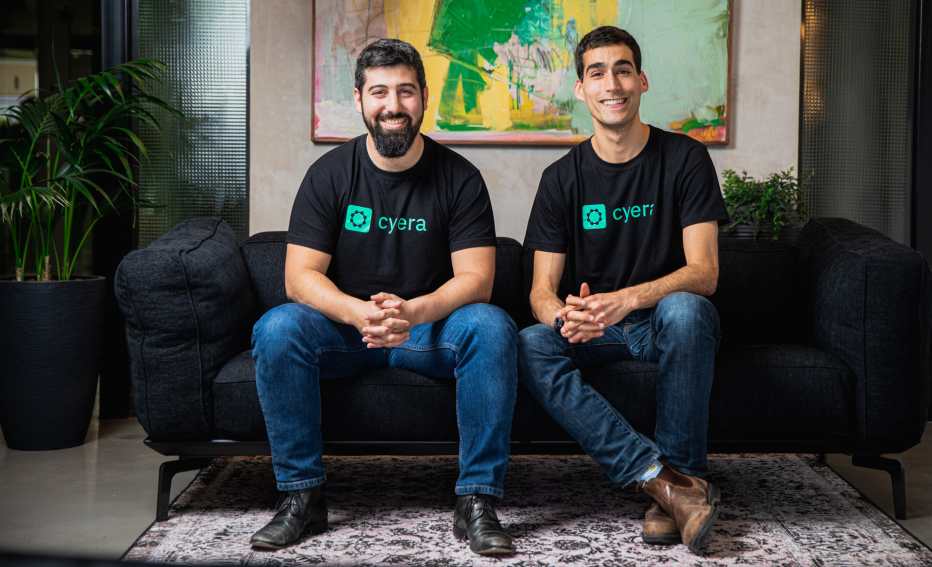
Data security startup Cyera landed a massive $600M Series F at a $12B valuation. Cyera’s SaaS platform indexes and classifies corporate data to detect unknown data permissions and exposures in real time – essentially filling what it calls the “trust layer” for cloud data and AI models. Investors bet on Cyera because data compliance and breaches are now existential risks: by automating security policies across all corporate data, Cyera addresses a blind spot in hybrid IT. The size of this round – quadrupling its valuation since late 2024 – highlights how hot the data-security market is. Its lead investor (Evolution Equity) and other backers (B Capital, Gaingels, and unnamed sovereign funds) signal confidence in Cyera’s vision. This round also reflects a trend: large security rounds in AI times, akin to CrowdStrike or SentinelOne in the cloud, showing that investors see cybersecurity as a stable, high-growth sector even as AI hype dominates headlines.
Funding Details:
Startup: Cyera
Investors: Evolution Equity, B Capital, Gaingels, Saudi Aramco’s VC arm, others
Amount Raised: $600M
Total Raised: $1.2B
Funding Stage: Series F
Funding Date: Jun 10, 2026
Headquarters: Los Altos, CA
Sector: Cybersecurity, AI Infrastructure
TensorWave raises $350M in funding to challenge Nvidia in AI compute
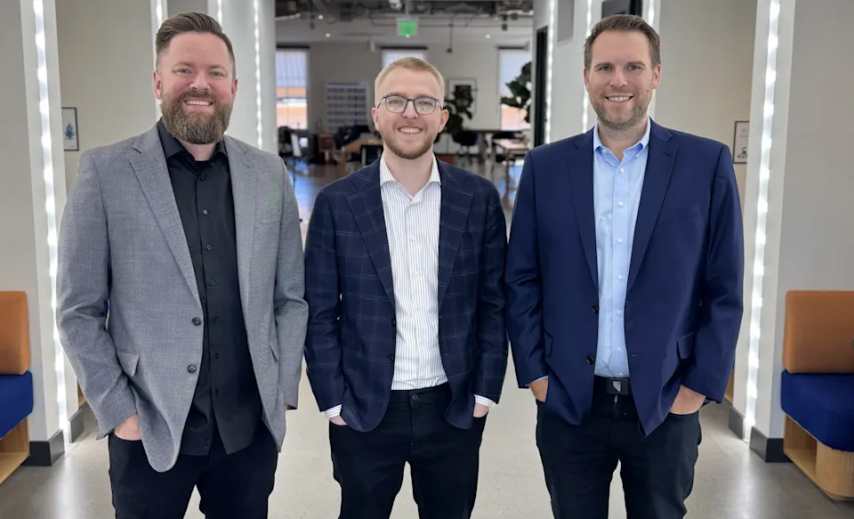
TensorWave, a startup building AMD-based AI hardware, pulled in a $350M Series B at a $1.55B valuation. Founded by ex-Lockheed Martin Skunk Works engineers, TensorWave is building clusters of custom AI accelerators (called “TE1 chips”) to serve large-model workloads. Investors care because NVIDIA’s GPUs are near-ubiquitous for AI, and big enterprises fear vendor lock-in and capacity constraints. By using AMD’s open-chip roadmap and proprietary software, TensorWave promises an alternative supply of generative-AI horsepower. The round was co-led by Magnetar Capital and AMD’s strategic funds, showing strong alignment: AMD itself is a new investor (via its venture arm). Total funding now is ~$493M, and the company will use it to deploy more AI data centers globally.
This raise matters for hardware and enterprise AI trends. It comes amid a broader “AI compute arms race.” On one front are GPU makers (Nvidia, AMD) scaling up; on another are startups like Lambda Labs or Cerebras. TensorWave sits between, repurposing AMD CPUs and GPUs into a turnkey stack. Strategically, the round signals that institutional investors believe the market will need more than one hardware supplier for AI. It also underscores that well-funded infrastructure plays – not just apps – command attention. Competitors include CoreWeave, Run:ai, and cloud giants themselves. If TensorWave delivers higher-density, energy-efficient clusters, it could carve out a niche in large-scale AI deployments. The involvement of AMD suggests a mutual bet on diversifying AI accelerator ecosystems.
Funding Details:
Startup: TensorWave
Investors: Magnetar Capital, AMD Ventures, Good Growth Capital, Ocap Ventures, others
Amount Raised: $350M
Total Raised: $493M (post-round)
Funding Stage: Series B
Funding Date: Jun 10, 2026
Headquarters: Manhattan Beach, CA
Sector: AI Hardware/Infrastructure
NinjaOne raises $400M in funding to unify IT management
NinjaOne, an Austin-based endpoint management platform, closed over $400M in new funding at a $12.3B valuation. NinjaOne offers cloud-native SaaS that helps IT teams manage, patch, secure, and back up millions of devices (PCs, servers, mobile devices) through a single dashboard. It serves 24,000 customers – including Nvidia, Lyft and Porsche – and aims to eliminate tool sprawl. Investors are drawn to NinjaOne’s explosive growth: a year ago it was worth $1.9B, then $5B, and now 6x that value in 18 months. Notably, Wellington Management, Teachers’ Venture Growth, Sequoia and ICONIQ led this round, underscoring confidence in its founder-led, capital-efficient model.
This round is a bet on post-pandemic shifts in enterprise IT. With remote/hybrid work expanding the “attack surface,” companies need smarter patch and security management. NinjaOne embeds AI features for autonomous remediation and helpdesk automation. They also just acquired Dropsuite (cloud backup) for $262M, so cross-selling is possible. In context, IT-ops is a highly consolidated space. Legacy players like Kaseya and SolarWinds dominate the MSP market; newer ones (Atera, JumpCloud) are carving out niches. NinjaOne’s strategy is to integrate patching, security and monitoring deeply, leveraging AI to keep it lean. The challenge: will it fend off big cloud vendors expanding toolsets, or smaller point solutions? Investors seem to believe in NinjaOne’s ease of use and stickiness, especially as companies prioritize operational efficiency amid mixed economic signals.
Funding Details:
Startup: NinjaOne
Investors: Wellington Management, Teachers’ Venture Growth, Sequoia Capital, ICONIQ, others
Amount Raised: $400M+
Total Raised: $800M+ (estimated)
Funding Stage: Series F
Funding Date: Jun 9, 2026
Headquarters: Austin, TX
Sector: Enterprise Software, IT Management
PhysicsX raises $300M in funding to accelerate industrial R&D
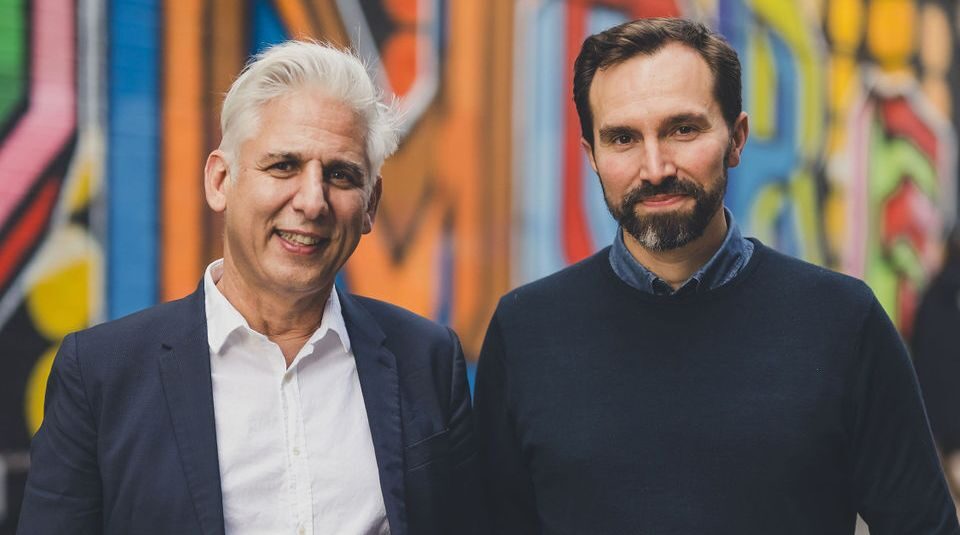
UK-based PhysicsX secured $300M Series C funding (valuation ~$2.4B) led by Temasek. PhysicsX builds AI-driven physics simulators for hardware design – a kind of “Large Physics Model” for engineers. Its software predicts how chips, engines or airplanes behave under different conditions, replacing slow simulations. The funding round also included M&G and Intrepid Growth, plus strategic industry partners (Applied Materials, NVIDIA, Siemens). The company has doubled revenues year-over-year and expanded to 24 countries, so the capital will fuel global expansion and R&D in even more powerful simulation models.
Why care? PhysicsX is betting that AI can dramatically speed up engineering cycles in sectors under tight timelines: semiconductors, aerospace, automotive, energy, defense. In effect, it makes sure hardware companies aren’t CPU-, time-, or cash-starved during design. Investors poured money because automating physics simulation – long a bottleneck – could unlock faster innovation in trillion-dollar markets. It’s a bet on “AI for physical science” rather than content. Competitors include traditional EDA tools and specific physics solvers, but PhysicsX’s edge is generality and ML-based speed. If it scales, it could become as fundamental to hardware companies as FEA was in the past. The tie-in with Temasek and manufacturing heavyweights suggests confidence in its thesis of “software to engineer everything faster”.
Funding Details:
Startup: PhysicsX
Investors: Temasek, M&G Investments, Intrepid Growth Partners, Applied Materials, NVIDIA, Siemens, others
Amount Raised: $300M
Total Raised: $300M
Funding Stage: Series C
Funding Date: Jun 9, 2026
Headquarters: Kent, UK
Sector: AI, Engineering Software
Standard Bots raises $200M in funding to scale its robotics factory
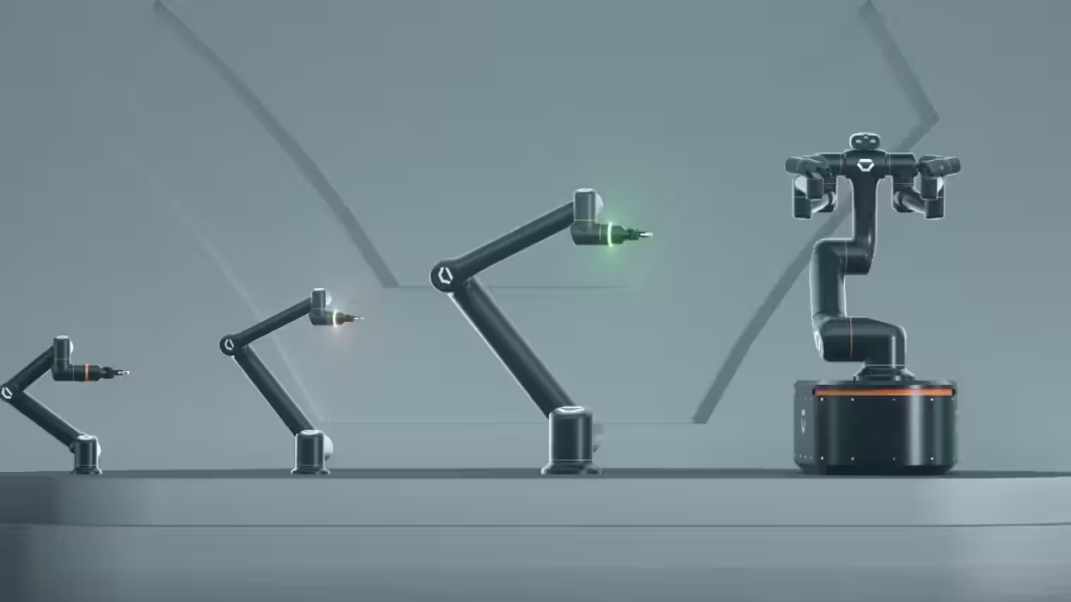
Industrial robotics startup Standard Bots announced a $200M Series C funding at a $1B valuation. The company, based in New York with a large Canadian facility, makes autonomous palletizing robots and “robot-as-a-service” for manufacturers. It installs fully automated robotic cells to pack and sort goods for companies like Keurig, Allbirds, and 3M. The new capital will expand its national manufacturing footprint and R&D. Backers (Westfield Capital, Allegion Ventures, Boardman Bay, Blackhorn Ventures) see Standard Bots as a leader in accessible factory automation.
This round matters because it underscores renewed investor interest in factory robotics. Standard Bots competes with established players like FANUC or KUKA, but targets mid-tier companies that can’t afford fully custom automation. By offering turnkey installation and financing, it lowers the bar for modernizing warehouses and factories. The timing is strategic: rising labor costs and supply-chain uncertainties are pushing firms to automate. If Standard Bots can prove ROI in food, beverage, and CPG factories, it could grab significant market share. However, it also needs to demonstrate that its software-integrated robots can adapt to a variety of products. Investors are betting its “robots as a service” model will turn one-off installations into an ongoing revenue stream.
Funding Details:
Startup: Standard Bots
Investors: Westfield Capital, Allegion Ventures, Boardman Bay Ventures, Blackhorn Ventures, others
Amount Raised: $200M
Total Raised: $332M (post-round)
Funding Stage: Series C
Funding Date: Jun 9, 2026
Headquarters: New York, NY (with manufacturing in Canada)
Sector: Industrial Robotics, Automation
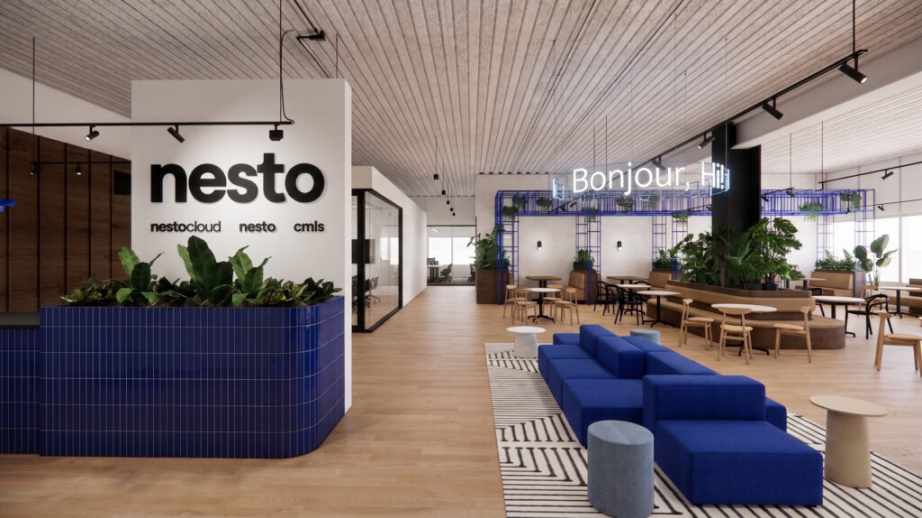
Nesto raises $228M in funding to bring AI to mortgages
Nesto, a Montreal, Canada-based mortgage fintech, closed a CAD$302M (≈$228M USD) Series E funding at a CAD$1.47B valuation. The round was led by La Caisse (Québec’s pension fund) and Fidelity Canada, among others. Nesto offers an AI-driven platform for mortgages and lending – including MaestroAI, which streamlines loan origination and underwriting. Investors are banking on Nesto modernizing Canada’s $2.1T mortgage market. With $80B under management and profitability, Nesto isn’t just a growth-stage startup but a scale-up aiming to build a “mortgage ecosystem.”
This round signals institutional confidence in fintech infrastructure. Nesto combines deep lending expertise with cloud technology, promising a better customer experience and cost cuts for banks and brokers. The funds will accelerate product development and expansion into other financial products beyond mortgages. It reflects a broader shift: legacy financial systems (in Canada and globally) are embracing AI orchestration to cut costs. In a sense, Nesto is positioning like a “Stripe for mortgages.” Notable investors (National Bank’s VC arm, FTQ fund) highlight public-sector support for local fintech champions. The high valuation also reflects competition from traditional banks and newer digital lenders (Hoffmann, Selfhad). For founders, Nesto’s story underscores that niche fintechs with solid revenue can still attract growth capital – especially if they promise to digitize a large, defensible market.
Funding Details:
Startup: nesto (Nesto Cloud)
Investors: La Caisse (CDPQ), Fidelity Canada, Picton Investments, Endeavor Catalyst, Portage Ventures, Diagram Venture, NAventures, FTQ, Fondaction
Amount Raised: CAD$302M (~$228M USD)
Total Raised: CAD$541M (approx)
Funding Stage: Series E
Funding Date: Jun 10, 2026
Headquarters: Montreal, Canada
Sector: Fintech (Mortgage Technology, AI)
Cellares raises $277M Series D funding to ramp up cell therapy manufacturing
Cell therapy manufacturer Cellares announced a $277M Series D (including a $20M new check from ARK Invest). Cellares makes automated “Cell Manufacturing Centers” (labs-in-a-box) to produce CAR-T and other cell therapies. Its customers are big pharma and biotech developing next-gen therapeutics. The round – co-led by Arcellx founder Bill Collis and Woodford’s Richard Dorment – brings Cellares’s total funding to over $600M. ARK’s involvement (via Cathie Wood) highlights the belief that personalized medicine manufacturing will be a huge growth area.
This raise is strategic: cell therapies offer cures for cancers and genetic diseases, but scaling them is notoriously hard. Cellares’s automation of the messy lab process aims to reduce costs and increase consistency. Investors care because if Cellares works, it could become a de facto standard factory for CAR-Ts and engineered cells. Competition includes Cytiva (GE’s cell culture arm) and smaller automation firms, but Cellares’s full-stack machines are unique. The fact that NEA, RA Capital, and existing backers are on board indicates trust in Cellares’s tech. It also ties into a healthcare trend: the use of AI and automation, even in wet labs, to address labor and quality issues. For biotech startups and pharma, Cellares’s funding suggests manufacturing bottlenecks are a solvable problem – with big venture bucks behind it.
Funding Details:
Startup: Cellares
Investors: Cathie Wood’s ARK Invest ($20M), NEA, RA Capital, Janus Henderson, Redmile, Andera Partners, BroadOak Capital, others
Amount Raised: $277M (Series D)
Total Raised: $632M (approx)
Funding Stage: Series D
Funding Date: Jun 10, 2026
Headquarters: Burlingame, CA
Sector: Biotech Manufacturing, Cell Therapy
Generalist AI raises $400M in funding to build a universal robot “brain”
Generalist AI, a San Francisco startup founded by ex-Google DeepMind engineers, closed a $400M raise in early June. The company’s vision is an AI foundation model (“GEN-1”) that can control any robot hardware – essentially a general intelligence layer for robotics. In practice, Generalist AI’s software enables diverse robots to learn from a common model, achieving very high task reliability. The round was led by Radical Ventures, with 8VC, USV, and others; NVIDIA, Bezos Expeditions, and co-founder Fei-Fei Li are also backers. Total funding now exceeds $500M, making it one of the largest bets on robotics AI.
This is a bet on “the mind of the robot” rather than the robot itself. By decoupling software from hardware, Generalist AI aims to turn robotics into a software problem – just as computer vision AI liberated cameras. Investors apparently believe the market is huge: any factory, warehouse, or vehicle could adopt a general controller instead of separate autopilots for each bot. Generalist AI competes with niche robotics companies (like Boston Dynamics-type firms) and heavy-duty automation players, but its angle is unique. If successful, the startup could tap into the entire robotics market rather than one segment. However, it must prove its models are reliable in the real world across domains. The funding reflects faith in its founders (Google’s PaLM-E and RT-2 architects) and the idea that building “Software 2.0 for physical systems” is the next frontier. For the startup ecosystem, this signals that even the wildest AI play (generalized robotics) can now attract Silicon Valley dollars.
Funding Details:
Startup: Generalist AI
Investors: Radical Ventures, 8VC, Union Square Ventures, Hanabi Capital, Norwest, NVIDIA, Bezos Expeditions, Boldstart, Spark Capital, others
Amount Raised: $400M (Series A)
Total Raised: $500M+
Funding Stage: Series A
Funding Date: Jun 8, 2026
Headquarters: San Francisco, CA
Sector: Robotics, AI
Helion Energy raises $465M in Series G funding for fusion power
Helion Energy, the Sam Altman-backed fusion startup, announced a huge $465M Series G financing. Led by Thrive Capital, the round pegged Helion’s valuation at $15.5B. Helion plans to build a commercial fusion power plant (code-named Orion) to supply Microsoft’s data centers. Its “direct-to-grid” approach uses magnets to convert fusion plasma energy into electricity in one step, aiming for higher efficiency than turbine-based designs. The raise comes with a lot of fanfare: Helion is one of the few companies on track to commercialize fusion by the end of the decade.
This funding is strategic on two fronts. First, it shows investor faith that fusion – long deemed a science project – is edging into serious commercialization. Microsoft’s partnership and repeated backing of Altman make fusion interesting even to tech-sector VCs. Second, it underscores that “climate tech” is not just solar or batteries now; long-term, limitless baseload power is enticing to energy-hungry industries (such as data centers). Helion’s competitors (such as Commonwealth Fusion and Tokamak Energy) also raised large rounds recently, suggesting an arms race. For founders, Helion’s story is a lesson that visionary deep tech (fusion) can still attract megafunding if the team and plan are credible. This round expands total raised to $1.5B, which Helion says is needed to hit its 2028 target. It also sends a signal: the energy transition is now inviting astronomic venture bets, similar to biotech or AI, but in energy infrastructure.
Funding Details:
Startup: Helion Energy
Investors: Thrive Capital (lead), Alta Park Capital, Anti Fund, BoxGroup, Lux Capital, Peak XV, Bill Ford, Capricorn Tech Impact, Lightspeed, Mithril, Good Ventures, SoftBank Vision Fund 2, others
Amount Raised: $465M (Series G)
Total Raised: $1.5B
Funding Stage: Series G
Funding Date: Jun 4, 2026
Headquarters: Everett, WA
Sector: Energy, Fusion Technology
Suno raises $400M in funding as AI-generated music explodes
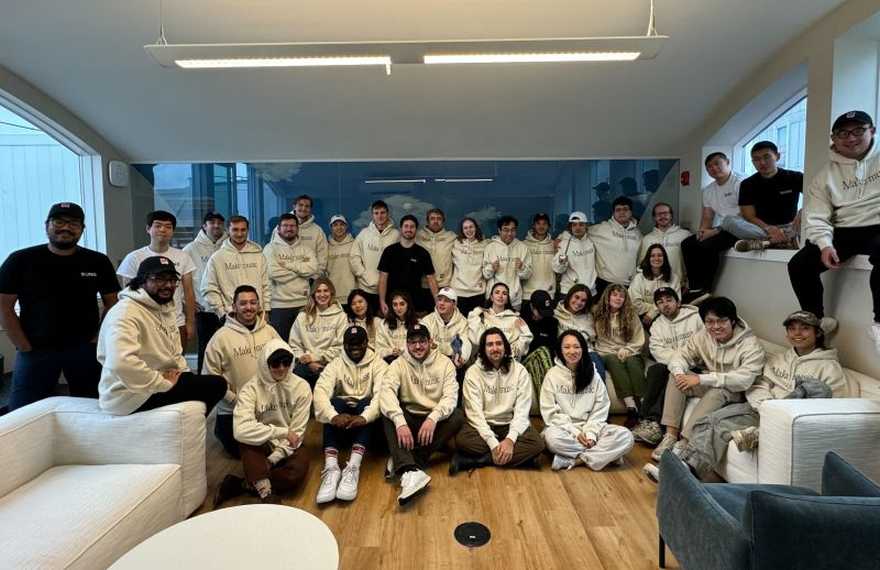
Suno, an AI music startup, closed a $400M Series D at a $5.4B valuation. Its platform generates full songs (lyrics, vocals, instruments) from text prompts. Suno’s user base is exploding – it reached 2 million paid subscribers and $300M ARR – by letting anyone create music instantly. The round was led by Bond Capital, with IVP, Forerunner, USV, Alkeon, and others participating. Existing backers (Matrix, Lightspeed, Menlo) doubled down.
This raise underlines AI’s surge into creative domains. Suno faced major label lawsuits over its training data, but investors are wagering that demand for AI-driven music (for media, gaming, therapy, etc.) justifies the valuation. It also highlights a “winner-takes-most” dynamic in AI: by raising $400M, Suno has the war chest to rapidly improve its models and marketing capabilities relative to smaller rivals. In strategic terms, Suno’s success suggests that the “AI content market” is expanding beyond text and images to audio. The competitive landscape now includes not only music producers but big tech’s generative layers (e.g., Meta’s recent music demo). For founders, Suno’s round is a lesson: if you can amass enough users and ARR, you can command legendary funding, even in nascent categories.
Funding Details:
Startup: Suno
Investors: Bond Capital (lead), IVP, Forerunner, Union Square Ventures, Alkeon, Quiet Capital, Matrix Partners, Lightspeed, Menlo Ventures, Schroders Capital
Amount Raised: $400M (Series D)
Total Raised: $775M+
Funding Stage: Series D
Funding Date: Jun 4, 2026
Headquarters: Cambridge, MA
Sector: AI, Music Technology
What Today’s Funding Activity Reveals
Several patterns emerge from these deals. AI and deep technology lead: 7 of 10 deals involve AI in some form (security, compute, enterprise AI, robotics, biotech AI, or creative AI). This echoes the broader trend where AI commands the largest share of VC capital. We’re seeing an “AI hardtech” wave – startups tackling compute infrastructure (TensorWave), edge AI (NinjaOne’s autonomous features), and real-world AI (PhysicsX, Generalist) are thriving. In particular, “physical AI” (robots and engineering AI) has leaped ahead: investors are pouring money into robotics intelligence (Generalist AI), industrial robots (Standard Bots), and physics simulation (PhysicsX).
Enterprise and infrastructure also draw big rounds. NinjaOne (IT management) and Nesto (fintech) are not flashy consumer tech, but they solve core business problems. Their big financings indicate capital is still chasing revenue models in large legacy industries. This is paired with cybersecurity (Cyera) and biotech manufacturing (Cellares) – again, foundational areas rather than consumer apps. In other words, the capital mix is diverse but oriented toward high-value, industrial or corporate markets.
Capital concentration is clear. Most rounds are led by very large firms or conglomerates (Bond, Temasek, La Caisse, Thrive, ARK, Wellington, etc.). This suggests a funnel in which big “institutional” investors dominate mega-rounds, confirming the Q1 data: a handful of rounds (> $100M) are taking the lion’s share of funds. Even the geographic diversity is limited: despite global queries, all our top deals are in North America or Western Europe. Emerging markets and smaller regions had no mega-round in our 12-hour window.
Innovation meets economics. Investors aren’t just blindly chasing AI; they’re picking applications tied to economics and geopolitics. For example, Helion’s fusion round was likely influenced by AI data center power needs (with Microsoft as a partner), while Cyera’s raise reflects a geopolitical focus on digital sovereignty and defense-grade security. PhysicsX’s funding underscores national tech competition in aerospace and chips. In short, VCs are aligning with major public- and private-sector trends: militaries and governments need tech, and markets demand AI-driven efficiency.
Comparative Funding Table
| Startup | Amount Raised | Sector | Stage | Lead Investors | Country |
|---|---|---|---|---|---|
| Cyera | $600M | Cybersecurity / AI | Series F | Evolution Equity Partners, B Capital, Gaingels, Saudi Aramco VC | USA (CA) |
| NinjaOne | $400M | Enterprise IT Software | Series F | Wellington Mgmt, Teachers’ Venture Growth, Sequoia, ICONIQ | USA (TX) |
| Generalist AI | $400M | Robotics / AI | Series A | Radical Ventures, 8VC, USV, Hanabi, Norwest, NVIDIA, Bezos Expeditions | USA (CA) |
| Suno | $400M | AI / Music Tech | Series D | Bond Capital, IVP, Forerunner, USV, Alkeon, Quiet Cap | USA (MA) |
| TensorWave | $350M | AI Hardware / Compute | Series B | Magnetar Capital, AMD Ventures, Good Growth Capital, Ocap | USA (CA) |
| PhysicsX | $300M | AI / Engineering Software | Series C | Temasek, M&G, Intrepid Growth, Applied Materials, NVIDIA, Siemens | UK |
| Nesto Cloud | $302M CAD | Fintech (Mortgage AI) | Series E | La Caisse, Fidelity Canada, Picton, Endeavor Catalyst, Portage, Diagram, NAventures | Canada (QC) |
| Helion Energy | $465M | Clean Energy (Fusion) | Series G | Thrive Capital, Alta Park, Anti Fund, BoxGroup, Lux Capital, Peak XV, Bill Ford | USA (WA) |
| Cellares | $277M | Biotech Manufacturing | Series D | ARK Invest (Cathie Wood), NEA, RA Capital, Janus Henderson, Redmile | USA (CA) |
| Standard Bots | $200M | Industrial Robotics | Series C | Westfield Capital, Allegion Ventures, Boardman Bay, Blackhorn Ventures | USA (NY) |
Strategic Takeaways for Founders and Investors
-
Solve big, tangible problems. Every top deal today is addressing a clear, high-value industry need: data governance, IT productivity, industrial automation, national security, or core infrastructure. Founders who can articulate how their AI/tech product saves real dollars or solves bottlenecks (rather than just being “cool AI”) get funded. Investors show little patience for pie-in-the-sky ideas without business traction or proven tech.
-
Think platform/infrastructure rather than point apps. Many capital flows into foundational layers (e.g. NinjaOne’s unified IT platform, TensorWave’s hardware stack, Generalist AI’s robot “OS”). These have the potential for higher defensibility and broad markets. Founders should consider platform business models or recurring services rather than one-off solutions.
-
Valuations and funding are front-loaded. The size of rounds ($300M–$600M) indicates that investors are rewarding growth today with huge checks, but expect performance. Founders should only raise these mega-rounds if they have the metrics to justify it (e.g., NinjaOne’s millions of devices under management, Suno’s runaway ARR). On the flip side, smaller companies may struggle to attract attention unless they’re in hot subfields (like AI).
-
Be capital-efficient if possible. Many of these companies are already high-revenue or profitable (Nesto) or have founder-oriented cap structures (NinjaOne kept equity control). In a market with any volatility, demonstrating capital efficiency is a signal that earns trust. Overfunding without a clear path to growth can leave firms vulnerable.
-
Leverage geopolitical and macro tailwinds. Aligning with big economic trends helps. For instance, Cyera emphasizes sovereign-level security (critical given cyber threats). PhysicsX is tapping into Western tech supply-chain needs (aerospace, chips). Founders should highlight how global megatrends – climate, data sovereignty, generative AI – play in their favor. Investors are much more bullish if the startup’s success “matters” at macro scale.
-
Sector clusters matter. Notice how AI permeates everything – even biotech and climate. Investors see convergence: biotech is embracing AI (Cellares), energy is tied to data (Helion). If your tech lies at a junction of hot fields (e.g. “AI + healthcare” or “AI + robotics”), you stand out. Conversely, pure-play consumer apps without an AI or tech-heavy angle are harder to fund at scale today.
Conclusion
Today’s funding rounds illustrate a venture landscape driven by intelligent automation and infrastructure expansion. Founders building platforms – whether they power data centers, factory floors, or even creative media – are raising capital. Investors are playing offense, pouring money into AI-fueled efficiency (Cyera, TensorWave, PhysicsX), large-scale automation (NinjaOne, Standard Bots, Generalist AI), and frontier solutions (fusion, cell therapy) that promise transformative returns. In short, the flows of capital tell a story: “Investors are betting big on tech that underpins the next decade’s productivity.”
For startup leaders, the message is clear: tie your tech to a massive problem and demonstrate measurable impact. For investors, the sheer size of these deals is a reminder of where the bar has been set. Amid economic headwinds, backers are placing large bets on areas where value can be built (and extracted) at scale. As we digest today’s rounds, one takeaway is certain: the era of “AI for every challenge” is crystallizing, and money is rushing to the most tangible manifestations of that promise. Each deal is a data point in a rapidly shifting market, but collectively they show venture capital flowing into hard problems and real assets, not just trendy labels. The startup ecosystem is heading toward deeper integration of AI and automation across industries – and today’s megadeals are its roadmap.