Nvidia acquires predictive AI startup Kumo AI in $400M+ deal to boost enterprise AI push
 Daniel Levi
Posted On June 4, 2026
Daniel Levi
Posted On June 4, 2026
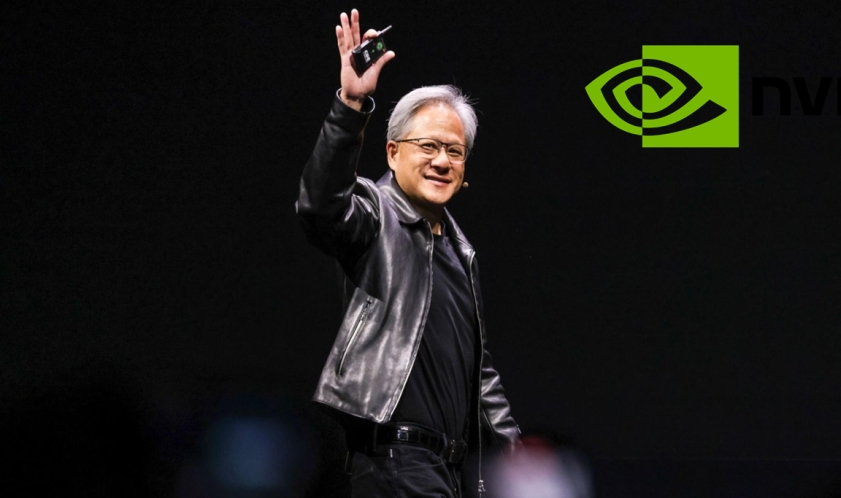
Nvidia has spent the past several years turning itself from a chip company into something much larger: a full-stack AI company. Its latest acquisition shows just how serious that effort has become.
The chip giant has acquired Kumo AI, a startup focused on helping businesses make predictions from structured data, in a deal worth more than $400 million, according to a person familiar with the transaction.
“Nvidia has bought Kumo AI, a five-year-old startup that sells predictive AI software to enterprises, for more than $400 million,” The Information reported, citing a person with knowledge of the deal.
The acquisition, first hinted at in a LinkedIn post by an Nvidia executive, brings a team of prominent AI researchers and enterprise AI specialists to Nvidia at a time when businesses are seeking practical ways to extract value from their data.
The deal adds another piece to Nvidia’s growing AI software portfolio and strengthens its position in one of the most lucrative segments of enterprise AI: predictive analytics.
Kumo AI, based in Mountain View, California, was founded in 2022 by CEO Vanja Josifovski, former CTO of Airbnb and Pinterest; Head of Engineering Hema Raghavan, who previously led AI initiatives at LinkedIn; and Stanford professor Jure Leskovec, a widely respected researcher known for his work in graph-based machine learning.
The startup built foundation models that work directly with relational data stored inside enterprise data warehouses. Rather than requiring extensive data preparation, feature engineering, or specialized machine learning teams, Kumo’s software allows companies to generate predictions from existing business data almost immediately.

From left: Kumo AI cofounder and CEO Vanja Josifovski, cofounder and head of engineering Hema Raghavan, and cofounder and chief scientist Jure Leskovec. (Courtesy of Kumo AI)
Its flagship product, KumoRFM, applies foundation-model techniques to structured enterprise datasets. The platform can generate predictions for customer churn, fraud detection, demand forecasting, lead scoring, credit risk analysis, product recommendations, and other business-critical decisions.
Customers have included DoorDash, Reddit, and U.K. grocery chain Sainsbury’s.
One of Kumo’s key selling points was speed. In describing the company’s approach, Leskovec previously said: “With the foundation model, you point it to your data, you define what you mean by churn, and a second later, you get the prediction.”
The platform integrates directly with enterprise data warehouses and includes a SQL-like Predictive Query Language that lets businesses interact with predictive models without building large machine learning pipelines from scratch.
The founders appear to have already made the transition. LinkedIn profiles for Josifovski, Raghavan, and Leskovec show they joined Nvidia last month. Kumo’s website still presents the company as an independent business.
Nvidia declined to comment on the acquisition.
Why Kumo AI matters to Nvidia
The acquisition highlights a shift happening across enterprise AI.
Much of the public conversation around artificial intelligence has centered on chatbots and large language models. Corporate buyers, though, often care less about generating text and more about answering practical questions.
Which customers are likely to leave?
Which transactions look fraudulent?
Which products will sell next month?
Which loans carry the highest risk?
Those questions sit at the heart of predictive analytics, a market worth billions of dollars annually.
Kumo’s technology is particularly valuable because it applies modern AI techniques to structured business data, one of the largest untapped sources of value inside enterprises. Many organizations have accumulated massive amounts of customer, financial, operational, and transactional data over decades but lack the resources needed to build advanced prediction systems internally.
For Nvidia, bringing those capabilities into its ecosystem creates another path for enterprise customers to adopt Nvidia software alongside its hardware.
The company’s broader strategy has increasingly focused on selling complete AI platforms rather than GPUs alone. Nvidia has spent years building software frameworks, inference tools, enterprise AI services, networking infrastructure, and industry-specific models that run on top of its hardware.
Kumo fits neatly into that vision.
Its models can potentially be optimized for Nvidia’s AI infrastructure, including Nvidia Inference Microservices (NIM), making predictive AI more accessible to enterprise customers already investing in Nvidia-powered systems.
Nvidia’s acquisition machine keeps growing
The Kumo deal adds to a long list of acquisitions and talent moves that Nvidia has pursued as it builds its AI ecosystem.
Over the past several years, the company has acquired startups across AI infrastructure, orchestration, software tooling, networking, data management, and enterprise applications. Recent examples include data semantics startup Illumex and AI orchestration company Run, which Nvidia acquired for approximately $700 million.
The strategy reflects a broader reality in today’s AI market. Owning the hardware remains valuable. Owning the software stack that customers use every day can be even more valuable.
That dynamic has pushed Nvidia into more direct competition with cloud providers such as Microsoft, Google, and Amazon, all of which are racing to build enterprise AI platforms around their infrastructure businesses.
A sign of where enterprise AI is headed
The acquisition offers another signal that specialized AI models focused on specific business problems are attracting growing attention.
Many companies are discovering that the biggest return on AI investment comes from improving operational decisions rather than generating content.
Predictive systems that identify fraud, reduce customer churn, forecast demand, or improve supply chain planning can produce measurable financial results. That makes them attractive targets for enterprise spending, particularly as companies move beyond AI experimentation and look for clear business outcomes.
Kumo was reportedly valued at roughly $250 million before the acquisition, according to PitchBook. The reported sale price of more than $400 million suggests Nvidia saw meaningful strategic value in both the technology and the team behind it.
As enterprises continue searching for ways to turn data into business intelligence, Nvidia appears determined to capture a larger share of that opportunity.
The company’s latest acquisition brings it one step closer to that goal.
Trending Now