The U.S. government wants to see AI models before you do. Trump just signed an executive order requesting early access
 Daniel Levi
Posted On June 2, 2026
Daniel Levi
Posted On June 2, 2026
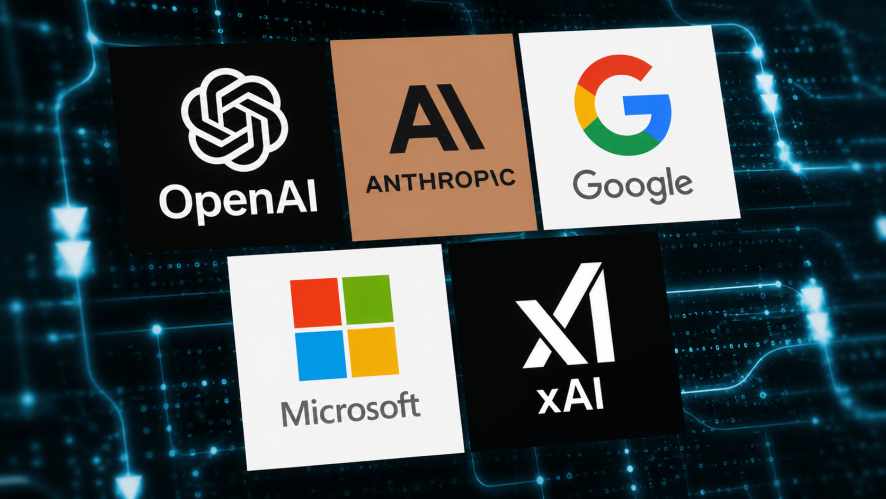
The race to build the most advanced AI models has become one of the biggest competitions in technology. Now the U.S. government wants a closer look before those systems reach the public.
President Donald Trump on Tuesday signed an executive order asking artificial intelligence companies to voluntarily provide their models to the federal government for evaluation before a broader release. The move creates a new framework for assessing advanced AI systems, particularly those with significant cybersecurity capabilities.
Under the order, companies can participate in a benchmarking process to measure a model’s capabilities and determine whether it qualifies as a “covered frontier model.” The administration is seeking access to those systems up to 30 days before public release and wants a role in selecting the trusted partners who would receive early access.
The language goes further than a simple benchmarking exercise. Section 3 of the order calls for the federal government to receive access to certain “covered frontier models” for up to 30 days before those systems are released to other trusted partners, subject to confidentiality and intellectual property protections.
Section three of the order reads:
“Sec. 3. Secure Frontier Model Deployment. Within 60 days of the date of this order, the Secretary of the Treasury, the Secretary of War, through the Director of NSA, and the Secretary of Homeland Security, through the Director of CISA, in consultation with the White House Chief of Staff, through the National Cyber Director, the Assistant to the President for Science and Technology (APST), and the Secretary of Commerce, through the Director of the National Institute of Standards and Technology, and in coordination with other agencies, as appropriate, shall:
(ii) provide the Federal Government with access to covered frontier models, subject to appropriate confidentiality, cybersecurity, insider-risk, and intellectual-property protection, use, and nondisclosure requirements, for a period of up to 30 days before they plan to release such models to other trusted partners.”
The order stops short of creating a formal approval process for new AI products.
“Nothing in this section shall be construed to authorize the creation of a mandatory governmental licensing, preclearance, or permitting requirement for the development, publication, release, or distribution of new AI models, including frontier models,” the order said.
According to CNBC, Trump signed the directive privately, weeks after delaying a planned signing ceremony that would have included several technology executives. At the time, the president told reporters he “didn’t like certain aspects of it.”
The order arrives as competition among leading AI companies intensifies.
Just one day earlier, AI startup Anthropic announced that it had confidentially filed paperwork with the U.S. Securities and Exchange Commission for an initial public offering. OpenAI is reportedly preparing for a potential IPO of its own. Elon Musk’s SpaceX, which owns AI lab SpaceXAI, could reach public markets even sooner, with reports suggesting a debut as early as next week at a valuation exceeding $1 trillion.
The timing highlights how closely AI development, capital markets, and national security have become intertwined.
Inside the US government’s plan for early access to advanced AI systems
The technology industry has played a major role in shaping the White House’s approach to artificial intelligence. Venture capitalist David Sacks, who previously served as the administration’s crypto and AI czar, was among a group of influential technology leaders who reportedly urged the White House to reconsider an earlier version of the AI order. Musk and Meta CEO Mark Zuckerberg were reportedly involved in those discussions.
At the center of many recent policy conversations is Anthropic and its latest AI model, Claude Mythos Preview.
The company drew attention from both Washington and Wall Street after introducing the model earlier this year. Anthropic says Mythos is particularly effective at identifying software vulnerabilities and security weaknesses, making it one of the most closely watched cybersecurity-focused AI systems released to date.
The company initially restricted access through a cybersecurity initiative known as Project Glasswing before expanding the program on Tuesday.
The launch led to a series of meetings between Anthropic executives and senior administration officials, including White House Chief of Staff Susie Wiles and Treasury Secretary Scott Bessent.
Trump’s order directs multiple federal agencies to develop additional guidance over the coming months. The Department of Defense is instructed to place special emphasis on protecting military and government information systems from cyber threats.
That focus carries added significance given the Pentagon’s recent relationship with Anthropic.
Shortly before the release of Mythos, the Department of Defense designated Anthropic as a supply chain risk. The classification effectively bars defense contractors from using the company’s technology for work related to the agency, citing national security concerns.
Anthropic challenged the designation in court and is seeking to overturn the decision. The case remains active.
The dispute underscores a broader question facing Washington: how should governments evaluate increasingly capable AI systems without slowing innovation?
Trump’s new executive order does not fully answer that question. What it does signal is that federal officials want a seat closer to the front of the line as the next generation of AI models approaches release.