Venture Capital & Startup Funding Roundup, June 1, 2026
 Nickie Louise
Posted On June 1, 2026
Nickie Louise
Posted On June 1, 2026
The last 12 hours of startup financing did not reward novelty for novelty’s sake. The biggest checks went to the hard stuff that sits underneath the current AI buildout: network fabric, energy deployment, 3D world models, robotics data, and clinical-grade experimental systems. DriveNets pulled in a $410 million Series D for AI networking, Tripo AI disclosed nearly $200 million for 3D and world-model research, Mecka AI secured $60 million for robotics training data, and Maxwell Power landed a $750 million capital commitment tied to battery storage and solar deployment. This is capital moving up the stack, toward bottlenecks that others have to buy through rather than nice-to-have application layers.
Even the smaller rounds fit that pattern. Waypoint Bio is pairing AI with spatial biology to improve cell-therapy design; SignalPlus is selling the picks and shovels for institutional crypto derivatives; Unastella is financing a domestic launch capability in South Korea; and Veritas Aortic is trying to replace open-chest surgery with a catheter-based alternative. The common thread is not sector sameness. It is that investors are still paying for technical leverage, regulated distribution, or physical infrastructure, where winning one layer can force the rest of the market to route through you.
That matters because the private market is no longer pricing “AI startup” as a category in its own right. It is pricing specific forms of control: who reduces GPU waste, who supplies training data that cannot be scraped from the web, who can move a therapy from model to clinic faster, who can finance power when grids are tightening, and who can turn niche transaction flows into dependable software revenue. Today’s deal flow reads less like a speculative spree and more like an argument over who gets to own the scarce inputs.
The Macro Environment: Capital Is Moving Up the Stack
The broader backdrop helps explain why this is happening. Crunchbase says global startup funding hit a record in the first quarter of 2026, with four of the five biggest venture rounds ever occurring in that single quarter, while 65% of global venture investment was concentrated in just four giant companies: OpenAI, Anthropic, xAI, and Waymo. That sort of concentration changes investor behavior downstream. If the frontier-model race is already expensive and crowded, the next cleanest trade is to fund the systems those companies and their customers depend on.
The same concentration shows up regionally. North American companies in Crunchbase AI-related categories drew $221 billion in the first quarter, about six times the prior quarter’s already large total. Europe, meanwhile, posted $17.6 billion in venture funding in Q1, up nearly 30% year over year, with AI taking more than half of total funding for the first time. PitchBook also said Europe attracted $1 billion in cybersecurity venture investment in the first quarter. Read against that backdrop, today’s mix of Israeli network infrastructure, Hong Kong market plumbing, New York and California biotech, and South Korean launch systems looks less scattered than it first appears. It is money following strategic infrastructure wherever it can find it.
Valuation data reinforces the divide. PitchBook’s Global Unicorn Tracker says the top 10 unicorns now hold 41.3% of aggregate unicorn value, and Carta reported that the median post-money valuation was $24 million at seed and $78.7 million at Series A in the most recent data it published. That means investors are still writing early-stage checks, but the bar is different. Seed and Series A money is going to companies that can show a technical wedge, a regulated go-to-market path, or an asset that compounds with scale. Generic AI wrappers can still get funded, but only if they show unusual engagement or distribution.
This is also why physical and operational friction is back at the center of venture underwriting. TechCrunch’s coverage of Gigascale’s new climate fund makes the point directly: AI demand is pulling capital toward energy, grid infrastructure, and critical minerals because those are now part of the compute story. Today’s Maxwell financing, DriveNets round, and Mecka disclosure make that thesis tangible. In 2026, “software” no longer means investors can ignore power, networks, sensors, or biology.
Individual Funding Rounds
Maxwell Power raises $750 million in funding to finance battery storage and solar deployment
Maxwell’s financing is the largest transaction in this roundup and deserves attention, even though it is not a textbook-priced venture round. The San Diego company, formerly HDM Renewable Finance, said it secured a $750 million investment commitment from Fairtide Partners to finance battery storage and solar projects, bringing Fairtide’s total commitment for Maxwell-developed projects to more than $1 billion. Maxwell says the capital will help it deepen relationships with sales and installation partners and expand into more states with structurally high power prices.
Why that matters for startup readers is straightforward: energy financing is back to being a software-and-origination story, not only a hardware story. The more AI pushes data-center demand higher, and the more households and businesses look for cheaper, distributed power, the more value accrues to firms that can source projects, underwrite them, and move capital quickly. Gigascale’s new $250 million climate fund makes the same point from the investor side: money is rotating toward energy and grid constraints because those are now part of the AI economy. Maxwell sits inside that trade.
This is not the type of company often described as a darling consumer app, but it may be closer to where long-duration value is being built. If you believe the next few years are defined by power shortages, local storage, and cost pressures on electricity, a financing platform that can repeatedly underwrite and package distributed energy deployment becomes strategically relevant in a hurry. That is especially true when its backer is willing to scale the commitment beyond the current round.
Funding Details
- Startup: Maxwell Power
- Investors: Fairtide Partners
- Amount Raised: $750 million
- Total Raised: More than $1 billion in total project commitments from Fairtide Partners
- Stage: Strategic Capital Commitment / Project Finance
- Date: June 1, 2026
- Headquarters: San Diego, California, United States
- Sector: Energy Infrastructure, Grid Modernization, Climate Finance
DriveNets raises $410 million in funding to scale AI networking infrastructure
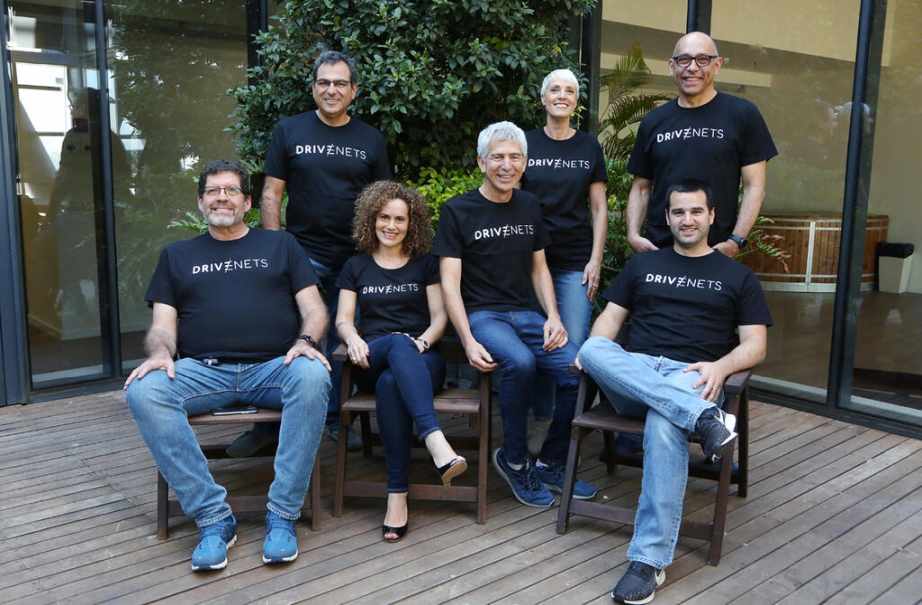
DriveNets is one of the clearest “infrastructure first” bets of the day. The Ra’anana, Israel-based networking company announced a $410 million Series D, bringing total capital raised to $1 billion. The round was led by Bessemer Venture Partners and Atreides Management, with AMD and Red Dot Capital joining alongside existing investors Pitango and D1 Capital Partners. The company said it already has more than $1 billion in secured business and has been cash-flow positive since 2025.
Investors are backing DriveNets because AI data centers are turning networking from a background function into a hard economic constraint. The company’s pitch is that an open, multi-vendor Ethernet fabric can support large-scale AI deployments without trapping customers in a single proprietary stack. Strategic participation from AMD matters here. It signals that the company is not just selling to telecom buyers anymore; it is positioning itself inside the battle over heterogeneous AI clusters, where customers want more than one accelerator option and need the network to keep utilization high.
For founders, this round is a reminder that the AI money is not confined to model labs. There is a growing venture appetite for businesses that help buyers integrate accelerators, orchestration, and systems hardware more efficiently. For incumbents, it is a warning that networking economics are being recast around GPU throughput rather than classic enterprise IT buying cycles. For investors, it is a bet that AI-infrastructure spend will keep shifting toward the fabric layer as buyers look for cheaper ways to scale.
Funding Details
- Startup: DriveNets
- Investors: Bessemer Venture Partners, Atreides Management, AMD, Red Dot Capital Partners, Pitango, and D1 Capital Partners
- Amount Raised: $410 million
- Total Raised: $1 billion
- Stage: Series D
- Date: June 1, 2026
- Headquarters: Ra’anana, Israel
- Sector: AI Networking and Infrastructure Software
Tripo AI raises nearly $200 million to expand AI 3D and world-model research
Tripo AI’s new financing is one of the day’s most telling signals about where frontier AI money is drifting next. The company said it completed Series A+ and Series A++ rounds totaling nearly $200 million. Officially, the money will go toward expanding its AI 3D and world-model research teams, improving core algorithms, building out data and infrastructure systems, and broadening product and ecosystem reach. The company simultaneously unveiled “Project Eden,” a research initiative aimed at persistent world models that maintain state over time rather than merely predict the next frame.
That shift matters. 3D generation has often been pitched as a content tool for creators, but Tripo is trying to move the discussion toward simulation, persistent environments, and shared interactive spaces. That opens bigger markets than creator tooling alone: gaming pipelines, industrial digital twins, robotics simulation, AR and VR, and multi-agent environments. Secondary reports indicate the new rounds were led by Ince Capital and a China Life-affiliated Yangtze River Delta technology fund. Earlier this year, Tripo also announced a separate $50 million financing backed by Alibaba and Baidu Ventures, which suggests investors are treating spatial AI as a deeper infrastructure category rather than a one-feature application market.
The strategic implication is that “world models” are graduating from the research term to the financing bucket. If generative AI’s first wave was text and images, the next one may center on stateful environments that can be rendered, edited, and reused across industries. The winners there may not be the flashiest consumer products. They may be the firms that own the representation layer and the underlying data systems.
Mecka AI raises $60 million to build robotics-training data infrastructure
Mecka AI did not announce a single conventional venture round so much as surface two previously undisclosed financings at once: a $25 million Series A closed in November and a $35 million follow-on investment, together totaling $60 million. Fortune reported that Framework Ventures led the financing, with Menlo Ventures, SV Angel, Kindred Ventures, and angel Ted Xiao also participating. The company, based in New York City, is building a business around collecting human motion and behavior data—using custom sensors and iPhones—to train robots.
That looks smart because robotics fundraising is splitting into distinct layers. There are robot makers, model builders, and data suppliers. Mecka is betting the scarce layer is the training set: hand motions, full-body movements, action sequences, and the structured labels that make them useful for embodied AI. If that thesis holds, the company can sell into many robotics programs rather than making a winner-take-all bet on a single hardware platform. Gao told Fortune that the startup projects a $100 million annual run rate based on signed contracts, suggesting there is already commercial demand for this category.
This round also says something about venture behavior. Framework is best known for crypto, not robotics, but the common denominator is still market structure around scarce digital assets. In crypto, it was liquidity and rails. In robotics, it may be privileged training data. Founders should take note: one way to get funded in a crowded AI market is to sell the thing everyone else must buy to compete.
SignalPlus raises $50 million in funding to build institutional crypto derivatives infrastructure
SignalPlus announced a $50 million Series B1 round at a $500 million post-money valuation, led by HashKey Capital with follow-on participation from BlockBooster and AppWorks. Goldman Sachs served as the sole financial advisor. The Hong Kong company sells options and derivatives trading infrastructure for digital assets and said it handled a record $160 billion in platform volumes in the fourth quarter of 2025, including nearly $70 billion in block-RFQ transactions on Deribit alone.
This is a meaningful signal because it shows where crypto infrastructure money can still get serious pricing. It is not flowing into generalized consumer speculation. It is flowing into software that looks more like institutional capital-markets plumbing: execution management, risk analytics, scenario analysis, and round-the-clock pricing infrastructure. In other words, investors are not underwriting a meme cycle here. They are underwriting the possibility that crypto derivatives will become just another professional market, where software margins accrue to firms that can make workflows look and feel like modern TradFi.
The timing also matters. Hong Kong has been trying to position itself as a regulated digital-assets hub, and SignalPlus is using that maturity story to sell itself as the bridge between digital assets and traditional capital markets. A $500 million valuation is not cheap, but it is understandable if you believe the real money in digital assets will be made by whoever owns the workflow layer for institutions, not whoever owns one more token-facing front end.
Funding Details
- Startup: SignalPlus
- Investors: HashKey Capital, BlockBooster, and AppWorks
- Amount Raised: $50 million
- Total Raised: Not disclosed
- Stage: Series B1
- Date: June 1, 2026
- Headquarters: Hong Kong
- Sector: Crypto Derivatives and Financial Market Infrastructure
Unastella raises $24 million in funding to expand South Korea’s commercial launch capacity
Unastella, a four-year-old South Korean rocket startup, has closed a $24 million Series B, bringing total funding to $44 million. The Seoul-based company is building its own launch vehicles and engines for small-satellite launch services, and it already flew UNA EXPRESS-I from South Korean soil in May 2025. Altos Ventures led the round, joined by Korea Development Bank, Strong Ventures, and Hana Ventures.
The technical choice at the center of the company is telling. Unastella uses a kerosene-and-liquid-oxygen propulsion system and replaces the traditional turbopump with an electric motor-driven pump, a simpler, cheaper architecture that has already been validated by Rocket Lab. That approach sacrifices payload, but it fits a go-to-market strategy focused on reaching commercial service sooner and controlling design, manufacturing, ground operations, and flight data in-house.
Investors are clearly underwriting more than one launch startup here. They are underwriting sovereign capability. Domestic launch access sits next to satellite services, defense procurement, and national industrial policy. In Asia, where commercial launch capacity remains unevenly distributed, a company like Unastella can end up mattering well beyond its pure launch revenue. That makes the round strategically larger than its dollar amount.
Waypoint Bio raises $20 million in funding to move AI-designed CAR T programs toward the clinic
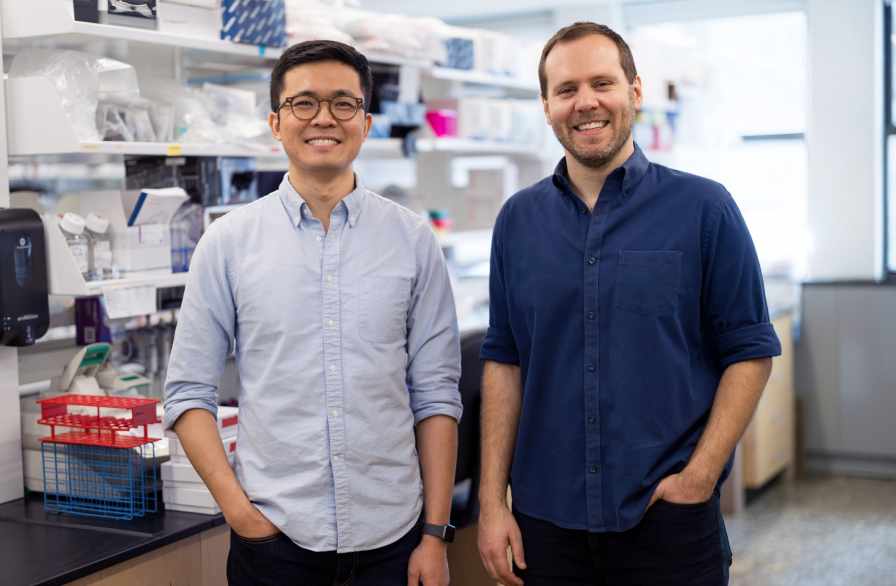
Waypoint Bio announced a $20 million Series A funding led by Amplify Partners, with participation from General Catalyst, Time BioVentures, Mitsui Global Investments, Lux Capital, and existing investor Hummingbird Ventures. The company describes itself as an AI-native biotech using spatial biology, computer vision, and pooled screening to design next-generation in vivo CAR T therapies for solid tumors. The new capital will support an investigator-initiated trial for WAY-103 beginning in late 2026 and expand the company’s AI and clinical-development capabilities.
This is one of the more interesting biotech rounds of the day because it is not making the usual “AI will discover drugs faster” pitch in the abstract. Waypoint’s argument is more specific: AI is useful only if paired with experimental systems that can tell you which biological designs actually matter, especially in solid tumors where the tumor microenvironment is notoriously difficult. That is a better investor story than generic AI-for-biotech branding because it ties the data loop directly to clinical prioritization.
There is also a founder-facing lesson here. AI in biotech seems to be bifurcating. One group is building broad software for discovery. Another is building vertically integrated therapeutic companies that use AI only where it changes hit quality or development speed. Waypoint is clearly in the second camp, and that makes the business easier to underwrite because the output is a drug program, not just a software explanation of one.
Sekai raises $20 million to turn text prompts into feed-native software
Axios reported that Sekai raised a $20 million Series A co-led by Khosla Ventures and Connect Ventures, with support from a16z Speedrun, Mayfield, A*, MVP Ventures, 359 Capital, Parable VC, and 645 Ventures. The product lets users create and remix mini-apps from text prompts, with founder Lucky Zhang pitching the experience less as traditional no-code and more as a consumer-native creation loop. Axios said the company was founded in 2024, and Techmeme’s summary of the report noted the round followed a $6 million seed in 2025.
Consumer AI has been treacherous because many products feel like demos with weak retention. Sekai’s appeal to investors is that it is trying to make software itself behave like content—scrollable, remixable, and socially discoverable. That is a stronger framing than “AI app builder” because it points to a distribution engine rather than just a feature set. The syndicate is also telling: Khosla, a16z Speedrun, Mayfield, and Connect are the kind of investors who can fund either infrastructure or consumer platforms, and here they are backing a product that tries to merge both.
The strategic question is whether AI-generated software can become a category with its own demand loops rather than a novelty layer on top of existing creator products. If the answer is yes, Sekai has a shot at owning a new rail for lightweight consumer software. If the answer is no, it risks becoming another well-funded interface that trains users to expect zero-cost creation. That tension is exactly why the round matters. It is one of the few consumer-AI bets in this window that looks designed around behavior, not only generation.
Funding Details
- Startup: Sekai
- Investors: Khosla Ventures, Connect Ventures, a16z Speedrun, Mayfield, A*, MVP Ventures, 359 Capital, Parable VC, and 645 Ventures
- Amount Raised: $20 million
- Total Raised: Approximately $26 million
- Stage: Series A
- Date: June 1, 2026
- Headquarters: Not Disclosed
- Sector: Consumer AI and App Creation Software
Veritas Aortic Solutions raises $12 million to replace open-heart surgery in high-risk aortic disease
Veritas Aortic Solutions, a Costa Mesa-based spinout from inQB8 Medical Technologies, announced a $12 million seed financing led by a group of experienced MedTech angel investors, with strong participation from Cedars-Sinai Intellectual Property Company and existing inQB8 investors. The money will support the first-in-human development of the company’s transcatheter valved aortic root conduit, a non-surgical treatment approach for aortic root and ascending aortic diseases.
This is exactly the sort of seed round that still gets funded in a selective market because the value proposition is simple and the unmet need is obvious. Current treatment for many ascending-aortic pathologies still relies on complex open-heart surgery. If Veritas can make a catheter-based alternative work, it will not just improve the procedure. It changes who can be treated, how hospitals allocate care resources, and how much risk there is in the operating room. That is why medtech angels will still write checks into difficult device categories even when software valuations are all over the place.
The round is also a useful reminder that not every defensible startup in 2026 is AI-branded. Some of the best seed stories remain old-fashioned in structure: concentrated clinical pain point, procedural shift, and experienced operators on the board. In a market where software features can be cloned quickly, procedural and regulatory moats look attractive again.
Funding Details
- Startup: Veritas Aortic Solutions
- Investors: A syndicate of MedTech angel investors, Cedars-Sinai Intellectual Property Company, and existing inQB8 investors
- Amount Raised: $12 million
- Total Raised: $12 million
- Stage: Seed
- Date: June 1, 2026
- Headquarters: Costa Mesa, California, United States
- Sector: MedTech and Cardiovascular Devices
SpeedLabs raises $6.5 million to build the real-time market engine for sports trading
SpeedLabs launched with a $6.5 million seed round led by Parlay Capital, with participation from Bullpen Capital, TA Ventures, EdgeEquity, and other investors with experience in sports, gaming, and consumer technology. The New York company says it is building “Momentum Markets,” a system that creates and prices new tradable markets in real time during live sports events rather than simply repricing preexisting sportsbook lines.
On the surface, this is the outlier deal in a very infrastructure-heavy roundup. On closer inspection, it fits the day’s pattern. SpeedLabs is not really a media bet. It is a market-structure bet. If in-game trading becomes more dynamic and fans want event-specific instruments created on the fly, the valuable layer is the engine that generates, prices, and routes those markets fast enough to matter. That pushes value away from the interface and toward the underlying transaction architecture.
It is also a smaller reminder that venture still has room for narrowly scoped products when they attack a specific inefficiency. The company is not trying to build all of sports betting. It is trying to own one difficult layer inside it. In a market where giant rounds draw the headlines, that is still a viable way to raise seed capital.
What Today’s Funding Activity Reveals
The clearest pattern is that venture money keeps moving toward bottlenecks. Today’s top rounds sit in networking, power deployment, 3D spatial systems, robotics data, market infrastructure, and clinically validated therapeutic design. Founders who merely add AI to an existing workflow are competing in a crowded field. Founders who reduce friction in the compute, biology, or transaction stack still have room to command serious investor attention.
The second pattern is that strategic relevance is widening the definition of what gets financed. AMD joined DriveNets. Korea Development Bank backed Unastella. Mitsui participated in Waypoint. HashKey led SignalPlus. That mix of corporate, strategic, and institutionally connected investors suggests the market wants more than financial upside. It wants adjacency to important procurement flows, regulatory regimes, and platform shifts. When capital is scarce at the margin, strategic usefulness helps close rounds.
Third, the geography is more global than the daily U.S. tech-news cycle usually implies. The largest and most relevant financings in this window span Israel, Hong Kong, South Korea, and multiple U.S. hubs, with Tripo adding a transpacific flavor through its San Francisco base and China-linked investor reporting. That spread reinforces one of the defining features of the current market: AI and infrastructure capital may be concentrated, but it is not geographically monolithic. The best entrepreneurs are still getting funded wherever they control a meaningful choke point.
Finally, the seed is alive, but it is being reserved for sharper stories. Carta’s median valuation data and today’s seed rounds line up neatly: Veritas got funded because the clinical problem is acute and differentiated, while SpeedLabs got funded because it tackles one precise market-making problem. The takeaway is not that early-stage investing is weak. It is that early-stage conviction now has to be clearer, narrower, and easier to explain in one sentence.
Comparative Funding Table
| Startup | Amount Raised | Sector | Funding Stage | Lead Investors | Country |
|---|---|---|---|---|---|
| Maxwell Power | $750M | Energy infrastructure | Strategic capital commitment | Fairtide Partners | United States |
| DriveNets | $410M | AI networking | Series D | Bessemer Venture Partners, Atreides Management | Israel |
| Tripo AI | Nearly $200M | AI 3D and world models | Series A+ / A++ | The official release did not disclose; secondary reports point to Ince Capital and a China Life-affiliated Yangtze River Delta tech fund | United States |
| Mecka AI | $60M | Robotics data infrastructure | Series A plus follow-on | Framework Ventures | United States |
| SignalPlus | $50M | Crypto derivatives infrastructure | Series B1 | HashKey Capital | Hong Kong |
| Unastella | $24M | Spacetech | Series B | Altos Ventures | South Korea |
| Waypoint Bio | $20M | AI-native biotech | Series A | Amplify Partners | United States |
| Sekai | $20M | Consumer AI and app creation | Series A | Khosla Ventures, Connect Ventures | Not disclosed in accessible June 1 coverage |
| Veritas Aortic Solutions | $12M | Medtech | Seed | MedTech angel syndicate | United States |
| SpeedLabs | $6.5M | Sports market infrastructure | Seed | Parlay Capital | United States |
Strategic Takeaways for Founders and Investors
For founders, the lesson is to build where AI creates a cost center or a bottleneck, not just a demo. DriveNets is reducing network drag on expensive compute. Mecka is supplying data that robotics companies cannot buy cheaply elsewhere. Waypoint is using AI only where it improves biological screening and therapeutic selection. Those are better fundraising stories than “we added a model to an existing workflow,” because they point to pricing power and structural demand.
For investors, the message is that infrastructure adjacency still wins, but the definition of infrastructure has widened. It now includes network fabric, project finance for distributed energy, robotics-training datasets, derivatives execution software, and clinical readout systems. In each case, the venture case gets stronger when the company sits close to a purchase decision that is either strategic, regulated, or tied to obvious return on investment. That is why a crypto market-plumbing company and a catheter-based device startup can both make sense on the same day.
Capital discipline has not disappeared just because big rounds are back. DriveNets said it has been cash-flow positive since 2025. Waypoint’s founders explicitly framed their development strategy around getting to human data quickly rather than piling up preclinical stories. Maxwell’s financing is built around deployment finance rather than burn-heavy experimentation. Investors are still rewarding growth, but they reward it more when the company can demonstrate an operating model that compounds rather than just consumes capital.
The biggest risk for both founders and investors remains the commoditization of AI. App-layer experiences are getting easier to copy as baseline model capabilities improve. Defensibility is showing up elsewhere: proprietary motion datasets, physical network integration, clinician-grade validation systems, and institutional workflow software. Even a consumer bet like Sekai has to argue for defensibility through behavior loops and creation mechanics, not only through model access. That is the real test in this market.
Open Questions and Limitations
A strict 12-hour filter makes same-day funding coverage messy, especially when outlets surface older financings in fresh articles. I excluded several rounds that were heavily discussed on June 1 but whose original funding announcements predated the window, including MokN, Invisix, and GradBridge’s Series A. I also included Maxwell Power even though its financing is structured more like a large strategic capital commitment than a standard priced VC equity round, because it was one of the most consequential startup-scale financings disclosed in the window. For Tripo AI, the official June 1 release did not publish the investor list, and for Sekai, the accessible June 1 coverage did not specify headquarters.
Conclusion
What happened in the last 12 hours was not random deal flow. It was a compact version of where the startup market is heading. Capital continues to chase what the current AI cycle cannot easily do without: power, networks, data, simulation, market structure, and validated biological systems. The further a startup sits from those choke points, the harder the fundraising story gets. The closer it sits, the bigger the check can become.
For founders, that means the next strong pitch is less likely to be “we use AI” and more likely to be “we remove the constraint that AI, biology, finance, or industrial buyers are already paying to solve.” For investors, it means the market still has room for meaningful early conviction, but only where the wedge is hard to copy and the customer pain is already visible. Today’s rounds were a reminder that the most valuable startups in 2026 may not be the loudest. They may be the ones quietly becoming unavoidable.