Denied a U.S. visa 3 times. Now he leads a tech company worth nearly $1 trillion
 Daniel Levi
Posted On May 29, 2026
Daniel Levi
Posted On May 29, 2026
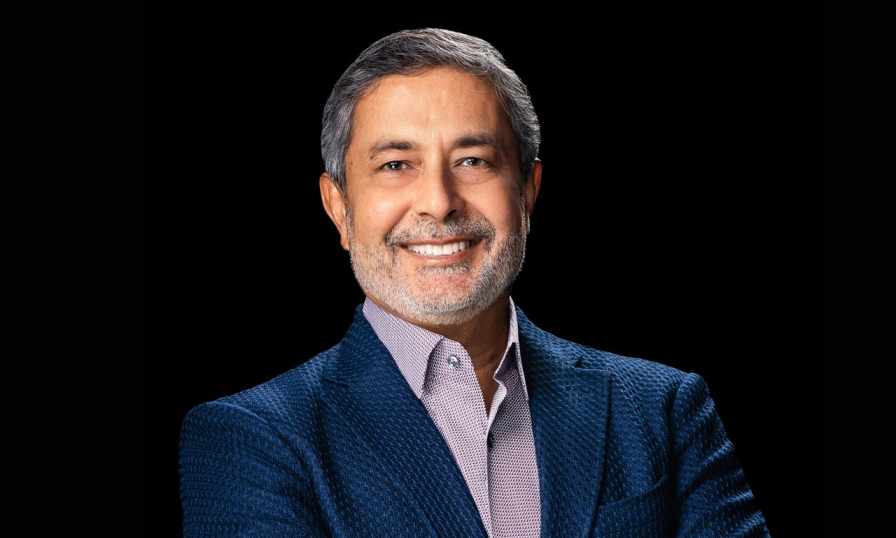
The story behind Sanjay Mehrotra’s rise
In the summer of 1976, an 18-year-old engineering student from India stood inside the U.S. Embassy in New Delhi after receiving devastating news for the third time.
His American student visa had been denied again.
Sanjay Mehrotra had already been accepted to the University of California, Berkeley. His bags were nearly packed. His future appeared set. Then the rejection came, casting doubt on his plans to study in the United States.
Mehrotra prepared to leave the embassy and accept the decision. His father did the opposite.
According to Mehrotra’s account in an interview with the Computer History Museum, his father refused to leave the embassy lobby. Spotting the U.S. consul nearby, he followed the official directly into his private office and pleaded his son’s case in a tense conversation that lasted roughly 20 minutes.
“My dad for 20 minutes, pretty much nonstop, with much love, much emotion, much passion,” argued that “there was no logic to denying my applications,” the 67-year-old tech veteran recalled in an interview with Business Insider.
The meeting changed everything.
The visa was approved. Mehrotra boarded a flight to California weeks later and eventually earned bachelor’s and master’s degrees in Electrical Engineering and Computer Science from UC Berkeley. After graduating from college, Mehrotra joined Intel, where he met future SanDisk co-founder Eli Harari.
Nearly five decades after that embassy confrontation, Mehrotra now runs Micron Technology, one of the most important semiconductor companies in the global artificial intelligence race. Micron’s market value recently climbed above $970 billion as investors poured money into companies supplying the memory chips used inside AI servers and data centers.
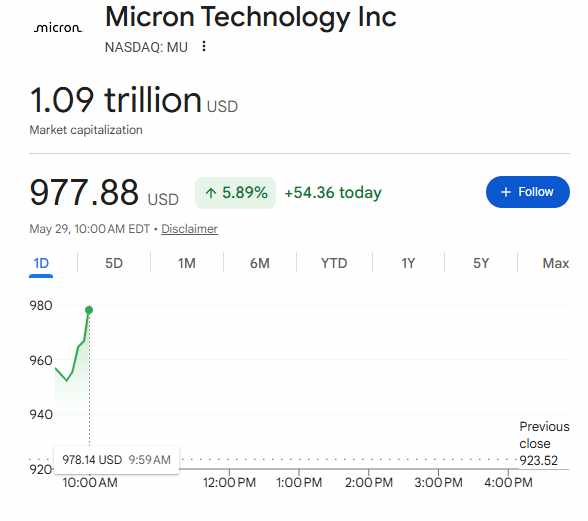
Micron Market Cap
The rise has pushed Micron close to the trillion-dollar mark, placing the company alongside a tiny group of tech giants dominating the AI infrastructure boom.
Mehrotra, now 67, is far from a household name outside semiconductor circles. Yet his fingerprints are all over modern computing. Before leading Micron, he co-founded SanDisk in 1988 and helped make flash storage a foundational technology for smartphones, cameras, laptops, and data storage devices worldwide.
His career spans the transition from floppy disks to flash memory and now the AI computing era, where high-bandwidth memory chips have become one of the most sought-after pieces of hardware in Silicon Valley.
What began as a teenager waiting anxiously inside a U.S. embassy in New Delhi eventually became one of the semiconductor industry’s defining success stories.
The visa rejection that nearly changed Silicon Valley history
Long before artificial intelligence turned memory chips into Wall Street’s hottest trade, Sanjay Mehrotra was a teenager from Kanpur trying to convince U.S. immigration officials to let him study abroad.
The odds were not in his favor.
Mehrotra had already secured admission to UC Berkeley, one of America’s leading engineering schools. Yet his visa applications kept getting rejected. By the summer of 1976, he had already been denied entry to the United States twice. The third rejection appeared final.
At the time, studying overseas remained out of reach for most middle-class Indian families. American visas were difficult to obtain, and foreign education carried enormous financial and personal risk. Mehrotra’s father had spent years encouraging his son’s interest in science and engineering, believing education could create opportunities unavailable at home.
Inside the embassy in New Delhi, Sanjay accepted the outcome. His father did not.
According to Mehrotra’s retelling in interviews, his father refused to leave the embassy lobby after the third denial. When he spotted the U.S. consul, he followed the diplomat directly into his office and argued passionately for his son’s future.
The conversation lasted about 20 minutes.
The consul eventually reversed the decision and approved the visa.
For Mehrotra, the moment became more than a bureaucratic victory. It became a lesson about persistence that stayed with him throughout his career in Silicon Valley.
Years later, after co-founding SanDisk and later taking over Micron, Mehrotra would often point back to that embassy confrontation and his father’s refusal to give up.
One approval stamp altered the trajectory of a teenager’s life. It later helped shape two of the most important companies in modern memory computing.
From Kanpur to UC Berkeley
Sanjay Mehrotra was born in 1958 in Kanpur, a city in northern India known for its manufacturing industry and engineering culture. He was the youngest of four children in a middle-class family that placed a strong emphasis on education.
His father worked as a liaison officer in the cotton industry and later moved the family to New Delhi when Mehrotra was 10 years old. The move exposed him to better schools and stronger academic competition at a young age.
Mehrotra gravitated early toward math and science. He later recalled that his father and older siblings encouraged his interest in engineering and pushed him to think beyond the limitations of his surroundings. During his teenage years, he enrolled in mechanical and technical courses before transferring to Sardar Patel Vidyalaya, one of New Delhi’s most respected schools.
India’s technology industry looked very different in the 1970s. Silicon Valley barely existed in its modern form. The semiconductor industry remained concentrated in the United States and Japan, and personal computers had not yet entered most homes.
For ambitious engineering students, America represented access to research labs, advanced computing systems, and universities operating at the center of technological innovation.
Mehrotra briefly attended BITS Pilani, one of India’s leading engineering institutes, before leaving for California after finally receiving his visa approval.
At UC Berkeley, he studied Electrical Engineering and Computer Science during a period when semiconductor research and computer architecture were beginning to reshape the future of computing. The timing placed him near the center of the coming digital storage revolution.
He earned both his bachelor’s and master’s degrees from Berkeley and later completed executive education at Stanford University’s Graduate School of Business.
The move from India to California gave Mehrotra access to the ecosystem that would eventually produce companies such as Intel, Apple, Cisco, and later Nvidia. It also placed him inside Silicon Valley at the exact moment flash memory technology was beginning to emerge as a commercial opportunity.
Decades later, Mehrotra would hold more than 70 patents tied to memory technology and become one of the semiconductor industry’s most influential executives. None of it would have happened without that final visa approval in New Delhi.
Building SanDisk and helping shape the flash memory era
By the late 1980s, personal computing was entering a new phase. Computers were shrinking, digital cameras were emerging, and electronics companies were searching for storage systems that were smaller, faster, and more reliable than floppy disks and magnetic drives.
Sanjay Mehrotra saw an opening.
In 1988, he co-founded SanDisk alongside Eli Harari and Jack Yuan. The startup focused on flash memory technology, a form of non-volatile storage that retains data without power. At the time, the technology remained expensive and commercially unproven for mass-market devices.
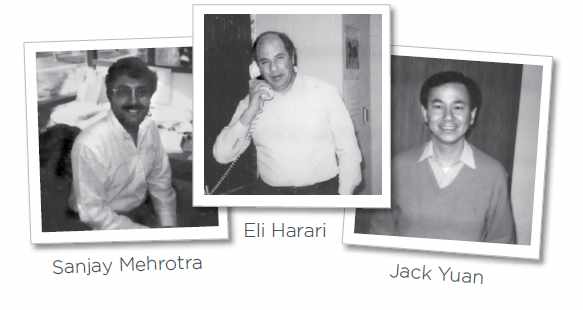
Scandisk cofounders: Sanjay Mehrotra, Eli Harari, and Jack Yuan (Image credit: Courier Post)
SanDisk spent years pushing flash memory into mainstream electronics. The company developed storage solutions for cameras, MP3 players, USB drives, smartphones, and laptops, helping to make flash memory one of the defining technologies of modern consumer computing.
The rise of digital photography and mobile devices accelerated SanDisk’s growth through the 1990s and 2000s. The company went public in 1995 and became one of Silicon Valley’s most recognizable names in storage technology.
Mehrotra rose through the company’s leadership ranks and later became chief executive. Colleagues inside the semiconductor industry came to view him as an engineer deeply focused on product development and long-term industry shifts rather than media attention.
SanDisk’s success mirrored the broader transformation of the digital economy. Consumers were producing and storing more data than ever before. Phones, cameras, laptops, and cloud systems all depended on advances in flash storage capacity and reliability.
The company eventually attracted acquisition interest from larger players seeking control over flash memory technology and manufacturing capacity.
In 2016, Western Digital acquired SanDisk in a deal valued at roughly $16 billion. Mehrotra played a central role in negotiating the transaction, closing one of the semiconductor industry’s largest storage acquisitions at the time.
The sale marked the end of nearly three decades at the company he helped build from scratch.
A year later, another semiconductor giant came calling.
Taking over Micron before the AI explosion
In 2017, Sanjay Mehrotra took over as chief executive of Micron Technology, one of America’s largest memory chip manufacturers.
At the time, Micron was already a major supplier of DRAM and NAND memory used in computers, smartphones, gaming systems, and cloud infrastructure. Yet the company still operated in one of the semiconductor industry’s most volatile sectors, where prices often swung sharply, and investors treated memory chips like commodities.
Micron’s stock traded near $30 a share when Mehrotra arrived.
His appointment came during a turning point for the broader chip industry. Cloud computing was accelerating. Data centers were consuming more memory. Artificial intelligence research was beginning to move from university labs into mainstream technology companies.
Inside Silicon Valley, firms such as Nvidia, Microsoft, Google, and Meta started building increasingly powerful AI systems that required enormous quantities of high-performance memory chips to train and operate large language models.
That shift transformed memory from a background component into critical infrastructure for the AI economy.
Micron invested heavily in advanced memory technologies, including high-bandwidth memory (HBM), used in AI servers that power systems developed by companies such as Nvidia. Demand surged as hyperscale data center operators raced to secure enough computing capacity for AI workloads.
Investors began rewarding semiconductor firms tied directly to artificial intelligence infrastructure. Nvidia’s valuation exploded first. Memory suppliers followed.
Under Mehrotra’s leadership, Micron’s market value climbed dramatically as Wall Street bet that AI would create years of demand for advanced memory chips.
The rally turned Micron into one of the world’s largest semiconductor companies and propelled Mehrotra into a small group of executives leading the AI hardware boom reshaping global markets.
For a man once denied entry into the United States three times, the rise carried an unmistakable sense of historical irony.
The same country that nearly rejected his student visa now depends heavily on the semiconductor industry he helped build.
The AI boom pushes Micron toward the trillion-dollar club
The artificial intelligence frenzy that swept through financial markets over the past two years created clear winners across the semiconductor industry.
Micron emerged as one of them.
Training large AI models requires enormous computing infrastructure packed with advanced graphics processors and high-performance memory systems. Every AI server running inside modern data centers depends on memory chips capable of moving massive amounts of data at extremely high speeds.
That demand turned high-bandwidth memory into one of the most valuable products in the semiconductor supply chain.
Micron became a major supplier of those chips.
As companies raced to build AI infrastructure, investors poured money into semiconductor firms tied directly to the boom. Shares of Micron climbed sharply, pushing the company’s market value above $900 billion and placing it near the trillion-dollar threshold once reserved for only the largest technology companies in the world.
The surge marked a dramatic shift for a company long viewed by Wall Street as cyclical and vulnerable to swings in memory pricing.
Now, Micron sits at the center of one of the largest infrastructure spending waves in tech history.
The company’s rise reflects a larger transformation underway across Silicon Valley. Artificial intelligence has created a scramble for the physical hardware powering AI systems, from graphics processors to networking equipment and memory chips.
Without memory, AI systems cannot function.
Micron’s technology now plays a direct role in supporting AI models used across cloud computing, enterprise software, autonomous systems, and consumer applications. Major technology companies building AI data centers require enormous quantities of advanced DRAM and NAND storage products, placing memory suppliers in a powerful position.
The rally has lifted Mehrotra’s profile across the tech industry after decades spent largely outside the public spotlight.
His personal fortune has climbed into billionaire territory through Micron stock awards and a career in the semiconductor industry. Yet people who have followed Mehrotra’s career often describe him less as a celebrity executive and more as a deeply technical operator who spent decades focused on engineering and long-term product strategy.
For investors, Micron’s rise has become another signal that the AI race extends far beyond chatbots and software.
It is increasingly a story about infrastructure, electricity, chips, servers, and the engineers building the systems underneath it all.
More than 70 patents and a legacy built on persistence
Long before artificial intelligence turned semiconductor executives into Wall Street stars, Sanjay Mehrotra had already spent decades helping shape modern memory technology.
Over the course of his career, he accumulated more than 70 patents tied to non-volatile memory systems and flash storage design. His work contributed to the development of multilevel cell NAND flash products that became standard across consumer electronics and enterprise storage systems.
In 2022, the National Academy of Engineering elected Mehrotra as a member for his contributions to memory architecture and flash technology, placing him among the most respected engineering leaders in the United States.
The recognition reflected a career spanning several generations of computing.
Mehrotra helped push flash memory into mainstream consumer electronics during the rise of digital cameras and smartphones. Years later, he found himself leading one of the semiconductor companies supplying memory systems for artificial intelligence infrastructure.
The scale of that transformation is difficult to ignore.
A teenager who once feared losing his chance to study in America now oversees a company valued at more than many national economies. Micron’s chips sit inside the data centers powering some of the largest AI systems ever built.
Yet the defining moment in Mehrotra’s story may still trace back to a crowded embassy lobby in New Delhi nearly 50 years ago.
He has frequently spoken about the influence of his father, whose refusal to accept a third visa rejection changed the course of his life. That confrontation with a U.S. consul became an early lesson in persistence, conviction, and refusing to walk away after a setback.
What looked like a bureaucratic rejection in 1976 eventually became the opening chapter of one of the semiconductor industry’s most remarkable rise stories.
A single visa approval carried Sanjay Mehrotra from Kanpur to California. The ripple effects reached all the way to Silicon Valley’s AI boom decades later.
A quiet giant in Silicon Valley
Unlike many modern tech executives, Sanjay Mehrotra rarely built his public profile around social media visibility or headline-grabbing appearances.
His reputation grew inside engineering circles.
Across the semiconductor industry, Mehrotra became known as a builder who spent much of his career focused on storage technology, manufacturing scale, and long-term shifts in computing demand. Former colleagues and industry observers have often described him as more of an engineer than a celebrity executive.
That low-profile approach stands in sharp contrast to the scale of the companies he helped shape.
SanDisk helped change how consumers stored photos, music, videos, and mobile data during the rise of digital devices. Micron Technology now sits at the center of the artificial intelligence infrastructure race, reshaping global markets.
The timing of Micron’s ascent has placed Mehrotra in rare company.
A small handful of semiconductor executives now occupy some of the most strategically important positions in the global economy as governments and technology firms compete for dominance in AI computing. Memory chips, once treated as background hardware, have become central to the future of artificial intelligence.
That shift helped transform Micron from a cyclical chipmaker into one of Wall Street’s biggest AI beneficiaries.
For Mehrotra, the moment arrives after nearly four decades inside the semiconductor business.
His career has spanned the rise of personal computers, digital storage, smartphones, cloud computing, and now artificial intelligence. Few executives have remained relevant across so many technological transitions.
Yet his story still carries a deeply human starting point.
Before the patents, billion-dollar acquisitions, and semiconductor rallies, there was an anxious teenager standing inside a U.S. embassy after hearing “no” three times.
The future of one of Silicon Valley’s most influential chip executives nearly ended before it began.
From a visa rejection to the center of the AI race
Sanjay Mehrotra’s rise is unusual in its timing.
His career began during the early days of Silicon Valley’s semiconductor industry, long before artificial intelligence became the dominant force driving global technology markets. He entered the United States as a student, hoping to study engineering at Berkeley. Decades later, he leads one of the companies supplying memory systems for the AI boom reshaping the global economy.
The arc of that story mirrors the evolution of modern computing itself.
When Mehrotra arrived in California in the 1970s, semiconductor companies were focused on personal computers and basic storage technologies. During the 1980s and 1990s, the industry shifted toward digital devices and flash memory. The smartphone era followed. Cloud computing came next.
Artificial intelligence has now pushed the industry into another transformation, one centered on massive data centers filled with advanced chips capable of processing enormous amounts of information.
Micron sits directly inside that shift.
The company’s memory products are now tied to AI servers powering large language models, enterprise AI systems, and advanced computing infrastructure being built across the United States and overseas. Demand for those systems has turned semiconductor firms into some of the market’s most valuable companies.
Mehrotra’s story has begun to attract fresh attention as Micron’s valuation approaches the trillion-dollar mark.
For many readers, the most striking part is not the company’s market capitalization or the billions generated by the AI rally. It is the fragile moment that came before any of it existed.
Three visa denials nearly stopped the entire story before it started.
One final approval changed the outcome.
What Sanjay Mehrotra’s story says about persistence
Sanjay Mehrotra’s rise stands out in Silicon Valley for a simple reason.
The story almost never happened.
Three visa denials nearly ended his plans to study in the United States before his career had even begun. A different decision inside the U.S. Embassy in New Delhi in 1976 could have completely altered the trajectory of his life and perhaps the future of two major semiconductor companies.
Instead, persistence changed the outcome.
His father refused to leave the embassy lobby after the third rejection. Mehrotra continued his education after arriving in California. Years later, he spent decades building storage technology long before artificial intelligence turned semiconductor executives into some of the most watched leaders in tech.
The timeline matters.
This was not an overnight success. The distance between that embassy rejection and Micron’s rise near the trillion-dollar mark spans nearly half a century of engineering work, industry cycles, product development, and long-term conviction.
For many immigrants, students, and founders facing rejection or uncertainty, Mehrotra’s story carries a broader message beyond semiconductors or stock market valuations.
Early setbacks do not always define the final outcome.
A teenager who was once denied entry to the United States three times now leads one of the companies helping to power the global artificial intelligence boom.
The future nearly closed its doors on Sanjay Mehrotra in 1976.
It opened anyway.
TechStartups’ Founder Stories section features more profiles of entrepreneurs, engineers, and founders whose paths to success rarely followed a straight line. Explore more founder stories on TechStartups.