Dropbox founder Drew Houston steps down as CEO to pursue AI ventures
 Daniel Levi
Posted On May 26, 2026
Daniel Levi
Posted On May 26, 2026
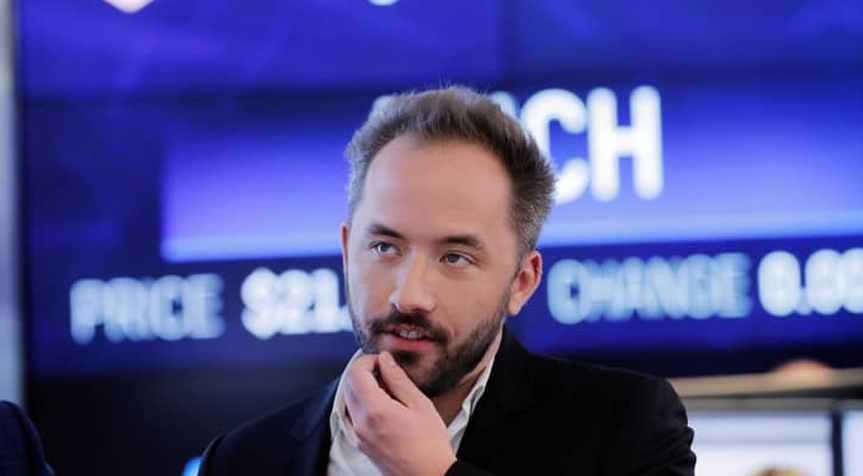
Nearly two decades after founding Dropbox from a college frustration over misplaced USB drives, Drew Houston is preparing to step away from the CEO role that turned him into one of Silicon Valley’s most recognizable founders.
Houston told employees Tuesday that he will transition into executive chairman after a temporary co-CEO period with Ashraf Alkarmi, Dropbox’s current product chief, who will later assume the top job permanently.
The leadership shift closes a major chapter for one of the earliest breakout startups from Y Combinator. Houston built Dropbox into one of tech’s defining cloud storage platforms and became the first founder to take a Y Combinator-backed company from the accelerator program to the public markets.
Founded in 2007 by Drew Houston and Arash Ferdowsi, Dropbox became one of the first major success stories to emerge from Y Combinator, growing from a file-syncing startup into a cloud storage platform used by hundreds of millions of people and businesses worldwide.
“Dropbox CEO Drew Houston, who founded the cloud storage company when he was 24, plans to step down and assume the role of executive chairman,” CNBC reported.
Still, Dropbox’s story has long carried a strange tension inside Silicon Valley. The company became a household name, amassed millions of users, and survived brutal competition from Google, Apple, Microsoft, and Amazon. Yet it never reached the same cultural or financial heights as some of its startup-era peers.
Dropbox currently has a market value of just over $6 billion, roughly half its first-day trading peak after its 2018 IPO and below the private-market valuation investors assigned the company in 2014. By comparison, Airbnb, another early Y Combinator success story, now sits at a market cap near $80 billion.
Houston brushed aside comparisons between the two companies during an interview with CNBC.
“I think my 18-year-old self would be high-fiving me,” Houston told CNBC, adding that Dropbox remains “something that a percentage of the planet still uses.”
That reach remains meaningful. Dropbox said in its latest quarterly earnings report that it has more than 18 million paying users. The service still holds a strong foothold among creative professionals, architects, photographers, and media teams who rely on large-file sharing for their daily work.
Yet the business has struggled to regain the growth profile investors once expected from enterprise software companies.
Dropbox topped $1 billion in annual revenue in 2017 and crossed $2 billion in 2021. Revenue has largely stalled over the past two years and slipped slightly in 2025. The company has spent much of the past several years restructuring operations and reducing costs.
In 2021, Dropbox cut 11% of its workforce, affecting 315 employees. Two years later, the company laid off another 16% of its staff, affecting roughly 500 workers as slower growth in cloud software put pressure on the business.
From Cloud Storage Pioneer to AI Builder: Drew Houston Steps Aside as Dropbox CEO
The software industry now faces a much bigger question hanging over it: what artificial intelligence means for subscription software companies.
AI has rattled much of the SaaS sector over the past three years as investors worry that large language models from companies like OpenAI and Anthropic could replace many existing software workflows with simpler AI-driven interfaces.
Houston appears less alarmed than many investors.
“Whenever there’s a new technology, people extrapolate very quickly,” he said. They make assumptions that may be “directionally correct” but take years or even decades longer to play out than they predict.
Regarding “this concept of SaaS Apocalypse or whatever,” Houston said he’s “never met a Dropbox customer who’s like, ‘I’m just using so much ChatGPT I’m going to cancel my Dropbox subscription.’”
Dropbox stock has actually held up better than many software peers over the past year. Shares are down less than 5%, compared to much steeper declines at companies like HubSpot, Asana, and Monday.com.
Industry analysts say the market still has little clarity on where AI spending will ultimately flow.
John Lovelock, an analyst at Gartner, compared the current AI cycle to the early days of cloud computing, when companies like Salesforce surged ahead and legacy vendors such as Oracle and SAP struggled to adapt.
“AI is going to bring more value, therefore there’s going to be more money spent,” Lovelock said. “Where everybody seems to get very excited is who’s going to make that money and that, in some ways, is the unanswerable question right now.”
Dropbox has spent the past year leaning harder into its own AI products. Analysts at Monness, Crespi, Hardt & Co. recently pointed to the company’s AI-powered Dash product as one reason value-focused investors may still find Dropbox attractive.
Dash allows users to search and interact with content across documents, messages, video, and audio files spread across third-party apps.
Houston said advances in AI models finally made it possible to build products he had wanted to create years ago.
“Suddenly we can build the version of this that I would have loved to build 10 years ago,” he said.
Ironically, Houston’s next chapter appears likely to center on AI itself.
“I’m not gonna be racing sailboats,” said Houston, who joined Meta’s board in 2020.
Houston said he wants to return to building startups during what he described as one of the most exciting moments in technology history.
“It’s all cliche, right?” Houston said. “AI is reshaping every aspect of how we live, and I’m sure that I’ll have no shortage of ideas and stuff to work on.”
Dropbox said Mike Torres will join the company in July as chief product officer from Google, where he currently serves as vice president of product for Chrome.
Houston insisted there was no dramatic trigger behind his decision to step aside.
“Part of me has always thought, oh yeah, I’ll be the CEO of Dropbox until my last gasp of my career,” he said. “There’s never a perfect time, there was no part of me where I was like, ‘oh, this date is the date where it’s gonna happen.’”
Houston said Alkarmi helped make Dropbox more responsive to customers after joining from Vimeo in late 2024.
“I trust the right leader,” Houston said. “The company’s in the right place.”